Introduction
As the demand for accurate heart rhythm analysis grows, developers face significant challenges in EKG technology that must be addressed to enhance patient care. We’ll explore best practices that enhance diagnostic precision and simplify the integration of EKG solutions into healthcare systems. However, as the landscape of cardiac care evolves, developers often struggle to navigate the complex regulatory landscape while ensuring their innovations are effective and user-friendly. If these challenges are not addressed, the potential benefits of new EKG technologies may remain untapped, hindering advancements in patient care.
Understand EKG Fundamentals and Heart Rhythms
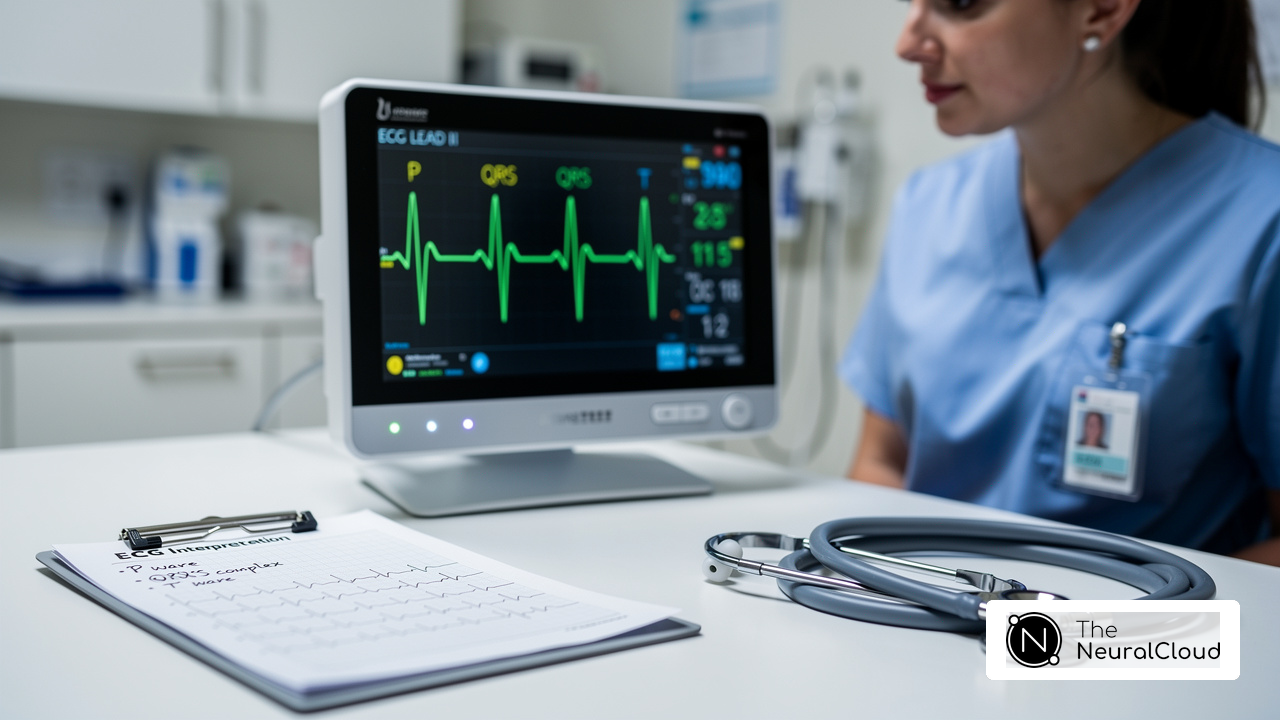
Understanding the fundamental components of heart rhythms EKG is crucial for accurate interpretation and effective patient care. The key elements include the P wave, QRS complex, and T wave, each corresponding to distinct electrical activities in the heart. The P wave signifies atrial depolarization, while the QRS complex indicates ventricular depolarization. Grasping these components is essential for programmers aiming to develop algorithms that accurately identify and analyze various heart rhythms EKG, such as normal sinus rhythm, atrial fibrillation, and ventricular tachycardia.
Additionally, being aware of common arrhythmias and their clinical implications is vital for healthcare professionals. This knowledge can inform the development of features that alert providers to critical changes in a patient's heart rhythms EKG, ultimately enhancing patient outcomes. For instance, integrating real-time monitoring capabilities can facilitate the early detection of life-threatening arrhythmias by analyzing heart rhythms EKG, allowing for timely intervention.
Incorporating educational resources, like interactive simulations, can significantly enhance understanding of EKG fundamentals. Training modules also play a crucial role in this process. Successful training programs in Canada emphasize the importance of mastering these concepts, ensuring professionals are well-equipped to create effective health tech solutions. Recent studies indicate that a systematic approach to EKG interpretation can significantly reduce misdiagnosis risks. This improvement ultimately enhances overall patient care. By concentrating on these essential components, health technology creators can drive progress in cardiovascular diagnostics and care management.

Implement a Structured Approach to EKG Interpretation
Accurate interpretation of heart rhythms EKG is crucial for effective patient care, yet many healthcare professionals face challenges in achieving this goal. To ensure accurate EKG interpretation, developers should implement a structured approach that includes the following steps:
- Rate Assessment: Determine the heart rate by measuring the intervals between R waves. This helps identify bradycardia (heart rate less than 50 bpm) or tachycardia (heart rate greater than 100 bpm).
- Rhythm Analysis: Evaluate the regularity of the heart rhythm. Is it regular or irregular? This step is essential for diagnosing conditions such as atrial fibrillation, which can greatly affect heart rhythms EKG and outcomes for individuals.
- P Wave Examination: Check for the presence and morphology of P waves. Each P wave should precede a QRS complex in a normal EKG, indicating proper atrial activity.
- QRS Complex Analysis: Assess the width and morphology of the QRS complex. A wide QRS may indicate a bundle branch block or ventricular rhythm, which requires further clinical attention.
- T Wave Evaluation: Analyze T waves for abnormalities, which can indicate ischemia or electrolyte imbalances, both essential for managing individuals.
- Overall Interpretation: Combine findings from the previous steps to form a comprehensive interpretation of the EKG, ensuring that all aspects of the cardiac cycle are considered.
Using a structured approach in heart rhythms EKG analysis software like MaxYield can really boost interpretation accuracy. MaxYield takes long, noisy heart rhythms EKG recordings and transforms them into clear signals, utilizing advanced AI for quick and accurate analysis. Additionally, the customizable visualization and reporting tool, Insight360, complements MaxYield by transforming clean ECG data into interactive dashboards and clinical-ready reports. Based on expert endorsements from Dr. Alan Rabinowitz, Dr. Brett Heilbron, and Dr. Marc W. Deyell, MaxYield's precision competes with human interpretation, making it an essential tool for medical professionals.
Recent studies indicate that the median accuracy of ECG interpretation improved from 54% before training to 67% after training, underscoring the importance of structured methodologies in improving diagnostic accuracy. Moreover, tackling frequent mistakes in heart rhythms EKG analysis, such as diagnostic inaccuracies that can lead to increased healthcare costs and compromised patient outcomes, is crucial. By adhering to these best practices and using MaxYield's automated ECG analysis platform, which is awaiting FDA Class II SaMD approval, developers can offer medical professionals reliable tools for patient evaluation, ultimately enhancing patient care. Ultimately, leveraging MaxYield can transform EKG analysis, leading to better patient outcomes and more efficient healthcare delivery.

Leverage Advanced AI Technologies for Enhanced EKG Analysis
The integration of AI technologies into heart rhythms EKG analysis addresses significant challenges in diagnostic accuracy and efficiency. Here are some best practices for developers:
- Utilize machine learning algorithms to implement models that learn from extensive datasets of heart rhythms EKG recordings. These models can identify patterns and anomalies that traditional analysis methods might overlook. For instance, AI algorithms have shown a detection accuracy of 96-97% in identifying heart rhythms EKG, highlighting their potential to enhance diagnostic precision.
- Real-Time Data Processing: Develop systems capable of processing heart rhythms EKG data in real-time. This allows for immediate feedback and alerts for abnormal rhythms, which is vital in emergencies where quick action can significantly reduce morbidity and mortality rates associated with cardiac events.
- Automated Interpretation: Create algorithms that automatically analyze heart rhythms EKG, providing preliminary evaluations for medical providers to review. This automation can ease clinician workload and improve efficiency in busy medical environments, as seen with AI-powered detection in critical cardiac events like STEMI and OMI.
- Continuous Learning: Design AI systems for continuous learning from new data, enhancing their accuracy over time. This adaptability is crucial for keeping pace with evolving cardiac care standards and improving the reliability of diagnostic outputs.
- User-Friendly Interfaces: Craft intuitive interfaces that enable healthcare providers to easily interact with AI-driven insights, facilitating better decision-making. A user-friendly approach can boost adoption and training, addressing common challenges faced by health tech creators when integrating new technologies.
Utilizing these advanced AI technologies allows developers to create tools for heart rhythms EKG analysis that boost diagnostic accuracy and streamline cardiac care efficiency. As AI continues to evolve, its role in EKG diagnostics will be pivotal in shaping the future of cardiac care.

Address Integration and Compliance Challenges in EKG Solutions
Integrating EKG solutions into healthcare systems presents developers with a range of challenges that must be addressed for successful implementation. To effectively navigate these challenges, developers should adhere to the following best practices:
- Understand Regulatory Requirements: Familiarizing yourself with Canadian medical regulations, including the Medical Device Establishment Licensing Framework and recent amendments to compliance guidelines, is essential. Adhering to these regulations from the outset can prevent costly delays and legal complications.
- Interoperability Standards: Design EKG solutions that comply with interoperability standards such as HL7 and FHIR. This compliance is crucial for facilitating seamless data exchange between various medical systems, ensuring that EKG data can be efficiently shared and utilized across platforms.
- User Training and Support: It's crucial to offer thorough training and continuous support for medical providers using EKG solutions. This approach enhances user confidence and ensures that the technology is effectively integrated into clinical practice.
- Feedback Mechanisms: Implement feedback mechanisms that allow users to report issues or suggest improvements. This practice can assist creators in enhancing their products and tackling integration challenges that may occur after deployment.
- Continuous Monitoring and Updates: Establish processes for the continuous monitoring of heart rhythms EKG solutions to ensure compliance with evolving regulations and standards. Regular updates not only enhance functionality but also bolster security, keeping pace with the latest regulatory expectations.
By adhering to these best practices, developers can streamline integration and enhance the reliability of EKG solutions in healthcare settings. Ultimately, these best practices not only facilitate smoother integration but also foster trust among healthcare providers and patients in EKG technology.

Conclusion
Navigating the complexities of EKG technology is crucial for health tech developers focused on enhancing patient care and diagnostic accuracy. Developers can significantly improve clinical outcomes by understanding EKG components, implementing structured interpretation methods, leveraging AI technologies, and addressing integration challenges. Key insights from the article highlight the importance of a systematic approach to EKG interpretation, which includes:
- Assessing heart rates
- Analyzing rhythms
- Evaluating waveforms
The integration of AI technologies not only boosts diagnostic precision but also streamlines workflows for healthcare providers. Furthermore, adhering to regulatory requirements and interoperability standards ensures that EKG solutions are effectively integrated into existing healthcare systems, fostering trust and reliability among users.
As cardiac care evolves, adopting these best practices empowers developers to create innovative EKG solutions that meet clinician and patient needs. By prioritizing accuracy, efficiency, and compliance, health tech developers can redefine cardiovascular diagnostics and elevate patient care standards across Canada.
Frequently Asked Questions
What are the key components of heart rhythms EKG?
The key components of heart rhythms EKG include the P wave, QRS complex, and T wave. The P wave signifies atrial depolarization, the QRS complex indicates ventricular depolarization, and the T wave represents ventricular repolarization.
Why is understanding EKG fundamentals important for healthcare professionals?
Understanding EKG fundamentals is crucial for accurate interpretation and effective patient care. It helps healthcare professionals identify and analyze various heart rhythms, such as normal sinus rhythm, atrial fibrillation, and ventricular tachycardia.
How can knowledge of common arrhythmias impact patient care?
Knowledge of common arrhythmias and their clinical implications can inform the development of features that alert providers to critical changes in a patient's heart rhythms EKG, ultimately enhancing patient outcomes.
What role does real-time monitoring play in EKG interpretation?
Real-time monitoring capabilities facilitate the early detection of life-threatening arrhythmias by analyzing heart rhythms EKG, allowing for timely intervention and improving patient safety.
How can educational resources enhance understanding of EKG fundamentals?
Incorporating educational resources, such as interactive simulations and training modules, can significantly enhance understanding of EKG fundamentals, ensuring professionals are well-equipped to create effective health tech solutions.
What impact does a systematic approach to EKG interpretation have on patient care?
A systematic approach to EKG interpretation can significantly reduce misdiagnosis risks, ultimately enhancing overall patient care and improving health outcomes.
How can health technology creators drive progress in cardiovascular diagnostics?
By concentrating on essential components of EKG interpretation and integrating educational resources, health technology creators can drive progress in cardiovascular diagnostics and care management.
List of Sources
- Understand EKG Fundamentals and Heart Rhythms
- Arrhythmia Update 2024 Conference - News - PHRI (https://phri.ca/au24)
- New Clinical Trial Finds Human Oversight ECG Monitors Outperform AI-Dependent Monitoring - HRS (https://hrsonline.org/news/human-oversight-ecg-monitors-outperform-ai-dependent-monitoring)
- Harnessing AI to Decode the Heart | UHN Research (https://uhnresearch.ca/news/12-10-2025/harnessing-ai-to-decode-the-heart)
- theneuralcloud.com (https://theneuralcloud.com/post/master-ekg-abnormalities-integrate-tech-for-accurate-analysis)
- New Trends in the ECG Monitoring (https://dicardiology.com/article/new-trends-ecg-monitoring)
- Implement a Structured Approach to EKG Interpretation
- ECG Rate Interpretation (https://litfl.com/ecg-rate-interpretation)
- How Accurate ECG Interpretation Can Mitigate Healthcare Costs (https://gehealthcare.com/en-us/insights/article/how-accurate-ecg-interpretation-can-mitigate-healthcare-costs?srsltid=AfmBOopp_hnGWz_aOOmD-VMHLp70-CPiKPpN1o-pOidQySgj-fPIyPpl)
- Checking your browser - reCAPTCHA (https://pmc.ncbi.nlm.nih.gov/articles/PMC7522782)
- Leverage Advanced AI Technologies for Enhanced EKG Analysis
- AI-ECG Finds STEMI Faster, Cuts False-Positive Cath Lab Activations (https://tctmd.com/news/ai-ecg-finds-stemi-faster-cuts-false-positive-cath-lab-activations)
- One moment, please... (https://hospitalnews.com/research-study-makes-heart-screening-faster-more-accessible-using-ai)
- Investigating the Efficacy of AI-Powered Innovations in ECG Analysis and Continuous Heart Monitoring: A Comprehensive Narrative Review - PMC (https://pmc.ncbi.nlm.nih.gov/articles/PMC12419789)
- PMcardio: AI ECG & Cardiac Care Platform (https://powerfulmedical.com)
- Study Shows AI-Powered ECG Could Help Patients Requiring Lifelong Heart Monitoring (https://dicardiology.com/content/study-shows-ai-powered-ecg-could-help-patients-requiring-lifelong-heart-monitoring)
- Address Integration and Compliance Challenges in EKG Solutions
- Health Canada announces further steps on the “Action Plan on Medical Devices” (https://smartbiggar.ca/insights/publication/health-canada-announces-further-steps-on-the-action-plan-on-medical-devices-)
- New Health Canada Guidance Documents for Medical Devices Published… (https://nsf.org/life-science-regulatory-news/new-health-canada-guidance-documents-medical-devices-published-march-april-2026)
- Health Canada 2026 to 2028 Forward Regulatory Plan - Canada.ca (https://canada.ca/en/health-canada/corporate/about-health-canada/legislation-guidelines/acts-regulations/forward-regulatory-plan/plan.html)
- Why ECG and EMR integration is a critical healthcare technology solution (https://gehealthcare.com/en-ca/insights/article/why-ecg-integration-in-the-emr-is-a-critical-healthcare-technology-solution?srsltid=AfmBOopat29IOCiBRROt5_FBW4lZEQqfV3-9_Y8pDlcSHzYIWtEYE7gA)