Introduction
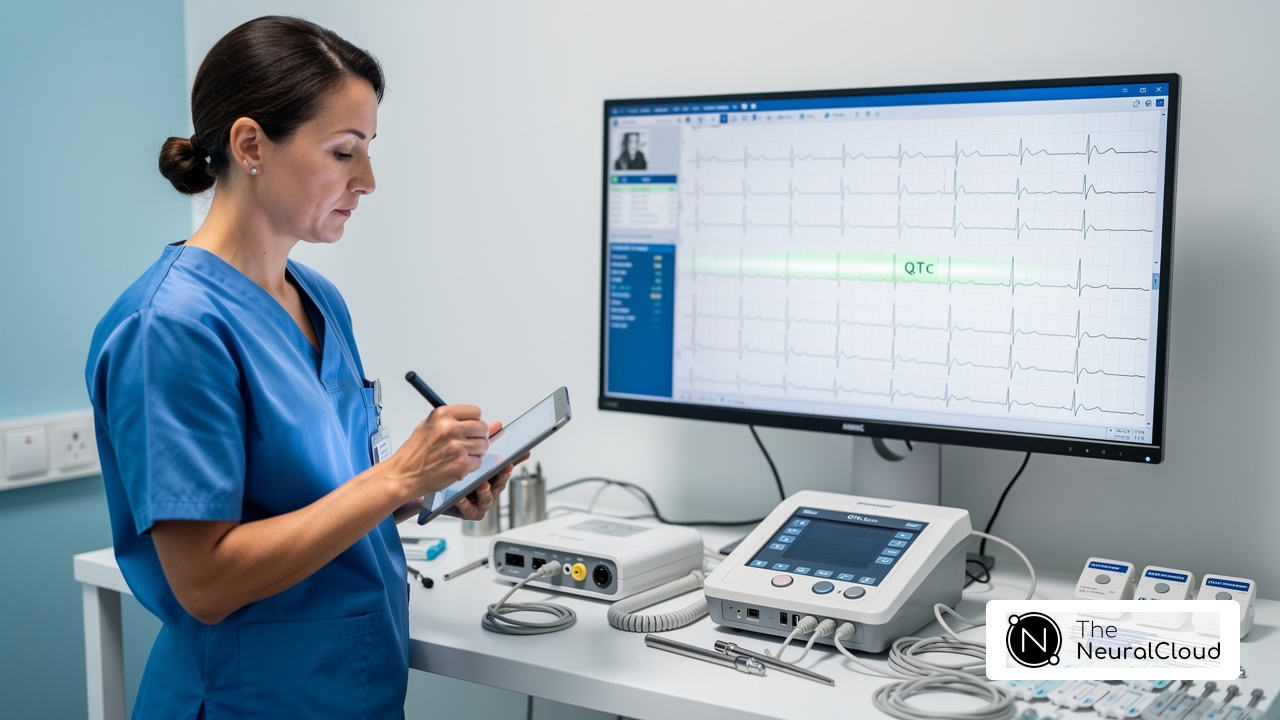
Accurate atrial rate assessment on an ECG is essential for diagnosing various cardiac conditions. Mastering atrial rate calculation helps practitioners improve diagnostic accuracy and patient outcomes, particularly with the increase in atrial fibrillation cases. However, many healthcare professionals struggle with the intricacies of ECG analysis, which can result in errors.
So, how can healthcare professionals tackle these challenges to ensure accurate atrial rate calculations? Addressing these challenges not only improves diagnostic accuracy but also enhances overall patient care.
Understand Atrial Rate and Its Importance in ECG Analysis
Understanding how to calculate atrial rate on ECG is essential, as it reflects the heart's contractions over time and is vital for diagnosing cardiac conditions. Understanding the atrial rate is essential for several key reasons:
- Clinical Relevance: The heart's rhythm serves as a significant indicator of various cardiac disorders, including fibrillation (AF) and flutter (AFL). For example, a rapid heart rhythm may suggest AFL, and understanding how to calculate atrial rate on ECG is important, as it is characterized by excessive contractions of the upper chambers, which can lead to inefficient blood circulation and an increased risk of complications such as stroke.
- Understanding how to calculate atrial rate on ECG is crucial for accurately assessing the heart's rhythm, which is essential for identifying and treating patients with suspected arrhythmias. Research indicates that independent component analysis (ICA) combined with k-nearest neighbor (KNN) classifiers achieved an impressive accuracy of 99.50% in detecting AF. This highlights the importance of understanding how to calculate atrial rate on ECG for precise heart rhythm assessment in clinical settings.
- Monitoring and Management: Regular monitoring of the heart's rhythm is essential for evaluating the effectiveness of therapies and interventions. For instance, early diagnosis of AF significantly enhances patient outcomes. Studies show that maintaining a normal rhythm within a year of detection leads to better results. Continuous assessment enables healthcare professionals to adjust treatment plans as needed, ensuring optimal patient care.
As the prevalence of atrial fibrillation continues to grow, knowing how to calculate atrial rate on ECG will be indispensable for effective cardiovascular care. With projections indicating that more than 12 million individuals in the U.S. will be affected by 2050, the ability to accurately assess and respond to changes in heart rhythm will become increasingly critical.

Calculate Atrial Rate Using Effective Techniques
Understanding how to calculate atrial rate on ECG is essential for accurate determination of atrial frequency, as many healthcare professionals face challenges in using various methods for effective ECG analysis. Here are the most common techniques:
-
The 6-Second Method: This is one of the simplest and most widely used techniques.
- Step 1: Identify a 6-second strip on the ECG, which typically spans 30 large squares.
- Step 2: Count the number of P signals within this 6-second interval.
- Step 3: Multiply the number of P oscillations by 10 to convert it to a frequency per minute.
- Example: If you count 8 P signals in 6 seconds, the heart frequency is 8 x 10 = 80 bpm.
-
The Large Square Method: This method is useful for regular rhythms.
- Step 1: Count the number of large squares between two consecutive P signals.
- Step 2: Divide 300 by the number of large squares counted.
- Example: If there are 3 large squares between P cycles, the heart rhythm is 300 / 3 = 100 bpm.
-
The Small Square Method: This method provides a more precise calculation for irregular rhythms.
- Step 1: Count the number of small squares between two consecutive P signals.
- Step 2: Divide 1500 by the number of small squares counted.
- Example: If there are 15 small squares between P waves, the heart frequency is 1500 / 15 = 100 bpm.
By mastering these techniques, healthcare professionals can significantly enhance their ECG interpretation skills, particularly in understanding how to calculate atrial rate on ECG, leading to better patient outcomes. Mastering these techniques not only improves ECG interpretation but also plays a vital role in enhancing patient care.

Troubleshoot Common Issues in Atrial Rate Calculation
Several common challenges that healthcare professionals face during ECG analysis can lead to inaccurate calculations in how to calculate atrial rate on ECG. Here are some troubleshooting tips:
-
Poor Quality ECG Tracings: Ensure that the ECG tracing is clear and free from artifacts. Poor quality can obscure P signals, making them difficult to count.
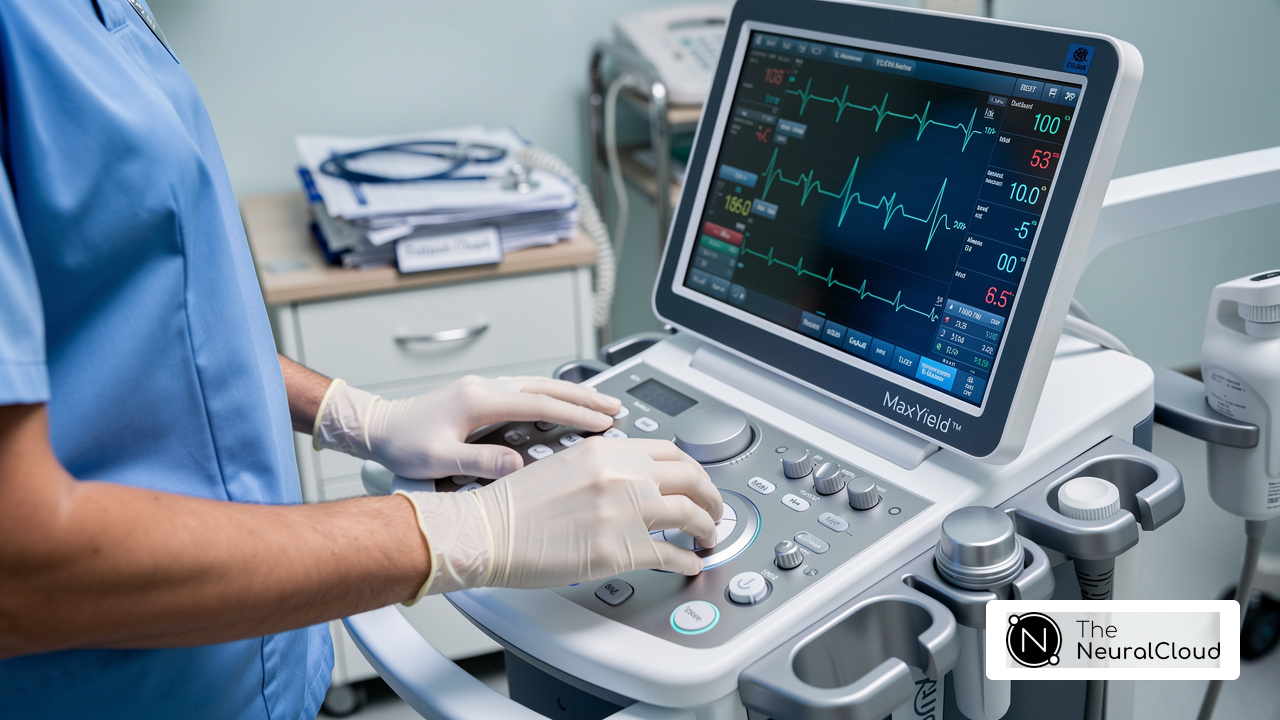
- Solution: If the tracing is unclear, re-evaluate lead placement or use advanced ECG filtering techniques. Neural Cloud Solutions' MaxYield™ platform incorporates innovative noise filtering and artifact handling, significantly enhancing signal quality and clarity, which is crucial for accurate diagnoses.
-
Irregular Patterns: Counting P signals can be challenging when irregular patterns occur, often leading to miscalculations. Approximately 39% of ECGs are interpreted incorrectly, with a significant portion attributed to misidentification of waveforms.
- Solution: Use the 6-second method over multiple cycles to obtain an average heart rate, or utilize software tools that analyze the rhythm more accurately. MaxYield™'s adaptive algorithms evolve with each use, improving diagnostic yield and addressing the impact of physiological variability and noise on signal quality.
-
Misidentification of Waves: Occasionally, P waves may be confused with other forms, particularly in situations such as fibrillation, where 28% of arrhythmias are overdiagnosed.
- Solution: Familiarizing yourself with the shapes of P waves and other forms can really boost your identification skills. Advanced visualization tools within the MaxYield™ platform assist in distinguishing between waveforms, enhancing the accuracy of ECG interpretation.
-
Counting Errors: Manual counting can lead to errors, especially in fast rhythms.
- Solution: Utilize digital tools or software that automatically count P waves and provide real-time feedback on the heart rhythm. Implementing Signal Quality Indices (SQIs) in ECG systems, such as those offered by MaxYield™, can improve the reliability of diagnoses and reduce the risk of errors due to noise interference.
By recognizing these typical problems and their remedies, healthcare experts can utilize the advanced features of Neural Cloud Solutions' MaxYield™ platform to enhance their understanding of how to calculate atrial rate on ECG, resulting in improved patient care. By leveraging the advanced capabilities of MaxYield™, healthcare professionals can significantly enhance their diagnostic accuracy and ultimately improve patient outcomes.

Leverage Advanced Technologies for Enhanced ECG Analysis
Traditional ECG analysis often faces challenges in precision and effectiveness, necessitating the integration of advanced technologies. Here are several strategies to leverage these innovations:
- AI-Powered ECG Analysis Tools: Consider implementing software that utilizes artificial intelligence to analyze ECG data. These tools can automatically identify P waves and compute heart rhythms, providing insights on how to calculate atrial rate on ecg with remarkable precision. For example, platforms such as MaxYield™ handle unprocessed ECG data, providing organized outputs that facilitate the recognition of heart rhythms and improve clinical decision-making.
- Wearable ECG Devices: Think about using wearable technology that keeps a constant eye on heart rhythms, providing instant updates on chamber frequencies. These devices can alert users to irregularities, facilitating timely interventions. Devices that synchronize with mobile applications offer immediate feedback on heart rhythms and other cardiac metrics, utilizing MaxYield™ for automated labeling and data processing, which enhances patient engagement and monitoring.
- Advanced Visualization Software: Utilize visualization tools capable of creating customizable dashboards and reports based on ECG data. This helps in visualizing trends in heart rhythms over time, which is essential for informed clinical decision-making. For instance, Insight360 can generate comprehensive reports that highlight how to calculate atrial rate on ecg trends and anomalies, further supported by the clean signals provided by MaxYield™.
- Continuous Education and Training: Stay updated on the latest advancements in ECG technology through workshops, webinars, and online courses. This ongoing education will enhance your proficiency in utilizing advanced tools effectively. Participating in training sessions focused on the integration of AI in ECG analysis can significantly improve diagnostic capabilities.
Ultimately, embracing these innovations can transform ECG analysis, enhancing both patient care and operational efficiency.

Conclusion
Calculating atrial rate on ECG is more than a technical skill; it’s essential for effective cardiac care. However, many healthcare professionals struggle with accurately assessing atrial rates, which can hinder effective diagnosis and treatment. The ability to accurately assess atrial rate is crucial for diagnosing various cardiac conditions and improving patient outcomes. With the growing prevalence of atrial fibrillation and other arrhythmias, failing to master this skill may lead to misdiagnoses and suboptimal patient care.
Throughout the article, we explored key techniques for calculating atrial rate, including the:
- 6-Second Method
- Large Square Method
- Small Square Method
Each method offers a distinct approach to accurately determining heart rhythms. We also addressed troubleshooting common issues, such as poor quality ECG tracings and misidentification of waves. Leveraging advanced technologies, such as AI-powered tools and wearable devices, further enhances the accuracy and efficiency of ECG analysis, ultimately leading to better patient management.
As cardiac care evolves, it’s crucial for professionals to embrace these advanced techniques and technologies. Staying informed about the latest developments in ECG analysis not only enhances diagnostic capabilities but also empowers healthcare professionals to make informed decisions that significantly impact patient health. Mastering atrial rate calculation is not just a skill; it’s a commitment to improving patient outcomes in cardiac care.
Frequently Asked Questions
Why is understanding atrial rate important in ECG analysis?
Understanding atrial rate is crucial as it reflects the heart's contractions over time and is vital for diagnosing various cardiac conditions, such as atrial fibrillation (AF) and atrial flutter (AFL).
What are the clinical implications of atrial rate?
The heart's rhythm serves as a significant indicator of cardiac disorders. A rapid heart rhythm may suggest AFL, which is characterized by excessive contractions of the upper chambers, potentially leading to inefficient blood circulation and an increased risk of complications like stroke.
How does atrial rate calculation assist in diagnosing arrhythmias?
Accurately calculating atrial rate on ECG is essential for assessing the heart's rhythm, which helps identify and treat patients with suspected arrhythmias. Research shows that advanced techniques can achieve high accuracy in detecting AF.
What role does monitoring atrial rate play in patient management?
Regular monitoring of the heart's rhythm is essential for evaluating the effectiveness of therapies and interventions. Early diagnosis of AF significantly enhances patient outcomes, allowing healthcare professionals to adjust treatment plans as needed.
What is the projected prevalence of atrial fibrillation in the U.S. by 2050?
It is projected that more than 12 million individuals in the U.S. will be affected by atrial fibrillation by 2050, highlighting the importance of accurately assessing and responding to changes in heart rhythm.
List of Sources
- Understand Atrial Rate and Its Importance in ECG Analysis
- Global surge in serious heart rhythm disorders sparks urgent call to action from experts: 1 in 3 people at risk (https://escardio.org/news/press/press-releases/global-surge-in-serious-heart-rhythm-disorders-sparks-urgent-call-to-action-from)
- sciencedirect.com (https://sciencedirect.com/science/article/abs/pii/S1746809413001213)
- Apple Heart Study demonstrates ability of wearable technology to detect atrial fibrillation (https://med.stanford.edu/news/all-news/2019/03/apple-heart-study-demonstrates-ability-of-wearable-technology.html)
- HRS Reports First Success of COMPASS Initiative for Early Atrial Fibrillation Care (https://hrsonline.org/news/compass-initiative-early-afib-care)
- What doctors want patients to know about atrial fibrillation (https://ama-assn.org/public-health/chronic-diseases/what-doctors-want-patients-know-about-atrial-fibrillation)
- Calculate Atrial Rate Using Effective Techniques
- med.stanford.edu (https://med.stanford.edu/news/insights/2018/10/understanding-afib-how-to-measure-your-own-heart-rate-and-rhythm.html)
- qaly.co (https://qaly.co/post/how-to-calculate-atrial-rate)
- simplenursing.com (https://simplenursing.com/six-second-method-calculate-heart-rate-ecg)
- Heart Rhythm 2025 Features Advances in AI that Enhance Safety of Atrial Fibrillation Treatment - HRS (https://hrsonline.org/news/hr2025-features-advanced-ai-safety-afib-treatment)
- ecglectures.com (https://ecglectures.com/blog/quick-tip-how-to-calculate-heart-rate-in-atrial-fibrillation-on-ecg)
- Troubleshoot Common Issues in Atrial Rate Calculation
- escardio.org (https://escardio.org/news/press/press-releases/Wearable-heart-monitor-increases-diagnoses-of-common-heart-rhythm-disorder-by-50)
- Frontiers | The most common errors in automatic ECG interpretation (https://frontiersin.org/journals/physiology/articles/10.3389/fphys.2025.1590170/full)
- smw.ch (https://smw.ch/index.php/smw/article/view/3470/5737)
- schillerus.com (https://schillerus.com/signal-quality-in-the-electrocardiograph-key-to-accurate-and-reliable-diagnoses)
- Leverage Advanced Technologies for Enhanced ECG Analysis
- New study finds AI model improves heart attack detection (https://health.ucdavis.edu/news/headlines/new-study-finds-ai-model-improves-heart-attack-detection/2025/11)
- Investigating the Efficacy of AI-Powered Innovations in ECG Analysis and Continuous Heart Monitoring: A Comprehensive Narrative Review - PMC (https://pmc.ncbi.nlm.nih.gov/articles/PMC12419789)
- The latest innovations in ECG technology and analysis - Norav Medical (https://noravmedical.com/advancements-in-ecg-technology-exploring-the-latest-innovations-in-ecg-analysis)
- AccurKardia (https://accurkardia.com/news)