Introduction
Accurate heart rate determination through electrocardiograms (ECGs) is crucial for healthcare professionals. By mastering the fundamental components of an ECG, such as the P wave, QRS complex, and T wave, practitioners can significantly enhance their diagnostic capabilities. Calculating heart rate can be particularly challenging in noisy environments.
What strategies can healthcare providers use to ensure accurate heart rate measurements despite these challenges? This guide delves into effective techniques for determining heart rate from ECG, equipping professionals with the knowledge to improve patient outcomes.
Understand ECG Basics and Heart Rate Fundamentals
Understanding the basic elements of an ECG is vital for accurately determining pulse rate. An ECG (electrocardiogram) records the organ's electrical activity, displaying it as a sequence of patterns: P patterns, QRS complexes, and T patterns.
- P Wave: This signal represents atrial depolarization, marking the electrical activity that triggers atrial contraction.
- QRS Complex: The most prominent feature on the ECG, the QRS complex signifies ventricular depolarization, which is essential for effective cardiac function.
- T Wave: This signal indicates ventricular repolarization, marking the organ's recovery phase following contraction.
Heart rhythm (HR) is measured in beats per minute (BPM) and can be calculated by analyzing the intervals between these waves, particularly focusing on the R waves within the QRS complex, which is essential for understanding how to determine heart rate from ECG. By mastering these components, healthcare professionals can enhance their diagnostic capabilities and improve patient outcomes. With MaxYield™, healthcare professionals can utilize advanced AI-driven ECG analysis to turn noisy recordings into clear insights, ensuring clean data and hospital-grade accuracy from consumer-grade devices. This capability improves the dependability of pulse calculations and aids assured clinical decision-making in remote patient monitoring.

Explore Methods for Calculating Heart Rate from ECG
Determining how to determine heart rate from ECG can present challenges, especially in noisy environments where traditional methods may falter. With the integration of MaxYield™, these methods can be significantly enhanced, particularly in challenging environments with high levels of noise and artifacts. Here are the most widely used techniques:
- The 1500 Method: Suitable for consistent rhythms, this approach entails counting the number of small squares between two successive R peaks and dividing 1500 by this count. For instance, if there are 30 small squares between two R peaks, the heart rate is determined as 1500 / 30 = 50 BPM. This method is favored for its precision in clinical practice, particularly when analyzing fast rhythms. With MaxYield™, even recordings with baseline wander and muscle artifacts can yield clear R signal identification, enhancing the reliability of this method.
- The 300 Method: Also appropriate for regular rhythms, this technique involves counting the number of large squares between two R peaks and dividing 300 by this count. For instance, if there are 3 large squares, the heart rate would be 300 / 3 = 100 BPM. This method is quick and effective, making it a popular choice among healthcare professionals. MaxYield™ supports this method by filtering out noise, ensuring precise identification of R signals even in less-than-ideal recordings.
- The Six-Second Method: This technique plays a key role in accurately assessing pulse frequencies for patients with arrhythmias. It consists of tallying the quantity of R peaks in a 6-second strip (typically 30 large squares) and multiplying that amount by 10. For instance, if 8 R waves are noted in 6 seconds, the pulse is 8 x 10 = 80 BPM. With MaxYield™, clinicians can salvage previously obscured sections of ECG recordings, making this method even more effective in real-world applications.
Understanding the context in which to apply each method is crucial for enhancing ECG interpretation skills, particularly in how to determine heart rate from ECG. Present usage levels suggest that the 1500 Method and the 300 Method are extensively utilized in clinical environments, with healthcare practitioners acknowledging their efficiency in delivering precise pulse measurements. By mastering these techniques and utilizing MaxYield™, healthcare professionals can elevate their diagnostic accuracy and improve patient care significantly. Additionally, it is important to select a clear ECG strip with a consistent rhythm and ensure the paper speed is set at 25 mm/sec to maintain accuracy.

Troubleshoot Common Issues in ECG Heart Rate Calculation
Calculating heart rate from an ECG can present several challenges that impact accuracy:
- Irregular Rhythms: Irregular rhythms can lead to confusion in pulse calculations, making accuracy a challenge. Utilize the Six-Second Method, which demonstrates how to determine heart rate from ECG by counting the number of R peaks in a six-second interval and multiplying by ten. This method is particularly useful in cases of atrial fibrillation, where it is important to understand how to determine heart rate from ECG, as heart rates can fluctuate widely.
- Poor Signal Quality: Artifacts or noise can distort the ECG signal, leading to inaccurate readings. The MaxYield™ platform excels in this area by utilizing advanced noise filtering and unique signal recognition to salvage previously obscured sections of lengthy Holter, 1-Lead, and patch monitor recordings. It's important to place electrodes correctly and check for any interference, like muscle tremors or electrical noise, that could affect signal quality. Research shows that poor signal quality can misclassify up to 46.8% of cardiac pause events. This highlights the critical need for high-fidelity traces.
- Waveform Analysis: To understand how to determine heart rate from ECG, one must analyze the waveform patterns. Accurate counting of R waves is crucial for understanding how to determine heart rate from ECG, especially in complex rhythms. Miscounts can really throw off pulse calculations, leading to potential errors. Cardiologists emphasize the importance of double-checking counts, particularly in patients with arrhythmias, to understand how to determine heart rate from ECG, where the rhythm may not be straightforward.
- Incorrect Paper Speed: The paper speed of the ECG machine can vary, typically set at 25 mm/sec. If the speed differs, it can affect calculations. Always verify the machine's settings and adjust your calculations accordingly to ensure accuracy. For example, if the speed is set to 50 mm/sec, the pulse computation must be halved to represent the accurate value.
Being aware of these issues and knowing how to determine heart rate from ECG can greatly enhance the precision of pulse measurements. As Dr. Neal Yuan observes, even minor mistakes in documenting pulse can change a patient's treatment strategy, making accuracy in ECG analysis crucial. With the MaxYield™ platform, healthcare professionals can navigate these challenges, leading to more accurate ECG interpretations and better patient outcomes.

Utilize Tools and Resources for Enhanced ECG Analysis
In the fast-paced world of healthcare, accurate ECG analysis remains a significant challenge for professionals. To address these challenges, consider leveraging the following tools and resources:
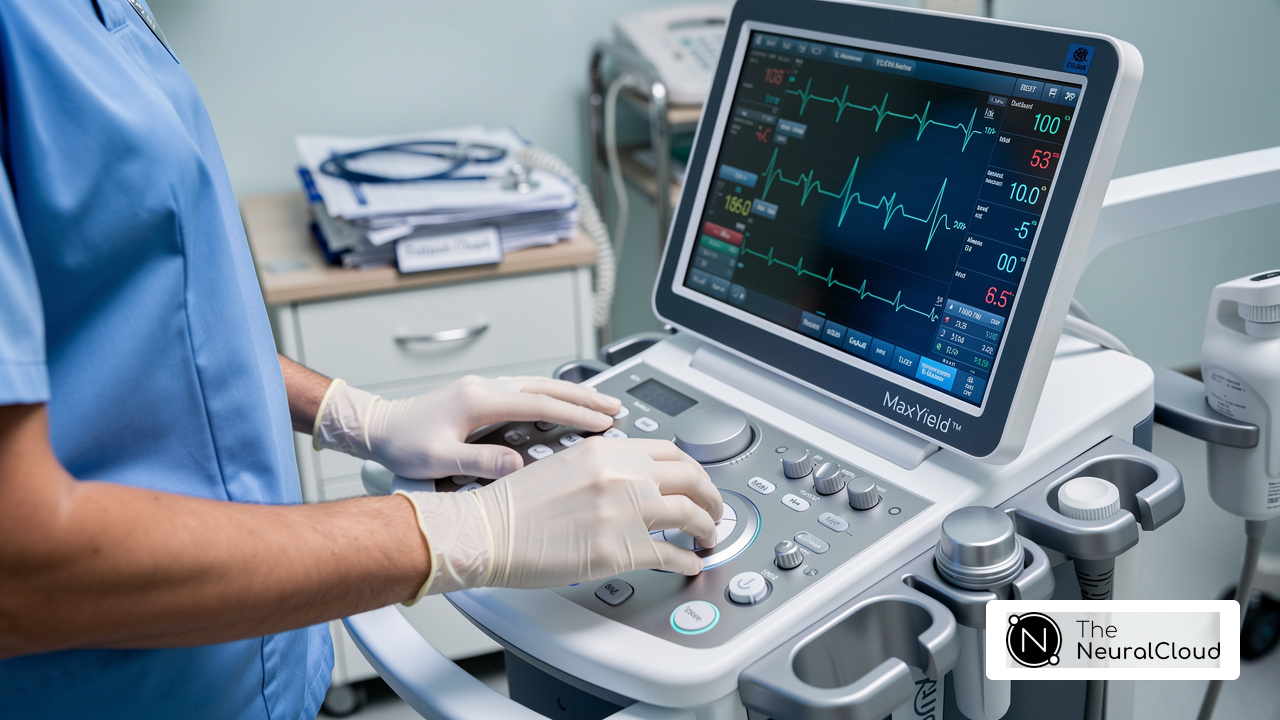
- ECG Analysis Software: MaxYield from Neural Cloud Solutions automates ECG analysis, providing accurate pulse computations and visual representations. This software enhances workflow efficiency and diagnostic accuracy, making it an essential tool for healthcare professionals.
- Mobile Apps: Applications like PMcardio utilize AI-powered ECG interpretation, enabling rapid assessments in dynamic healthcare settings. These mobile solutions are particularly beneficial for professionals who need quick insights while on the move.
- Online Tutorials and Courses: Platforms such as LITFL and dedicated YouTube channels offer valuable visual aids and structured guides for ECG interpretation, reinforcing learning through engaging content.
- Practice ECG Strips: Resources that provide practice ECG strips, such as SkillStat, allow for hands-on learning. These platforms offer quizzes and exercises to test and refine your skills in real-time.
By integrating these resources, healthcare professionals can elevate their ECG analysis skills, ultimately leading to better patient outcomes.

Conclusion
Understanding ECGs can be daunting due to the intricate details involved in heart rate calculation. This guide has outlined the key components of ECGs and effective methods for calculating heart rate, addressing common challenges along the way. By grasping the details of the P wave, QRS complex, and T wave, and using techniques like the 1500 Method, 300 Method, and Six-Second Method, practitioners can enhance their assessment accuracy.
Key insights include:
- The importance of selecting appropriate methods based on rhythm consistency
- The value of advanced tools like MaxYield™ to mitigate noise and enhance signal clarity
- Recognizing and addressing common issues such as irregular rhythms, poor signal quality, and incorrect paper speed, which is crucial for reliable heart rate calculations
- Utilizing available resources, from software to online tutorials, to further bolster skills in ECG interpretation
In conclusion, the ability to accurately assess heart rate from ECG readings not only supports clinical decision-making but also plays a vital role in improving patient outcomes. By mastering these techniques, healthcare professionals can significantly enhance their diagnostic accuracy and patient care.
Frequently Asked Questions
What is an ECG and why is it important?
An ECG (electrocardiogram) records the electrical activity of the heart and is vital for accurately determining pulse rate.
What are the main components of an ECG?
The main components of an ECG are the P wave, QRS complex, and T wave. The P wave represents atrial depolarization, the QRS complex signifies ventricular depolarization, and the T wave indicates ventricular repolarization.
How is heart rhythm measured?
Heart rhythm (HR) is measured in beats per minute (BPM) and can be calculated by analyzing the intervals between the waves in an ECG, particularly focusing on the R waves within the QRS complex.
How can healthcare professionals enhance their diagnostic capabilities using ECG?
By mastering the components of an ECG, healthcare professionals can improve their diagnostic capabilities and enhance patient outcomes.
What is MaxYield™ and how does it assist in ECG analysis?
MaxYield™ is an advanced AI-driven ECG analysis tool that helps turn noisy recordings into clear insights, ensuring clean data and hospital-grade accuracy from consumer-grade devices.
What benefits does MaxYield™ provide for pulse calculations and clinical decision-making?
MaxYield™ improves the dependability of pulse calculations and aids assured clinical decision-making in remote patient monitoring.
List of Sources
- Understand ECG Basics and Heart Rate Fundamentals
- AI Screening for Atrial Fibrillation Shows 90% Accuracy at HRS (https://mddionline.com/cardiovascular/ai-powered-atrial-fibrillation-detection-how-machine-learning-is-transforming-cardiac-care-through-ecg-analysis)
- Smartwatches Help Detect Hidden Dangerous Heart Rhythm Problems, Clinical Trial Finds (https://usnews.com/news/health-news/articles/2026-01-23/smartwatches-help-detect-hidden-dangerous-heart-rhythm-problems-clinical-trial-finds)
- foxnews.com (https://foxnews.com/health/wearables-detect-heart-problems-early-doctor-breaks-real-data)
- AI-powered electrocardiogram detects early signs of heart failure (https://utsouthwestern.edu/newsroom/articles/year-2026/may-ai-powered-electrocardiogram.html)
- Explore Methods for Calculating Heart Rate from ECG
- simplenursing.com (https://simplenursing.com/six-second-method-calculate-heart-rate-ecg)
- escardio.org (https://escardio.org/communities/working-groups/e-cardiology/news/editorial---april-2026)
- emjreviews.com (https://emjreviews.com/cardiology/news/ai-ecg-model-predicts-cardiac-arrest-early)
- Heart Rhythm 2026 to feature late-breaking EP data, hands-on training and more (https://cardiovascularbusiness.com/topics/clinical/heart-rhythm/heart-rhythm-2026-feature-late-breaking-ep-data-hands-training-and-more)
- escardio.org (https://escardio.org/news/press/press-releases/using-artificial-intelligence-to-calculate-the-heart-s-biological-age-through-ecg-data-predicts-increased-risk-of-mortality-and-cardiovascular-events)
- theneuralcloud.com (https://theneuralcloud.com/post/master-how-to-calculate-heart-rate-from-ecg-in-4-simple-steps)
- CV Physiology | Determining Heart Rate from the Electrocardiogram (https://cvphysiology.com/arrhythmias/a020)
- ECG Rate Interpretation (https://litfl.com/ecg-rate-interpretation)
- Troubleshoot Common Issues in ECG Heart Rate Calculation
- Smartwatches Help Detect Hidden Dangerous Heart Rhythm Problems, Clinical Trial Finds (https://usnews.com/news/health-news/articles/2026-01-23/smartwatches-help-detect-hidden-dangerous-heart-rhythm-problems-clinical-trial-finds)
- New Clinical Trial Finds Human Oversight ECG Monitors Outperform AI-Dependent Monitoring - HRS (https://hrsonline.org/news/human-oversight-ecg-monitors-outperform-ai-dependent-monitoring)
- powershealth.org (https://powershealth.org/about-us/newsroom/health-library/2026/01/23/smartwatches-help-detect-hidden-dangerous-heart-rhythm-problems-clinical-trial-finds)
- npr.org (https://npr.org/2023/10/24/1208344606/ai-could-help-detect-irregular-heart-rhythms-in-ekgs-that-humans-cant-see)
- triblive.com (https://triblive.com/news/health-now/in-a-heartbeat-upmcs-dr-saba-helps-ground-against-the-shock-of-abnormal-ekgs)
- Computerized Electrocardiogram Rhythm Errors Common, NewYork-Presbyterian/Weill Cornell Study Finds | NYP (https://nyp.org/news/computerized-electrocardiogram-rhythm-errors-common-nyp)
- finance.yahoo.com (https://finance.yahoo.com/sectors/healthcare/articles/ehra-2026-studies-reveal-why-120000143.html)
- selfimed.com (https://selfimed.com/zh/blogs/news/overcoming-obstacles-accurate-cardiac-health-records-2026?srsltid=AfmBOoplDbB8OKdPyTWhKIBp_cy2loLF8x_q2WgC4N9YTbue3GdmX80B)
- pmc.ncbi.nlm.nih.gov (https://pmc.ncbi.nlm.nih.gov/articles/PMC9840097)
- To fix a patient's irregular heartbeat, doctors first tested its digital 'twin' (https://apnews.com/article/heart-disease-arrhythmia-ventricular-tachycardia-73086c0c3df8758380bef539940fa826)
- pmc.ncbi.nlm.nih.gov (https://pmc.ncbi.nlm.nih.gov/articles/PMC12137353)
- Utilize Tools and Resources for Enhanced ECG Analysis
- businesswire.com (https://businesswire.com/news/home/20260507798318/en/AccurKardias-AK-Guard-Named-Best-New-ECG-Technology-Solution-By-MedTech-Breakthrough)
- PMcardio: AI ECG & Cardiac Care Platform (https://powerfulmedical.com)
- How AI is impacting electrocardiography and ECG interpretation for a more accurate diagnosis of cardiovascular diseases (https://tempus.com/resources/content/articles/ai-revolution-electrocardiography-ecg-ai-insights)
- finance.yahoo.com (https://finance.yahoo.com/sectors/healthcare/articles/accurkardia-ak-guard-named-best-141500973.html)