Introduction
Interpreting cardiac strips is essential for healthcare professionals, yet many struggle with the complexities involved. These visual representations of the heart's electrical activity reveal essential information about a patient's condition. Getting a handle on these strips boosts diagnostic accuracy and can make a real difference in patient outcomes, particularly in emergency and cardiology situations. Yet, many clinicians struggle with these complex patterns, which can lead to misdiagnoses.
How can healthcare providers overcome these hurdles and confidently interpret cardiac strips? This guide presents a simple five-step method to clarify the process and help professionals boost their ECG analysis skills.
Understand Cardiac Strips: Definition and Importance
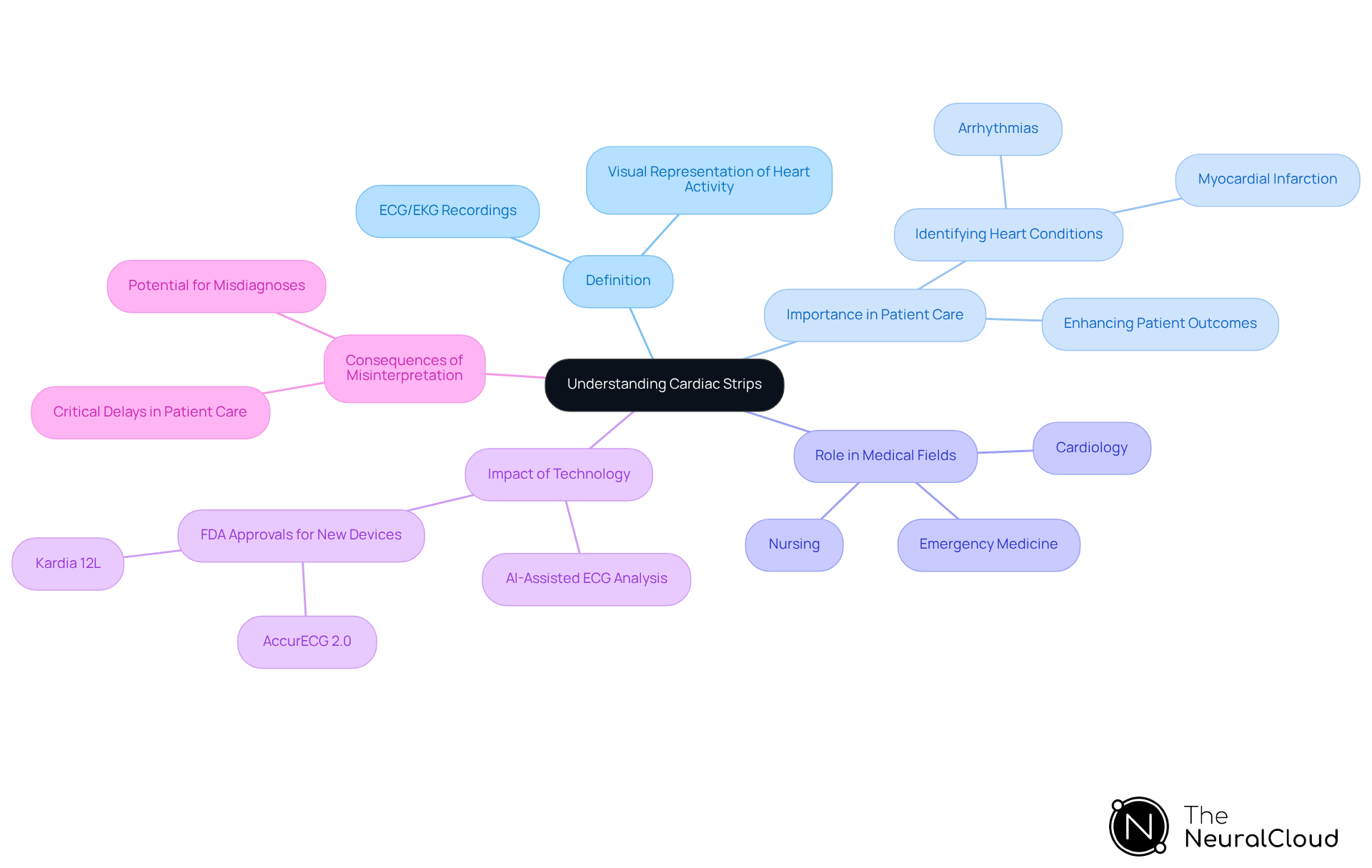
Understanding the complexities of ECG analysis is vital for effective patient care in various medical fields. Cardiac recordings, commonly referred to as ECG or EKG recordings, visually represent the heart's electrical activity over time. These bands are essential in identifying various heart conditions, providing insights into rhythms, rates, and possible irregularities. Being skilled at analyzing heart rhythm patterns is essential for healthcare professionals, as precise readings can enable prompt actions and greatly enhance patient outcomes. In emergency medicine, cardiology, and nursing, understanding how to read cardiac strips effectively is a foundational skill, highlighting their essential role in heart diagnostics.
In light of recent studies, the importance of ECG in clinical settings has become even more pronounced. For example, studies show that AI-assisted ECG analysis can enhance decision-making tools, improving early detection and treatment of heart events. These findings underscore the critical need for accurate ECG readings in clinical practice, as discrepancies in analysis can lead to misdiagnoses and delayed care.
Understanding how to read cardiac strips is essential not only for urgent patient treatment but also for continuous learning and instruction in ECG analysis. Misinterpretations of ECG readings can lead to critical delays in patient care. As the field progresses, the integration of advanced technologies will significantly boost the accuracy and reliability of ECG diagnostics, ensuring that healthcare professionals are equipped to provide the best possible care. This evolution in technology will empower healthcare professionals to deliver timely and accurate patient care.
Follow the 5-Step Method to Read Cardiac Strips
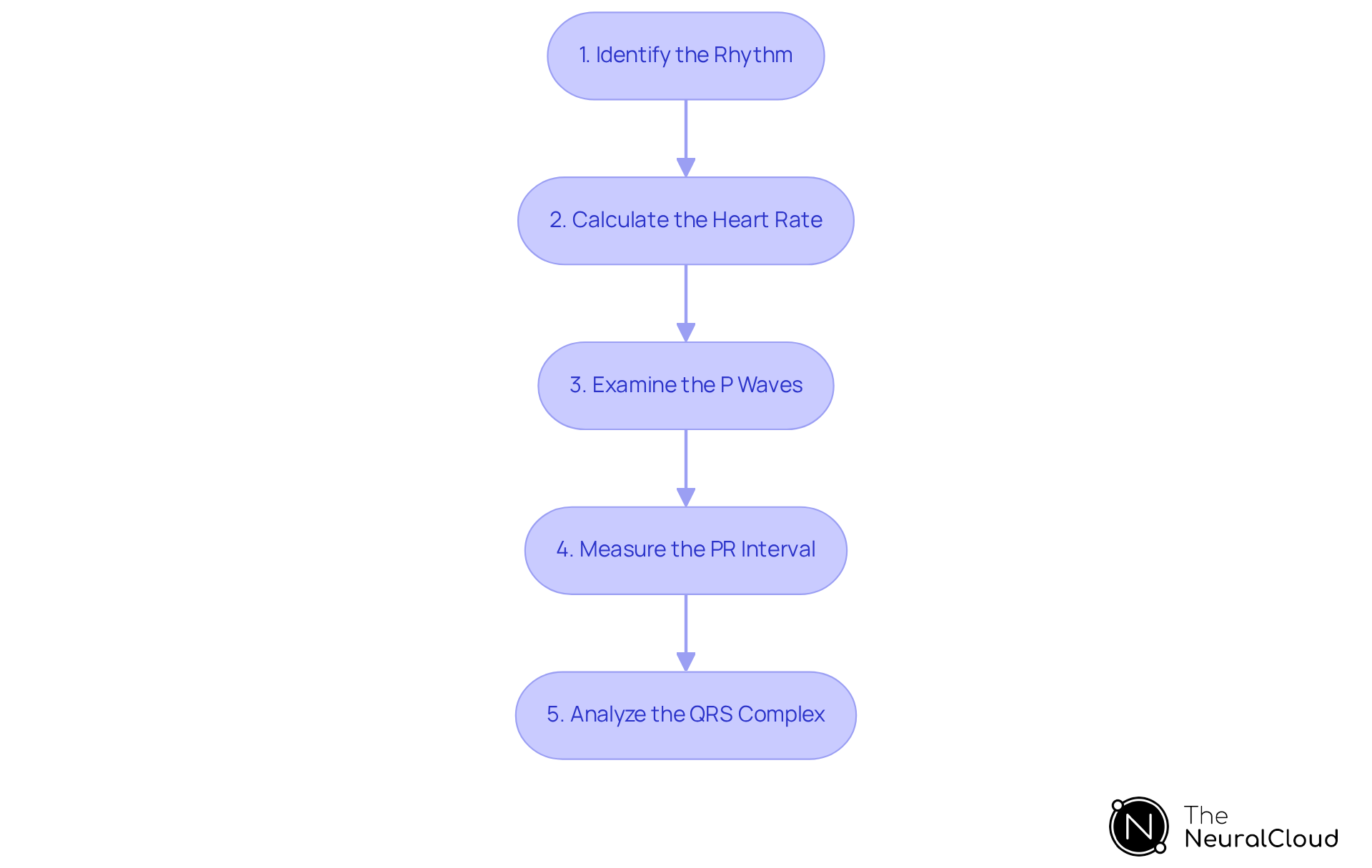
To read cardiac strips effectively, follow these five steps:
- Identify the Rhythm: Determine if the rhythm is regular or irregular by examining the consistency of the R-R intervals. A rhythm is considered irregular if the variance in the tracing exceeds 0.12 seconds or more than three small squares.
- Calculate the Heart Rate: Count the number of R waves in a 10-second segment and multiply by 6 to obtain the beats per minute (bpm). This quick calculation helps assess the heart's performance.
- Examine the P Waves: Check for the presence of P waves preceding each QRS complex. These waves should be upright and consistent in shape, indicating proper atrial activity.
- Measure the PR Interval: Assess the duration of the PR interval, which should range from 0.12 to 0.20 seconds. This measurement reflects the conduction time from the atria to the ventricles, crucial for normal heart function.
- Analyze the QRS Complex: Evaluate the width and morphology of the QRS complex. A normal QRS duration is less than 0.12 seconds. Any abnormalities may suggest conduction issues or other heart-related problems.
Many healthcare professionals struggle with the complexities of ECG interpretation, leading to potential misdiagnoses. Following these steps will teach you how to read cardiac strips with confidence. MaxYield™ automates ECG analysis and improves accuracy with advanced noise filtering, making the process much easier. Given that approximately 10 million Americans are affected by atrial fibrillation, understanding these methods is essential for timely diagnosis and treatment. Early detection and treatment of arrhythmias can significantly improve health outcomes, making ongoing evaluations crucial for patients with known arrhythmias. Integrating MaxYield™ into your practice not only enhances diagnostic accuracy but also empowers you to provide better patient care. For a deeper dive into ECG analysis, consider integrating MaxYield™ and Insight360 into your workflow to enhance diagnostic yield and clinical decision-making. We invite you to contact Neural Cloud Solutions for free trials or personalized walkthroughs of MaxYield and Insight360.
Troubleshoot Common Issues in Cardiac Strip Interpretation
Interpreting cardiac strips can be challenging due to various common issues that complicate ECG analysis:
- Irregular Rhythms: An irregular rhythm can be identified by examining the R-R intervals. Use calipers or a ruler for precise measurement to confirm irregularities. Atrial fibrillation (AFib), affecting approximately 3 million to 6 million people in the United States, is a common cause of irregular rhythms and can lead to serious complications if not recognized.
- Missing P Waves: The absence of P waves may suggest atrial fibrillation or other arrhythmias. It's essential to review the entire strip for any discernible patterns that could indicate underlying issues. Recognizing these patterns is crucial, as AFib contributes to nearly 130,000 deaths each year in the U.S.
- Wide QRS Complexes: A QRS duration exceeding 0.12 seconds may signal a bundle branch block or a ventricular rhythm. Assess the morphology of the QRS complex for additional diagnostic clues.
- Artifact Interference: External factors can introduce noise into the ECG readings. Ensure that electrodes are placed correctly and check for patient movement or electrical interference that could distort the signal.
The MaxYield platform from Neural Cloud Solutions tackles these challenges head-on with advanced noise filtering and automated labeling, making workflow much more efficient. With MaxYield streamlining the analysis process, healthcare professionals can focus on what really matters-essential evaluations-without getting bogged down by artifacts and irregularities. By grasping these issues and applying effective troubleshooting techniques, you can significantly enhance your analytical skills, leading to better patient care. For instance, a study examining ECG recordings found that 13.2% of computer-generated rhythm statements needed physician revision, underscoring the importance of manual analysis skills in clinical practice. Daniel Jennings, PA-C, points out that 'AFib is a serious heart condition affecting up to 6 million Americans each year,' highlighting just how crucial precise ECG analysis is. By honing these skills and leveraging the capabilities of MaxYield, health tech developers can better integrate ECG analysis into their solutions, ensuring accurate and reliable cardiac assessments. Additionally, utilizing Insight360 as a customizable visualization tool can transform MaxYield’s clean ECG data into interactive dashboards and clinical-ready reports, further enhancing the analysis process.

Utilize Tools and Resources for Effective Learning
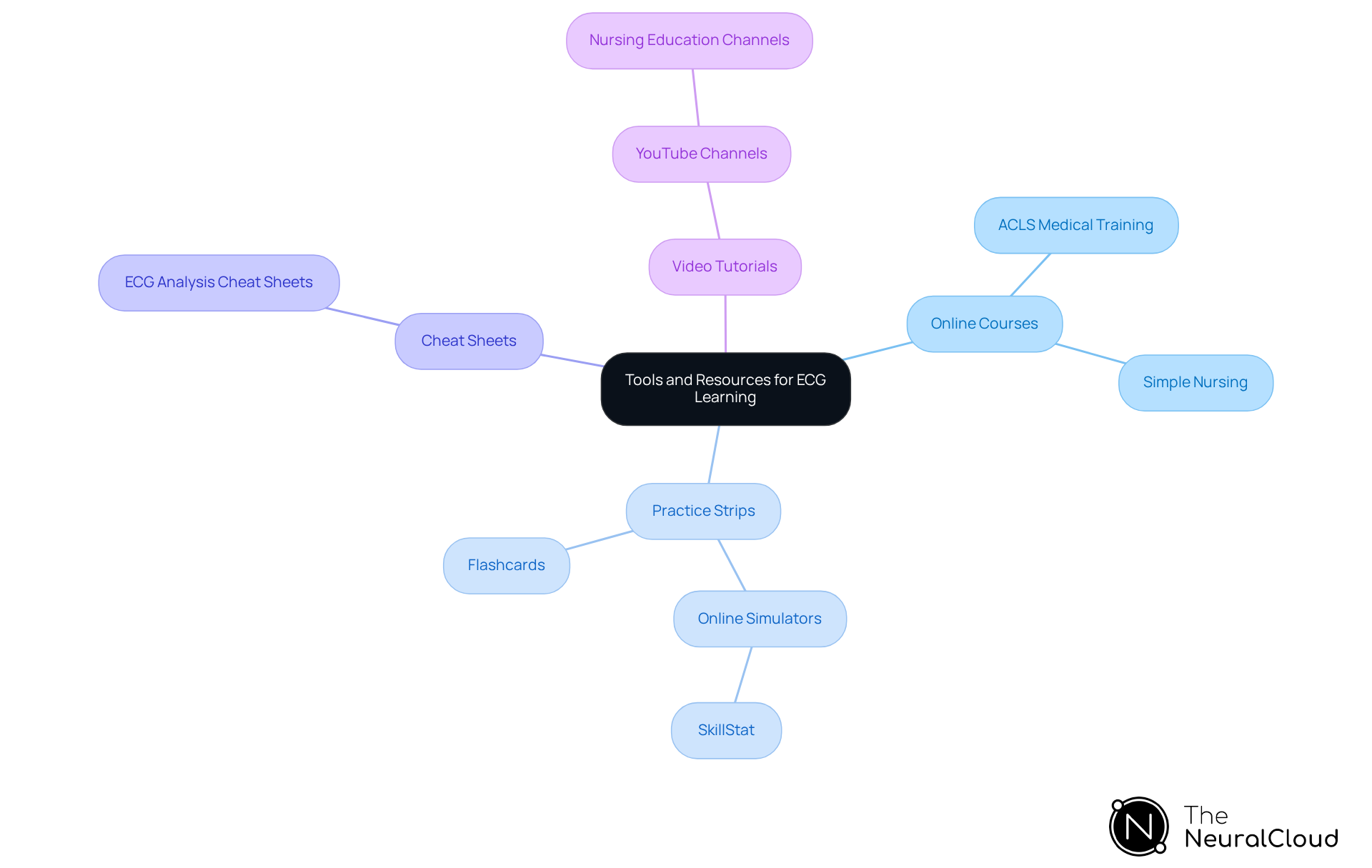
ECG analysis can be challenging, especially for those new to how to read cardiac strips and interpret cardiac rhythms and abnormalities. To further enhance your ECG interpretation skills, consider utilizing the following tools and resources:
- Online Courses: Platforms such as ACLS Medical Training and Simple Nursing offer structured courses specifically designed for ECG interpretation, providing a solid foundation in the subject.
- Practice Strips: Engage with flashcards or online simulators to practice identifying rhythms and abnormalities. Websites like SkillStat feature interactive ECG simulators that allow for hands-on learning.
- Cheat Sheets: Download ECG analysis cheat sheets for quick reference during practice or clinical settings. These resources reinforce key concepts and common rhythms, making them invaluable for both learning and review.
- Video Tutorials: Explore platforms like YouTube, which host numerous instructional videos that simplify ECG analysis into manageable segments. Seek out channels dedicated to nursing and medical education for targeted content.
By utilizing these resources, you can significantly enhance your skills in how to read cardiac strips, leading to better patient outcomes in clinical practice.
Conclusion
The ability to accurately interpret cardiac strips is essential for healthcare professionals. It directly influences patient care and outcomes. By understanding the fundamental principles of ECG analysis, clinicians can effectively identify heart conditions and respond promptly to irregularities. This guide has outlined a straightforward five-step method to interpret cardiac strips, emphasizing the importance of rhythm identification, heart rate calculation, and careful examination of waveforms.
Key insights include:
- Common challenges in ECG interpretation
- Tools available to enhance learning
From recognizing irregular rhythms to troubleshooting issues like artifact interference, the ability to accurately read cardiac strips is essential in clinical settings. By utilizing advanced technologies like MaxYield™, healthcare professionals can enhance their efficiency and accuracy in ECG analysis, allowing them to focus on delivering high-quality patient care.
In conclusion, the significance of mastering cardiac strip interpretation cannot be overstated. As the healthcare landscape evolves, continuous education and the integration of innovative tools will empower professionals to improve diagnostic accuracy and patient outcomes. By prioritizing continuous education and innovative tools, healthcare providers can significantly elevate the standard of cardiac care in Canada.
Frequently Asked Questions
What are cardiac strips and why are they important?
Cardiac strips, also known as ECG or EKG recordings, visually represent the heart's electrical activity over time. They are essential for identifying various heart conditions and provide insights into heart rhythms, rates, and possible irregularities, which are crucial for effective patient care.
Why is it important for healthcare professionals to understand how to read cardiac strips?
Understanding how to read cardiac strips is vital for healthcare professionals as precise readings can enable prompt actions, greatly enhancing patient outcomes. It is a foundational skill in emergency medicine, cardiology, and nursing.
How does AI-assisted ECG analysis impact clinical decision-making?
AI-assisted ECG analysis enhances decision-making tools, improving early detection and treatment of heart events. This underscores the critical need for accurate ECG readings in clinical practice to avoid misdiagnoses and delayed care.
What are the consequences of misinterpretations in ECG readings?
Misinterpretations of ECG readings can lead to critical delays in patient care, potentially resulting in adverse outcomes for patients.
How is technology evolving in the field of ECG diagnostics?
The integration of advanced technologies is expected to significantly boost the accuracy and reliability of ECG diagnostics, empowering healthcare professionals to deliver timely and accurate patient care.
List of Sources
- Understand Cardiac Strips: Definition and Importance
- AI-based ECG interpretation outperforms standard diagnosis of occlusive myocardial infarction (https://news-medical.net/news/20260323/AI-based-ECG-interpretation-outperforms-standard-diagnosis-of-occlusive-myocardial-infarction.aspx)
- AI-ECG Momentum and Rising Competition Reshape Diagnostic Cardiology in 2026 (https://signifyresearch.net/insights/diagnostic-cardiology-market-bouncing-into-2026)
- Accuracy of Physicians’ Electrocardiogram Interpretation (https://jamanetwork.com/journals/jamainternalmedicine/fullarticle/2771093)
- Breakthrough in heart health: A new approach to interpreting ECG data using large language models (https://eurekalert.org/news-releases/1073406)
- Follow the 5-Step Method to Read Cardiac Strips
- 5 Step Process to Rhythm Interpretation (https://code1web.com/learning-center/5-step-process-to-rhythm-interpretation)
- Atrial fibrillation estimated to affect about 1 in 22 Americans (https://nhlbi.nih.gov/news/2024/atrial-fibrillation-estimated-affect-about-1-22-americans)
- Comprehensive Guide to Arrhythmias and Heart Rhythm Disorders (https://firstcoastheart.com/conditions/heart-rhythm-disorders)
- New ECG Technology Can Derive 22-Lead Function From Five Electrodes (https://dicardiology.com/content/new-ecg-technology-can-derive-22-lead-function-five-electrodes)
- Troubleshoot Common Issues in Cardiac Strip Interpretation
- Facts and Statistics About Atrial Fibrillation (https://healthline.com/health/living-with-atrial-fibrillation/facts-statistics-infographic)
- Common Errors in ECG Interpretation – That Can Easily Be Corrected » Mayo Clinic Cardiac Monitoring (https://cardiovascularservices.mayoclinic.com/2024/05/14/common-errors-in-ecg-interpretation-that-can-easily-be-corrected)
- Computerized Electrocardiogram Rhythm Errors Common, NewYork-Presbyterian/Weill Cornell Study Finds | NYP (https://nyp.org/news/computerized-electrocardiogram-rhythm-errors-common-nyp)
- Utilize Tools and Resources for Effective Learning
- New AI Tool Beats Standard Approaches for Detecting Heart Attacks (https://upmc.com/media/news/062923-ecg-model-heart-attacks)
- Effectiveness of electrocardiogram interpretation education program using mixed learning methods and webpage - BMC Medical Education (https://link.springer.com/article/10.1186/s12909-024-05960-8)
- One moment, please... (https://hospitalnews.com/research-study-makes-heart-screening-faster-more-accessible-using-ai)
- With AI, researchers discover new way to detect sudden cardiac death risk - Berkeley News (https://news.berkeley.edu/2026/06/24/with-ai-researchers-discover-new-way-to-detect-sudden-cardiac-death-risk)