Introduction
Hyperkalemia presents a serious challenge to cardiac health, especially in older adults with chronic kidney disease. When potassium levels increase, they can disrupt the heart's electrical system, causing critical ECG changes that need immediate attention.
We’ll walk through how to analyze ECGs for hyperkalemia, helping healthcare professionals spot key QRS changes and take action quickly.
So, how can clinicians navigate the complexities of ECG interpretation to protect patients from the dangers of high potassium levels? Understanding these ECG changes is crucial for timely intervention and improved patient outcomes.
Understand Hyperkalemia and Its Cardiac Implications
Hyperkalemia, a condition marked by potassium levels exceeding 5.0 mEq/L, presents serious cardiac risks, especially in patients with chronic kidney disease (CKD). This condition disrupts the heart's electrical conduction system, leading to potentially life-threatening arrhythmias. Potassium plays a vital role in maintaining the resting membrane potential of cardiac cells. When levels rise, it can lead to altered heart rhythms. The progression of ECG changes associated with elevated potassium levels, known as hyperkalemia qrs, typically begins with peaked T waves, advances to a widening of the QRS complex, and can culminate in severe outcomes such as ventricular fibrillation or asystole.
In Canada, the occurrence of elevated potassium levels is notably high among older adults, particularly those with CKD. Studies indicate that hyperkalemia occurs in:
- 4.5-8.8% of individuals with CKD stage G3
- 23.7-34.4% in stage G5
Furthermore, around 2.6% of individuals aged 66 and older presenting to emergency departments are hyperkalemic, underscoring the need for vigilant monitoring and management.
Case studies highlight the critical nature of timely intervention. For instance, an elderly individual with a potassium level of 9.7 mEq/L exhibited significant ECG changes, including hyperkalemia qrs characterized by widened QRS duration and tall T waves, necessitating immediate treatment to avert fatal arrhythmias. Following emergent hemodialysis, the individual's potassium levels normalized, and ECG findings returned to baseline, demonstrating the effectiveness of prompt management.
Expert opinions emphasize the significance of early identification of the cardiac implications of elevated potassium levels. Continuous ECG monitoring is crucial for detecting potential complications, especially in individuals with concurrent metabolic acidosis. Managing elevated potassium levels requires a multifaceted approach, including regular potassium level checks and adherence to clinical protocols that prioritize rapid diagnosis and intervention. Implementing a proactive management strategy is essential to safeguard against the severe cardiac consequences of hyperkalemia.

Identify Key QRS Changes in Hyperkalemia
Diagnosing hyperkalemia QRS presents unique challenges, particularly as the QRS complex undergoes critical changes that must be accurately interpreted. Initially, the QRS may appear normal; however, as potassium levels rise, several key changes can be observed:
-
Widening of the QRS Complex: This typically occurs when potassium levels exceed 6.5 mEq/L. The widening can mimic conditions such as right bundle branch block (RBBB) or ventricular tachycardia (VT). Significantly, 71% of individuals with potassium levels exceeding 6.5 mEq/L display ECG variations, highlighting the necessity of closely monitoring these levels.
-
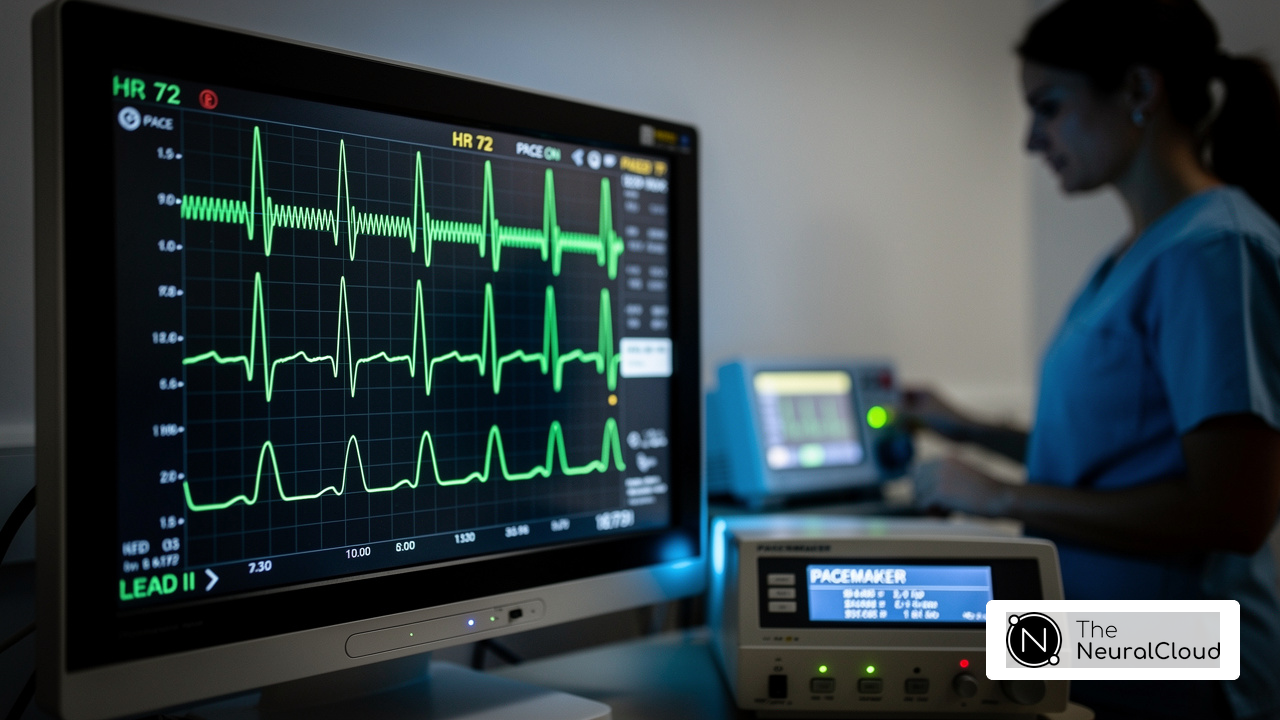
Sine Wave Pattern: In severe cases of hyperkalemia QRS, the QRS complex may merge with the T wave, resulting in a sine wave appearance. This pattern is a critical indicator of impending cardiac arrest and necessitates immediate medical intervention. For example, an individual with a potassium level of 9.0 mEq/L exhibited classic findings and a brief sine wave on the ECG, emphasizing the urgency of identifying this alteration.
-
Prolonged QRS Duration: As hyperkalemia QRS advances, the QRS duration can exceed 200 ms, indicating severe conduction delay. This alteration is important, as 39% of individuals with severe potassium elevation (>7 mEq/L) exhibit multiple ECG variations, highlighting the necessity for prompt intervention to avert negative outcomes.
Recognizing these variations can significantly impact treatment strategies and patient outcomes in instances of elevated potassium levels. With MaxYield™, Neural Cloud Solutions Inc. offers an automated ECG analysis platform that significantly enhances the interpretation of these critical changes. By mapping ECG signals through noise and isolating key features, MaxYield™ provides healthcare professionals with detailed insights into each heartbeat, enabling them to identify cardiac events with confidence. Dr. Alan Rabinowitz stresses that MaxYield™ competes with human analysis in accuracy, while Dr. Brett Heilbron points out its noise reduction advantages, which are essential in precisely evaluating conditions such as elevated potassium levels. Additionally, with FDA Class II SaMD clearance-pending status, MaxYield™ ensures compliance with regulatory standards. The integration of Insight360 enables the conversion of MaxYield’s clean ECG data into interactive dashboards and clinical-ready reports, further improving clinical decision-making and patient outcomes in the context of elevated potassium levels. By leveraging MaxYield™, healthcare professionals can enhance their diagnostic accuracy and ultimately improve patient care in cases of elevated potassium levels.

Analyze ECGs for Hyperkalemia: Step-by-Step Process
Analyzing ECGs for hyperkalemia requires a meticulous approach to ensure accurate interpretation and timely intervention:
-
Obtain a Clear ECG Recording: Ensure the ECG is free from artifacts and properly calibrated to avoid misinterpretation. MaxYield™ enhances recording clarity with advanced noise filtering and distinct wave recognition, even in challenging conditions. Additionally, MaxYield™ is pending FDA Class II SaMD clearance, ensuring regulatory compliance for clinical use.
-
Evaluate Heart Rate and Rhythm: Check for bradycardia or irregular rhythms, which may indicate hyperkalemia. Research indicates that 71% of patients with potassium levels exceeding 6.5 mmol/L display ECG alterations associated with hyperkalemia qrs, highlighting the significance of this step.
-
Evaluate the P Wave: Observe variations in amplitude and duration. In elevated potassium levels, P waves may flatten or vanish, with moderate elevation (6.5 - 7.5 mmol/L) resulting in significant changes.
-
Examine the QRS Complex: Note any widening or alterations in morphology. Pay attention to the duration, as hyperkalemia qrs with critical potassium elevation (>7.5 mmol/L) can result in profound disturbances, including the formation of a sine wave pattern, which indicates a high risk of ventricular fibrillation or asystole. With MaxYield™, automated labeling helps quickly identify these critical changes.
-
Analyze the T Wave: Identify peaked T waves, which are often the earliest sign of elevated potassium levels. Early signs of mild hyperkalemia (5.5 - 6.5 mmol/L) include tall, peaked T waves with narrow bases, particularly visible in precordial leads.
-
Document Findings: Record all observations and correlate them with the individual's clinical status and potassium levels. This method ensures a thorough ECG examination, crucial for prompt intervention and better patient outcomes. Precise recognition of ECG alterations in hyperkalemia qrs is essential, as it can greatly influence treatment choices. Additionally, for patients with hyperkalemic emergencies, especially those with end-stage kidney disease (ESKD), an urgent nephrology consult is essential to ensure appropriate management.
Insight360, a customizable visualization and reporting tool, transforms MaxYield’s clean ECG data into interactive dashboards and clinical-ready reports, enhancing the analysis process. Expert endorsements from Dr. Alan Rabinowitz, Dr. Brett Heilbron, and Dr. Marc W. Deyell highlight that MaxYield™ competes with human interpretation in accuracy and provides substantial noise reduction advantages, establishing it as an essential resource for healthcare professionals in the evaluation of ECGs for elevated potassium levels. Recognizing these ECG changes is crucial, as timely intervention can significantly alter patient outcomes in hyperkalemia cases.

Utilize Tools and Resources for Enhanced ECG Analysis
Healthcare professionals often struggle with the complexities of ECG interpretation, leading to potential misdiagnoses. Here are some valuable tools and resources to enhance your ECG analysis skills:
-
MaxYield™ ECG Interpretation Software: Implement advanced ECG interpretation software like MaxYield™, which utilizes cutting-edge AI technology to deliver automated analysis with precision rivaling human interpretation. MaxYield™ impressively identifies significant variations in ECG readings, including those linked to elevated potassium levels, while offering automated notifications for unusual results, enhancing the diagnostic process.
-
Online ECG Libraries: Utilize extensive ECG libraries, like the LITFL ECG Library, which offer a multitude of examples of elevated potassium levels ECGs for comparison and study, aiding in a deeper comprehension of waveform variations.
-
Mobile Applications: Take advantage of mobile applications specifically designed for ECG interpretation. These apps provide rapid references and guidelines for identifying hyperkalemia qrs variations, making them essential for on-the-go analysis.
-
Continuing Education Courses: Enroll in specialized courses focused on ECG interpretation and cardiac conditions. These educational opportunities can deepen your insights and enhance your practical skills in recognizing critical ECG changes.
-
Peer Collaboration: Foster collaboration with colleagues or engage in online forums to discuss challenging cases and share insights on ECG interpretation. This collaborative approach can significantly enhance learning and improve diagnostic accuracy, as evidenced by the positive outcomes reported in Canadian healthcare settings. Additionally, integrating advanced analytics platforms like MaxYield™ can further improve ECG analysis and patient outcomes. MaxYield™'s adaptive algorithm continuously evolves, enhancing diagnostic yield and accuracy over time, making it a valuable asset in your workflow. For a comprehensive visualization of your ECG data, consider using Insight360, which transforms MaxYield™’s clean ECG data into interactive dashboards and clinical-ready reports.
If you're keen to explore MaxYield™ further, Neural Cloud Solutions Inc. provides free trials and personalized walkthroughs to seamlessly integrate this powerful tool into your practice. Integrating MaxYield™ into your practice not only streamlines ECG analysis but also empowers you to make more informed clinical decisions.

Conclusion
Recognizing the complexities of hyperkalemia is essential for effective cardiac health management. This guide emphasizes the importance of recognizing QRS changes in ECG readings, which can be life-saving in managing patients with elevated potassium levels. By mastering the step-by-step analysis of ECGs, clinicians can significantly improve their diagnostic accuracy and patient outcomes.
Key insights discussed include:
- Critical ECG changes associated with hyperkalemia
- Widening of the QRS complex
- Emergence of a sine wave pattern
The guide also highlights the necessity of utilizing advanced tools like MaxYield™ and Insight360 to enhance ECG interpretation. These resources not only streamline the analysis process but also empower healthcare professionals to make informed clinical decisions swiftly.
Ultimately, the ability to accurately identify and respond to hyperkalemia QRS changes is vital in preventing severe cardiac complications. Using the tools and strategies in this guide, clinicians can sharpen their ECG interpretation skills, ensuring better management of hyperkalemia in patients. By adopting these practices, clinicians can significantly enhance patient care and outcomes in the Canadian healthcare system.
Frequently Asked Questions
What is hyperkalemia and what are its cardiac implications?
Hyperkalemia is a condition characterized by potassium levels exceeding 5.0 mEq/L, which poses serious cardiac risks, particularly in patients with chronic kidney disease (CKD). It disrupts the heart's electrical conduction system, potentially leading to life-threatening arrhythmias.
How does elevated potassium affect heart rhythms?
Elevated potassium levels alter the resting membrane potential of cardiac cells, leading to changes in heart rhythms. The progression of ECG changes associated with hyperkalemia typically starts with peaked T waves, advances to a widening of the QRS complex, and can result in severe outcomes like ventricular fibrillation or asystole.
What is the prevalence of hyperkalemia in Canada?
In Canada, hyperkalemia is notably prevalent among older adults, especially those with CKD. Studies show that hyperkalemia occurs in 4.5-8.8% of individuals with CKD stage G3 and 23.7-34.4% in stage G5. Additionally, about 2.6% of individuals aged 66 and older presenting to emergency departments are hyperkalemic.
Can you provide an example of a case involving hyperkalemia?
A case study highlighted an elderly individual with a potassium level of 9.7 mEq/L, who exhibited significant ECG changes, including widened QRS duration and tall T waves. Immediate treatment was necessary to prevent fatal arrhythmias. After emergent hemodialysis, the individual's potassium levels normalized, and ECG findings returned to baseline.
What is the importance of early identification and management of hyperkalemia?
Early identification of the cardiac implications of elevated potassium levels is crucial. Continuous ECG monitoring is essential for detecting potential complications, especially in individuals with concurrent metabolic acidosis. Managing elevated potassium levels requires regular checks and adherence to clinical protocols for rapid diagnosis and intervention.
What strategies are recommended for managing elevated potassium levels?
A multifaceted approach is recommended for managing elevated potassium levels, which includes regular potassium level checks and implementing clinical protocols that prioritize rapid diagnosis and intervention. A proactive management strategy is essential to prevent severe cardiac consequences associated with hyperkalemia.
List of Sources
- Understand Hyperkalemia and Its Cardiac Implications
- Severe Hyperkalemia With Cardiac Conduction Abnormalities in a 92-Year-Old Woman: First Reported Case in Illinois, United States - PMC (https://pmc.ncbi.nlm.nih.gov/articles/PMC12664752)
- The Burden of Hyperkalemia in Patients With Cardiovascular and Renal Disease | AJMC (https://ajmc.com/view/a577_nov15_hyperkalemia)
- Identify Key QRS Changes in Hyperkalemia
- EM Cases | ECG Cases 10: hyperkalemia (https://emergencymedicinecases.com/ecg-cases-10-hyperkalemia-the-great-imitator)
- Hyperkalaemia (https://litfl.com/hyperkalaemia-ecg-library)
- ECG Changes in Hyperkalemia | Patient Care Online (https://patientcareonline.com/view/ecg-changes-hyperkalemia)
- Hyperkalemia ECG Changes: Peaked T Waves (https://powerfulmedical.com/blog/hyperkalemia-ecg-critical-changes)
- Changes in ECG in Acute versus Chronic Hyperkalemia | Docwire News (https://docwirenews.com/post/changes-in-ecg-in-acute-versus-chronic-hyperkalemia)
- Analyze ECGs for Hyperkalemia: Step-by-Step Process
- Hyperkalemia ECG Changes: Peaked T Waves (https://powerfulmedical.com/blog/hyperkalemia-ecg-critical-changes)
- Hyperkalemia – Diagnosis and Treatment : Emergency Care BC (https://emergencycarebc.ca/clinical_resource/clinical-summary/hyperkalemia-diagnosis-and-treatment)
- Changes in ECG in Acute versus Chronic Hyperkalemia | Docwire News (https://docwirenews.com/post/changes-in-ecg-in-acute-versus-chronic-hyperkalemia)
- Empowering Insights: ECG in Hyperkalemia Explained (https://tricog.com/how-to-interpret-ecg-in-hyperkalemia?srsltid=AfmBOopXlxLoncQQq_E8wP6e1v4bZZ4pToBXDG3aqbZNQIrbpXLq8E4A)
- Empowering Insights: ECG in Hyperkalemia Explained (https://tricog.com/how-to-interpret-ecg-in-hyperkalemia?srsltid=AfmBOor_QZdDmNtaAgSiK4JpkljlLW6Skr2nean-i-gwr7pDvOHDZlkA)
- Utilize Tools and Resources for Enhanced ECG Analysis
- Researchers use deep learning, ECGs to detect hyperkalemia (https://cardiovascularbusiness.com/topics/cardiac-imaging/electrocardiography-ecg/deep-learning-ecgs-detect-hyperkalemia)
- MedTech Breakthrough Names AI-powered Hyperkalemia Detection Software 'Best New ECG Technology Solution' (https://dicardiology.com/content/medtech-breakthrough-names-ai-powered-hyperkalemia-detection-software-best-new-ecg)
- AI-Enhanced Detection of Hyperkalemia: A Validation Study | Nephrology Times (https://docwirenews.com/post/ai-enhanced-detection-of-hyperkalemia-a-validation-study)