Introduction
Junctional rhythm tachycardia presents significant challenges in cardiac health technology, particularly when the heart's primary pacemaker fails. This condition can lead to serious clinical complications, especially within the Canadian healthcare landscape. Health tech developers have a unique opportunity to enhance diagnostic tools and treatment protocols that address the nuances of junctional rhythms. By doing so, they can ultimately improve patient outcomes. It's crucial to explore how innovative technologies can enhance clinical practice and patient care in managing this complex cardiac issue.
Define Junctional Rhythm and Its Importance in Cardiac Health
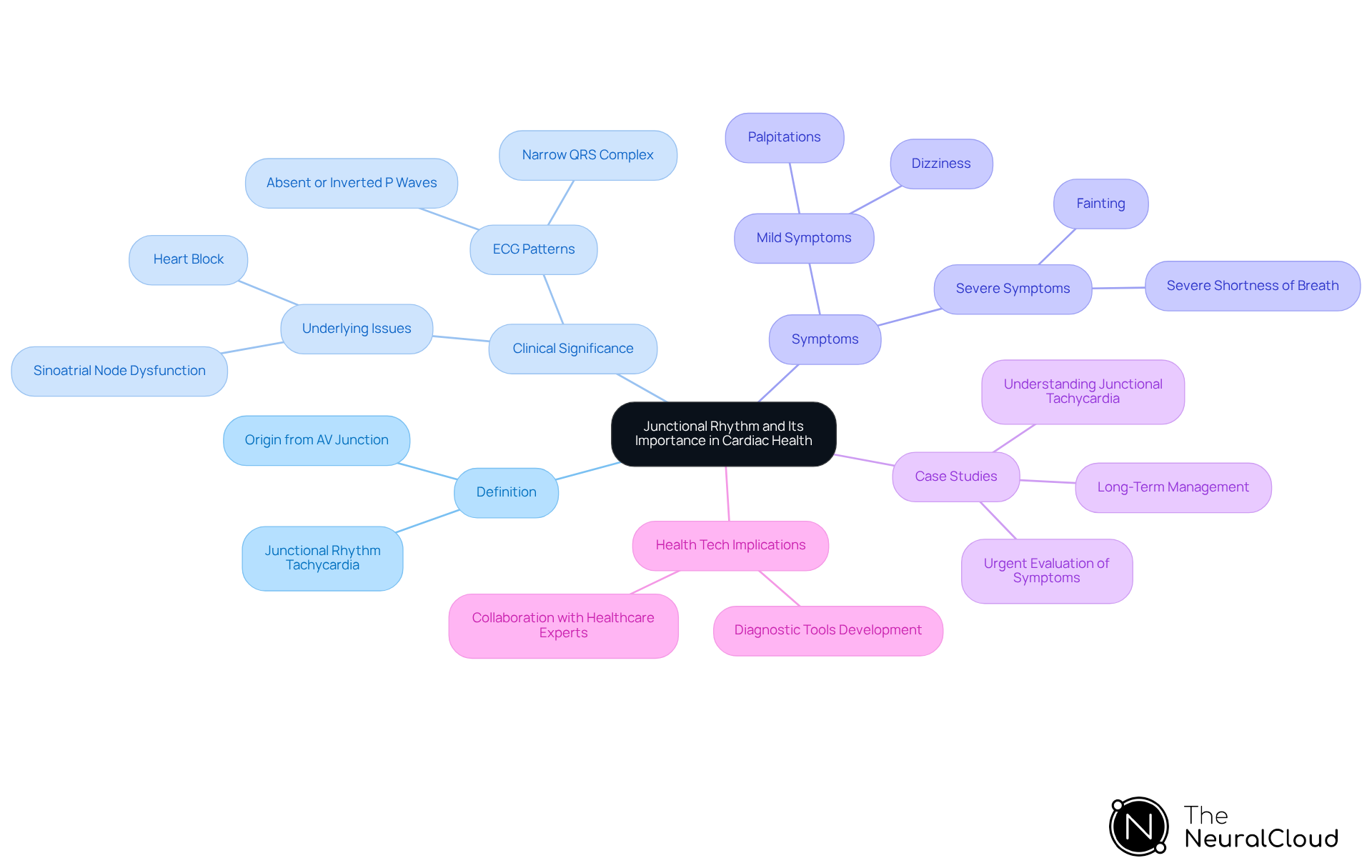
When the sinoatrial node fails to initiate impulses, the heart's rhythm can be disrupted, resulting in junctional rhythm tachycardia that poses significant clinical challenges. Junctional rhythm tachycardia originates from the atrioventricular (AV) junction and assumes the role of the primary pacemaker when the SA node is inactive. This pattern is clinically significant. It can indicate underlying cardiac issues like sinoatrial node dysfunction or heart block. In Canada, specific heart patterns are frequently identified through electrocardiograms (ECGs), which show absent or inverted P waves and a narrow QRS complex. Understanding these patterns is crucial for assessing their effects on cardiac health.
The clinical effects of junctional patterns can vary widely, with symptoms ranging from palpitations to fainting. For example, tachycardia, a faster heart rate, may present mild symptoms in some individuals while being more serious in others, depending on the underlying cause and heart rate. In cases where symptoms like severe shortness of breath or fainting occur, urgent medical evaluation is necessary. However, these patterns are generally considered harmless in the absence of structural heart disease, and treatment is usually not required unless symptoms arise.
Case studies highlight the importance of recognizing junctional patterns in clinical practice. Individuals with junctional rhythm tachycardia may experience different symptoms, necessitating careful observation and assessment to determine their impact on overall health. Managing these cases often means looking at underlying triggers, like medication effects or previous heart surgeries, and may involve advanced interventions for recurrent cases.
For health tech developers, understanding junctional patterns is essential for creating effective diagnostic tools and treatment protocols. By combining insights from clinical practice and care management, developers can enhance treatment in cardiology, ultimately improving outcomes for individuals with junctional patterns. Collaboration between healthcare experts and tech developers is key to improving how we manage these patterns, ensuring that patients receive timely and suitable care.
Explore Types of Junctional Rhythms and Their Clinical Significance
Understanding junctional rhythm tachycardia is crucial for accurate ECG analysis and effective patient management. Junctional rhythms can be classified into several types based on their rate and characteristics, each with distinct clinical implications:
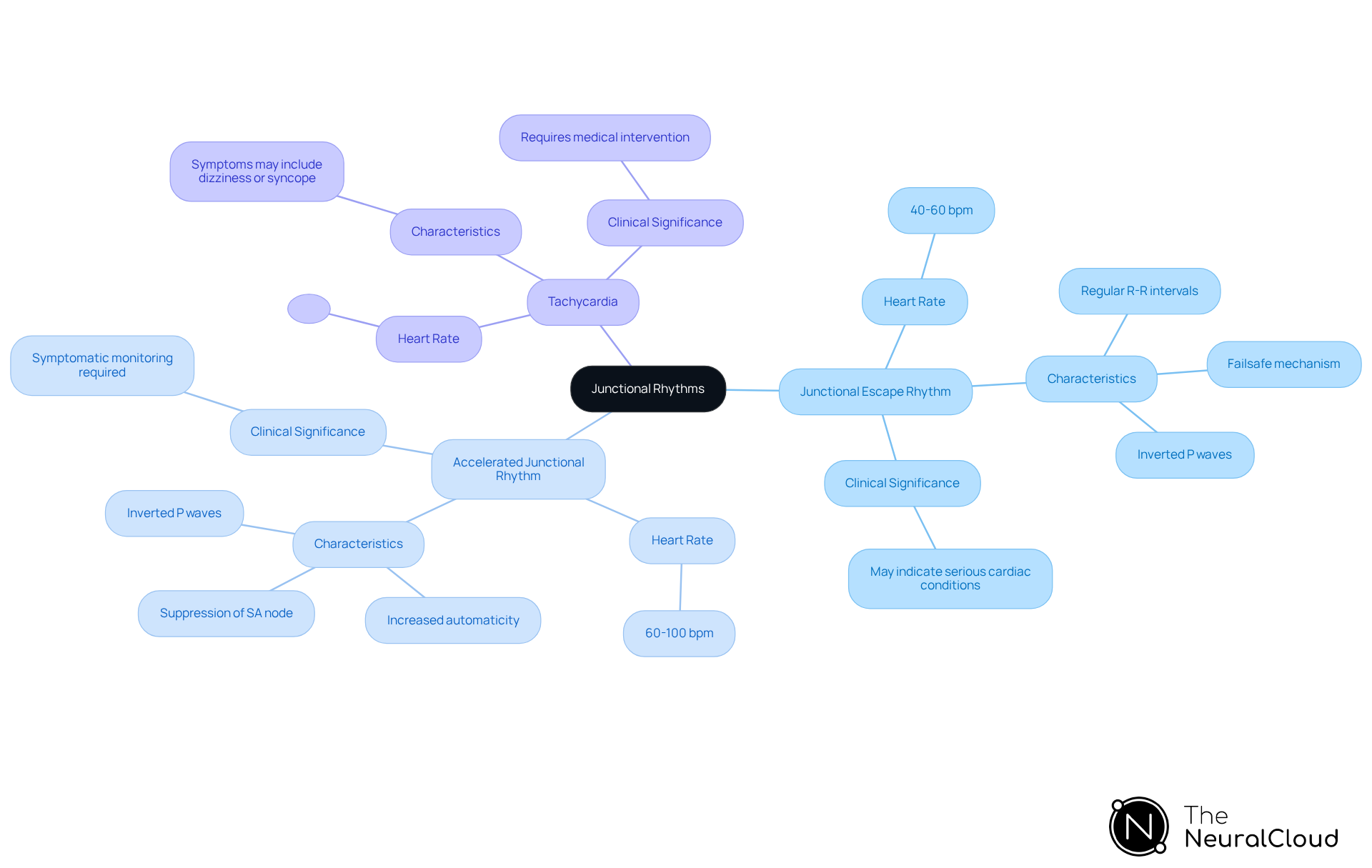
- Junctional Escape Rhythm: Occurring at a rate of 40-60 beats per minute (bpm), this pattern acts as a failsafe mechanism when the sinoatrial (SA) node fails. While often benign, persistent junctional escape rhythms may signal serious cardiac conditions that require thorough investigation.
- Accelerated Junctional Rhythm: Characterized by a heart rate of 60-100 bpm, this rhythm results from increased automaticity of the atrioventricular (AV) junction. It can be symptomatic, necessitating careful monitoring and potential intervention depending on the patient's condition.
- Tachycardia: Defined by a heart rate exceeding 100 bpm, this type of tachycardia can present with symptoms such as dizziness or syncope and often requires medical intervention. Understanding this pattern is vital for health tech developers because it influences treatment decisions and the design of monitoring technologies.
Each type of junctional rhythm tachycardia presents unique challenges and opportunities for health technology aimed at improving patient outcomes. Effective management strategies may include observation, medication adjustments, or even pacemaker implantation in symptomatic cases. Recent studies in Canada underscore the significance of precise diagnosis and management of these rhythms, emphasizing the necessity for advanced tools that can improve diagnostic accuracy and optimize care. By integrating advanced technologies like MaxYield, healthcare professionals can enhance their diagnostic capabilities and improve patient outcomes in cardiovascular care.
Identify Causes and Symptoms of Junctional Tachycardia
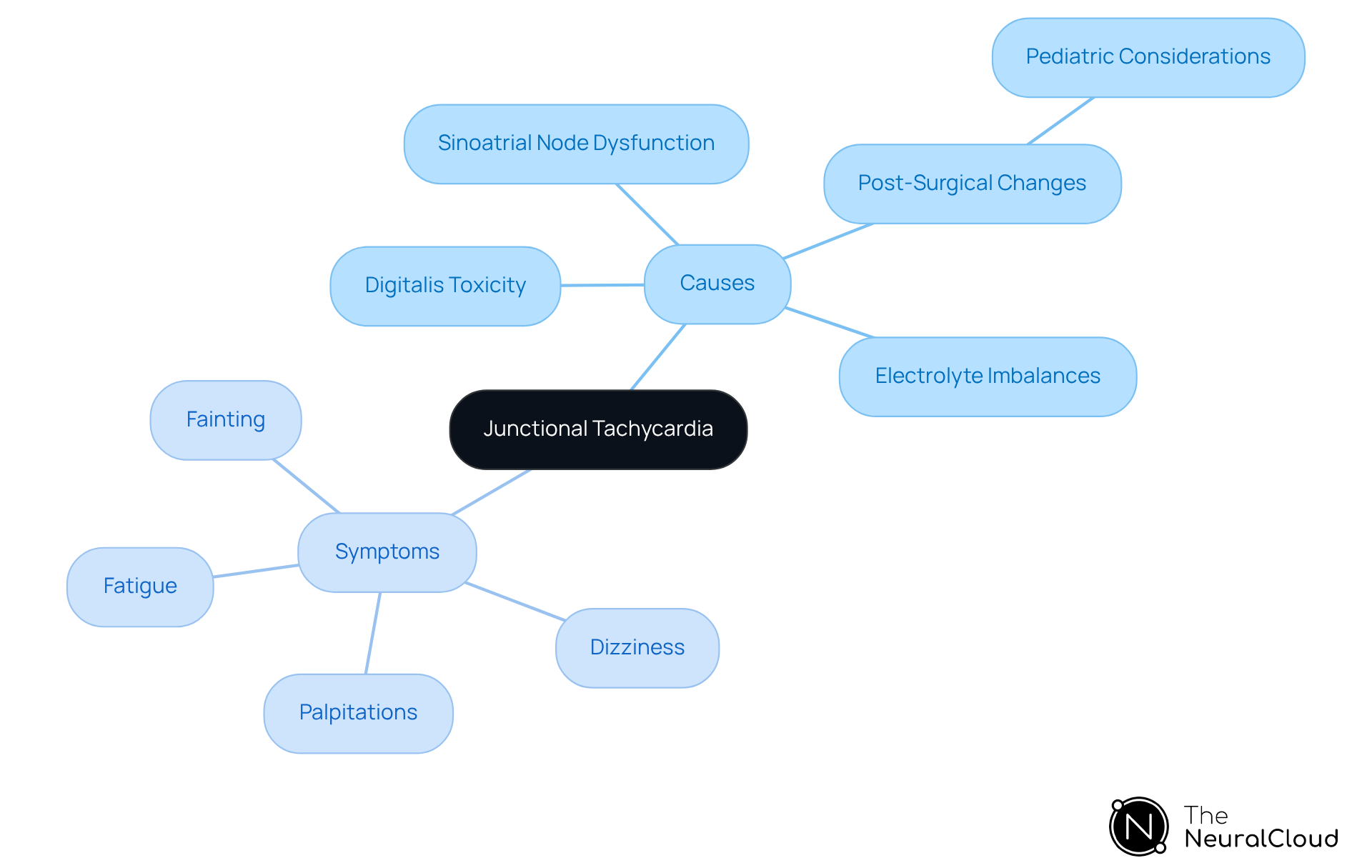
Junctional rhythm tachycardia presents significant challenges in cardiac care, stemming from various underlying causes that require careful monitoring. These causes include:
- Sinoatrial Node Dysfunction: When the sinoatrial (SA) node fails to function properly, the atrioventricular (AV) junction may take over, leading to junctional tachycardia.
- Digitalis Toxicity: This condition is particularly common in individuals undergoing digoxin therapy, where toxicity can increase the automaticity of the AV junction.
- Post-Surgical Changes: Patients who have undergone cardiac surgery may experience a rapid heart rate due to irritation or injury to the AV node, often observed within 2 to 3 days post-operation. Notably, ectopic rapid heart rate can arise in pediatric patients within the first four days after surgery, highlighting the necessity for careful observation in this group.
- Electrolyte Imbalances: Abnormal levels of potassium or magnesium can disrupt normal cardiac function, leading to irregular rhythms.
Common symptoms include palpitations, dizziness, fatigue, and in severe cases, fainting, highlighting the need for prompt evaluation. Recent findings indicate that junctional rhythm tachycardia is more prevalent in pediatric individuals following cardiac surgery, with secondary junctional rhythm tachycardia occurring in 5% to 11% of children after surgery for congenital heart issues. Understanding these causes and symptoms is essential for health tech developers to devise solutions that can precisely monitor and manage these conditions, ultimately enhancing care.
Neural Cloud Solutions Inc.'s MaxYield™ platform addresses these challenges by leveraging a Continuous Learning Model that evolves with each use, enhancing ECG analysis accuracy and efficiency. Dr. Alan Rabinowitz emphasizes that 'MaxYield’s precision rivals human interpretation, significantly reducing noise and improving diagnostic yield.' This capability is crucial for developing effective health tech solutions. As highlighted by Yamama Hafeez, 'Recognition of underlying causes allows for focused management strategies,' which is crucial for healthcare professionals in providing optimal care. By addressing these challenges, healthcare professionals can significantly enhance patient care and outcomes in those affected by junctional rhythm tachycardia.
Diagnose and Manage Junctional Tachycardia Effectively
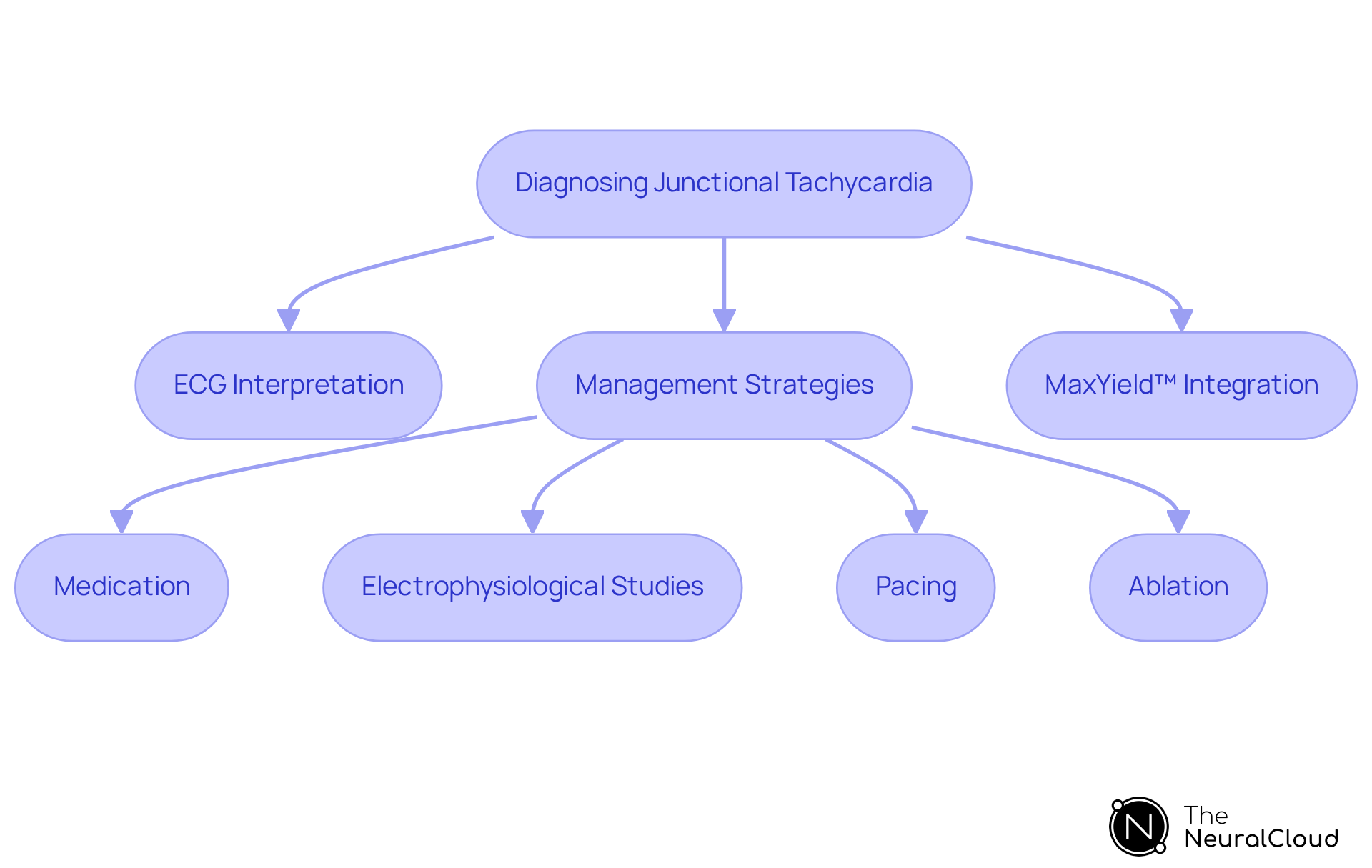
Diagnosing rapid heartbeats presents significant challenges, particularly in accurately interpreting ECG readings. The identification of a specific type of rapid heartbeat relies heavily on electrocardiography (ECG). ECG readings display distinctive traits, such as absent or inverted P waves and narrow QRS complexes, often associated with junctional rhythm tachycardia. Once diagnosed, management strategies may include:
- Medication: Beta-blockers or calcium channel blockers are often used to control heart rate and alleviate symptoms.
- Electrophysiological Studies: In cases where the cause is unclear or symptoms are severe, electrophysiological studies may be conducted to assess the conduction system of the heart.
- Pacing: Temporary pacing may be necessary for individuals with symptomatic rapid heart rate, especially if they are hemodynamically unstable.
- Ablation: In persistent cases, catheter ablation may be considered to eliminate the abnormal pacemaker activity.
Understanding these diagnostic and management strategies allows health tech developers to create tools that enable timely and effective interventions. This ultimately enhances patient outcomes in managing tachycardia. Leveraging MaxYield™, a device-agnostic ECG intelligence layer from Neural Cloud Solutions Inc., can significantly enhance this process. MaxYield™ automates ECG analysis, delivering rapid and accurate insights that can match human interpretation. It also reduces noise, which helps in clearly identifying junctional rhythm tachycardia. Dr. Alan Rabinowitz and Dr. Brett Heilbron highlight how MaxYield™'s precision and noise reduction really change the game in cardiac diagnostics. By integrating MaxYield™ into their platforms, developers can ensure that healthcare professionals have access to the most reliable data for clinical decision-making. It's also worth noting that MaxYield™ is pending FDA Class II SaMD clearance, which ensures it meets regulatory standards and boosts its credibility in clinical settings.
Conclusion
The complexities of junctional rhythm tachycardia present significant challenges for health tech developers in cardiac care. This failure complicates timely diagnosis and effective treatment, posing risks to patient health. Let’s explore the various types of junctional rhythms, their clinical significance, and what causes junctional tachycardia. It emphasizes the necessity for precise diagnosis through ECG analysis and highlights the importance of tailored management strategies, including medication and advanced interventions. The integration of innovative technologies like MaxYield™ from Neural Cloud Solutions Inc. can significantly enhance the accuracy of ECG interpretations, thereby facilitating timely and effective patient care.
In conclusion, the insights presented underscore the critical role of collaboration between healthcare professionals and tech developers in addressing the complexities of junctional rhythm tachycardia. The future of cardiac health hinges on the successful integration of technology and clinical expertise, ensuring patients receive timely and effective care.
Frequently Asked Questions
What is junctional rhythm and why is it important in cardiac health?
Junctional rhythm occurs when the sinoatrial node fails to initiate impulses, leading to a disruption in the heart's rhythm. It originates from the atrioventricular (AV) junction and becomes the primary pacemaker when the SA node is inactive. This rhythm is clinically significant as it can indicate underlying cardiac issues such as sinoatrial node dysfunction or heart block.
How is junctional rhythm identified in Canada?
In Canada, junctional rhythm patterns are frequently identified through electrocardiograms (ECGs), which typically show absent or inverted P waves and a narrow QRS complex. Recognizing these patterns is crucial for assessing their effects on cardiac health.
What are the clinical effects and symptoms of junctional rhythm tachycardia?
The clinical effects of junctional rhythm tachycardia can vary widely, with symptoms ranging from palpitations to fainting. Tachycardia may present mild symptoms in some individuals while being more serious in others, depending on the underlying cause and heart rate. Severe symptoms like shortness of breath or fainting require urgent medical evaluation.
Is treatment necessary for junctional rhythm tachycardia?
Junctional rhythm patterns are generally considered harmless in the absence of structural heart disease, and treatment is usually not required unless symptoms arise.
What factors should be considered when managing junctional rhythm cases?
Managing junctional rhythm cases often involves looking at underlying triggers such as medication effects or previous heart surgeries. Careful observation and assessment are necessary to determine the impact on overall health.
How can health tech developers contribute to the management of junctional rhythms?
Health tech developers can enhance diagnostic tools and treatment protocols by understanding junctional patterns. Collaboration between healthcare experts and tech developers is essential for improving management strategies and ensuring timely and suitable care for patients with these patterns.
List of Sources
- Define Junctional Rhythm and Its Importance in Cardiac Health
- Can you explain if/when junctional rhythm is a serious issue? (https://texasheart.org/heart-health/heart-information-center/frequently-asked-patient-questions/can-you-explain-if-when-junctional-rhythm-is-a-serious-issue)
- Junctional Tachycardia: Symptoms, Causes, Treatment (https://acibademinternational.com/health-library/junctional-tachycardia-an-evidence-based-guide-for-patients)
- Junctional Rhythm: Background, Etiology, Pathophysiology (https://emedicine.medscape.com/article/155146-overview)
- Junctional Rhythm - StatPearls - NCBI Bookshelf (https://ncbi.nlm.nih.gov/books/NBK507715)
- Junctional Rhythm: Causes, Symptoms and Treatment (https://my.clevelandclinic.org/health/diseases/23206-junctional-rhythm)
- Explore Types of Junctional Rhythms and Their Clinical Significance
- Junctional Rhythms (https://aclscertification.org/ecg-course-advanced-junctional-rhythms)
- theneuralcloud.com (https://theneuralcloud.com/post/understanding-types-of-junctional-rhythms-for-health-tech-solutions)
- Junctional Rhythm: Causes, Symptoms and Treatment (https://my.clevelandclinic.org/health/diseases/23206-junctional-rhythm)
- Junctional tachycardia - WikEM (https://wikem.org/wiki/Junctional_tachycardia)
- Junctional Rhythm - StatPearls - NCBI Bookshelf (https://ncbi.nlm.nih.gov/books/NBK507715)
- Identify Causes and Symptoms of Junctional Tachycardia
- Junctional Tachycardia (https://webmd.com/heart-disease/junctional-tachycardia)
- Junctional Tachycardia: Symptoms, Causes, Treatment (https://acibademinternational.com/health-library/junctional-tachycardia-an-evidence-based-guide-for-patients)
- Junctional Rhythm - StatPearls - NCBI Bookshelf (https://ncbi.nlm.nih.gov/books/NBK507715)
- Junctional Rhythm: Background, Etiology, Pathophysiology (https://emedicine.medscape.com/article/155146-overview)
- Junctional Tachycardia: Causes, Symptoms and Treatment (https://my.clevelandclinic.org/health/diseases/23216-junctional-tachycardia)
- Diagnose and Manage Junctional Tachycardia Effectively
- Junctional Tachycardia: Causes, Symptoms and Treatment (https://my.clevelandclinic.org/health/diseases/23216-junctional-tachycardia)
- Diagnosis and management of supraventricular tachycardias (https://cmaj.ca/content/188/17-18/E466)
- Supraventricular tachycardia (SVT) (https://emcrit.org/ibcc/svt)
- Junctional Rhythm Treatment & Management: Approach Considerations, Medical Care, Surgical Care (https://emedicine.medscape.com/article/155146-treatment)