Introduction
Junctional tachycardia presents unique challenges for healthcare professionals, especially in Canada, where accurate diagnosis is vital for effective patient care. This guide will help you identify and manage this rapid heart rhythm, providing practical insights into ECG interpretation and effective treatment options.
Clinicians often face difficulties in distinguishing junctional tachycardia from other arrhythmias, which can lead to misdiagnosis and inappropriate treatment. Misdiagnosis can lead to ineffective treatment plans, ultimately affecting patient outcomes.
Define Junctional Tachycardia: Key Characteristics and Importance
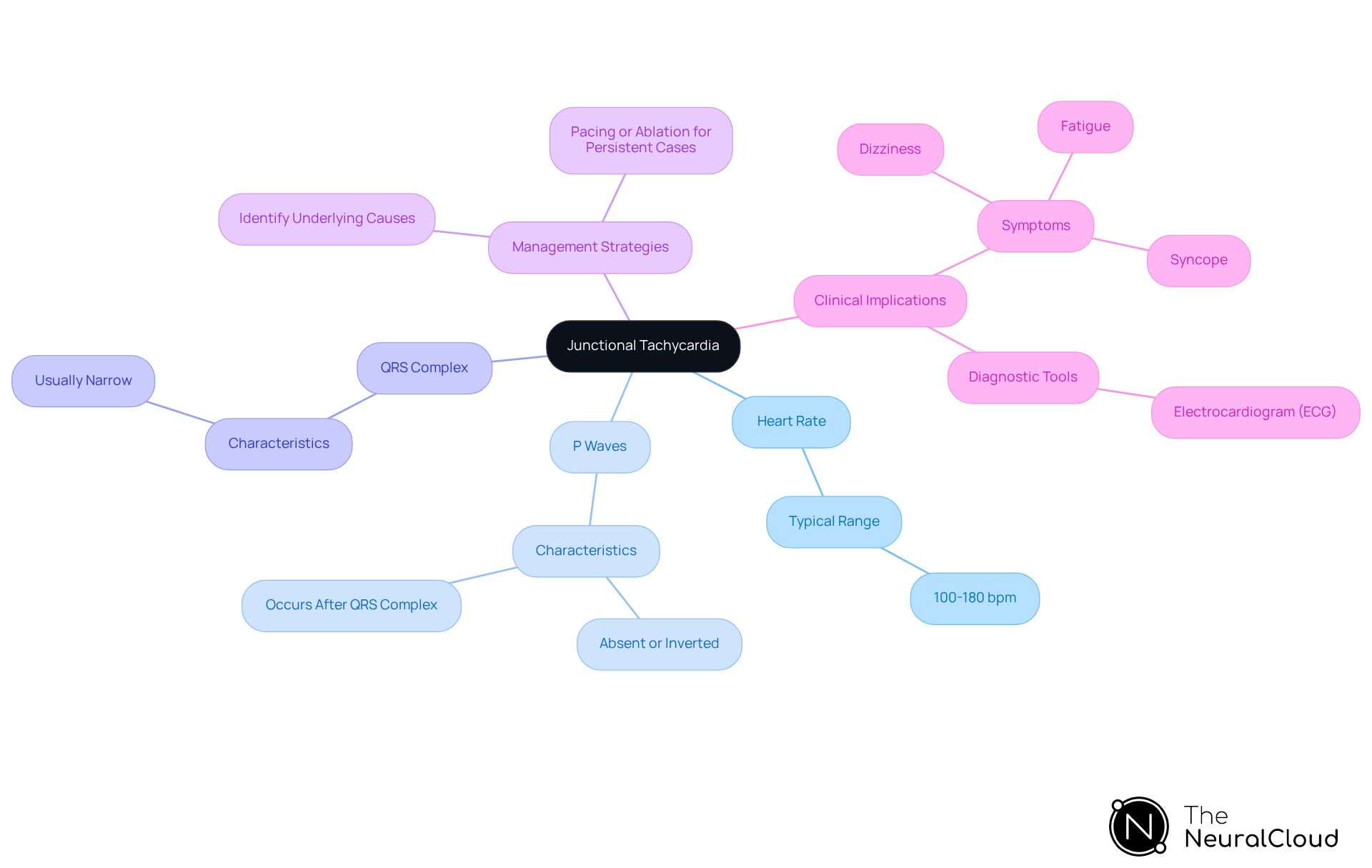
Junctional rapid heartbeat, a type of supraventricular rapid heartbeat, occurs when the heart rate exceeds 100 beats per minute, originating from the atrioventricular (AV) junction. Key characteristics include:
- Heart Rate: Typically ranges from 100 to 180 bpm, indicating a rapid cardiac rhythm.
- P Waves: Often absent, inverted, or occurring after the QRS complex, signifying that the electrical impulse originates from the AV junction rather than the sinoatrial node.
- QRS Complex: Usually narrow, reflecting normal ventricular conduction.
Understanding these characteristics is crucial for accurate diagnosis and management, as the junctional tachycardia rhythm strip can mimic other rapid heart rhythm disorders, necessitating distinct treatment strategies. In Canada, junctional rapid heartbeat is a notable concern, with numerous case studies illustrating its implications for cardiovascular care. For instance, secondary rapid heart rate frequently arises post-surgery and typically resolves within a week. In contrast, primary rapid heart rate poses more intricate challenges due to its congenital origins.
Experts emphasize the importance of quickly recognizing and managing arrhythmias to improve patient outcomes. Integrating advanced ECG analysis tools, like those from Neural Cloud Solutions, can improve diagnostic accuracy and streamline treatment protocols, enhancing patient care across Canada.
Identify Junctional Tachycardia on ECG: Waveforms and Intervals
Identifying junctional tachycardia on an ECG presents unique challenges that require careful analysis of key waveforms and intervals:
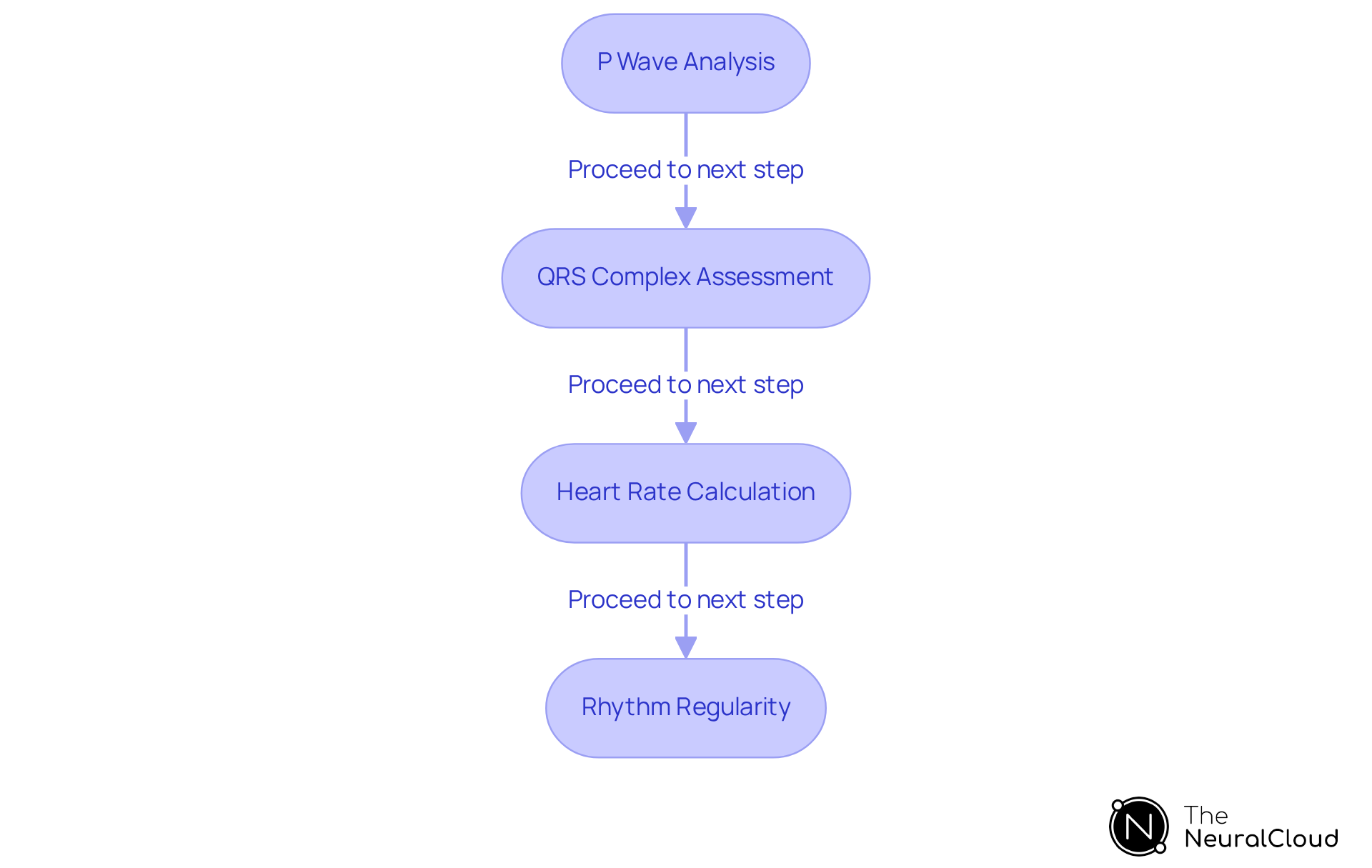
- P Wave Analysis: Look for absent or inverted P waves. If present, they may occur before or after the QRS complex, indicating altered atrial activation. This trait is essential, as a rapid heart rate at junctions can be observed in a junctional tachycardia rhythm strip, characterized by a heart rate surpassing 100 bpm, which is particularly important in pediatric groups where it can occur after surgery or as a congenital issue.
- QRS Complex: Assess the width; a narrow QRS complex measuring less than 120 ms suggests normal conduction through the ventricles, which is crucial for accurate diagnosis.
- Heart Rate Calculation: Measure the heart rate; rapid heartbeat is characterized by rates exceeding 100 bpm, making this a critical parameter for identification. Precise ECG analysis is essential, especially in remote monitoring situations, resulting in enhanced outcomes for individuals.
- Rhythm Regularity: The rhythm is typically regular, with consistent R-R intervals, which helps differentiate it from other arrhythmias.
Getting a handle on these identification techniques is essential for healthcare professionals, as it allows them to effectively differentiate the junctional tachycardia rhythm strip from other arrhythmias, facilitating timely and suitable care. Healthcare professionals can boost their diagnostic capabilities by using advanced AI-driven ECG analysis tools like MaxYield. This tool's advanced noise filtering and distinct wave recognition capabilities allow for the isolation of critical data even in recordings with high levels of noise and artifact. For practical application, healthcare professionals should consider scenarios where MaxYield can be integrated into their workflow, ensuring maximum diagnostic yield. Experts like Dr. Alan Rabinowitz emphasize that MaxYield’s precision rivals human interpretation, making it an invaluable tool in clinical settings. With MaxYield, healthcare professionals can enhance their diagnostic capabilities, ensuring timely and effective patient care.
Explore Causes of Junctional Tachycardia: Clinical Implications
Managing a junctional tachycardia rhythm strip can be challenging due to its diverse causes, each requiring specific attention. Here are some common causes:
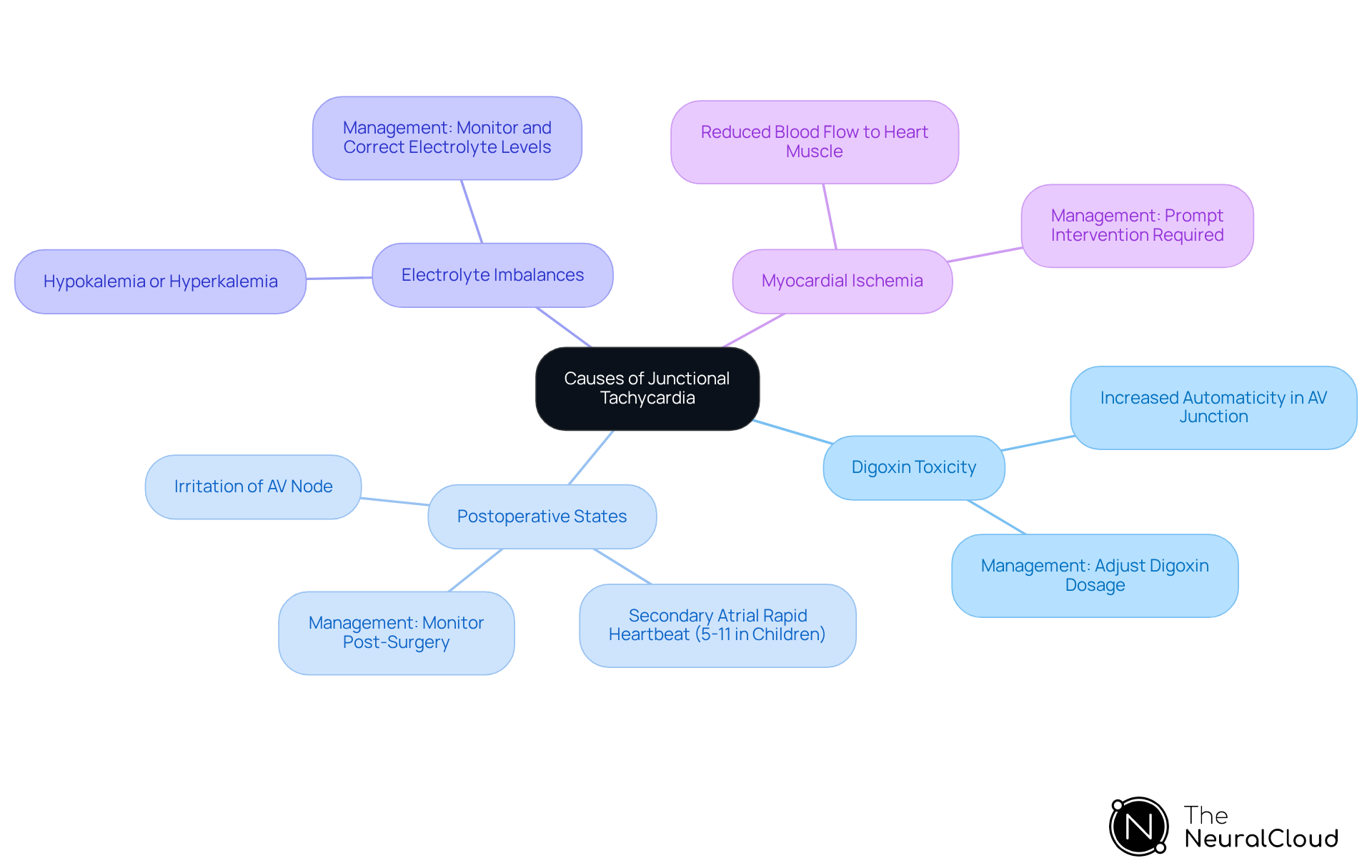
- Digoxin Toxicity: A prevalent cause, particularly in patients undergoing digoxin therapy, leading to increased automaticity in the AV junction.
- Postoperative States: Junctional rapid heart rate is often seen in patients after cardiac surgery, typically due to irritation of the AV node during the procedure. Notably, secondary atrial rapid heartbeat occurs in 5% to 11% of children following surgery for congenital heart issues.
- Electrolyte Imbalances: Conditions like hypokalemia or hyperkalemia can trigger rapid heart rates, making careful monitoring of electrolyte levels essential. Addressing these imbalances is vital for effective management.
- Myocardial Ischemia: Reduced blood flow to the heart muscle can lead to arrhythmias, including junctional rapid heart rate, highlighting the need for prompt intervention.
Recognizing these causes is crucial for managing the junctional tachycardia rhythm strip effectively. By identifying these factors, healthcare professionals can tailor treatment plans that significantly improve patient outcomes. Consistent follow-ups and adherence to prescribed medications are also key components of managing this heart condition, ensuring individuals receive appropriate care and monitoring.
Manage Junctional Tachycardia: Treatment Strategies and Best Practices
Managing rapid heart rate at the junction presents unique challenges that require tailored strategies based on individual patient needs. Key strategies include:
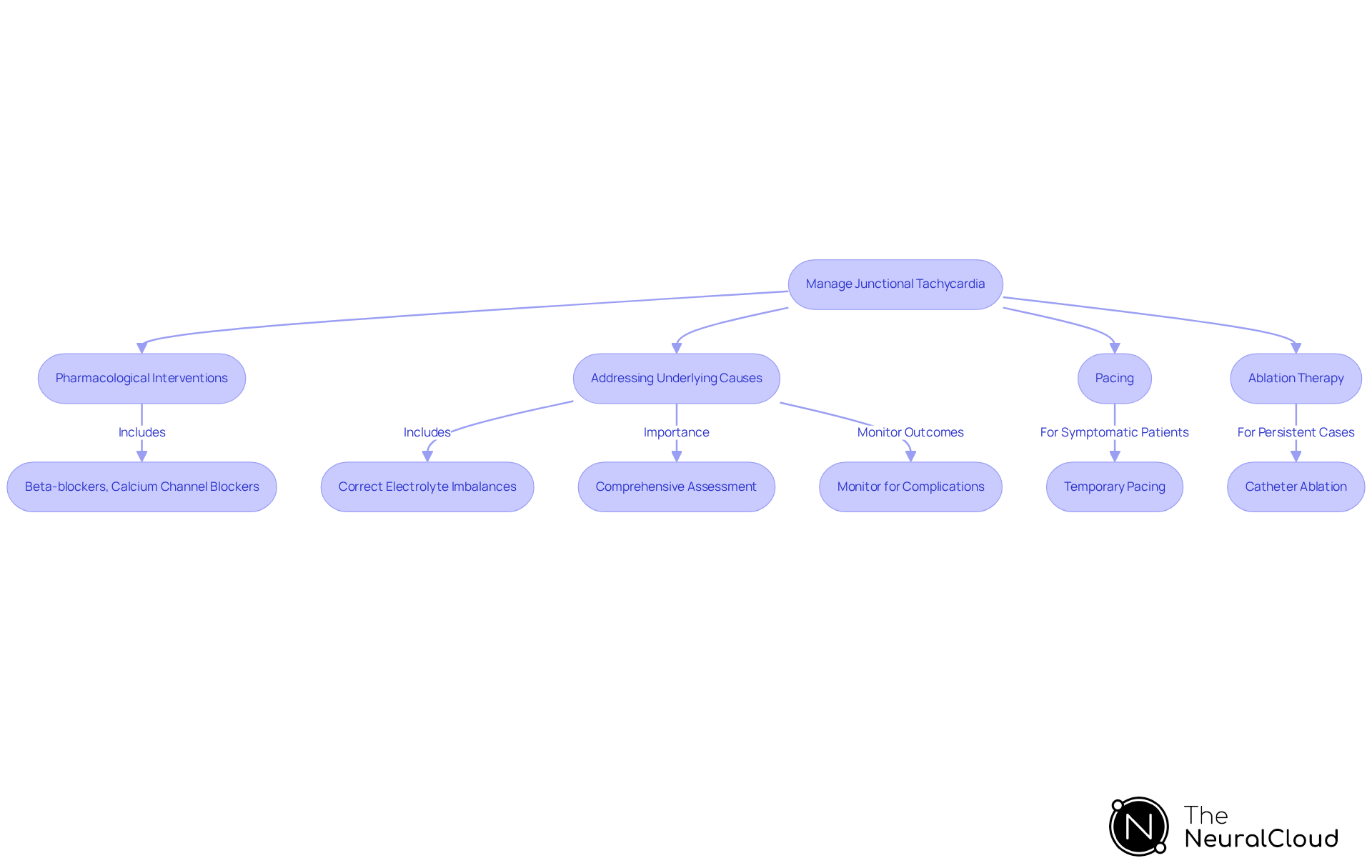
- Pharmacological Interventions: First-line treatments often involve beta-blockers and calcium channel blockers, such as diltiazem and verapamil, to effectively control heart rate. These medications are crucial in managing symptoms and preventing complications. Notably, propafenone has shown efficacy in preventing or managing postoperative ectopic rapid heart rate (POJET) in neonates.
- Addressing Underlying Causes: In some cases, correcting electrolyte imbalances or discontinuing digoxin can resolve rapid heart rate. This approach highlights the importance of a comprehensive medical history and diagnostic assessment. With a significant portion of congenital junctional ectopic heart rhythm cases being incessant, healthcare professionals face challenges in effective management. Timely intervention is critical to improve outcomes.
- Pacing: For symptomatic individuals, temporary pacing may be necessary to stabilize heart rate and enhance hemodynamics. This intervention is particularly relevant in acute settings where immediate control is required.
- Ablation Therapy: In persistent cases, catheter ablation is considered to eliminate the ectopic focus responsible for the rapid heart rate. This technique has proven effective in improving outcomes, especially in situations resistant to medical therapy.
By implementing these strategies, healthcare professionals can significantly improve patient outcomes and reduce the risks linked to junctional tachycardia. Efficient monitoring and appropriate medical treatment can lower the risk of tachycardia-induced cardiomyopathy in infants, underscoring the necessity for a proactive approach. Follow-up appointments two weeks after discharge are also essential for comprehensive patient management.
Conclusion
Effectively managing junctional tachycardia is crucial for delivering optimal patient care in clinical environments. This arrhythmia, characterized by a heart rate exceeding 100 beats per minute and unique ECG waveforms, requires healthcare professionals to be adept at identifying its key features and understanding its clinical implications. By mastering the identification techniques and treatment strategies outlined, clinicians can significantly enhance their diagnostic accuracy and improve patient outcomes.
This article explores the key aspects of junctional tachycardia, from its definition and ECG identification to its underlying causes and management strategies. Key insights include:
- The importance of recognizing absent or inverted P waves
- The role of pharmacological interventions
- The necessity of addressing underlying causes such as electrolyte imbalances
Furthermore, advanced tools like those from Neural Cloud Solutions and MaxYield can aid in refining diagnostic capabilities, ensuring timely and effective treatment.
Understanding junctional tachycardia goes beyond just identification; it requires a holistic approach to patient management. By integrating best practices and leveraging advanced technology, healthcare professionals can navigate the complexities of this condition, ultimately leading to improved patient care and outcomes. By prioritizing education and embracing innovative technologies, clinicians can significantly improve their approach to junctional tachycardia, ultimately enhancing patient care and outcomes.
Frequently Asked Questions
What is junctional tachycardia?
Junctional tachycardia is a type of supraventricular rapid heartbeat that occurs when the heart rate exceeds 100 beats per minute, originating from the atrioventricular (AV) junction.
What are the key characteristics of junctional tachycardia?
Key characteristics include a heart rate typically ranging from 100 to 180 beats per minute, often absent or inverted P waves, and a narrow QRS complex reflecting normal ventricular conduction.
Why is it important to understand the characteristics of junctional tachycardia?
Understanding these characteristics is crucial for accurate diagnosis and management, as the rhythm can mimic other rapid heart rhythm disorders, requiring distinct treatment strategies.
What are some common causes of junctional tachycardia in Canada?
Junctional tachycardia can frequently arise post-surgery and typically resolves within a week. In contrast, primary rapid heart rate poses more complex challenges due to its congenital origins.
How can advanced ECG analysis tools assist in managing junctional tachycardia?
Integrating advanced ECG analysis tools, like those from Neural Cloud Solutions Inc., can improve diagnostic accuracy and streamline treatment protocols, enhancing patient care across Canada.
What is the significance of quickly recognizing and managing arrhythmias?
Quickly recognizing and managing arrhythmias is essential to improve patient outcomes, particularly in cases of junctional tachycardia.
List of Sources
- Define Junctional Tachycardia: Key Characteristics and Importance
- Junctional Tachycardia: Causes, Symptoms and Treatment (https://my.clevelandclinic.org/health/diseases/23216-junctional-tachycardia)
- Junctional Rhythm - StatPearls - NCBI Bookshelf (https://ncbi.nlm.nih.gov/books/NBK507715)
- theneuralcloud.com (https://theneuralcloud.com/post/what-does-junctional-tachycardia-look-like-key-features-explained)
- Junctional Tachycardia: Symptoms, Causes, Treatment (https://acibademinternational.com/health-library/junctional-tachycardia-an-evidence-based-guide-for-patients)
- Identify Junctional Tachycardia on ECG: Waveforms and Intervals
- Junctional Rhythms (https://aclscertification.org/ecg-course-advanced-junctional-rhythms)
- Junctional Tachycardia: Causes, Symptoms and Treatment (https://my.clevelandclinic.org/health/diseases/23216-junctional-tachycardia)
- theneuralcloud.com (https://theneuralcloud.com/post/what-does-junctional-tachycardia-look-like-key-features-explained)
- Junctional Rhythm - StatPearls - NCBI Bookshelf (https://ncbi.nlm.nih.gov/books/NBK507715)
- Explore Causes of Junctional Tachycardia: Clinical Implications
- Junctional Tachycardia: Symptoms, Causes, Treatment (https://acibademinternational.com/health-library/junctional-tachycardia-an-evidence-based-guide-for-patients)
- Junctional rhythm (escape rhythm) and junctional tachycardia – The Cardiovascular (https://ecgwaves.com/topic/junctional-rhythm-junctional-tachycardia)
- Junctional Tachycardia: Causes, Symptoms and Treatment (https://my.clevelandclinic.org/health/diseases/23216-junctional-tachycardia)
- Manage Junctional Tachycardia: Treatment Strategies and Best Practices
- Junctional Tachycardia: Causes, Symptoms and Treatment (https://my.clevelandclinic.org/health/diseases/23216-junctional-tachycardia)
- Junctional Ectopic Tachycardia Treatment & Management: Approach Considerations, Pharmacologic Therapy, Surgical Care (https://emedicine.medscape.com/article/898989-treatment)