Introduction
Mastering EKG rhythms is essential for health tech developers aiming to enhance patient care through innovative solutions. Navigating the complexities of EKG interpretation can be daunting for developers, but it offers valuable insights into cardiac analysis that improve diagnostic accuracy. With rapid advancements in technology and the integration of AI, developers must stay informed and adapt to advancements in EKG analysis to ensure their tools are effective and reliable.
Master EKG Rhythm Fundamentals
Learning EKG rhythms is essential for mastering the development of effective health tech solutions that rely on accurate cardiac analysis. Understanding the basic components of an EKG waveform: P waves, QRS complexes, and T waves, is crucial, as each represents different phases of the cardiac cycle. Recognizing their normal patterns is vital for identifying abnormalities.
Key Practices:
- Study Basic Waveforms: Familiarize yourself with the morphology of normal and abnormal waveforms. Resources such as the ECG Academy and LITFL offer excellent visual aids and explanations.
- To understand heart rhythms, focus on learning EKG rhythms to differentiate between normal sinus rhythm, atrial fibrillation, and other common arrhythmias. This foundational knowledge is critical for developing algorithms that accurately interpret EKG data.
- Utilize Simulation Tools: Engage with simulation software that allows practice in identifying rhythms in a controlled environment. This hands-on experience reinforces theoretical knowledge and enhances practical skills.
- Be Aware of Common Pitfalls: Misinterpretation of EKG data poses significant risks in clinical settings. Ensure that you are familiar with the nuances of EKG analysis to avoid common mistakes.
Recent statistics indicate that normal ECG values include a PR interval of 120-200 milliseconds, a QRS complex duration of 80-100 milliseconds, a P wave duration of 80 milliseconds, and an RR interval of 0.6-1.2 seconds. Comprehending these metrics is crucial for health tech developers striving to create effective diagnostic instruments. Ziad Obermeyer highlights that accurate EKG analysis is vital for developing reliable health tech solutions, stating, "Good AI starts with good data."
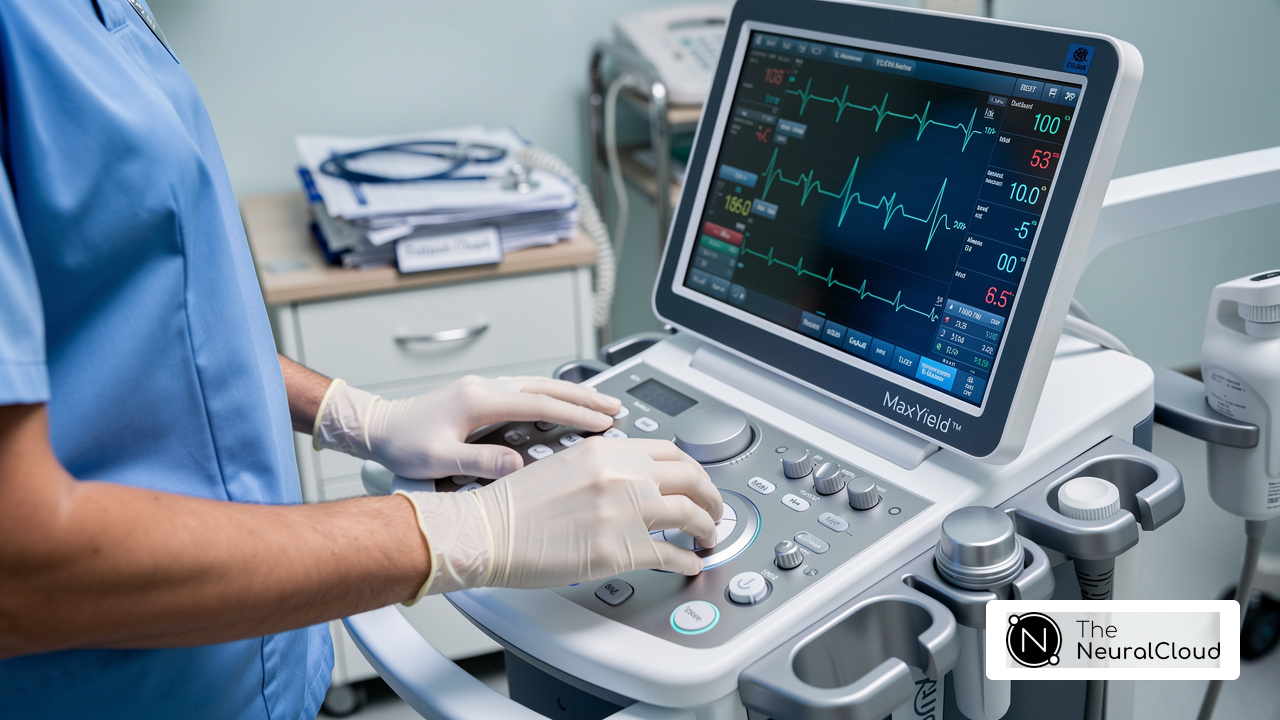
Neural Cloud Solutions Inc.'s MaxYield™ platform exemplifies this principle by utilizing advanced noise filtering and distinct wave recognition capabilities. It identifies and labels critical data even in recordings with high levels of noise and artifacts, allowing developers to salvage previously obscured sections of lengthy Holter, 1-Lead, and patch monitor recordings. Expert endorsements from Dr. Alan Rabinowitz, Dr. Brett Heilbron, and Dr. Marc W. Deyell emphasize the precision of the company, competing with human analysis and greatly minimizing noise interference. Additionally, the platform is pending FDA Class II SaMD clearance, ensuring compliance with regulatory standards. By mastering these fundamentals, developers can significantly enhance the accuracy of their diagnostic tools.

Implement a Systematic EKG Interpretation Method
Inconsistent EKG readings can lead to misdiagnoses, highlighting the need for a systematic approach in health tech applications. A systematic method for learning EKG rhythms is essential for obtaining consistent and precise readings. This method uses a clear, step-by-step process that integrates easily with technologies like MaxYield, which is awaiting FDA Class II SaMD clearance.
- Follow a Structured Algorithm: Employ a systematic algorithm for EKG analysis, such as the 'ABCDE' method (Assess, Baseline, Compare, Diagnose, and Evaluate). This ensures that all critical aspects of the EKG are thoroughly considered, enhancing diagnostic accuracy. For example, the PR interval should range from 0.12 to 0.22 seconds across all leads, which is a crucial element to evaluate during analysis. With MaxYield's advanced noise filtering, even recordings with significant artifacts can be accurately analyzed, ensuring that critical data is not overlooked.
- Incorporate Checklists: Develop comprehensive checklists that guide users through the interpretation process. These tools help standardize evaluations and minimize the risk of oversight, leading to more reliable outcomes. Guidelines recommend that less than 0.5 mm ST-segment depression be accepted in all leads, which can be included in these checklists. The automated labeling capabilities of this system further streamline this process, allowing for quicker and more efficient evaluations.
- Train with Real-World Cases: Utilize case studies and practical examples to train developers and users on systematic approaches. For example, the case study on 'Systematic ECG Interpretation' emphasizes the importance of a systematic approach in learning EKG rhythms to avoid missing critical abnormalities. This practical training strengthens knowledge and enhances confidence in learning EKG rhythms. Expert endorsements from Dr. Alan Rabinowitz, Dr. Brett Heilbron, and Dr. Marc W. Deyell emphasize that MaxYield’s precision competes with human analysis, especially in difficult situations with noise and artifacts.
By using these systematic approaches, health tech developers can create tools that help with EKG analysis and promote best practices, leading to better patient care. Additionally, it is essential to interpret EKG changes within the clinical context, as not all changes indicate serious conditions. By comparing current ECGs with previous recordings, developers can help users identify significant changes that may indicate pathology. As MaxYield evolves, its continuous learning model promises to refine EKG analysis, ensuring that healthcare professionals can deliver the highest standard of patient care.

Leverage AI-Driven Tools for Enhanced EKG Analysis
The integration of AI in EKG analysis presents both opportunities and challenges for cardiology technology, greatly improving both precision and speed in EKG interpretation. These innovations are essential for health tech developers aiming to improve patient outcomes and streamline healthcare processes.
Key Practices:
- Utilize Machine Learning Algorithms:
Implement machine learning algorithms that analyze extensive datasets of EKG readings to identify patterns and anomalies. This enhances diagnostic capabilities. For instance, a recent AI application has demonstrated the ability to identify heart disease in under two seconds. Trials show it can detect up to 81% of heart failure cases and 90% of heart valve disease cases, highlighting the potential for timely interventions. Neural Cloud Solutions Inc.'s MaxYield™ exemplifies this capability. It delivers beat-by-beat analysis and isolates key features in every heartbeat, such as P-wave, QRS complex, and T-wave onsets and offsets. This enhances diagnostic accuracy. - Incorporate Real-Time Analysis:
Create resources that provide real-time analysis of EKG data, enabling immediate feedback and prompt interventions when necessary. In emergency settings, this capability is vital because quick decisions can make all the difference for patients. MaxYield™ supports this by transforming noisy recordings into detailed insights, enabling healthcare professionals to make confident clinical decisions swiftly. - Enhance User Interfaces:
Design intuitive user interfaces that present AI-generated insights clearly and concisely, simplifying the interpretation of results for healthcare professionals. The integration of Insight360 as a customizable visualization and reporting resource further enhances this aspect, transforming MaxYield’s clean ECG data into interactive dashboards and clinical-ready reports.
However, over-dependence on automated systems without sufficient clinical supervision can result in misinterpretations. By leveraging AI-driven tools like MaxYield™, health tech developers can create solutions that not only improve diagnostic accuracy but also streamline workflows for healthcare providers. The recent FDA Class II SaMD clearance-pending status for MaxYield™ and its audit-ready documentation supporting GxP inspections further underscores the advancements in this field. This provides a comprehensive view of the current landscape in AI-driven EKG analysis, particularly within the Canadian healthcare context. Expert endorsements from Dr. Alan Rabinowitz, Dr. Brett Heilbron, and Dr. Marc W. Deyell highlight MaxYield’s precision comparable to human analysis and its noise reduction advantages, reinforcing its significance in clinical environments. As healthcare continues to evolve, the role of AI-driven tools like MaxYield™ will be pivotal in shaping the future of patient care.

Commit to Continuous Learning in EKG Interpretation
In the rapidly evolving field of cardiology, the gap in ECG training poses a challenge for health tech developers. This focus on education helps developers keep up with new technologies and methods, which ultimately improves patient care.
Key Practices:
- Engage in Professional Development: Actively participate in workshops, webinars, and conferences that focus on EKG analysis and cardiology technology. Exposure to new ideas and practices is invaluable for staying current in the field. As Dr. Kashou emphasizes, there is a critical need for more in-depth ECG training for a broader range of clinicians, highlighting the importance of ongoing education. Furthermore, specialists such as Dr. Alan Rabinowitz and Dr. Brett Heilbron support MaxYield's precision, highlighting its capability to compete with human analysis and greatly diminish noise in ECG recordings.
- Utilize online learning platforms for learning EKG rhythms by leveraging online courses and resources that provide current information on EKG analysis techniques and technologies. These platforms offer flexible learning opportunities tailored to busy professionals.
- Collaborate with Experts: Build relationships with cardiology experts and researchers to gain insights into the latest trends and challenges in EKG analysis. Such collaborations can foster innovation and improve the quality of solutions developed.
Did you know that around 71.8% of clinicians have had five hours or less of ECG training? This shows a real need for better educational programs. Furthermore, studies show that computerized ECG interpretation (CEI) can improve accuracy by 15% and reduce interpretation time by an average of 52 seconds per ECG. CEI is here to boost human expertise, giving clinicians a helpful tool. By dedicating themselves to ongoing education, including learning EKG rhythms, health tech developers can guarantee that their solutions, like Insight360, are not only groundbreaking but also in accordance with best practices in the field, ultimately aiding in enhanced patient outcomes. Additionally, it is important to note that MaxYield is currently pending FDA Class II SaMD clearance, ensuring compliance with regulatory standards, and Insight360 serves as a customizable visualization and reporting tool that transforms MaxYield’s clean ECG data into interactive dashboards and clinical-ready reports. With MaxYield's pending FDA clearance, developers can ensure their innovations meet the highest standards of care.

Conclusion
Health tech developers face significant challenges in mastering EKG rhythms, which are crucial for enhancing cardiac analysis and improving patient outcomes. Developers can enhance EKG analysis by focusing on fundamental interpretation, implementing systematic methods, leveraging AI-driven tools, and committing to continuous learning. These practices include:
- Familiarizing oneself with basic waveforms
- Employing structured algorithms for analysis
- Utilizing machine learning to identify patterns in EKG data
Ongoing education and collaboration with experts are vital, ensuring that developers stay at the forefront of advancements in EKG technology.
The integration of platforms like Neural Cloud Solutions Inc.'s MaxYield™ and Insight360 shows how advanced tools can make workflows smoother and improve diagnostic accuracy. As the field of cardiology continues to evolve, embracing these best practices will not only improve the quality of health tech solutions but also significantly impact patient care. By prioritizing education and innovation, health tech developers can profoundly influence patient care and the future of healthcare.
Frequently Asked Questions
Why is learning EKG rhythms important for health tech solutions?
Learning EKG rhythms is essential for developing effective health tech solutions that rely on accurate cardiac analysis, as it helps in understanding the basic components of an EKG waveform and identifying abnormalities.
What are the basic components of an EKG waveform?
The basic components of an EKG waveform include P waves, QRS complexes, and T waves, each representing different phases of the cardiac cycle.
How can one study basic waveforms effectively?
To study basic waveforms effectively, familiarize yourself with the morphology of normal and abnormal waveforms using resources such as the ECG Academy and LITFL, which offer visual aids and explanations.
What should I focus on when learning heart rhythms?
Focus on differentiating between normal sinus rhythm, atrial fibrillation, and other common arrhythmias, as this foundational knowledge is critical for developing algorithms that accurately interpret EKG data.
What tools can help in practicing EKG rhythm identification?
Utilize simulation software that allows practice in identifying rhythms in a controlled environment, reinforcing theoretical knowledge and enhancing practical skills.
What are some common pitfalls in EKG analysis?
Common pitfalls include misinterpretation of EKG data, which poses significant risks in clinical settings. Familiarity with the nuances of EKG analysis is essential to avoid these mistakes.
What are the normal ECG values to be aware of?
Normal ECG values include a PR interval of 120-200 milliseconds, a QRS complex duration of 80-100 milliseconds, a P wave duration of 80 milliseconds, and an RR interval of 0.6-1.2 seconds.
How does accurate EKG analysis contribute to health tech development?
Accurate EKG analysis is vital for developing reliable health tech solutions, as highlighted by Ziad Obermeyer, who states that 'Good AI starts with good data.'
What features does Neural Cloud Solutions Inc.'s MaxYield™ platform offer?
MaxYield™ utilizes advanced noise filtering and distinct wave recognition capabilities, allowing it to identify and label critical data even in recordings with high levels of noise and artifacts.
What endorsements support the effectiveness of MaxYield™?
Expert endorsements from Dr. Alan Rabinowitz, Dr. Brett Heilbron, and Dr. Marc W. Deyell emphasize the precision of MaxYield™, which competes with human analysis and minimizes noise interference.
What regulatory status does MaxYield™ hold?
The MaxYield™ platform is pending FDA Class II SaMD clearance, ensuring compliance with regulatory standards.
List of Sources
- Master EKG Rhythm Fundamentals
- Normal Electrocardiography (ECG) Intervals: Normal Electrocardiography Intervals (https://emedicine.medscape.com/article/2172196-overview)
- With AI, researchers discover new way to detect sudden cardiac death risk - Berkeley News (https://news.berkeley.edu/2026/06/24/with-ai-researchers-discover-new-way-to-detect-sudden-cardiac-death-risk)
- AI-ECG Finds STEMI Faster, Cuts False-Positive Cath Lab Activations (https://tctmd.com/news/ai-ecg-finds-stemi-faster-cuts-false-positive-cath-lab-activations)
- Implement a Systematic EKG Interpretation Method
- The latest innovations in ECG technology and analysis - Norav Medical (https://noravmedical.com/advancements-in-ecg-technology-exploring-the-latest-innovations-in-ecg-analysis)
- How to interpret the ECG: A systematic approach (https://ecgwaves.com/articles/systematic-clinical-ecg-interpretation-review-guide)
- Leverage AI-Driven Tools for Enhanced EKG Analysis
- New AI Tool Beats Standard Approaches for Detecting Heart Attacks (https://upmc.com/media/news/062923-ecg-model-heart-attacks)
- A sweeping new AI to detect heart conditions is coming to OpenEvidence (https://statnews.com/2026/06/23/pathway-labs-echonext-ai-tool-heart-disease-detection)
- ‘Superhuman’ AI tool spots heart disease in less than 2 seconds (https://theguardian.com/technology/2026/aug/31/superhuman-ai-tool-spots-heart-disease)
- Commit to Continuous Learning in EKG Interpretation
- The future of algorithms for ECG interpretation : What new research shows (https://gehealthcare.com/en/insights/article/the-future-of-algorithms-for-ecg-interpretation-what-new-research-shows?srsltid=AfmBOorFRh1Hu1SnpxWJVMD4Gilhm2tl5XYeS1pqNh9c5A9Qg9F06BD3)
- The 2026 Outlook for Cardiology: Trends & Insights | CVL (https://cvlhealth.com/blog/guide/the-2026-outlook-for-cardiology)
- Early-Career Cardiologists Are Reshaping Education: Let’s Learn, and Adapt (https://tctmd.com/news/early-career-cardiologists-are-reshaping-education-lets-learn-and-adapt)