Introduction
Disruptions in electrocardiograms (ECGs) can obscure crucial cardiac signals, leading to misinterpretations that may jeopardize patient care. Understanding movement artifacts - such as tremors or patient repositioning - is essential for clinicians aiming to enhance diagnostic accuracy and ensure patient safety. These artifacts can mimic serious cardiac conditions, presenting a significant challenge for healthcare professionals. How can they effectively identify and mitigate these distortions to improve ECG readings? This article explores the causes of movement artifacts, practical solutions, and innovative technologies like the MaxYield™ platform that promise to revolutionize ECG analysis.
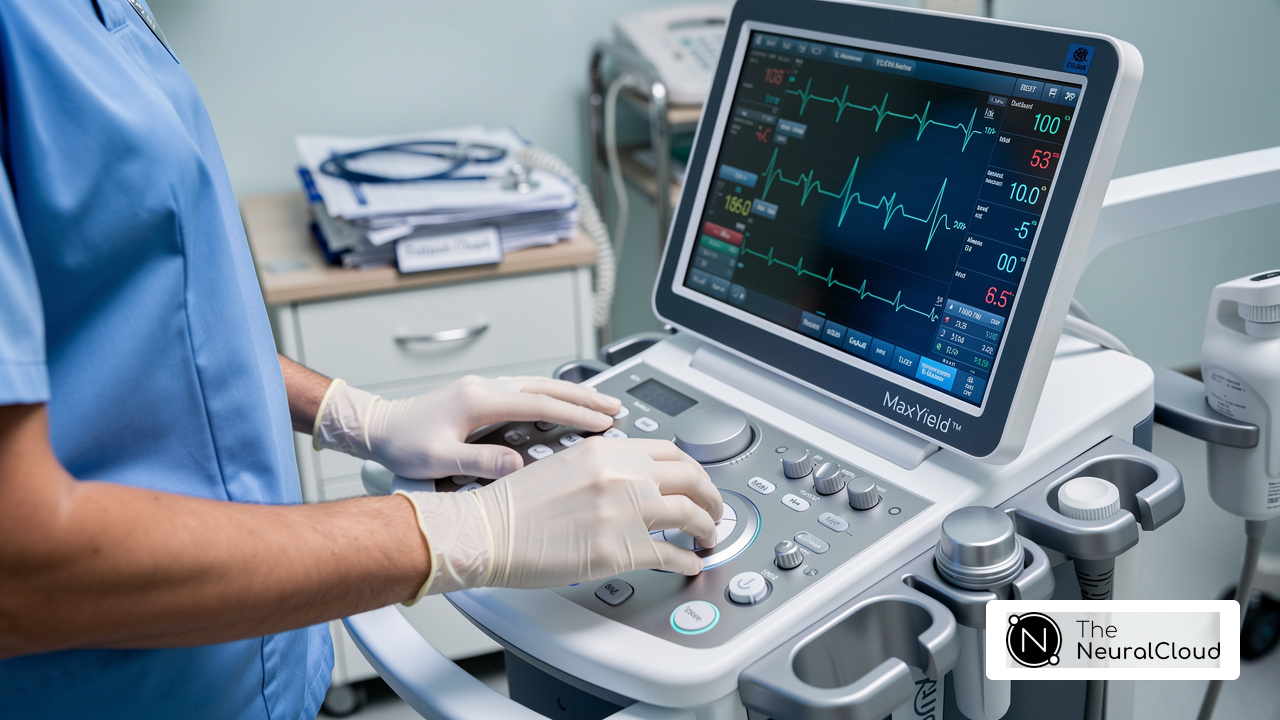
The MaxYield™ platform addresses the challenges in ECG analysis by offering advanced features designed to enhance diagnostic accuracy. It utilizes sophisticated algorithms to filter out movement artifacts, ensuring that the ECG readings reflect the true cardiac signals. This capability not only improves the reliability of the data but also aids clinicians in making informed decisions regarding patient care.
The advantages of the MaxYield™ platform extend beyond just improved accuracy. By minimizing the impact of movement artifacts, healthcare professionals can reduce the risk of misdiagnosis, ultimately leading to better patient outcomes. Additionally, the platform's user-friendly interface allows for seamless integration into existing workflows, making it accessible for both technical and non-technical users.
In summary, the MaxYield™ platform represents a significant advancement in ECG analysis. By effectively addressing the challenges posed by movement artifacts, it enhances diagnostic accuracy and supports healthcare professionals in delivering optimal patient care. As we delve deeper into the features and benefits of this innovative technology, it becomes clear that the future of ECG analysis is bright.
Define Movement Artifacts in ECG: Importance and Impact
Disruptions in electrocardiograms (ECGs) can obscure genuine cardiac signals, leading to misinterpretation and potential misdiagnosis. These distortions often arise from patient movements or external influences, making it crucial for clinicians to understand various types of movement artifact ECG, such as tremors, shivering, and patient repositioning. Such artifacts can significantly impact diagnostic precision, as they may mimic severe cardiac conditions, complicating the diagnostic process. For instance, tremors can create irregular waveforms that might be mistaken for arrhythmias, resulting in unnecessary interventions or missed diagnoses.
Research indicates that motion disturbances in movement artifact ECG can trigger false alarms and misdiagnoses, underscoring the importance of identifying and addressing these issues in ECG analysis. Effective skin preparation and consistent electrode placement are essential for reducing these irregularities, enhancing quality, and ensuring accurate waveform analysis. Furthermore, studies have shown that employing advanced detection techniques can decrease the likelihood of misinterpretation, thereby improving patient safety and diagnostic reliability.
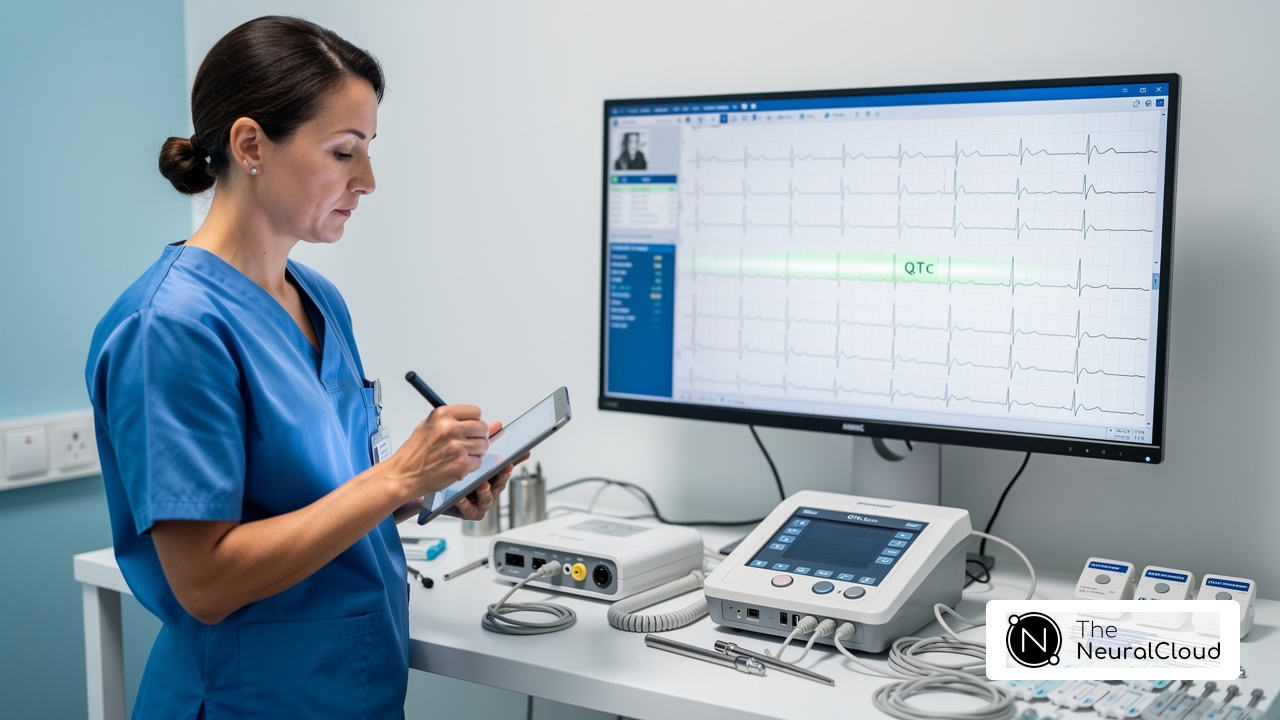
Neural Cloud Solutions' MaxYield™ platform specifically tackles these challenges by utilizing advanced noise filtering and distinct wave recognition. This technology allows for the rapid isolation of ECG waves, even in recordings affected by tremors or shivering. By integrating MaxYield™, healthcare providers can streamline their workflow, automate repetitive tasks, and ensure a cleaner, more reliable ECG output for accurate diagnostics.
Clinicians must remain vigilant in verifying the integrity of ECG recordings, as even minor variations in acquisition techniques can lead to significant discrepancies in waveform patterns. The MaxYield™ platform not only enhances the accuracy of ECG analysis but also supports healthcare professionals in delivering better patient care.

Identify Causes of Movement Artifacts: Physiological and Environmental Factors
Movement artifact ECG recordings can arise from various physiological and environmental factors, complicating accurate interpretation. Physiological causes often include involuntary muscle actions, such as tremors linked to conditions like Parkinson's disease or anxiety, which can introduce significant noise into the ECG signal. Continuous muscle twitching may mimic arrhythmias, making it challenging to discern true cardiac activity. Environmental factors also play a crucial role; external vibrations from medical equipment or even the patient's movements during the recording can result in movement artifact ECG distortions in the waveform. Additionally, improper electrode placement or inadequate skin preparation can exacerbate these issues.
Research indicates that proper electrode positioning and skin preparation can decrease interference rates by about 40%, underscoring the importance of these practices. For instance, loose electrodes can lead to intermittent signals, while excessive conductive gel may mask true cardiac activity. The MaxYield™ platform from Neural Cloud Solutions addresses these challenges by employing advanced noise reduction and handling techniques. This enables healthcare professionals to effectively anticipate and mitigate potential disturbances during ECG monitoring.
The features of the MaxYield™ platform include:
These features translate into significant advantages for healthcare professionals. By utilizing the MaxYield™ platform, practitioners can enhance diagnostic accuracy and gain automated insights into cardiac health. This ultimately leads to better patient outcomes and more reliable ECG analysis.

Implement Solutions for Movement Artifact Reduction: Techniques and Best Practices
To effectively reduce movement artifact ECG disturbances in recordings, several techniques and best practices should be implemented. Proper skin preparation is essential; this involves cleaning the skin with rubbing alcohol to eliminate oils and dead skin cells that can impede electrode adhesion. Studies indicate that effective skin preparation can enhance signal quality by up to 30%. Moreover, utilizing high-quality electrodes specifically designed to reduce the movement artifact ECG can significantly enhance the reliability of ECG readings.
Correct electrode positioning is crucial; electrodes must not be placed over large muscles or bony projections to prevent introducing extra distortions. Positioning the patient comfortably and instructing them to stay still during the recording is also essential, as a calm environment can stabilize heart rates and lead to clearer ECG readings. Advanced technologies, such as adaptive filtering algorithms and neural network models for complex data processing, play a vital role in enhancing clarity by effectively distinguishing between genuine cardiac patterns and noise.
For example, the Rd-ICA method has shown exceptional performance in minimizing movement artifact ECG interferences while maintaining ECG characteristics with little distortion. By implementing these strategies, healthcare professionals can achieve more reliable ECG readings and enhance diagnostic accuracy, ultimately improving patient outcomes. Additionally, leveraging Neural Cloud Solutions' MaxYield™ can further streamline this process.
Features of MaxYield™
- Rapidly labels P, QRS, and T Wave onsets and offsets.
- Provides time-series intervals for beat-by-beat tabulation in CSV format.
- Integrates easily into existing workflows.
Advantages for Healthcare Professionals
MaxYield™ not only enhances the clarity of ECG signals but also supports the discovery of new digital biomarkers. This automation makes it an invaluable tool for healthcare professionals aiming to improve patient care. By utilizing MaxYield™, practitioners can focus more on analysis and less on manual data entry, ultimately leading to better patient outcomes.

Leverage Advanced Technologies: Enhancing ECG Analysis with AI Solutions
Advanced technologies, particularly artificial intelligence (AI), are pivotal in enhancing ECG analysis by effectively addressing movement artifact ECG. The MaxYield™ platform from Neural Cloud Solutions exemplifies this by identifying and labeling critical data, even in recordings plagued by high levels of noise and distortion. Its sophisticated noise filtering capabilities, combined with the highlighting of P, QRS, and T Waves, streamline the workflow, allowing for the quick isolation of ECG waves from recordings affected by baseline wander and muscle interference. This innovative approach enables the recovery of previously obscured segments in lengthy Holter, 1-Lead, and patch monitor recordings.
AI algorithms can assess ECG data in real-time, adeptly recognizing and filtering out noise from movement artifact ECG caused by motion. For instance, machine learning models can be trained to detect patterns associated with movement artifact ECG, facilitating automatic correction of the ECG signal. Notably, research indicates that AI can achieve a 95.4% increase in arrhythmia detection and a 98.0% reduction in false positives, highlighting its effectiveness in enhancing diagnostic accuracy. Furthermore, AI aids in optimizing electrode placement by offering feedback on ideal positioning based on real-time data. The continuous learning model of the MaxYield™ platform ensures that its algorithms improve with each use, further boosting diagnostic yield.
This integration of AI not only streamlines the ECG analysis process but also enhances diagnostic yield, allowing healthcare professionals to concentrate on critical decision-making rather than manual artifact correction. As Bryn Mumma, a professor of emergency medicine, points out, "Accurate diagnosis and rapid treatment to restore blood flow are critical, and any tool that speeds up this process can help us save more lives." As AI technology continues to advance, its applications in ECG analysis are expected to expand, further improving patient outcomes and operational efficiency in clinical environments.

Conclusion
Understanding movement artifacts in ECG is crucial for accurate cardiac assessments. These disturbances, stemming from patient movements or external factors, can lead to misinterpretations that jeopardize patient safety. By identifying the types and sources of these artifacts, healthcare professionals can implement effective solutions to enhance diagnostic precision and patient care.
Key insights from the article emphasize the significance of proper skin preparation, electrode placement, and the integration of advanced technologies like the MaxYield™ platform. This platform offers features that mitigate the impact of movement artifacts and leverage AI to streamline ECG analysis. The direct benefits include improved diagnostic outcomes and a significant reduction in false alarms, enhancing the reliability of ECG readings.
As ECG technology evolves, embracing these advancements becomes essential for healthcare providers. By prioritizing best practices and utilizing cutting-edge tools, professionals can effectively manage movement artifacts. This commitment leads to better patient outcomes and more accurate cardiac monitoring. Refining ECG analysis through technology and awareness will play a pivotal role in advancing cardiac care in clinical settings.
Frequently Asked Questions
What are movement artifacts in ECGs?
Movement artifacts in ECGs are disruptions caused by patient movements or external influences that can obscure genuine cardiac signals, leading to misinterpretation and potential misdiagnosis.
What types of movement artifacts can affect ECG readings?
Types of movement artifacts include tremors, shivering, and patient repositioning, all of which can significantly impact diagnostic precision.
How do movement artifacts impact ECG diagnostics?
Movement artifacts can mimic severe cardiac conditions, complicating the diagnostic process and potentially resulting in unnecessary interventions or missed diagnoses.
What are some consequences of motion disturbances in ECGs?
Motion disturbances can trigger false alarms and misdiagnoses, highlighting the importance of identifying and addressing these issues in ECG analysis.
How can clinicians reduce movement artifacts in ECG recordings?
Effective skin preparation and consistent electrode placement are essential for reducing irregularities in ECG recordings, enhancing quality and ensuring accurate waveform analysis.
What advanced techniques can help in detecting movement artifacts?
Employing advanced detection techniques can decrease the likelihood of misinterpretation, thereby improving patient safety and diagnostic reliability.
What is the MaxYield™ platform, and how does it help with ECG analysis?
The MaxYield™ platform by Neural Cloud Solutions utilizes advanced noise filtering and distinct wave recognition to rapidly isolate ECG waves, even in recordings affected by tremors or shivering, ensuring cleaner and more reliable ECG outputs.
Why is it important for clinicians to verify the integrity of ECG recordings?
Even minor variations in acquisition techniques can lead to significant discrepancies in waveform patterns, making it crucial for clinicians to verify the integrity of ECG recordings for accurate diagnostics.
How does the MaxYield™ platform support healthcare professionals?
The MaxYield™ platform enhances the accuracy of ECG analysis and helps healthcare professionals deliver better patient care by streamlining workflows and automating repetitive tasks.
List of Sources
- Define Movement Artifacts in ECG: Importance and Impact
- midmark.com (https://midmark.com/medical/resource-library/blog/the-ecg-is-only-as-good-as-the-acquisition-why-ecg-accuracy-starts-with-technique)
- array.aami.org (https://array.aami.org/doi/full/10.2345/0899-8205-45.2.155)
- medrxiv.org (https://medrxiv.org/content/10.1101/2025.08.26.25334522v2.full-text)
- Identify Causes of Movement Artifacts: Physiological and Environmental Factors
- array.aami.org (https://array.aami.org/doi/full/10.2345/0899-8205-45.2.155)
- ECG Motion Artefacts (https://litfl.com/ecg-motion-artefacts-ecg-library)
- ECG Artifacts: Types, Causes, Identifications, and More (https://aclsnow.com/blog/understanding-ecg-artifacts)
- med-linket-corp.com (https://med-linket-corp.com/blogs/news/ecg-artifact-troubleshooting?srsltid=AfmBOoql_bZMJy1s5SMG_g-1ErJdPHtJZBFCee69MBlpdhCP5F0FKbRr)
- Main artifacts in electrocardiography - PMC (https://pmc.ncbi.nlm.nih.gov/articles/PMC6931710)
- Implement Solutions for Movement Artifact Reduction: Techniques and Best Practices
- array.aami.org (https://array.aami.org/doi/full/10.2345/0899-8205-45.2.155)
- theneuralcloud.com (https://theneuralcloud.com/post/understanding-artefact-on-ecg-types-impact-and-reduction-strategies)
- lifesync.com (https://lifesync.com/blogs/blog/reducing-artifacts-in-electrocardiography?srsltid=AfmBOooU01L1s36Wx4BfnDjAgBJsftqDaEHu79PqQoa5nNUmkWrXs5Tn)
- pmc.ncbi.nlm.nih.gov (https://pmc.ncbi.nlm.nih.gov/articles/PMC9736764)
- Leverage Advanced Technologies: Enhancing ECG Analysis with AI Solutions
- AI-Based ECG Analysis Significantly Improves STEMI Detection, Reduces False Activations - American College of Cardiology (https://acc.org/latest-in-cardiology/articles/2025/10/24/16/56/tues-554pm-ai-tct-2025)
- AI-Powered ECG Analysis Offers Promising Path for Early Detection of Chronic Obstructive Pulmonary Disease, Say Mount Sinai Researchers (https://mountsinai.org/about/newsroom/2026/ai-powered-ecg-analysis-offers-promising-path-for-early-detection-of-chronic-obstructive-pulmonary-disease-say-mount-sinai-researchers)
- jacc.org (https://jacc.org/doi/10.1016/j.jcin.2025.10.018)
- New study finds AI model improves heart attack detection (https://health.ucdavis.edu/news/headlines/new-study-finds-ai-model-improves-heart-attack-detection/2025/11)
- gehealthcare.com (https://gehealthcare.com/en-us/insights/article/health-tech-startup-uses-ai-to-redefine-cardiology-care.html?srsltid=AfmBOoqCMKq9HjZMytLxtjHPMTcGqy2dzbKTauLuCTOl5mZ3PXeOke7v)