Introduction
Timely and accurate ECG analysis is essential for effective cardiac care, especially in diagnosing myocardial infarction, yet traditional methods often struggle to meet the demands of modern healthcare. As traditional methods often fall short in addressing the complexities of heart conditions, the integration of AI technologies enhances precision and speed in ECG interpretation. This article will examine how healthcare professionals can utilize these advancements to enhance patient outcomes and streamline diagnostic processes. It delves into the transformative role of AI in myocardial infarction ECG analysis, exploring its potential to redefine clinical practices and save lives in the Canadian healthcare landscape.
Clarify ECG Fundamentals and Myocardial Infarction Significance
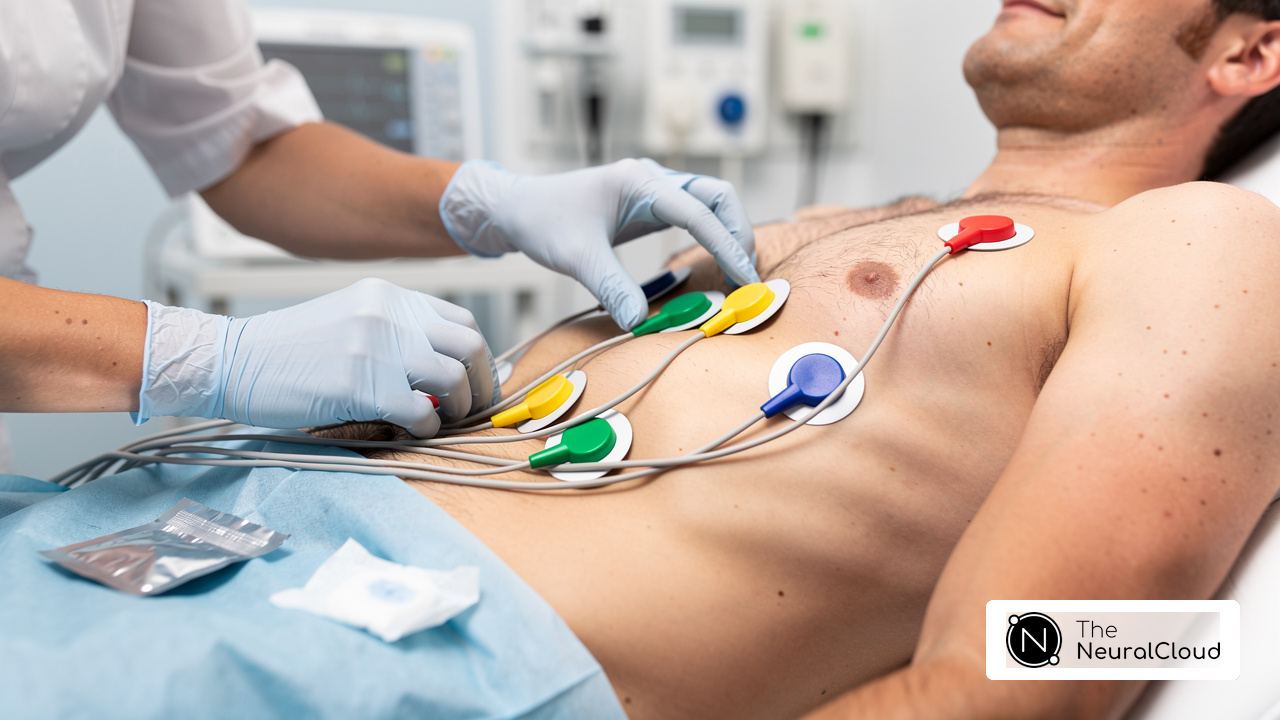
Timely and accurate ECG analysis is crucial for diagnosing heart conditions, yet traditional methods often fall short. Electrocardiography (ECG) is a vital diagnostic tool that records the electrical activity of the heart over time. Understanding its fundamentals is essential for interpreting the heart's rhythm and identifying abnormalities. Myocardial infarction heart attack ECG occurs when blood flow to a part of the heart is blocked, leading to tissue damage. Key ECG alterations linked to myocardial infarction heart attack ECG include:
- ST-segment elevation
- T-wave inversion
- The emergence of Q waves
Identifying these developments is essential for prompt intervention and treatment, as early detection can greatly enhance patient outcomes.
AI technologies, particularly through Neural Cloud Solutions' platform, enhance the precision and speed of ECG analysis. This marks a revolutionary advancement in cardiac care. The company provides hospital-level precision from consumer devices, enabling ongoing monitoring without the expenses linked to clinical-grade equipment. Recent studies have shown that AI models can correctly identify 553 confirmed cases of ST-elevation myocardial infarction (STEMI) on the initial ECG compared to 427 detected by traditional methods. This significantly reduces false-positive rates to about 8%. Such advancements underscore the importance of AI in expediting treatment decisions, as delays longer than 90 minutes can increase the risk of death by approximately three times.
In Canada, the focus on diagnosing myocardial infarction heart attack ECG is highlighted by the latest guidelines and expert opinions, which support the use of advanced ECG technologies to enhance clinical decision-making. The Fifth Universal Definition of Myocardial Infarction (UDMI) refines the criteria for diagnosing myocardial infarction heart attack ECG. This aligns clinical practices with current research and improves communication with patients about their conditions. As Dr. Alan Rabinowitz stated, 'Accurate diagnosis and rapid treatment to restore blood flow are critical, and any tool that speeds up this process can help us save more lives.'
As the landscape of cardiac diagnostics evolves, the role of the myocardial infarction heart attack ECG remains pivotal. Integrating traditional ECG principles with advanced AI technology simplifies the diagnostic process. It also allows healthcare professionals to deliver more efficient and timely care to patients experiencing a myocardial infarction heart attack ECG. Furthermore, MaxYield's integration with Insight360 transforms clean ECG data into interactive dashboards and clinical-ready reports, enhancing workflow efficiency and decision-making in cardiac diagnostics. As technology advances, the integration of AI in ECG analysis could redefine cardiac care, ensuring that no patient is left waiting for critical treatment.

Analyze ECG Changes in Different Types of Myocardial Infarction
Understanding the nuances of myocardial infarction is essential for effective diagnosis and treatment. Myocardial infarction is primarily categorized into:
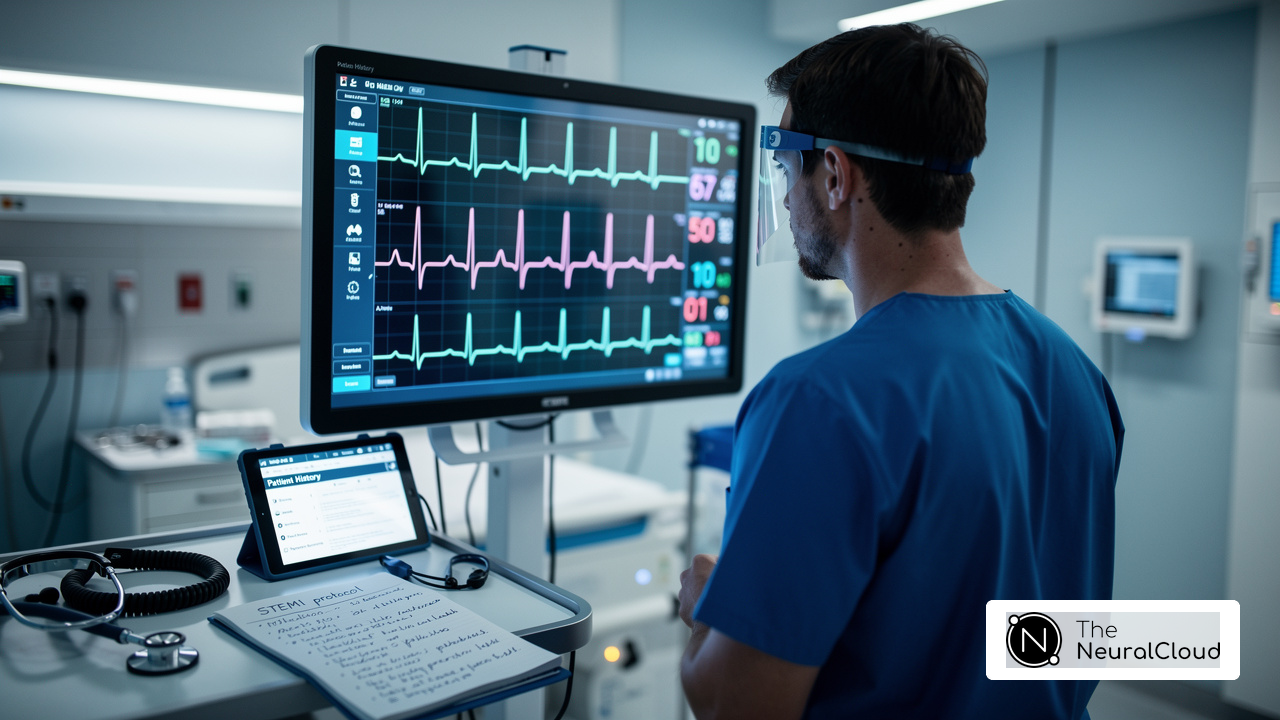
In STEMI, the ECG typically exhibits significant ST-segment elevation in specific leads, indicating acute coronary occlusion. For instance, ST-segment elevation in leads V2-V4 indicates an anterior wall STEMI, while alterations in leads II, III, and aVF may signify an inferior wall MI.
In contrast, NSTEMI often presents with ST-segment depression or T-wave inversion, reflecting partial occlusion or ischemia. Grasping these differences is crucial for ensuring timely diagnosis and effective intervention in myocardial infarction heart attack ECG cases, as misinterpretation can lead to delayed treatment. Recent studies highlight the significance of serial ECG monitoring, as patterns can evolve swiftly, with 36% of dynamic developments involving a transition from NSTEMI to STEMI.
AI technologies are now playing a key role in quickly identifying these ECG changes, enhancing clinical decision-making and potentially improving patient outcomes. Canadian cardiology experts emphasize that recognizing the characteristic ECG patterns is crucial, as timely and precise interpretation can significantly impact treatment choices and outcomes. The integration of AI in ECG analysis not only aids in accurate interpretation but also paves the way for improved patient care outcomes.

Implement Advanced AI Technologies for Enhanced ECG Analysis
Despite advancements in cardiology, accurately diagnosing a myocardial infarction heart attack ECG continues to pose significant challenges. The integration of AI technologies into ECG analysis has significantly transformed this field. Neural Cloud Solutions Inc.'s Yield platform exemplifies this transformation, utilizing advanced noise reduction and artifact handling to streamline ECG analysis. AI algorithms analyze large ECG datasets quickly, spotting critical patterns and anomalies that might be missed by human eyes. For instance, machine learning models within the system are adept at detecting specific ECG changes indicative of a myocardial infarction heart attack, such as ST-segment elevation and T-wave inversions, achieving high sensitivity and specificity. This means fewer false positives and negatives, which translates to more accurate diagnoses.
Additionally, its device-agnostic design allows seamless integration with various ECG devices, making it applicable in diverse clinical settings. Recent studies have demonstrated that AI-enhanced ECG models can reduce false positives and negatives, leading to more accurate diagnoses. In a notable case study, the Queen of Hearts algorithm (PMcardio) was evaluated across three PCI centers, revealing that the AI model improved sensitivity from 71% to 92% and specificity from 29% to 81%, while also decreasing false positive activation rates from 42% to 8%. This level of accuracy is essential for timely interventions, as it enables healthcare professionals to prioritize individuals who require immediate attention based on their ECG findings.
Furthermore, the organization aids in triaging individuals by prioritizing those who need urgent attention based on their ECG findings. This enhances patient care and streamlines workflows, enabling healthcare professionals to concentrate on critical cases. As Dr. Alan Rabinowitz observes, 'This system's precision rivals human interpretation, making it an invaluable tool in modern cardiology.' With its automated, scalable, and device-agnostic solutions, the company is poised to revolutionize ECG analysis, ensuring that clinicians can make informed decisions swiftly and effectively. With the promise of FDA clearance, MaxYield is set to redefine ECG analysis, empowering clinicians to act decisively in critical situations.

Conclusion
The integration of AI technologies into ECG analysis addresses the critical challenges faced in diagnosing myocardial infarction. Timely and precise ECG analysis is crucial for diagnosing myocardial infarction. AI technologies are transforming this critical aspect of cardiac care. This article emphasizes the importance of understanding ECG fundamentals and the specific changes linked to types of myocardial infarction, like STEMI and NSTEMI. AI advancements not only make the diagnostic process smoother but also keep pace with the latest clinical guidelines, ensuring Canadian clinicians have the best tools for effective patient care.
Traditional ECG analysis often leads to delays in diagnosing myocardial infarction due to its reliance on manual interpretation. By adopting AI technologies, clinicians can achieve faster and more accurate diagnoses, ultimately improving patient outcomes. As cardiac diagnostics evolve, embracing AI technologies in ECG analysis is essential. Integrating AI into ECG interpretation is essential for enhancing patient care and outcomes in the face of evolving cardiac diagnostics. Prioritizing AI adoption in ECG interpretation helps healthcare professionals respond better to myocardial infarction cases, improving care quality for patients across Canada.
Frequently Asked Questions
What is the significance of ECG in diagnosing heart conditions?
ECG, or electrocardiography, is a vital diagnostic tool that records the electrical activity of the heart over time. Timely and accurate ECG analysis is crucial for diagnosing heart conditions, particularly myocardial infarction, as it helps identify abnormalities in the heart's rhythm.
What are the key ECG alterations associated with myocardial infarction?
Key ECG alterations linked to myocardial infarction include ST-segment elevation, T-wave inversion, and the emergence of Q waves. Identifying these changes is essential for prompt intervention and treatment.
How does AI technology enhance ECG analysis?
AI technologies, particularly through Neural Cloud Solutions' platform, enhance the precision and speed of ECG analysis. This advancement allows for hospital-level precision from consumer devices, enabling ongoing monitoring without the costs associated with clinical-grade equipment.
What are the benefits of using AI in ECG analysis for myocardial infarction?
Recent studies have shown that AI models can correctly identify more cases of ST-elevation myocardial infarction (STEMI) on the initial ECG compared to traditional methods, significantly reducing false-positive rates to about 8%. This expedites treatment decisions, which is critical as delays longer than 90 minutes can increase the risk of death.
How do Canadian guidelines support advanced ECG technologies?
The latest Canadian guidelines and expert opinions emphasize the use of advanced ECG technologies to enhance clinical decision-making in diagnosing myocardial infarction. The Fifth Universal Definition of Myocardial Infarction refines the criteria for diagnosis, aligning clinical practices with current research.
What role does MaxYield play in cardiac diagnostics?
MaxYield's integration with Insight360 transforms clean ECG data into interactive dashboards and clinical-ready reports, enhancing workflow efficiency and decision-making in cardiac diagnostics.
How does the integration of AI in ECG analysis impact patient care?
The integration of AI in ECG analysis simplifies the diagnostic process and allows healthcare professionals to deliver more efficient and timely care to patients experiencing a myocardial infarction, ensuring that critical treatment is not delayed.
List of Sources
- Clarify ECG Fundamentals and Myocardial Infarction Significance
- New study finds AI model improves heart attack detection (https://health.ucdavis.edu/news/headlines/new-study-finds-ai-model-improves-heart-attack-detection/2025/11)
- FDA Clears First AI-ECG Model for Acute MI Detection (https://tctmd.com/news/fda-clears-first-ai-ecg-model-acute-mi-detection)
- Fifth Universal Definition of MI Unveiled at ESC 2026 (https://tctmd.com/news/fifth-universal-definition-mi-unveiled-esc-2026)
- AI-based ECG interpretation outperforms standard diagnosis of occlusive myocardial infarction (https://news-medical.net/news/20260323/AI-based-ECG-interpretation-outperforms-standard-diagnosis-of-occlusive-myocardial-infarction.aspx)
- Artificial intelligence may speed heart attack diagnosis and treatment (https://newsroom.heart.org/news/artificial-intelligence-may-speed-heart-attack-diagnosis-and-treatment)
- Analyze ECG Changes in Different Types of Myocardial Infarction
- AI-based ECG interpretation outperforms standard diagnosis of occlusive myocardial infarction (https://news-medical.net/news/20260323/AI-based-ECG-interpretation-outperforms-standard-diagnosis-of-occlusive-myocardial-infarction.aspx)
- STEMI/NSTEMI to Occlusion MI (OMI) Shift (https://powerfulmedical.com/blog/pmcardio-featured-on-this-week-in-cardiology-the-shift-from-stemi-nstemi-to-omi)
- Understanding STEMI vs NSTEMI: ECG Interpretation Guide (https://tricog.com/understanding-stemi-vs-nstemi-in-ecg-interpretation?srsltid=AU7gw4V55voSCJQGaxC60PnvjbFwBMNHUVJJf_fD-SbXw8u5rWDEr9uV)
- National Incidence of Heart Attacks Decline 50% Since 2004, Yet Underrepresented Groups Remain at Highest Risk | SCAI (https://scai.org/media-center/news-and-articles/national-incidence-heart-attacks-decline-50-2004-yet)
- Understanding STEMI vs NSTEMI: ECG Interpretation Guide (https://tricog.com/understanding-stemi-vs-nstemi-in-ecg-interpretation?srsltid=AU7gw4UQSWWrGQqzuIKoIntPetvJ7Wj8iPwmEh0_avdbkTGTDnxqJpDy)
- Implement Advanced AI Technologies for Enhanced ECG Analysis
- AI-Based ECG Analysis Significantly Improves STEMI Detection, Reduces False Activations - American College of Cardiology (https://acc.org/latest-in-cardiology/articles/2025/10/24/16/56/tues-554pm-ai-tct-2025)
- With AI, researchers discover new way to detect sudden cardiac death risk - Berkeley News (https://news.berkeley.edu/2026/06/24/with-ai-researchers-discover-new-way-to-detect-sudden-cardiac-death-risk)
- ‘Superhuman’ AI tool spots heart disease in less than 2 seconds (https://theguardian.com/technology/2026/aug/31/superhuman-ai-tool-spots-heart-disease)
- Three New Studies Show Viz.ai’s Cardio Suite Speeds Detection of Cardiac Disease and Improves Patient Follow-Up (https://viz.ai/news/three-new-studies-show-viz-ais-cardio-suite-speeds-detection-of-cardiac-disease-and-improves-patient-follow-up)