Introduction
For healthcare providers, understanding the nuances of electrocardiograms (ECGs) is crucial, especially when interpreting readings for female patients. The physiological differences between genders can significantly impact ECG interpretation, making it essential to recognize these variations. This article explores the unique characteristics of normal ECGs for women, emphasizing the importance of identifying gender-specific differences to prevent misdiagnosis and ensure timely treatment. With advancements in technology reshaping cardiac diagnostics, clinicians are left wondering how to best use these innovations to improve ECG accuracy for female patients.
Explore the Basics of ECGs in Female Patients
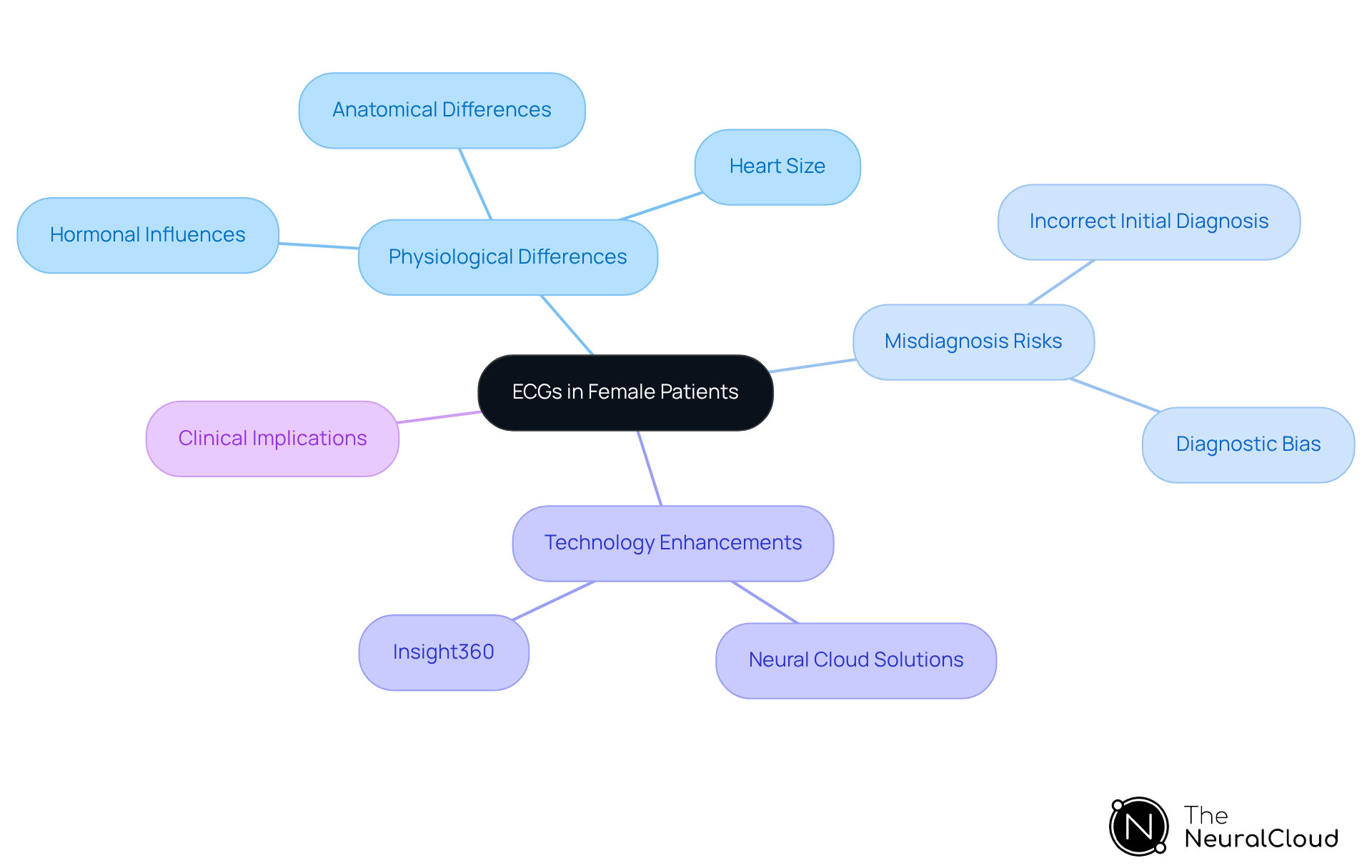
Electrocardiograms (ECGs) are crucial diagnostic tools, yet their interpretation can be challenging, especially when determining a normal ECG for female patients. Understanding the nuances of ECGs is vital due to physiological differences that can significantly influence the normal ECG for female patients. Research shows that women display different heart disease symptoms than men. Healthcare providers must recognize these variations.
Factors such as hormonal influences, heart size, and anatomical differences contribute to the unique patterns observed in a normal ECG for female patients. For instance, studies have shown that women typically present with shorter QRS durations and longer QT intervals than their male counterparts. Clinicians need to be aware of these differences to avoid misinterpreting ECG results, particularly in recognizing a normal ECG for female patients, which could lead to misdiagnosis or delayed treatment.
Moreover, becoming acquainted with standard lead placements and necessary adjustments for female individuals is essential for obtaining accurate readings. Statistics show that women are 50% more likely than men to get an incorrect initial diagnosis after a myocardial infarction, underscoring the need for tailored approaches in ECG interpretation. Addressing these disparities is vital for improving outcomes in female patients, as ensuring a normal ECG for female patients can help reduce diagnostic bias that leads to delays in treatment and less aggressive care.
By utilizing advanced technologies from Neural Cloud Solutions Inc., which provide hospital-grade ECG precision using consumer-grade devices, significant enhancements can be achieved in the accuracy and effectiveness of cardiovascular diagnostics for women. The advanced noise filtering and wave recognition capabilities of the system ensure clean data, enhancing ECG analysis efficiency and reducing the likelihood of misinterpretation.
Additionally, the customizable visualization and reporting tool, Insight360, transforms clean ECG data into interactive dashboards and clinical-ready reports, further supporting healthcare providers in their diagnostic efforts. As Dr. Alan Rabinowitz emphasizes, this technology's precision rivals human interpretation, making it an invaluable tool in the evolving landscape of digital health. Furthermore, with its FDA Class II SaMD clearance-pending status, the product is positioned to meet regulatory standards, ensuring compliance and reliability in clinical settings.
Analyze Key Characteristics of Normal ECGs
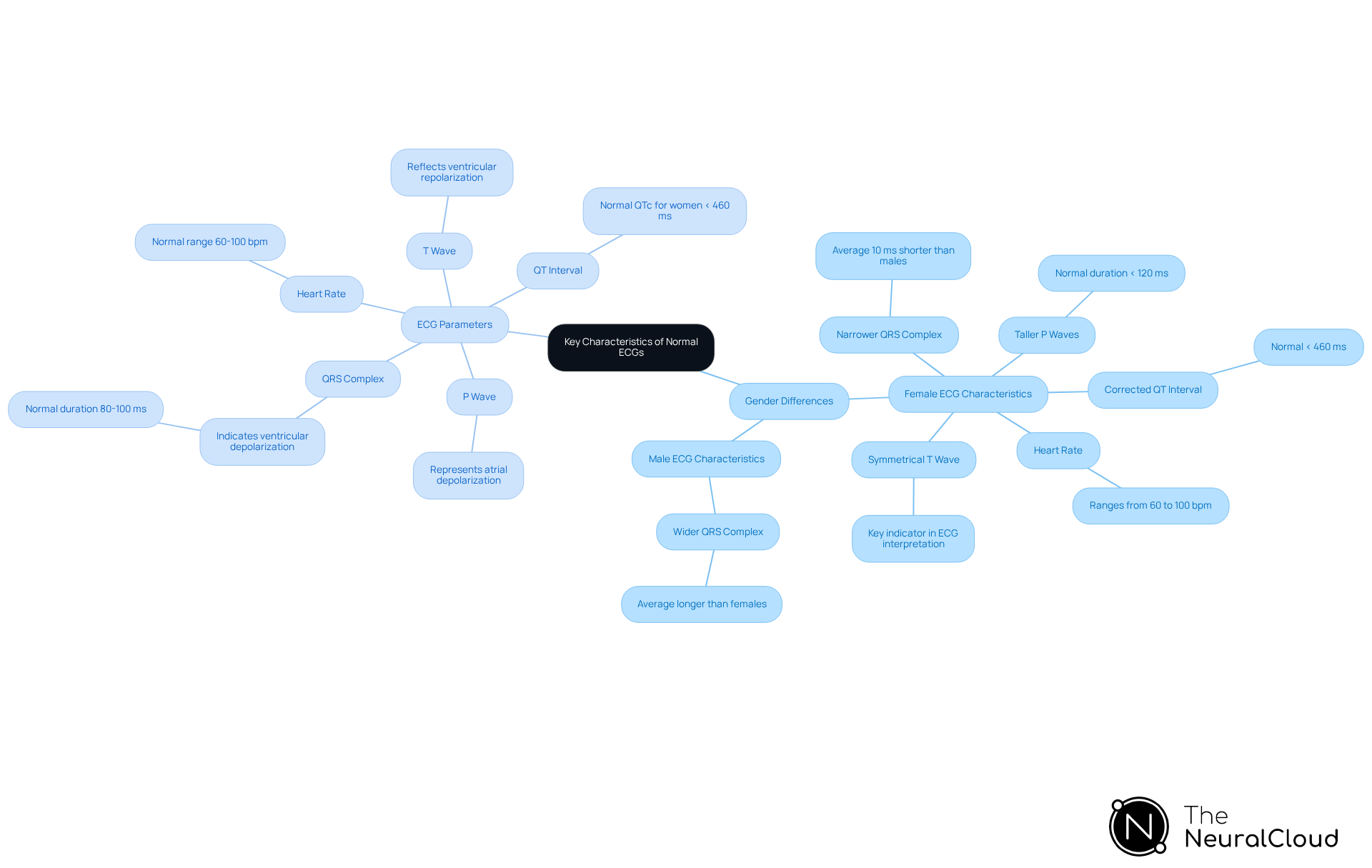
ECG analysis presents unique challenges, particularly when considering gender differences in cardiac parameters. A normal ECG for female typically shows a consistent pattern of waves: P, QRS, and T waves. In female patients, these characteristics can differ significantly from those in male patients. For instance, women generally exhibit narrower QRS complexes, averaging about 10 milliseconds shorter than those of men, and taller P waves with a normal duration of less than 120 milliseconds. The normal ECG for female patients shows that their heart rate ranges from 60 to 100 beats per minute, and they often present with a corrected QT interval of less than 460 milliseconds, which is crucial for assessing arrhythmia risk. Additionally, the T wave in women tends to be more symmetrical, serving as a key indicator in ECG interpretation. Understanding these parameters is essential for healthcare providers to accurately assess cardiac health and identify deviations that may indicate underlying issues. This risk underscores the critical need for precise ECG measurements, as each increase of 20 milliseconds in the PR interval doubles the risk of atrial fibrillation.
The MaxYield™ platform enhances the examination of these ECG components by employing advanced noise filtering and automated labeling, allowing for quick detection of abnormalities and improving diagnostic accuracy. With this system, clinicians can convert noisy recordings into detailed insights, analyzing 200,000 heartbeats in under 5 minutes. This capability streamlines workflow and helps clinicians make confident decisions. Additionally, the integration of Insight360 as a customizable visualization tool transforms the clean ECG data from the company into interactive dashboards and clinical-ready reports, further enhancing the analysis process. By knowing these traits and how the product works, clinicians can make better choices, ultimately improving patient outcomes. As Dr. Alan Rabinowitz notes, "MaxYield’s precision rivals human interpretation, making it an invaluable tool in modern cardiac care.
Interpret ECG Readings for Clinical Insights
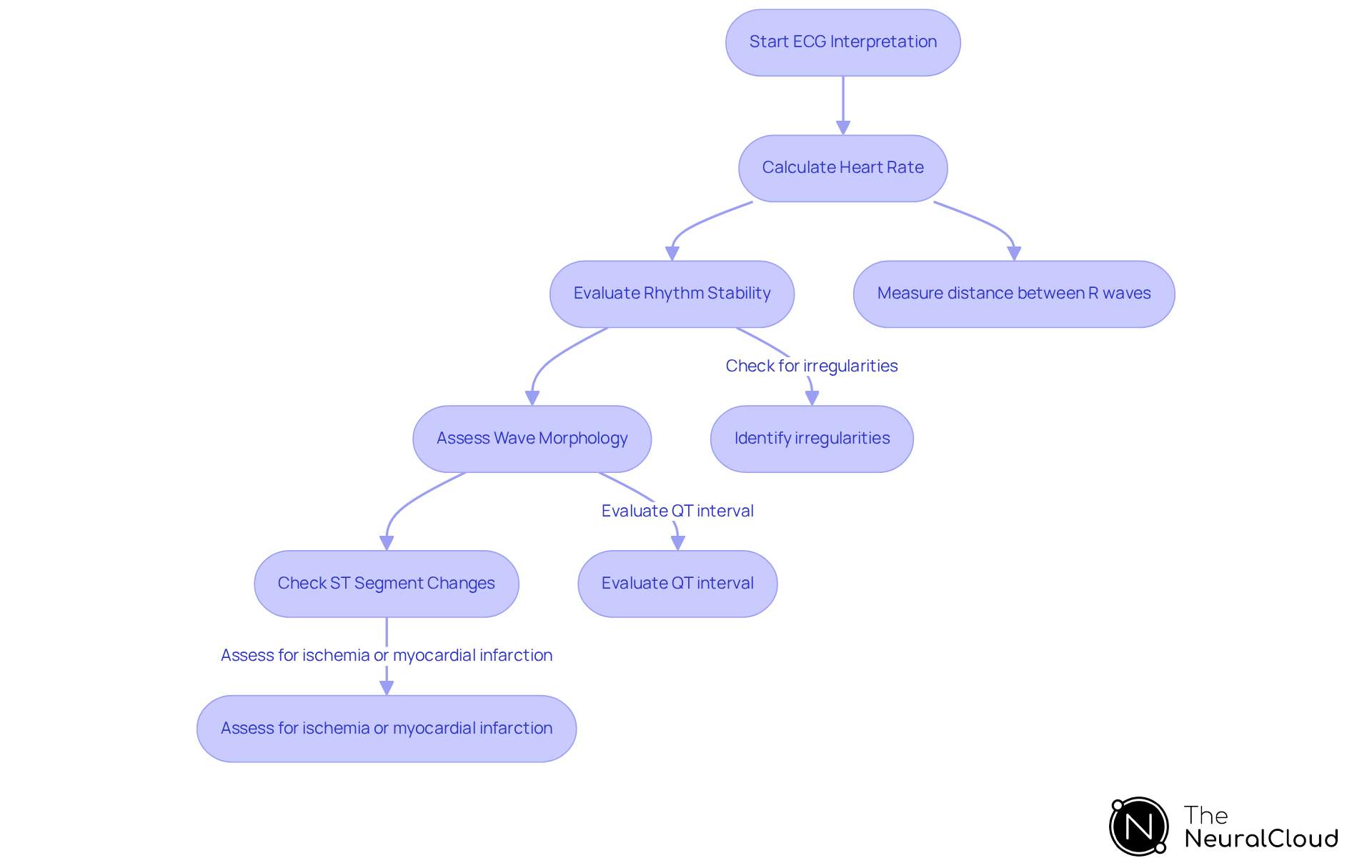
Interpreting ECG readings can be challenging due to the complexities of heart electrical activity. Clinicians should start by calculating the heart rate, which is determined by measuring the distance between R waves. A consistent rhythm typically indicates stable heart function, while irregularities may signal arrhythmias. Evaluating the morphology of the waves is equally crucial; for instance, a prolonged QT interval can heighten the risk of torsades de pointes, a serious arrhythmia. Additionally, clinicians must pay attention to ST segment changes, as these can signify ischemia or myocardial infarction. By synthesizing these insights, healthcare providers can make informed decisions regarding individual management and treatment strategies.
MaxYield™ makes ECG evaluations faster and more accurate by using advanced noise filtering and recognizing distinct waves. This technology allows for the rapid isolation of ECG waves from recordings affected by baseline wander, movement, and muscle artifacts, ensuring that critical data is accurately identified and labeled. MaxYield™ helps recover important data from long Holter, 1-Lead, and patch monitor recordings, tackling issues like noise and artifacts. By addressing these common challenges in ECG interpretation, MaxYield™ enhances the overall quality of analysis.
Integrating tools like MaxYield™ into healthcare systems is essential for developers looking to enhance patient care and treatment strategies. The platform's algorithm evolves with each use, continuously improving its accuracy and efficiency, which is vital for maximizing diagnostic yield. For further learning and research, resources such as full journal access and individual articles are available for purchase, providing valuable insights into ECG interpretation and its clinical implications. It's also important to note that MaxYield™ is currently pending FDA Class II SaMD clearance, ensuring compliance with regulatory standards. Expert endorsements from Dr. Alan Rabinowitz, Dr. Brett Heilbron, and Dr. Marc W. Deyell further validate the precision and noise reduction benefits of MaxYield™. The advancements offered by MaxYield™ could redefine how healthcare providers approach ECG analysis.
Integrate Advanced Technologies for Enhanced ECG Analysis
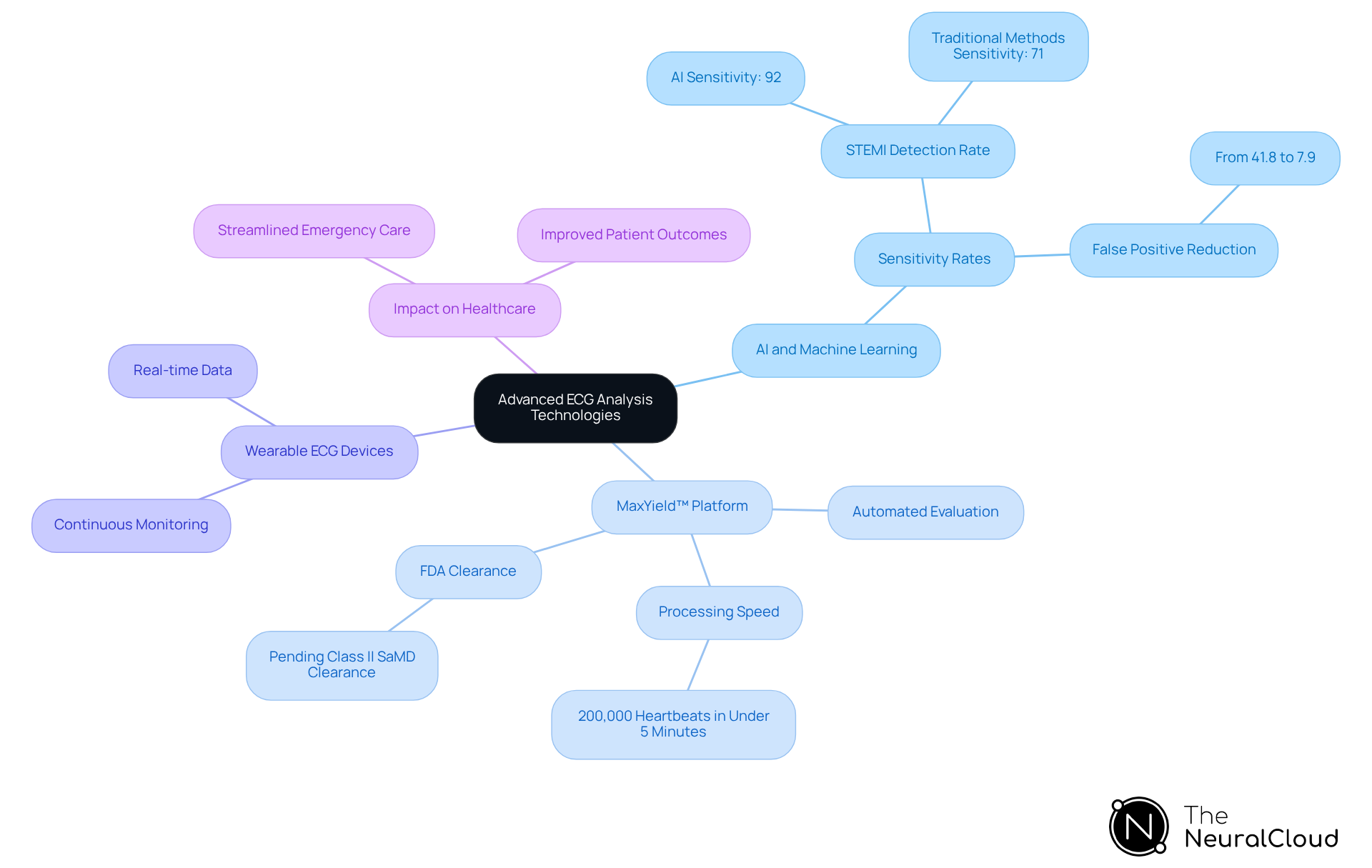
The integration of AI and machine learning is revolutionizing ECG evaluation, addressing significant challenges in cardiology. AI algorithms analyze large ECG datasets quickly, spotting subtle waveform patterns that humans might miss. For instance, AI has shown a sensitivity of 92% in detecting ST-Elevation Myocardial Infarction (STEMI), while traditional methods only reach 71%. This highlights the potential of AI to improve early diagnosis of cardiac issues.
Neural Cloud Solutions Inc.'s MaxYield™ platform exemplifies this transformation by offering automated, distinct, and scalable ECG evaluation. With MaxYield™, you can process ECG recordings from any 1-lead or 3-lead device, providing beat-by-beat evaluation of 200,000 heartbeats in under 5 minutes. This capability streamlines workflow and boosts diagnostic accuracy, enabling healthcare providers to respond quickly to abnormalities. Additionally, MaxYield™ is currently pending FDA Class II SaMD clearance, ensuring compliance with regulatory standards.
Wearable ECG devices are gaining traction, enabling continuous heart activity monitoring outside clinical environments. These devices provide real-time data, allowing healthcare providers to respond promptly to abnormalities. In a recent study, AI-ECG evaluation reduced false-positive cath lab activations from 41.8% to 7.9%, illustrating the technology's ability to streamline emergency care and enhance diagnostic accuracy.
Leveraging these advanced technologies allows clinicians to enhance their diagnostic capabilities significantly, leading to improved patient outcomes and more efficient healthcare delivery. The ongoing development of AI-driven ECG analysis tools, particularly in Canada, underscores the commitment to advancing cardiac care and ensuring that women receive tailored monitoring, including achieving a normal ECG for female patients. Furthermore, the integration of MaxYield™ with Insight360 transforms clean ECG data into interactive dashboards and clinical-ready reports, further enhancing the utility of these advanced technologies. As these technologies evolve, they promise to redefine cardiac care, ensuring timely and accurate patient monitoring.
Conclusion
Misdiagnosis in ECG interpretation for female patients can lead to ineffective cardiac care. This article highlights the physiological differences that necessitate a tailored approach to ECG analysis, emphasizing the importance of recognizing these variations to avoid misdiagnosis and ensure timely treatment. Utilizing advanced technologies from Neural Cloud Solutions Inc. allows healthcare providers to improve ECG evaluation accuracy and efficiency, leading to better patient outcomes.
Key insights discussed include the unique characteristics of normal ECGs in women, such as:
- narrower QRS complexes
- longer QT intervals
These characteristics differ from those in men. The integration of platforms like MaxYield™ and Insight360 facilitates rapid and precise ECG analysis, allowing clinicians to detect abnormalities swiftly and make informed decisions. Furthermore, the role of AI in ECG evaluation is underscored, showcasing its potential to revolutionize cardiac diagnostics by identifying subtle patterns that may be overlooked in traditional assessments.
As cardiac care evolves, it's vital to adopt these advanced technologies to ensure female patients get the monitoring and treatment they need. By prioritizing gender-specific considerations in ECG interpretation and utilizing innovative tools, healthcare professionals can significantly enhance diagnostic accuracy and ultimately contribute to better health outcomes for women across Canada.
Frequently Asked Questions
What is the significance of ECGs in female patients?
Electrocardiograms (ECGs) are crucial diagnostic tools for assessing heart health, but their interpretation can be challenging for female patients due to physiological differences that influence normal ECG patterns.
How do ECG patterns differ between male and female patients?
Women typically present with shorter QRS durations and longer QT intervals compared to men, which are important factors for clinicians to consider to avoid misinterpretation of ECG results.
Why is it important for healthcare providers to recognize variations in ECGs for female patients?
Recognizing these variations is vital to prevent misdiagnosis or delayed treatment, as women are 50% more likely than men to receive an incorrect initial diagnosis after a myocardial infarction.
What factors contribute to the unique ECG patterns observed in female patients?
Factors such as hormonal influences, heart size, and anatomical differences contribute to the distinct ECG patterns seen in women.
What role does lead placement play in ECG accuracy for female patients?
Understanding standard lead placements and making necessary adjustments for female individuals is essential for obtaining accurate ECG readings.
How can advanced technologies improve ECG diagnostics for women?
Technologies from Neural Cloud Solutions Inc. enhance cardiovascular diagnostics by providing hospital-grade ECG precision using consumer-grade devices, improving accuracy and effectiveness.
What features does the Insight360 tool offer for ECG data analysis?
Insight360 transforms clean ECG data into interactive dashboards and clinical-ready reports, supporting healthcare providers in their diagnostic efforts.
What is the regulatory status of the ECG technology mentioned in the article?
The technology has FDA Class II SaMD clearance-pending status, ensuring it meets regulatory standards for compliance and reliability in clinical settings.
List of Sources
- Explore the Basics of ECGs in Female Patients
- AI-enhanced ECG identifies increased heart disease risk in women | Contemporary OB/GYN (https://contemporaryobgyn.net/view/ai-enhanced-ecg-identifies-increased-heart-disease-risk-in-women)
- Best Practices for ECG Lead Placement on Women (https://gehealthcare.com/en/insights/article/best-practices-for-ecg-lead-placement-on-women?srsltid=AfmBOort0Sxa_cHi3hq2O-4STYpG5028aPJz6R0Qc2Iwjy7jTHPlzldV)
- Women's Cardiac Care and Sex Bias (https://powerfulmedical.com/blog/womens-health-and-cardiac-care-a-call-to-action-for-healthcare-providers)
- Age and gender differences of basic electrocardiographic values and abnormalities in the general adult population; Tehran Cohort Study - BMC Cardiovascular Disorders (https://link.springer.com/article/10.1186/s12872-023-03339-z)
- Analyze Key Characteristics of Normal ECGs
- theneuralcloud.com (https://theneuralcloud.com/post/master-normal-ecg-reading-for-women-key-insights-and-technologies)
- Normal Electrocardiography (ECG) Intervals: Normal Electrocardiography Intervals (https://emedicine.medscape.com/article/2172196-overview)
- ECG Abnormalities Warn of Heart-Related Risks in Older Women (https://stagetestdomain3.nih.gov/news-events/nih-research-matters/ecg-abnormalities-warn-heart-related-risks-older-women)
- Interpret ECG Readings for Clinical Insights
- Accuracy of Physicians’ Electrocardiogram Interpretation (https://jamanetwork.com/journals/jamainternalmedicine/fullarticle/2771093)
- Integrate Advanced Technologies for Enhanced ECG Analysis
- AI could safely replace human analysis of ambulatory ECG - News - PHRI (https://phri.ca/draimartini)
- AI predicts mortality risk based on ECG results with 85% accuracy (https://cardiovascularbusiness.com/topics/cardiac-imaging/electrocardiography-ecg/ai-predicts-mortality-risk-based-ecg-results-85-accuracy)
- Harnessing AI to Decode the Heart | UHN Research (https://uhnresearch.ca/news/12-10-2025/harnessing-ai-to-decode-the-heart)
- AI-ECG Finds STEMI Faster, Cuts False-Positive Cath Lab Activations (https://tctmd.com/news/ai-ecg-finds-stemi-faster-cuts-false-positive-cath-lab-activations)
- Cover Story | Artificial Intelligence: An Opportunity to Revolutionize Health Care? - American College of Cardiology (https://acc.org/latest-in-cardiology/articles/2023/12/01/01/42/cover-story-artificial-intelligence-an-opportunity-to-revolutionize-health-care)