Introduction
Many healthcare professionals face significant challenges when interpreting electrocardiograms (ECGs), which are essential for effective cardiac care. This tutorial delves into the intricacies of Normal Sinus Rhythm and First Degree Block, offering insights into their definitions, clinical significance, and the advanced tools available for accurate analysis.
As the prevalence of first-degree AV block increases with age, clinicians often struggle to differentiate between harmless and potentially serious cases. By utilizing advanced diagnostic tools, clinicians can enhance their accuracy and improve patient care.
Define Normal Sinus Rhythm and First Degree Block
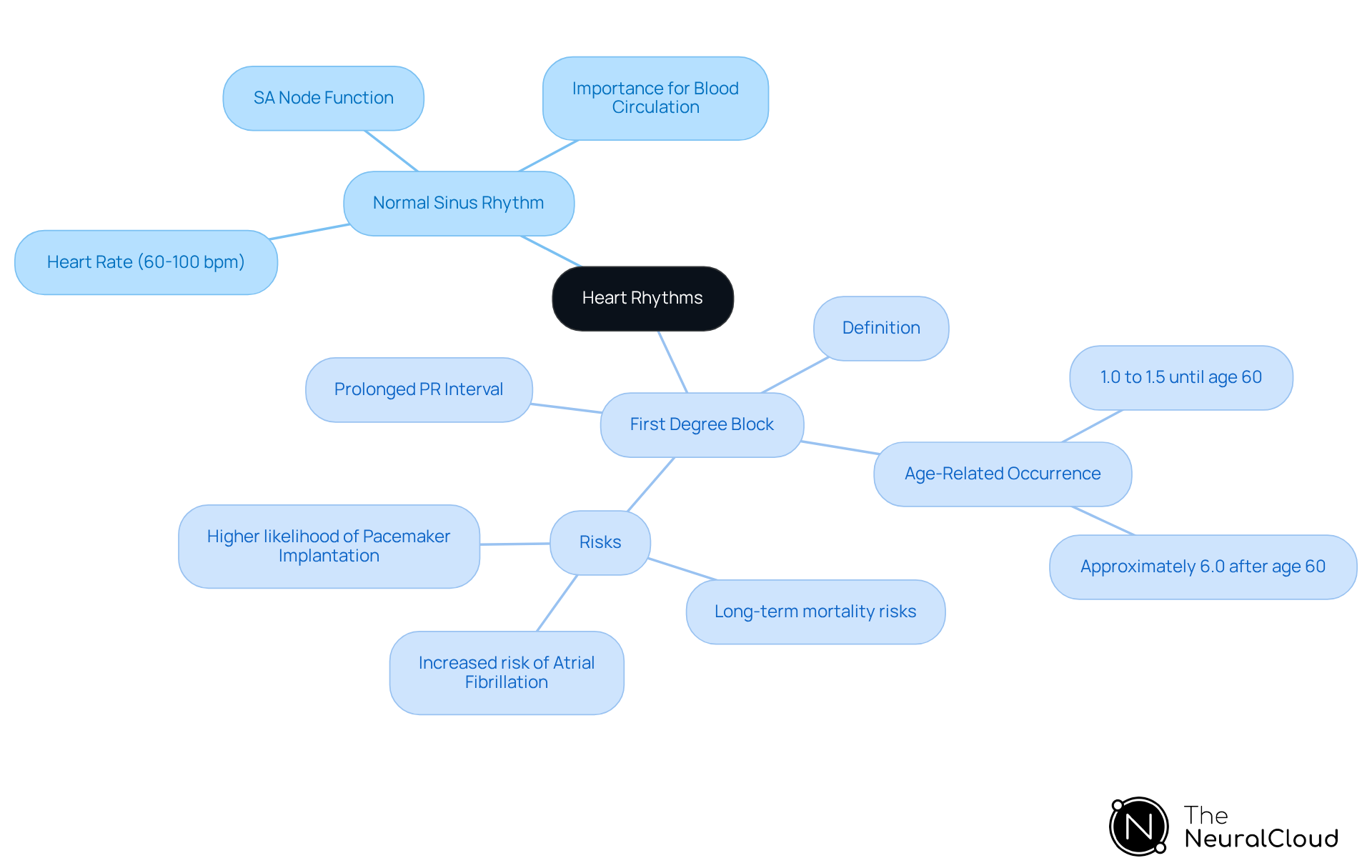
Understanding the nuances of heart rhythms is essential for effective cardiac care. Normal Sinus Rhythm (NSR) is defined by a heart rate ranging from 60 to 100 beats per minute, with electrical impulses generated by the sinoatrial (SA) node. This rhythm is vital for cardiac function. It ensures a coordinated heartbeat, which is essential for optimal blood circulation.
In contrast, Primary Level Interruption represents a type of atrioventricular (AV) interruption characterized by a delay in the conduction of electrical impulses from the atria to the ventricles. This condition is identified by a prolonged PR interval exceeding 200 milliseconds on an electrocardiogram (ECG).
While initial stage impairment is often regarded as harmless, this initial perception can be misleading, as it may mask more serious underlying issues. Epidemiological data indicate that the occurrence of primary AV obstruction rises with age, from roughly 1.0% to 1.5% until age 60, increasing to around 6.0% afterwards. Significantly, initial stage heart obstruction can frequently be asymptomatic, discovered incidentally during routine ECGs. However, recognizing these risks is vital for proactive patient management, as it is linked to heightened long-term risks of atrial fibrillation and pacemaker implantation. Understanding these dynamics is essential for healthcare professionals in assessing patient risk and managing cardiac health effectively.
The MaxYield™ platform from Neural Cloud Solutions enhances the analysis of these rhythms by employing advanced noise filtering and distinct wave recognition capabilities. This technology enables rapid isolation of ECG waves, even in recordings affected by baseline wander, movement, and muscle artifacts, thereby improving diagnostic accuracy and efficiency. Additionally, MaxYield™ automates the labeling process, salvaging previously obscured sections of ECG recordings, and is designed to comply with regulatory standards, including FDA Class II SaMD clearance-pending status. Furthermore, the integration of Insight360, a customizable visualization tool, transforms MaxYield’s clean ECG data into interactive dashboards and clinical-ready reports. By leveraging advanced technology, healthcare professionals can significantly improve patient outcomes and cardiac health management.
Explore Clinical Significance and Causes of First Degree Block
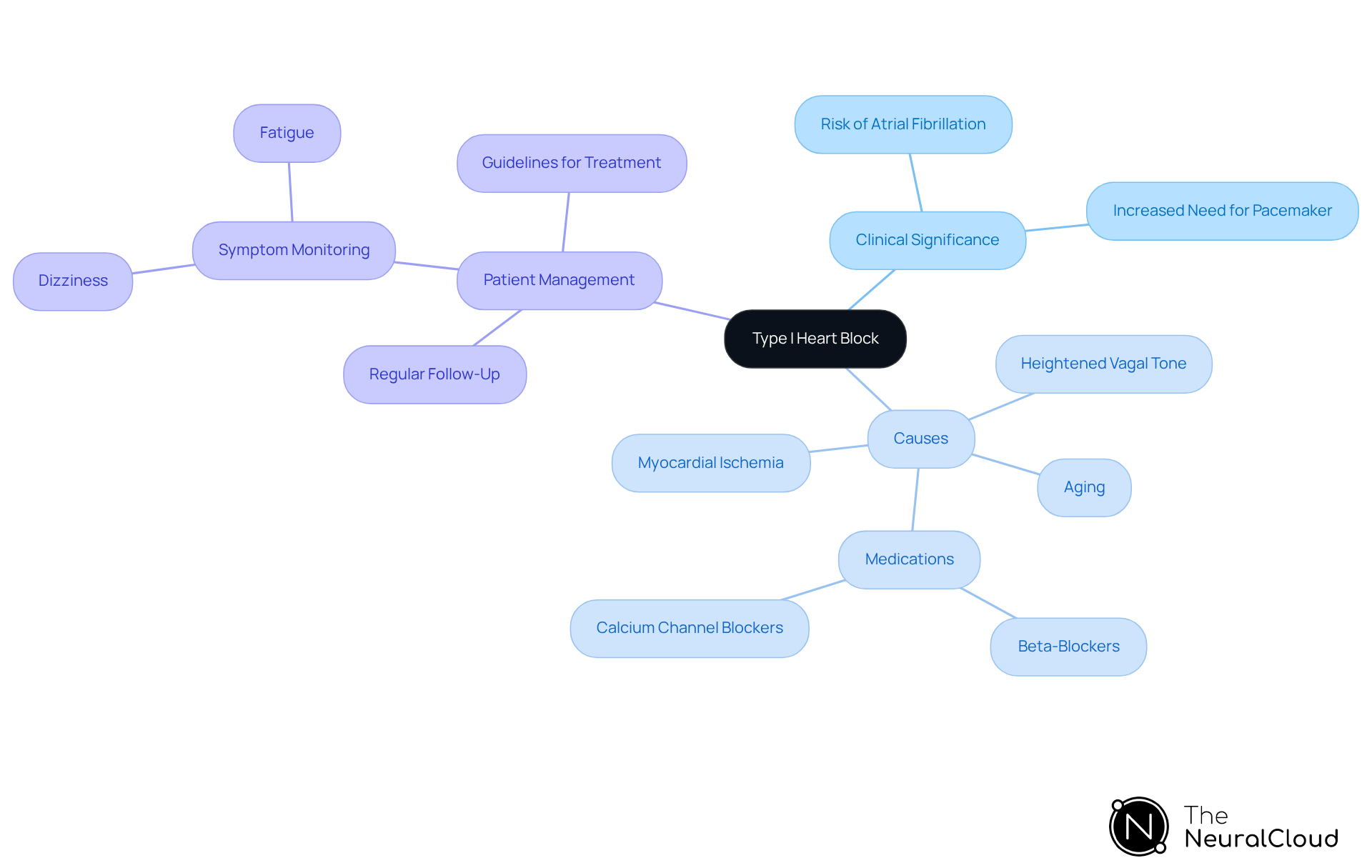
Type I heart block often goes unnoticed, yet its implications for patient care are significant. This condition is commonly asymptomatic and is often discovered incidentally during standard ECGs. However, its clinical significance is important because it may signal a higher risk of developing more severe heart block. Factors contributing to initial heart conduction delay include:
- Aging
- Heightened vagal tone
- Myocardial ischemia
- Specific medications, such as beta-blockers and calcium channel blockers
The Framingham Study showed that patients with extended PR intervals or primary heart block have twice the risk of developing atrial fibrillation and are three times more likely to need a pacemaker.
Understanding these factors is crucial for clinicians, as they help assess the risk of progression to higher-degree blocks. For example, while initial stage obstruction is often harmless, it can be linked to underlying issues such as myocardial infarction or structural heart disease, requiring careful observation. Case studies suggest that patients with initial heart conduction issues should have regular follow-up to ensure that their condition does not deteriorate, especially as they age or develop other cardiovascular problems.
Moreover, expert guidelines suggest that in the absence of symptoms, patients typically do not require treatment beyond surveillance. However, if symptoms such as dizziness or fatigue arise, further evaluation is warranted. Recognizing the nuances of Type I heart block can ultimately shape better patient management and outcomes.
In this context, Neural Cloud Solutions' MaxYield™ platform is crucial for tackling the challenges of ECG analysis. With its advanced noise filtering and distinct wave recognition capabilities, MaxYield™ can effectively isolate ECG waves from recordings that may be compromised by baseline wander, movement, and muscle artifacts. This ensures that previously obscured sections of lengthy Holter, 1-Lead, and patch monitor recordings can be salvaged, providing clinicians with clearer insights into the patient's cardiac health. As conventional ECG analysis methods frequently face challenges with elevated noise levels, MaxYield™ develops with every application, consistently enhancing its precision and effectiveness, which is crucial for handling issues such as initial heart obstruction. Additionally, the customizable visualization and reporting tool, Insight360, transforms MaxYield’s clean ECG data into interactive dashboards and clinical-ready reports, enhancing the overall analysis experience. Furthermore, it is important to note that MaxYield™ is currently pending FDA Class II SaMD clearance, ensuring compliance with regulatory standards.
Interpret ECG Readings of Normal Sinus Rhythm with First Degree Block
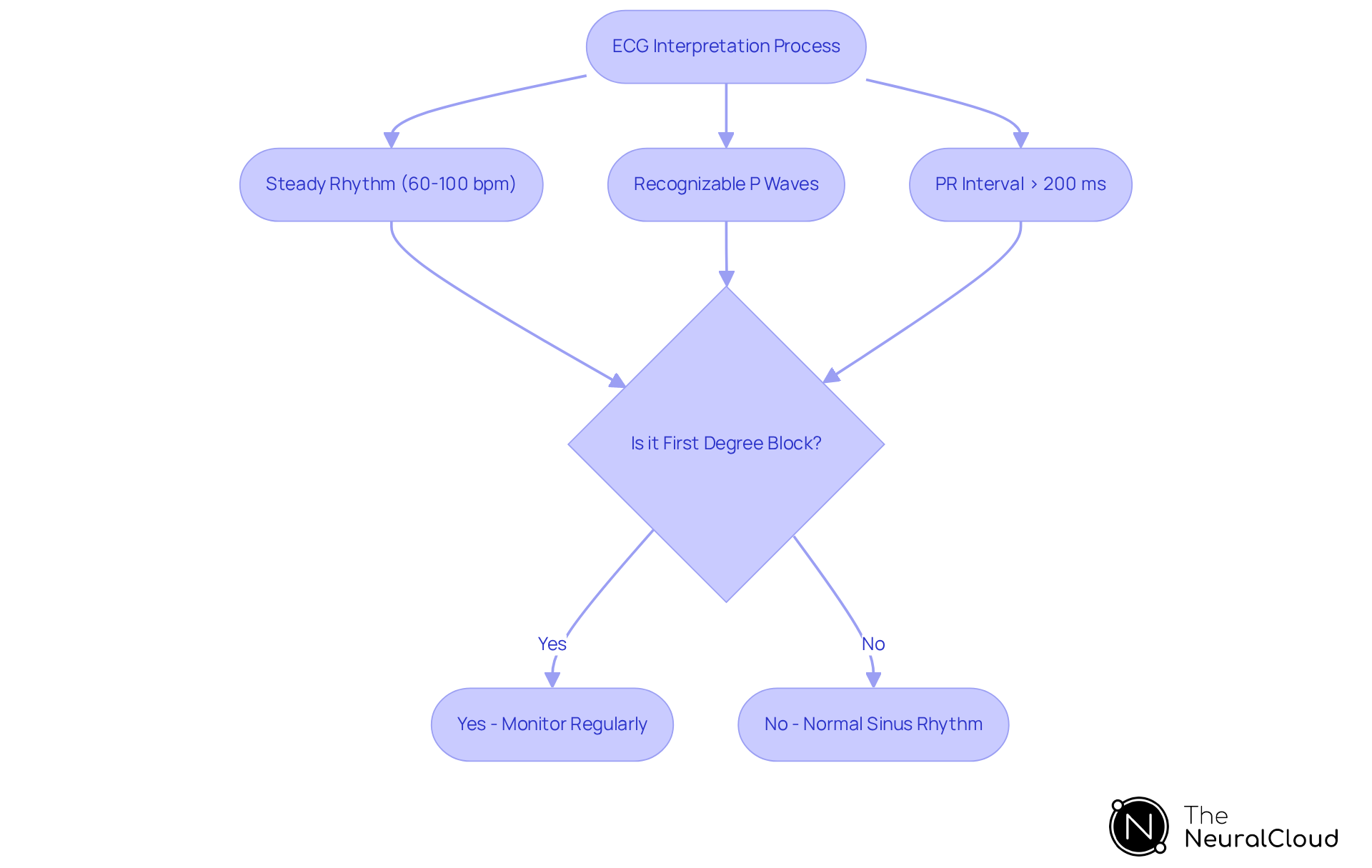
Analyzing an ECG showing normal sinus rhythm with first degree block presents unique challenges that require careful attention. Key features to note include:
- A steady rhythm with a heart rate between 60 and 100 beats per minute
- Recognizable P waves occurring before each QRS complex
- A PR interval consistently surpassing 200 milliseconds
The prolonged PR interval indicates first degree block, but the overall rhythm is a normal sinus rhythm with first degree block. Understanding this interpretation helps distinguish between normal conduction and possible abnormalities, guiding further clinical evaluation. Notably, first-degree AV block is found in approximately 1 to 2% of ECGs in healthy adults, and it is more prevalent in individuals over 60, where around 6% are affected. While first-degree heart block is often benign, it may signal future conduction problems. Regular monitoring is recommended to ensure that the condition does not progress.
The MaxYield platform from Neural Cloud Solutions significantly enhances this process. MaxYield automates the analysis of ECG signals, providing detailed insights and labeling key features in every heartbeat. This advanced ECG analysis tool not only helps in identifying cardiac events but also supports confident clinical decisions by delivering clean signals and clear data across the entire workflow. Additionally, the integration of Insight360 as a customizable visualization tool transforms MaxYield’s clean ECG data into interactive dashboards and clinical-ready reports. Integrating MaxYield into your platform transforms noisy recordings into actionable insights, providing clear benefits for ECG interpretation. Furthermore, it is important to note that MaxYield is currently pending FDA Class II SaMD clearance, ensuring compliance with regulatory standards for health tech developers. With MaxYield, healthcare professionals can confidently navigate the complexities of ECG interpretation, ultimately improving patient outcomes.
Utilize Advanced Tools for Enhanced ECG Analysis
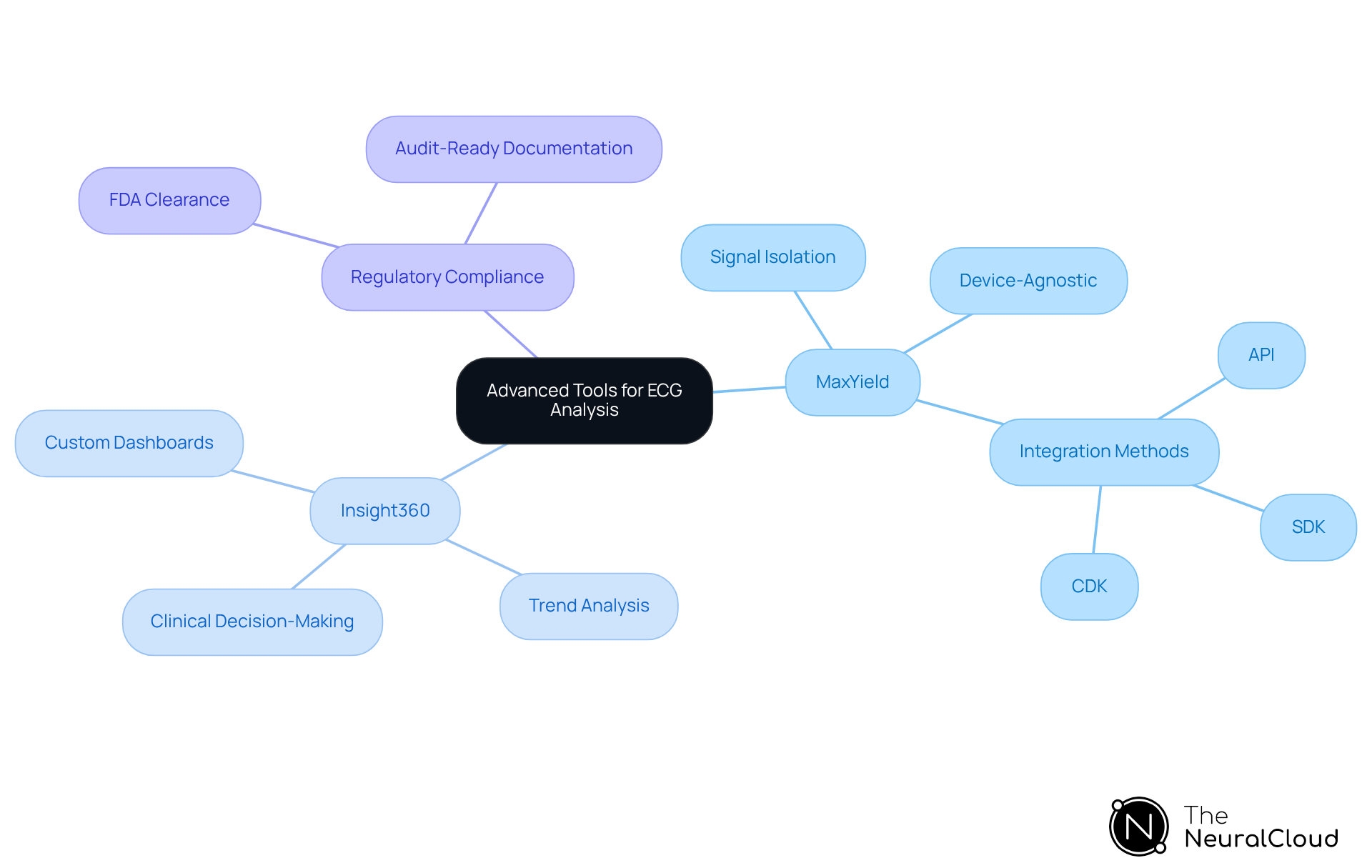
ECG analysis often faces challenges due to noisy signals that can obscure critical cardiac data. Solutions like MaxYield from Neural Cloud Solutions excel at isolating and cleaning these signals, delivering high-fidelity cardiac data crucial for accurate diagnostics. MaxYield is a device-agnostic ECG intelligence layer that integrates seamlessly via API, SDK, or CDK without requiring hardware changes.
Furthermore, visualization tools such as Insight360 facilitate the creation of customizable dashboards and reports, enabling comprehensive trend analysis and informed clinical decision-making. These advanced tools streamline workflows and enhance diagnostic capabilities, ultimately improving patient care.
Additionally, MaxYield is currently pending FDA Class II SaMD clearance, ensuring regulatory compliance and audit-ready documentation. For those interested, we invite you to contact Neural Cloud Solutions for free trials or personalized walkthroughs of MaxYield and Insight360.
Conclusion
Clinicians face significant challenges in accurately interpreting ECG readings, particularly when it comes to normal sinus rhythm and first-degree block. Understanding these heart rhythms aids in accurate diagnosis and enhances patient management strategies. Normal sinus rhythm, characterized by a heart rate of 60 to 100 beats per minute, is crucial for maintaining optimal blood circulation. In contrast, first-degree block, marked by a prolonged PR interval, can indicate underlying health risks that require careful monitoring.
This tutorial has highlighted the definitions, clinical significance, and ECG characteristics of both normal sinus rhythm and first-degree block. It emphasized the importance of recognizing the potential risks associated with first-degree block, particularly as it can often be asymptomatic yet linked to more severe conduction issues. Advanced tools like MaxYield™ from Neural Cloud Solutions enhance ECG analysis, ensuring that healthcare professionals can make informed decisions based on clear and accurate data.
In conclusion, the ability to interpret ECG readings effectively is vital for clinicians, especially in the context of normal sinus rhythm and first-degree block. By integrating advanced technologies into their practice, healthcare providers can not only enhance their diagnostic accuracy but also transform patient outcomes in cardiac care. Leveraging these insights and tools will significantly improve cardiac health outcomes and foster proactive patient management.
Frequently Asked Questions
What is Normal Sinus Rhythm (NSR)?
Normal Sinus Rhythm (NSR) is defined by a heart rate ranging from 60 to 100 beats per minute, with electrical impulses generated by the sinoatrial (SA) node, ensuring a coordinated heartbeat essential for optimal blood circulation.
What is Primary Level Interruption in the context of heart rhythms?
Primary Level Interruption refers to a type of atrioventricular (AV) interruption characterized by a delay in the conduction of electrical impulses from the atria to the ventricles, identified by a prolonged PR interval exceeding 200 milliseconds on an electrocardiogram (ECG).
Is Primary Level Interruption always harmful?
While initial stage impairment is often regarded as harmless, it can be misleading as it may mask more serious underlying issues. Recognizing these risks is vital for proactive patient management.
How does the occurrence of primary AV obstruction change with age?
The occurrence of primary AV obstruction rises with age, from roughly 1.0% to 1.5% until age 60, increasing to around 6.0% afterwards.
Can initial stage heart obstruction be asymptomatic?
Yes, initial stage heart obstruction can frequently be asymptomatic and may be discovered incidentally during routine ECGs.
What are the long-term risks associated with initial stage heart obstruction?
Initial stage heart obstruction is linked to heightened long-term risks of atrial fibrillation and the need for pacemaker implantation.
How does the MaxYield™ platform from Neural Cloud Solutions enhance ECG analysis?
The MaxYield™ platform enhances ECG analysis by employing advanced noise filtering and distinct wave recognition capabilities, enabling rapid isolation of ECG waves even in recordings affected by baseline wander, movement, and muscle artifacts.
What additional features does MaxYield™ offer for ECG recordings?
MaxYield™ automates the labeling process, salvaging previously obscured sections of ECG recordings, and is designed to comply with regulatory standards, including FDA Class II SaMD clearance-pending status.
How does Insight360 integrate with MaxYield™?
Insight360 is a customizable visualization tool that transforms MaxYield’s clean ECG data into interactive dashboards and clinical-ready reports, improving the overall management of cardiac health.
List of Sources
- Define Normal Sinus Rhythm and First Degree Block
- First Degree Heart Block (https://litfl.com/first-degree-heart-block-ecg-library)
- Understanding First-Degree Heart Block | UMass Memorial Health (https://ummhealth.org/health-library/understanding-first-degree-heart-block)
- First-Degree Heart Block - StatPearls - NCBI Bookshelf (https://ncbi.nlm.nih.gov/books/NBK448164)
- First-Degree Atrioventricular Block: Background, Pathophysiology, Etiology (https://emedicine.medscape.com/article/161829-overview)
- thecardiologyadvisor.com (https://thecardiologyadvisor.com/ddi/av-block-first-second-third-degree)
- Explore Clinical Significance and Causes of First Degree Block
- A Guide to the Causes of First-Degree Heart Block (https://myheart.org.sg/heart-news/first-degree-heart-block-causes-is-it-always-a-sign-of-heart-disease)
- First-Degree Heart Block - StatPearls - NCBI Bookshelf (https://ncbi.nlm.nih.gov/books/NBK448164)
- Prevalence of first-degree atrioventricular block and the associated risk factors: a cross-sectional study in rural Northeast China - BMC Cardiovascular Disorders (https://link.springer.com/article/10.1186/s12872-019-1202-4)
- Interpret ECG Readings of Normal Sinus Rhythm with First Degree Block
- First-Degree AV Block on Your ECG: What Does It Really Mean? - Heart Matters (https://heartmatters.com/first-degree-av-block-on-your-ecg-what-does-it-really-mean)
- Do You Know the Symptoms of Heart Block? (https://my.clevelandclinic.org/health/diseases/17056-heart-block)
- A Guide to the Causes of First-Degree Heart Block (https://myheart.org.sg/heart-news/first-degree-heart-block-causes-is-it-always-a-sign-of-heart-disease)
- First-Degree Atrioventricular (AV) Block ECG Review (https://healio.com/cardiology/learn-the-heart/ecg-review/ecg-topic-reviews-and-criteria/first-degree-av-block-review)
- 1st degree ventricular block: Causes, symptoms, and treatment (https://medicalnewstoday.com/articles/1st-degree-heart-block)
- Utilize Advanced Tools for Enhanced ECG Analysis
- Major AI Health Partnership: MaxYield ECG Tech Powers Next-Gen Smart Ring Through Multi-Year License Deal (https://stocktitan.net/news/AIMLF/aiml-subsidiary-neural-cloud-signs-loi-with-circular-health-to-2oh9lpuw71dy.html)
- New study finds AI model improves heart attack detection (https://health.ucdavis.edu/news/headlines/new-study-finds-ai-model-improves-heart-attack-detection/2025/11)
- AI-Based ECG Analysis Significantly Improves STEMI Detection, Reduces False Activations - American College of Cardiology (https://acc.org/latest-in-cardiology/articles/2025/10/24/16/56/tues-554pm-ai-tct-2025)
- AIML Subsidiary Neural Cloud Signs LOI with Circular Health to License MaxYield(TM) ECG Signal Processing (https://finance.yahoo.com/news/aiml-subsidiary-neural-cloud-signs-110000257.html)