Introduction
The complex realm of electrocardiograms (ECGs) offers crucial insights into cardiac health, with T waves acting as essential indicators of the heart's electrical activity. Grasping the nuances of these waves, especially the importance of peaked T waves, can enable healthcare professionals to make timely and precise diagnoses. Yet, the challenge remains in interpreting these signals effectively, given the diverse conditions of patients.
This is where advanced technologies like MaxYield™ come into play. The platform enhances the analysis of T waves by providing sophisticated algorithms that streamline the interpretation process. By automating the detection of abnormalities, MaxYield™ ensures that critical issues are not missed, allowing for quicker and more accurate clinical decisions.
For healthcare professionals, the benefits are significant. With MaxYield™, they can expect improved diagnostic accuracy, reduced analysis time, and ultimately, better patient outcomes. This innovative approach not only simplifies the complexities of ECG interpretation but also empowers clinicians to focus more on patient care.
Define T Waves and Their Role in ECG Analysis
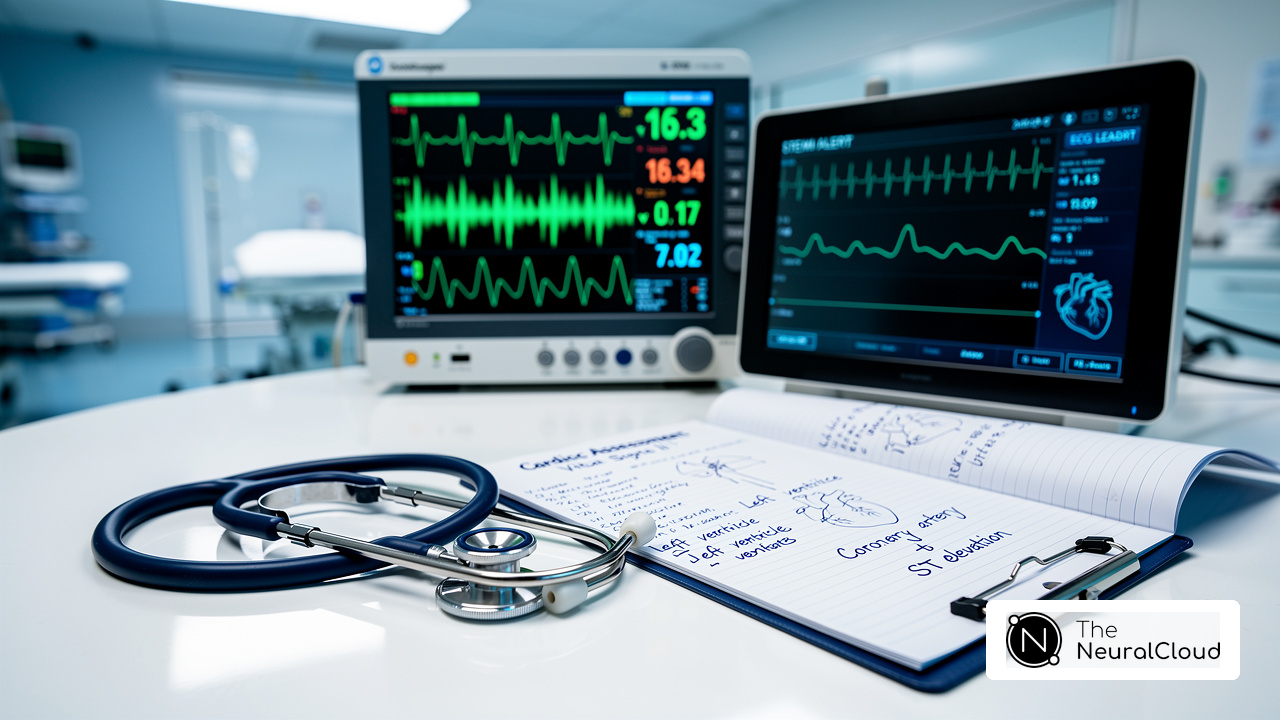
T Waves are a crucial component of the electrocardiogram (ECG), depicting the repolarization phase of the ventricles after contraction. Typically seen as positive deflections in most leads, T Waves provide essential insights into the heart's electrical activity and overall health. Irregularities in T wave shape, amplitude, or duration can suggest a variety of cardiac conditions, including ischemia, electrolyte imbalances, and structural heart diseases.
Clinical case studies emphasize the importance of T Wave analysis. For example, peaked T waves are frequently seen in hyperkalemia, while inverted T shapes can suggest conditions like pulmonary embolism or myocardial infarction. In pediatric populations, inverted T patterns in the right precordial leads (V1-3) are common and typically reflect the dominance of right ventricular forces. However, persistent juvenile T-patterns may continue into adulthood.
The prevalence of T Wave abnormalities in cardiac patients underscores their diagnostic significance. Research has indicated that T inversions can be persistent following myocardial infarction, acting as a sign of ongoing cardiac problems. Furthermore, T Wave morphology is valuable in predicting major adverse cardiovascular events (MACE), with specific patterns correlating with these serious outcomes.
Recent advancements in ECG analysis technology, such as Neural Cloud Solutions' MaxYield™ Technology, enhance the clarity and speed of T signal interpretation. Key features of MaxYield™ include:
- Advanced filtering that improves signal clarity.
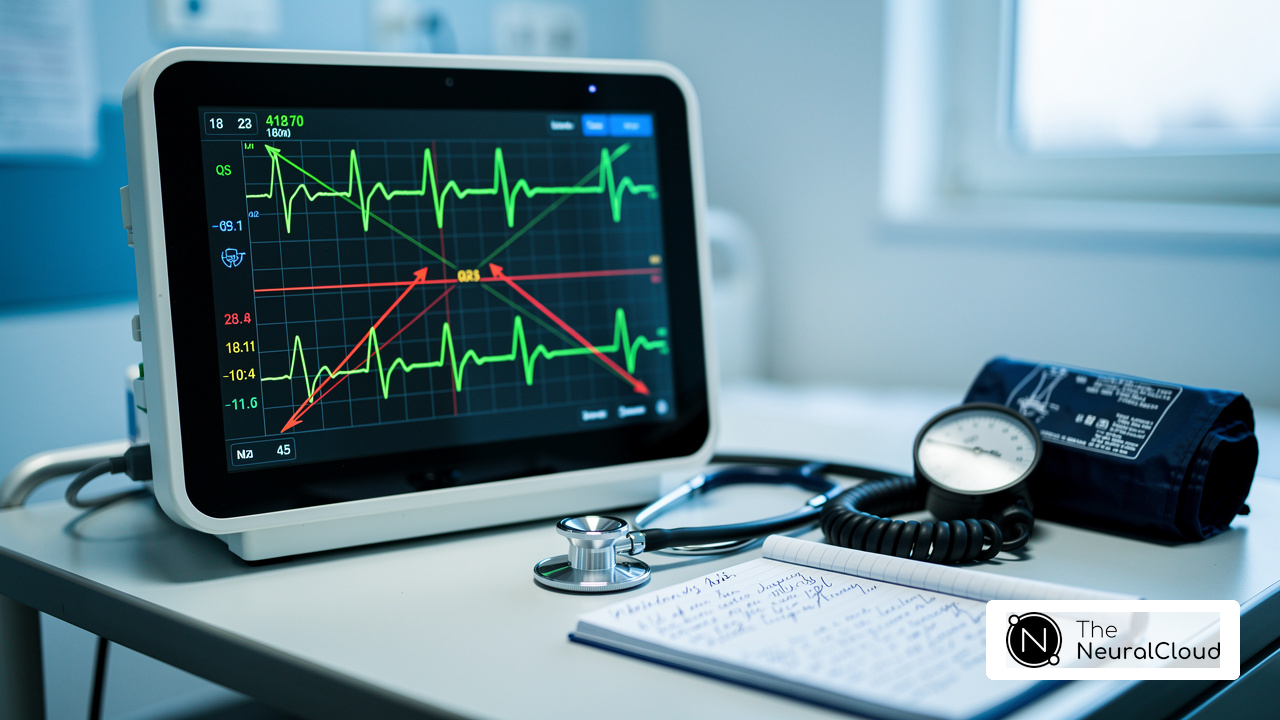
- Highlighting of P, QRS, and T waves for easier identification.
- Automation of T signal onset, offset, and intervals.
These features lead to significant advantages for healthcare professionals, including optimized workflow and improved risk stratification for patients at risk of arrhythmias or other cardiac conditions. As healthcare experts continue to utilize these advancements, observing dynamic ECG alterations during follow-up becomes vital for evaluating treatment effectiveness. Understanding the role of T Waves in cardiac well-being is critical for precise diagnosis and prompt intervention.

Identify Characteristics of Peaked T Waves
Peaked T forms are characterized by their tall, narrow, and symmetrical appearance, often resembling a tent shape. Typically, these oscillations can be even taller in precordial leads, particularly V2 to V4. Clinicians should be vigilant for the following key features:
- Symmetry: Peaked T forms display symmetry, with both sides of the peak equal in height.
- Shape: The waveform rises sharply to a distinct point.
- Lead Specificity: These oscillations are often observed in specific leads, such as II, III, and aVF, particularly in cases of hyperkalemia, where serum potassium levels exceed 5.5 mEq/L.
Recognizing these characteristics is crucial for diagnosis, as they may lead to serious complications, including arrhythmias. The integration of MaxYield™ technology enhances analysis by filtering out noise and artifacts, facilitating precise analysis and rapid detection of these critical indicators.
MaxYield™ provides beat-by-beat insights from 200,000 heartbeats in less than 5 minutes. This platform allows healthcare professionals to leverage automated analysis, improving clinical decision-making and effectively managing physiological variability. By utilizing MaxYield™, clinicians can enhance their diagnostic capabilities, ensuring timely interventions and better patient outcomes.

Explore Clinical Implications of Peaked T Waves
are vital indicators in ECG analysis, often associated with serious medical conditions like hyperkalemia, which can lead to life-threatening arrhythmias if not addressed promptly. The implications include:
- Elevated potassium levels are a primary cause of T wave abnormalities, signaling the urgent need for intervention.
- These T changes, specifically the peaked T waves on the EKG, may also indicate early myocardial infarction, necessitating further diagnostic assessment and possible intervention to mitigate risks.
- In certain situations, the presence of peaked T waves serves as an early indicator for acute coronary syndrome, requiring immediate medical attention.
Understanding these implications allows healthcare providers to prioritize patient care effectively, ensuring timely interventions. For instance, a patient exhibiting peaked T wave patterns alongside chest pain may require swift evaluation for myocardial infarction or unstable angina, as evidenced by cases where raised troponin levels confirmed NSTEMI following initial ST depression. Moreover, recognizing peaked T waves in the context of Wellens Syndrome can indicate significant narrowing of the proximal LAD artery, underscoring the need for prompt action. By leveraging MaxYield™ technology, healthcare professionals can enhance their diagnostic capabilities, ensuring accurate and timely responses to these critical ECG findings.

Apply MaxYield™ for Analyzing Peaked T Waves
ECG analysis often presents challenges, particularly in accurately identifying and interpreting EKG. The MaxYield™ technology addresses these issues by automating the identification and interpretation process, adhering to best practices. This technology leverages advanced algorithms, allowing healthcare professionals to streamline workflows and enhance the accuracy of ECG interpretations.
Features of MaxYield™:
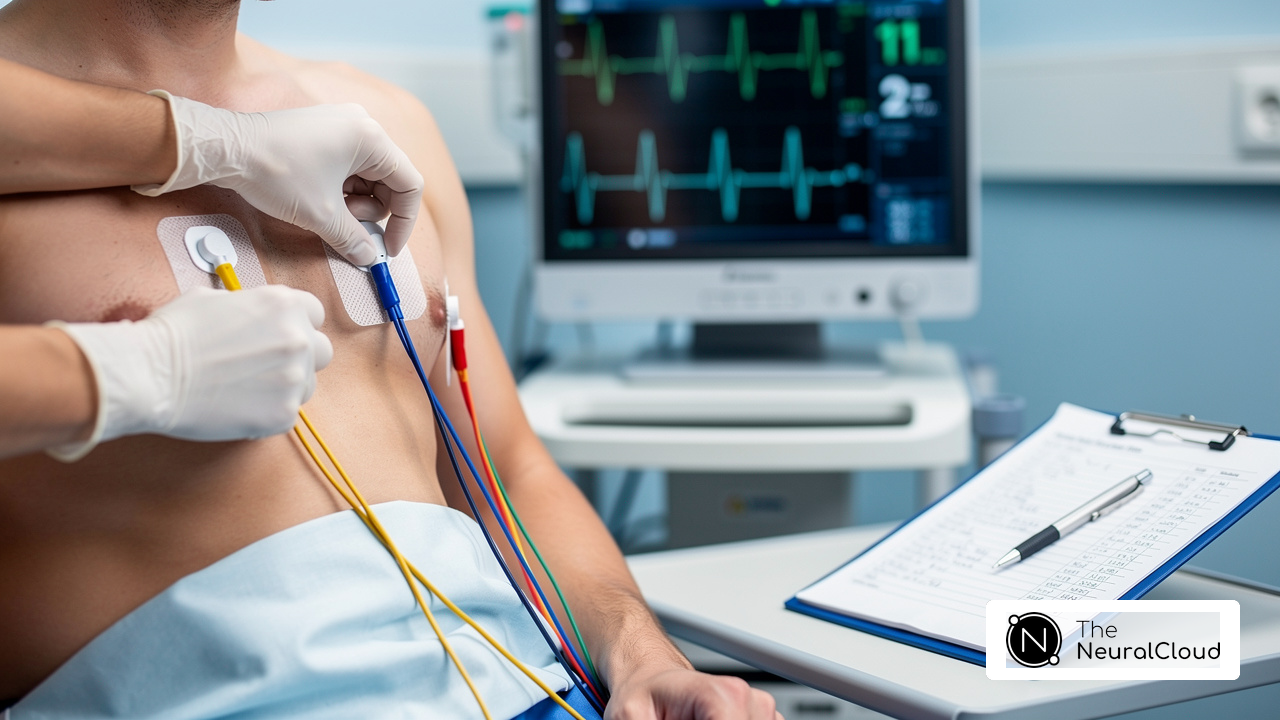
- Import ECG data: Import ECG data from your device into the designated platform.
- Select Analysis Parameters: Choose specific parameters for T signal analysis, including peak detection and amplitude thresholds.
- Data Processing: The system processes the data using advanced algorithms to filter noise and enhance signal clarity, enabling quicker data processing.
- Review Results: Examine automated reports generated by MaxYield™, which highlight key findings and provide insights into their significance.
By utilizing this technology, healthcare professionals can achieve faster, more accurate ECG interpretations. This ultimately leads to improved patient outcomes, making MaxYield™ an invaluable tool in modern healthcare.

Conclusion
Understanding peaked T waves in EKG analysis is crucial for healthcare professionals who want to improve diagnostic accuracy and patient care. T waves play a vital role in the electrocardiogram, and recognizing their significance is key to detecting various cardiac conditions. Advanced technology, particularly MaxYield™, revolutionizes how clinicians interpret these essential signals, facilitating timely and effective interventions.
The characteristics of peaked T waves and their clinical implications are critical for accurate diagnosis. MaxYield™ offers innovative features that streamline ECG analysis, allowing healthcare providers to quickly identify the distinctive traits of peaked T waves. By understanding their associations with conditions like hyperkalemia and myocardial ischemia, clinicians can prioritize patient management and enhance outcomes. The integration of automated analysis and noise filtering through MaxYield™ empowers healthcare professionals to make informed decisions swiftly.
In an environment where timely diagnosis can greatly influence patient health, adopting advanced tools like MaxYield™ is essential. By mastering the nuances of peaked T waves and leveraging cutting-edge technology, healthcare professionals can significantly enhance their diagnostic capabilities. This not only paves the way for improved patient care but also leads to more effective management of cardiac conditions.
Frequently Asked Questions
What are T waves in an ECG?
T waves are a crucial component of the electrocardiogram (ECG) that depict the repolarization phase of the ventricles after contraction. They typically appear as positive deflections in most leads.
Why are T waves important in ECG analysis?
T waves provide essential insights into the heart's electrical activity and overall health. Irregularities in their shape, amplitude, or duration can indicate various cardiac conditions, such as ischemia, electrolyte imbalances, and structural heart diseases.
What do abnormalities in T waves indicate?
Abnormalities in T waves can suggest several cardiac issues. For example, peaked T waves may indicate hyperkalemia, while inverted T waves can suggest conditions like pulmonary embolism or myocardial ischemia.
Are there specific T wave patterns in pediatric populations?
Yes, inverted T patterns in the right precordial leads (V1-3) are common in pediatric populations and typically reflect the dominance of right ventricular forces. However, these patterns may persist into adulthood in some cases.
How significant are T wave abnormalities in cardiac patients?
T wave abnormalities are significant as they can indicate ongoing cardiac problems. For instance, T inversions can persist after a myocardial infarction and are associated with major adverse cardiovascular events (MACE).
What advancements have been made in ECG analysis technology regarding T waves?
Recent advancements, such as Neural Cloud Solutions' MaxYield™, enhance the clarity and speed of T wave interpretation. Key features include noise filtering, highlighting of P, QRS, and T signals, and automation of T signal onset, offset, and intervals.
What are the benefits of using advanced ECG analysis tools for T wave interpretation?
These advanced tools optimize workflow for healthcare professionals and improve risk stratification for patients at risk of arrhythmias or other cardiac conditions, aiding in the evaluation of treatment effectiveness.
List of Sources
- Define T Waves and Their Role in ECG Analysis
- theneuralcloud.com (https://theneuralcloud.com/post/t-wave-ecg-analysis)
- medpagetoday.com (https://medpagetoday.com/medical-journeys/cardiomyopathy/106214)
- The T-wave: physiology, variants and ECG features – (https://ecgwaves.com/the-t-wave-physiology-variants-and-ecg-features)
- T wave (https://litfl.com/t-wave-ecg-library)
- pmc.ncbi.nlm.nih.gov (https://pmc.ncbi.nlm.nih.gov/articles/PMC11287209)
- Identify Characteristics of Peaked T Waves
- Checking your browser - reCAPTCHA (https://pubmed.ncbi.nlm.nih.gov/31686358)
- theneuralcloud.com (https://theneuralcloud.com/post/understanding-peaked-t-waves-in-hyperkalemia-a-comprehensive-tutorial)
- Explore Clinical Implications of Peaked T Waves
- Myocardial Ischaemia (https://litfl.com/myocardial-ischaemia-ecg-library)
- Apply MaxYield™ for Analyzing Peaked T Waves
- theneuralcloud.com (https://theneuralcloud.com/post/10-must-know-features-of-the-ecg-monitor-patch-for-health-tech-developers)
- Checking your browser - reCAPTCHA (https://pmc.ncbi.nlm.nih.gov/articles/PMC10145690)
- Checking your browser - reCAPTCHA (https://pmc.ncbi.nlm.nih.gov/articles/PMC12419789)