Introduction
Rapid atrial flutter poses significant challenges for healthcare professionals, especially in urban centers like Toronto and Calgary, where heart rhythm disturbances are on the rise. Let’s explore the key characteristics, symptoms, and treatment options for rapid atrial flutter together.
By leveraging innovative solutions like MaxYield™, clinicians can enhance diagnostic accuracy and streamline patient management, ultimately leading to better health outcomes. Understanding these complexities and adopting innovative strategies can significantly improve patient outcomes in the face of this pressing health concern.
Define Rapid Atrial Flutter: Key Characteristics and Mechanisms
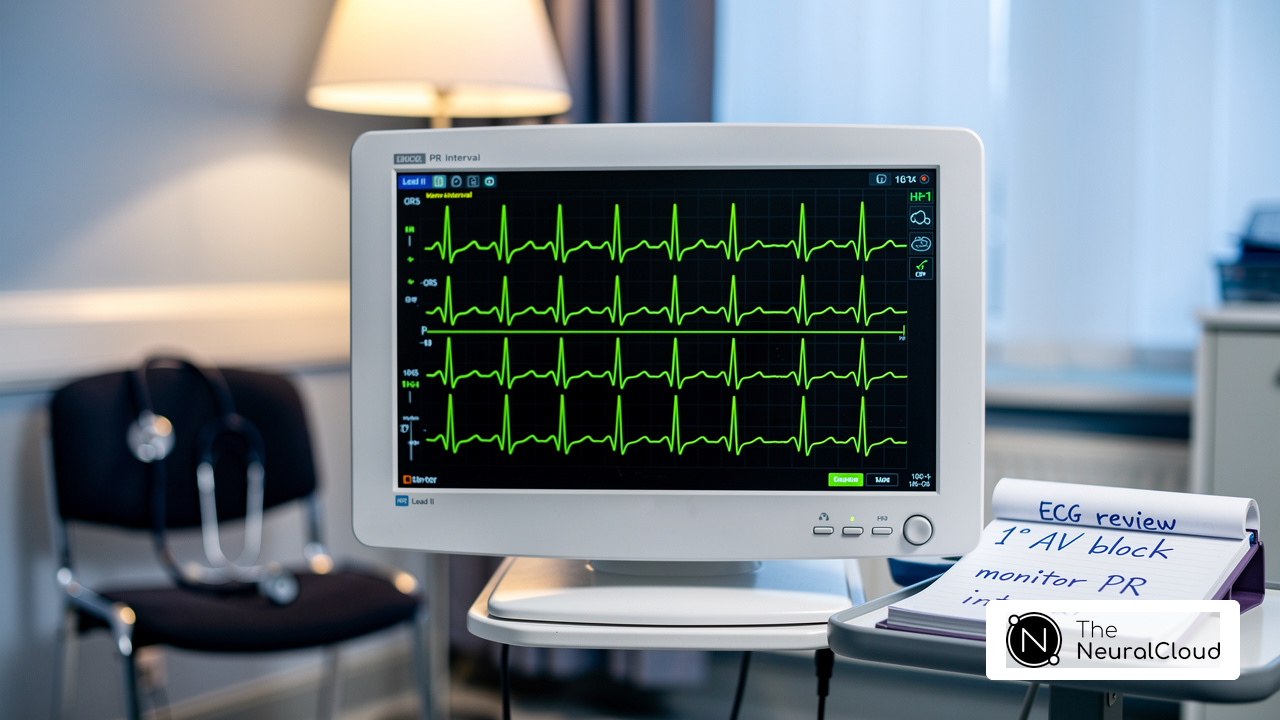
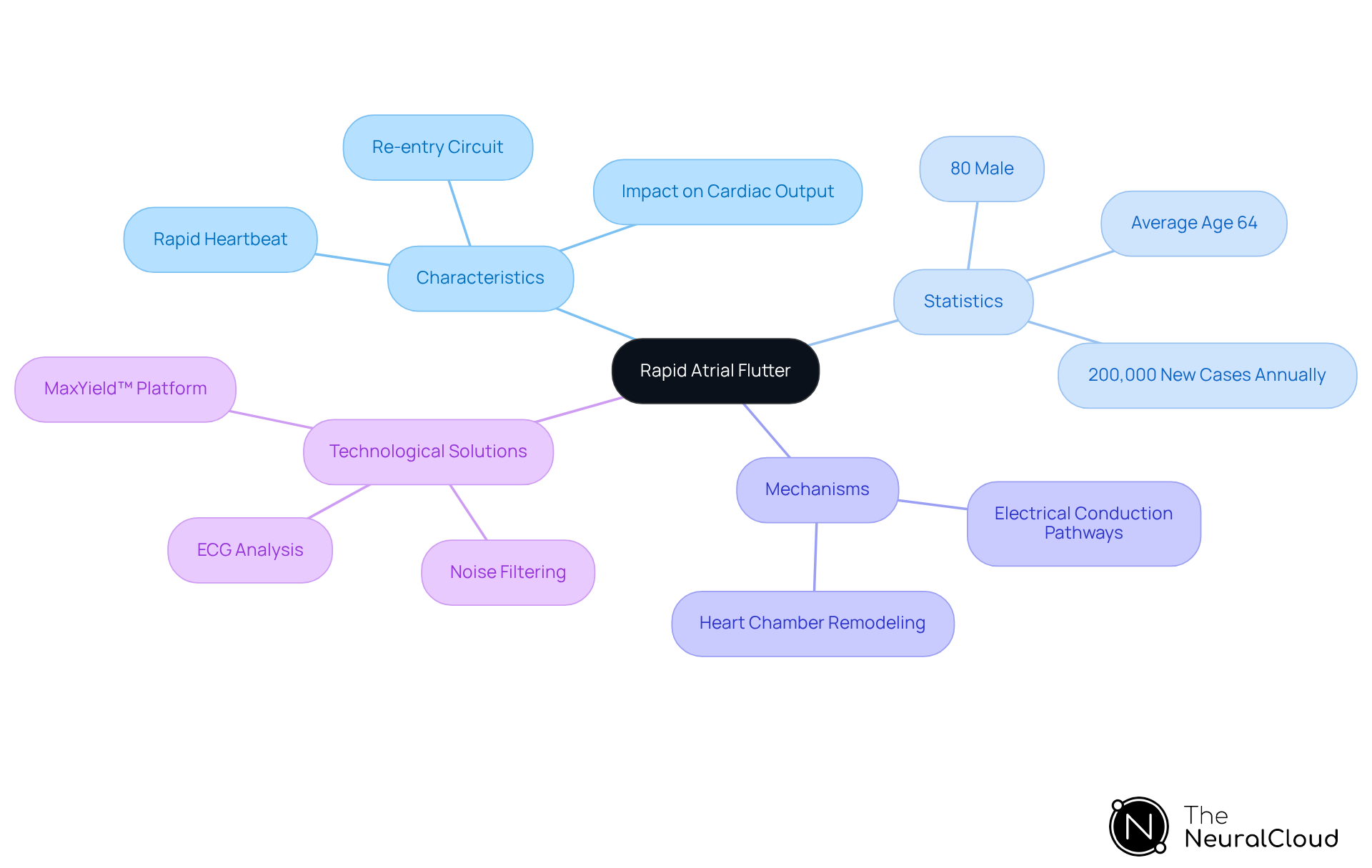
The swift and consistent heartbeat characteristic of supraventricular tachycardia presents significant challenges in ECG analysis and patient management. This condition is defined by a rapid heartbeat originating from the upper chambers, typically ranging from 240 to 400 beats per minute. It is primarily driven by a re-entry circuit, often localized within the right atrium. The rapid atrial flutter causes rapid contractions of the atria, which can hinder their ability to fill completely with blood, leading to decreased cardiac output and an increased risk of thromboembolic events.
In Canada, around 200,000 new cases of heart rhythm disturbances arise annually, particularly among older adults. Key statistics include:
- 80% of affected patients are male.
- The average age of those impacted is 64 years.
This demographic insight underscores the importance of targeted interventions and monitoring for at-risk populations, especially in urban centers like Toronto and Calgary.
Understanding how swift heart rhythm disturbances work is key to diagnosing and treating them effectively. Key factors include the electrical conduction pathways and the remodeling of heart tissue, which can contribute to the arrhythmia's persistence. Recent studies emphasize the significance of heart chamber remodeling in the emergence of unusual rhythm disturbances, which may involve complex re-entrant circuits and require specialized management approaches.
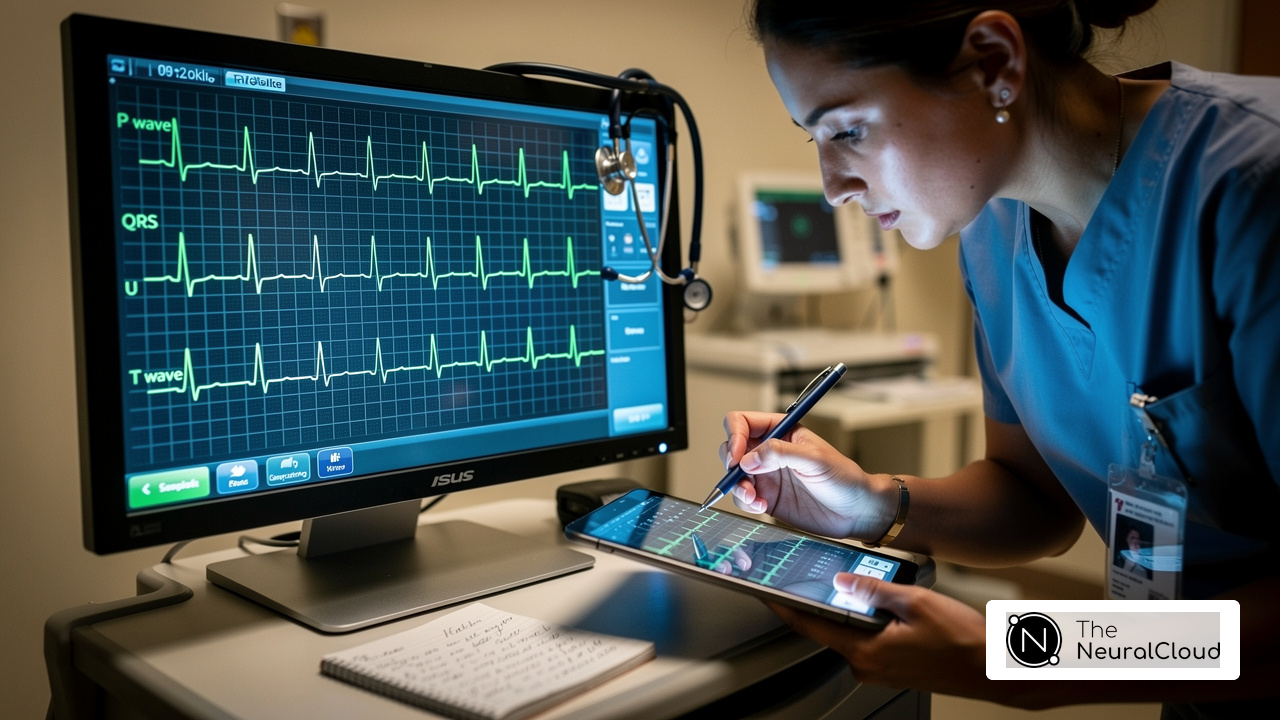
Neural Cloud Solutions Inc.'s MaxYield™ platform plays a crucial role in improving the analysis of ECG data associated with heart rhythm disturbances. By ensuring clean PPG data and hospital-grade accuracy from consumer devices, MaxYield™ addresses the challenges of physiological variability and signal artifacts. Its advanced noise filtering and distinct wave recognition capabilities enable the swift isolation of ECG waves, even in recordings with high levels of noise and artifact. This technology boosts diagnostic accuracy and lightens the load of manual interpretation, making clinical work more efficient. Furthermore, MaxYield™ is designed to comply with regulatory standards, including FDA Class II SaMD clearance-pending status, ensuring that it meets the highest quality benchmarks.
Case studies involving Canadian patients have demonstrated the varied presentations of rapid atrial flutter, including occurrences of 1:1 conduction, where the ventricular rate can reach 250-300 bpm, indicating potential hemodynamic instability. These cases emphasize the need for timely intervention, such as electrical cardioversion, to restore normal rhythm and prevent complications. Furthermore, anticoagulation strategies are essential in handling heart rhythm disturbances to reduce the risk of thromboembolic occurrences.
Overall, a thorough comprehension of swift heart rhythm's traits and mechanisms, combined with the advanced features of MaxYield™, is crucial for healthcare professionals to improve patient outcomes and refine treatment strategies. As Dr. Alan Rabinowitz notes, "MaxYield’s precision rivals human interpretation, significantly improving the accuracy of ECG analysis and reducing noise-related errors." Moreover, the platform offers unique metrics and premium subscription opportunities that can further empower clinicians in their practice. Understanding these dynamics, alongside the capabilities of MaxYield™, equips healthcare professionals to enhance patient care and outcomes significantly.
Identify Symptoms of Rapid Atrial Flutter: Clinical Presentation and Warning Signs
Recognizing symptoms of rapid atrial flutter is crucial, as they can vary widely among individuals and may sometimes go unnoticed. Here are some common indicators to watch for:
- Palpitations: A sensation of a racing or fluttering heartbeat, which can be alarming.
- Shortness of Breath: Difficulty breathing, especially during exertion, may indicate compromised cardiac function.
- Dizziness or Lightheadedness: Feelings of faintness or unsteadiness can be attributed to decreased cardiac output.
- Chest Pain: Discomfort or pain in the chest area, sometimes mistaken for angina, necessitating careful evaluation.
- Fatigue: A pervasive sense of tiredness or lack of energy reflects the heart's inefficiency in maintaining adequate circulation.
In Canada, these symptoms are prevalent among patients experiencing rapid atrial flutter. This underscores the need for awareness and prompt action, as unmanaged cases can result in serious health dangers, including stroke and heart failure. As stated by the Cleveland Clinic, "It’s important to maintain your appointments because it’s common for heart rhythm disturbances to recur." Timely recognition of these symptoms can be the difference between effective treatment and serious health complications.

Explore Treatment Options for Rapid Atrial Flutter: Medications and Procedures
Managing rapid heart rhythm disturbances is crucial, as failure to address them can lead to serious complications such as stroke and cardiomyopathy. Treatment typically involves a combination of medications and procedures aimed at restoring normal cardiac rhythm. Common treatment options include:
- Medications: Antiarrhythmic drugs such as beta-blockers (e.g., metoprolol) and calcium channel blockers (e.g., diltiazem) are often used to control heart rate and rhythm. Furthermore, anticoagulants might be recommended to lower the risk of stroke, especially significant since heart rhythm disturbances can result in severe issues such as stroke and cardiomyopathy.
- Electrical Cardioversion: This procedure involves delivering a controlled electric shock to the heart to restore normal rhythm. It is frequently conducted in a hospital environment and has a high success rate, with internal cardioversion attaining a 95% success rate for converting fibrillation to normal sinus rhythm.
- Catheter Ablation: A minimally invasive procedure that targets the abnormal electrical pathways causing heart rhythm disturbances. This technique has shown high success rates, with studies indicating a 97% success rate in curing the condition. Furthermore, catheter ablation has been associated with a significant reduction in healthcare utilization, including a 40% decrease in emergency department visits following the procedure. A recent study indicates that catheter ablation ought to be regarded as a primary treatment for heart rhythm disturbances, contrary to existing guidelines that categorize it as a Class IIa recommendation.
Recognizing the effectiveness of catheter ablation could transform treatment approaches and improve patient outcomes significantly.

Leverage Advanced ECG Technologies: Enhancing Diagnosis and Treatment of Atrial Flutter
Diagnosing rapid atrial flutter presents significant challenges for healthcare professionals, often leading to misinterpretations and delayed treatments. Advanced ECG technologies are essential in addressing these challenges, with key innovations including:
- AI-Driven ECG Analysis: Machine learning algorithms enhance the detection of atrial flutter by identifying subtle patterns often overlooked by traditional methods. In Canada, healthcare professionals are increasingly turning to MaxYield™ from Neural Cloud Solutions Inc., which delivers beat-by-beat analysis and isolates critical ECG features even in noisy recordings. This technology reflects a broader trend towards integrating advanced analytics in healthcare, supported by regulatory compliance, including FDA Class II SaMD clearance-pending status.
- Wearable ECG Monitors: Continuous monitoring devices provide real-time data, facilitating early detection of arrhythmias and timely interventions. The fastest-growing segment in the ECG market is single-lead ECG devices, projected to grow at a CAGR of 7.4% from 2025 to 2030. This underscores the increasing reliance on portable solutions for cardiac monitoring, aligning with the trend towards advanced analytics in healthcare.
Telemedicine solutions, including remote monitoring and telehealth consultations, empower healthcare providers to manage patients more effectively, particularly those with rapid atrial flutter. This integration is supported by Canada's robust healthcare infrastructure, which prioritizes digital health solutions and preventive care initiatives.
Additionally, expert endorsements from Dr. Alan Rabinowitz, Dr. Brett Heilbron, and Dr. Marc W. Deyell emphasize that when healthcare professionals incorporate advanced technologies like MaxYield™ into their practice, they can significantly improve diagnostic accuracy, streamline workflows, and enhance overall patient care. Incorporating MaxYield™ into clinical practice not only enhances diagnostic accuracy but also transforms patient care through timely interventions.

Conclusion
Rapid atrial flutter presents serious challenges for healthcare professionals, necessitating effective management to safeguard patient health. This condition, characterized by a rapid heartbeat originating from the upper chambers of the heart, requires a comprehensive approach to diagnosis and treatment. Utilizing MaxYield™ allows clinicians to improve diagnostic capabilities and enhance patient outcomes.
The key characteristics and mechanisms of rapid atrial flutter are crucial for understanding its impact. Recognizing symptoms such as palpitations, shortness of breath, and dizziness is vital. Treatment options, including medications, electrical cardioversion, and catheter ablation, can significantly reduce the risk of complications like stroke. Moreover, the integration of advanced ECG technologies, particularly AI-driven analysis and wearable monitors, is transforming how healthcare providers diagnose and manage this condition.
In conclusion, the insights provided underscore the critical need for awareness and timely intervention in cases of rapid atrial flutter. Embracing technologies like MaxYield™ not only enhances diagnostic accuracy but also plays a pivotal role in improving patient care and outcomes. The evolution of technology in cardiac health management opens doors for better treatment strategies and can truly save lives.
Frequently Asked Questions
What is rapid atrial flutter?
Rapid atrial flutter is a condition characterized by a swift and consistent heartbeat originating from the upper chambers of the heart, typically ranging from 240 to 400 beats per minute. It is primarily driven by a re-entry circuit, often localized within the right atrium.
What are the effects of rapid atrial flutter on the heart?
Rapid atrial flutter causes rapid contractions of the atria, which can hinder their ability to fill completely with blood. This can lead to decreased cardiac output and an increased risk of thromboembolic events.
How prevalent is rapid atrial flutter in Canada?
In Canada, approximately 200,000 new cases of heart rhythm disturbances arise annually, particularly among older adults. Notably, 80% of affected patients are male, and the average age of those impacted is 64 years.
What factors contribute to the persistence of rapid atrial flutter?
Key factors include the electrical conduction pathways and the remodeling of heart tissue, which can contribute to the arrhythmia's persistence. Recent studies highlight the significance of heart chamber remodeling in the emergence of unusual rhythm disturbances.
How does MaxYield™ assist in the analysis of ECG data related to heart rhythm disturbances?
MaxYield™ improves the analysis of ECG data by ensuring clean PPG data and hospital-grade accuracy from consumer devices. It features advanced noise filtering and distinct wave recognition capabilities, enabling the swift isolation of ECG waves even in recordings with high levels of noise and artifact.
What are the implications of 1:1 conduction in rapid atrial flutter?
In cases of 1:1 conduction, the ventricular rate can reach 250-300 bpm, indicating potential hemodynamic instability. This emphasizes the need for timely intervention, such as electrical cardioversion, to restore normal rhythm and prevent complications.
Why are anticoagulation strategies important in managing heart rhythm disturbances?
Anticoagulation strategies are essential to reduce the risk of thromboembolic occurrences in patients with heart rhythm disturbances, including rapid atrial flutter.
What is the significance of MaxYield™ in clinical practice?
MaxYield™ enhances diagnostic accuracy and reduces noise-related errors in ECG analysis, significantly improving the efficiency of clinical work. It complies with regulatory standards and offers unique metrics and premium subscription opportunities to empower clinicians in their practice.
List of Sources
- Define Rapid Atrial Flutter: Key Characteristics and Mechanisms
- Atrial Fibrillation and Atrial Flutter - Heart and Blood Vessel Disorders - Merck Manual Consumer Version (https://merckmanuals.com/home/heart-and-blood-vessel-disorders/abnormal-heart-rhythms/atrial-fibrillation-and-atrial-flutter)
- Scientists unveil new molecular mechanisms leading to atrial fibrillation (https://news-medical.net/news/20190821/Scientists-unveil-new-molecular-mechanisms-leading-to-atrial-fibrillation.aspx)
- Atrial Flutter (https://litfl.com/atrial-flutter-ecg-library)
- Atrial Flutter: Practice Essentials, Background, Pathophysiology (https://emedicine.medscape.com/article/151210-overview)
- Atrial Flutter, Typical and Atypical: A Review - PMC (https://pmc.ncbi.nlm.nih.gov/articles/PMC5522718)
- Identify Symptoms of Rapid Atrial Flutter: Clinical Presentation and Warning Signs
- Atrial flutter - Symptoms and causes (https://mayoclinic.org/diseases-conditions/atrial-flutter/symptoms-causes/syc-20352586)
- What is atrial flutter? (https://medtronic.com/en-ca/heart-device-answers/search-results/search-result.what-is-atrial-flutter.html)
- What Is Atrial Flutter? (https://my.clevelandclinic.org/health/diseases/22885-atrial-flutter)
- Atrial Flutter Clinical Presentation: History, Physical Examination (https://emedicine.medscape.com/article/151210-clinical)
- Explore Treatment Options for Rapid Atrial Flutter: Medications and Procedures
- Catheter Ablation a First-line Treatment for Atrial Flutter (https://dicardiology.com/content/catheter-ablation-first-line-treatment-atrial-flutter)
- Atrial flutter - Diagnosis and treatment - Mayo Clinic (https://mayoclinic.org/diseases-conditions/atrial-flutter/diagnosis-treatment/drc-20572204)
- Atrial Flutter (https://healthcare.utah.edu/cardiovascular/conditions/atrial-flutter)
- Atrial Flutter (https://ucsfhealth.org/care/conditions/atrial-flutter)
- Leverage Advanced ECG Technologies: Enhancing Diagnosis and Treatment of Atrial Flutter
- canada Diagnostic Electrocardiograph/ECG Market Size, Share,Trends, Growth Analysis Report, 2030 (https://marketsandmarkets.com/Market-Reports/geography/Diagnostic-ECG-global-Market/canada)
- AI at the heart of new SFU gel-free ECG system for faster diagnoses (https://sfu.ca/sfunews/stories/2025/11/ai-at-the-heart-of-new-sfu-gel-free-ecg-system-for-faster-diagno.html)
- CardioComm Solutions Secures Health Canada Clearance for Advanced AI ECG Technology for Multiple Cardiac Conditions (https://ainvest.com/news/cardiocomm-solutions-secures-health-canada-clearance-for-advanced-ai-ecg-technology-for-multiple-cardiac-conditions-240910001462d29f8c18a073)
- CARDIOCOMM SOLUTIONS SECURES HEALTH CANADA CLEARANCE FOR ARTIFICIAL INTELLIGENCE ECG INTERPRETATION FOR MULTIPLE CARDIAC ARRHYTHMIAS - CardioComm Solutions (https://cardiocommsolutions.com/cardiocomm-solutions-secures-health-canada-clearance-for-artificial-intelligence-ecg-interpretation-for-multiple-cardiac-arrhythmias)
- Tempus AI Announces Multi-Center Validation Of AI-Enabled ECG Model For Predicting Atrial Fibrillation Risk (https://ca.marketscreener.com/news/tempus-ai-announces-multi-center-validation-of-ai-enabled-ecg-model-for-predicting-atrial-fibrillati-ce7f5cd9de88f720)