Introduction
Mastering EKG rhythm interpretation is essential for healthcare professionals, yet many face significant challenges. This guide simplifies the process into ten clear steps, making it easier to understand and apply EKG readings. As technology evolves and AI tools like MaxYield™ become more prevalent, how can healthcare professionals keep up and enhance their diagnostic skills? This gap in skills can lead to misdiagnoses and compromised patient care. Utilizing advanced tools like MaxYield™ can bridge this gap, enhancing diagnostic accuracy and patient outcomes.
Assess Rhythm Regularity
Accurate ECG analysis is essential, yet many healthcare professionals find challenges in reading EKG rhythms, which can complicate diagnosis. To assess rhythm regularity, follow these steps:
- Identify the R-R intervals: Measure the distance between consecutive R peaks on the EKG strip. Use a ruler or the grid on the EKG paper for accuracy.
- Check for consistency: Determine if the R-R intervals are consistent. If they vary significantly, the rhythm is irregular.
- Classify the rhythm: If the intervals are consistent, classify the rhythm as regular. If they vary, note the pattern of irregularity (e.g., regularly irregular or irregularly irregular).
- Document your findings: Record your observations for further examination in the subsequent steps.
Misinterpretation of reading EKG rhythms can lead to critical delays in patient care. Cardiologists emphasize the importance of accurately measuring R-R intervals while reading EKG rhythms, as they are fundamental in diagnosing various arrhythmias. For example, a frequent reason for bradycardia with absent P signals is atrial fibrillation with a slow ventricular rate. By mastering reading EKG rhythms, healthcare professionals can significantly enhance patient care.
The MaxYield™ platform from Neural Cloud Solutions showcases how technology can enhance ECG analysis, utilizing advanced AI for noise filtering and wave recognition. This allows for the isolation of critical data even in recordings with high levels of noise and artifact. This capability not only salvages previously obscured sections of lengthy Holter and patch monitor recordings but also continuously improves its accuracy and efficiency through a learning model that adapts with each use. Additionally, the customizable visualization and reporting tool, Insight360, transforms MaxYield’s clean ECG data into interactive dashboards and clinical-ready reports. Furthermore, AI-enhanced ECG analysis has shown promise in predicting conditions like left ventricular systolic dysfunction, demonstrating how technology can significantly improve rhythm interpretation. It is also important to note that MaxYield™ is currently pending FDA Class II SaMD clearance, ensuring compliance with regulatory standards. With MaxYield™, healthcare professionals can trust that their ECG interpretations will lead to timely and effective patient interventions.

Calculate Heart Rate
Accurate heart rate calculation is essential for effective patient care, yet many healthcare professionals struggle with traditional ECG analysis methods. To calculate the heart rate, utilize the following methods:
- Regular Rhythm: Count the number of large squares between two R peaks and divide 300 by that number. For example, if there are 3 large squares, the heart rate is 100 bpm (300/3).
- Irregular Rhythm: Apply the six-second method. Count the number of R peaks in a six-second strip and multiply by 10. For instance, if you count 8 R waves, the heart rate is 80 bpm (8 x 10).
- Document the Heart Rate: Record the calculated heart rate along with the method used for future reference. This practice is essential for maintaining accurate patient records and ensuring compliance with the latest guidelines from the American College of Cardiology, the American Heart Association, and the Heart Rhythm Society regarding the evaluation and treatment of patients with bradycardia, defined as a heart rate of less than 50 beats per minute. Additionally, monitoring heart rate is crucial as the average heart pumps 2,000 gallons of blood per day, emphasizing the importance of cardiovascular health.
Using Neural Cloud Solutions' platform, healthcare professionals can streamline their workflow with advanced noise filtering and automated signal processing. This ensures clean and reliable ECG data for accurate heart rate calculations. Furthermore, utilizing Insight360, a customizable visualization tool, allows for the transformation of MaxYield’s clean ECG data into interactive dashboards and clinical-ready reports, facilitating better decision-making in patient care. It is also important to recognize that adherence to regulatory standards, including FDA Class II SaMD clearance-pending status, is crucial for maintaining the integrity of the ECG evaluation process. Inaccurate ECG data interpretation can lead to misdiagnoses and ineffective treatment plans, ultimately jeopardizing patient health.

Identify P-Waves
Identifying P-waves while reading EKG rhythms can be challenging, yet it is crucial for accurate cardiac assessment. To effectively identify P-waves, follow these steps:
- Locate the P-wave: Start by finding the first upward deflection before each QRS complex on the EKG strip, which indicates atrial depolarization. With MaxYield™, you can identify P-waves more clearly, thanks to its advanced noise filtering and wave recognition features, even in tough recordings.
- Assess morphology: Next, evaluate the shape and size of the P-wave. A normal P-wave has a smooth, rounded appearance, typically measuring less than 2.5 mm in height. Abnormalities in P-wave morphology can signal underlying cardiac issues, such as atrial fibrillation, which is common among many patients. Thanks to MaxYield™'s automated labeling, you can assess P-wave morphology accurately, minimizing the chances of missing important details.
- Check for consistency: Confirm that there is one P-wave for each QRS complex. In reading EKG rhythms, the absence or irregularity of P-waves may suggest arrhythmias like atrial fibrillation, complicating diagnosis and treatment strategies. Detecting P-waves can be particularly challenging due to factors like low voltage and significant variability among patients. MaxYield™ tackles these challenges by continuously evolving its algorithms, which means it gets better at accuracy with every use.
- Document findings: Finally, meticulously record the presence, morphology, and consistency of P-waves. This documentation is essential for further examination and can significantly influence patient management and outcomes in cardiology. Accurate P-wave detection is vital for improving patient outcomes, as it aids in diagnosing various cardiac arrhythmias. Using MaxYield™ can make documenting your findings easier, helping you capture critical data quickly and efficiently.

Measure PR Interval
Accurate measurement of the PR interval is essential for effective reading EKG rhythms and providing quality patient care. To accurately measure the PR interval, adhere to the following steps:
- Identify the start of the P-wave: Locate the beginning of the P-wave on the EKG strip, which represents atrial depolarization.
- Locate the start of the QRS complex: Find the beginning of the QRS complex that follows the P-wave, indicating ventricular depolarization.
- Measure the interval: Count the number of small squares between the start of the P-wave and the start of the QRS complex. Each small square corresponds to 0.04 seconds.
- Evaluate the duration: A normal PR interval ranges from 120 to 200 milliseconds (3 to 5 small squares). If the interval exceeds this range, it may indicate a first-degree AV block, which has a prevalence of 1% to 6% in the general population, particularly increasing with age.
- Record your findings: Document the PR interval duration for further examination, as prolonged PR intervals are crucial due to their association with serious cardiovascular risks, including increased risks of atrial arrhythmias and mortality. This information is vital for ongoing patient monitoring and management.
The MaxYield™ platform from Neural Cloud Solutions significantly enhances this process. MaxYield™ employs advanced noise filtering and distinct wave recognition, allowing healthcare professionals to accurately isolate ECG waves even in recordings with high levels of noise and artifacts. This feature helps recover previously hidden sections of lengthy Holter, 1-Lead, and patch monitor recordings, leading to more precise measurements and interpretations. By using MaxYield™ in your ECG evaluation workflow and focusing on reading EKG rhythms, you can overcome common challenges like physiological variability and signal artifacts, ultimately enhancing diagnostic yield and efficiency. Additionally, Insight360 acts as a customizable visualization tool that converts the clean ECG data into interactive dashboards and clinical-ready reports, further improving the analysis process. It is important to note that MaxYield™ is currently pending FDA Class II SaMD clearance, ensuring compliance with regulatory standards. Incorporating MaxYield™ into your practice not only streamlines ECG analysis but also enhances patient safety and care quality.

Measure QRS Segment
Accurate measurement of the QRS segment is crucial for effective reading EKG rhythms and ensuring quality patient care. To accurately measure the QRS segment, adhere to the following steps:
- Identify the QRS complex: Locate the QRS complex on the EKG strip, which consists of the Q, R, and S components. This is vital for comprehending reading EKG rhythms related to the heart's electrical activity. The platform's advanced noise filtering features assist in isolating the QRS complex, even in recordings with considerable artifacts. Isolating the QRS complex can be challenging when reading EKG rhythms due to noise and artifacts in recordings.
- Measure the duration: Count the number of small squares from the beginning of the Q wave (or R wave if no Q wave is present) to the end of the S wave. Each small square represents 0.04 seconds, allowing for precise timing. The automated labeling feature from the company can help in precisely identifying these points, simplifying the measurement process.
- Evaluate the width: A normal QRS duration ranges from 70 to 100 ms (1.5 to 2.5 small squares). When reading EKG rhythms, exceeding this range may indicate a conduction delay, which can lead to serious health risks, including heart failure or arrhythmias. Notably, prolonged QRS duration, which is crucial for reading EKG rhythms, has been associated with a higher incidence of heart failure, particularly in patients with left ventricular hypertrophy (ECG-LVH). The system's flexibility ensures that evaluations improve with each use, leading to greater precision.
- Document your findings:
- Record the QRS duration for further analysis.
- This data is essential for assessing cardiac health and guiding treatment decisions. Regular monitoring of QRS duration aids in reading EKG rhythms to spot conduction delays and other issues, ultimately improving patient outcomes. Additionally, consider demographic factors such as sex and race, as studies indicate significant variations in QRS duration across different populations, which may influence clinical assessments. Leveraging MaxYield’s capabilities can provide deeper insights into these variations, ultimately supporting better clinical decisions. Understanding these variations can significantly enhance clinical assessments and patient management strategies.

Observe T Wave
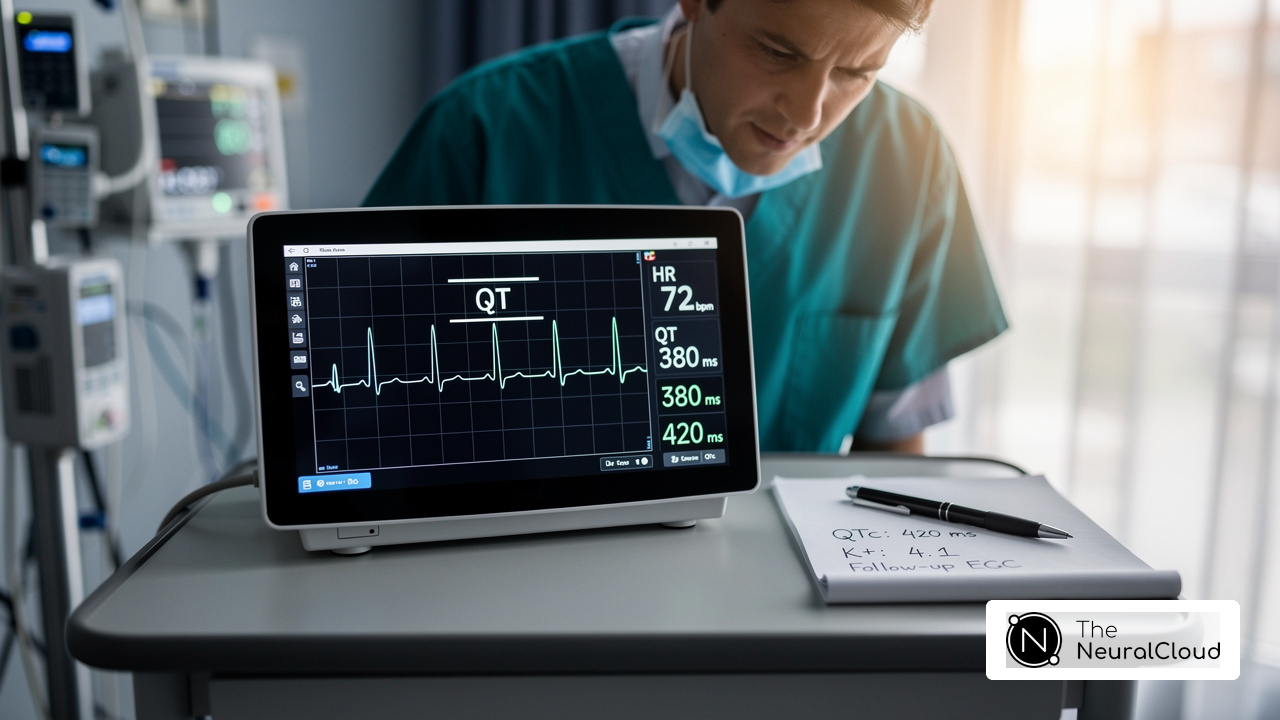
Identifying T wave abnormalities on an EKG strip is essential for accurate cardiac assessment. To effectively observe the T wave, follow these steps:
- Locate the T segment: Identify the T segment, which appears after the QRS complex. This signal represents the repolarization of the ventricles.
- Assess morphology: Evaluate the shape of the T wave. A normal T deflection is generally upright in leads I, II, and V3-V6, indicating healthy ventricular repolarization.
- Check for abnormalities: Look for any signs of inversion, flattening, or peaked T patterns. These changes can indicate underlying conditions such as myocardial ischemia or hyperkalemia, which require further investigation.
- Document findings: Record the characteristics of the T wave, including any abnormalities, for further analysis. This documentation is crucial for tracking changes over time and guiding clinical decisions.
Understanding T wave abnormalities is vital, especially in ischemic heart disease, as quick identification can significantly impact patient outcomes. Today’s standards for evaluating T wave morphology highlight the importance of accurately classifying ectopic beats, as these can provide critical insights into cardiac health. Real-world examples from clinical practice demonstrate the importance of thorough evaluation, as T wave abnormalities can range from benign variants to indicators of serious conditions. By mastering these steps, healthcare professionals can significantly enhance patient outcomes.

Identify Ectopic Beats
To identify ectopic beats using the advanced capabilities of MaxYield, follow these steps:
- Look for irregularities: Scan the EKG strip for any beats that appear earlier than expected or have a different morphology compared to normal beats. Thanks to advanced noise filtering, the system makes it easier to spot irregularities in the ECG signal.
- Classify the ectopic beats: Determine if they are atrial (PACs) or ventricular (PVCs) based on their appearance and timing. The automated labeling feature of the software assists in accurately classifying these beats.
- Assess frequency: Note how often these ectopic beats occur and if they are isolated or in patterns (e.g., couplets or triplets). With the beat-by-beat data wall from the company, you can efficiently track the frequency of ectopic beats.
- Document findings: Record the presence and type of ectopic beats for further analysis. The platform integrates with Insight360, allowing for customizable visualization and reporting. This ensures your findings are presented in a format ready for clinical use. Additionally, it is important to note that the company is currently awaiting FDA Class II SaMD clearance, ensuring compliance with regulatory standards. For further engagement, we invite you to contact Neural Cloud Solutions for free trials or personalized walkthroughs of MaxYield and Insight360.

Determine Rhythm Origin
Accurately reading EKG rhythms can be a daunting task due to various challenges, including noise and artifacts that obscure critical information. To determine the rhythm origin, follow these steps:
- Identify the P signals: Check for the presence of P signals and their relationship to the QRS complexes. This is crucial for reading EKG rhythms to distinguish between sinus and ectopic rhythms.
- Evaluate the rate: Assess the heart rate and compare it to normal ranges for various rhythms, such as atrial versus ventricular.
- Analyze the morphology: Examine the shape of the QRS complexes and P forms to ensure they align with normal conduction pathways. The MaxYield™ platform enhances this evaluation by using advanced noise filtering and clear wave recognition to separate ECG waves from recordings affected by noise and artifacts.
- Document findings:
- Record the rhythm origin for further analysis.
- Ensure a comprehensive understanding of the ECG interpretation.
With MaxYield™, you can salvage previously obscured sections of lengthy Holter, 1-Lead, and patch monitor recordings, which aids in reading EKG rhythms and provides a clearer picture for accurate documentation. Additionally, consider using Insight360, a customizable visualization tool that transforms the clean ECG data from the platform into interactive dashboards and clinical-ready reports. For further engagement, contact Neural Cloud Solutions for free trials or personalized walkthroughs of MaxYield and Insight360, and be aware of our FDA Class II SaMD clearance-pending status, ensuring compliance with regulatory standards. By leveraging MaxYield™, healthcare professionals can enhance their ECG analysis, ultimately improving patient care and outcomes.

Identify EKG Rhythm
Reading EKG rhythms can be complex and requires careful analysis. To accurately identify the EKG rhythm, follow these essential steps:
- Synthesize results: Combine your observations from earlier evaluations, concentrating on rhythm regularity, heart rate, P waves, PR interval, QRS segment, and T characteristics. Leverage the advanced noise filtering and wave recognition capabilities of the MaxYield™ platform to ensure clarity in your data.
- Classify the rhythm: Based on your thorough examination, categorize the rhythm into types such as normal sinus rhythm, atrial fibrillation, or ventricular tachycardia. The automated labeling features of MaxYield™ can assist in this classification process, providing consistent and accurate results.
- Consider clinical context: Evaluate the patient's clinical history and symptoms, as these factors are crucial in supporting your rhythm identification. MaxYield™ consolidates this information by providing a clear, "neuralized" signal that improves your clinical insights.
- Document your conclusion: Record the identified rhythm along with any relevant notes to facilitate further examination and ensure continuity of care. Leverage Insight360, a flexible visualization and reporting tool, to turn your findings into interactive dashboards and reports ready for clinical use. Additionally, be aware of the regulatory compliance details, including FDA Class II SaMD clearance-pending status, to support audit-ready documentation for GxP inspections. For personalized walkthroughs or free trials of MaxYield™ and Insight360, contact Neural Cloud Solutions. Utilizing MaxYield™ not only streamlines the process but also enhances the quality of patient care.

Stay Updated on EKG Advances
In a field as dynamic as EKG analysis, staying current with advancements is crucial for effective practice. Here are some strategies to help you keep up:
- Engage with Professional Organizations: Joining cardiology and electrophysiology societies gives you access to cutting-edge research, guidelines, and networking opportunities essential for professional growth in EKG analysis.
- Attend Conferences and Workshops: Participating in specialized events focused on EKG interpretation and technology allows you to learn from industry leaders and peers, fostering collaboration and knowledge exchange.
- Utilize Online Resources: Leverage reputable websites, journals, and online courses that offer the latest updates on EKG advancements and best practices, ensuring you remain informed about emerging technologies and methodologies.
- Network with Professionals: Connecting with fellow developers and clinicians can really boost your insights and experiences in EKG interpretation and technology, promoting a collaborative approach to problem-solving and innovation in the field.
Neglecting these strategies could hinder your ability to provide the best care for your patients.

Conclusion
Healthcare professionals often face challenges in accurately interpreting EKG rhythms, which can significantly affect patient care. By systematically assessing rhythm regularity and identifying EKG rhythms, practitioners can enhance their diagnostic capabilities and ensure timely interventions. The MaxYield™ platform integrates advanced technology that simplifies ECG analysis, making readings more accurate and efficient.
Key insights discussed throughout the article highlight the importance of precise measurements, such as:
- R-R intervals
- Heart rates
- Various wave characteristics, including P-waves and QRS segments
Each of these elements plays a crucial role in diagnosing cardiac conditions and preventing misinterpretations that could jeopardize patient safety. Moreover, staying updated with the latest advancements in EKG technology and methodologies is essential for continuous improvement in practice.
Ultimately, by embracing these strategies, healthcare professionals can not only improve their skills but also enhance the overall quality of patient care. Engaging with professional resources, attending workshops, and utilizing innovative tools like MaxYield™ can empower healthcare professionals to make informed decisions in their practice. This commitment to mastering EKG rhythm interpretation leads to better patient outcomes and a deeper understanding of the complexities of cardiac health.
Frequently Asked Questions
What is the importance of accurate ECG analysis?
Accurate ECG analysis is essential for effective diagnosis and patient care. Misinterpretation can lead to critical delays in treatment.
How do you assess rhythm regularity on an ECG?
To assess rhythm regularity, identify the R-R intervals by measuring the distance between consecutive R peaks, check for consistency in the intervals, classify the rhythm as regular or irregular, and document your findings.
What are R-R intervals and why are they significant?
R-R intervals are the distances between consecutive R peaks on an ECG strip. They are significant because they help determine the regularity of the heart rhythm, which is crucial for diagnosing arrhythmias.
What technology does MaxYield™ utilize to enhance ECG analysis?
MaxYield™ utilizes advanced AI for noise filtering and wave recognition, allowing for the isolation of critical data even in recordings with high levels of noise and artifact.
How can healthcare professionals calculate heart rate from an ECG?
For regular rhythms, count the number of large squares between two R peaks and divide 300 by that number. For irregular rhythms, use the six-second method: count the R peaks in a six-second strip and multiply by 10.
Why is documenting heart rate calculations important?
Documenting heart rate calculations is essential for maintaining accurate patient records and ensuring compliance with guidelines from health organizations regarding the evaluation and treatment of bradycardia.
What steps are involved in identifying P-waves on an ECG?
To identify P-waves, locate the first upward deflection before each QRS complex, assess the morphology of the P-wave, check for consistency with QRS complexes, and document your findings.
What does a normal P-wave look like?
A normal P-wave has a smooth, rounded appearance and typically measures less than 2.5 mm in height.
How does MaxYield™ assist in identifying P-waves?
MaxYield™ provides advanced noise filtering and wave recognition features, making it easier to identify P-waves even in challenging recordings.
Why is accurate P-wave detection important in cardiology?
Accurate P-wave detection is vital for diagnosing various cardiac arrhythmias, which can significantly influence patient management and outcomes.
List of Sources
- Assess Rhythm Regularity
- ECG Rhythm Evaluation (https://litfl.com/ecg-rhythm-evaluation)
- Heart rate variability - Wikipedia (https://en.wikipedia.org/wiki/Heart_rate_variability)
- Rhythm Interpretation for Nurses: Addressing the Competency Gap | Relias (https://relias.com/blog/rhythm-interpretation-for-nurses)
- AI and ECG Interpretation: Insights and Trends for Cardiologists (https://gehealthcare.com/en-us/insights/article/ai-and-ecg-interpretation-insights-and-trends-for-todays-cardiologists?srsltid=AfmBOorlj86Debk1dL8_zwAaOqEGBvEJP_Liso3yyK3lnoooBJGjt6Qm)
- Calculate Heart Rate
- Novel algorithm on wearable devices can detect irregular heartbeat, may prompt early care (https://newsroom.heart.org/news/novel-algorithm-on-wearable-devices-can-detect-irregular-heartbeat-may-prompt-early-care)
- Societies Publish New Guidance for the Treatment of Slow, Irregular Heartbeats - HRS (https://hrsonline.org/news/societies-publish-new-guidance-treatment-slow-irregular-heartbeats)
- ECG Rate Interpretation (https://litfl.com/ecg-rate-interpretation)
- Target Heart Rates Chart (https://heart.org/en/healthy-living/exercise-and-physical-activity/fitness-basics/target-heart-rates)
- How to Check Your Heart Rate | Mass General Brigham (https://massgeneralbrigham.org/en/about/newsroom/articles/how-to-check-your-heart-rate)
- Identify P-Waves
- Reliable P wave detection in pathological ECG signals - Scientific Reports (https://nature.com/articles/s41598-022-10656-4)
- Reliable P wave detection in pathological ECG signals - PMC (https://pmc.ncbi.nlm.nih.gov/articles/PMC9023481)
- AI-ECG Finds STEMI Faster, Cuts False-Positive Cath Lab Activations (https://tctmd.com/news/ai-ecg-finds-stemi-faster-cuts-false-positive-cath-lab-activations)
- Prognostic value of P-wave morphology in general population - PMC (https://pmc.ncbi.nlm.nih.gov/articles/PMC10112844)
- Measure PR Interval
- Epidemiology and Outcomes associated with PR Prolongation - PMC (https://pmc.ncbi.nlm.nih.gov/articles/PMC9918374)
- Common ECG finding may indicate serious cardiac problems — Harvard Gazette (https://news.harvard.edu/gazette/story/2009/06/common-ecg-finding-may-indicate-serious-cardiac-problems)
- Researchers Say ECG Standards Should Be Revised for Elderly | Newswise (https://newswise.com/articles/researchers-say-ecg-standards-should-be-revised-for-elderly)
- Measure QRS Segment
- Electrocardiographic QRS duration is influenced by body mass index and sex - PMC (https://pmc.ncbi.nlm.nih.gov/articles/PMC8503593)
- Sex and race differences in QRS duration (https://academic.oup.com/europace/article/18/12/1842/2952291)
- Prevalence and long-term prognostic implications of prolonged QRS duration in left ventricular hypertrophy: a population-based observational cohort study (https://bmjopen.bmj.com/content/12/2/e053477)
- Prognostic Significance of Quantitative QRS Duration (https://amjmed.com/article/S0002-9343(05)00760-6/fulltext)
- Observe T Wave
- ECG T Wave - StatPearls - NCBI Bookshelf (https://ncbi.nlm.nih.gov/books/NBK538264)
- An efficient method of addressing ectopic beats: new insight into data preprocessing of heart rate variability analysis - PMC (https://pmc.ncbi.nlm.nih.gov/articles/PMC3232430)
- Cardiac and non-cardiac causes of T-wave inversion in the precordial leads in adult subjects: A Dutch case series and review of the literature - PMC (https://pmc.ncbi.nlm.nih.gov/articles/PMC4325305)
- Identify Ectopic Beats
- Artificial Intelligence-Enabled 8-Channel ECG Diagnosing of Abnormalities with Wide QRS Complexes | Health Data Science (https://spj.science.org/doi/10.34133/hds.0265)
- 72 Ectopic Beats – Frequent, Troublesome and not to be Dismissed (https://heart.bmj.com/content/101/Suppl_4/A39.2)
- AI ECG Reader — Interpret ECGs Online (https://powerfulmedical.com/pmcardio-individuals)
- Determine Rhythm Origin
- AI demonstrates potential to identify irregular heart rhythms as well as humans (https://med.stanford.edu/news/insights/2019/01/ai-demonstrates-potential-to-identify-irregular-heart-rhythms-as-well-as-humans.html)
- Cardiologist or Computer: Who Can Read EKG Better? (https://jcardiac.com/full-text/cardiologist-or-computer-who-can-read-ekg-better)
- Checking your browser - reCAPTCHA (https://pmc.ncbi.nlm.nih.gov/articles/PMC7522782)
- Heart Rhythm Society – Advancing Electrophysiology Worldwide (https://hrsonline.org)
- Identify EKG Rhythm
- AI and ECG Interpretation: Insights and Trends for Cardiologists (https://gehealthcare.com/en/insights/article/ai-and-ecg-interpretation-insights-and-trends-for-todays-cardiologists?srsltid=AfmBOooS025OJqnrOD7Rm9cysfxfJKaLriIbxiSyEDJTU0y747jQYF37)
- American Heart Association names top advances in cardiovascular disease research for 2023 (https://heart.org/en/around-the-aha/aha-names-top-advances-in-cardiovascular-disease-research-for-2023)
- Cardiovascular Diseases and Cardiac Surgery News - Medical Professionals - Mayo Clinic (https://mayoclinic.org/medical-professionals/cardiovascular-diseases/news)
- Latest in Cardiology - American College of Cardiology (https://acc.org/latest-in-cardiology)
- Artificial Intelligence and ECG: A New Frontier in Cardiac Diagnostics and Prevention - PMC (https://pmc.ncbi.nlm.nih.gov/articles/PMC12292989)
- Stay Updated on EKG Advances
- The latest innovations in ECG technology and analysis - Norav Medical (https://noravmedical.com/advancements-in-ecg-technology-exploring-the-latest-innovations-in-ecg-analysis)
- 6 Trends In ECG Systems (https://dicardiology.com/article/6-trends-ecg-systems)
- U.S. Smart Wearable ECG Monitors Market Size Report 2030 (https://grandviewresearch.com/industry-analysis/us-smart-wearable-ecg-monitors-market-report)
- Mayo Clinic Cardiovascular Medicine artificial intelligence group's researchers develop AI-ECG to detect obstructive sleep apnea - Mayo Clinic (https://mayoclinic.org/medical-professionals/cardiovascular-diseases/news/mayo-clinic-cardiovascular-medicine-artificial-intelligence-groups-researchers-develop-ai-ecg-to-detect-obstructive-sleep-apnea/mac-20594007)
- Advancing cardiovascular health across Europe (https://philips.com/a-w/about/news/archive/standard/news/articles/2025/advancing-cardiovascular-health-across-europe.html)