Introduction
Right atrial enlargement (RAE) is a frequently overlooked condition in cardiac diagnostics, yet it poses significant risks to patient health. With healthcare professionals relying more on electrocardiograms (ECGs) for accurate assessments, understanding the nuances of RAE is crucial for improving patient outcomes. This article delves into the critical insights developers need to master RAE detection on ECGs, exploring its clinical significance, diagnostic techniques, and management strategies. By enhancing detection methods, healthcare professionals can significantly improve patient care and outcomes in cardiac health.
Define Right Atrial Enlargement: Importance in Cardiac Diagnostics
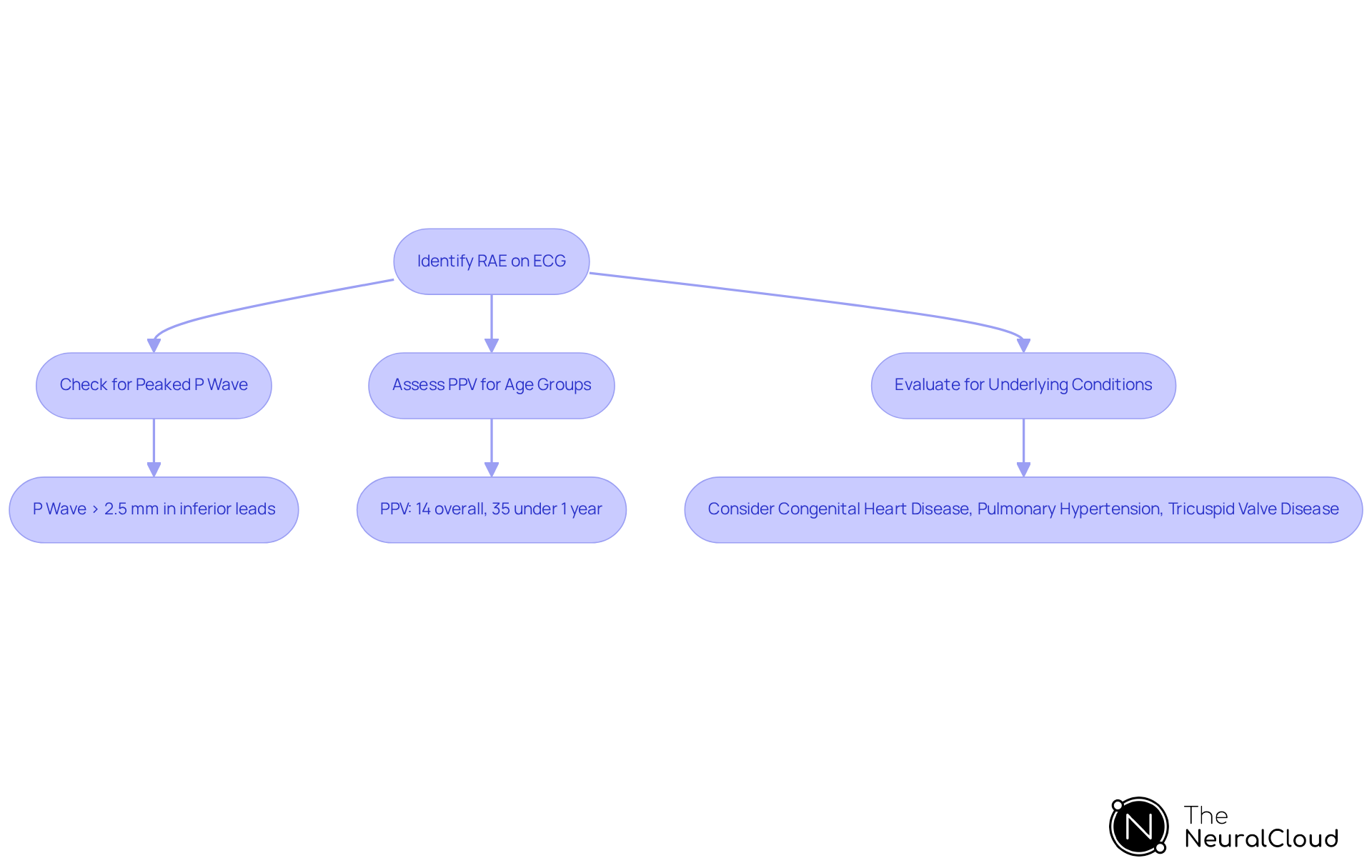
Right atrial enlargement (RAE) poses significant challenges in cardiac diagnostics, often going undetected due to limitations in traditional ECG analysis. The condition known as right atrial enlargement on EKG is characterized by the abnormal dilation of the right atrium, identifiable through specific electrocardiogram (ECG) changes. Clinically, RAE is indicated by a peaked P wave (P pulmonale) exceeding 2.5 mm in the inferior leads (II, III, and AVF) and greater than 1.5 mm in lead V1. Understanding RAE's significance in cardiac diagnostics is essential, as it may indicate serious underlying conditions such as pulmonary hypertension, tricuspid valve disease, or congenital heart defects. Studies indicate that 74% of individuals with true RAE were newly diagnosed with congenital heart disease (CHD), underscoring the critical need for accurate detection.
The positive predictive value (PPV) of right atrial enlargement on EKG for true right atrial enlargement verified by echocardiogram is 14%, with an elevated PPV of 35% for individuals under one year old, while it decreases to 7% for those older than one year. Additionally, 48% of individuals with true RAE met RAE criteria in the anterior precordial leads (V1-V3), and 22% showed right ventricular hypertrophy (RVH) on ECG. Accurate detection of right atrial enlargement on EKG is crucial, yet many ECG tools fall short in this area. This emphasizes the importance for developers of ECG analysis tools to prioritize RAE detection, as timely intervention can significantly influence outcomes for individuals.
With MaxYield from Neural Cloud Solutions Inc., developers can leverage advanced AI-driven ECG analysis that ensures hospital-grade accuracy from consumer-grade devices. MaxYield provides precision that can match human interpretation, helping to reduce noise and improve workflow efficiency. Its capability to provide clean, consistent data across connected devices revolutionizes remote health monitoring, allowing healthcare professionals to make assured clinical decisions. Furthermore, the integration of Insight360 transforms MaxYield’s clean ECG data into interactive dashboards and clinical-ready reports, enhancing the overall user experience.
In the context of Canadian cardiovascular care, understanding RAE's implications is essential for enhancing diagnostic accuracy and improving management strategies for individuals. As Dr. Alan Rabinowitz notes, "MaxYield’s precision rivals human interpretation, significantly reducing noise and enhancing workflow efficiency." Moreover, MaxYield is pending FDA Class II SaMD clearance, ensuring it meets regulatory standards.
Explore Causes of Right Atrial Enlargement: Clinical Implications
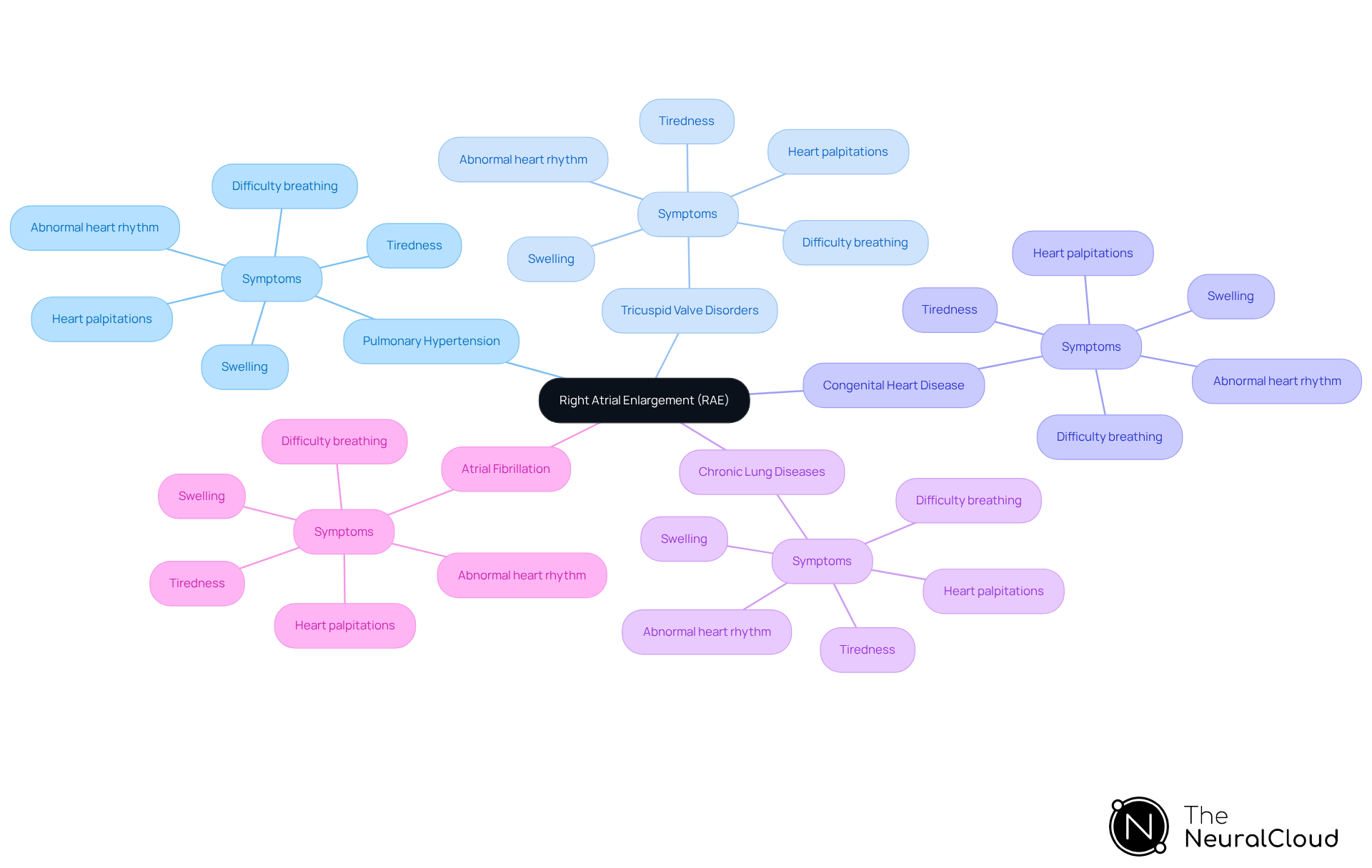
Right atrial enlargement on EKG poses significant challenges in clinical practice, stemming from various underlying conditions that require careful consideration. The following conditions are commonly associated with RAE:
- Pulmonary Hypertension: Elevated pressure in the pulmonary arteries can lead to dilation of the right atrium. If the underlying cause is treated successfully, RAE may improve, making it crucial for developers to incorporate this factor into diagnostic algorithms.
- Tricuspid Valve Disorders: Tricuspid valve disorders, such as tricuspid regurgitation, result in volume overload, which can lead to right atrial enlargement on EKG. Understanding this relationship is vital for accurate diagnosis and treatment planning.
- Congenital Heart Disease: Congenital Heart Disease involves structural abnormalities present from birth that can result in right atrial enlargement on EKG, necessitating early detection and intervention to prevent complications.
- Chronic Lung Diseases: Chronic lung diseases, including chronic obstructive pulmonary disease (COPD), can result in right atrial enlargement on EKG due to elevated atrial pressure from hypoxia, highlighting the need for thorough assessments of individuals. Prolonged RAE may not be fully reversible, highlighting the urgency of timely intervention.
- Atrial Fibrillation: This common arrhythmia can exacerbate conditions leading to right atrial enlargement on EKG, increasing the risk of complications such as stroke, heart failure, and organ damage due to poor circulation.
Symptoms of RAE may include:
- Heart palpitations
- Abnormal heart rhythm
- Difficulty breathing
- Swelling
- Tiredness
It's crucial for healthcare professionals to recognize these causes and symptoms to develop algorithms that accurately identify RAE and its underlying conditions. By improving diagnostic accuracy and addressing these critical factors, innovations can significantly enhance patient care and outcomes. As noted by the Cleveland Clinic, "Enlargement of the atrium means your heart has an abnormally large atrium," underscoring the importance of understanding this condition in the context of broader health issues.
Identify Right Atrial Enlargement on EKG: Diagnostic Techniques
Accurately identifying right atrial enlargement on EKG presents several challenges for clinicians. To aid in this process, several key diagnostic criteria are utilized:
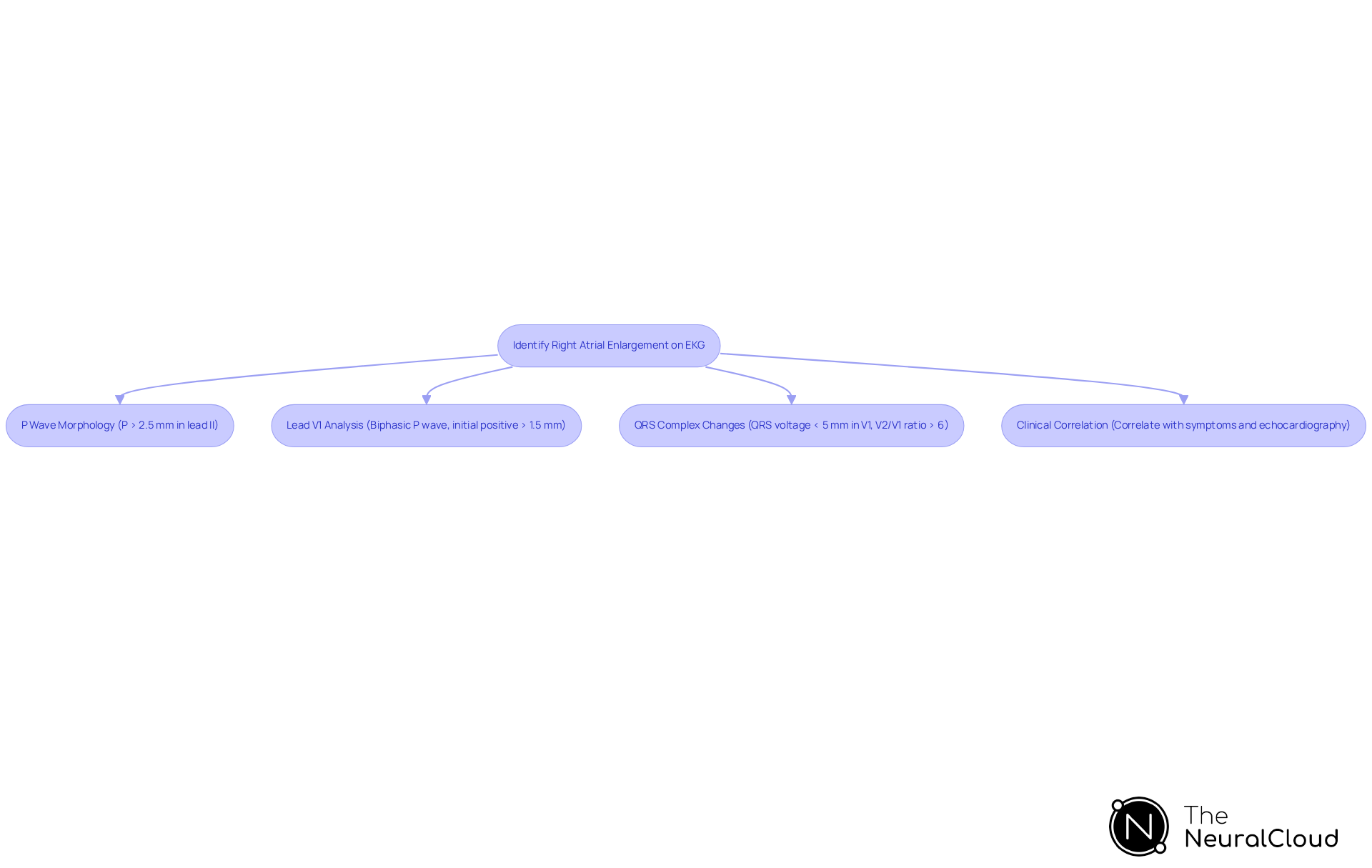
- P Wave Morphology: A classic indicator of RAE is a peaked P wave (P pulmonale) in lead II, characterized by an amplitude exceeding 2.5 mm. This finding is crucial for initial assessments.
- Lead V1 Analysis: In lead V1, the P wave may exhibit a biphasic pattern, where the initial positive component is greater than 1.5 mm tall. This morphology can further support the diagnosis of RAE.
- QRS Complex Changes: Alterations in the QRS complex can also indicate RAE, particularly when accompanied by correct ventricular hypertrophy (RVH). A QRS voltage in lead V1 of less than 5 mm, combined with a V2/V1 voltage ratio greater than 6, has shown a sensitivity of 50% and specificity of 90% for diagnosing RAE.
- Clinical Correlation: It is vital to correlate ECG findings with clinical symptoms and additional diagnostic tests, such as echocardiography, to confirm RAE. For example, echocardiograms should be considered for individuals under one year old with RAE on ECG, especially if they meet specific criteria in the anterior precordial leads or show RVH.
By incorporating these diagnostic techniques into ECG analysis software, developers can help ensure precise detection of RAE, which enhances the overall accuracy of cardiac assessments.
Manage Right Atrial Enlargement: Treatment and Monitoring Strategies
Managing right atrial enlargement on EKG presents unique challenges that necessitate a thorough and individualized approach. Here are some key strategies to consider:
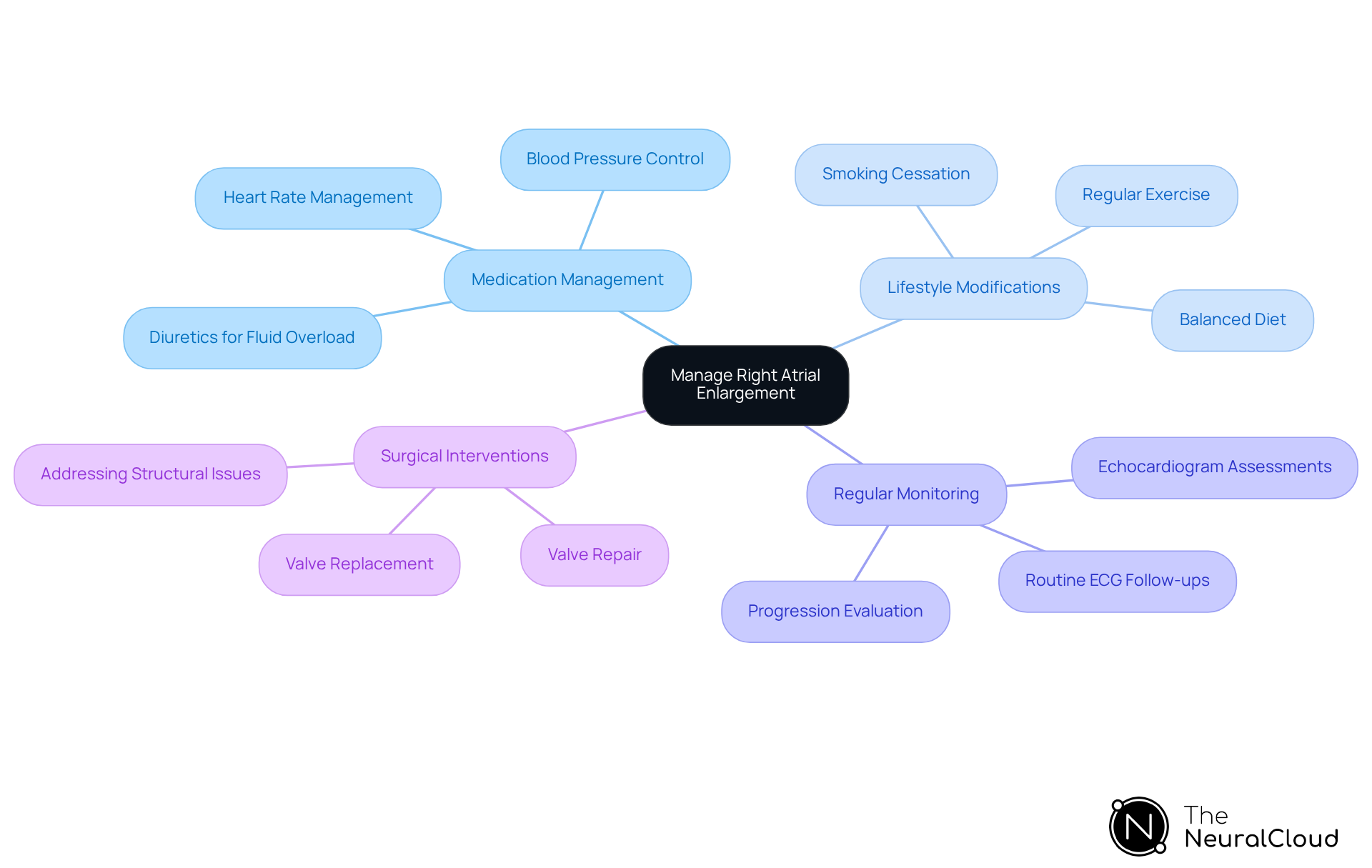
- Medication Management: Diuretics can be prescribed to alleviate fluid overload, while medications aimed at controlling blood pressure and heart rate are also beneficial in managing RAE.
- Lifestyle Modifications: Encouraging individuals to adopt heart-healthy habits such as regular exercise, a balanced diet, and smoking cessation can significantly aid in managing RAE.
- Regular monitoring through routine follow-ups with ECGs and echocardiograms is essential for assessing the progression of right atrial enlargement on EKG and evaluating the effectiveness of treatment interventions.
- Surgical Interventions: In severe cases, surgical options may be necessary to address underlying structural issues, including valve repair or replacement.
It's essential for developers to keep these management strategies in mind when creating tools that help healthcare providers monitor and treat RAE effectively. By incorporating insights from recent studies on patient characteristics, developers can enhance diagnostic accuracy in their solutions. Ultimately, leveraging these strategies can lead to improved patient care and outcomes in those affected by RAE.
Conclusion
Recognizing right atrial enlargement (RAE) on EKG is essential for advancing cardiac diagnostics and enhancing patient outcomes. This condition, often overlooked, can indicate serious underlying health issues such as pulmonary hypertension and congenital heart defects. Accurate identification of RAE through specific ECG changes allows healthcare professionals to intervene promptly, greatly impacting patient care.
This article emphasizes the importance of recognizing RAE's clinical implications, including its causes, symptoms, and diagnostic techniques. Key diagnostic criteria, such as P wave morphology and lead V1 analysis, are essential for accurate identification. Furthermore, the integration of advanced tools like MaxYield from Neural Cloud Solutions Inc. can enhance the precision of ECG analysis, ensuring that clinicians have access to reliable data for informed decision-making.
Given these insights, developers and healthcare professionals must prioritize detecting and managing right atrial enlargement. By leveraging innovative technologies and adhering to best practices in treatment and monitoring, the healthcare community can significantly improve the quality of care for individuals affected by RAE. By prioritizing RAE detection, the healthcare community can transform patient care and outcomes across Canada.
Frequently Asked Questions
What is right atrial enlargement (RAE)?
Right atrial enlargement (RAE) is a condition characterized by the abnormal dilation of the right atrium, identifiable through specific changes on an electrocardiogram (ECG).
How is RAE identified on an ECG?
RAE is indicated by a peaked P wave (P pulmonale) exceeding 2.5 mm in the inferior leads (II, III, and AVF) and greater than 1.5 mm in lead V1.
Why is understanding RAE important in cardiac diagnostics?
Understanding RAE is crucial as it may indicate serious underlying conditions such as pulmonary hypertension, tricuspid valve disease, or congenital heart defects. Accurate detection can lead to timely interventions that significantly influence patient outcomes.
What is the positive predictive value (PPV) of RAE on an ECG?
The PPV of right atrial enlargement on ECG for true RAE verified by echocardiogram is 14%. For individuals under one year old, the PPV is elevated to 35%, while it decreases to 7% for those older than one year.
How prevalent is RAE in individuals with congenital heart disease (CHD)?
Studies indicate that 74% of individuals with true RAE were newly diagnosed with congenital heart disease (CHD), highlighting the critical need for accurate detection.
What challenges exist in detecting RAE using traditional ECG tools?
Many ECG tools fall short in accurately detecting right atrial enlargement, which emphasizes the need for improved ECG analysis tools that prioritize RAE detection.
How does MaxYield from Neural Cloud Solutions Inc. enhance ECG analysis?
MaxYield leverages advanced AI-driven ECG analysis to ensure hospital-grade accuracy from consumer-grade devices, providing precision that rivals human interpretation and improving workflow efficiency.
What additional features does Insight360 provide in conjunction with MaxYield?
Insight360 transforms MaxYield’s clean ECG data into interactive dashboards and clinical-ready reports, enhancing the overall user experience for healthcare professionals.
What is the regulatory status of MaxYield?
MaxYield is pending FDA Class II SaMD clearance, ensuring it meets regulatory standards for safety and effectiveness.
Why is RAE detection particularly relevant in the Canadian context?
Understanding RAE's implications is essential for enhancing diagnostic accuracy and improving management strategies for individuals within Canadian cardiovascular care, particularly for clinicians and diagnostic testing facilities.
List of Sources
- Define Right Atrial Enlargement: Importance in Cardiac Diagnostics
- Right Atrial Enlargement on ECG in Previously Healthy Patients | UPMC Physician Resources (https://upmcphysicianresources.com/news/070924-rae)
- Frontiers | Impact of right atrial enlargement on clinical outcome in patients with atrial fibrillation (https://frontiersin.org/journals/cardiovascular-medicine/articles/10.3389/fcvm.2022.989012/full)
- Explore Causes of Right Atrial Enlargement: Clinical Implications
- Right atrial enlargement - Causes, Diagnosis and Treatment (https://apollohospitals.com/symptoms/right-atrial-enlargement)
- Right Atrial Enlargement (RAE): Causes and Treatment (https://my.clevelandclinic.org/health/symptoms/23576-right-atrial-enlargement)
- Pulmonary Hypertension News – Pulmonary Hypertension News (https://pulmonaryhypertensionnews.com)
- Identify Right Atrial Enlargement on EKG: Diagnostic Techniques
- ECG Learning Center - An introduction to clinical electrocardiography (https://ecg.utah.edu/lesson/7)
- Right Atrial Enlargement on ECG in Previously Healthy Patients | UPMC Physician Resources (https://upmcphysicianresources.com/news/070924-rae)
- Manage Right Atrial Enlargement: Treatment and Monitoring Strategies
- Right Atrial Enlargement on ECG in Previously Healthy Patients | UPMC Physician Resources (https://upmcphysicianresources.com/news/070924-rae)
- Right Atrial Enlargement Is Linked to Outcomes in Atrial Fibrillation | Managed Healthcare Executive (https://managedhealthcareexecutive.com/view/right-atrial-enlargement-is-linked-to-outcomes-in-atrial-fibrillation)