Introduction
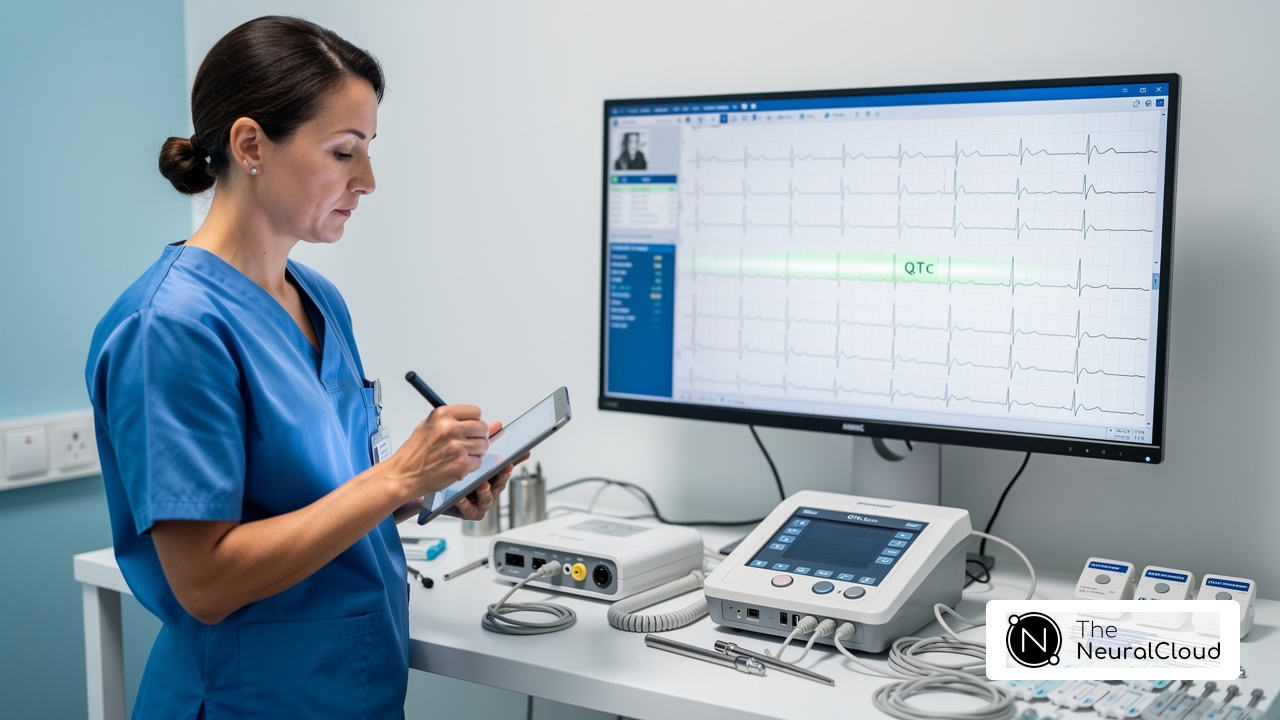
Right Ventricular Hypertrophy (RVH) often goes unnoticed, yet it poses serious health risks that demand attention. Advanced technologies in electrocardiogram (EKG) analysis provide healthcare professionals with powerful tools. These tools help identify and manage RVH effectively. Yet, clinicians face the challenge of using these innovations to improve diagnostic accuracy and patient outcomes for RVH, which often presents subtly. This article explores the latest advancements in EKG interpretation, highlighting best practices and techniques for diagnosing right ventricular hypertrophy effectively.
Define Right Ventricular Hypertrophy and Its Clinical Importance
Right Ventricular Hypertrophy (RVH) often goes unnoticed until serious complications arise, highlighting the need for effective diagnostic strategies. RVH is defined by the thickening of the muscular walls of the right ventricle, often resulting from chronic pressure overload due to conditions such as pulmonary hypertension, congenital heart defects, or valvular heart disease. RVH is clinically important because it can lead to serious complications like heart failure and arrhythmias, increasing the risk of morbidity and mortality. In Canada, the prevalence of RVH is not well-defined due to limited research, but it is known as a key indicator of serious cardiovascular issues that require prompt attention.
Since RVH often shows no symptoms early on, catching it early is vital for effective treatment. Diagnostic tools such as echocardiography and electrocardiograms (ECGs) are essential for identifying right ventricular hypertrophy EKG, as they can reveal changes in heart structure and function. For instance, a study found that 14.4% of individuals with hypertrophic cardiomyopathy exhibited RV involvement, highlighting the importance of assessing RV function in clinical practice.
Furthermore, the clinical implications of RVH extend to its association with adverse outcomes. Patients with RV involvement are at a higher risk for severe complications, including unplanned cardiovascular admissions and even sudden cardiac death, particularly in young athletes. This highlights the need for healthcare providers to closely monitor patients at risk for right ventricular hypertrophy EKG, as timely interventions can greatly enhance patient outcomes.

Explore EKG Criteria for Diagnosing Right Ventricular Hypertrophy
Recognizing the critical criteria for diagnosing right ventricular hypertrophy EKG is essential for effective patient care. Diagnosing RVH involves several key markers that healthcare professionals must be aware of:
- Dominant R wave in V1: An R wave exceeding 7 mm in lead V1 serves as a significant marker for RVH, indicating potential hypertrophy.
- R/S ratio in V1: A ratio greater than 1 is indicative of RVH, especially when corroborated by additional findings.
- Right axis deviation: An axis shift of +110° or more suggests the presence of RVH.
- S wave in V5 or V6: A deep S wave in these positions further supports the diagnosis of RVH.
These criteria are essential for clinicians to identify right ventricular hypertrophy EKG on ECGs, which facilitates timely intervention and management of underlying causes. Additionally, the R-wave peak time in positions V1 and V2 is usually extended, varying from 35 to 55 milliseconds, which can also assist in diagnosis. Larger R-waves in right-sided electrodes and deeper S-waves in left-sided electrodes are characteristic changes linked to RVH.
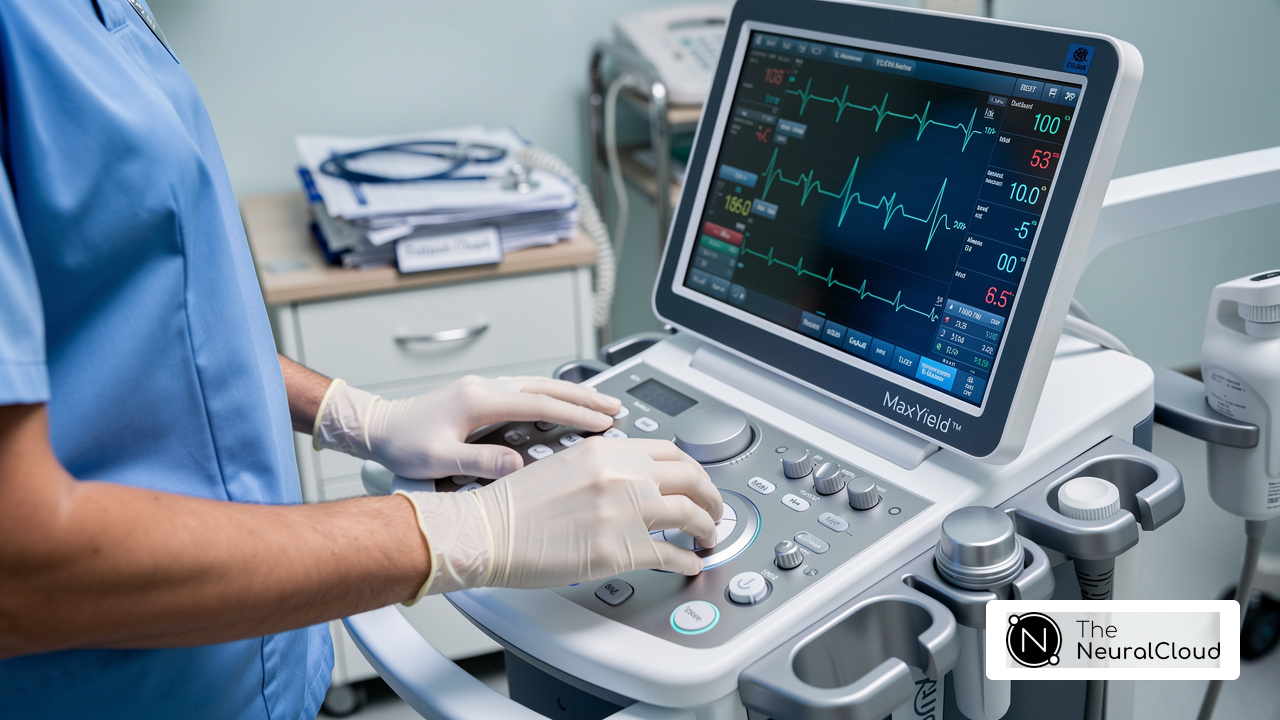
MaxYield™ from Neural Cloud Solutions Inc. improves the diagnostic process by effectively mapping ECG signals, filtering out noise, and clearly identifying key features in each heartbeat. With its ability to analyze 200,000 heartbeats in less than 5 minutes, MaxYield™ provides healthcare professionals with detailed insights that support confident clinical decisions. The advanced features of MaxYield™, such as its noise reduction capabilities, directly assist in identifying the criteria for right ventricular hypertrophy EKG mentioned, ensuring accurate diagnosis. Expert endorsements from Dr. Alan Rabinowitz, Dr. Brett Heilbron, and Dr. Marc W. Deyell emphasize MaxYield’s precision, rivaling human interpretation and significantly reducing noise, which is crucial for accurate RVH diagnosis.
Understanding these ECG patterns is vital; misdiagnosing right ventricular hypertrophy EKG can lead to serious complications like heart failure and arrhythmias, highlighting the need for accurate diagnosis. Effective management strategies, including addressing underlying causes rather than the hypertrophy itself, lifestyle modifications, and regular monitoring, can greatly enhance outcomes and reduce the risk of cardiovascular events. By leveraging advanced tools like MaxYield™, healthcare professionals can significantly improve diagnostic accuracy and patient outcomes, ultimately reducing the risk of serious cardiovascular complications.

Integrate Advanced Technologies for Enhanced EKG Analysis
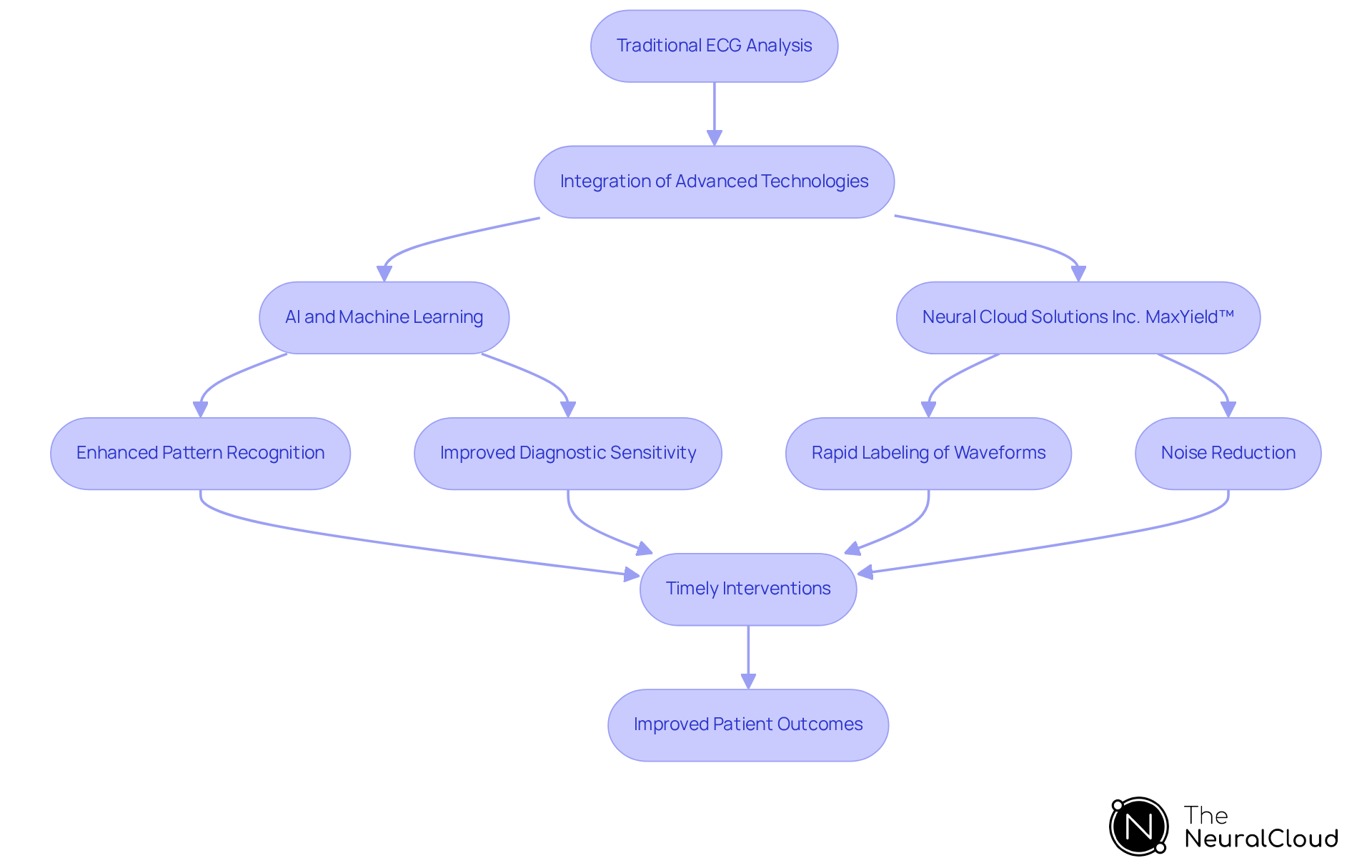
Traditional ECG analysis often misses subtle patterns, which can delay diagnoses, but advanced technologies like AI are changing that. Advanced technologies, particularly artificial intelligence (AI) and machine learning, are significantly enhancing EKG analysis, especially in the detection of right ventricular hypertrophy EKG. These innovations allow for the analysis of extensive ECG datasets. They help identify subtle patterns that traditional methods might miss. For example, Neural Cloud Solutions Inc.'s MaxYield™ rapidly labels P, QRS, and T Wave onsets, offsets, and time-series intervals, providing beat-by-beat tabulation in CSV format for easy integration into current workflows. This capability reduces noise, making the ECG waveform clearer and easier to interpret. Furthermore, machine learning models can be specifically trained to recognize features indicative of right ventricular hypertrophy EKG, thereby increasing both diagnostic sensitivity and specificity.
Recent studies underscore the impact of these technologies in clinical settings. For example, a study released on December 29, 2023, emphasized that 34% of individuals with HCM could have been recognized before clinical diagnosis, with some instances identified as early as 16.3 years earlier. This demonstrates the potential of AI-driven models, like those developed by Neural Cloud Solutions Inc., to identify right ventricular hypertrophy EKG earlier than conventional approaches, leading to timely interventions. In Canada, research initiatives have demonstrated that AI applications can streamline the diagnostic process, ultimately enhancing outcomes for individuals. As Omar M. Abdelfattah, MD, observed, "Implementation of Viz HCM enabled us to identify new HCM individuals more quickly and optimize their care pathways." By incorporating these advanced tools into daily clinical practice, healthcare providers can significantly improve their diagnostic capabilities, ensuring that individuals receive precise and efficient care. Additionally, the Centers for Medicare & Medicaid Services (CMS) has published a national payment rate of $128.90 for AI-enabled ECG analysis effective January 1, 2025, further supporting the integration of these technologies in clinical settings. Expert endorsements from Dr. Alan Rabinowitz, Dr. Brett Heilbron, and Dr. Marc W. Deyell emphasize that MaxYield™ rivals human interpretation in precision and offers significant noise reduction benefits, making it an invaluable asset in the realm of cardiac diagnostics. Furthermore, with the FDA Class II SaMD clearance-pending status and the customizable visualization tool Insight360, which transforms MaxYield’s clean ECG data into interactive dashboards and clinical-ready reports, Neural Cloud Solutions Inc. is at the forefront of revolutionizing cardiac diagnostics.
Apply EKG Interpretation Techniques for Right Ventricular Hypertrophy
Diagnosing right ventricular hypertrophy EKG presents unique challenges that require a systematic approach. Here are key steps clinicians should follow:
- Systematic Review: Focus on leads V1 and V2 to assess R wave amplitude and S wave depth, critical indicators of RVH.
- Assess Axis Deviation: Evaluate the QRS axis for right axis deviation, a significant marker for the diagnosis of right ventricular hypertrophy EKG.
- Utilize established criteria, including the R/S ratio and a dominant R wave in V1, which are essential for accurate identification of right ventricular hypertrophy EKG.
- Correlate with Clinical Findings: Always correlate ECG findings with clinical symptoms and medical history for a comprehensive assessment.
- Leverage Advanced Technology: Use advanced ECG analysis tools from Neural Cloud Solutions to enhance interpretation accuracy and efficiency.
By applying these techniques, clinicians can avoid misdiagnosis and improve patient care, ultimately leading to better patient outcomes.

Conclusion
Diagnosing Right Ventricular Hypertrophy (RVH) presents significant challenges that can lead to serious cardiovascular complications if not addressed promptly. Recognizing and diagnosing RVH is crucial for preventing these complications. This article emphasizes the importance of advanced technologies, particularly those offered by Neural Cloud Solutions Inc., in enhancing the accuracy and efficiency of EKG analysis. By leveraging tools like MaxYield™, healthcare professionals can identify RVH more effectively, ensuring timely interventions that can significantly improve patient outcomes.
Key insights discussed include the critical EKG criteria for diagnosing RVH, such as:
- The dominant R wave in V1
- Right axis deviation
Additionally, the role of AI and machine learning in refining diagnostic processes is highlighted. These advanced technologies help clinicians spot subtle patterns that traditional methods might miss, enabling them to make better-informed decisions based on thorough data analysis.
Adopting these innovative tools is crucial for enhancing diagnostic accuracy and improving patient care. As the landscape of cardiac diagnostics evolves, embracing advanced EKG analysis technologies will be essential for clinicians, researchers, and diagnostic facilities across Canada. By prioritizing early detection and accurate diagnosis of RVH, healthcare providers can enhance patient care and ultimately reduce the risks associated with this serious condition. Embracing these advanced technologies is not just beneficial; it is essential for improving patient outcomes and reducing the risks associated with RVH.
Frequently Asked Questions
What is Right Ventricular Hypertrophy (RVH)?
Right Ventricular Hypertrophy (RVH) is defined as the thickening of the muscular walls of the right ventricle, often resulting from chronic pressure overload due to conditions such as pulmonary hypertension, congenital heart defects, or valvular heart disease.
Why is RVH clinically important?
RVH is clinically important because it can lead to serious complications such as heart failure and arrhythmias, which increase the risk of morbidity and mortality.
How prevalent is RVH in Canada?
The prevalence of RVH in Canada is not well-defined due to limited research, but it is recognized as a key indicator of serious cardiovascular issues that require prompt attention.
What are the symptoms of RVH?
RVH often shows no symptoms in its early stages, making early detection vital for effective treatment.
What diagnostic tools are used to identify RVH?
Diagnostic tools such as echocardiography and electrocardiograms (ECGs) are essential for identifying RVH, as they can reveal changes in heart structure and function.
What is the significance of RV involvement in hypertrophic cardiomyopathy?
A study found that 14.4% of individuals with hypertrophic cardiomyopathy exhibited RV involvement, highlighting the importance of assessing RV function in clinical practice.
What are the risks associated with RVH?
Patients with RV involvement are at a higher risk for severe complications, including unplanned cardiovascular admissions and sudden cardiac death, particularly in young athletes.
What should healthcare providers do for patients at risk of RVH?
Healthcare providers should closely monitor patients at risk for RVH, as timely interventions can greatly enhance patient outcomes.
List of Sources
- Define Right Ventricular Hypertrophy and Its Clinical Importance
- Right Ventricular Hypertrophy: Symptoms, Causes, Diagnosis, Treatment (https://healthline.com/health/right-ventricular-hypertrophy)
- Prevalence, functional characteristics, and clinical significance of right ventricular involvement in patients with hypertrophic cardiomyopathy - Scientific Reports (https://nature.com/articles/s41598-020-78945-4)
- Bel Marra Health (https://belmarrahealth.com/right-ventricular-hypertrophy-causes-symptoms-treatment-tips-enlarged-right-ventricle-heart)
- Right Ventricular Hypertrophy (https://mdsearchlight.com/heart-health/right-ventricular-hypertrophy)
- Right ventricular hypertrophy: Causes and complications (https://medicalnewstoday.com/articles/318959)
- Explore EKG Criteria for Diagnosing Right Ventricular Hypertrophy
- Right ventricular hypertrophy (RVH): ECG criteria & clinical characteristics (https://ecgwaves.com/articles/right-ventricular-hypertrophy-ecg-ekg-criteria)
- Right Ventricular Hypertrophy (RVH) (https://litfl.com/right-ventricular-hypertrophy-rvh-ecg-library)
- Right ventricular hypertrophy: Causes and complications (https://medicalnewstoday.com/articles/318959)
- theneuralcloud.com (https://theneuralcloud.com/post/understanding-right-ventricular-hypertrophy-on-ecg-a-comprehensive-tutorial)
- Integrate Advanced Technologies for Enhanced EKG Analysis
- AI-driven study redefines right heart health assessment with novel predictive model (https://eurekalert.org/news-releases/1030213)
- Harnessing AI to Decode the Heart | UHN Research (https://uhnresearch.ca/news/12-10-2025/harnessing-ai-to-decode-the-heart)
- New Data Show Viz.ai’s AI-Enabled ECG Screening Increases Detection and Accelerates Diagnosis of Hypertrophic Cardiomyopathy (https://viz.ai/news/new-data-show-viz-ais-ai-enabled-ecg-screening-increases-detection)
- Artificial intelligence in ECG diagnostics - where are we now? (https://escardio.org/communities/councils/cardiology-practice/education/cardiopractice/artificial-intelligence-in-ecg-diagnostics-where-are-we-now)
- Mayo researchers create, test AI to improve EKG testing for hypertrophic cardiomyopathy | Newswise (https://newswise.com/articles/mayo-researchers-create-test-ai-to-improve-ekg-testing-for-hypertrophic-cardiomyopathy)
- Apply EKG Interpretation Techniques for Right Ventricular Hypertrophy
- Right ventricular hypertrophy: Causes and complications (https://medicalnewstoday.com/articles/318959)
- A 12-Lead ECG-Based System With Physiological Parameters and Machine Learning to Identify Right Ventricular Hypertrophy in Young Adults - IEEE Journal of Translational Engineering in Health and Medicine (JTEHM) (https://embs.org/jtehm/articles/a-12-lead-ecg-based-system-with-physiological-parameters-and-machine-learning-to-identify-right-ventricular-hypertrophy-in-young-adults)
- theneuralcloud.com (https://theneuralcloud.com/post/understanding-right-ventricular-hypertrophy-on-ecg-a-comprehensive-tutorial)
- Electrocardiogram - StatPearls - NCBI Bookshelf (https://ncbi.nlm.nih.gov/books/NBK549803)
- Right Ventricular Hypertrophy (RVH) (https://litfl.com/right-ventricular-hypertrophy-rvh-ecg-library)