Introduction
Despite advancements in cardiac care, the complexities of diagnosing septal STEMI continue to challenge healthcare professionals. This condition not only poses significant diagnostic hurdles but also carries serious implications for patient outcomes if not identified promptly. By exploring the latest advancements in AI-driven tools, clinicians can enhance their ECG interpretation skills, leading to quicker and more accurate diagnoses. Embracing these technologies could redefine diagnostic accuracy and significantly enhance patient outcomes.
Define Septal STEMI and Its Clinical Importance
ST-Elevation Myocardial Infarction poses significant challenges due to its potential complications, making timely diagnosis crucial. This condition is significant because it can lead to severe complications, like heart failure and arrhythmias, if not recognized and treated quickly. The septal wall plays a vital role in maintaining the heart's structural integrity and function, making early detection essential for improving patient outcomes.
Current statistics show that the occurrence of myocardial infarction (MI) in people over 60 years is about 9.5%, emphasizing the urgent need for effective diagnostic measures in this group, especially in Canada where the rate of septal stemi ecg is increasing. Enhanced awareness and training among healthcare professionals are necessary to ensure timely intervention.
Experts agree that understanding septal myocardial infarction is key to cardiac health. Clinicians emphasize that grasping the pathophysiology of this condition is vital for accurate ECG interpretation, which can guide immediate therapeutic interventions. Recent advancements in AI-driven technologies, like those from Neural Cloud Solutions, are paving the way for more precise and efficient ECG analysis, ultimately resulting in improved care for individuals.
Ongoing research and clinical trials are shedding light on the outcomes of the septal stemi ecg, reinforcing its clinical importance. Incorporating advanced diagnostic tools like MaxYield™ is crucial for addressing the challenges of this condition. Here’s how it helps:
- Enhances diagnostic yield
- Addresses physiological variability
- Isolates and labels key features in every heartbeat
By leveraging automated ECG analysis, MaxYield™ ultimately leads to better patient outcomes.

Identify Key ECG Features of Septal STEMI
Accurate analysis of the septal stemi ecg is crucial for timely diagnosis and treatment of Septal STEMI, yet it poses significant challenges for healthcare professionals. Key ECG features of Septal STEMI include:
- ST Segment Elevation: Typically observed in leads V1 and V2, with elevation of 1 mm or more in two contiguous leads being a hallmark of this condition.
- Q Waves: Development of pathological Q waves may occur in the affected leads, indicating myocardial necrosis.
- Reciprocal Changes: ST segment depression may be seen in the inferior leads (II, III, aVF), which can provide additional diagnostic clues.
- T Wave Inversion: Following the acute phase, T wave inversions may develop in the leads corresponding to the infarcted area.
Recognizing these key features is vital for differentiating a Septal heart attack from other cardiac conditions like NSTEMI and identifying the septal stemi ecg. In Canada, these ECG changes are particularly significant; studies show that quick recognition and intervention can greatly enhance patient outcomes. For instance, the STEMI-DTU trial highlighted the importance of prompt reperfusion therapy, which is essential in reducing mortality rates associated with myocardial infarction. According to recent statistics, mortality rates at 30 days for individuals presenting with ST elevation myocardial infarction range from 2.5% to 10%, underscoring the critical need for prompt intervention. Moreover, insights from the case study on the diagnosis and management of heart attacks emphasize that successful early intervention can reduce mortality rates from 9% to 7%.
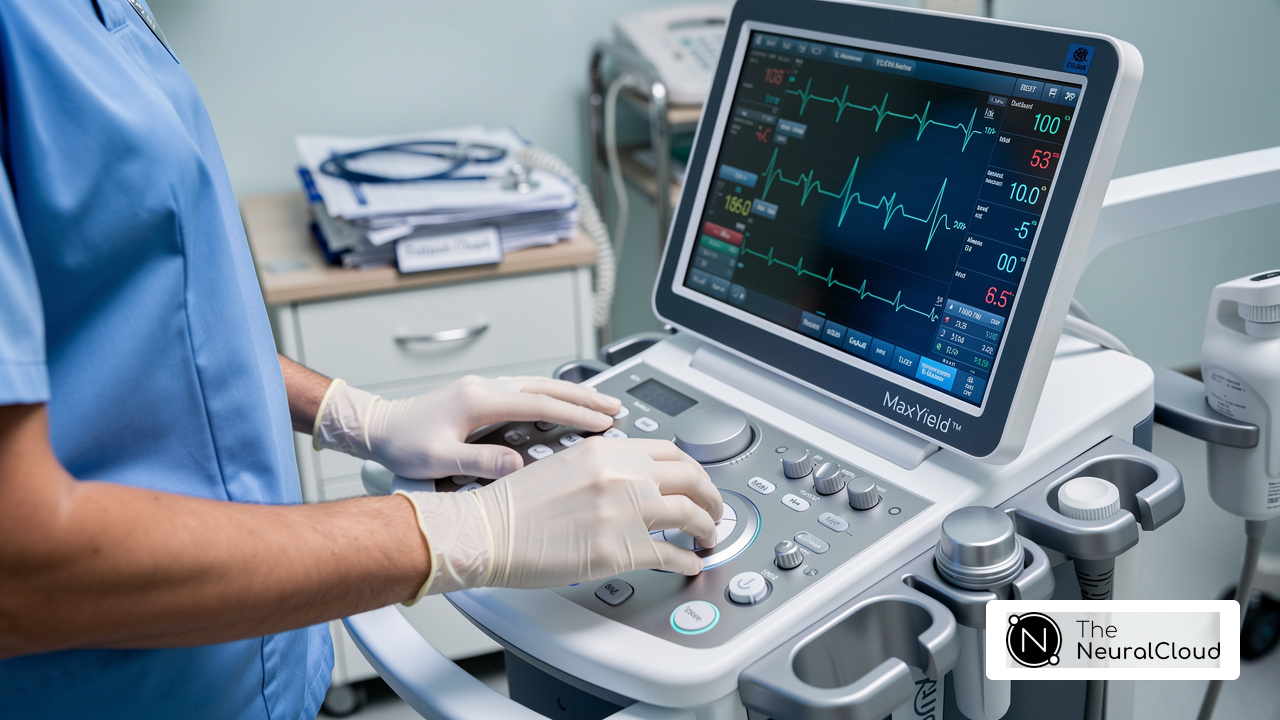
Neural Cloud Solutions' MaxYield™ platform enhances the analysis of these key features by mapping ECG signals through noise, isolating and labeling critical data even in recordings with high levels of noise and artifact. MaxYield™ delivers beat-by-beat analysis, outputting an analysis of 200,000 heartbeats in less than 5 minutes, allowing for the rapid identification of ST segment elevation, Q waves, and other significant markers. This ability ultimately aids assured clinical choices and integrates smoothly into current workflows, improving the overall management of individuals experiencing myocardial infarction of the septum. Understanding these ECG features and leveraging advanced tools like MaxYield™ can significantly enhance patient outcomes in critical situations.

Utilize AI-Driven Tools for Enhanced ECG Analysis
Timely and accurate ECG analysis remains a significant challenge in modern healthcare, often leading to critical delays in patient care. AI-driven tools can significantly enhance ECG analysis through several key functionalities:
- Automated Interpretation: Advanced AI algorithms, such as those utilized in Neural Cloud Solutions' MaxYield™, rapidly analyze ECG data, identifying patterns and abnormalities that may elude human detection. This capability is vital for timely diagnosis. In cases of septal stemi ecg, early intervention can save lives. Recent studies indicate that AI-ECG tools have demonstrated a 99.1% negative predictive value, confirming their effectiveness in identifying individuals at risk for conditions like left ventricular systolic dysfunction (LVSD).
- Real-Time Alerts: These tools provide immediate notifications for critical findings, enabling healthcare professionals to respond swiftly to urgent situations. This feature is particularly beneficial in emergency settings, where every second counts. For instance, AI-ECG systems can alert clinicians to significant changes in heart rhythm, facilitating quicker decision-making.
- Data Integration: AI systems effortlessly combine information from various sources, including medical history and other diagnostic tests. This comprehensive perspective enhances clinical decision-making, allowing for more precise evaluations of an individual's condition. The integration of ECG insights with medical records has been shown to enhance clinical outcomes by providing actionable next steps for high-risk ECGs.
- Continuous Learning: Machine learning algorithms improve over time, refining their accuracy as they process more ECG data. As these tools learn and improve, they help identify complex conditions like septal stemi ecg more effectively. As highlighted by specialists, the ongoing learning feature of AI-ECG tools, including those from Neural Cloud Solutions, is essential for adjusting to changing clinical requirements and enhancing care.
Incorporating AI into ECG workflows not only boosts the accuracy of interpretations but also streamlines the overall diagnostic process. This integration is becoming progressively essential in contemporary cardiology, as it enables healthcare providers to deliver quicker, more dependable care to individuals. Recent developments in 2026 have further emphasized the role of AI in enhancing ECG analysis, making it an indispensable tool in the fight against cardiovascular diseases. Additionally, MaxYield™ serves as a device-agnostic ECG intelligence layer that integrates seamlessly via API, SDK, or CDK without requiring hardware changes. The customizable visualization and reporting tool, Insight360, transforms MaxYield’s clean ECG data into interactive dashboards and clinical-ready reports, further enhancing the utility of AI in ECG analysis.

Conduct Step-by-Step ECG Interpretation for Septal STEMI
Accurate ECG interpretation is crucial for timely diagnosis, yet many healthcare professionals struggle with the complexities involved. To conduct a step-by-step ECG interpretation for Septal STEMI, adhere to the following guidelines:
- Subject Preparation: Ensure the individual is comfortably positioned and that the ECG machine is properly calibrated to avoid inaccuracies.
- Lead Placement: Confirm correct lead placement to minimize artifacts that could compromise interpretation.
- Initial Assessment: Conduct a rapid assessment of the overall rhythm and rate of the ECG, identifying any immediate abnormalities.
- Identify ST Elevation: Focus on leads V1 and V2 for ST segment elevation, measuring the elevation at the J point for accuracy.
- Look for Q Waves: Check for Q waves in the same leads, as their presence indicates myocardial necrosis.
- Evaluate Reciprocal Changes: Examine inferior leads for ST segment depression, which can support the diagnosis of septal STEMI ECG.
- T Wave Analysis: After the acute phase, monitor for T wave inversions in the affected leads, as these can indicate ongoing ischemia.
- Document Findings: Meticulously record all findings, noting any changes over time to track the individual's condition.
- Consult AI Tools: Utilize AI-driven ECG analysis tools like MaxYield™ and Insight3 to corroborate findings and enhance diagnostic accuracy. MaxYield™ offers advanced noise filtering and automated signal processing. This helps streamline your workflow by processing more data quickly and providing a clean, "neuralized" signal. Insight3 transforms MaxYield’s data into interactive dashboards, providing clinical-ready reports. Studies published in the Journal of the American College of Cardiology indicate that computer-assisted interpretation can reduce analysis time by up to 28%, which is crucial for timely diagnosis. Make sure to comply with regulatory standards, like the FDA Class II SaMD clearance-pending status, to keep your documentation ready for audits.
- Clinical Correlation: Always correlate ECG findings with clinical symptoms and medical history for a comprehensive assessment.
By following these steps, healthcare professionals can accurately interpret the septal STEMI ECG, which can lead to better patient outcomes. Additionally, it is important to consider the latest guidelines for type 1 myocardial infarction (MI) resulting from presumed plaque rupture, as these can provide further context for ECG interpretation.

Conclusion
In critical situations, the ability to interpret septal STEMI ECGs accurately can mean the difference between life and death for patients. AI-driven insights, especially from tools like MaxYield™, improve diagnostic accuracy and efficiency. This enhancement allows for timely interventions that can significantly lower mortality rates from myocardial infarction.
Key insights from the article highlight the importance of recognizing specific ECG features such as:
- ST segment elevation
- Q waves
- Reciprocal changes
These elements are crucial for differentiating septal STEMI from other cardiac conditions. Furthermore, the step-by-step approach to ECG interpretation, combined with the capabilities of AI tools, empowers clinicians to make informed decisions quickly, ultimately leading to better patient care.
As cardiovascular diagnostics change, it's clear that embracing AI technologies is essential for effective care. By leveraging these advancements, healthcare providers can ensure they are equipped to deliver rapid and reliable care, addressing the pressing challenges posed by conditions like septal STEMI. By prioritizing AI-driven ECG analysis training, healthcare professionals can significantly enhance their ability to save lives in critical situations.
Frequently Asked Questions
What is Septal STEMI and why is it clinically important?
Septal STEMI (ST-Elevation Myocardial Infarction) is a serious heart condition that can lead to severe complications such as heart failure and arrhythmias if not diagnosed and treated promptly. Its clinical importance lies in the need for timely diagnosis to improve patient outcomes.
What are the statistics regarding myocardial infarction in older adults?
Current statistics indicate that the occurrence of myocardial infarction (MI) in individuals over 60 years old is approximately 9.5%. This highlights the urgent need for effective diagnostic measures, particularly in Canada, where the rate of septal STEMI ECG is increasing.
Why is early detection of Septal STEMI crucial?
Early detection of Septal STEMI is essential because the septal wall is vital for maintaining the heart's structural integrity and function. Timely recognition and treatment can significantly improve patient outcomes.
What role do healthcare professionals play in managing Septal STEMI?
Healthcare professionals must enhance their awareness and training regarding Septal STEMI to ensure timely intervention. Understanding the pathophysiology of this condition is crucial for accurate ECG interpretation and guiding immediate therapeutic interventions.
How are advancements in technology impacting the diagnosis of Septal STEMI?
Recent advancements in AI-driven technologies, such as those from Neural Cloud Solutions, are improving the precision and efficiency of ECG analysis, which can lead to better care for individuals with Septal STEMI.
What tools are recommended for addressing the challenges of Septal STEMI?
Incorporating advanced diagnostic tools like MaxYield™ is crucial for addressing the challenges associated with Septal STEMI. MaxYield™ enhances diagnostic yield, addresses physiological variability, and isolates key features in every heartbeat.
How does automated ECG analysis contribute to patient outcomes?
By leveraging automated ECG analysis, tools like MaxYield™ ultimately lead to better patient outcomes by providing more accurate and efficient diagnostic capabilities.
List of Sources
- Define Septal STEMI and Its Clinical Importance
- COVID-19 and Severe Heart Attack Increase Mortality by 25% After One Year, More than Double Pre-Pandemic Rates | SCAI (https://scai.org/media-center/news-and-articles/covid-19-and-severe-heart-attack-increase-mortality-25-after-one)
- What Is a STEMI? (https://my.clevelandclinic.org/health/diseases/22068-stemi-heart-attack)
- SCAI 2026: STEMI-DTU Data Provide Deeper Insight Into Patient Outcomes (https://dicardiology.com/content/scai-2026-stemi-dtu-data-provide-deeper-insight-patient-outcomes)
- pmc.ncbi.nlm.nih.gov (https://pmc.ncbi.nlm.nih.gov/articles/PMC10122825)
- Identify Key ECG Features of Septal STEMI
- AI-based ECG interpretation outperforms standard diagnosis of occlusive myocardial infarction (https://news-medical.net/news/20260323/AI-based-ECG-interpretation-outperforms-standard-diagnosis-of-occlusive-myocardial-infarction.aspx)
- Acute ST-Segment Elevation Myocardial Infarction (STEMI) - StatPearls - NCBI Bookshelf (https://ncbi.nlm.nih.gov/books/NBK532281)
- New ST-elevation myocardial infarction protocol trial data provide deeper insight into patient outcomes (https://medicalxpress.com/news/2026-04-st-elevation-myocardial-infarction-protocol.html)
- Anterior Myocardial Infarction (https://litfl.com/anterior-myocardial-infarction-ecg-library)
- Utilize AI-Driven Tools for Enhanced ECG Analysis
- AI and ECG Interpretation: The next era of cardiology starts here (https://clinicalview.gehealthcare.com/article/ai-and-ecg-interpretation-next-era-cardiology-starts-here)
- A sweeping new AI to detect heart conditions is coming to OpenEvidence (https://statnews.com/2026/06/23/pathway-labs-echonext-ai-tool-heart-disease-detection)
- AI-powered electrocardiogram detects early signs of heart failure (https://utsouthwestern.edu/newsroom/articles/year-2026/may-ai-powered-electrocardiogram.html)
- AI may spot deadly heart risk in a routine ECG (https://foxnews.com/tech/ai-may-spot-deadly-heart-risk-routine-ecg)
- Conduct Step-by-Step ECG Interpretation for Septal STEMI
- 2025 ACC/AHA/ACEP/NAEMSP/SCAI Guideline for the Management of Patients With Acute Coronary Syndromes (https://professional.heart.org/en/science-news/2025-guideline-for-the-management-of-patients-with-acute-coronary-syndromes)
- New Guideline on Acute Coronary Syndromes: Key Takeaways (https://consultqd.clevelandclinic.org/new-guideline-on-acute-coronary-syndromes-key-takeaways-for-cardiologists)
- AI-based ECG interpretation outperforms standard diagnosis of occlusive myocardial infarction (https://news-medical.net/news/20260323/AI-based-ECG-interpretation-outperforms-standard-diagnosis-of-occlusive-myocardial-infarction.aspx)
- Avoiding STEMI and NSTEMI Misdiagnoses with Fast, Accurate ECG Interpretation (https://gehealthcare.com/en/insights/article/avoiding-stemi-and-nstemi-misdiagnoses-with-fast-accurate-ecg-interpretation?srsltid=AfmBOoqU5K-OsSXBBgofhrNlDhNfgyn61x9BQu6D1HOOqgbCkgKBkXeT)