Introduction
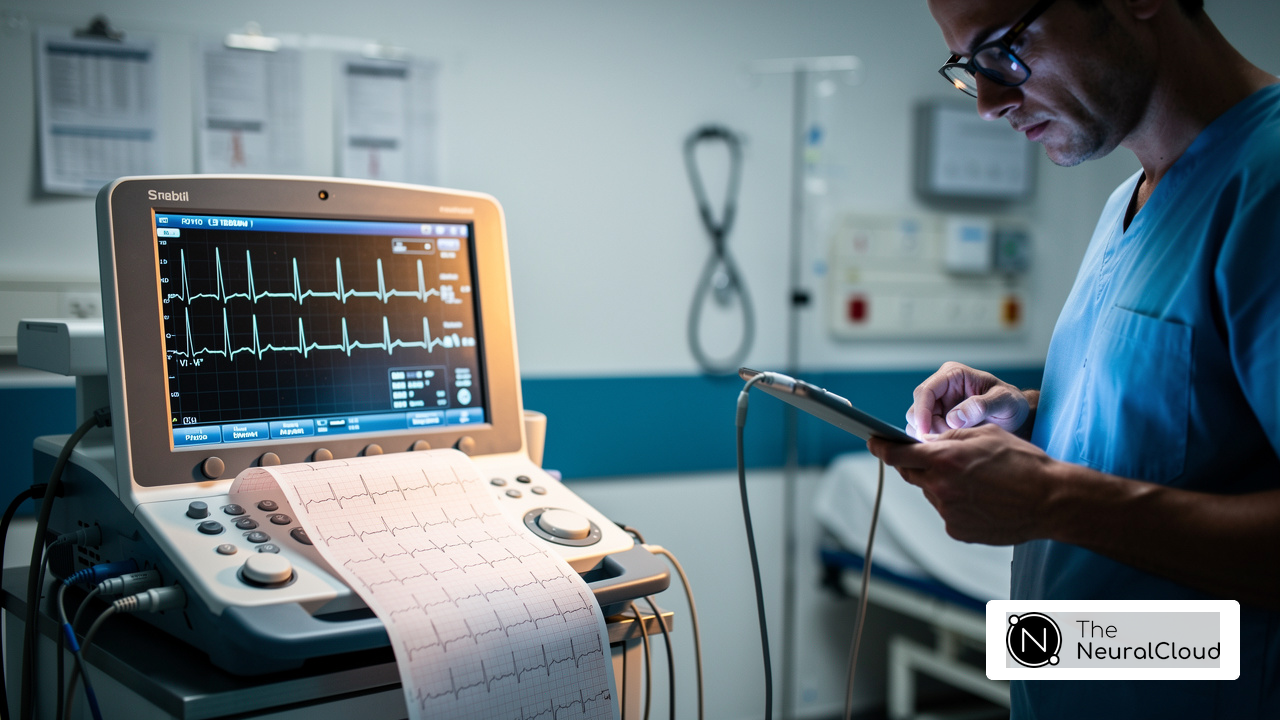
ST elevated myocardial infarction (STEMI) is a critical medical emergency that requires immediate and effective intervention to prevent irreversible heart damage. In the evolving landscape of cardiac care, advanced ECG technologies, such as Neural Cloud Solutions' MaxYield™, are revolutionizing diagnostic and treatment processes. These innovations significantly enhance the ability to identify life-threatening conditions with remarkable speed and accuracy.
However, as reliance on technology grows, an important question arises:
- Can these advancements truly bridge the gap between timely diagnosis and improved patient outcomes?
- Or do they risk overshadowing the essential clinical skills that are fundamental to effective cardiac care?
Define ST Elevated Myocardial Infarction and Its Clinical Importance
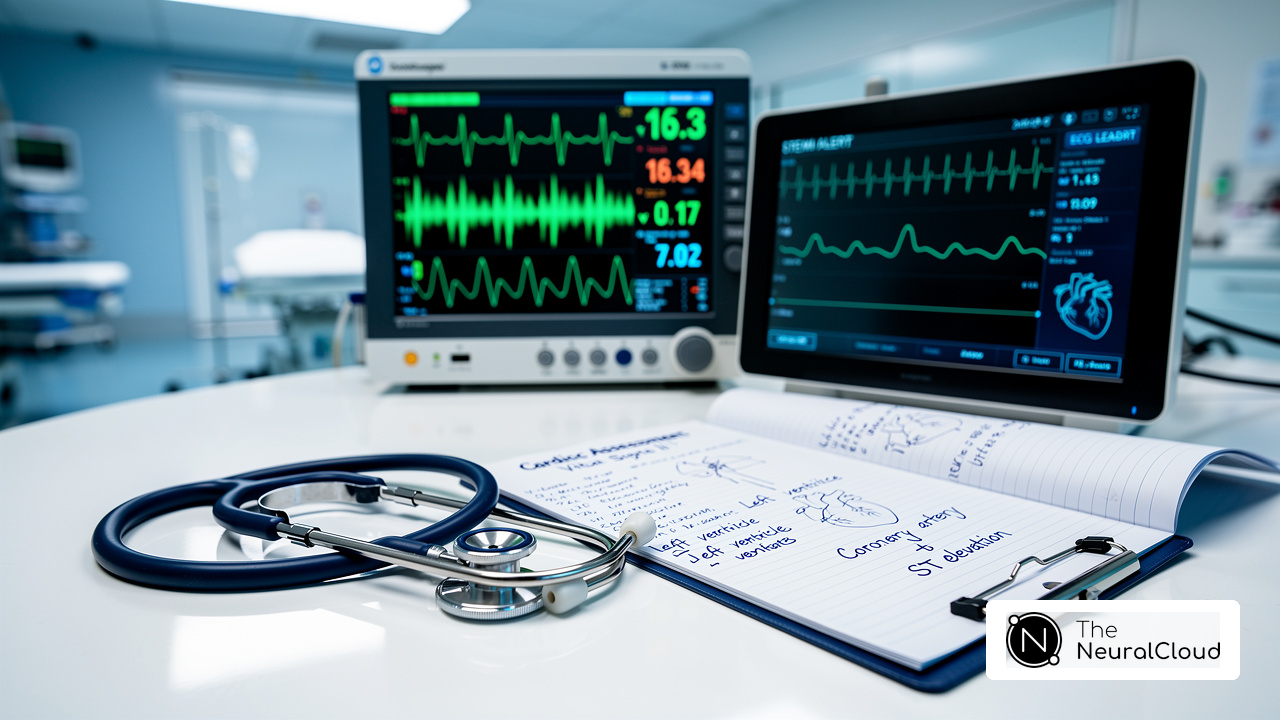
ST Elevated Myocardial Infarction (STEMI) is a critical medical emergency caused by the complete blockage of one or more coronary arteries, resulting in significant heart damage. This condition, known as myocardial infarction, is marked by a distinct elevation of the ST segment, serving as a vital diagnostic indicator. Timely intervention is essential in the case of STEMI, as delays can result in irreversible heart damage and increased mortality rates. For example, the mortality rate is around 9.9%, with women experiencing higher rates (14%) compared to men (8%). Recognizing symptoms such as severe chest pain, dyspnea, and diaphoresis is crucial for the prompt treatment of STEMI, ideally through reperfusion therapy within 90 minutes of hospital arrival.
The urgency of addressing STEMI is underscored by survival rates that are significantly influenced by the speed of intervention. Within 30 days, mortality rates can increase. Additionally, approximately 20% of patients with STEMI face hospital infections, highlighting the necessity for immediate action. In this context, the technology from Neural Cloud Solutions enhances ECG analysis through advanced noise filtering and distinct wave recognition.
MaxYield™ rapidly isolates ECG waves from recordings affected by noise and artifacts, ensuring accurate identification and labeling of critical data. This capability improves diagnosis and addresses challenges posed by physiological variability and signal artifacts. By streamlining the ECG analysis process, healthcare professionals can make more informed decisions, ultimately leading to better patient outcomes.

Diagnose STEMI: Key Methods and Diagnostic Tools
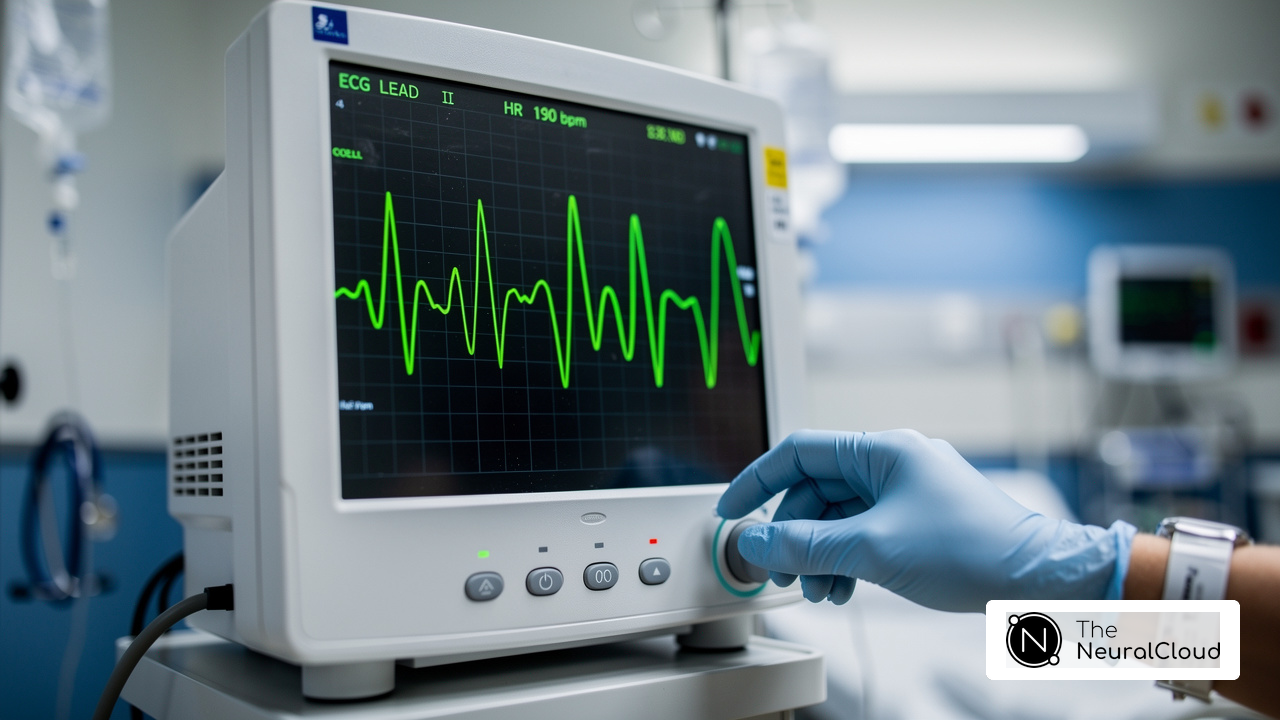
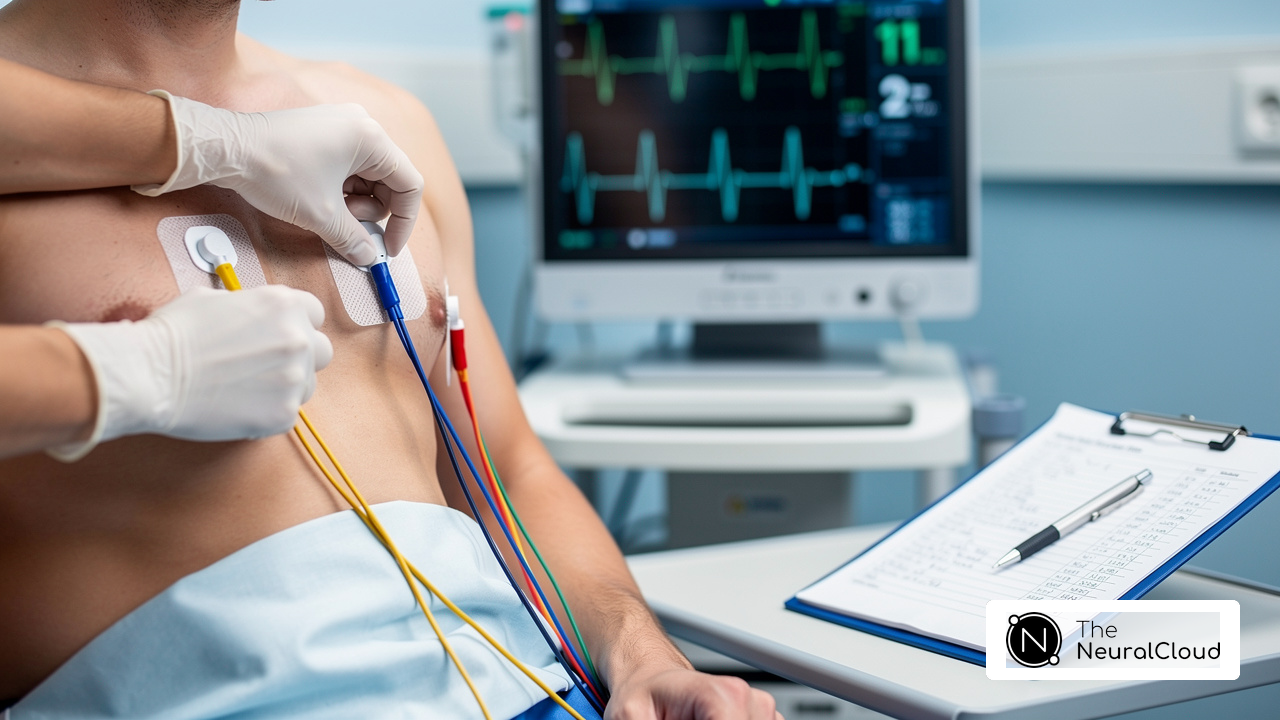
The diagnosis of STEMI primarily relies on the ECG, which demonstrates characteristic changes. Clinicians must identify ST elevation by noting changes in two or more contiguous leads, which is a key indicator. Alongside ECG findings, cardiac biomarkers are essential for indicating myocardial injury and improving diagnostic accuracy. Current best practices advocate using these biomarkers in conjunction with ECG results to effectively confirm a diagnosis.
Echocardiography further assesses myocardial function and damage, providing a comprehensive view of the patient's cardiac status. The integration of advanced technologies, like Neural Cloud Solutions' offerings, significantly enhances diagnostic accuracy. These tools rapidly process ECG data and identify critical patterns that may be missed in traditional evaluations. The system effectively maps ECG signals through noise, isolating and labeling key features in every heartbeat, delivering beat-by-beat analysis of 200,000 heartbeats in under 5 minutes.
This advanced platform aids healthcare professionals in identifying cardiac events, displaying smooth waveforms, and supporting confident clinical decisions. For example, AI tools can detect subtle changes in the ECG that indicate acute coronary occlusions, facilitating timely interventions. It's noteworthy that over fifty percent of individuals presenting with STEMI-like conditions experienced delayed catheterization lab (CCL) activation, underscoring the importance of prompt diagnosis and intervention.
This combination of conventional techniques and advanced technologies is vital for improving patient outcomes in heart attack management. For practical insights, refer to the user manuals and use cases associated with these tools to understand their application in various clinical scenarios.

Treat STEMI: Acute Interventions and Long-Term Management Strategies
Immediate treatment for ST elevated myocardial infarction is critical. The primary goal is to restore blood flow to the heart through intervention. This can be achieved via percutaneous coronary intervention (PCI) or thrombolytic therapy, depending on the clinical scenario and timing of presentation.
Medications are equally vital. These typically include:
- Beta-blockers
- ACE inhibitors
- Lifestyle modifications aimed at reducing cardiovascular risk factors
Rehabilitation programs play a crucial role in recovery, providing structured support to individuals after an event. Continuous monitoring and follow-up care are essential to prevent recurrence and manage potential complications.
Research indicates that effective long-term management can significantly lower the risk of major adverse cardiovascular events (MACEs). Customized strategies enhance outcomes for individuals, particularly those at high risk. The implementation of tailored treatment strategies to improve recovery and enhance quality of life is important.
Overall, a comprehensive approach to both immediate interventions and ongoing management is essential. This strategy not only enhances survival rates but also improves quality of life in heart attack patients.

Leverage Advanced ECG Technologies for Enhanced STEMI Management
Advanced ECG technologies, such as Neural Cloud Solutions' MaxYield™, are revolutionizing the management of ST Elevated Myocardial Infarction. Traditional ECG analysis often faces challenges, including high false positive rates and delays in treatment. MaxYield™ addresses these issues by utilizing sophisticated AI algorithms to automate ECG analysis, enabling rapid identification of ST-segment elevations and other critical cardiac features.
One of the standout features of MaxYield™ is its ability to process extensive ECG data swiftly. This capability empowers healthcare providers to make informed decisions in real-time, significantly reducing the time to treatment. Timely intervention is crucial, as delays can triple the risk of death in heart attack cases. Furthermore, the integration of advanced ECG technologies into clinical workflows enhances communication among healthcare teams, streamlining patient management and improving overall outcomes for heart attack patients.
MaxYield™ offers detailed outputs, including P-wave, QRS complex, and T-wave onsets and offsets, which contribute to accurate diagnosis. Real-world applications of these technologies highlight their effectiveness; for instance, a study at UC Davis Medical Center found that MaxYield™ accurately identified 553 confirmed cases, outperforming traditional methods. As ECG technology continues to advance, the potential for further refinement in diagnostic capabilities and treatment protocols remains promising, ultimately leading to improved patient care.
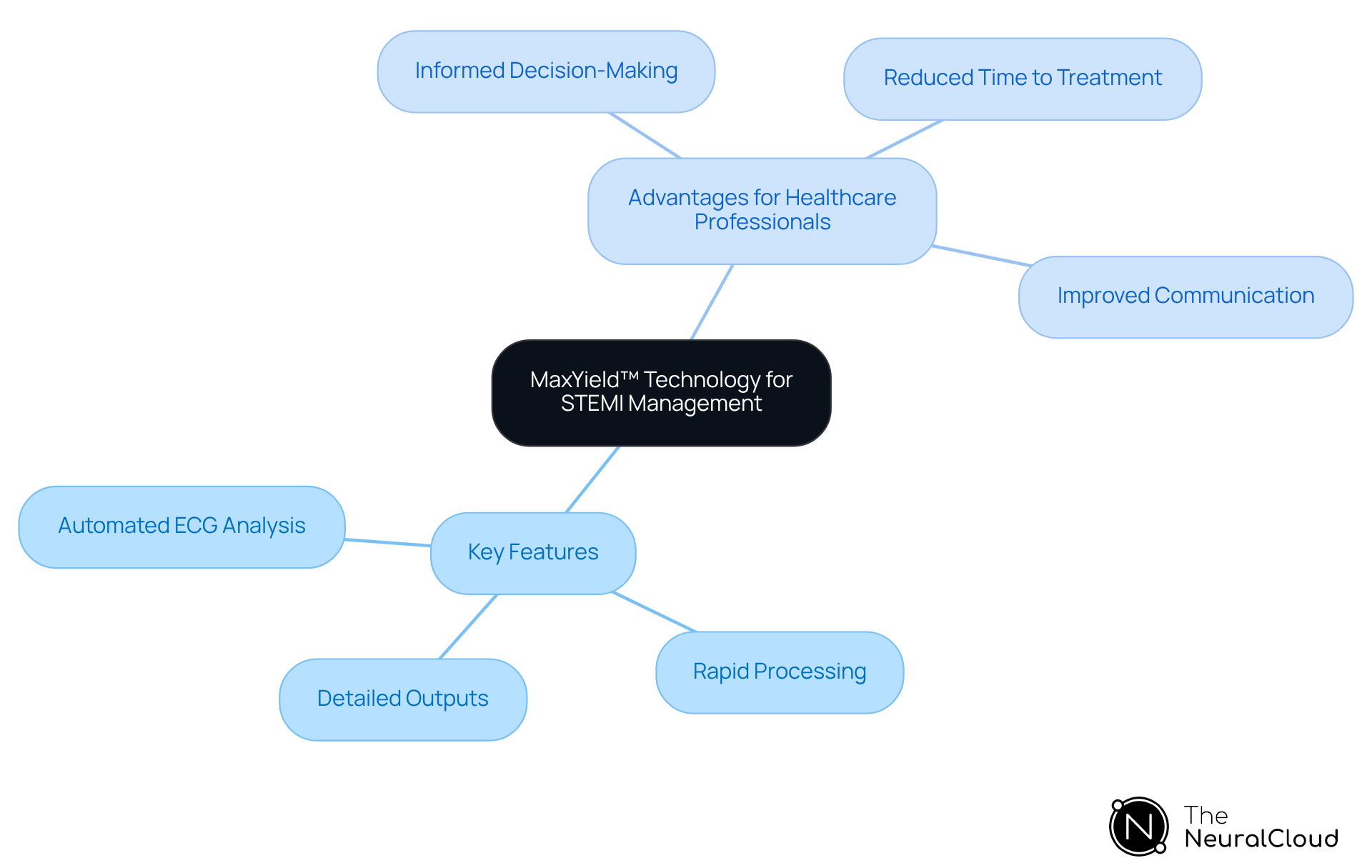
Key Features of MaxYield™:
- Enhanced analysis using AI algorithms.
- Rapid processing of ECG data.
- Detailed outputs for enhanced diagnostics.
Advantages for Healthcare Professionals:
- Informed decision-making in real-time.
- Reduced time to treatment, lowering the risk of death.
- Improved communication within healthcare teams.
Conclusion
ST elevated myocardial infarction (STEMI) is a critical medical emergency that demands immediate attention to avert severe health consequences. Timely diagnosis and intervention are essential, and advanced ECG technologies, like Neural Cloud Solutions' MaxYield™, play a pivotal role in enhancing the management of this life-threatening condition. By streamlining ECG analysis and improving diagnostic accuracy, these innovations enable healthcare professionals to act swiftly, ultimately leading to better patient outcomes.
The challenges in ECG analysis often stem from the complexity of interpreting data quickly and accurately. MaxYield™ addresses these challenges by offering features such as automated analysis and real-time data processing. These capabilities not only facilitate rapid identification of critical cardiac features but also enhance communication among healthcare teams, ensuring that everyone is on the same page during emergencies.
Recognizing STEMI symptoms and understanding the role of ECG and cardiac biomarkers in diagnosis are crucial for effective treatment. The integration of advanced technologies like MaxYield™ supports both acute interventions and long-term management strategies. This comprehensive approach is vital for reducing mortality rates and improving the quality of life for patients recovering from STEMI.
Healthcare professionals must embrace advanced ECG solutions and stay informed about the latest innovations in heart attack management. By leveraging technology and adhering to best practices, the medical community can significantly impact the lives of those affected by STEMI. The commitment to continuous improvement in diagnostic capabilities and patient care will pave the way for a future where heart attack management is more effective and efficient than ever before.
Frequently Asked Questions
What is ST elevated myocardial infarction (STEMI)?
ST elevated myocardial infarction (STEMI) is a critical medical emergency caused by the complete blockage of one or more coronary arteries, leading to significant myocardial ischemia and marked by an elevation of the ST segment on an electrocardiogram (ECG).
Why is timely intervention important in STEMI cases?
Timely intervention is crucial in STEMI cases because delays can result in irreversible heart damage and increased mortality rates. The hospital mortality rate for STEMI is approximately 9.9%, with higher rates in women (14%) compared to men (8%).
What are the common symptoms of STEMI?
Common symptoms of STEMI include severe chest pain, dyspnea (shortness of breath), and diaphoresis (excessive sweating).
What is the recommended treatment timeframe for STEMI?
The ideal treatment for STEMI is primary percutaneous coronary intervention (PCI) within 90 minutes of hospital arrival to improve outcomes.
How do survival rates vary for STEMI patients based on gender?
Within 30 days, survival rates for STEMI patients are 92.1% for men and 86.4% for women, indicating a significant difference based on gender.
What percentage of STEMI patients face hospital infections?
Approximately 20% of patients with STEMI experience hospital infections, emphasizing the need for immediate intervention.
How does the MaxYield™ platform improve ECG analysis for STEMI?
The MaxYield™ platform enhances ECG analysis efficiency by rapidly isolating ECG waves from recordings affected by noise and artifacts, ensuring accurate identification and labeling of critical data, which leads to better patient outcomes.
List of Sources
- Define ST Elevated Myocardial Infarction and Its Clinical Importance
- amjcaserep.com (https://amjcaserep.com/abstract/full/idArt/929736)
- dovepress.com (https://dovepress.com/factors-of-hospital-mortality-in-men-and-women-with-st-elevation-myoca-peer-reviewed-fulltext-article-IJGM)
- STEMI: ST-segment Elevation Myocardial Infarction - The Cardiology Advisor (https://thecardiologyadvisor.com/ddi/stemi-st-elevation-myocardial-infarction)
- Trends and Outcomes of ST‐Segment–Elevation Myocardial Infarction Among Young Women in the United States | Journal of the American Heart Association (https://ahajournals.org/doi/10.1161/JAHA.122.026811)
- studocu.com (https://studocu.com/en-us/document/texas-am-university/nursing-foundation/case-studies-acute-myocardial-infarction-stemi/10297665)
- Diagnose STEMI: Key Methods and Diagnostic Tools
- STEMI - Electrocardiogram - M3 Curriculum | SAEM (https://saem.org/about-saem/academies-interest-groups-affiliates2/cdem/for-students/online-education/m3-curriculum/group-electrocardiogram-(ecg)-rhythm-recognition/stemi)
- jacc.org (https://jacc.org/doi/10.1016/j.jcin.2025.10.018)
- Queen of Hearts AI Hits 92% STEMI Accuracy (https://powerfulmedical.com/blog/pmcardio-reports-positive-rct-results-and-late-breaking-clinical-science-for-stemi-detection)
- ECG data analysis to determine ST-segment elevation myocardial infarction and infarction territory type: an integrative approach of artificial intelligence and clinical guidelines - PMC (https://pmc.ncbi.nlm.nih.gov/articles/PMC11491539)
- STEMI ECG Criteria: ST-Elevation Thresholds (https://powerfulmedical.com/blog/stemi-ecg-criteria)
- Treat STEMI: Acute Interventions and Long-Term Management Strategies
- pmc.ncbi.nlm.nih.gov (https://pmc.ncbi.nlm.nih.gov/articles/PMC8128486)
- journals.lww.com (https://journals.lww.com/cd/fulltext/2022/12000/long_term_management_of_patients_with_myocardial.5.aspx)
- Leverage Advanced ECG Technologies for Enhanced STEMI Management
- New study finds AI model improves heart attack detection (https://health.ucdavis.edu/news/headlines/new-study-finds-ai-model-improves-heart-attack-detection/2025/11)
- AI-Based ECG Analysis Significantly Improves STEMI Detection, Reduces False Activations - American College of Cardiology (https://acc.org/latest-in-cardiology/articles/2025/10/24/16/56/tues-554pm-ai-tct-2025)