Introduction
ST elevation on an electrocardiogram (ECG) is a vital sign of potential myocardial injury, especially in ST-Elevation Myocardial Infarction (STEMI). Understanding the nuances of ST elevation criteria is essential for clinicians, researchers, and diagnostic facilities in Canada, where timely intervention can significantly impact patient outcomes. Misinterpretation of ST elevation can lead to critical delays in treatment. To address these challenges, healthcare professionals require advanced tools that streamline ECG analysis.
Define ST Elevation and Its Role in STEMI Diagnosis
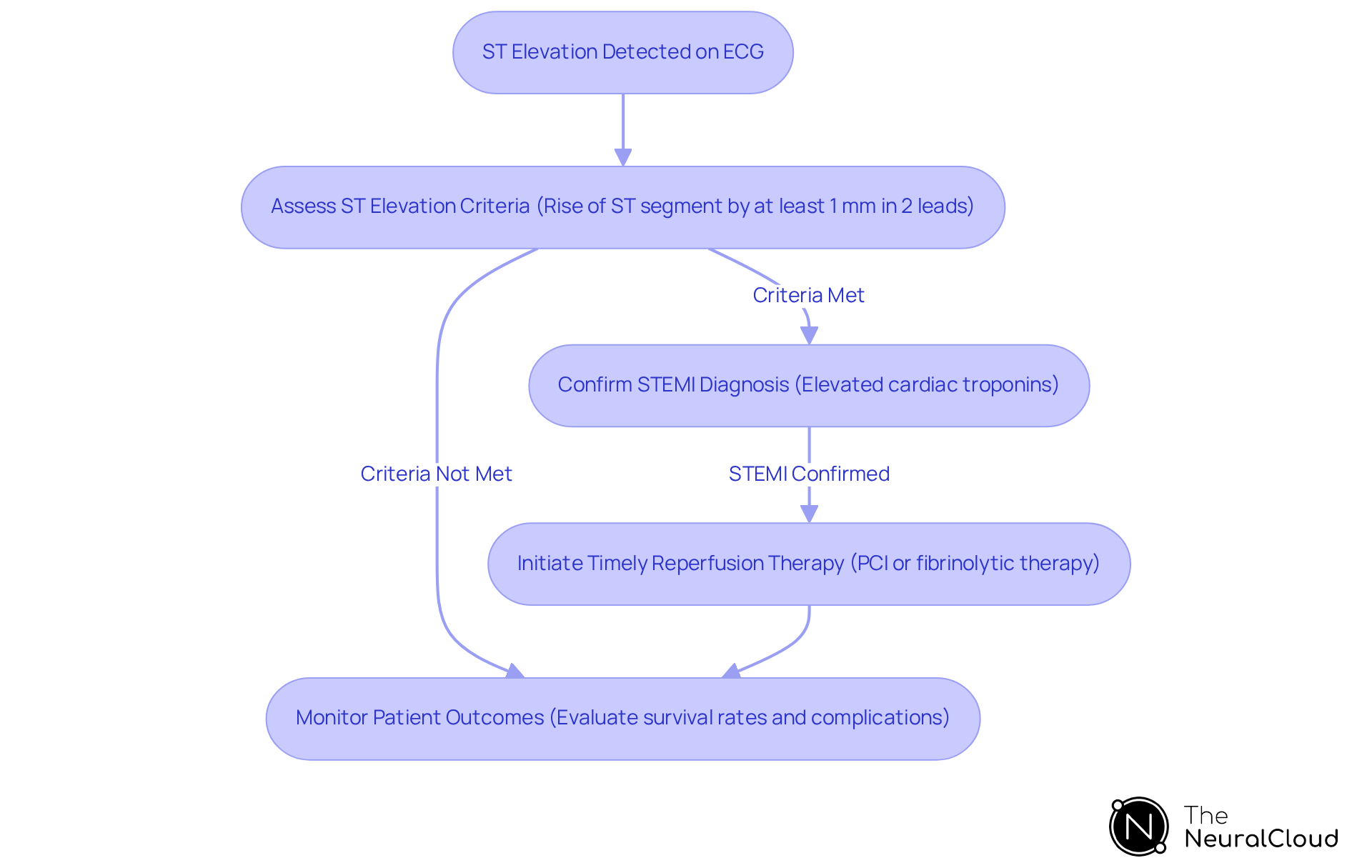
ST elevation on an electrocardiogram (ECG) signals potential myocardial injury, presenting significant challenges in accurate diagnosis. In ST-Elevation Myocardial Infarction, this rise usually results from a complete blockage of a coronary artery. This blockage causes ischemia and damages the heart muscle. Clinically, the ST elevation criteria for STEMI is defined as a rise of the ST segment at the J point by at least 1 mm in two or more adjacent leads, serving as a standard criterion for diagnosing ST-segment elevation myocardial infarction. This elevation is critical, as it requires immediate medical intervention to restore blood flow and minimize myocardial damage.
In Canada, about 38% of patients with acute coronary syndrome (ACS) are diagnosed with ST segment myocardial infarction. This statistic underscores the importance of detecting ST changes in clinical practice. Timely reperfusion therapy, such as percutaneous coronary intervention (PCI), is essential. Studies show that prompt treatment can significantly reduce mortality rates. Understanding the implications of ST elevation is vital for healthcare professionals, as it directly influences patient outcomes and treatment efficacy.
Regulatory compliance, including FDA Class II SaMD clearance-pending status and audit-ready documentation supporting GxP inspections, enhances the credibility of the diagnostic process. Specialists like Dr. Alan Rabinowitz, Dr. Brett Heilbron, and Dr. Marc W. Deyell emphasize that prompt intervention is crucial for improving survival rates in individuals with ST elevation myocardial infarction. Neural Cloud Solutions Inc.'s MaxYield platform enhances this process by providing hospital-grade ECG accuracy from consumer-grade devices. This feature helps tackle the challenges posed by physiological variability and signal artifacts in ECG analysis, which can lead to improved patient outcomes.
Outline Key ST Elevation Criteria for STEMI Identification
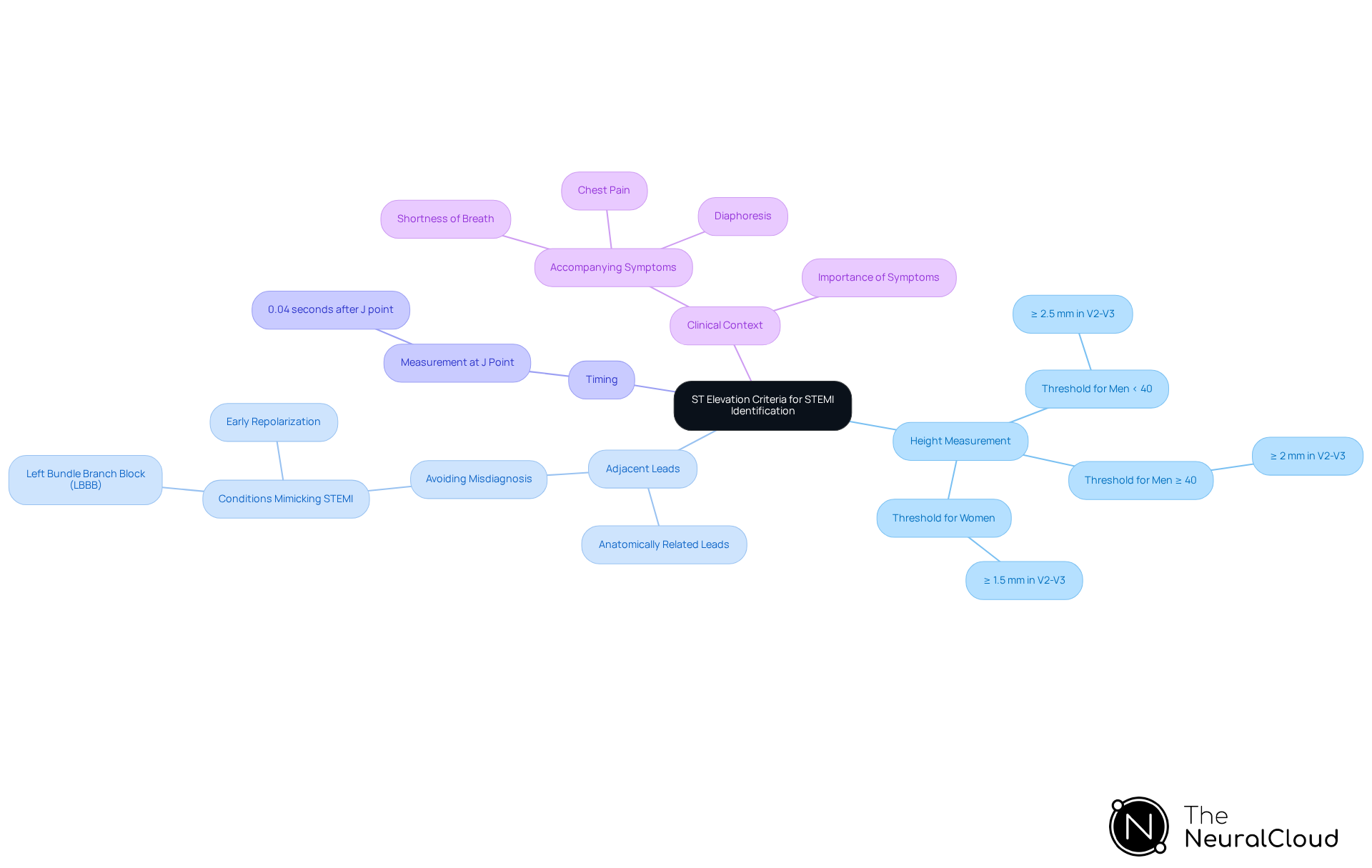
Accurate identification of ST Elevation Myocardial Infarction (STEMI) is crucial for effective treatment and patient outcomes. The key criteria for identifying STEMI through ST elevation include:
- Height Measurement: The ST segment must rise at least 1 mm in two or more adjacent leads. For leads V2 and V3, the threshold is set at 2 mm for men and 1.5 mm for women, reflecting the need for gender-specific considerations in diagnosis.
- Adjacent Leads: The elevation must occur in adjacent leads that are anatomically or electrically related. This ensures that the observed elevation is not due to other conditions, such as left bundle branch block (LBBB) or early repolarization.
- Timing: Accurate measurement should be taken at the J point, where the QRS complex ends and the ST segment begins. This is typically assessed 0.04 seconds after the J point to ensure precision in identifying significant changes.
- Clinical Context: Accompanying symptoms such as chest pain, shortness of breath, or diaphoresis are critical in supporting the diagnosis of ST-elevation myocardial infarction. These clinical signs, combined with ECG findings, guide clinicians in recognizing life-threatening conditions.
Adhering to the ST elevation criteria for STEMI is vital for ensuring accurate diagnoses and prompt treatment, as they assist clinicians in effectively recognizing myocardial infarction. Recent research indicates that traditional STEMI criteria might overlook occlusion myocardial infarction (OMI) in more than half of the cases, highlighting the importance of adhering to these guidelines for timely intervention.
Identify Challenges in ST Elevation Interpretation and Diagnosis
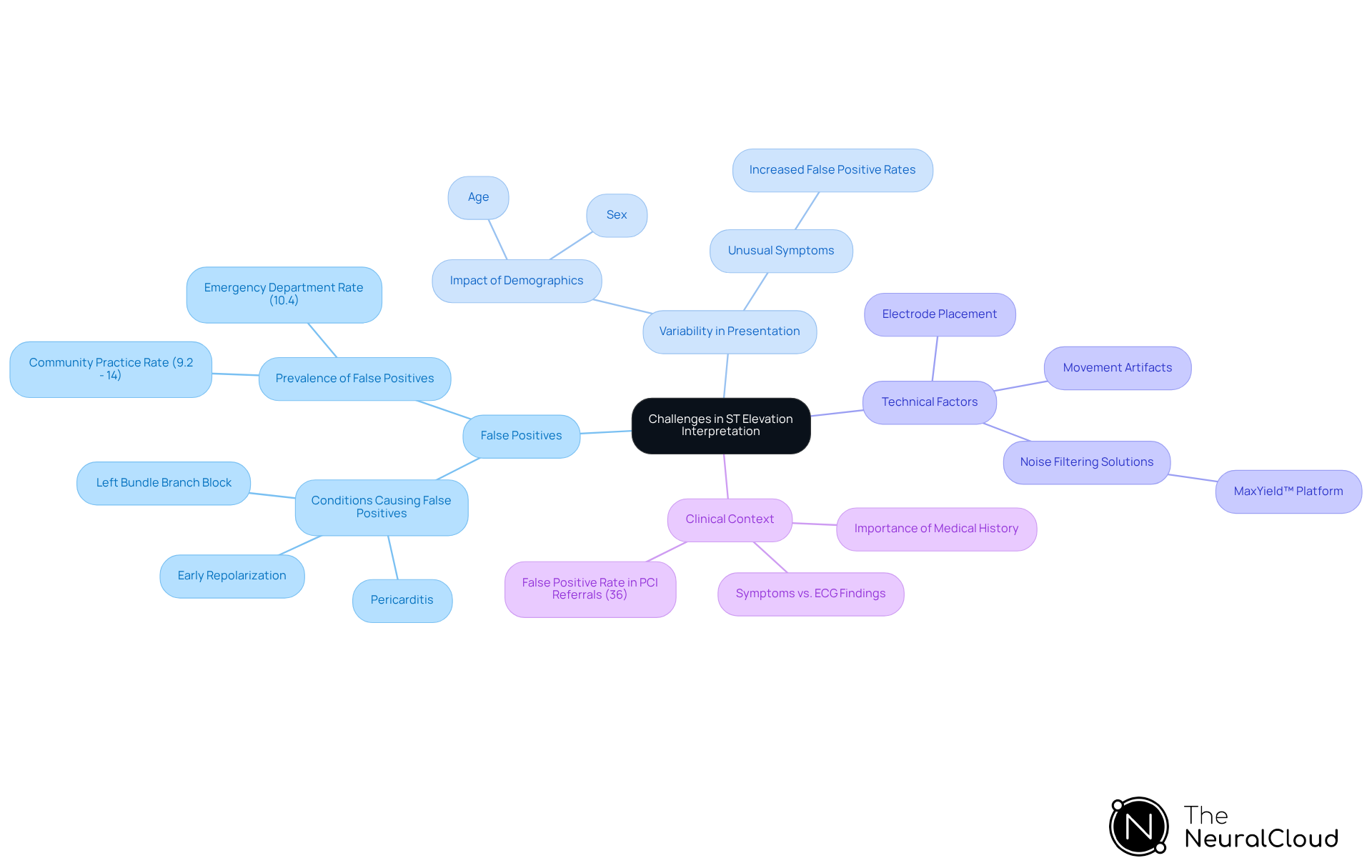
Interpreting ST elevation in ECGs can be fraught with challenges that jeopardize diagnostic accuracy:
- False Positives: Conditions such as early repolarization, pericarditis, and left bundle branch block can resemble ST rise, leading to misdiagnosis. Studies indicate that the prevalence of false-positive STEMI diagnoses can range from 9.2% to 14% in community practice, highlighting the need for careful evaluation.
- Variability in Presentation: Patient demographics, including age and sex, can affect the manifestation of ST changes. For example, unusual symptoms may result in increased false-positive rates, requiring a customized approach to interpretation that considers individual characteristics.
- Technical Factors: Poor electrode placement or movement of the individual can introduce artifacts that may be mistaken for ST elevation. It highlights how crucial it is to get ECG acquisition right to avoid misinterpretations. Neural Cloud Solutions Inc.'s MaxYield™ platform addresses these challenges by employing advanced noise filtering and distinct wave recognition, allowing for the rapid isolation of ECG waves from recordings with baseline wander, movement, and muscle artifact.
- Clinical Context: Symptoms may not always align with ECG findings, leading to confusion. Clinicians must consider the entire clinical picture, including medical history and presenting symptoms, to make accurate diagnoses. For instance, a study discovered that 36% of individuals referred for primary PCI were deemed as false-positive acute myocardial infarction, underscoring the essential requirement for thorough evaluation. Integrating MaxYield™ into clinical practice enhances diagnostic accuracy by turning noisy ECG recordings into clear signals, improving interpretation reliability.
Tackling these challenges is essential for enhancing diagnostic precision and guaranteeing prompt care for patients undergoing a heart attack. Continuous education and the integration of advanced diagnostic tools, such as the AI-based ECG model, Queen of Hearts, which has demonstrated higher sensitivity and specificity compared to standard care, can further enhance the reliability of ECG interpretations in clinical practice. Expert endorsements from Dr. Alan Rabinowitz, Dr. Brett Heilbron, and Dr. Marc W. Deyell emphasize that MaxYield™ rivals human interpretation in precision and significantly reduces noise, making it an invaluable asset in the evolving landscape of ECG analysis. Additionally, it is important to note that MaxYield™ is currently pending FDA Class II SaMD clearance, ensuring compliance with regulatory standards. The adoption of MaxYield™ not only streamlines ECG analysis but also empowers clinicians to make more informed decisions, ultimately enhancing patient care.
Integrate Advanced Technologies for Enhanced ECG Analysis
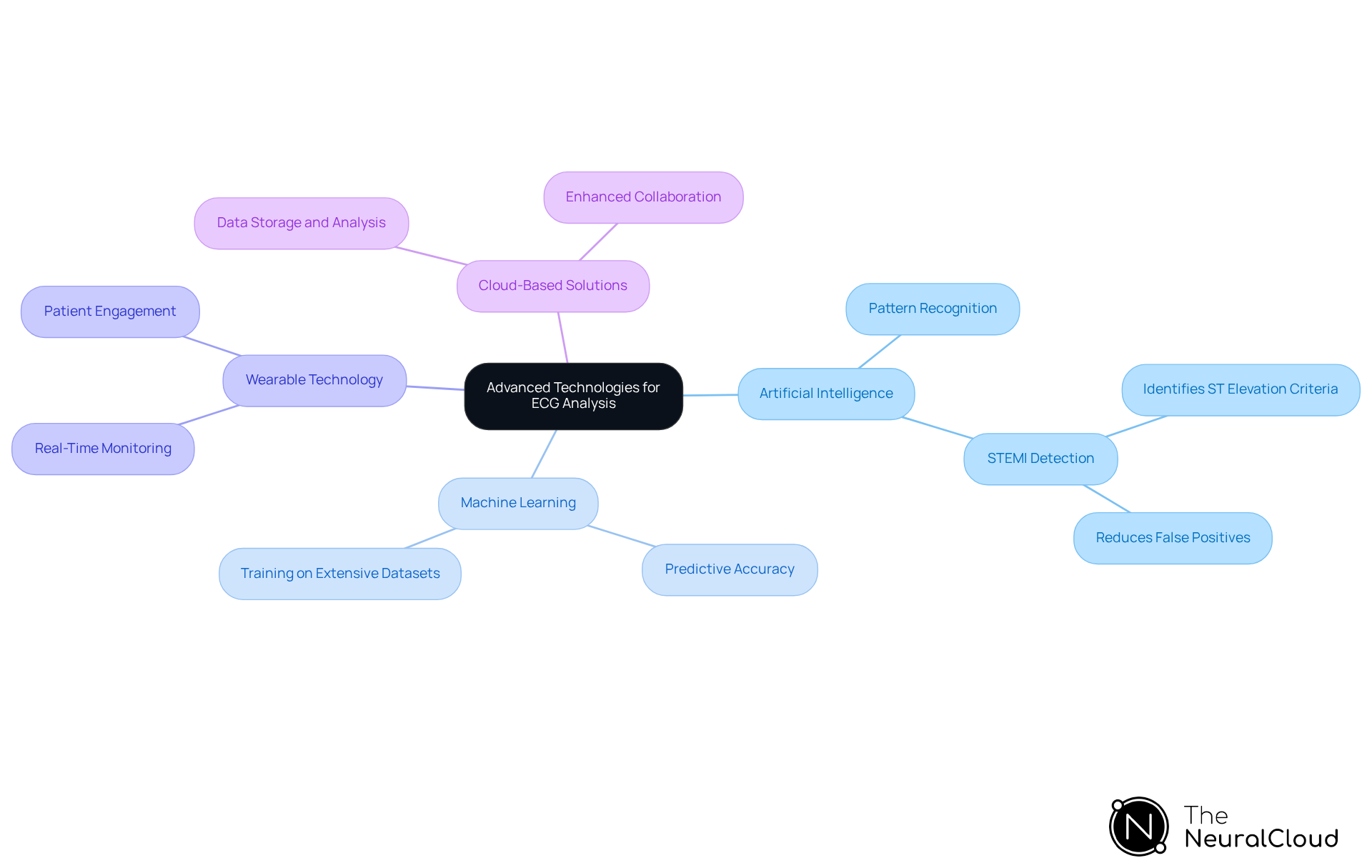
ECG analysis faces significant challenges, particularly in accurately diagnosing conditions like myocardial infarction. Key technologies include:
- Artificial Intelligence (AI): AI algorithms rapidly analyze ECG data, identifying patterns and anomalies that may elude human detection. For instance, AI can efficiently identify slight changes that meet the ST elevation criteria for STEMI, which is essential for distinguishing specific heart attacks from other cardiac conditions.
- Machine Learning: By training on extensive datasets, machine learning models improve their predictive accuracy, enabling more reliable identification of STEMI cases according to the ST elevation criteria for STEMI. This capability is particularly beneficial in emergency settings where timely diagnosis is critical.
- Wearable Technology: Continuous monitoring devices provide real-time ECG data, facilitating early detection of the ST elevation criteria for STEMI and ensuring prompt intervention. These compact devices enable individuals to engage actively in their cardiac care.
- Cloud-Based Solutions: The use of cloud technology allows for the storage and analysis of ECG data from various sources, enhancing accessibility and collaboration among healthcare providers. This integration supports real-time assessments, leading to informed and swift treatment decisions.
Leveraging these technologies enhances diagnostic capabilities and leads to improved patient outcomes and streamlined workflows. Recent studies, such as those conducted at UC Davis Health, demonstrate the effectiveness of AI in accurately identifying STEMI cases based on the ST elevation criteria for STEMI, significantly reducing false positive rates and improving triage accuracy. The integration of these technologies is essential for advancing cardiac diagnostics and improving patient care outcomes.
Conclusion
The accurate identification of ST elevation on an ECG is a critical skill for healthcare professionals. The ability to recognize ST elevation can be the difference between life and death, as timely intervention is essential for minimizing myocardial damage. By understanding the specific criteria for ST elevation and the implications of these findings, clinicians can enhance their diagnostic accuracy and improve patient outcomes.
This article outlines key criteria for identifying ST elevation, including necessary height measurements, the importance of adjacent leads, and the clinical context surrounding symptoms. It also highlights challenges in interpreting ST elevation, such as false positives and variability in presentation, which can complicate the diagnostic process. Furthermore, the integration of advanced technologies, including AI and machine learning, is emphasized as a means to enhance ECG analysis and streamline the identification of STEMI cases.
As cardiac diagnostics continue to evolve, it's important for clinicians to embrace these advanced tools and adhere to established ST elevation criteria. Continuous education and the adoption of innovative technologies like Neural Cloud Solutions Inc.'s MaxYield platform can significantly improve diagnostic precision and patient care. By prioritizing accurate ECG interpretation, leveraging the latest advancements, and integrating AI and machine learning, healthcare professionals can ensure effective responses to myocardial infarction challenges, ultimately saving lives and enhancing the quality of care in Canada.
Frequently Asked Questions
What does ST elevation indicate on an electrocardiogram (ECG)?
ST elevation on an ECG signals potential myocardial injury and is a critical indicator of ST-Elevation Myocardial Infarction (STEMI), typically resulting from a complete blockage of a coronary artery.
How is ST elevation defined for diagnosing STEMI?
The ST elevation criteria for STEMI is defined as a rise of the ST segment at the J point by at least 1 mm in two or more adjacent leads.
Why is ST elevation important in clinical practice?
ST elevation is important because it requires immediate medical intervention to restore blood flow and minimize myocardial damage, which can significantly influence patient outcomes.
What percentage of patients with acute coronary syndrome (ACS) in Canada are diagnosed with ST segment myocardial infarction?
Approximately 38% of patients with acute coronary syndrome (ACS) in Canada are diagnosed with ST segment myocardial infarction.
What is the significance of timely reperfusion therapy in STEMI cases?
Timely reperfusion therapy, such as percutaneous coronary intervention (PCI), is essential as studies show that prompt treatment can significantly reduce mortality rates in patients with STEMI.
What role do specialists play in the management of ST elevation myocardial infarction?
Specialists like Dr. Alan Rabinowitz, Dr. Brett Heilbron, and Dr. Marc W. Deyell emphasize that prompt intervention is crucial for improving survival rates in individuals with ST elevation myocardial infarction.
How does Neural Cloud Solutions Inc.'s MaxYield platform contribute to ECG analysis?
Neural Cloud Solutions Inc.'s MaxYield platform enhances ECG analysis by providing hospital-grade accuracy from consumer-grade devices, addressing challenges posed by physiological variability and signal artifacts, which can lead to improved patient outcomes.
What regulatory compliance is mentioned in relation to the diagnostic process for ST elevation?
The article mentions FDA Class II SaMD clearance-pending status and audit-ready documentation supporting GxP inspections, which enhance the credibility of the diagnostic process.
List of Sources
- Define ST Elevation and Its Role in STEMI Diagnosis
- Acute ST-Segment Elevation Myocardial Infarction (STEMI) - StatPearls - NCBI Bookshelf (https://ncbi.nlm.nih.gov/books/NBK532281)
- North American COVID-19 ST-Elevation Myocardial Infarction (STEMI) Research Reveals Impact on Minority Populations, High Mortality and Atypical Symptoms | Minneapolis Heart Institute Foundation (https://mplsheart.org/news/north-american-covid-19-st-elevation-myocardial-infarction-stemi-research-reveals-impact)
- New ST-elevation myocardial infarction protocol trial data provide deeper insight into patient outcomes (https://medicalxpress.com/news/2026-04-st-elevation-myocardial-infarction-protocol.html)
- Study reinforces need for greater coordination in heart attack care (https://newsroom.heart.org/news/study-reinforces-need-for-greater-coordination-in-heart-attack-care)
- Outline Key ST Elevation Criteria for STEMI Identification
- ST Elevation MI (STEMI) - Cardio Guide (https://cardioguide.ca/stemi)
- STEMI ECG Criteria: ST-Elevation Thresholds (https://powerfulmedical.com/blog/stemi-ecg-criteria)
- theneuralcloud.com (https://theneuralcloud.com/post/master-stemi-key-st-elevation-criteria-and-ecg-innovations)
- STEMI: ST-segment Elevation Myocardial Infarction - The Cardiology Advisor (https://thecardiologyadvisor.com/ddi/stemi-st-elevation-myocardial-infarction)
- Identify Challenges in ST Elevation Interpretation and Diagnosis
- Technical Factors Involved in False Positive ECG STEMI Diagnoses (https://dicardiology.com/article/technical-factors-involved-false-positive-ecg-stemi-diagnoses)
- AI-based ECG model linked to reduction in false positives for heart attack (https://healio.com/news/cardiology/20251030/aibased-ecg-model-linked-to-reduction-in-false-positives-for-heart-attack)
- False Positive ST-Segment Elevation Myocardial Infarction - PMC (https://pmc.ncbi.nlm.nih.gov/articles/PMC3717418)
- Several Factors Behind False-Positive STEMI Activations (https://tctmd.com/news/several-factors-behind-false-positive-stemi-activations)
- Integrate Advanced Technologies for Enhanced ECG Analysis
- New study finds AI model improves heart attack detection (https://health.ucdavis.edu/news/headlines/new-study-finds-ai-model-improves-heart-attack-detection/2025/11)
- AI-ECG Finds STEMI Faster, Cuts False-Positive Cath Lab Activations (https://tctmd.com/news/ai-ecg-finds-stemi-faster-cuts-false-positive-cath-lab-activations)
- The latest innovations in ECG technology and analysis - Norav Medical (https://noravmedical.com/advancements-in-ecg-technology-exploring-the-latest-innovations-in-ecg-analysis)
- AI-Based ECG Analysis Significantly Improves STEMI Detection, Reduces False Activations - American College of Cardiology (https://acc.org/latest-in-cardiology/articles/2025/10/24/16/56/tues-554pm-ai-tct-2025)