Introduction
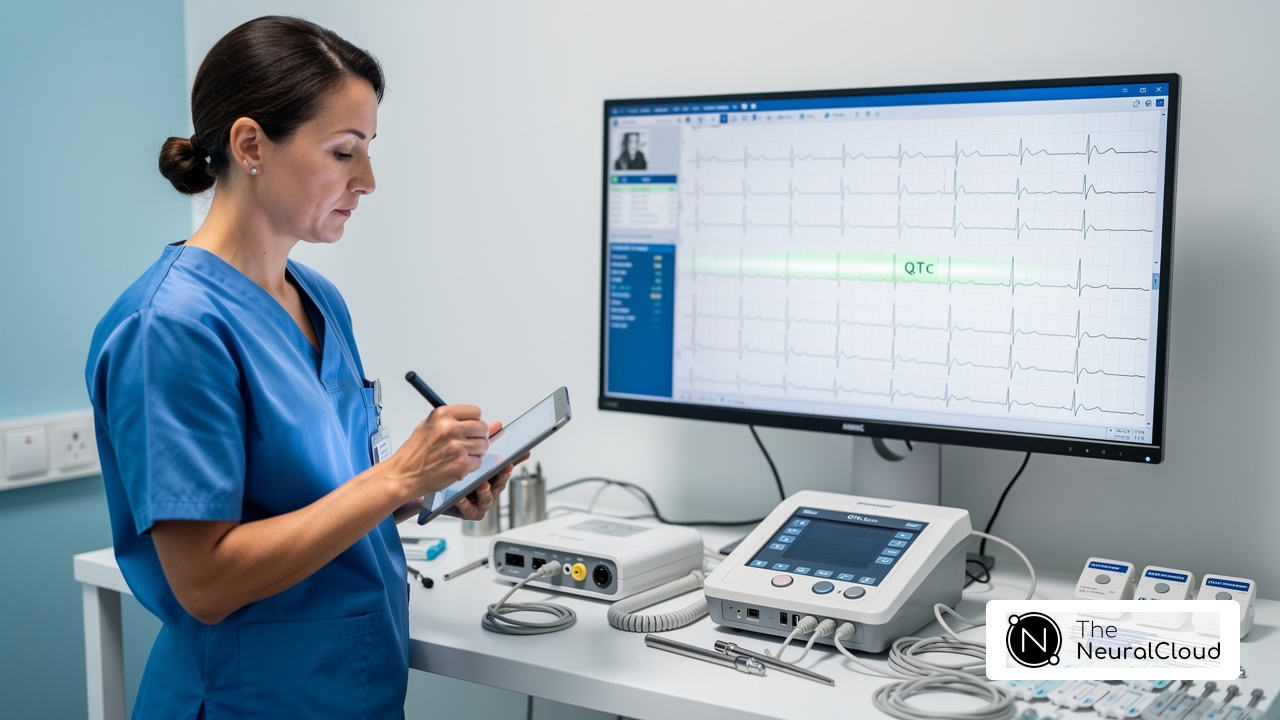
Understanding ST-segment elevation myocardial infarction (STEMI) is essential in cardiac care, as it poses a life-threatening condition with serious implications for patient outcomes. Accurately identifying and interpreting contiguous leads on an ECG can significantly impact timely diagnosis and intervention. However, distinguishing genuine ST-segment elevations from artifacts presents a challenge that necessitates advanced analytical tools.
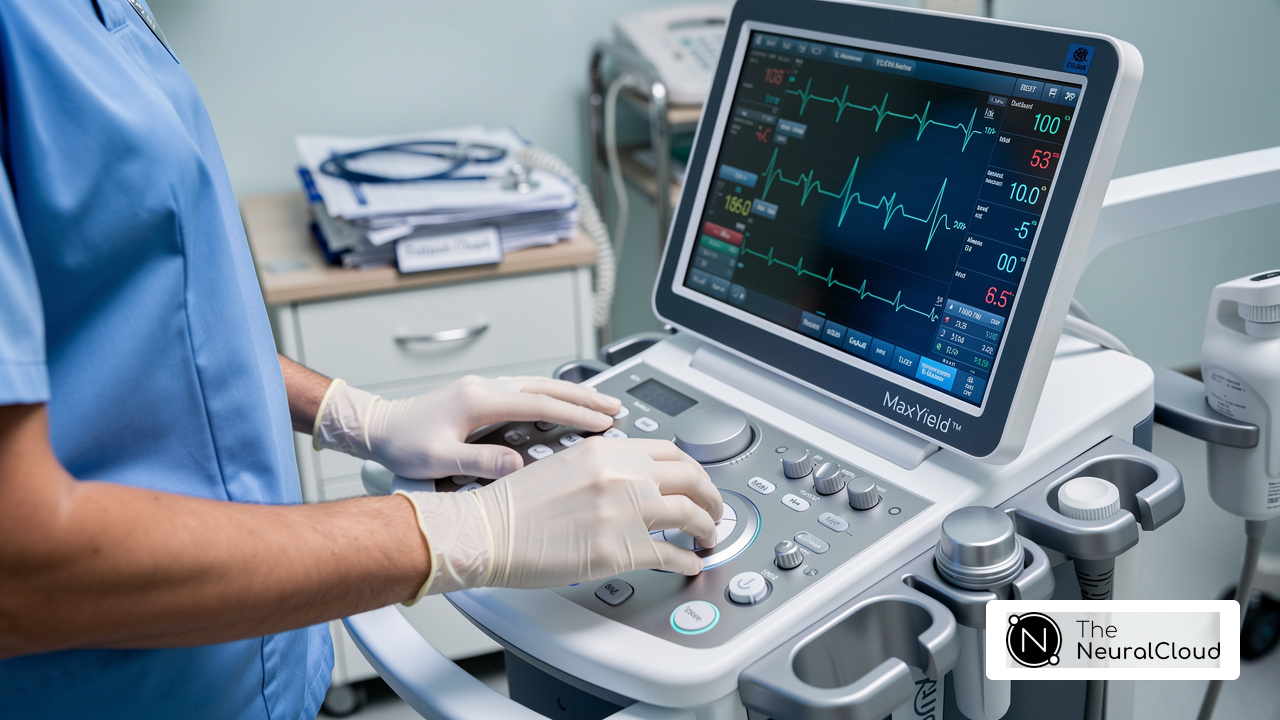
This is where innovative technologies come into play. Developers can harness these tools to enhance the precision of ECG analysis, ultimately improving survival rates for STEMI patients. By focusing on the features of the MaxYield™ platform, we can explore how it addresses these challenges effectively.
The MaxYield™ platform offers advanced algorithms that enhance the accuracy of ECG readings, allowing healthcare professionals to make informed decisions quickly. This not only streamlines the diagnostic process but also ensures that patients receive timely and appropriate care.
In summary, the integration of such technologies into clinical practice can lead to better patient outcomes, making it imperative for healthcare providers to adopt these advancements in their ECG analysis protocols.
Define STEMI and Its Clinical Importance
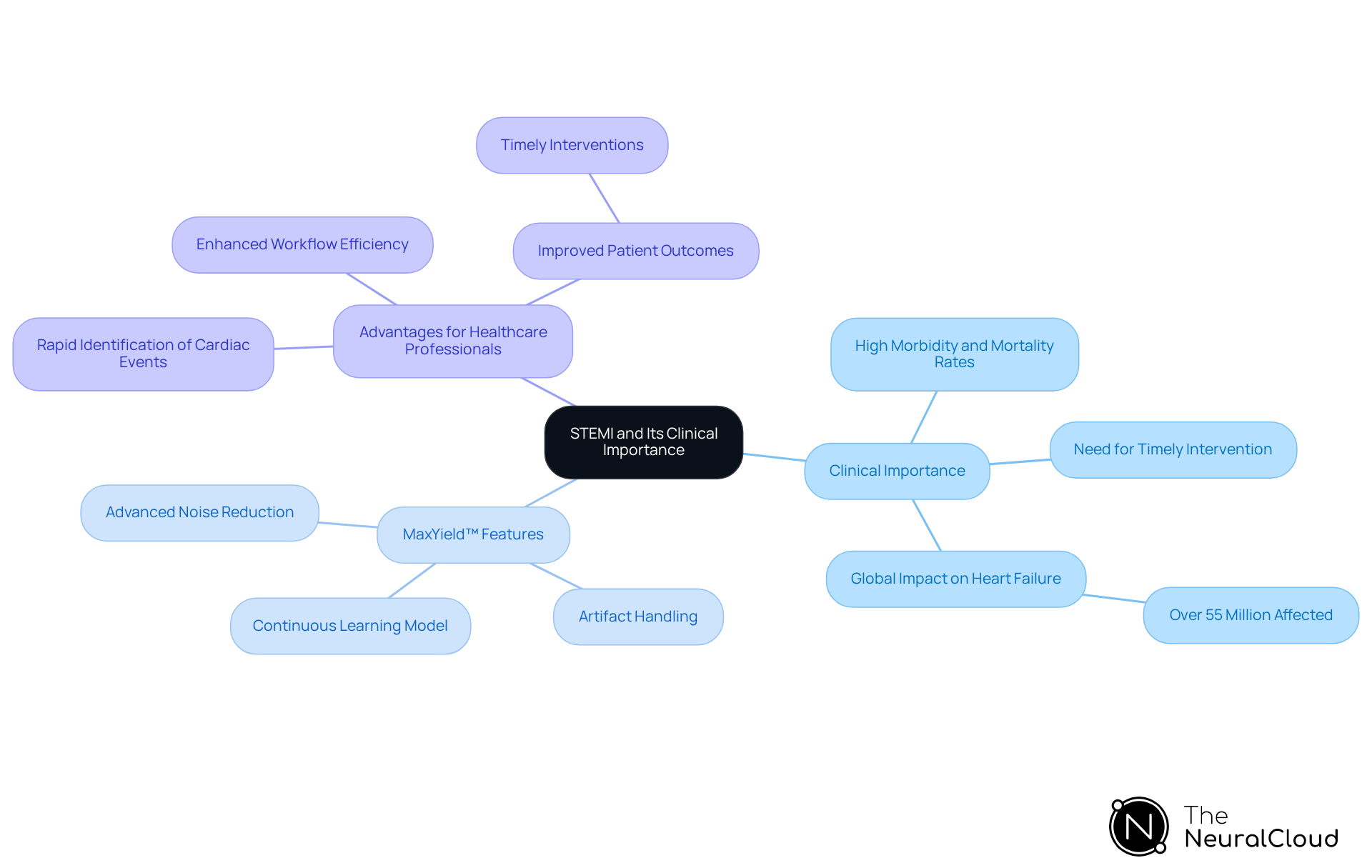
ST-segment elevation myocardial infarction represents a critical heart attack caused by a complete blockage of a coronary artery, leading to significant myocardial ischemia. The urgency of addressing this condition is highlighted by its high morbidity and mortality rates; without immediate treatment, irreversible damage to the heart muscle can occur. Timely recognition and intervention are essential, as they can greatly improve patient outcomes. For instance, research indicates that over 55 million people globally are affected by heart failure, with this specific type being a major contributor.
Understanding the pathophysiology of this heart attack type is vital for developers of ECG analysis tools. It informs the algorithms designed to detect and analyze ST-segment elevations, which are critical indicators of this condition. Neural Cloud Solutions' MaxYield™ platform tackles the challenges in ECG analysis by employing advanced noise reduction and artifact handling techniques. This platform also features a continuous learning model that enhances its accuracy and efficiency over time.
The MaxYield™ platform allows for the swift identification of critical cardiac events, even in recordings with high noise levels. This innovative AI-driven solution not only improves the accuracy of ECG readings but also streamlines the workflow for healthcare professionals. Recent studies emphasize the need for personalized treatment strategies in heart attack management, underscoring the importance of prompt interventions to boost survival rates and reduce complications.
Key Features of MaxYield™:
- Advanced noise reduction techniques
- Artifact handling capabilities
- Continuous learning model for improved accuracy
Advantages for Healthcare Professionals:
- Rapid identification of cardiac events
- Enhanced workflow efficiency
- Improved patient outcomes through timely interventions
In conclusion, the MaxYield™ platform represents a significant advancement in ECG analysis, providing healthcare professionals with the tools necessary to enhance patient care.
Explain the Role of Contiguous Leads in STEMI Diagnosis
Contiguous electrodes are crucial in ECG analysis, defined as connections that are anatomically adjacent, offering overlapping views of the heart's electrical activity. In diagnosing STEMI, observing ST-segment elevation in stemi contiguous leads is a key criterion for identifying myocardial infarction. This is essential because these connected vessels help pinpoint the ischemic region, enabling clinicians to identify the affected coronary artery. For instance, electrodes V2 and V3 provide an Anteroseptal view, while V4 and V5 offer an Anterolateral perspective. Understanding these primary groupings is vital for developers aiming to create algorithms that accurately detect these patterns, significantly influencing clinical decision-making.
Recent studies underscore the importance of ST-segment changes in adjacent channels, which can be effectively analyzed using stemi contiguous leads to enhance diagnostic specificity for acute coronary blockage. This ensures that observed changes reflect true regional ischemia rather than artifacts. Here, Neural Cloud Solutions' MaxYield™ platform becomes instrumental. It employs advanced noise filtering and distinct wave recognition to effectively isolate ECG waves from recordings that may be compromised by noise and artifacts, such as baseline wander and muscle movement.
MaxYield™ also maps ECG signals and provides beat-by-beat analysis, delivering insights on 200,000 heartbeats in under 5 minutes. This capability is crucial for salvaging previously obscured sections of lengthy Holter, 1-Lead, and patch monitor recordings, thereby enhancing the accuracy of ECG analysis tools. Cardiologists stress the importance of recognizing these connections for prompt and efficient care in emergencies. Dr. Navdeep Sekhon remarked, "Hyperacute T waves are the first ischemic changes in a STEMI," emphasizing the critical nature of early detection.
By leveraging this knowledge and integrating MaxYield™'s automated analysis features, developers can significantly improve the accuracy and reliability of ECG analysis tools, ultimately benefiting patient outcomes. Furthermore, current guidelines highlight the necessity of evaluating adjacent electrodes and stemi contiguous leads to accurately identify various forms of myocardial infarction, including anterior, inferior, and lateral MIs, which correlate with specific electrode groupings.

Guide to Identifying and Interpreting Contiguous Leads on ECG
Understanding adjacent signals on an ECG begins with a grasp of the standard 12-electrode arrangement. For example, electrodes V1 and V2 are adjacent and represent the septal wall, while electrodes II, III, and aVF correspond to the inferior wall. When analyzing these findings, it’s crucial to look for stemi contiguous leads showing ST-segment elevation of at least 1 mm in two or more adjacent recordings, as this indicates myocardial injury.
To enhance ECG analysis, developers should integrate algorithms capable of automatically detecting these elevations and providing alerts for potential cases involving stemi contiguous leads. This feature not only streamlines the diagnostic process but also ensures timely intervention, which can be critical for patient outcomes. Furthermore, recognizing reciprocal changes in non-contiguous electrodes can significantly improve diagnostic accuracy, offering healthcare professionals a more comprehensive view of the patient's condition.

Address Challenges in Interpreting Contiguous Leads
Interpreting stemi contiguous leads presents significant challenges, especially when it comes to distinguishing true ST-segment elevation from artifacts caused by lead misplacement or patient movement. Developers must ensure their algorithms can effectively differentiate between genuine pathological changes and benign variations. Physiological factors, such as left ventricular hypertrophy or early repolarization, can mimic heart attack patterns, complicating precise interpretation. A study found that human ECG interpretation accurately identified occlusive myocardial infarction (MI) in only 42% of cases, underscoring the need for improved diagnostic tools.
To address these challenges, integrating advanced filtering techniques and machine learning models is crucial. These models can learn from a diverse dataset of ECGs, enhancing their ability to interpret complex data accurately. The MaxYield™ platform from Neural Cloud Solutions exemplifies how AI-driven systems can streamline ECG analysis. It identifies and labels critical data, even in recordings with high levels of noise and artifacts, significantly improving the accuracy of STEMI detection through stemi contiguous leads.
The features of MaxYield™ include:
- Advanced filtering techniques that enhance signal clarity.
- Machine learning models trained on diverse ECG datasets.
- The ability to salvage previously obscured sections of lengthy Holter and patch monitor recordings.
These features provide several advantages for healthcare professionals. By improving diagnostic precision, MaxYield™ addresses the physiological variability that complicates ECG analysis. Additionally, it reduces the prevalence of lead misplacement errors reported in clinical settings, ultimately leading to better patient outcomes. With its innovative approach, MaxYield™ not only enhances the accuracy of ECG interpretation but also supports healthcare providers in delivering timely and effective care.

Conclusion
Mastering STEMI contiguous leads is crucial in cardiac care. This tutorial emphasizes the importance of ST-segment elevation myocardial infarction (STEMI) and the essential role contiguous leads play in its diagnosis. By grasping how these leads are interconnected, healthcare professionals can greatly improve their ability to detect and respond to this life-threatening condition.
Key insights from our discussion highlight the value of advanced ECG analysis tools like the MaxYield™ platform. This platform utilizes sophisticated noise reduction and artifact handling techniques, enhancing the accuracy of identifying ST-segment elevations. Additionally, it streamlines clinicians' workflows, ultimately leading to improved patient outcomes. Recognizing the challenges in interpreting contiguous leads, such as distinguishing true pathological changes from artifacts, underscores the need for ongoing advancements in diagnostic methods.
As the healthcare landscape evolves, integrating AI-driven solutions like MaxYield™ becomes essential for enhancing cardiac care. Both developers and clinicians are encouraged to adopt these technologies to refine their diagnostic capabilities. This proactive approach ensures timely interventions that can save lives and minimize complications associated with STEMI. The message is clear: prioritize mastering contiguous leads and leverage innovative tools to improve the accuracy and reliability of ECG interpretations, transforming patient care in critical situations.
Frequently Asked Questions
What is STEMI and why is it clinically important?
STEMI, or ST-segment elevation myocardial infarction, is a critical heart attack caused by a complete blockage of a coronary artery, leading to significant myocardial ischemia. Its clinical importance lies in the high morbidity and mortality rates associated with it; immediate treatment is essential to prevent irreversible damage to the heart muscle.
How prevalent is heart failure related to STEMI?
Over 55 million people globally are affected by heart failure, with STEMI being a major contributor to this condition.
Why is understanding the pathophysiology of STEMI important for ECG analysis?
Understanding the pathophysiology of STEMI is vital for developers of ECG analysis tools as it informs the algorithms designed to detect and analyze ST-segment elevations, which are critical indicators of this heart attack type.
What is the MaxYield™ platform and how does it assist in ECG analysis?
The MaxYield™ platform by Neural Cloud Solutions tackles challenges in ECG analysis by employing advanced noise reduction and artifact handling techniques. It features a continuous learning model that enhances its accuracy and efficiency over time.
What are the key features of the MaxYield™ platform?
Key features of the MaxYield™ platform include advanced noise reduction techniques, artifact handling capabilities, and a continuous learning model for improved accuracy.
What advantages does the MaxYield™ platform offer healthcare professionals?
The MaxYield™ platform offers healthcare professionals rapid identification of cardiac events, enhanced workflow efficiency, and improved patient outcomes through timely interventions.
How does timely intervention impact patient outcomes in STEMI cases?
Timely intervention in STEMI cases is crucial as it can significantly boost survival rates and reduce complications associated with heart attacks.
List of Sources
- Define STEMI and Its Clinical Importance
- abiomed.com (https://abiomed.com/en-us/about-us/news-and-media/press-releases/stemi-dtu-acc-2026)
- acc.org (https://acc.org/latest-in-cardiology/articles/2025/10/24/16/56/tues-254pm-combo-mi-tct-2025)
- tctmd.com (https://tctmd.com/news/year-review-dcbs-big-coronary-news-along-beta-blockers-stemi)
- ahajournals.org (https://ahajournals.org/doi/10.1161/CIRCOUTCOMES.125.012224)
- Explain the Role of Contiguous Leads in STEMI Diagnosis
- STEMI ECG Criteria: ST-Elevation Thresholds (https://powerfulmedical.com/blog/stemi-ecg-criteria)
- rppeo.ca (https://rppeo.ca/paramedic-practice/medicask-about/medicask-answers-list/359-professionalism/291-paramedic-practice/1916-stemi-contiguous-leads)
- droracle.ai (https://droracle.ai/articles/614778/what-is-the-significance-of-contiguous-lead-involvement-on)
- STEMI - Electrocardiogram - M3 Curriculum | SAEM (https://saem.org/about-saem/academies-interest-groups-affiliates2/cdem/for-students/online-education/m3-curriculum/group-electrocardiogram-(ecg)-rhythm-recognition/stemi)
- Address Challenges in Interpreting Contiguous Leads
- Report identifies risks in ambulance ECG interpretation and timely STEMI diagnosis — HSSIB (https://hssib.org.uk/news-events-blog/report-identifies-risks-in-ambulance-ecg-interpretation-and-timely-stemi-diagnosis)
- AI-based ECG interpretation outperforms standard diagnosis of occlusive myocardial infarction (https://news-medical.net/news/20260323/AI-based-ECG-interpretation-outperforms-standard-diagnosis-of-occlusive-myocardial-infarction.aspx)
- theneuralcloud.com (https://theneuralcloud.com/post/10-innovations-in-ai-ecg-interpretation-for-enhanced-cardiac-care)
- jacc.org (https://jacc.org/doi/10.1016/j.jcin.2025.10.018)
- AI-Based ECG Analysis Significantly Improves STEMI Detection, Reduces False Activations - American College of Cardiology (https://acc.org/latest-in-cardiology/articles/2025/10/24/16/56/tues-554pm-ai-tct-2025)