Introduction
The complexities of ST-segment elevation myocardial infarction (STEMI) present significant challenges in cardiac care, as this condition can lead to serious health complications if not addressed promptly. Developers in health technology have a unique chance to use advanced AI tools to improve how ECGs are interpreted quickly and accurately. However, the question remains: how can these innovations lead to better patient outcomes and faster interventions? By focusing on the features and advantages of platforms like MaxYield™, we can explore how they enhance ECG analysis and ultimately benefit healthcare professionals.
Define STEMI Heart Attack: Key Characteristics and Importance
ST-segment elevation myocardial infarction (STEMI) poses a critical challenge in cardiac care due to its severe implications for patient health. This condition is caused by a complete blockage of a coronary artery, leading to significant myocardial ischemia. The distinguishing feature of a STEMI heart attack ECG is the elevation of the ST segment on a 12-lead ECG, which indicates transmural injury to the heart tissue. Delays in treatment can lead to serious complications, making swift action essential to restore blood flow and minimize heart damage.
Recent studies show just how crucial early diagnosis and treatment are for heart attacks. For instance, the Cleveland Clinic emphasizes that timely recognition of ST-segment elevation can significantly improve patient outcomes. The longer a blockage persists, the greater the damage to the heart muscle. In fact, STEMIs are a leading cause of death globally, with approximately 750,000 cases reported annually in the United States alone.
Understanding the key characteristics of the STEMI heart attack ECG, including typical changes and the physiological implications of the blockage, is crucial for health tech developers. Innovations in AI-driven ECG analysis, such as those provided by PMcardio, have demonstrated enhanced sensitivity in detecting severe heart attacks. These advancements reduce the time to diagnosis and treatment, as AI tools can recognize complex patterns indicative of coronary events, facilitating quicker triage and intervention.
Moreover, cardiologists emphasize the importance of educating healthcare workers and patients about the signs and symptoms of a heart attack. Common symptoms include:
- Chest pain
- Shortness of breath
- Discomfort radiating to the jaw or arm
Awareness of these indicators can lead to faster response times and improved survival rates. As Dr. Hana Hybasek Dzurikova observes, improving awareness and leveraging advanced diagnostic tools can lead to better outcomes for patients experiencing STEMI, ultimately revolutionizing cardiac diagnostics and care protocols.

Identify Symptoms and Causes of STEMI: Clinical Insights
Recognizing the symptoms of a heart attack is crucial, yet they often vary significantly among individuals. Common symptoms include chest pain or discomfort. This pain may radiate to the arms, neck, jaw, or back. Other symptoms can include shortness of breath, sweating, and nausea. However, these symptoms can vary, particularly in women, who may experience fatigue, indigestion, or anxiety instead. This variation can complicate timely diagnosis and treatment, as studies indicate that women are more likely than men to present with non-classical symptoms.
The main reason for a stemi heart attack ecg is the rupture of atherosclerotic plaques within coronary arteries, which results in thrombus formation that leads to complete occlusion. Real-world examples illustrate that even minor plaque ruptures can precipitate a heart attack, highlighting the need for early detection and intervention. Cardiologists stress the importance of understanding these symptoms and their causes for those developing health tech. This understanding drives the development of tools that enhance diagnosis and treatment efficiency, ultimately improving patient outcomes and streamlining emergency responses.

Diagnose STEMI: Role of ECG and Diagnostic Techniques
Diagnosing a stemi heart attack ECG can be challenging because of the limitations of traditional ECG analysis. The identification of this condition primarily relies on the 12-lead ECG, which shows characteristic ST-segment elevations in specific leads indicative of a stemi heart attack ECG. These elevations indicate the extent of myocardial damage and guide treatment decisions. In addition to the ECG, other diagnostic techniques such as cardiac biomarkers and imaging studies may be employed to confirm the diagnosis and assess the severity of the infarction.
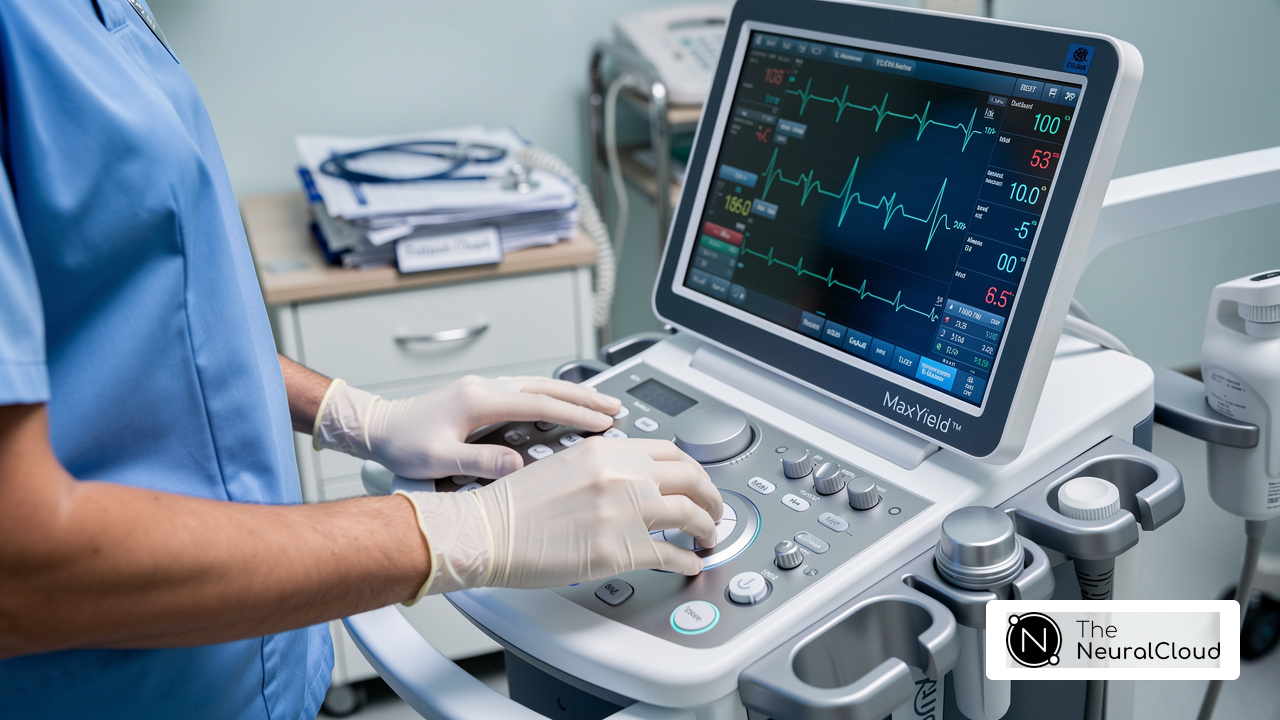
Conventional methods often struggle with noise and artifacts, complicating accurate diagnosis. Recent studies have indicated that incorporating AI-driven diagnostic tools, such as Neural Cloud Solutions' MaxYield™, can greatly improve the precision of heart attack detection. MaxYield™ effectively identifies and labels critical data, even in noisy recordings. It rapidly isolates ECG waves affected by baseline wander, movement, and muscle artifact. For example, an AI model showcased an impressive capability to recognize 553 confirmed cases of myocardial infarction compared to 427 identified by conventional techniques, while also decreasing false positives to approximately 8%.
Moreover, when care for a heart attack lasts over 90 minutes, the chance of death rises by roughly threefold, highlighting the importance of prompt diagnosis and action. By utilizing AI, healthcare professionals can enhance diagnostic accuracy and reduce the risk of misdiagnosis. It's crucial for health tech developers to grasp these nuances in ECG interpretation and how AI technologies like MaxYield™ can drive innovation in cardiovascular care. As Dr. Bryn Mumma stated, 'the best outcomes happen when technology and clinicians work hand in hand,' emphasizing the collaborative aspect of using AI in clinical settings. Embracing AI technologies like MaxYield™ could redefine how we approach cardiovascular emergencies, ultimately saving lives.

Manage and Treat STEMI: Integrating ECG Data into Clinical Practice
Timely and accurate management of ST-Elevation Myocardial Infarction is critical, but the complexity of the stemi heart attack ecg data often complicates urgent decision-making. Effective reperfusion therapy, primarily through percutaneous coronary procedures, relies heavily on the integration of ECG data, particularly the stemi heart attack ecg, to guide treatment decisions. Health tech developers can leverage this data to build advanced tools that help clinicians make real-time decisions, improving care efficiency.
Recent advancements in AI-driven ECG analysis, such as Neural Cloud Solutions' MaxYield™, show promise in enhancing heart attack detection precision. MaxYield™ rapidly labels P, QRS, and T Wave onsets, offsets, and time-series intervals, providing beat-by-beat tabulation in CSV format for easy integration into existing workflows. This capability allows for the analysis of more data in less time, enabling users to work with clear data sets and clean signals.
Continuous observation and care are vital for managing acute myocardial infarction, with technology playing a key role in tracking patient progress. For instance, the NHS Ambulance Service has begun utilizing AI tools to assist paramedics in making quicker clinical decisions, which is essential given the increasing demand for emergency services.
Integrating advanced ECG analysis tools like MaxYield™ not only enhances clinical decision-making but also paves the way for improved patient care in emergency settings, especially for cases involving stemi heart attack ecg.

Conclusion
Health tech developers face significant challenges in accurately diagnosing STEMI heart attacks, which can lead to critical delays in patient care. This article highlights the importance of recognizing ST-segment elevation as a key indicator of myocardial infarction, emphasizing the need for rapid diagnosis and intervention to improve patient outcomes. By integrating advanced technologies, such as AI-driven ECG analysis, developers can significantly enhance the speed and accuracy of diagnosis, ultimately leading to better management of this life-threatening condition.
Key insights discussed include the various symptoms of STEMI, which can differ greatly among individuals, particularly among women. It's vital for both healthcare professionals and patients to understand these symptoms so they can recognize and respond to STEMI more quickly. Additionally, the role of innovative diagnostic tools, like Neural Cloud Solutions' MaxYield™, demonstrates how technology can overcome traditional ECG limitations, ensuring timely and effective treatment decisions.
In conclusion, the integration of AI technologies into ECG interpretation is crucial for improving the speed and accuracy of STEMI diagnosis. Health tech developers are called to embrace these innovations, not only to improve diagnostic precision but also to enhance overall patient care. Embracing these technological advancements is not just an option; it's a necessity for improving survival rates in STEMI patients.
Frequently Asked Questions
What is a STEMI heart attack?
A STEMI heart attack, or ST-segment elevation myocardial infarction, occurs due to a complete blockage of a coronary artery, leading to significant myocardial ischemia.
What distinguishes a STEMI heart attack on an ECG?
The distinguishing feature of a STEMI heart attack on a 12-lead ECG is the elevation of the ST segment, indicating transmural injury to the heart tissue.
Why is timely treatment critical for STEMI patients?
Timely treatment is essential because delays can lead to serious complications and greater damage to the heart muscle. The longer a blockage persists, the worse the outcomes for the patient.
How prevalent are STEMI heart attacks in the United States?
STEMIs are a leading cause of death globally, with approximately 750,000 cases reported annually in the United States alone.
What role does AI play in the diagnosis of STEMI heart attacks?
AI-driven ECG analysis, such as that provided by PMcardio, enhances sensitivity in detecting severe heart attacks, reducing the time to diagnosis and treatment by recognizing complex patterns indicative of coronary events.
What are common symptoms of a heart attack?
Common symptoms of a heart attack include chest pain, shortness of breath, and discomfort radiating to the jaw or arm.
How can awareness of heart attack symptoms improve patient outcomes?
Increased awareness of heart attack symptoms can lead to faster response times and improved survival rates, as it encourages quicker action when symptoms are recognized.
What is the importance of educating healthcare workers and patients about heart attack signs?
Educating healthcare workers and patients about heart attack signs is crucial for timely diagnosis and treatment, ultimately leading to better outcomes for patients experiencing STEMI.
List of Sources
- Define STEMI Heart Attack: Key Characteristics and Importance
- STEMI: ST-segment Elevation Myocardial Infarction - The Cardiology Advisor (https://thecardiologyadvisor.com/ddi/stemi-st-elevation-myocardial-infarction)
- ejcrim.com (https://ejcrim.com/index.php/EJCRIM/article/view/4495)
- STEMI ECG Criteria: Key Insights into Ischemic ST-Elevation Patterns (https://powerfulmedical.com/blog/stemi-ecg-criteria)
- What Is a STEMI? (https://my.clevelandclinic.org/health/diseases/22068-stemi-heart-attack)
- Trends and Outcomes of ST‐Segment–Elevation Myocardial Infarction Among Young Women in the United States | Journal of the American Heart Association (https://ahajournals.org/doi/10.1161/JAHA.122.026811)
- Identify Symptoms and Causes of STEMI: Clinical Insights
- Heart Disease Facts (https://cdc.gov/heart-disease/data-research/facts-stats)
- A troubling forecast on women’s heart health – and what women and girls can do now to protect theirs (https://heart.org/en/news/2026/02/25/a-troubling-forecast-on-womens-heart-health-and-what-women-and-girls-can-do-now-to-protect-theirs)
- scai.org (https://scai.org/media-center/news-and-articles/new-stemi-dtu-data-provide-deeper-insight-patient-outcomes)
- STEMI: ST-segment Elevation Myocardial Infarction - The Cardiology Advisor (https://thecardiologyadvisor.com/ddi/stemi-st-elevation-myocardial-infarction)
- nypost.com (https://nypost.com/2026/02/27/health/heart-disease-threat-projected-to-skyrocket-in-women)
- Diagnose STEMI: Role of ECG and Diagnostic Techniques
- New study finds AI model improves heart attack detection (https://health.ucdavis.edu/news/headlines/new-study-finds-ai-model-improves-heart-attack-detection/2025/11)
- Checking your browser - reCAPTCHA (https://pmc.ncbi.nlm.nih.gov/articles/PMC5613667)
- jacc.org (https://jacc.org/doi/10.1016/j.jcin.2025.10.018)
- AI-ECG Finds STEMI Faster, Cuts False-Positive Cath Lab Activations (https://tctmd.com/news/ai-ecg-finds-stemi-faster-cuts-false-positive-cath-lab-activations)
- AI outperforms conventional diagnosis for certain types of heart attacks (https://escardio.org/news/press/press-releases/acvc-press)
- Manage and Treat STEMI: Integrating ECG Data into Clinical Practice
- scai.org (https://scai.org/media-center/news-and-articles/new-stemi-dtu-data-provide-deeper-insight-patient-outcomes)
- powerfulmedical.com (https://powerfulmedical.com/blog/case-study-how-pmcardio-helps-paramedics-diagnose-acute-patients-faster-and-more-accurately)
- AI-ECG Finds STEMI Faster, Cuts False-Positive Cath Lab Activations (https://tctmd.com/news/ai-ecg-finds-stemi-faster-cuts-false-positive-cath-lab-activations)
- AI-Based ECG Algorithms Show High Accuracy in Predicting STEMI - The Cardiology Advisor (https://thecardiologyadvisor.com/reports/ai-ecg-algorithms-stemi-prediction)