Introduction
Understanding the complexities of ST-Elevation Myocardial Infarction (STEMI) is crucial in the fast-paced realm of healthcare technology, where timely diagnosis can be a matter of life and death. This article explores the challenges faced in ECG analysis and introduces the innovative MaxYield™ platform, which enhances traditional methods through advanced algorithms and real-time data processing. As the field of ECG interpretation continues to evolve, it raises important questions: what challenges remain in accurately diagnosing STEMI, especially in the presence of potential mimics and diagnostic limitations?
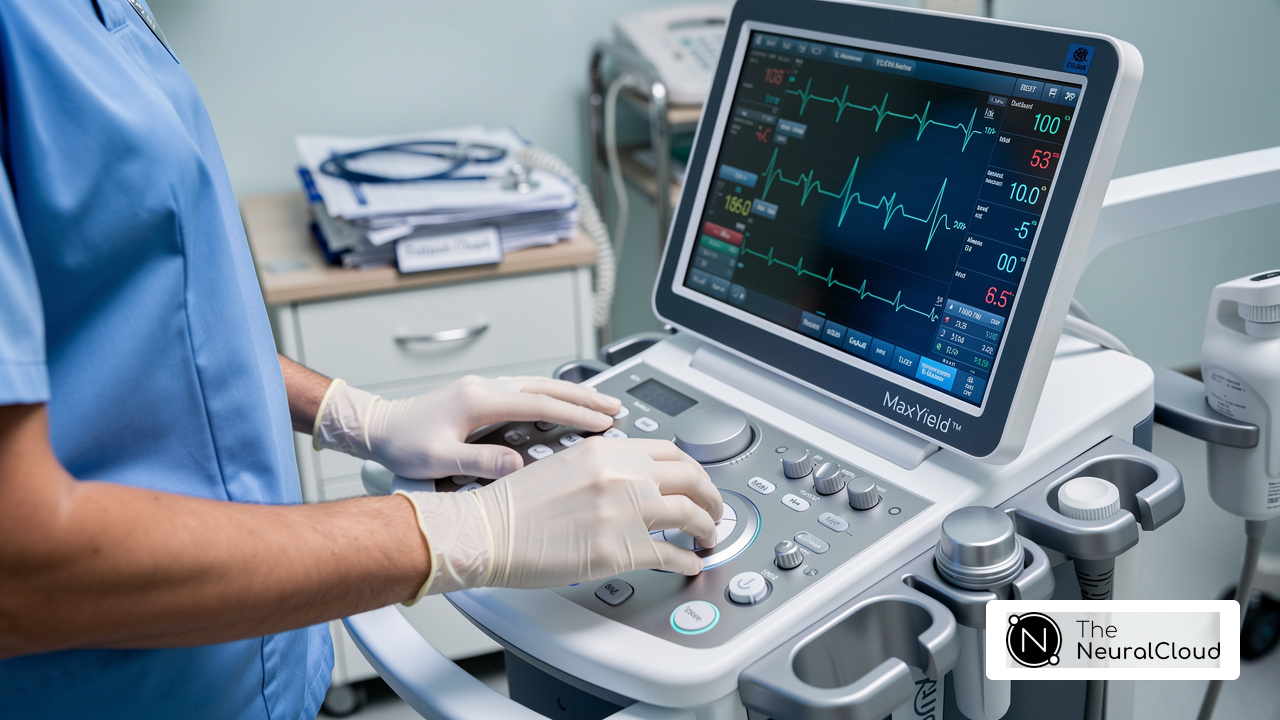
The MaxYield™ platform offers several key features that significantly improve ECG analysis. By leveraging cutting-edge algorithms, it processes data in real-time, allowing healthcare professionals to make informed decisions quickly. This capability not only streamlines the diagnostic process but also enhances the accuracy of STEMI detection, ultimately benefiting patient outcomes.
In summary, the MaxYield™ platform stands out by addressing the critical needs of healthcare providers. Its advanced features lead to improved diagnostic accuracy and efficiency, empowering professionals to respond swiftly in emergency situations. As we delve deeper into the specifics of this platform, we will uncover how it transforms ECG analysis and supports better healthcare delivery.
Define STEMI: Understanding Its Clinical Significance
ST-Elevation Myocardial Infarction is a critical condition caused by the complete blockage of a coronary artery, resulting in severe damage. Diagnosis of a STEMI on 12 lead occurs when the ST segment elevates by more than 1 mm in two contiguous leads on a 12-lead ECG. This condition carries high morbidity and mortality rates, highlighting the urgent need for timely intervention. Recent studies show that quick identification of heart attacks can significantly reduce ECG-to-balloon time, leading to better patient outcomes.
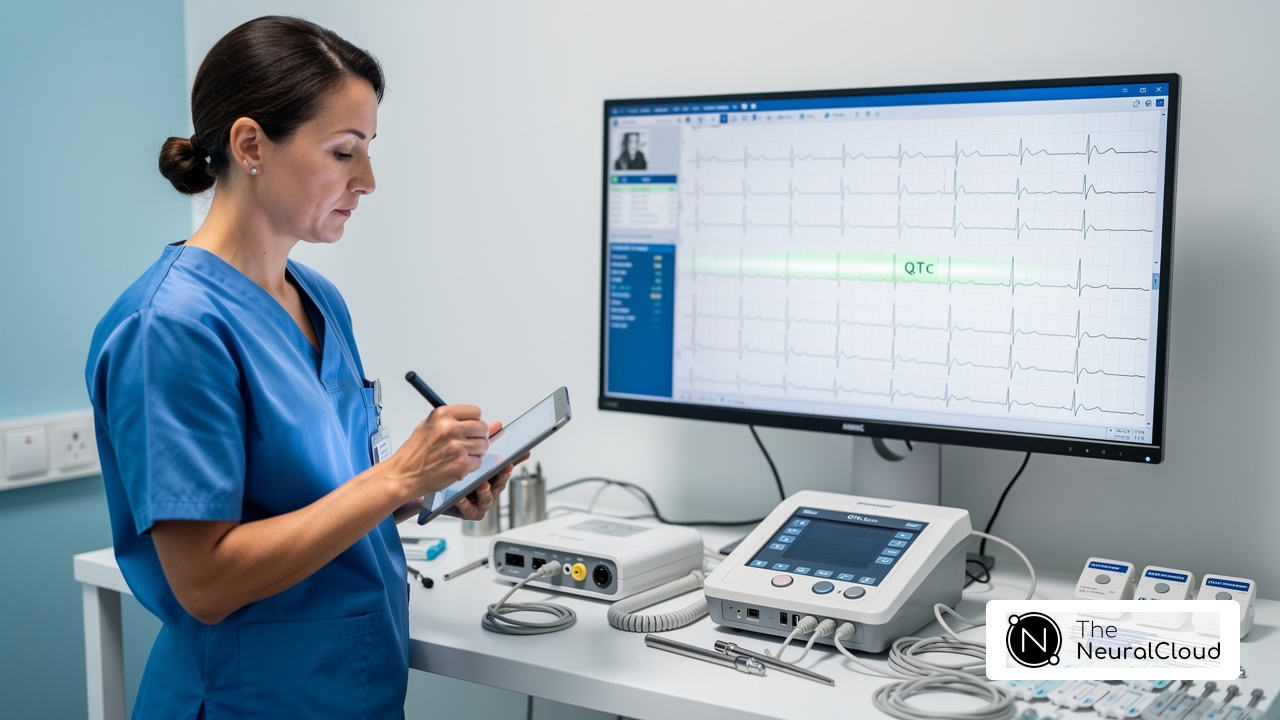
For health tech creators, understanding the clinical significance of STEMI is essential. This knowledge informs the development of technologies that can accurately detect these urgent events. The technology from Neural Cloud Solutions is instrumental in this regard. It effectively maps ECG signals through noise, isolating and labeling key features in every heartbeat. By transforming noisy recordings into detailed insights, MaxYield™ provides beat-by-beat analysis, processing 200,000 heartbeats in under 5 minutes.
This capability enhances assessment precision and enables timely interventions, ultimately saving lives. Case studies underscore the importance of swift diagnosis; for example, a 61-year-old male patient experienced consecutive heart attacks due to rapid plaque progression, emphasizing the necessity for immediate intervention. Additionally, cardiologists warn that misinterpretation of ST-segment elevation, such as in cases of early repolarization, can lead to misdiagnoses, reinforcing the need for precise ECG criteria in emergency situations.
By leveraging advanced technology like MaxYield™, which continuously learns and adapts to improve diagnostic yield, developers can create solutions that address inefficiencies, physiological variability, and signal artifacts. This ensures enhanced cardiac insights and better clinical decision-making.
Key Features of MaxYield™:
- Feature Isolation: Isolates and labels key ECG features.
- Rapid Analysis: Processes 200,000 heartbeats in less than 5 minutes.
- Continuous Learning: Adapts to improve diagnostic yield.
Advantages for Healthcare Professionals:
- Improved Precision: Enhances assessment accuracy.
- Timely Intervention: Facilitates prompt intervention.
- Better Outcomes: Ultimately saves lives.

Identify Key ECG Criteria for STEMI Diagnosis
Accurate diagnosis of acute myocardial infarction presents several challenges in ECG analysis. Key criteria include:
- The presence of ST-segment elevation
- The gradual emergence of Q waves
Additionally, this criteria acts as a confirming indicator.
by incorporating these criteria into its ECG analysis tools. This platform enhances and accelerates the detection of heart attacks. Its features ensure timely and effective treatment.
For healthcare providers, the benefits are significant. By utilizing MaxYield™, clinicians can make informed decisions more quickly, ultimately improving patient outcomes. The platform not only streamlines the diagnostic process but also supports better clinical decision-making.

Recognize STEMI Mimics and Diagnostic Limitations
Myocardial infarction mimics can complicate diagnosis, including conditions like:
- LBBB
- pericarditis
These conditions may produce ST-segment elevations that closely resemble those seen in a myocardial infarction, which can lead to potential misdiagnosis. To address these challenges, developers must ensure that their tools are equipped to recognize these mimics. This can be achieved by incorporating algorithms that account for variations in ECG patterns.
Understanding the diagnostic process is crucial. Serial ECGs may be necessary to capture changes. By addressing these challenges, developers can create more robust and reliable diagnostic tools. This not only enhances the accuracy of diagnoses but also improves patient outcomes by ensuring timely treatment.

Leverage Advanced Technology for Enhanced ECG Analysis
The integration of artificial intelligence (AI) and machine learning into ECG analysis represents a significant advancement in cardiology technology. Traditional ECG analysis faces challenges, including variability in interpretation and the potential for missed diagnoses. The solution, developed by Neural Cloud Solutions, addresses these issues by utilizing deep learning algorithms to enhance diagnostic accuracy.
Features of the technology:
- Noise Reduction: This feature minimizes interference, ensuring clearer signal interpretation.
- Automated Analysis: Streamlines the analysis process, reducing the time healthcare professionals spend on manual evaluations.
- Beat-by-Beat Evaluation: Provides detailed insights into P-wave, QRS complex, and T-wave onsets, offsets, and time-series intervals.
Advantages of the technology:
By employing these features, the system significantly improves the accuracy of ECG interpretation. Recent studies indicate that AI models can accurately identify 553 out of 601 confirmed heart attack cases, compared to only 427 detected by traditional methods. Moreover, the AI reduces false positives from 41.8% to 7.9%, showcasing a fivefold enhancement in reliability. This precision allows healthcare professionals to make informed decisions quickly, ultimately improving patient outcomes.
Benefits for Healthcare Professionals:
With the advanced technology, healthcare providers can focus on critical decision-making rather than time-consuming manual evaluations. The AI's ability to reduce ECG-to-balloon time for acute coronary occlusion patients underscores its impact on patient care. By embracing these advanced technologies, developers can create solutions that not only elevate diagnostic accuracy but also substantially enhance patient care. The AI model has been validated in clinical settings, reinforcing its effectiveness in real-world applications.

Conclusion
Understanding and accurately diagnosing ST-Elevation Myocardial Infarction (STEMI) is crucial for improving patient outcomes in emergency care. The challenges in ECG analysis can lead to misdiagnoses, which underscores the need for advanced diagnostic tools. The MaxYield™ platform addresses these challenges by enhancing diagnostic precision and facilitating timely interventions. By leveraging cutting-edge ECG technologies, healthcare professionals can significantly reduce misdiagnoses and improve the efficiency of cardiac care.
Key features of the MaxYield™ platform include:
- Noise Mapping: This feature helps to identify and eliminate interference in ECG signals, ensuring clearer readings.
- Automated Signal Processing: This streamlines the diagnostic process, allowing for quicker analysis and decision-making.
- AI-Enhanced ECG Analysis: Artificial intelligence plays a transformative role in improving the accuracy of ECG interpretations.
The advantages of using the MaxYield™ platform are substantial. By integrating these advanced features, healthcare professionals can make informed decisions swiftly, ultimately saving lives. The platform empowers users to recognize specific ECG criteria for STEMI diagnosis and effectively address challenges posed by myocardial infarction mimics.
In reflecting on the advancements discussed, it is evident that embracing technology in ECG analysis is not just an option but a necessity in modern healthcare. As the prevalence of STEMI continues to demand rapid and accurate responses, the call to action for developers and healthcare providers alike is clear: prioritize the integration of advanced diagnostic tools to ensure that every patient receives the timely and effective treatment they deserve.
Frequently Asked Questions
What is STEMI?
ST-Elevation Myocardial Infarction (STEMI) is a critical condition caused by the complete blockage of a coronary artery, leading to severe myocardial ischemia.
How is STEMI diagnosed?
STEMI is diagnosed on a 12-lead ECG when the ST segment is elevated by more than 1 mm in two contiguous leads.
Why is rapid diagnosis of STEMI important?
Rapid diagnosis is crucial because it significantly reduces ECG-to-balloon time, which can improve patient outcomes and decrease morbidity and mortality rates.
What role does the MaxYield™ platform play in STEMI diagnosis?
The MaxYield™ platform helps in accurately detecting STEMI by mapping ECG signals through noise, isolating and labeling key features in every heartbeat, which enhances assessment precision.
What are the key features of the MaxYield™ platform?
Key features include noise mapping to isolate ECG features, rapid analysis that processes 200,000 heartbeats in under 5 minutes, and continuous learning to improve diagnostic yield.
How does MaxYield™ benefit healthcare professionals?
MaxYield™ improves precision in assessments, facilitates timely treatment, and ultimately leads to better patient outcomes, potentially saving lives.
Can misinterpretation of ST-segment elevation occur?
Yes, misinterpretation of ST-segment elevation can lead to misdiagnoses, highlighting the need for precise ECG criteria in emergency situations.
What does the case study mentioned in the article illustrate about STEMI?
The case study of a 61-year-old male patient illustrates the importance of immediate intervention due to rapid plaque progression leading to consecutive STEMIs.
List of Sources
- Define STEMI: Understanding Its Clinical Significance
- Trends and Outcomes of ST‐Segment–Elevation Myocardial Infarction Among Young Women in the United States | Journal of the American Heart Association (https://ahajournals.org/doi/10.1161/JAHA.122.026811)
- pmc.ncbi.nlm.nih.gov (https://pmc.ncbi.nlm.nih.gov/articles/PMC11073598)
- STEMI ECG Criteria: ST-Elevation Thresholds (https://powerfulmedical.com/blog/stemi-ecg-criteria)
- Identify Key ECG Criteria for STEMI Diagnosis
- AI-Based ECG Analysis Significantly Improves STEMI Detection, Reduces False Activations - American College of Cardiology (https://acc.org/latest-in-cardiology/articles/2025/10/24/16/56/tues-554pm-ai-tct-2025)
- STEMI: ST-segment Elevation Myocardial Infarction - The Cardiology Advisor (https://thecardiologyadvisor.com/ddi/stemi-st-elevation-myocardial-infarction)
- STEMI ECG Criteria: ST-Elevation Thresholds (https://powerfulmedical.com/blog/stemi-ecg-criteria)
- Inferior STEMI (https://litfl.com/inferior-stemi-ecg-library)
- pmc.ncbi.nlm.nih.gov (https://pmc.ncbi.nlm.nih.gov/articles/PMC8065286)
- Leverage Advanced Technology for Enhanced ECG Analysis
- PMcardio Reports Positive RCT Results and Late-Breaking Clinical Science for STEMI Detection (https://powerfulmedical.com/blog/pmcardio-reports-positive-rct-results-and-late-breaking-clinical-science-for-stemi-detection)
- sciencedirect.com (https://sciencedirect.com/science/article/pii/S1936879825026007)
- icthealth.org (https://icthealth.org/news/ai-ecg-boosts-heart-attack-detection-and-cuts-false-alarms)
- New study finds AI model improves heart attack detection (https://health.ucdavis.edu/news/headlines/new-study-finds-ai-model-improves-heart-attack-detection/2025/11)
- AI-Based ECG Analysis Significantly Improves STEMI Detection, Reduces False Activations - American College of Cardiology (https://acc.org/latest-in-cardiology/articles/2025/10/24/16/56/tues-554pm-ai-tct-2025)