Introduction
Understanding the complexities of the T wave on an electrocardiogram (ECG) is crucial for accurate cardiac assessment. This wave reflects the heart's repolarization phase and can provide vital health insights. However, ECG analysis presents challenges that can complicate interpretation. This article explores the significance of T wave analysis, examining both its normal and abnormal characteristics.
One of the key advancements in this field is the MaxYield™ platform, which enhances diagnostic accuracy. The platform offers features such as advanced algorithms for T wave analysis, real-time data processing, and user-friendly interfaces. These features not only streamline the analysis process but also reduce the likelihood of misinterpretation.
The advantages of using the MaxYield™ platform are significant for healthcare professionals. By improving ECG analysis, clinicians can make more informed decisions, leading to better patient outcomes. As the landscape of cardiac care evolves, understanding how to effectively navigate T wave interpretation becomes essential. This ensures that clinicians can provide optimal care in a rapidly changing environment.
Understand the T Wave: Fundamentals and Significance
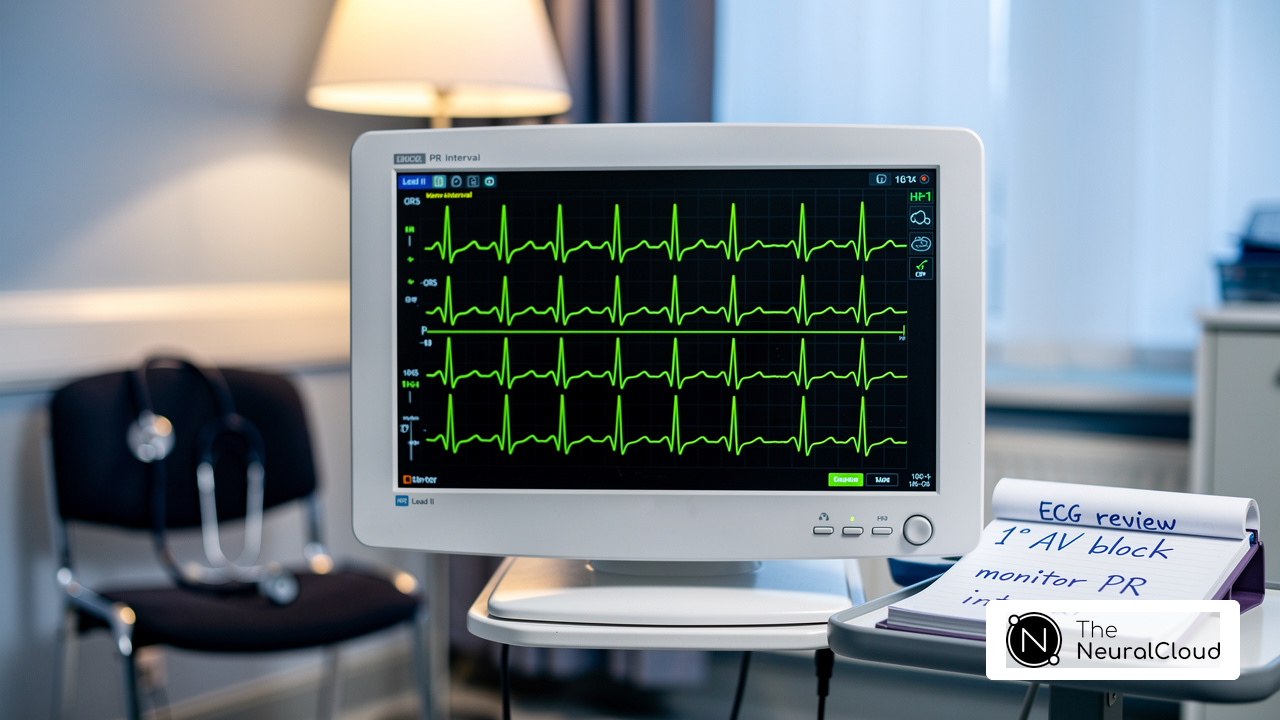
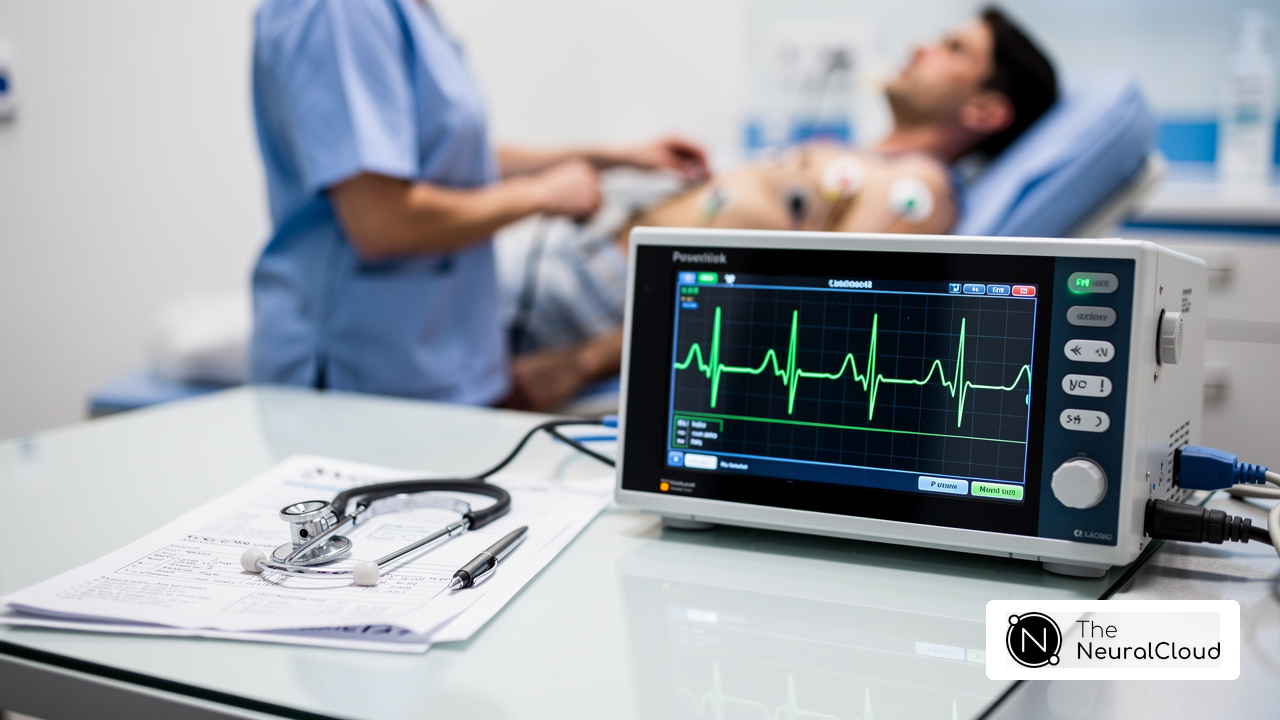
The T wave signal on an electrocardiogram (ECG) indicates the repolarization of the ventricles, marking a crucial phase in the cardiac cycle. Following the QRS complex, it typically features a smooth, rounded shape. Understanding the T wave is essential for accurate ECG interpretation, as it provides valuable insights into the heart's electrical activity and overall health. Abnormalities in the T wave can signal various cardiac issues, making it a critical focus in cardiology.
For instance, T inversions exceeding 3 mm in lead III without ST depression are considered abnormal and may suggest underlying structural heart disease, particularly in individuals with left ventricular hypertrophy (LVH), where T inversions are observed in 55% of cases. Recent studies have highlighted the prevalence of T wave abnormalities in cardiac patients, emphasizing their role as potential indicators of serious conditions such as myocardial infarction and arrhythmias. Ongoing research into T wave morphology continues to reveal its implications for predicting major adverse cardiovascular events (MACE), underscoring the necessity for clinicians to recognize normal T wave patterns to effectively identify potential pathologies.
Advancements in technology, such as Neural Cloud Solutions' platform, enhance T wave analysis through advanced noise filtering and automated, scalable solutions. This platform improves the ability to detect T wave abnormalities, which is crucial for diagnosis and patient management in clinical settings. MaxYield™ streamlines the analysis process by processing 200,000 heartbeats in less than 5 minutes, addressing challenges like physiological variability and signal artifacts. This empowers clinicians with clearer insights for informed decision-making.

Explore T Wave Morphologies: Normal vs. Abnormal Characteristics
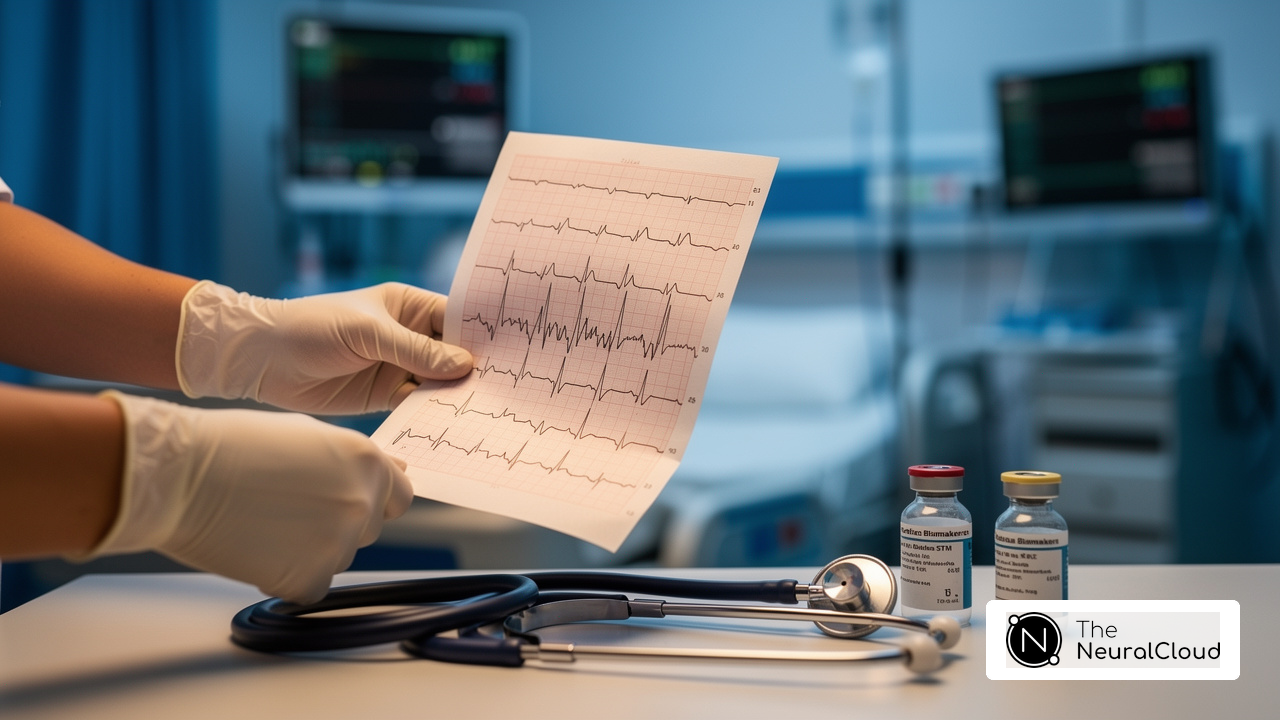
T morphologies show significant variation, making their recognition crucial for accurate ECG interpretation. Typically, normal T deflections are upright, smooth, and rounded across most leads. In contrast, abnormal T forms can appear peaked, inverted, or biphasic. For example, T waves with an amplitude of 5 mm or more in limb leads often suggest myocardial ischemia. On the other hand, inverted T patterns may indicate myocardial infarction, especially when observed in contiguous leads. Recent studies highlight that T inversions, particularly in anterior leads, are associated with increased risk of cardiac events.
Understanding these variations not only aids in diagnosing arrhythmias and electrolyte imbalances but also enhances patient care by guiding further diagnostic testing and interventions, including stress testing. The software from Neural Cloud Solutions addresses the challenges in ECG analysis by automating the examination of morphology. This advanced technology boosts diagnostic precision and facilitates prompt clinical decisions. MaxYield™ rapidly processes ECG data, analyzing 200,000 heartbeats in under 5 minutes, which significantly enhances workflow efficiency for healthcare professionals.
Features of MaxYield™:
- Rapid processing of large datasets
- Detailed insights on T wave characteristics
Advantages for Healthcare Professionals:
- Improved diagnostic accuracy
- Enhanced patient care through timely interventions
- Streamlined workflow, allowing more focus on patient interaction
By incorporating MaxYield™, healthcare providers can navigate the complexities of ECG interpretation with greater ease, ultimately leading to better patient outcomes.

Analyze Clinical Implications: T Wave Abnormalities and Cardiac Conditions
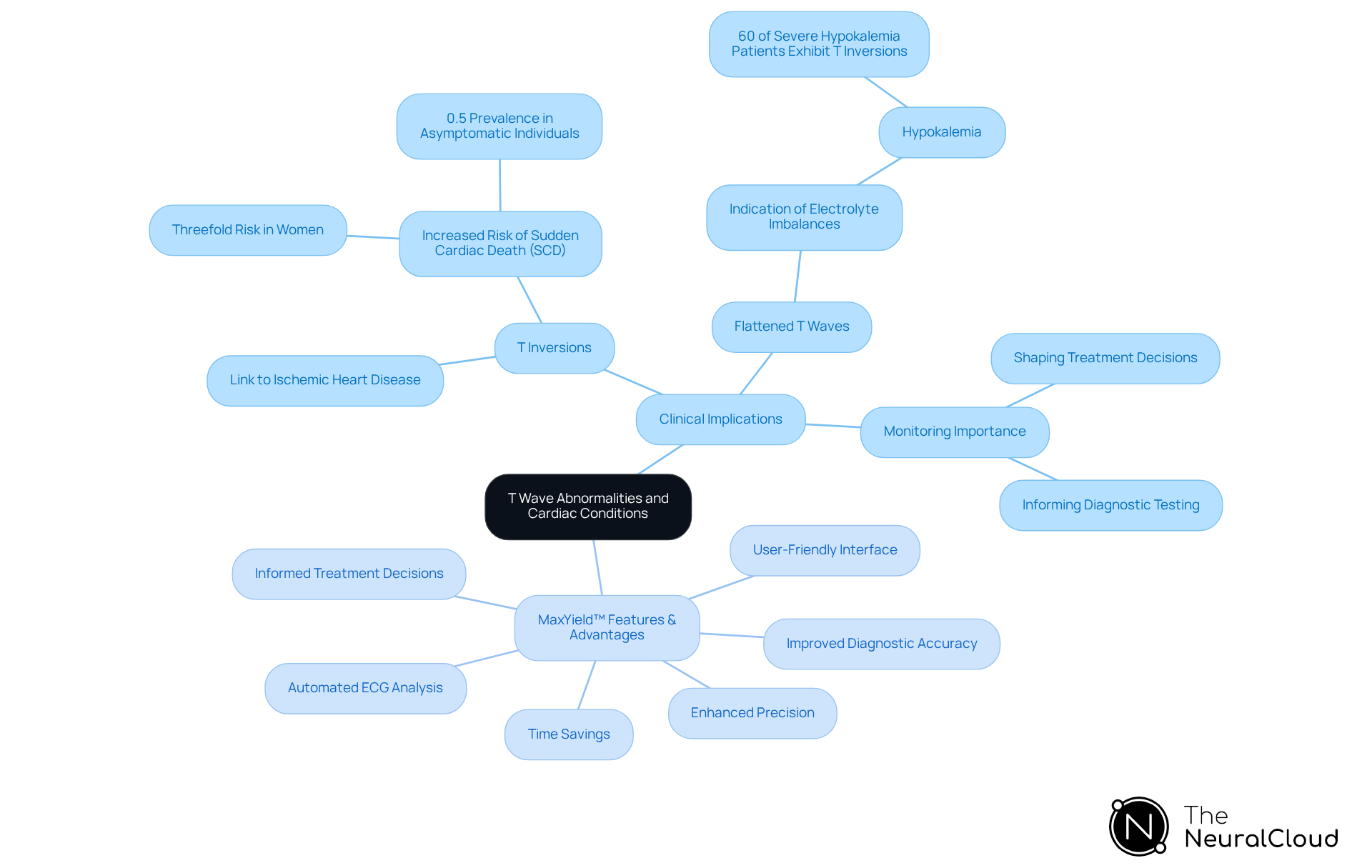
T Wave abnormalities are significant. For example, research shows that T wave inversion in right precordial leads occurs in 0.5% of asymptomatic individuals, yet it can signal serious cardiac concerns, particularly in women, where it correlates with a threefold increased risk of sudden cardiac death (SCD). Conversely, T wave flattening is especially concerning. In a study of 100 patients, 60% with severe hypokalemia exhibited T inversions, underscoring the importance of recognizing these changes. Clinicians must understand that T wave abnormalities can indicate underlying issues and shape treatment decisions.
By correlating T Wave EKG morphology with clinical findings, healthcare professionals can enhance patient outcomes through timely interventions. The technology improves analysis by automating processes and increasing precision. This platform addresses the challenges in EKG interpretation by providing clear, actionable insights.
Features of MaxYield™:
- Enhanced precision in identifying abnormalities
- User-friendly interface for healthcare professionals
Advantages for Healthcare Professionals:
- Saves time in ECG interpretation
- Supports informed treatment decisions
By leveraging advanced tools like MaxYield™, clinicians can ensure better patient care and outcomes.
Integrate Technology: Enhancing T Wave Analysis with Advanced Tools
ECG analysis has long faced challenges, particularly in accurately interpreting the T Wave. The introduction of advanced technology, such as AI algorithms and machine learning, has significantly transformed this process. The MaxYield™ platform stands out by automating the detection and evaluation of T Waves, which drastically reduces the time required for manual interpretation.
Features of MaxYield™:
- Streamlines the identification of T Waves, minimizing human error.
- Advanced algorithms map ECG signals through noise, isolating key features in each heartbeat.
- Provides immediate feedback on morphology, which enhances diagnostic accuracy.
These features translate into substantial advantages for healthcare professionals. By minimizing the time spent on manual interpretation, MaxYield™ allows clinicians to focus more on patient care. Additionally, its ability to salvage previously obscured sections of lengthy recordings means that critical data is not lost, further improving the quality of ECG analysis.
In summary, the MaxYield™ platform not only enhances the efficiency of ECG interpretation but also empowers healthcare professionals to make more informed clinical decisions. This ultimately leads to improved patient outcomes and streamlined workflows.

Conclusion
Understanding the complexities of T wave EKG analysis is crucial for accurate cardiac assessment and diagnosis. The T wave, which represents ventricular repolarization, is a key indicator of heart health. By recognizing both normal and abnormal T wave morphologies, healthcare professionals can pinpoint potential cardiac conditions and make informed treatment decisions, ultimately improving patient care.
This article has highlighted the significance of T wave characteristics, the implications of abnormalities, and the technological advancements that aid in their analysis. The MaxYield™ platform exemplifies how automation and advanced algorithms enhance the interpretation process. This allows for rapid and precise evaluations of T wave patterns, improving diagnostic accuracy and enabling clinicians to devote more time to patient interaction and care.
As cardiology evolves, utilizing advanced tools for EKG interpretation becomes increasingly vital. By leveraging innovations like the MaxYield™ platform, healthcare providers can boost their diagnostic capabilities, leading to better patient outcomes. Staying updated on the latest research and techniques in T wave analysis is essential for practitioners dedicated to delivering exceptional cardiac care.
Frequently Asked Questions
What does the T wave on an electrocardiogram (ECG) represent?
The T wave indicates the repolarization of the ventricles, marking a crucial phase in the cardiac cycle.
Why is understanding the T wave important in ECG interpretation?
Understanding the T wave is essential for accurate ECG interpretation as it provides valuable insights into the heart's electrical activity and overall health.
What abnormalities in the T wave can indicate serious cardiac conditions?
Abnormalities such as T inversions exceeding 3 mm in lead III without ST depression can suggest underlying structural heart disease and are particularly noted in individuals with left ventricular hypertrophy (LVH).
How prevalent are T wave EKG abnormalities in cardiac patients?
Recent studies have highlighted a high prevalence of T wave EKG abnormalities in cardiac patients, emphasizing their potential as indicators of serious conditions like myocardial ischemia and arrhythmias.
What is the significance of T wave morphology in predicting cardiovascular events?
Ongoing research into T wave morphology reveals its implications for predicting major adverse cardiovascular events (MACE), making it crucial for clinicians to recognize normal T shape morphology to identify potential pathologies.
How does the MaxYield™ platform enhance T signal evaluation?
The MaxYield™ platform enhances T signal evaluation through advanced noise filtering and automated solutions, improving the detection of subtle changes in T signal patterns for better risk stratification and patient management.
What are the capabilities of the MaxYield™ platform in processing heartbeats?
MaxYield™ can process 200,000 heartbeats in less than 5 minutes, addressing challenges like physiological variability and signal artifacts to provide clearer insights for clinicians.
List of Sources
- Understand the T Wave: Fundamentals and Significance
- ECG Case Studies | Interpretation & Answers | Geeky Medics (https://geekymedics.com/ecg-case-studies)
- pmc.ncbi.nlm.nih.gov (https://pmc.ncbi.nlm.nih.gov/articles/PMC6931827)
- theneuralcloud.com (https://theneuralcloud.com/post/t-wave-ecg-analysis)
- Hyperacute T waves and Occlusion MI | ECG Cases| Emergency Medicine Cases (https://emergencymedicinecases.com/hyperacute-t-waves-occlusion-mi)
- Checking your browser - reCAPTCHA (https://pmc.ncbi.nlm.nih.gov/articles/PMC11929567)
- Explore T Wave Morphologies: Normal vs. Abnormal Characteristics
- Hyperacute T waves and Occlusion MI | ECG Cases| Emergency Medicine Cases (https://emergencymedicinecases.com/hyperacute-t-waves-occlusion-mi)
- T wave (https://litfl.com/t-wave-ecg-library)
- theneuralcloud.com (https://theneuralcloud.com/post/t-wave-ecg-analysis)
- Checking your browser - reCAPTCHA (https://pmc.ncbi.nlm.nih.gov/articles/PMC11929567)
- Checking your browser - reCAPTCHA (https://pubmed.ncbi.nlm.nih.gov/31686358)
- Analyze Clinical Implications: T Wave Abnormalities and Cardiac Conditions
- pmc.ncbi.nlm.nih.gov (https://pmc.ncbi.nlm.nih.gov/articles/PMC6931827)
- Electrocardiographic Changes in Patients With Hypokalemia and Their Correlation With Serum Potassium Levels (https://cureus.com/articles/400549-electrocardiographic-changes-in-patients-with-hypokalemia-and-their-correlation-with-serum-potassium-levels)
- pmc.ncbi.nlm.nih.gov (https://pmc.ncbi.nlm.nih.gov/articles/PMC9496440)
- medpagetoday.com (https://medpagetoday.com/medical-journeys/cardiomyopathy/106214)