Introduction
Timely diagnosis of ST-Elevation Myocardial Infarction (STEMI) is often hindered by the complexities of ECG interpretation, particularly when it comes to recognizing the ECG tombstone pattern. This pattern is a critical indicator of severe myocardial injury and presents significant challenges for timely diagnosis and management of STEMI. Understanding this distinctive morphology is essential for healthcare professionals, as it can drastically influence clinical decisions and patient outcomes.
Clinicians must be equipped with the knowledge and tools to effectively identify and respond to this alarming pattern amidst the complexities of ECG interpretation. This article explores the clinical significance of the ECG tombstone pattern. It offers insights into its key characteristics and discusses advanced technologies that can enhance diagnostic accuracy and improve patient care in Canadian healthcare settings.
Define the ECG Tombstone Pattern and Its Clinical Importance
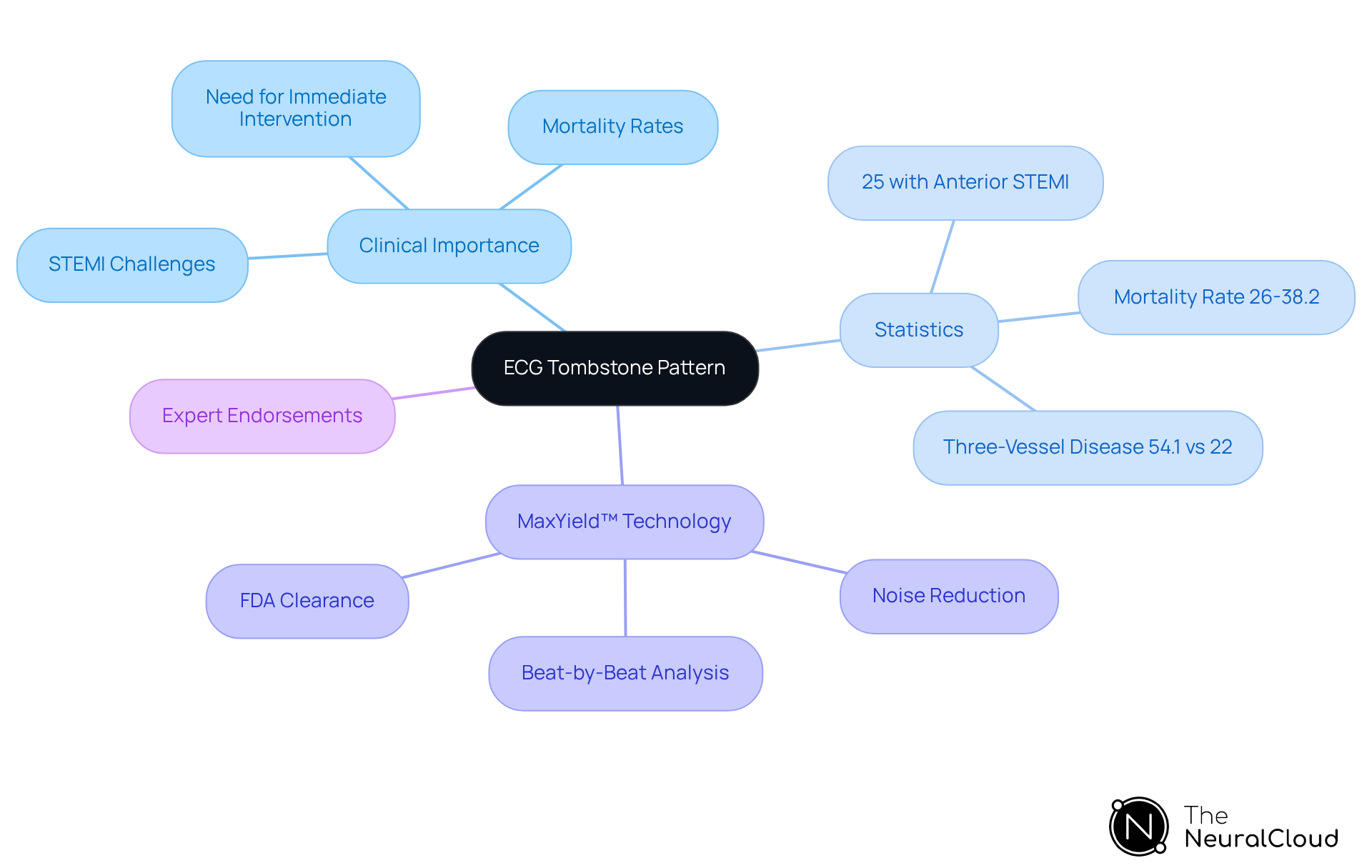
The ECG tombstone pattern, commonly known as 'tombstoning,' presents significant challenges in the timely diagnosis and intervention for patients experiencing STEMI. This distinctive morphology of ST-segment elevation resembles an ECG tombstone pattern and is clinically significant, typically indicating a high-risk ST-Elevation Myocardial Infarction (STEMI) associated with extensive myocardial injury. Notably, research indicates that approximately 25% of individuals with anterior STEMI exhibit the ECG tombstone pattern, which correlates with a mortality rate ranging from 26% to 38.2%. Furthermore, the occurrence of three-vessel disease is considerably greater in individuals with tombstoning, affecting 54.1% compared to just 22% in those without this trend. Recognizing this trend means immediate reperfusion therapy is essential, given its connection to serious myocardial injury and poor outcomes for patients. For instance, patients with a T-configuration on their ECG have a notably higher all-cause mortality rate of 15.6% compared to 2.9% in those lacking this configuration. The T-pattern also serves as an independent predictor of 6-month all-cause mortality, with an odds ratio of 5.18, underscoring the critical nature of identifying this configuration.
Recognizing the ECG tombstone pattern can be life-saving, as it signals the need for immediate medical intervention to restore blood flow to the heart muscle. In Canadian hospitals, understanding the clinical implications of the ECG tombstone pattern is crucial for timely diagnosis and management, ultimately improving patient outcomes. By utilizing MaxYield™, healthcare professionals can enhance their diagnostic capabilities, leading to timely interventions that save lives. MaxYield™ maps ECG signals through noise, isolating and labeling key features in every heartbeat, transforming noisy recordings into detailed insights. With its automated noise reduction and adaptive algorithms, MaxYield™ delivers beat-by-beat analysis, outputting an analysis of 200,000 heartbeats in less than 5 minutes, which is essential for clinicians in urgent situations. Additionally, it is important to note that MaxYield™ is currently pending FDA Class II SaMD clearance, ensuring compliance with regulatory standards. Expert endorsements from Dr. Alan Rabinowitz, Dr. Brett Heilbron, and Dr. Marc W. Deyell further validate MaxYield™'s precision and noise reduction benefits, emphasizing its role in enhancing clinical decision-making.
Identify Key ECG Characteristics of the Tombstone Pattern
Healthcare professionals face significant challenges in accurately interpreting ECG results, which can impact patient care. The ECG Tombstone Pattern is characterized by several distinct features that are crucial for accurate diagnosis and timely intervention:
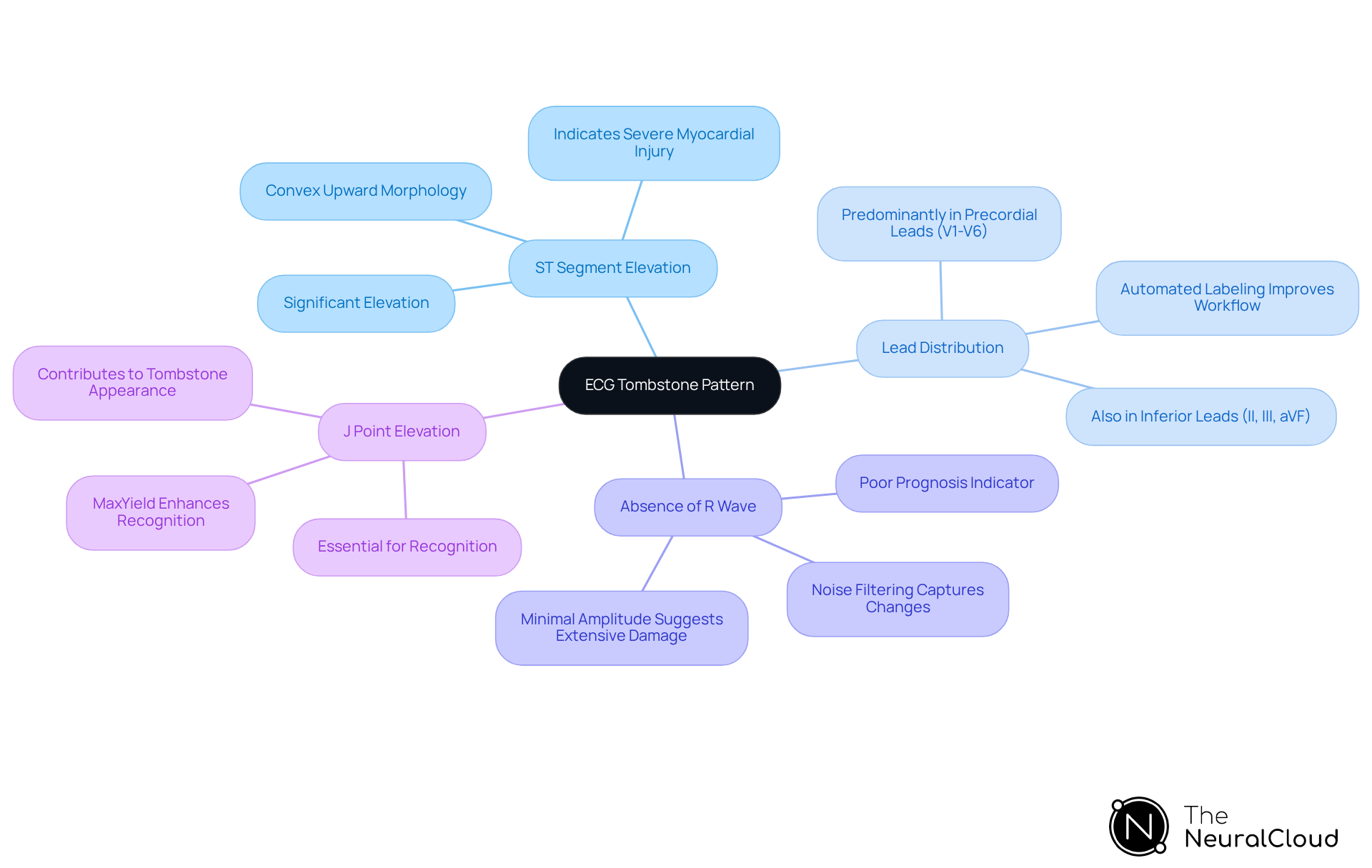
- ST Segment Elevation: The ST segment exhibits significant elevation, often merging with the T wave, resulting in a convex upward morphology. This elevation is a hallmark of severe myocardial injury, which can be effectively analyzed using advanced ECG analysis capabilities.
- Lead Distribution: This pattern is predominantly observed in the precordial leads (V1-V6) and can also manifest in the inferior leads (II, III, aVF), indicating the extent of myocardial damage. The automated labeling from the company aids in swiftly recognizing these leads, improving workflow efficiency.
- Absence of R Wave: A notable absence or minimal amplitude of the R wave is frequently present, suggesting extensive myocardial damage and a poor prognosis. Thanks to the system's noise filtering capabilities, even the slightest changes in the R wave are captured accurately, aiding in clinical decision-making.
- J Point Elevation: The J point is raised, contributing to the overall tombstone appearance, which is essential for recognizing this formation on an ECG. With MaxYield, clinicians can transform noisy recordings into detailed insights, allowing for better recognition of this critical feature.
Recognizing these characteristics is crucial for identifying the ECG tombstone pattern, which indicates severe myocardial injury and necessitates prompt clinical intervention. Tombstoning ST-segment elevation is observed in 10-26.1% of STEMI cases, with a higher prevalence in anterior localization (39.8%). This underscores the importance of understanding these ECG features for effective diagnosis and management of acute myocardial infarction. Additionally, the criteria for the ECG tombstone pattern include the peak ST segment being higher than the R wave and the merging of the ST segment with the T wave, highlighting the critical nature of the ECG tombstone pattern in clinical settings. As Dr. Alan Rabinowitz observes, 'This system's precision rivals human interpretation, making it an invaluable tool for clinicians.' Furthermore, it is important to note that MaxYield is currently pending FDA Class II SaMD clearance, ensuring compliance with regulatory standards. Understanding these ECG features is not just beneficial; it is essential for timely and effective patient management in acute myocardial infarction cases.
Apply Knowledge of the Tombstone Pattern in Clinical Decision-Making
Recognizing the ECG tombstone pattern is crucial in clinical decision-making, as it may indicate severe cardiac events that necessitate immediate attention. To effectively apply knowledge of the ECG Tombstone Pattern in clinical decision-making, consider the following steps:
- Immediate Assessment: Upon identifying the tombstone pattern, prioritize the evaluation of the individual, including vital signs and symptom assessment. Recognizing this pattern quickly can really make a difference in treatment outcomes.
- Initiate Protocols: Activate emergency protocols for STEMI management, including notifying the cardiac care team and preparing for potential reperfusion therapy. Research indicates that early intervention can reduce door-to-balloon times, enhancing survival rates for individuals.
- Medical History: Gather a thorough medical history, focusing on risk factors for coronary artery disease and previous cardiac events. Comprehending the individual's background can inform treatment choices and enhance prognostic precision, particularly in cases involving the ecg tombstone pattern.
- Ongoing Observation: Observe the individual closely for any alterations in their condition, as the tombstone shape can signify quickly progressing myocardial injury. Continuous ECG monitoring is essential to detect any deterioration promptly.
- Documentation: Document the findings and actions taken promptly to ensure continuity of care and facilitate further treatment decisions. Accurate documentation supports effective communication among healthcare providers and aids in subsequent clinical evaluations.
By following these steps, clinicians can significantly enhance patient outcomes and reduce the risk of complications. Studies show that effective use of the ECG in decision-making can lead to improved triage and management of STEMI patients, ultimately reducing mortality rates associated with acute coronary events. Ultimately, a structured approach to managing the ecg tombstone pattern can be the difference between life and death for patients experiencing acute coronary events.

Leverage Advanced Technologies for Enhanced ECG Analysis
Healthcare professionals face significant challenges in accurately interpreting ECG data, which can lead to critical misdiagnoses. To leverage advanced technologies for enhanced ECG analysis, consider the following approaches:
- AI-Powered Interpretation: Implement AI algorithms capable of analyzing ECG data with exceptional sensitivity and specificity. This enables the identification of critical patterns, such as the ECG tombstone pattern, which is significant in diagnosing ST-elevation myocardial infarction (STEMI). Notably, the company has demonstrated accuracy comparable to human understanding, with endorsements from Dr. Alan Rabinowitz, Dr. Brett Heilbron, and Dr. Marc W. Deyell highlighting its noise reduction advantages.
- Integration with Existing Systems: Utilize solutions that process raw ECG recordings from various devices, transforming them into structured outputs that simplify interpretation and enhance diagnostic accuracy. This integration addresses the challenges healthcare professionals face when adopting new technologies into existing workflows. The automated labeling of P, QRS, and T wave onsets, offsets, and time-series intervals in CSV format enables seamless ingestion into current systems, streamlining the workflow.
- Real-Time Monitoring: Incorporate wearable ECG devices that provide continuous monitoring of individuals, facilitating immediate detection of abnormal patterns, such as the ECG tombstone pattern. In fact, AI analysis has cut missed diagnoses of severe arrhythmias by 14 times compared to human technicians, underscoring the importance of timely interventions.
- Data Visualization Tools: Leverage advanced visualization tools, such as Insight360, to create customizable dashboards that assist clinicians in visualizing trends and making informed decisions swiftly. Insight360 transforms clean ECG data from the company into interactive dashboards and clinical-ready reports, enhancing the overall analysis process.
By adopting these technologies, healthcare professionals can streamline their workflows and enhance diagnostic accuracy, ultimately improving patient care. Additionally, with FDA Class II SaMD clearance-pending status and audit-ready documentation supporting GxP inspections, Neural Cloud Solutions Inc. ensures compliance and reliability in its offerings. For those interested, contact Neural Cloud Solutions Inc. for free trials or personalized walkthroughs of MaxYield and Insight360.

Conclusion
The ECG tombstone pattern presents significant challenges for healthcare professionals, highlighting the need for advanced diagnostic tools. Recognizing this pattern is essential, as it serves as a critical indicator of severe myocardial injury and the need for immediate intervention. This distinctive morphology highlights the urgency of clinical decision-making and shows how advanced technologies like MaxYield™ can enhance diagnostic accuracy and improve patient outcomes.
Throughout the article, we explored key insights regarding the characteristics of the ECG tombstone pattern, including significant ST-segment elevation, lead distribution, and the absence of R waves. These features are vital for timely diagnosis and intervention, particularly in the context of STEMI cases. The integration of AI-powered tools and real-time monitoring systems empowers clinicians to make informed decisions swiftly, ultimately improving patient care and reducing mortality rates associated with acute coronary events.
In light of the critical nature of the ECG tombstone pattern, it is imperative for healthcare professionals to embrace advanced technologies and structured approaches in their clinical practice. By doing so, they can enhance their diagnostic capabilities, ensure timely interventions, and ultimately save lives. Using tools like MaxYield™ and Insight360 can improve patient outcomes and advance cardiac care in Canada.
Frequently Asked Questions
What is the ECG tombstone pattern?
The ECG tombstone pattern, also known as 'tombstoning,' is a distinctive morphology of ST-segment elevation that indicates a high-risk ST-Elevation Myocardial Infarction (STEMI) associated with extensive myocardial injury.
Why is the ECG tombstone pattern clinically significant?
It is clinically significant because it correlates with a high mortality rate (26% to 38.2%) and a greater occurrence of three-vessel disease in patients, indicating the need for immediate reperfusion therapy to improve outcomes.
What percentage of individuals with anterior STEMI exhibit the ECG tombstone pattern?
Approximately 25% of individuals with anterior STEMI exhibit the ECG tombstone pattern.
How does the ECG tombstone pattern affect mortality rates?
Patients with a T-configuration on their ECG have a higher all-cause mortality rate of 15.6% compared to 2.9% in those without this configuration, making its recognition critical for patient management.
What is the significance of the T-pattern in ECG readings?
The T-pattern serves as an independent predictor of 6-month all-cause mortality, with an odds ratio of 5.18, highlighting the importance of identifying this configuration in clinical settings.
How can healthcare professionals improve their diagnostic capabilities regarding the ECG tombstone pattern?
Healthcare professionals can enhance their diagnostic capabilities by utilizing MaxYield™, which maps ECG signals through noise, isolating and labeling key features in every heartbeat for timely interventions.
What are the features of MaxYield™ that assist in urgent situations?
MaxYield™ offers automated noise reduction and adaptive algorithms, delivering beat-by-beat analysis of 200,000 heartbeats in less than 5 minutes, which is essential for clinicians in urgent situations.
What is the current regulatory status of MaxYield™?
MaxYield™ is currently pending FDA Class II SaMD clearance, ensuring compliance with regulatory standards.
Who endorses MaxYield™ for its precision and noise reduction benefits?
Expert endorsements from Dr. Alan Rabinowitz, Dr. Brett Heilbron, and Dr. Marc W. Deyell validate MaxYield™'s precision and noise reduction benefits, emphasizing its role in enhancing clinical decision-making.
List of Sources
- Define the ECG Tombstone Pattern and Its Clinical Importance
- Patients with Tombstoning Pattern on the Admission Electrocardiography Who Have Undergone Primary Percutaneous Coronary Intervention for Anterior Wall ST‐Elevation Myocardial Infarction: In‐Hospital and Midterm Clinical Outcomes - PMC (https://pmc.ncbi.nlm.nih.gov/articles/PMC6932004)
- theneuralcloud.com (https://theneuralcloud.com/post/understanding-stemi-tombstone-ecg-insights-and-clinical-implications)
- Tombstoning ST-Elevation Myocardial Infarction - PMC (https://pmc.ncbi.nlm.nih.gov/articles/PMC2842959)
- Identify Key ECG Characteristics of the Tombstone Pattern
- “Tombstone” ST segment elevation of acute myocardial infarction (https://academic.oup.com/pmj/article/80/943/276/7036155)
- Tombstoning ST-Elevation Myocardial Infarction - PMC (https://pmc.ncbi.nlm.nih.gov/articles/PMC2842959)
- ST‑segment elevation myocardial infarction mimics: The differential diagnosis of nonacute coronary syndrome causes of ST‑segment/T‑wave abnormalities in the chest pain patient | 2024, Volume 24, Issue 4 | Turkish Journal of Emergency Medicine (https://turkjemergmed.com/full-text/895)
- High-risk ECG patterns in ST elevation myocardial infarction for mortality prediction (https://sciencedirect.com/science/article/pii/S0022073622001662)
- Apply Knowledge of the Tombstone Pattern in Clinical Decision-Making
- New Coordinated Heart Attack Care System Aims to Decrease Treatment Delays, Save Lives (https://dicardiology.com/content/new-coordinated-heart-attack-care-system-aims-decrease-treatment-delays-save-lives)
- (PDF) The ECG as decision support in STEMI (https://researchgate.net/publication/221879824_The_ECG_as_decision_support_in_STEMI)
- AI-ECG Finds STEMI Faster, Cuts False-Positive Cath Lab Activations (https://tctmd.com/news/ai-ecg-finds-stemi-faster-cuts-false-positive-cath-lab-activations)
- New Guideline on Acute Coronary Syndromes: Key Takeaways (https://consultqd.clevelandclinic.org/new-guideline-on-acute-coronary-syndromes-key-takeaways-for-cardiologists)
- Leverage Advanced Technologies for Enhanced ECG Analysis
- PMcardio: AI ECG & Cardiac Care Platform (https://powerfulmedical.com)
- theneuralcloud.com (https://theneuralcloud.com/post/maxyield-vs-traditional-ecg-tools-which-cardiologists-tool-reigns)
- Remote heart monitoring gets cleaner ECG data under Europe deal (https://stocktitan.net/news/AIMLF/neural-cloud-signs-reseller-agreement-with-european-digital-cardiac-odr4kyyg9lzi.html)
- Movesense and NeuralCloud to Pilot AI-Powered ECG and Holter Reporting — Movesense (https://movesense.com/news/2026/02/movesense-and-neuralcloud-to-pilot-ai-powered-ecg-and-holter-reporting)