Introduction
Developers face significant challenges in accurately reading EKG strips, which is crucial for advancing cardiovascular care through technology. This guide offers a comprehensive roadmap for mastering the EKG Strip Reader, highlighting best practices and advanced techniques that can significantly improve diagnostic accuracy. Addressing these challenges is vital for ensuring that technological advancements lead to reliable and effective cardiovascular care.
Understand EKG Basics and Terminology
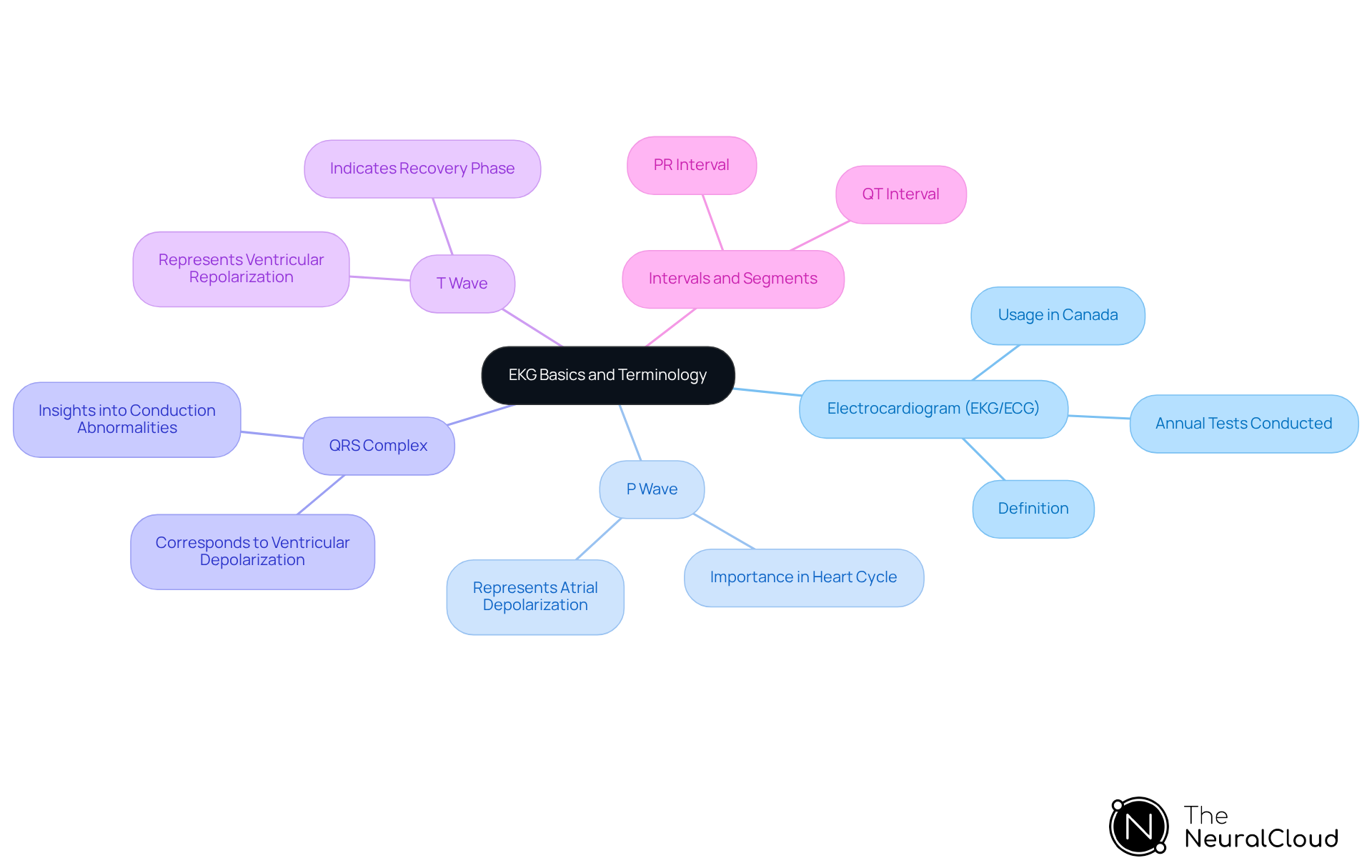
To effectively utilize the EKG Strip Reader, it's crucial to understand the following key terms and concepts:
- Electrocardiogram (EKG/ECG): A graphical representation of the heart's electrical activity over time, typically displayed as a series of waves. In Canada, EKGs are increasingly prevalent, with healthcare providers relying on this non-invasive test to assess heart health and diagnose conditions. Recent statistics indicate that EKG usage has risen significantly, with over 5 million tests conducted annually across the country, reflecting its critical role in cardiovascular care.
- P Wave: Represents atrial depolarization, indicating the electrical impulse traveling through the atria. This wave is essential for understanding the initiation of the heart's electrical cycle.
- QRS Complex: Corresponds to ventricular depolarization, reflecting the electrical activity as it spreads through the ventricles. The width of the QRS complex can provide insights into potential conduction abnormalities.
- T Wave: Represents ventricular repolarization, indicating the recovery phase of the ventricles. Abnormalities in the T wave can signal various cardiac issues.
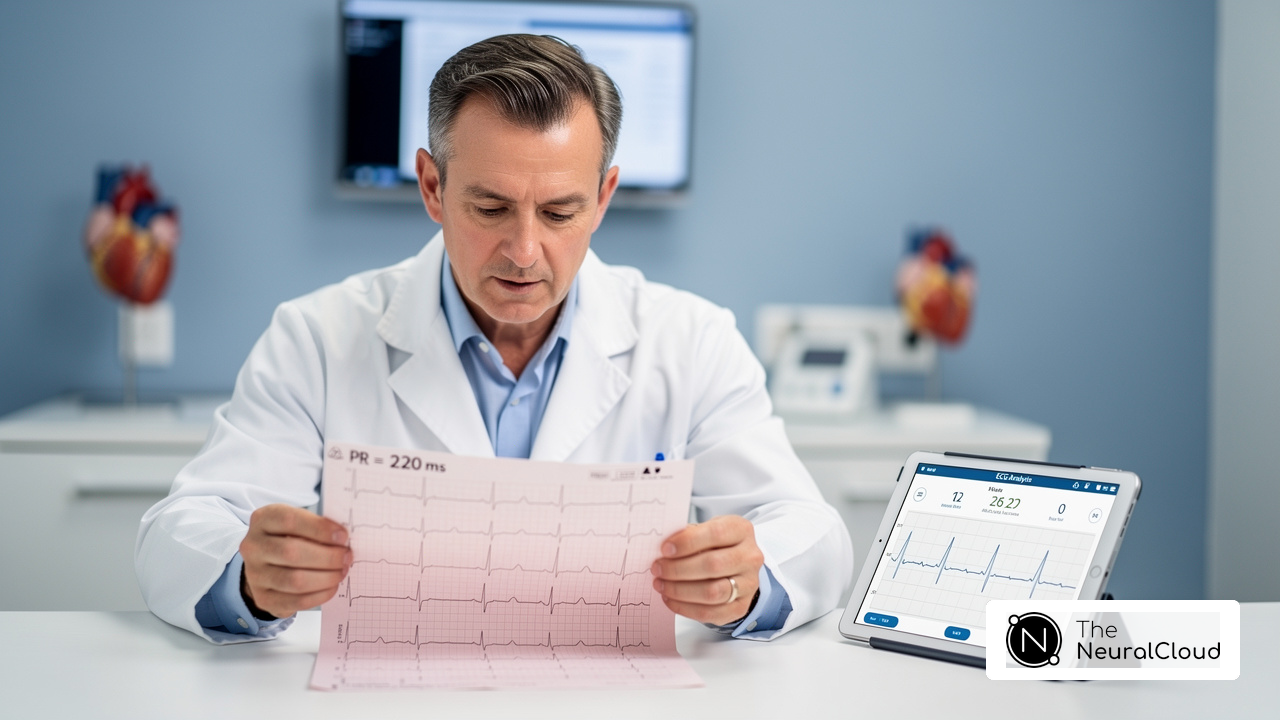
- Intervals and Segments: Key measurements such as the PR interval (the time from the start of the P wave to the start of the QRS complex) and the QT interval (the time from the start of the QRS complex to the end of the T wave) are critical for assessing heart rhythm and function.
Understanding these elements is crucial for accurately interpreting EKG strips, which can enhance the development of applications that utilize an EKG strip reader. Recent advancements in electrocardiogram technology in Canada, including AI-driven tools like MaxYield, are improving the accuracy and efficiency of EKG interpretation. MaxYield works as a device-agnostic ECG intelligence layer, easily integrating through API, SDK, or CDK without needing hardware changes, ensuring clean data across all connected devices and addressing the 'garbage-in/garbage-out' issue related to PPG feeds. For instance, a recent study highlighted that AI-enhanced EKG analysis can reduce interpretation time by up to 30%, making it essential for developers to stay informed about these trends. Furthermore, expert endorsements from Dr. Alan Rabinowitz, Dr. Brett Heilbron, and Dr. Marc W. Deyell emphasize MaxYield’s precision rivaling human interpretation and its noise reduction benefits. Additionally, case studies from Canadian healthcare settings demonstrate how EKG testing has led to timely interventions and improved patient outcomes, underscoring the importance of integrating these insights into application development. Regulatory compliance details, including FDA Class II SaMD clearance-pending status and audit-ready documentation supporting GxP inspections, further enhance the credibility of MaxYield in the realm of remote patient monitoring.
Follow Step-by-Step Instructions for Using the EKG Strip Reader
Integrating advanced ECG analysis tools can be daunting for developers, especially when navigating compliance and system compatibility issues. To effectively utilize the EKG Strip Reader powered by MaxYield™, follow these detailed steps:
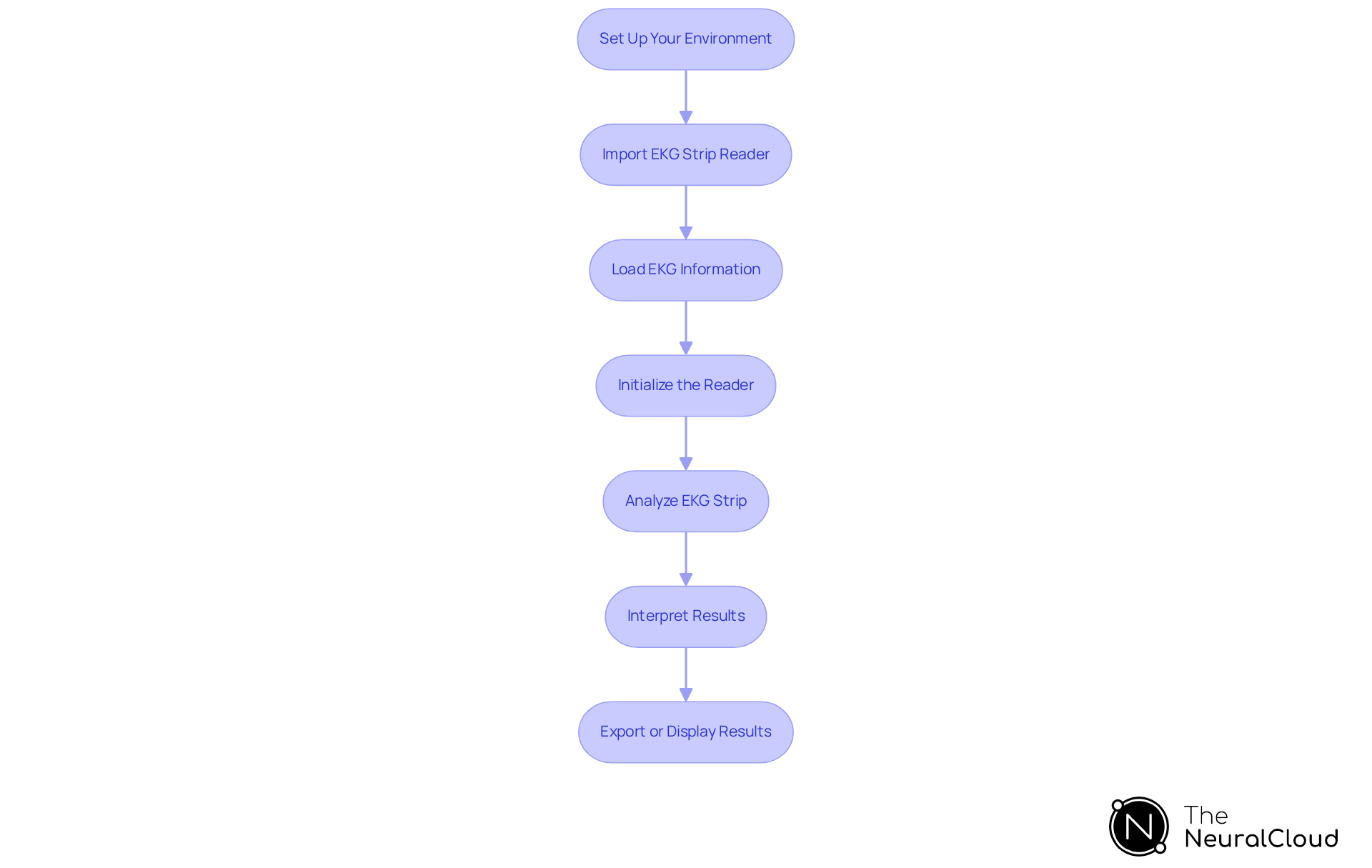
- Set Up Your Environment: Prepare your development environment by installing any necessary software or libraries needed for the EKG waveform analyzer. Ensure that your setup is compatible with existing healthcare systems to facilitate integration, particularly considering the device-agnostic nature of MaxYield™, which integrates seamlessly via API, SDK, or CDK without requiring hardware changes.
- To integrate the project, you need to import the EKG Strip Reader. This may involve adding a specific package or module based on your programming language, leveraging MaxYield™'s capabilities for enhanced ECG analysis.
- Load EKG Information: Import the EKG records you wish to analyze. This can be achieved by uploading a file or linking to a source that provides EKG strips. Consider the volume of information, as precise EKG analysis is essential in managing large collections effectively, particularly in Canadian healthcare settings such as Toronto and Calgary.
- Initialize the Reader: Create an instance of the EKG Record Reader to prepare the tool for processing the EKG information. This step ensures the reader works well in your application, taking advantage of MaxYield™'s precision that matches human interpretation.
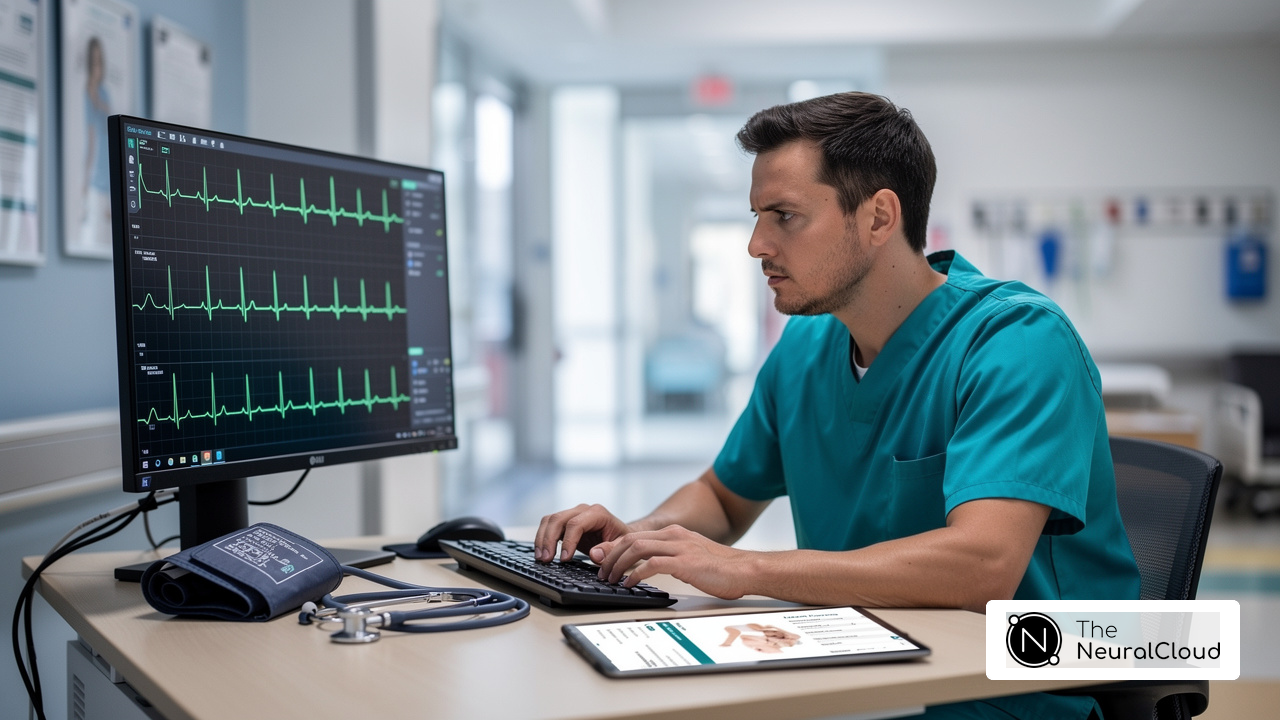
- The EKG strip reader is essential for analyzing heart rhythms. Utilize the EKG strip reader to analyze the EKG strip during the processing. This usually entails calling a method that handles the information and returns the results. Best practices recommend verifying the information prior to processing to enhance accuracy, a feature that MaxYield™ automates to reduce noise and improve outcomes.
- Interpret the Results: Examine the output produced by the EKG Analyzer, which may include identifying arrhythmias, measuring intervals, and visualizing the information. Integrating user feedback during this phase can enhance the interpretation process, aided by the customizable visualization and reporting tool, Insight360, which converts MaxYield™'s clean ECG information into interactive dashboards and clinical-ready reports.
- Export or Display Results: Depending on your application, you may want to export the results to a file or display them in a user interface for further analysis. This step is vital for ensuring that the results are accessible and actionable for healthcare professionals.
By following these steps and considering the integration challenges health tech developers face, such as compliance with healthcare regulations, developers can effectively use the EKG device for data analysis and integrate it into their applications. Furthermore, exploring successful case studies can illuminate the path to effective EKG data analysis and integration in healthcare applications. For personalized walkthroughs of MaxYield™ and Insight360, feel free to contact Neural Cloud Solutions Inc.
Troubleshoot Common Issues with EKG Strip Readers
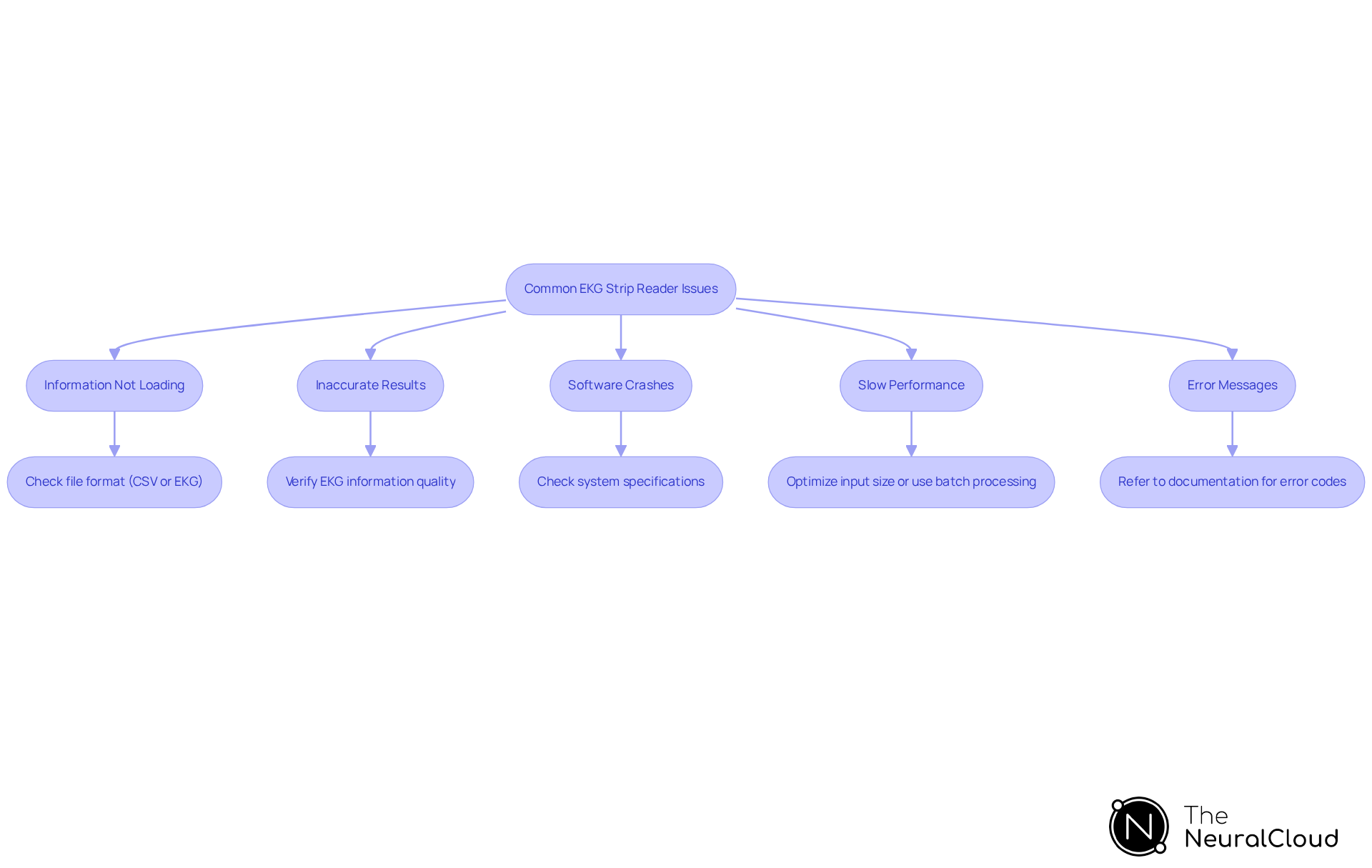
Developers often face challenges when utilizing the EKG Strip Reader, which can hinder effective ECG analysis. Here’s a guide to troubleshooting these common issues effectively:
- Information Not Loading: If the EKG information fails to load, first check the file format to ensure compatibility with the reader. Supported formats typically include CSV or specific EKG file types. Ensuring the correct format can prevent loading errors.
- Inaccurate Results: If the output seems incorrect, verify that the EKG information is clean and free from noise. Employing noise reduction capabilities within the EKG Analyzer can significantly improve information quality. Inaccurate results can lead to misdiagnoses, which is a serious concern for healthcare professionals.
- Software Crashes: If the application crashes while processing, check that your development environment meets the required system specifications. Regularly checking for updates or patches for the EKG Strip Reader can also help mitigate software instability.
- Slow Performance: If processing times surpass expectations, consider optimizing the input size or utilizing batch processing features if available. Effective information management can enhance performance, as larger collections may hinder processing speeds.
- Error Messages: Pay close attention to any error messages displayed. These often provide critical clues about what went wrong. Refer to the documentation for specific error codes and their meanings, as understanding these can lead to quicker resolutions.
In Canadian healthcare settings, case studies have shown that addressing these common issues through systematic troubleshooting can enhance the reliability of EKG readings. For instance, a study highlighted that regular calibration and software updates are essential for maintaining accuracy, thereby reducing the likelihood of misdiagnoses. By systematically addressing these challenges, developers can significantly improve the reliability of EKG readings, ultimately enhancing patient outcomes.
Integrate Advanced Technologies for Enhanced EKG Analysis
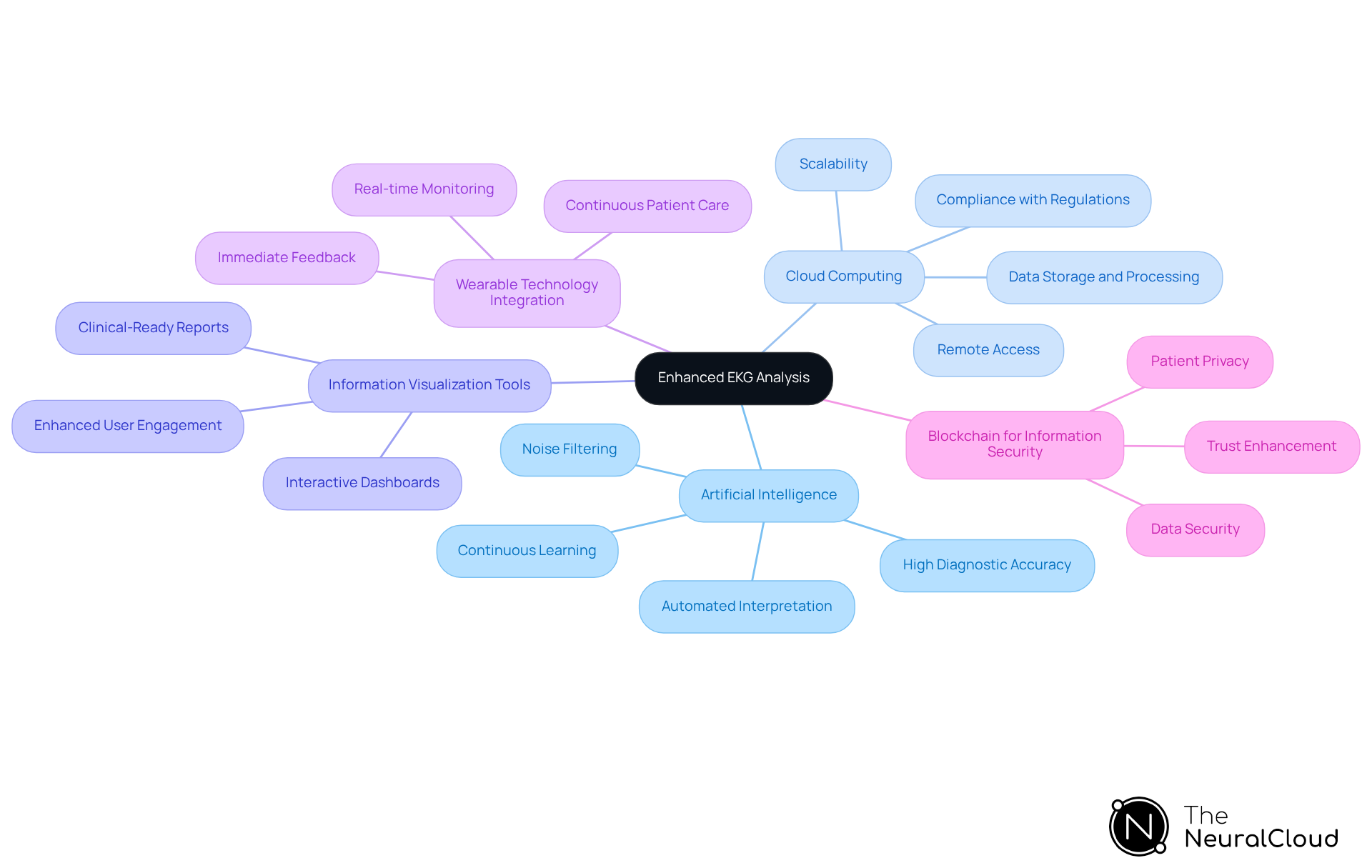
Traditional EKG analysis faces significant challenges, particularly in interpreting noisy recordings and ensuring diagnostic accuracy. To enhance EKG analysis, consider integrating the following advanced technologies:
- Artificial Intelligence (AI): Implement AI algorithms to automate the interpretation of EKG strips. MaxYield™ from Neural Cloud Solutions Inc. utilizes advanced noise filtering and distinct wave recognition to improve diagnostic accuracy, even in recordings with high levels of noise and artifact. This device-agnostic ECG intelligence layer evolves with each use, ensuring continuous learning and enhanced efficiency. Expert endorsements from Dr. Alan Rabinowitz, Dr. Brett Heilbron, and Dr. Marc W. Deyell emphasize MaxYield’s precision rivaling human interpretation and its noise reduction benefits.
- Cloud Computing: Utilize cloud services to store and process large volumes of EKG information. This means you can analyze data on a larger scale and tap into powerful computing resources without being held back by local hardware constraints. Cloud computing has emerged as a transformative force in healthcare, enhancing information management and accessibility while ensuring compliance with regulations, including FDA Class II SaMD clearance-pending status.
- Information Visualization Tools: Integrate advanced visualization libraries to create interactive dashboards that showcase EKG trends and insights. Tools like D3.js or Plotly can enhance user engagement and understanding. Insight360, Neural Cloud Solutions Inc.'s customizable visualization and reporting tool, transforms MaxYield’s clean ECG information into clinical-ready reports.
- Wearable Technology Integration: Consider developing applications that connect with wearable devices to gather real-time EKG information. This can provide continuous monitoring and immediate feedback to users, further enhancing the capabilities of your EKG analysis applications. Recent advancements in AI and IoT have shown promise in accurately distinguishing between healthy and unhealthy heart signals, contributing to improved patient care.
- Blockchain for Information Security: Explore the use of blockchain technology to secure EKG information and ensure patient privacy. This can enhance trust in your application, especially in healthcare settings where data security is paramount. As healthcare organizations increasingly adopt digital solutions, robust cybersecurity measures are essential to protect sensitive patient information.
By adopting these technologies, healthcare professionals can use an EKG strip reader to achieve more accurate diagnoses and improved patient outcomes. Embracing these advanced technologies not only enhances EKG analysis but also paves the way for a new standard in patient care and diagnostic precision.
Conclusion
To enhance cardiovascular care through technology, developers must master the EKG Strip Reader. By understanding the fundamental concepts of EKGs and following a structured approach to utilizing the EKG Strip Reader, developers can significantly improve the accuracy and efficiency of heart rhythm analysis. This guide highlights how integrating advanced technologies like AI and cloud computing can streamline interpretation and help meet healthcare regulations.
Key insights from the article emphasize the necessity of grasping EKG basics, troubleshooting common issues, and leveraging innovative tools like MaxYield™ and Insight360. These resources not only facilitate effective EKG analysis but also support healthcare professionals in making timely and informed decisions. The integration of AI-driven solutions and advanced visualization techniques further enhances the diagnostic capabilities of EKG applications, ultimately leading to better patient outcomes.
With healthcare technology evolving rapidly, it's essential for developers to embrace these advancements. By prioritizing the integration of cutting-edge tools and methodologies, the potential for improved cardiovascular diagnostics and patient care becomes a reality. Engaging with resources like Neural Cloud Solutions Inc. can provide valuable support in navigating this transformative journey, ensuring that developers are well-equipped to meet the demands of modern healthcare.
Frequently Asked Questions
What is an Electrocardiogram (EKG/ECG)?
An Electrocardiogram (EKG/ECG) is a graphical representation of the heart's electrical activity over time, typically displayed as a series of waves. In Canada, EKGs are widely used by healthcare providers to assess heart health and diagnose conditions, with over 5 million tests conducted annually.
What does the P Wave represent in an EKG?
The P Wave represents atrial depolarization, indicating the electrical impulse traveling through the atria. It is essential for understanding the initiation of the heart's electrical cycle.
What is the significance of the QRS Complex in an EKG?
The QRS Complex corresponds to ventricular depolarization, reflecting the electrical activity as it spreads through the ventricles. The width of the QRS complex can provide insights into potential conduction abnormalities.
What does the T Wave indicate in an EKG?
The T Wave represents ventricular repolarization, indicating the recovery phase of the ventricles. Abnormalities in the T wave can signal various cardiac issues.
What are intervals and segments in EKG interpretation?
Intervals and segments are key measurements in EKG interpretation. The PR interval measures the time from the start of the P wave to the start of the QRS complex, while the QT interval measures the time from the start of the QRS complex to the end of the T wave. These measurements are critical for assessing heart rhythm and function.
How is technology improving EKG interpretation in Canada?
Recent advancements in electrocardiogram technology, including AI-driven tools like MaxYield, are enhancing the accuracy and efficiency of EKG interpretation. MaxYield acts as a device-agnostic ECG intelligence layer, integrating easily without hardware changes and ensuring clean data across connected devices.
What benefits does AI-enhanced EKG analysis provide?
AI-enhanced EKG analysis can reduce interpretation time by up to 30%, improving the efficiency of EKG readings. Expert endorsements highlight MaxYield’s precision, which rivals human interpretation, and its ability to reduce noise in data.
What is the regulatory status of MaxYield?
MaxYield is currently pending FDA Class II SaMD clearance and has audit-ready documentation supporting GxP inspections, enhancing its credibility in remote patient monitoring.
How has EKG testing impacted patient outcomes in Canada?
Case studies from Canadian healthcare settings demonstrate that EKG testing has led to timely interventions and improved patient outcomes, underscoring the importance of integrating these insights into application development.
List of Sources
- Understand EKG Basics and Terminology
- Research study makes heart screening faster, more accessible using AI (https://uhnfoundation.ca/stories/research-study-makes-heart-screening-faster-more-accessible-using-ai)
- AI algorithm from the Heart Institute interprets ECGs better than a human (https://montreal.citynews.ca/2026/01/27/ai-algorithm-heart-institute-interprets-ecgs)
- What’s an EKG? (https://my.clevelandclinic.org/health/diagnostics/16953-electrocardiogram-ekg)
- Electrocardiogram (ECG or EKG) - Mayo Clinic (https://mayoclinic.org/tests-procedures/ekg/about/pac-20384983)
- Understanding the Jargon: ECGs | News & Articles | Welbeck (https://welbeck.com/news-and-articles/understanding-electrocardiograms)
- Follow Step-by-Step Instructions for Using the EKG Strip Reader
- ECG market keeps evolving thanks to AI, home monitoring and Epic integration (https://cardiovascularbusiness.com/topics/cardiac-imaging/electrocardiography-ecg/ecg-market-keeps-evolving-thanks-ai-home-monitoring-and-epic-integration)
- theneuralcloud.com (https://theneuralcloud.com/post/4-best-practices-for-successful-ekg-software-implementation)
- Canada Health Act Annual Report 2024-2025 - Canada.ca (https://canada.ca/en/health-canada/services/publications/health-system-services/canada-health-act-annual-report-2024-2025.html)
- National Center for Health Statistics (https://cdc.gov/nchs)
- Troubleshoot Common Issues with EKG Strip Readers
- Frontiers | The most common errors in automatic ECG interpretation (https://frontiersin.org/journals/physiology/articles/10.3389/fphys.2025.1590170/full)
- 7 Steps To Ensure Accurate EKG Machine Readings | Gumbo Medical (https://gumbomedical.com/7-steps-to-ensure-accurate-ekg-machine-readings)
- How To Troubleshoot Common ECG Machine Failures (https://allstatesmed.com/blogs/news/how-to-troubleshoot-common-ecg-machine-failures?srsltid=AfmBOoqFIprEzrtRVFSWFXwZ-REU65RetpDRxRYgz9eClnAjPJ0TwwqU)
- Integrate Advanced Technologies for Enhanced EKG Analysis
- AI could safely replace human analysis of ambulatory ECG - News - PHRI (https://phri.ca/draimartini)
- medicalgorithmics.com (https://medicalgorithmics.com/medicalgorithmics-receives-approval-for-commercialization-in-canada-for-the-latest-generation-of-deeprhythmai-artificial-intelligence-algorithms)
- Artificial intelligence in ECG diagnostics - where are we now? (https://escardio.org/communities/councils/cardiology-practice/education/cardiopractice/artificial-intelligence-in-ecg-diagnostics-where-are-we-now)
- Unraveling the role of cloud computing in health care system and biomedical sciences - PMC (https://pmc.ncbi.nlm.nih.gov/articles/PMC11004887)
- PMcardio: AI ECG & Cardiac Care Platform (https://powerfulmedical.com)