Introduction
The Modified Sgarbossa Criteria have become an essential tool in cardiology, especially for diagnosing acute myocardial infarction (AMI) in patients with left bundle branch block (LBBB). These criteria refine the interpretation of ECG readings, significantly enhancing diagnostic accuracy. This improvement offers healthcare professionals a clearer pathway for effective patient evaluation.
Despite the advantages of the Modified Sgarbossa Criteria, challenges persist in their application. Clinicians often face complexities that can hinder the full utilization of these guidelines. To navigate these challenges, it is crucial to explore strategies that can facilitate the successful implementation of these criteria in clinical practice.
By understanding the features of the Modified Sgarbossa Criteria, healthcare professionals can better appreciate their advantages. These criteria not only improve diagnostic precision but also streamline the evaluation process, ultimately benefiting patient outcomes. What strategies can clinicians employ to ensure they fully leverage these advancements in their practice?
Understand the Modified Sgarbossa Criteria and Its Importance
The criteria play a crucial role in diagnosing acute myocardial infarction (AMI) in patients with left bundle branch block (LBBB). These guidelines enhance diagnosis by emphasizing key changes in the ECG, which are essential for interpretation in challenging cases. The criteria include:
- Concordant ST elevation of 1 mm or more in leads with a positive QRS complex.
- Concordant ST depression of 1 mm or more in leads V1-V3.
- Discordant ST/S ratio of less than or equal to -0.25.
These modifications are significant as they overcome the limitations of traditional methods, which can be affected by LBBB. Recent evaluations show that the criteria have a sensitivity of 80% and a specificity of 99%, which is an improvement over the original criteria that had a sensitivity of only 49% and a specificity of 100%. This enhancement highlights their importance in emergency situations, where timely and accurate diagnosis is vital.
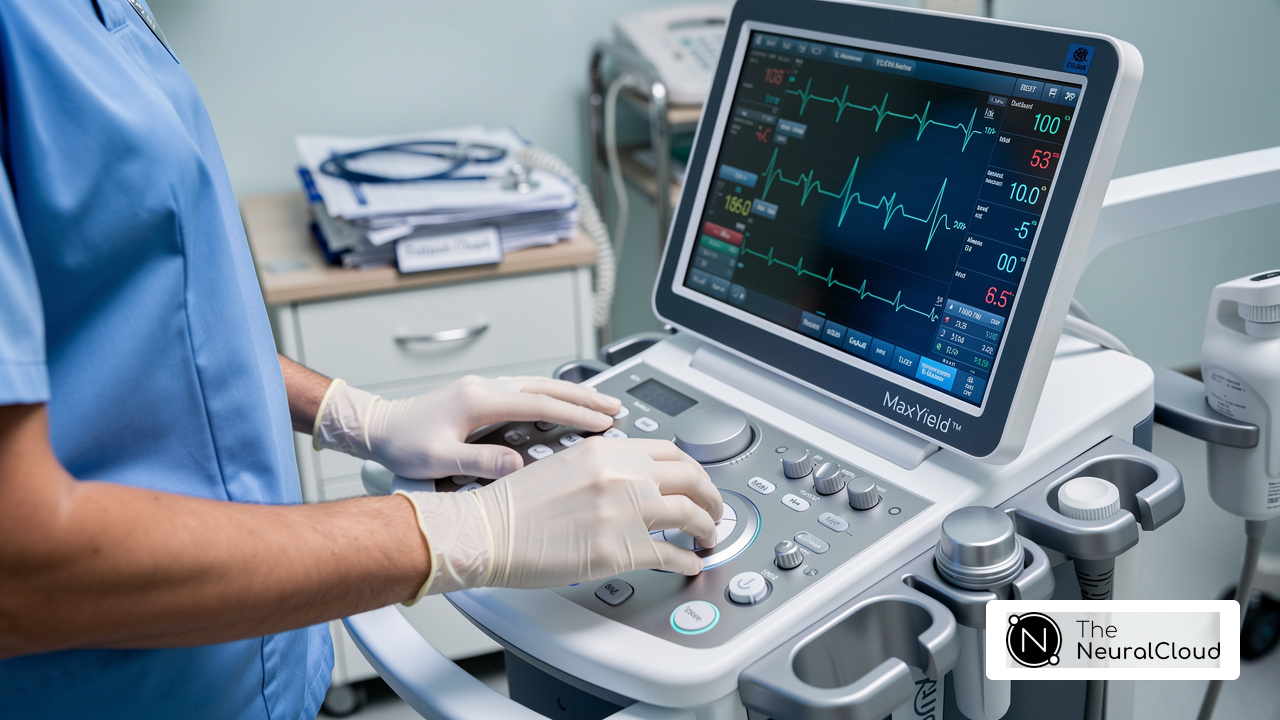
'Neural Cloud Solutions' MaxYield™ platform enhances the application of the criteria by incorporating advanced technology for analysis. This innovation streamlines processes, reduces operational costs, and addresses challenges like physiological variability and signal artifacts. The advanced algorithms of the MaxYield™ platform facilitate the identification of critical ST-segment changes, enabling healthcare professionals to make informed decisions swiftly.
The effectiveness of the Modified Sgarbossa Criteria in detecting acute coronary occlusion (ACO) in individuals with LBBB is demonstrated through real-world applications. The criteria support prompt decision-making regarding interventions such as percutaneous coronary intervention (PCI) or fibrinolysis, particularly in cases of hemodynamic instability or acute heart failure. As healthcare professionals increasingly adopt these guidelines, they contribute to improved patient care and better outcomes in cardiology.

Implement the Modified Sgarbossa Criteria in Patient Evaluation
To effectively implement the criteria in patient evaluation, follow these steps:
- Obtain a baseline: Ensure accurate recording of the ECG, capturing all necessary leads to assess for left bundle branch block (LBBB) and potential abnormalities.
- Identify LBBB: Confirm by checking for a characteristic wide QRS complex and specific morphology in the ECG leads.
- Examine ST-segment alterations: Search for the three standards:
- concordant ST elevation ≥ 1 mm in any lead,
- concordant ST-segment depression ≥ 1 mm in leads V1-V3,
- discordant ST elevation ≥ 5 mm in any lead.
Pay close attention to leads with positive QRS complexes for concordant ST elevation and leads V1-V3 for concordant ST depression.
- Calculate discordance: Measure the ST elevation and compare it to the S-wave depth to determine if it exceeds the 25% threshold, which is crucial for assessing discordance.
- Document findings: Note observations and the standards met in the individual's medical record, ensuring clarity for future reference and treatment choices.
- Consult with colleagues: If uncertain, discuss findings with fellow clinicians to confirm interpretation and decide on the next steps in patient management.
By adhering to these steps, healthcare professionals can improve their diagnostic precision. The modified Sgarbossa criteria have demonstrated an 80% accuracy in predicting AMI in the presence of LBBB.
- Advanced Data Identification: even in noisy recordings, enhancing the accuracy of ECG analysis.
- Rapid Isolation of ECG Waves: It quickly isolates ECG waves from recordings with baseline wander and muscle artifact, ensuring that previously obscured sections of lengthy Holter, 1-Lead, and patch monitor recordings are salvageable.
Advantages for Healthcare Professionals:
Utilizing MaxYield™ can significantly enhance diagnostic capabilities. Its features allow for clearer interpretations of ECG data, which can lead to better patient outcomes. However, it is important to recognize that further studies are needed to confirm the clinical use of the modified criteria. The elevated false activation rates linked to the original guidelines, varying from 44% to 86%, further emphasize the need for employing the modified standards to enhance patient care.

Navigate Limitations and Challenges in Application
While the Modified Sgarbossa Criteria enhance diagnostic accuracy, several limitations and challenges can arise during their application:
- Variability: Differences in ECG interpretation among clinicians can lead to inconsistencies in applying the standards. Standardized training and protocols can help mitigate these discrepancies, fostering a more uniform approach to patient evaluation. Neural Cloud Solutions leverages technology to automate ECG analysis, providing consistent, filtered signals that reduce the impact of variability.
- False positives: The standards may generate false positives in situations such as pericarditis or early repolarization patterns. To enhance diagnostic precision, clinicians should correlate ECG findings with clinical symptoms and biomarkers. The initial criteria exhibited a low sensitivity of 20%, underscoring the importance of thorough assessment to prevent misdiagnosis.
- Quality issues: Poor-quality ECG recordings can obscure critical details necessary for accurate interpretation. Ensuring that ECG equipment is functioning correctly and that leads are placed properly is essential for reliable results. Neural Cloud Solutions' MaxYield™ platform addresses this challenge by transforming lengthy and noisy ECG recordings into clean, crisp signals, enhancing data clarity for analysis.
- Patient factors: Variability in patient anatomy and physiology can significantly affect ECG readings. Clinicians must consider these factors when interpreting results to avoid misinterpretation.
- Continuous education: Staying updated on the latest research and advancements in ECG interpretation is crucial for refining skills and understanding the Modified Sgarbossa Criteria. Engaging in professional development can help clinicians navigate the complexities of modified Sgarbossa ECG analysis more effectively.
Additionally, the new ST/S ratio proposed by Steven Smith, MD, replaces the discordant ST-elevation component of the original Sgarbossa Criteria, adding complexity to the interpretation process. The 2013 STEMI guidelines also eliminated the recommendation for fibrinolysis in individuals with new LBBB, highlighting the evolving nature of clinical guidelines and their impact on ECG interpretation. By recognizing these challenges and leveraging solutions like Neural Cloud Solutions' MaxYield™, clinicians can enhance their approach to ECG interpretation, ultimately improving diagnostic accuracy and patient outcomes.

Leverage Technology to Enhance ECG Analysis and Criteria Application
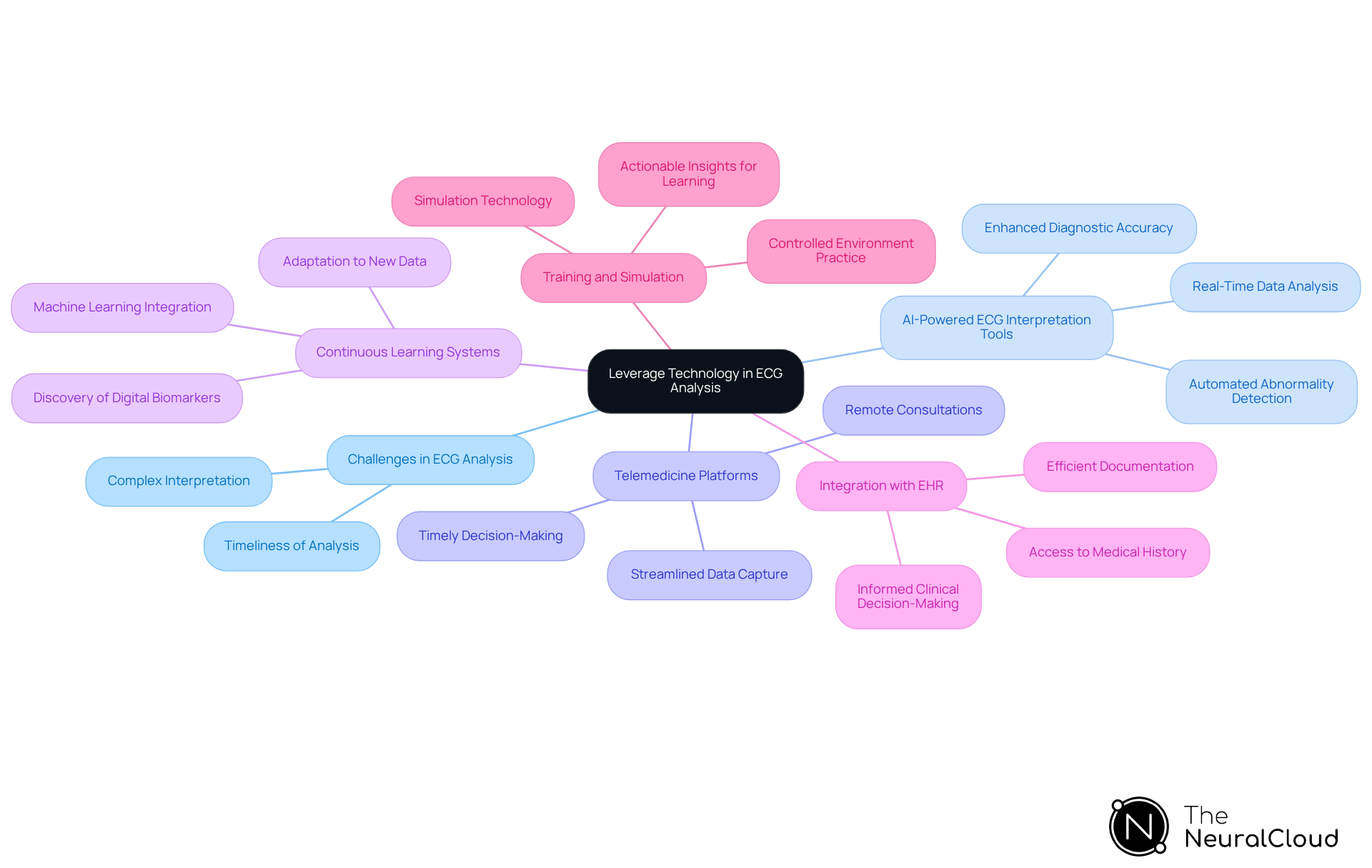
To effectively leverage technology in the analysis and application of the modified Sgarbossa criteria, consider the following strategies:
Challenges in ECG analysis can be complex, often requiring timely and accurate interpretation to identify potential abnormalities. This is where advanced technology can play a crucial role.
MaxYield™ Features: One of the standout features of Neural Cloud Solutions' MaxYield™ is its advanced algorithms that enable real-time ECG data analysis. This tool identifies potential abnormalities and facilitates the application of the modified Sgarbossa criteria. By automating the analysis process, MaxYield™ delivers beat-by-beat insights, significantly enhancing decision-making for healthcare professionals.
Telemedicine Platforms: Another advantage of integrating MaxYield™ is its compatibility with telemedicine platforms. These platforms enable remote consultations and timely interventions, ensuring timely decision-making in critical situations. By streamlining data capture from various devices, MaxYield™ ensures comprehensive ECG analysis, which is vital for effective patient care.
Machine Learning Integration: MaxYield™ also incorporates machine learning to enhance its capabilities over time. This feature allows the platform to adapt to new data and clinical findings, extracting key features from ECG signals. As a result, it supports the discovery of new digital biomarkers, providing healthcare professionals with cutting-edge tools for patient assessment.
EHR Integration: Seamless integration of ECG analysis tools like MaxYield™ with EHR systems is essential for efficient documentation and access to medical history. This integration enhances clinical decision-making, allowing healthcare providers to make informed choices based on comprehensive patient data.
Training and Simulation: Participating in training programs that utilize simulation technology can further enhance ECG interpretation skills. MaxYield™ provides clear, actionable insights that improve learning outcomes, enabling healthcare professionals to practice the application of the modified Sgarbossa criteria in a controlled environment.
By embracing these technological advancements, including the innovative solutions offered by Neural Cloud Solutions, healthcare professionals can significantly enhance their diagnostic capabilities and improve patient outcomes.
Conclusion
The Modified Sgarbossa Criteria mark a significant advancement in diagnosing acute myocardial infarction (AMI) in patients with left bundle branch block (LBBB). By concentrating on specific ST-segment changes, these guidelines enhance the accuracy of ECG interpretation, particularly in complex clinical scenarios. The improved sensitivity and specificity of these criteria underscore their vital role in emergency settings, where timely diagnosis can be life-saving.
In the article, essential steps for implementing the Modified Sgarbossa Criteria are outlined, highlighting the importance of obtaining accurate ECG recordings, identifying LBBB, and carefully examining ST-segment alterations. The integration of technology, especially through platforms like Neural Cloud Solutions' MaxYield™, is emphasized as a means to streamline ECG analysis and improve diagnostic precision. Challenges such as inter-observer variability and technical limitations are also discussed, reinforcing the need for continuous education and adaptation in clinical practices.
In conclusion, the Modified Sgarbossa Criteria not only enhance diagnostic accuracy but also pave the way for better patient outcomes in cardiology. Embracing technological advancements and remaining vigilant about the challenges in ECG interpretation can empower healthcare professionals to navigate the complexities of cardiac assessments effectively. By prioritizing ongoing education and leveraging AI tools, clinicians can improve their diagnostic capabilities, ultimately leading to more informed decision-making and enhanced care for patients experiencing acute coronary events.
Frequently Asked Questions
What are the Modified Sgarbossa Criteria?
The Modified Sgarbossa Criteria are guidelines used to diagnose acute myocardial infarction (AMI) in patients with left bundle branch block (LBBB). They focus on specific ST-segment changes in the ECG, which include concordant ST elevation of 1 mm or more in leads with a positive QRS complex, concordant ST depression of 1 mm or more in leads V1-V3, and a discordant ST/S ratio of less than or equal to -0.25.
Why are the Modified Sgarbossa Criteria important?
These criteria are important because they enhance diagnostic accuracy for AMI in patients with LBBB, overcoming limitations of traditional methods that can be affected by LBBB. They provide a clearer framework for interpretation in challenging cases, which is crucial for timely and accurate diagnosis.
How do the sensitivity and specificity of the Modified Sgarbossa Criteria compare to the original criteria?
The Modified Sgarbossa Criteria have a sensitivity of 80% and a specificity of 99%, which is an improvement over the original criteria that had a sensitivity of only 49% and a specificity of 100%.
How does the MaxYield™ platform enhance the application of the Modified Sgarbossa Criteria?
The MaxYield™ platform enhances the application of the Modified Sgarbossa Criteria by incorporating wearable technology for automated ECG labeling. This innovation streamlines processes, reduces operational costs, and helps address challenges such as physiological variability and signal artifacts.
What role do the Modified Sgarbossa Criteria play in clinical decision-making?
The Modified Sgarbossa Criteria support prompt decision-making regarding interventions such as primary percutaneous coronary intervention (PCI) or fibrinolysis, especially in cases of hemodynamic instability or acute heart failure, thereby contributing to improved diagnostic accuracy and better outcomes in cardiology.
List of Sources
- Understand the Modified Sgarbossa Criteria and Its Importance
- rebelem.com (https://rebelem.com/modified-sgarbossa-criteria-ready-primetime)
- journalfeed.org (https://journalfeed.org/article-a-day/2021/modified-sgarbossa-criteria-for-ventricular-paced-rhythms)
- coreem.net (https://coreem.net/journal-reviews/modified-sgarbossa-criteria)
- pubmed.ncbi.nlm.nih.gov (https://pubmed.ncbi.nlm.nih.gov/26678648)
- Implement the Modified Sgarbossa Criteria in Patient Evaluation
- aliem.com (https://aliem.com/modified-sgarbossa-criteria-ready-primetime)
- coreem.net (https://coreem.net/journal-reviews/modified-sgarbossa-criteria)
- journalfeed.org (https://journalfeed.org/article-a-day/2021/modified-sgarbossa-criteria-for-ventricular-paced-rhythms)
- Navigate Limitations and Challenges in Application
- aliem.com (https://aliem.com/modified-sgarbossa-criteria-ready-primetime)
- Leverage Technology to Enhance ECG Analysis and Criteria Application
- AI outperforms conventional diagnosis for certain types of heart attacks (https://escardio.org/news/press/press-releases/acvc-press)
- AI-ECG Momentum and Rising Competition Reshape Diagnostic Cardiology in 2026 (https://signifyresearch.net/insights/diagnostic-cardiology-market-bouncing-into-2026)
- AI-ECG Finds STEMI Faster, Cuts False-Positive Cath Lab Activations (https://tctmd.com/news/ai-ecg-finds-stemi-faster-cuts-false-positive-cath-lab-activations)
- AI-based ECG interpretation outperforms standard diagnosis of occlusive myocardial infarction (https://news-medical.net/news/20260323/AI-based-ECG-interpretation-outperforms-standard-diagnosis-of-occlusive-myocardial-infarction.aspx)
- Investigating the Efficacy of AI-Powered Innovations in ECG Analysis and Continuous Heart Monitoring: A Comprehensive Narrative Review - PMC (https://pmc.ncbi.nlm.nih.gov/articles/PMC12419789)