Introduction
In a healthcare landscape where cardiovascular diseases pose significant risks, mastering the intricacies of electrocardiograms (ECGs) is vital for professionals. This article will explore the key features of a normal ECG and provide insights into analysis techniques that enhance diagnostic accuracy and patient care.
Clinicians often face challenges in accurately interpreting ECGs, which can lead to misdiagnosis and impact patient care. Mastering these skills is crucial for clinicians to improve diagnostic accuracy and enhance patient outcomes.
Explain the Basics of ECG and Its Importance in Cardiac Health
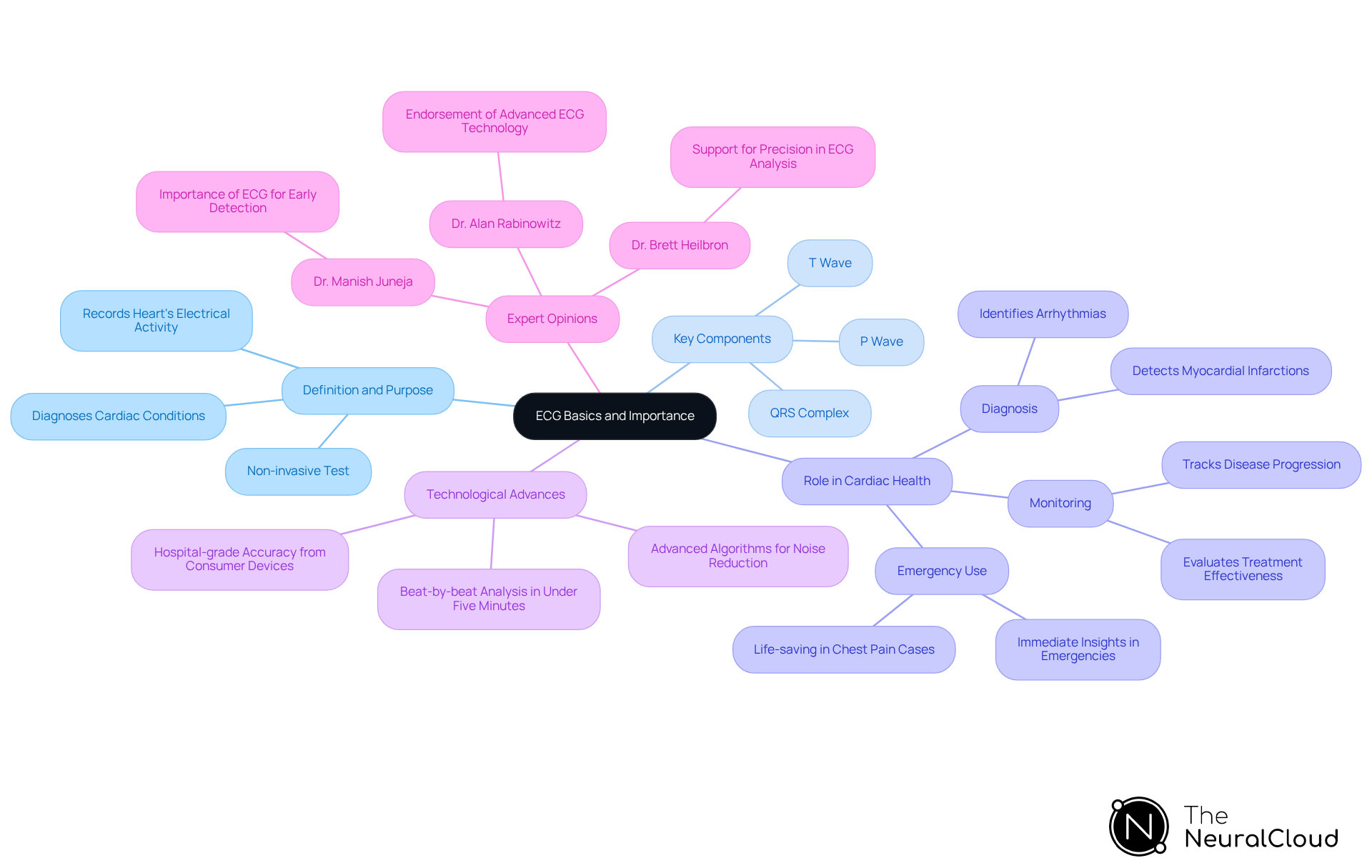
Accurate ECG interpretation is critical, yet many healthcare professionals face challenges in understanding its complexities. An electrocardiogram (ECG) is a non-invasive test that records the heart's electrical activity over time, playing a crucial role in diagnosing various cardiac conditions such as arrhythmias and myocardial infarctions. ECGs provide a graphical depiction of the heart's electrical impulses, enabling healthcare professionals to assess pulse rate, rhythm, and overall cardiac function. Understanding the fundamentals of ECG is essential for accurate interpretation and informed clinical decision-making.
The normal ECG picture consists of key components: the P wave, QRS complex, and T wave, each reflecting distinct phases of the cardiac cycle. ECGs play a crucial role in cardiac health by allowing for the early identification of cardiovascular conditions, continuous monitoring, and assessment of treatment. In Canada, cardiovascular disease remains the most costly health issue, with direct and indirect costs totaling $21.2 billion annually. Regular ECG assessments are vital for managing chronic conditions, as they allow for tracking disease progression and evaluating treatment effectiveness.
Recent statistics highlight that approximately 90% of the Canadian population has at least one risk factor for cardiovascular conditions, emphasizing the need for routine ECG testing. Moreover, ECGs are instrumental in emergency situations, providing immediate insights into a patient's heart condition, which can be life-saving in cases of chest pain or suspected heart attacks. Expert opinions, such as those from Dr. Manish Juneja, stress the importance of ECGs for early detection and ongoing monitoring, reinforcing their role in guiding treatment strategies.
With the advent of advanced technologies such as those from Neural Cloud Solutions Inc., the landscape of ECG analysis is evolving. Key features of the company’s technology include:
- Hospital-grade ECG accuracy from consumer-grade devices
- Advanced algorithms that reduce noise in readings
- Beat-by-beat analysis in under five minutes
This technology transforms remote patient monitoring. By utilizing sophisticated algorithms, the company addresses the common issue of noise in ECG readings, providing clean, reliable data that enhances clinical decision-making. Experts like Dr. Alan Rabinowitz and Dr. Brett Heilbron have endorsed this product for its precision, rivaling human interpretation and significantly reducing noise artifacts.
Furthermore, the capability of the system to provide beat-by-beat analysis in under five minutes enables medical professionals to swiftly recognize cardiac events and evaluate patient conditions efficiently. This capability is crucial for clinicians in settings like Toronto and Calgary, where timely and accurate data can significantly impact patient outcomes. As digital solutions become more common in medicine, integrating this system into existing workflows represents a significant advancement in cardiac diagnostics, ensuring that medical providers can offer the highest standard of care. Additionally, the company is currently awaiting FDA Class II SaMD clearance, further enhancing its credibility in the healthcare landscape. The use of Insight360, a customizable visualization tool, transforms MaxYield’s clean ECG data into interactive dashboards and clinical-ready reports, providing a comprehensive view of patient health.
Identify Key Features of a Normal ECG: Waveforms and Intervals
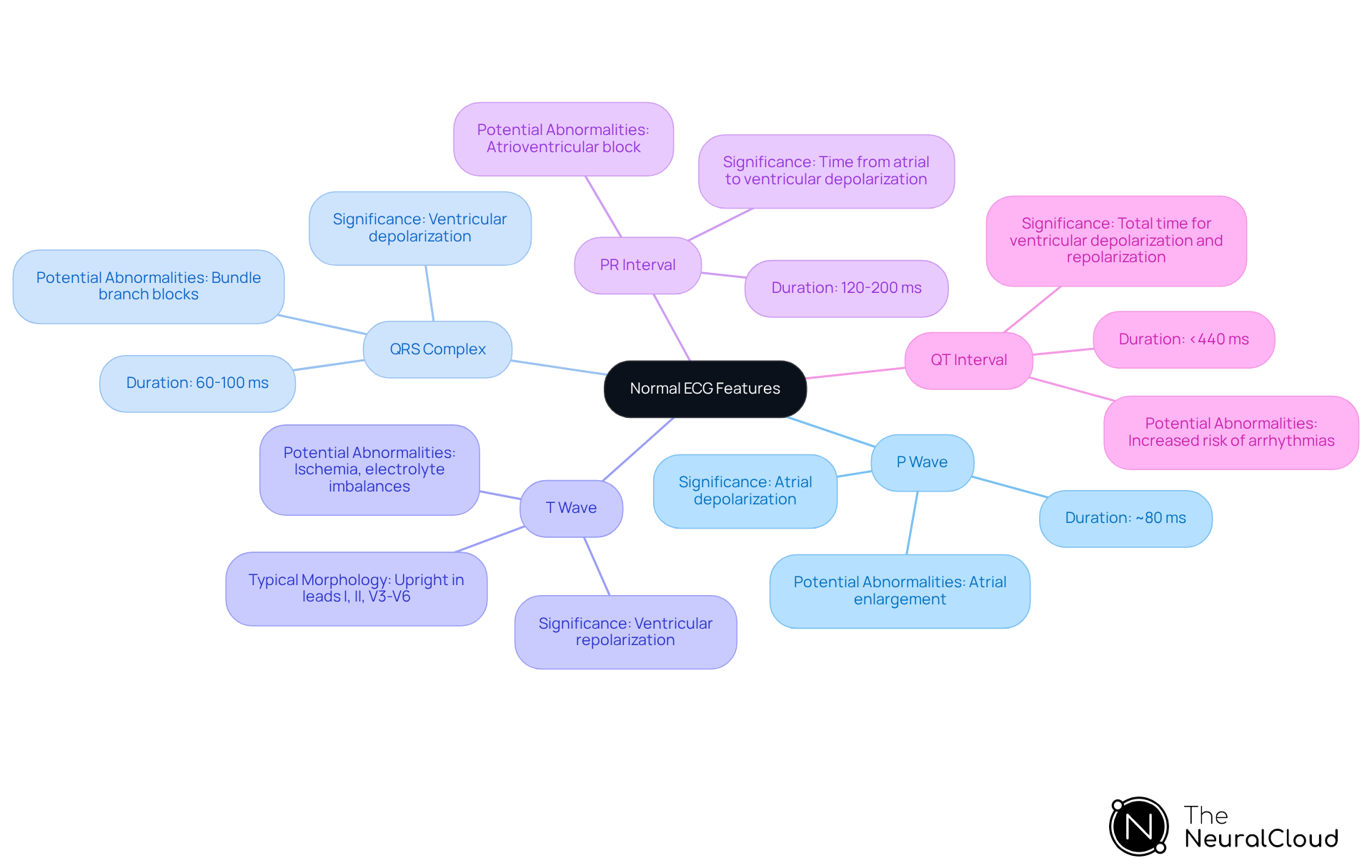
Accurate ECG analysis is critical, yet many healthcare professionals face challenges in interpreting complex waveforms and intervals. A normal ECG picture includes several critical waveforms and intervals that indicate the organ's electrical activity, which is essential for accurate diagnosis and treatment. The primary components include:
- P Wave: This waveform represents atrial depolarization, typically lasting around 80 milliseconds. Its morphology can indicate atrial enlargement or other conditions.
- QRS Complex: Indicating ventricular depolarization, the QRS complex lasts between 60 to 100 milliseconds. Its duration and shape are crucial for assessing the heart's pumping efficiency and can reveal conditions such as bundle branch blocks.
- T Wave: Reflecting ventricular repolarization, the T wave is usually upright in leads I, II, and V3-V6. Abnormalities in the T wave can signal issues like ischemia or electrolyte imbalances.
- PR Interval: This interval measures the time from the onset of atrial depolarization to the onset of ventricular depolarization, lasting between 120 to 200 milliseconds. Prolongation may indicate atrioventricular block.
- QT Interval: Representing the total time for ventricular depolarization and repolarization, a normal QT interval is less than 440 milliseconds. Prolonged QT can increase the risk of arrhythmias.
Grasping these features helps in spotting deviations that could signal serious cardiac issues, which may be reflected in a normal ECG picture. Recent Canadian studies show that timely ECG evaluations are crucial; delays can seriously affect patient outcomes. For instance, research indicates that the risk of death increases about three times when treatment takes longer than 90 minutes. Additionally, an AI model evaluated at UC Davis Medical Center correctly identified 553 confirmed cases on the initial ECG compared to 427 detected by traditional methods, underscoring the importance of accurate ECG interpretation in emergencies like STEMI.
Neural Cloud Solutions' MaxYield™ platform streamlines ECG analysis by automating processes, providing beat-by-beat insights, and clarifying noisy recordings. With MaxYield™, medical professionals can confidently identify cardiac events and make informed clinical decisions. Expert endorsements from Dr. Alan Rabinowitz, Dr. Brett Heilbron, and Dr. Marc W. Deyell highlight that MaxYield™ competes with human interpretation in accuracy and greatly diminishes noise, further enhancing effective medical delivery. By mastering these key features, health tech developers can enhance their applications and systems, ultimately improving medical service delivery and patient outcomes. By leveraging advanced platforms like MaxYield™, healthcare professionals can significantly enhance their diagnostic capabilities and ultimately save lives.
Analyze and Interpret Normal ECG Results: A Step-by-Step Guide
Interpreting ECGs can be challenging due to noise and artifacts that obscure critical data. To analyze and interpret a normal ECG, follow these steps:
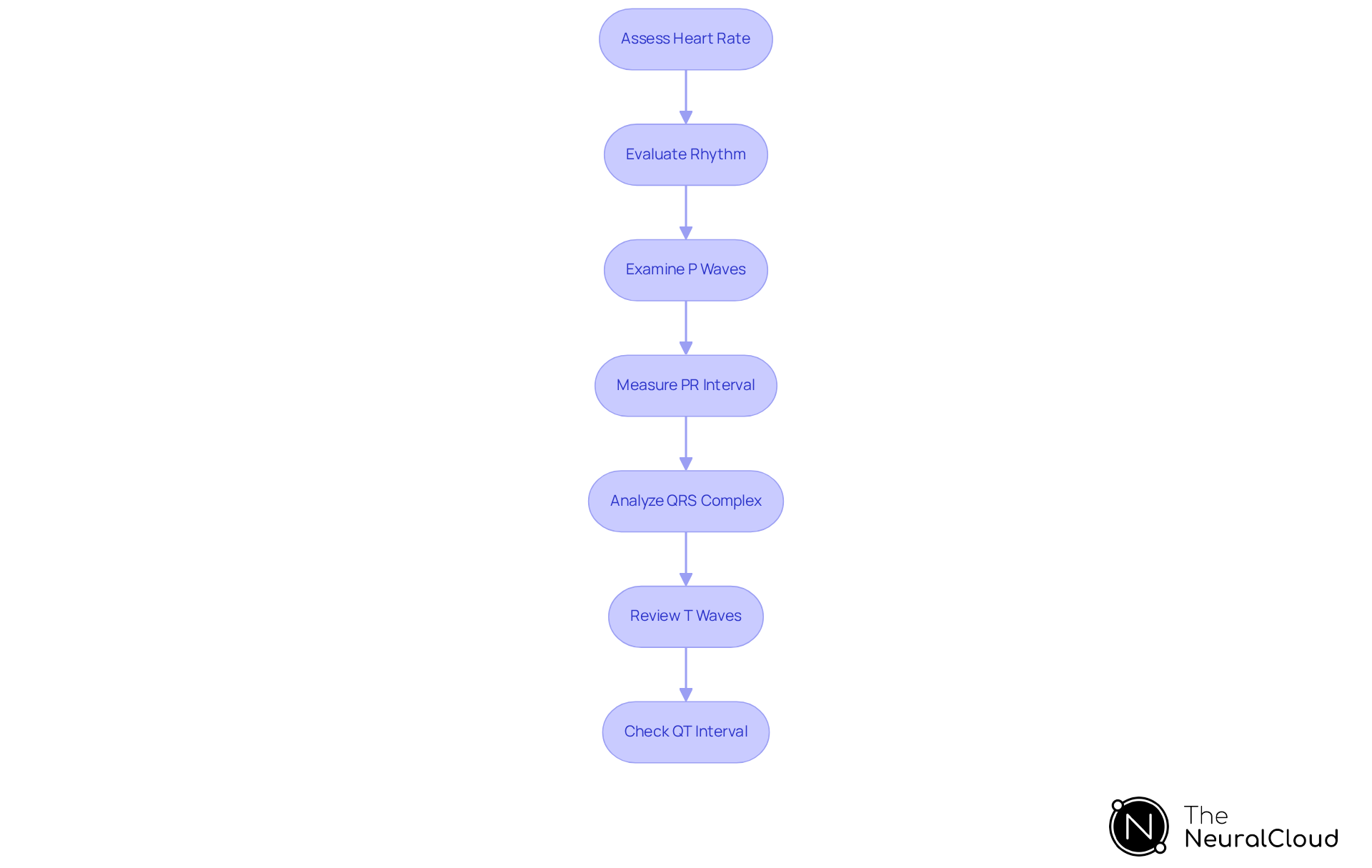
- Assess the Heart Rate: Count the number of R waves in a 6-second strip and multiply by 10 to estimate beats per minute (bpm). A normal heart rate, as indicated by a normal ECG picture, ranges from 60 to 100 bpm.
- Evaluate the Rhythm: Determine if the rhythm is regular or irregular by measuring the intervals between R waves. A regular rhythm will have consistent intervals.
- Examine the P Waves: Ensure that each QRS complex is preceded by a P wave, indicating normal atrial depolarization.
- Measure the PR Interval: Confirm that the PR interval is within the normal range (120-200 milliseconds), indicating proper conduction from the atria to the ventricles.
- Analyze the QRS Complex: Check that the QRS duration is between 60-100 milliseconds, which is essential for effective ventricular contraction.
- Review the T Waves: Ensure T waves are upright in leads I, II, V3-V6, indicating normal ventricular repolarization.
- Check the QT Interval: Confirm that the QT interval is less than 440 milliseconds, which is crucial for assessing the risk of arrhythmias.
By following these steps, medical professionals can accurately interpret ECG results and identify any abnormalities that may indicate a departure from a normal ECG picture, which may require further investigation. The MaxYield™ platform from Neural Cloud Solutions Inc. enhances this process. It employs advanced noise filtering and distinct wave recognition. This allows for the rapid isolation of ECG waves, even in recordings with significant noise and artifacts. This capability is particularly beneficial for salvaging previously obscured sections of lengthy Holter, 1-Lead, and patch monitor recordings.
Furthermore, regulatory compliance details, such as FDA Class II SaMD clearance-pending status, underscore the credibility of the MaxYield platform. Recent studies indicate that AI models, such as DeepRhythmAI, have demonstrated a 99.9% confidence level in ruling out severe arrhythmias, significantly enhancing diagnostic accuracy. This advancement highlights the importance of precise ECG interpretation in improving patient outcomes and addressing the global shortage of trained ECG technicians. Experts like Dr. Alan Rabinowitz, Dr. Brett Heilbron, and Dr. Marc W. Deyell emphasize that MaxYield™ matches human analysis in accuracy and significantly reduces noise. With the MaxYield™ platform, healthcare professionals can enhance their diagnostic capabilities, ultimately leading to better patient care.
Leverage Advanced Technologies for Enhanced ECG Analysis
The healthcare sector faces significant challenges in ECG analysis, often hampered by time-consuming manual processes and the potential for human error. Advanced technologies, particularly artificial intelligence (AI) and machine learning, are significantly transforming ECG analysis in this field. These innovations bring several important benefits to the table:
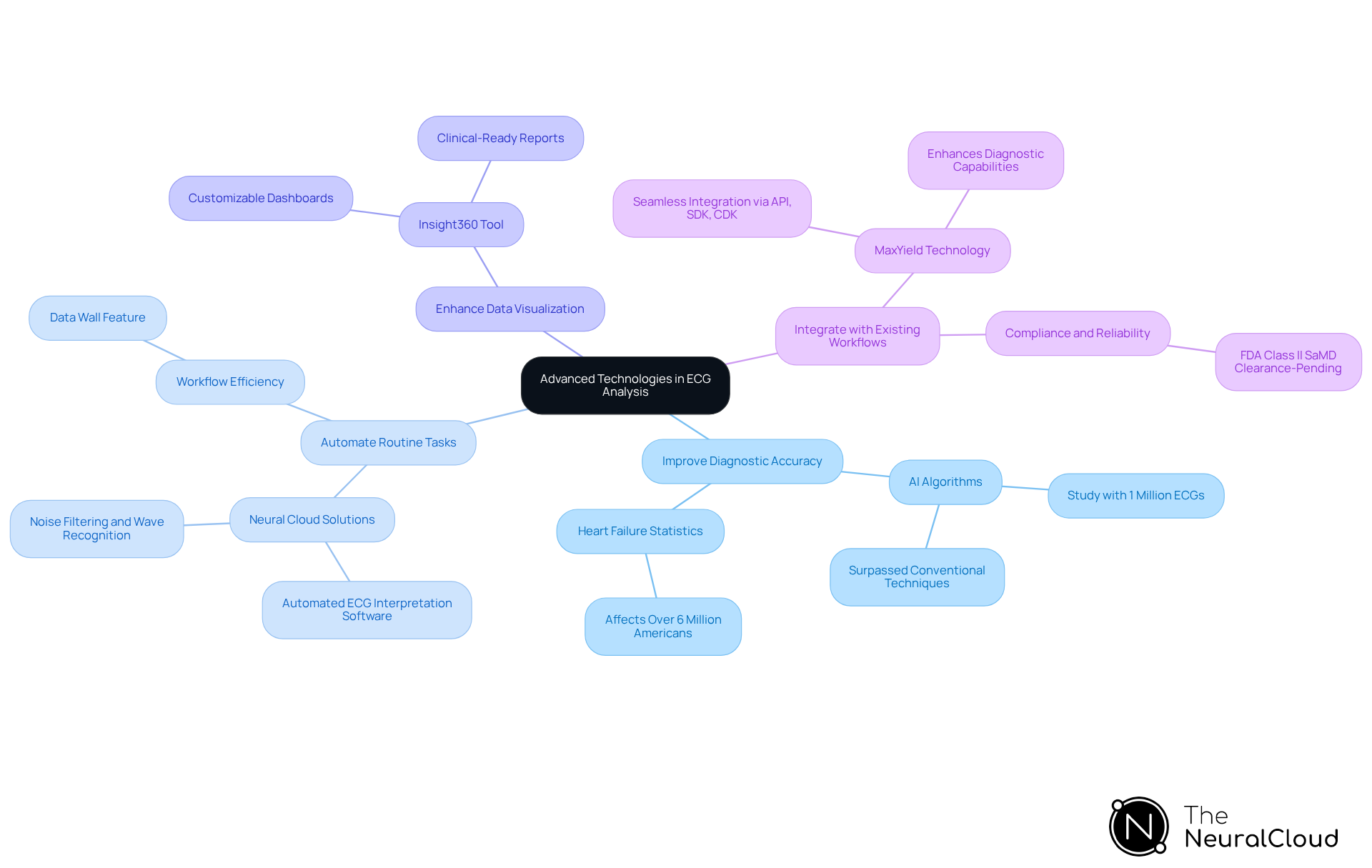
- Improve Diagnostic Accuracy: AI algorithms quickly and accurately analyze ECG data, making it easier to spot subtle abnormalities that may elude human interpretation. For instance, a recent study showed that a new AI model, created using over 1 million ECGs, surpassed conventional techniques in identifying attacks, highlighting its ability to improve diagnostic precision. This is particularly crucial as heart failure affects more than 6 million Americans, underscoring the urgent need for effective diagnostic tools.
- Automate Routine Tasks: Automated ECG interpretation software, such as Neural Cloud Solutions' product, streamlines the analysis process. This allows healthcare professionals to dedicate more time to patient care rather than manual data entry. The advanced noise filtering and wave recognition capabilities of the system, including P, QRS, and T Wave highlighting, assist in processing more data in less time, which is vital in busy clinical environments where timely decision-making is essential. Additionally, the data wall feature automates repetitive tasks, further enhancing workflow efficiency.
- Enhance Data Visualization: Tools like Insight360 facilitate the creation of customizable dashboards and reports, enabling clinicians to visualize trends effectively. This capability supports informed decision-making through extensive ECG data analysis, converting clean ECG data into interactive dashboards and clinical-ready reports.
- Integrate with Existing Workflows: Technologies such as MaxYield are designed to seamlessly integrate with various ECG devices via API, SDK, or CDK, enhancing diagnostic capabilities without necessitating a complete overhaul of current systems. This adaptability is vital for healthcare providers looking to improve their services without significant disruptions.
Moreover, case studies have shown that AI tools can significantly improve early detection rates of heart attacks and enhance risk assessment for patients with chest pain. This potentially reduces the time to appropriate care from up to 24 hours to a more immediate response. Expert endorsements from Dr. Alan Rabinowitz, Dr. Brett Heilbron, and Dr. Marc W. Deyell emphasize that MaxYield’s precision rivals human interpretation, further validating its noise reduction benefits. By implementing AI tools, healthcare providers can drastically shorten the time it takes to deliver critical care to patients, improving outcomes and efficiency. The integration of AI not only enhances ECG analysis but also positions healthcare providers to deliver timely, high-quality care that can save lives. Additionally, with FDA Class II SaMD clearance-pending status and audit-ready documentation supporting GxP inspections, Neural Cloud Solutions Inc. ensures compliance and reliability in its offerings.
Conclusion
Many healthcare professionals struggle with accurately interpreting ECG results, which can lead to misdiagnoses and delayed treatments. By understanding the key features of ECG waveforms and intervals, clinicians can accurately interpret results and identify potential cardiac issues. By integrating advanced technologies, healthcare professionals can streamline their analysis processes, leading to quicker and more accurate assessments.
Throughout the article, we’ve highlighted the importance of accurate ECG interpretation, focusing on the critical components of a normal ECG, including the P wave, QRS complex, and T wave. The step-by-step guide provided serves as a practical tool for clinicians to analyze ECG results effectively. Moreover, the role of AI and machine learning in enhancing diagnostic accuracy and automating routine tasks has been underscored, showcasing how these innovations can transform cardiac care.
As healthcare continues to change, using advanced ECG analysis technologies is essential for staying ahead. By leveraging tools like MaxYield™ and Insight360, healthcare providers can significantly enhance their diagnostic capabilities, ultimately leading to better patient care. Mastering ECG interpretation is crucial for early detection and effective management of cardiovascular conditions, ultimately saving lives.
Frequently Asked Questions
What is an electrocardiogram (ECG) and why is it important in cardiac health?
An electrocardiogram (ECG) is a non-invasive test that records the heart's electrical activity over time. It is crucial for diagnosing various cardiac conditions such as arrhythmias and myocardial infarctions, as it provides a graphical depiction of the heart's electrical impulses, enabling healthcare professionals to assess pulse rate, rhythm, and overall cardiac function.
What are the key components of a normal ECG?
The normal ECG consists of key components: the P wave, QRS complex, and T wave, each reflecting distinct phases of the cardiac cycle.
How do ECGs contribute to the management of cardiovascular health?
ECGs play a vital role in early identification of cardiovascular conditions, continuous monitoring, and assessment of treatment effectiveness. They are essential for managing chronic conditions and tracking disease progression.
What are the statistics regarding cardiovascular disease in Canada?
Cardiovascular disease is the most costly health issue in Canada, with direct and indirect costs totaling $21.2 billion annually. Approximately 90% of the Canadian population has at least one risk factor for cardiovascular conditions, highlighting the need for routine ECG testing.
How are ECGs used in emergency situations?
In emergency situations, ECGs provide immediate insights into a patient's heart condition, which can be life-saving in cases of chest pain or suspected heart attacks.
What advancements have been made in ECG technology by Neural Cloud Solutions Inc.?
Neural Cloud Solutions Inc. has developed technology that offers hospital-grade ECG accuracy from consumer-grade devices, advanced algorithms that reduce noise in readings, and beat-by-beat analysis in under five minutes, transforming remote patient monitoring.
How does the technology from Neural Cloud Solutions Inc. enhance clinical decision-making?
The technology provides clean, reliable data by addressing noise in ECG readings, which enhances clinical decision-making and allows medical professionals to swiftly recognize cardiac events and evaluate patient conditions efficiently.
What is Insight360 and how does it relate to ECG data?
Insight360 is a customizable visualization tool that transforms MaxYield’s clean ECG data into interactive dashboards and clinical-ready reports, providing a comprehensive view of patient health.
What is the significance of the FDA Class II SaMD clearance for Neural Cloud Solutions Inc.?
The FDA Class II SaMD clearance enhances the credibility of Neural Cloud Solutions Inc. in the healthcare landscape, indicating that their technology meets specific regulatory standards for safety and effectiveness.
List of Sources
- Explain the Basics of ECG and Its Importance in Cardiac Health
- Connected by the numbers (https://heartandstroke.ca/articles/connected-by-the-numbers)
- The Vital Role of Electrocardiogram Machines in Modern Healthcare (https://getsmartheart.com/blogs/news/the-vital-role-of-electrocardiogram-machines-in-modern-healthcare?srsltid=AfmBOopgmnzY3vmCHvfsnqdx5vQJ9bOM9HWRYpUfWhdvDFLPxz5Flw_6)
- The Importance of ECG in Safeguarding Cardiovascular Health (https://rhythmhospitals.com/the-importance-of-ecg)
- What is an ECG and Why is it Important for Your Heart Health? - Dr David Begley | Consultant Cardiologist (https://drbegleycardiology.co.uk/what-is-an-ecg-and-why-is-it-important-for-your-heart-health)
- The latest innovations in ECG technology and analysis - Norav Medical (https://noravmedical.com/advancements-in-ecg-technology-exploring-the-latest-innovations-in-ecg-analysis)
- Identify Key Features of a Normal ECG: Waveforms and Intervals
- New study finds AI model improves heart attack detection (https://health.ucdavis.edu/news/headlines/new-study-finds-ai-model-improves-heart-attack-detection/2025/11)
- One moment, please... (https://hospitalnews.com/research-study-makes-heart-screening-faster-more-accessible-using-ai)
- Bridging health disparities and ECG: Reimagining cardiac healthcare (https://gehealthcare.com/en-ca/insights/article/bridging-health-disparities-and-ecg-reimagining-cardiac-healthcare?srsltid=AfmBOorGA9wQymEWkal2ARkyDQOuQn4neut52FK01fmlMKz5oKUCpADG)
- Normal Electrocardiography (ECG) Intervals: Normal Electrocardiography Intervals (https://emedicine.medscape.com/article/2172196-overview)
- Analyze and Interpret Normal ECG Results: A Step-by-Step Guide
- AI proves better than humans at analyzing long-term ECG recordings in large international study (https://medicalxpress.com/news/2025-02-ai-humans-term-ecg-large.html)
- How Accurate ECG Interpretation Can Mitigate Healthcare Costs (https://gehealthcare.com/en-ca/insights/article/how-accurate-ecg-interpretation-can-mitigate-healthcare-costs?srsltid=AfmBOop1s_uY94z-7JUilk1H3x7vKQ_mB-soNEFCkguyaLgoUSCmYMbk)
- Leverage Advanced Technologies for Enhanced ECG Analysis
- AI tool detects hard-to-identify heart dysfunction from standard ECGs (https://newsroom.wakehealth.edu/news-releases/2026/08/ai-tool-detects-hard-to-identify-heart-dysfunction-from-standard-ecgs)
- A sweeping new AI to detect heart conditions is coming to OpenEvidence (https://statnews.com/2026/06/23/pathway-labs-echonext-ai-tool-heart-disease-detection)
- New AI Tool Beats Standard Approaches for Detecting Heart Attacks (https://upmc.com/media/news/062923-ecg-model-heart-attacks)
- With AI, researchers discover new way to detect sudden cardiac death risk - Berkeley News (https://news.berkeley.edu/2026/06/24/with-ai-researchers-discover-new-way-to-detect-sudden-cardiac-death-risk)