Introduction
The ability to recognize tombstone T waves on an ECG is crucial for acute cardiac care, as these waveforms signal severe heart damage in patients with ST-Elevation Myocardial Infarction (STEMI). By mastering the identification and analysis of these waves, healthcare professionals can utilize advanced AI tools, thereby enhancing diagnostic accuracy and improving patient outcomes.
Clinicians often struggle to incorporate advanced technologies into their existing practices, which can hinder timely patient care. Failure to effectively utilize these tools may lead to missed opportunities for timely interventions and compromised patient outcomes.
Define Tombstone T Waves and Their Clinical Importance
T Wave forms play a pivotal role in diagnosing acute heart attacks, particularly ST-Elevation Heart Attack (STEMI). These waves feature broad, convex elevations. The ST segment merges with the T wave, creating what is known as tombstone T waves. This pattern indicates critical heart tissue damage and is associated with increased mortality rates, ranging from 26% to 38.2% for those exhibiting this morphology.
Identifying specific T Waves is crucial for healthcare providers, as their presence indicates an urgent need for intervention to reduce further cardiac damage. Studies indicate that tombstone T waves in ECG patterns occur in 10% to 26.1% of individuals with STEMI, particularly in anterior heart attacks, which may relate to heightened left anterior descending (LAD) artery disease. The clinical implications of recognizing these waves extend to improved risk stratification and management strategies in emergency settings. Recognizing these patterns can lead to timely interventions that save lives.
Case studies have shown that the timely identification of tombstone T waves can significantly affect outcomes for individuals. For instance, individuals with positive hyperacute T wave (HATW) scores, despite lacking traditional STEMI criteria, often present with culprit lesions causing acute myocardial infarction. This underscores the importance of integrating advanced ECG analysis tools in clinical practice. Enhancing the identification of these critical ECG features allows healthcare professionals to diagnose and intervene earlier, improving patient care in acute settings.

Identify ECG Characteristics of Tombstone T Waves
Identifying tombstone T waves on an ECG is crucial for effective cardiac care, especially during acute heart events. To identify Tombstone T Waves on an ECG, consider these key characteristics:
- Morphology: The ST segment exhibits significant elevation, merging seamlessly with the T wave, resulting in a broad, convex appearance.
- Amplitude: Typically, the T wave is tall and broad, often exceeding the height of the preceding R wave, indicating severe heart stress.
- Lead Variability: This pattern is mainly seen in the anterior leads (V1-V6), but it can also appear in inferior leads, especially in instances of inferior heart attack.
- Clinical Context: In the early phases of an acute heart attack, tombstone T waves often manifest, indicating significant ischemic injury. Swift identification of these features is vital, as it can enable timely interventions, significantly enhancing outcomes for individuals.
Understanding these traits is key to accurately interpreting ECGs, especially in STEMI cases, where tombstone T waves can indicate serious heart damage and influence treatment decisions. For instance, tombstoning ECG patterns are found in 10-26.1% of STEMI patients, with a notable prevalence in anterior localizations (39.8%). Recognizing these patterns can lead to better risk stratification and management of myocardial infarction cases. Ultimately, accurate identification of these patterns can be the difference between life and death for patients experiencing severe cardiac events.

Apply Knowledge of Tombstone T Waves in ECG Analysis Workflows
Recognizing tombstone T waves in ECG analysis is vital for timely intervention in cases of acute coronary syndrome. To effectively apply knowledge of these waves in ECG workflows, follow these steps:
- Initial Assessment: Begin by reviewing the patient's clinical history and symptoms, focusing on any signs of acute coronary syndrome. Delays in recognizing critical ECG changes can lead to severe consequences for patient outcomes.
- ECG Interpretation: Examine the ECG for the occurrence of Tombstone T Waves, while paying close attention to their shape and amplitude, as these are crucial indicators of a possible heart attack, particularly in the context of ST elevation.
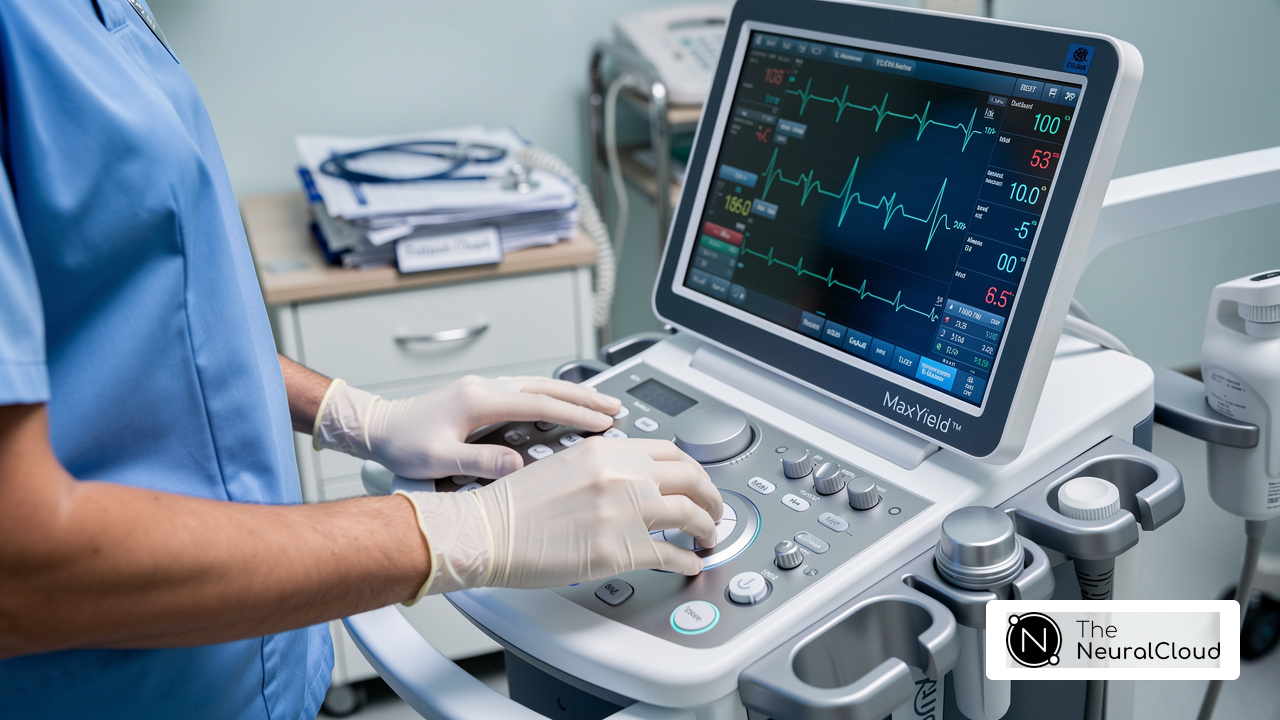
- Utilize AI Tools: Leverage AI-driven technologies, such as MaxYield™, to enhance the accuracy of your analysis. MaxYield™ quickly identifies the start and end points of P, QRS, and T Waves, making it easier to filter out noise in the signals. This functionality aids in isolating critical waveforms and supports the discovery of new digital biomarkers. Recent studies indicate that MaxYield™ achieves a sensitivity of 77% and specificity of 99% in detecting occlusive myocardial infarction, significantly enhancing diagnostic accuracy and leading to better patient care.
- Clinical Decision-Making: With your findings in hand, consider the next steps, like referring the patient for further tests or interventions. Record your observations and choices clearly to enhance communication with the healthcare team, ensuring that all members are aware of the individual's status and necessary actions.
- Continuous Learning: Stay informed about the latest research and developments in ECG analysis, including AI applications, to enhance your skills and improve care for individuals. Engaging with ongoing studies and expert recommendations will deepen your understanding of how AI can optimize the identification of critical ECG patterns, such as significant T Waves, in acute coronary syndrome cases.
By integrating AI tools like MaxYield™, healthcare professionals can significantly improve their diagnostic capabilities and patient outcomes.

Leverage Advanced Technologies for Enhanced ECG Analysis
Navigating the complexities of ECG analysis requires innovative strategies to enhance diagnostic accuracy. Consider the following approaches:
- Integrate AI Solutions: Utilize AI-driven platforms like MaxYield to efficiently process raw ECG data. MaxYield identifies and labels key components of the ECG, such as P-waves, QRS complexes, and T-waves, even in recordings with high levels of noise and artifact. This streamlining of the analysis process significantly improves diagnostic accuracy. Notably, almost 85% of individuals with hypertrophic cardiomyopathy (HCM) remain undiagnosed, underdiagnosed, or misdiagnosed, underscoring the critical need for precise ECG analysis to enhance outcomes for those affected.
- Enhance Signal Quality: Employ MaxYield’s advanced noise filtering and adaptive algorithms to reduce noise and improve signal clarity. This improvement is crucial for spotting subtle changes linked to tombstone T waves, which can be vital in diagnosing conditions like STEMI.
- Utilize Visualization Tools: Implement visualization tools such as Insight360 to create customizable dashboards and reports. These tools assist in visualizing trends and enhance communication of findings with the healthcare team, ultimately leading to improved outcomes for individuals.
- Continuous Training: Engage in ongoing training and education on the latest AI technologies and ECG analysis techniques. By staying updated on advancements in cardiology, including the 2026 AHA/ASA guideline update emphasizing early management for patients with acute ischemic stroke (AIS), healthcare professionals can significantly elevate their ECG analysis capabilities and improve patient outcomes.

Conclusion
For healthcare professionals, mastering the identification of tombstone T waves is crucial in acute cardiac care. These distinctive ECG patterns serve as critical indicators of severe heart damage, particularly in the context of ST-Elevation Heart Attacks (STEMI). However, many healthcare professionals struggle to identify these critical ECG patterns in real-time. Recognizing these waves can lead to timely interventions that are vital for improving patient outcomes and reducing mortality rates.
The significance of tombstone T waves has been emphasized throughout the article, focusing on their morphology, amplitude, and clinical context. Advanced AI tools like MaxYield enhance ECG analysis accuracy, allowing healthcare providers to identify these critical features more effectively. By following systematic workflows that prioritize initial assessment, ECG interpretation, and clinical decision-making, professionals can significantly improve their diagnostic capabilities and patient care.
In the end, using advanced technologies in ECG analysis goes beyond just improving accuracy; it’s about saving lives. Healthcare professionals engaging in ongoing education and adopting innovative tools can better manage acute coronary syndrome. By embracing these advancements, healthcare professionals can ensure that every patient receives the timely interventions necessary for optimal cardiac care.
Frequently Asked Questions
What are tombstone T waves and how are they identified?
Tombstone T waves are characterized by broad, convex elevations where the ST segment merges with the T wave. This pattern is significant in diagnosing acute heart attacks, particularly ST-Elevation Heart Attack (STEMI).
Why are tombstone T waves clinically important?
The presence of tombstone T waves indicates critical heart tissue damage and is associated with increased mortality rates, ranging from 26% to 38.2%. Recognizing these waves is crucial for timely intervention to reduce further cardiac damage.
In what percentage of STEMI cases do tombstone T waves occur?
Tombstone T waves are observed in 10% to 26.1% of individuals with STEMI, especially in cases of anterior heart attacks, which may be linked to significant left anterior descending (LAD) artery disease.
How can recognizing tombstone T waves improve patient outcomes?
Timely identification of tombstone T waves can lead to urgent interventions, improving risk stratification and management strategies in emergency settings, ultimately saving lives.
What role does advanced ECG analysis play in identifying tombstone T waves?
Integrating advanced ECG analysis tools in clinical practice enhances the identification of critical ECG features like tombstone T waves, allowing healthcare professionals to diagnose and intervene earlier in acute settings.
What is the significance of hyperacute T wave (HATW) scores in relation to tombstone T waves?
Individuals with positive HATW scores may present with culprit lesions causing acute myocardial infarction, even if they lack traditional STEMI criteria. This highlights the importance of recognizing these patterns for timely interventions.
List of Sources
- Define Tombstone T Waves and Their Clinical Importance
- researchgate.net (https://researchgate.net/publication/326638431_Tombstone_ST-segment_elevation_in_acute_anterior_wall_myocardial_infarction)
- Tombstoning ST-Elevation Myocardial Infarction - PMC (https://pmc.ncbi.nlm.nih.gov/articles/PMC2842959)
- Hyperacute T Waves Are Specific for Occlusion Myocardial Infarction, Even Without Diagnostic ST-Segment Elevation - PMC (https://pmc.ncbi.nlm.nih.gov/articles/PMC12791876)
- Identify ECG Characteristics of Tombstone T Waves
- researchgate.net (https://researchgate.net/publication/326638431_Tombstone_ST-segment_elevation_in_acute_anterior_wall_myocardial_infarction)
- Tombstoning ST-Elevation Myocardial Infarction - PMC (https://pmc.ncbi.nlm.nih.gov/articles/PMC2842959)
- Apply Knowledge of Tombstone T Waves in ECG Analysis Workflows
- AI-Based ECG Analysis Significantly Improves STEMI Detection, Reduces False Activations - American College of Cardiology (https://acc.org/latest-in-cardiology/articles/2025/10/24/16/56/tues-554pm-ai-tct-2025)
- AI-based ECG interpretation outperforms standard diagnosis of occlusive myocardial infarction (https://news-medical.net/news/20260323/AI-based-ECG-interpretation-outperforms-standard-diagnosis-of-occlusive-myocardial-infarction.aspx)
- New study finds AI model improves heart attack detection (https://health.ucdavis.edu/news/headlines/new-study-finds-ai-model-improves-heart-attack-detection/2025/11)
- AI outperforms conventional diagnosis for certain types of heart attacks (https://escardio.org/news/press/press-releases/acvc-press)
- Leverage Advanced Technologies for Enhanced ECG Analysis
- Three New Studies Show Viz.ai’s Cardio Suite Speeds Detection of Cardiac Disease and Improves Patient Follow-Up (https://viz.ai/news/three-new-studies-show-viz-ais-cardio-suite-speeds-detection-of-cardiac-disease-and-improves-patient-follow-up)
- New AI approach set to revolutionize ECG data interpretation in heart disease diagnosis (https://news-medical.net/news/20250219/New-AI-approach-set-to-revolutionize-ECG-data-interpretation-in-heart-disease-diagnosis.aspx)
- thecardiologyadvisor.com (https://thecardiologyadvisor.com/news/ai-powered-ecg-analysis-promising-for-early-detection-of-copd)
- MedTech Breakthrough Names AI-powered Hyperkalemia Detection Software 'Best New ECG Technology Solution' (https://dicardiology.com/content/medtech-breakthrough-names-ai-powered-hyperkalemia-detection-software-best-new-ecg)