Introduction
As technology advances, developers often struggle to balance accuracy with usability in their ECG solutions. We’ll explore key techniques and best practices that help developers accurately calculate and visualize ventricular rates. Understanding the intricacies of ventricular rate in EKG interpretation is crucial for developers aiming to enhance cardiac care applications. Addressing these challenges is essential for enhancing patient care and ensuring effective cardiac monitoring.
Clarify Ventricular Rate and Its Importance in EKG Interpretation
Understanding heart chamber frequency is essential for accurate ECG interpretation and effective cardiac care. The ventricular rate EKG, which is measured in beats per minute (bpm), serves as a key metric for ECG interpretation. It plays a vital role in diagnosing various cardiac conditions, such as tachycardia and bradycardia. The standard range for heart rhythms in adults is generally between 60 and 100 bpm. When heart rhythms deviate from this range, it can indicate serious health issues. For instance, a rhythm over 100 bpm may signal tachycardia, which can result in severe complications if not addressed quickly.
Recent studies have emphasized the significance of tracking heart rhythms, especially in individuals with atrial fibrillation (AF). Research indicates that heart frequencies of 100 bpm or more are linked to a higher risk of new-onset heart failure and death. This highlights the need for developers to create ECG applications that not only calculate but also clearly display the ventricular rate EKG, which is an important metric. By doing so, they empower healthcare professionals to make informed decisions based on precise data.
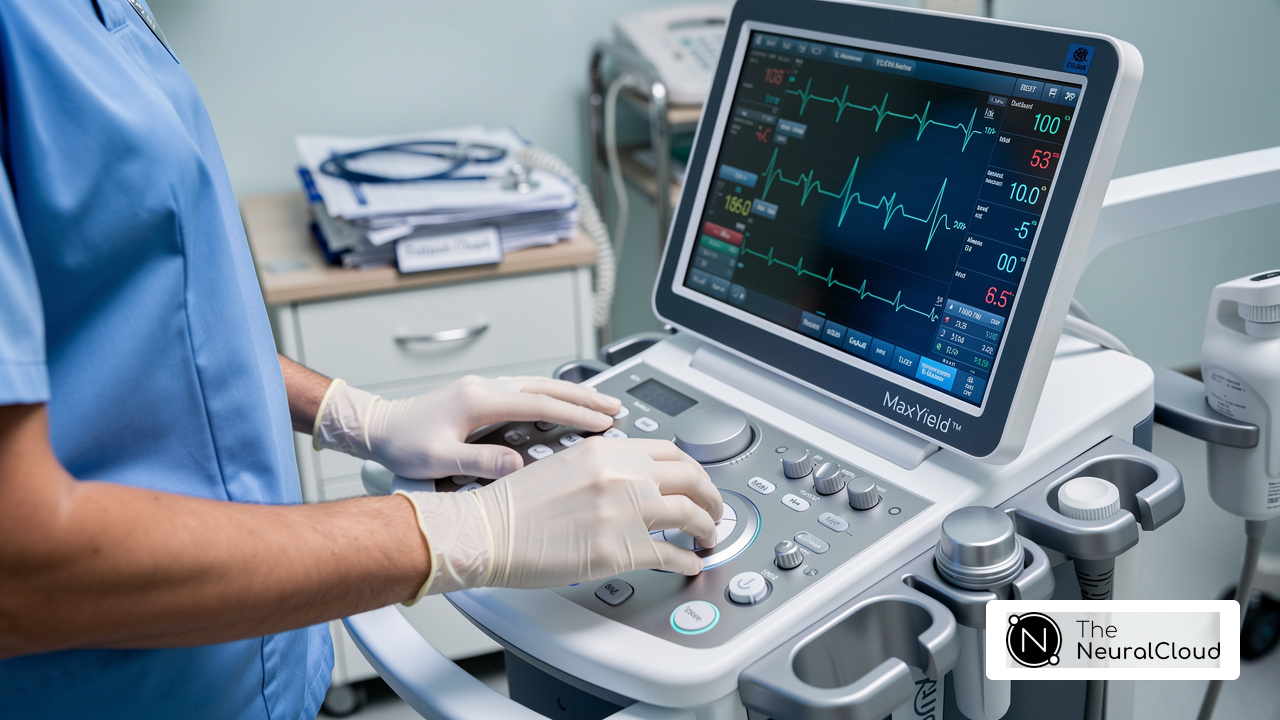
In Canada, case studies have shown the effectiveness of advanced ECG analysis technologies in accurately identifying abnormal heart rhythms, which is essential for timely intervention. Notably, Neural Cloud Solutions Inc.'s MaxYield™ addresses these challenges by transforming noisy recordings into detailed insights, delivering beat-by-beat analysis of 200,000 heartbeats in less than 5 minutes. This ability is vital for precisely recognizing unusual heart rhythms, which is important for prompt intervention. Furthermore, MaxYield™ is currently pending FDA Class II SaMD clearance, ensuring compliance with regulatory standards.
Dr. Alan Rabinowitz, Dr. Brett Heilbron, and Dr. Marc W. Deyell have endorsed MaxYield™, noting its accuracy in competing with human interpretation and its ability to reduce noise, which enhances the reliability of ECG data. Consequently, developers must prioritize the integration of strong algorithms that can improve the precision of heart rhythm evaluations within their ECG solutions. By prioritizing precision in ECG analysis, healthcare providers can significantly enhance patient care and outcomes.

Calculate Ventricular Rate: Methods and Techniques
Accurately determining heart chamber frequency from an ECG presents challenges that require effective techniques tailored to specific clinical scenarios. The most widely used techniques include:
- Small Box Method: This method involves counting the number of small boxes between two consecutive R waves and dividing 1500 by this number. It is particularly precise and well-suited for regular rhythms, making it a preferred choice among clinicians.
- Large Box Method: In this approach, the number of large boxes between two consecutive R waves is counted, and the result is divided by 300. While this method is quicker, its reduced precision may lead to less accurate assessments in critical situations, making it more suitable for rapid assessments.
- 6-Second Method: This technique counts the number of R waves in a 6-second strip and multiplies the result by 10. It is particularly beneficial for irregular rhythms, enabling a rapid assessment of the heart's frequency.
Using these techniques in ECG applications can really enhance how users interact with the tools for calculating heart frequencies. For instance, the large box method is particularly effective in emergency settings where rapid assessment is crucial, as it allows clinicians to quickly identify bradycardia or tachycardia based on the number of large blocks between R waves. A heart frequency of 50 BPM corresponds to 6 large blocks, while a frequency of 100 BPM corresponds to 3 large blocks.
Case studies indicate that grasping these methods can improve patient management. This is particularly true in emergency cardiac care. For example, the large block method has been highlighted for its effectiveness in distinguishing between normal and abnormal heart rates, facilitating timely clinical decisions. By equipping developers with these techniques, they can create robust ECG applications that meet the needs of healthcare professionals and improve patient outcomes. By mastering these techniques, healthcare professionals can significantly enhance their diagnostic capabilities and improve patient care in critical situations.

Integrate Advanced Technologies for Enhanced ECG Analysis
Traditional ECG analysis methods often struggle with accuracy and speed, creating challenges for healthcare providers in critical situations. The integration of AI and machine learning into ECG analysis has transformed the landscape, enabling faster and more accurate interpretations that enhance clinical decision-making. Developers can leverage these advanced technologies to improve the performance and reliability of their applications. Key innovations include:
- AI-Powered Algorithms: Utilizing deep learning models, these algorithms automatically detect and classify cardiac events, minimizing the reliance on manual interpretation and enhancing diagnostic accuracy. MaxYield™'s adaptive algorithm evolves with each use, continuously improving its accuracy and efficiency. Recent studies have shown that AI models can outperform traditional methods in identifying critical conditions like ST-elevation myocardial infarction (STEMI), with one model achieving a reduction in false positives from nearly 42% to about 8%.
- Advanced Noise Reduction: MaxYield™ identifies and labels essential information, even in recordings with high levels of noise and artifact. Its advanced noise filtering capabilities allow for the rapid isolation of ECG waves from recordings affected by baseline wander, movement, and muscle artifact. This feature is crucial for salvaging previously obscured sections of lengthy Holter, 1-Lead, and patch monitor recordings, thereby enhancing diagnostic yield.
- Signal Processing Techniques: Advanced methods such as wavelet transforms and Fourier analysis are essential for filtering noise and enhancing the clarity of ECG signals. These techniques allow for better isolation of relevant cardiac features, which is crucial for accurate diagnosis and timely intervention.
- Real-Time Monitoring: Creating systems that continuously analyze ECG information in real-time can alert healthcare providers to abnormalities as they occur. This capability is vital for ensuring prompt interventions, particularly in emergency settings where every minute counts.
- Rigorous Validation: It is essential to conduct rigorous validation in prospective clinical trials to establish the real-world applicability of AI models like ECG-CLIP in clinical settings. This step is crucial for ensuring that these technologies can be reliably integrated into healthcare workflows.
With the integration of AI and machine learning, healthcare professionals can expect a future where ECG analysis is not only faster but also significantly more reliable, ultimately transforming patient care in cardiology. Expert endorsements from Dr. Alan Rabinowitz, Dr. Brett Heilbron, and Dr. Marc W. Deyell emphasize MaxYield™'s precision rivaling human interpretation and its noise reduction benefits. Case studies, such as the evaluation of an AI-based ECG platform for STEMI triage at UC Davis Medical Center, demonstrate the tangible impact of these advancements in real-world scenarios. Furthermore, with FDA Class II SaMD clearance-pending status and audit-ready documentation supporting GxP inspections, Neural Cloud Solutions Inc. is committed to delivering reliable and compliant ECG analysis solutions.

Visualize EKG Data: Creating Effective Dashboards and Reports
Healthcare professionals often encounter challenges in swiftly interpreting ventricular rate EKG data, which can affect patient care. Effective visualization of the ventricular rate EKG information is crucial for enabling healthcare professionals to interpret and act on critical details quickly. Developers should prioritize the creation of intuitive and customizable dashboards and reports. Key considerations include:
- Customizable Dashboards: Users should have the ability to configure dashboards to showcase the most relevant information, such as heart rate trends, arrhythmia detection, and detailed waveform analysis.
- Interactive Graphs: Implementing interactive graphs allows users to zoom in on specific time periods, compare different datasets, and highlight significant events, enhancing the analytical capabilities of the tool.
- Automated Reporting: Creating automated reporting features can produce clinical-ready reports that summarize key findings and trends in ECG information, streamlining the workflow for healthcare professionals.
Focusing on these elements allows developers to build visualization tools that speed up ECG analysis, particularly in assessing the ventricular rate EKG, and improve patient outcomes. Research indicates that effective data visualization can lead to better decision-making in healthcare, highlighting the importance of adopting best practices in design.

Conclusion
Developers face significant challenges in mastering ventricular rate EKG techniques, which are essential for enhancing cardiac care through accurate ECG interpretation. The insights shared throughout this article highlight the importance of precise ventricular rate calculations and the integration of advanced technologies to improve diagnostic capabilities. By focusing on these essential techniques, developers can bridge the gap between technology and patient care, leading to better outcomes in clinical settings.
Key methods for calculating ventricular rate include:
- Small Box Method
- Large Box Method
- 6-Second Method
These methods equip healthcare professionals with essential tools for effective heart rate assessment. The integration of AI and machine learning into ECG analysis further enhances the reliability and speed of interpretations, allowing for timely interventions in critical situations. Additionally, the emphasis on effective data visualization through customizable dashboards and automated reporting ensures that healthcare providers can quickly interpret vital information, ultimately leading to improved patient care.
As ECG analysis evolves, developers must embrace these techniques and technologies to stay ahead. By prioritizing accuracy, speed, and user-friendly design, the potential to transform cardiac care is immense. By integrating advanced solutions like those from Neural Cloud Solutions Inc. and its MaxYield™ platform, we can shape a future where ECG analysis meets and exceeds modern healthcare demands, empowering clinicians to make informed decisions that enhance patient health and safety.
Frequently Asked Questions
What is the ventricular rate EKG and why is it important?
The ventricular rate EKG, measured in beats per minute (bpm), is a key metric for ECG interpretation that helps diagnose various cardiac conditions, such as tachycardia and bradycardia. It is essential for accurate ECG interpretation and effective cardiac care.
What is the standard range for heart rhythms in adults?
The standard range for heart rhythms in adults is generally between 60 and 100 bpm. Deviations from this range can indicate serious health issues.
What does a ventricular rate over 100 bpm indicate?
A ventricular rate over 100 bpm may signal tachycardia, which can lead to severe complications if not addressed quickly.
Why is tracking heart rhythms particularly important for individuals with atrial fibrillation (AF)?
Recent studies indicate that heart frequencies of 100 bpm or more in individuals with atrial fibrillation are linked to a higher risk of new-onset heart failure and death, highlighting the need for careful monitoring.
How does MaxYield™ by Neural Cloud Solutions Inc. contribute to ECG analysis?
MaxYield™ transforms noisy recordings into detailed insights, delivering beat-by-beat analysis of 200,000 heartbeats in less than 5 minutes, which is vital for accurately recognizing unusual heart rhythms and ensuring timely intervention.
What endorsements has MaxYield™ received?
MaxYield™ has been endorsed by Dr. Alan Rabinowitz, Dr. Brett Heilbron, and Dr. Marc W. Deyell for its accuracy in competing with human interpretation and its ability to reduce noise, enhancing the reliability of ECG data.
What is the regulatory status of MaxYield™?
MaxYield™ is currently pending FDA Class II SaMD clearance, ensuring compliance with regulatory standards.
What should developers prioritize in ECG solutions?
Developers must prioritize the integration of strong algorithms that improve the precision of heart rhythm evaluations within their ECG solutions to enhance patient care and outcomes.
List of Sources
- Clarify Ventricular Rate and Its Importance in EKG Interpretation
- What’s a Normal Heart Rate? (https://my.clevelandclinic.org/health/diagnostics/heart-rate)
- Target Heart Rates Chart (https://heart.org/en/healthy-living/exercise-and-physical-activity/fitness-basics/target-heart-rates)
- Normal Vital Signs: Heart Rate, Blood Pressure, Respiratory Rate, Temperature: Normal Vital Signs, Normal Heart Rate, Normal Respiratory Rate (https://emedicine.medscape.com/article/2172054-overview)
- Ventricular rate in atrial fibrillation and the risk of heart failure and death (https://academic.oup.com/europace/article/25/5/euad088/7135509)
- Calculate Ventricular Rate: Methods and Techniques
- Large Block Method to Calculate Heart Rate - ECG Medical Training (https://ecgmedicaltraining.com/large-block-method-to-calculate-heart-rate)
- CV Physiology | Determining Heart Rate from the Electrocardiogram (https://cvphysiology.com/arrhythmias/a020)
- News - Cardiac Rhythm News (https://cardiacrhythmnews.com/news)
- ECG Rate Interpretation (https://litfl.com/ecg-rate-interpretation)
- Calculating Heart Rate on an EKG (https://princetonlongevitycenter.com/calculating-heart-rate-on-an-ekg)
- Integrate Advanced Technologies for Enhanced ECG Analysis
- New AI algorithm could improve detection and prediction of heart diseases - Scripps Research (https://scripps.edu/news-events/news/new-ai-algorithm-could-improve-detection-and-prediction-of-heart-diseases)
- New study finds AI model improves heart attack detection (https://health.ucdavis.edu/news/headlines/new-study-finds-ai-model-improves-heart-attack-detection/2025/11)
- With AI, researchers discover new way to detect sudden cardiac death risk - Berkeley News (https://news.berkeley.edu/2026/06/24/with-ai-researchers-discover-new-way-to-detect-sudden-cardiac-death-risk)
- How AI is impacting electrocardiography and ECG interpretation for a more accurate diagnosis of cardiovascular diseases (https://tempus.com/resources/content/articles/ai-revolution-electrocardiography-ecg-ai-insights)
- Visualize EKG Data: Creating Effective Dashboards and Reports
- New Trends in the ECG Monitoring (https://dicardiology.com/article/new-trends-ecg-monitoring)
- Best practices for healthcare data visualization (https://healthcareitnews.com/news/best-practices-healthcare-data-visualization)
- New AI model protects patient privacy in ECG data (https://news-medical.net/news/20260616/New-AI-model-protects-patient-privacy-in-ECG-data.aspx)
- theneuralcloud.com (https://theneuralcloud.com/post/enhance-ecg-data-analysis-with-advanced-technologies-and-best-practices)
- 6 Trends In ECG Systems (https://dicardiology.com/article/6-trends-ecg-systems)