Introduction
Identifying and managing a widening QRS complex in ECG readings is essential for healthcare professionals, as it can indicate serious underlying cardiac issues that require immediate attention. This phenomenon may signal conditions such as bundle branch blocks and ventricular hypertrophy, making it crucial to understand its nuances to enhance patient care effectively. However, accurately interpreting these complex readings amidst the noise of clinical data presents a significant challenge.
To address these challenges, innovative tools and techniques are available for clinicians to ensure timely and effective responses to widening QRS patterns. The MaxYield™ platform stands out by improving ECG analysis through its advanced features. By leveraging this platform, healthcare professionals can enhance their diagnostic capabilities and respond more effectively to critical cardiac conditions.
Define Widening QRS Complex in ECG Readings
The QRS pattern reflects the electrical activity associated with ventricular depolarization in the heart, with a widening QRS defined as a duration exceeding 120 milliseconds (ms). This widening can indicate various underlying cardiac conditions, including bundle branch blocks, ventricular hypertrophy, and other conduction delays. Identifying a widening QRS is essential, as it may indicate serious arrhythmias or cardiac dysfunctions that require prompt intervention. For instance, a study highlighted that patients with a QRS duration of 180 ms and a heart rate of 222 bpm exhibited significant clinical deterioration, underscoring the importance of timely diagnosis and management.
Recent research indicates that QRS width progression is associated with adverse outcomes in heart failure patients, emphasizing the need for continuous monitoring. The presence of a wide QRS pattern can also serve as a prognostic marker, with studies showing that individuals with a history of heart attack or heart failure are at a heightened risk for developing wide pattern tachycardia.
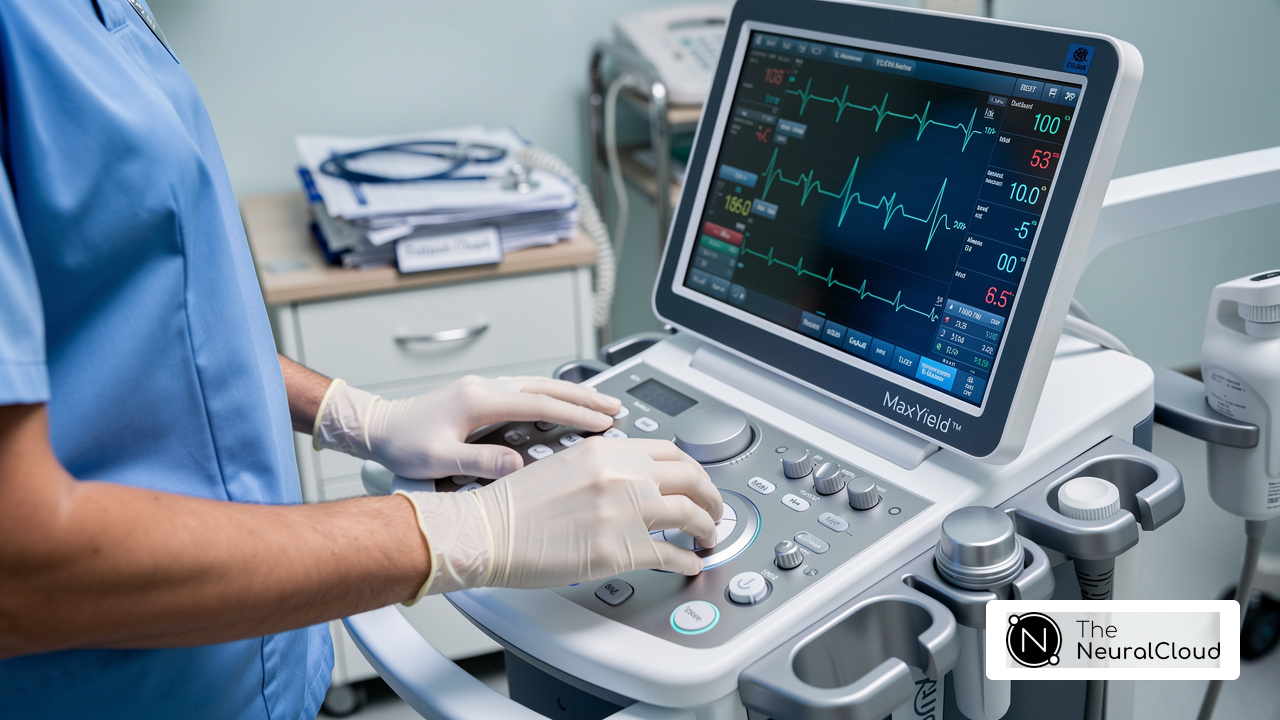
Neural Cloud Solutions' MaxYield™ platform addresses the challenges in ECG analysis by enhancing the interpretation of these critical readings. Key features of the MaxYield™ platform include:
- Advanced noise filtering to improve signal clarity.
- Distinct wave recognition for accurate identification of heartbeats.
- Rapid isolation and labeling of key features in every heartbeat.
These features translate into significant advantages for healthcare professionals. By transforming noisy recordings into detailed insights, the MaxYield™ platform enables clinicians to make confident clinical decisions. Understanding the implications of widening QRS is essential for healthcare professionals to enhance patient care and optimize treatment strategies.

Identify Widening QRS Complex: Key Indicators and Techniques
Identifying a widening QRS can be challenging for clinicians, but focusing on key indicators can streamline the process.
QRS Duration: The primary measure is the QRS duration on the ECG; a duration exceeding 120 ms is classified as widening QRS, which indicates potential underlying cardiac issues.
- Morphological Changes: Observing the shape of the QRS pattern for any morphological alterations, such as notching or slurring, is crucial. These changes can signify various cardiac conditions. Notably, a polarity shift is highly predictive of ventricular tachycardia (VT), as noted by Adam M. May.
- Heart Rate: Evaluating the heart rate is essential, as a wide QRS pattern is often linked with tachycardia, defined as a heart rate exceeding 100 bpm. For instance, a 70-year-old woman presented with a wide QRS complex of about 150 ms and a rate of about 190 bpm, favoring VT.
- Lead Analysis: Evaluating the QRS pattern across multiple leads is crucial to determine if the widening is consistent, aiding in diagnosing the specific type of tachycardia.
Automated ECG analysis tools improve the identification of widening QRS. These tools offer advanced noise filtering and distinct wave recognition capabilities, rapidly isolating ECG waves from recordings with high levels of noise and artifacts. This technology improves diagnostic efficiency, with automated ECG analysis tools demonstrating AUC values ranging from 0.72 to 0.93, indicating their effectiveness in flagging abnormal QRS durations.
Healthcare practitioners can integrate these systems into their diagnostic processes, enabling real-time analysis and improving precision in recognizing widening QRS. Furthermore, manual interpretation skills, honed through practice and training, remain essential for the precise evaluation and management of widening QRS. The continuous learning model of these systems ensures that their accuracy and efficiency will improve over time, further supporting healthcare professionals in their diagnostic efforts.

Manage Widening QRS Complex: Effective Treatment Approaches
The management of widening QRS complex presents several challenges in ECG analysis. However, innovative technologies like Neural Cloud Solutions' MaxYield™ platform offer effective treatment approaches that enhance patient care.
Pharmacological Interventions: Administering antiarrhythmic medications such as amiodarone or procainamide can stabilize the heart's rhythm. The MaxYield™ platform assists in monitoring the effects of these medications through precise ECG analysis, ensuring timely adjustments to treatment.
Electrolyte Management: Correcting electrolyte imbalances, particularly hyperkalemia, is crucial as they can exacerbate widening QRS. The platform aids in identifying these imbalances by providing real-time ECG data, allowing for prompt intervention.
Vagal Maneuvers: For stable patients with regular wide QRS tachycardia, vagal maneuvers may help restore normal rhythm. The MaxYield™ system evaluates the efficiency of these maneuvers through ongoing observation of the QRS pattern.
Cardioversion: In cases of unstable patients, synchronized cardioversion may be necessary to restore normal heart rhythm. The high-yield platform enhances the precision of this procedure by providing clear signal data, which is crucial for effective cardioversion.
Implementing continuous ECG monitoring allows healthcare providers to observe changes in the widening QRS complex and respond promptly to any deterioration in the patient's condition. The MaxYield™ system streamlines this process by automating data extraction and labeling, ensuring reliable information is always accessible.
Additionally, integrating wearable technology with the MaxYield™ platform allows for automated labeling and data extraction, streamlining processes and reducing operational costs. This technology not only enhances the accuracy and reliability of ECG analysis but also addresses challenges such as physiological variability and signal artifacts, ultimately improving patient outcomes.

Utilize Tools and Resources for Enhanced ECG Analysis
To enhance ECG analysis, consider the following tools and resources:
- Automated ECG Analysis Software: The MaxYield™ platform from Neural Cloud Solutions automates the analysis and labeling of ECG waveforms. It features advanced noise filtering and highlights P, QRS, and T waves. This significantly boosts workflow efficiency and accuracy, allowing clinicians to focus on critical decision-making.
- Educational Resources: Engaging in online courses and workshops dedicated to ECG interpretation can greatly improve interpretation skills. Research shows that these resources enable healthcare professionals to better identify and manage cardiac conditions.
- Mobile Applications: Mobile apps designed specifically for ECG analysis offer instant feedback and interpretations. These applications facilitate real-time learning and the application of ECG analysis techniques, making them invaluable tools for healthcare providers.
- Professional Guidelines: Consulting clinical guidelines and consensus statements from cardiology associations is essential. These documents outline best practices for managing widening QRS patterns and other cardiac irregularities, ensuring adherence to the latest standards in care.
- Peer Collaboration: Engaging with professional networks or forums allows clinicians to exchange insights and experiences related to ECG analysis and management. Collaborative learning enhances understanding and application of complex ECG interpretations.

Conclusion
Recognizing and managing a widening QRS complex is crucial for effective cardiac care and patient outcomes. This guide emphasizes the significance of identifying a widening QRS, which typically indicates serious underlying conditions that necessitate prompt intervention. Understanding the implications of this complex empowers healthcare professionals to make informed decisions that directly impact patient health.
The challenges in ECG analysis often stem from the complexity of interpreting QRS changes. The MaxYield™ platform addresses these challenges by providing advanced features that enhance the clarity of ECG readings. This platform improves diagnostic accuracy through sophisticated algorithms that analyze QRS morphology, enabling healthcare providers to identify abnormalities more effectively. As a result, professionals can respond swiftly to critical situations, ensuring timely treatment interventions.
The advantages of utilizing the MaxYield™ platform are significant. By streamlining the diagnostic process, it not only enhances the accuracy of ECG interpretations but also reduces the time required for analysis. This efficiency allows healthcare professionals to focus more on patient care rather than getting bogged down by complex data. Furthermore, the integration of this technology fosters collaboration among healthcare providers, as it supports continuous education and skill refinement in ECG interpretation.
In conclusion, the insights shared underscore the vital role of comprehensive ECG analysis in identifying and managing widening QRS complexes. By leveraging innovative tools like the MaxYield™ platform, healthcare professionals can enhance their diagnostic capabilities and improve patient care. Embracing these advancements streamlines clinical practices and significantly contributes to better patient outcomes, reinforcing the importance of vigilance in monitoring cardiac health.
Frequently Asked Questions
What does a widening QRS complex indicate in ECG readings?
A widening QRS complex, defined as a duration exceeding 120 milliseconds, can indicate various underlying cardiac conditions, such as bundle branch blocks, ventricular hypertrophy, and other conduction delays.
Why is identifying a widening QRS complex important?
Identifying a widening QRS is crucial because it may signal serious arrhythmias or cardiac dysfunctions that require prompt intervention.
What are some clinical implications of a significantly widened QRS complex?
For example, a study found that patients with a QRS duration of 180 ms and a heart rate of 222 bpm experienced significant clinical deterioration, highlighting the need for timely diagnosis and management.
How does QRS width progression relate to heart failure patients?
Recent research shows that QRS width progression is associated with adverse outcomes in heart failure patients, indicating the importance of continuous monitoring.
Can a wide QRS pattern serve as a prognostic marker?
Yes, studies have shown that individuals with a history of heart attack or heart failure are at a heightened risk for developing wide pattern tachycardia, making it a significant prognostic marker.
What is the MaxYield™ platform by Neural Cloud Solutions?
The MaxYield™ platform is designed to enhance ECG analysis by improving the interpretation of critical readings through advanced noise filtering, distinct wave recognition, and rapid isolation and labeling of key features in every heartbeat.
What advantages does the MaxYield™ platform provide for healthcare professionals?
The platform transforms noisy recordings into detailed insights, enabling clinicians to make confident clinical decisions, thereby enhancing patient care and optimizing treatment strategies.
List of Sources
- Define Widening QRS Complex in ECG Readings
- my.clevelandclinic.org (https://my.clevelandclinic.org/health/diseases/wide-complex-tachycardia)
- Clinical implications and risk factors for QRS prolongation over time in heart failure patients - PMC (https://pmc.ncbi.nlm.nih.gov/articles/PMC9898415)
- bookey.app (https://bookey.app/book/the-ecg-made-easy/quote)
- Differential Diagnosis of Wide QRS Complex Tachycardias (https://cancertherapyadvisor.com/home/decision-support-in-medicine/cardiology/differential-diagnosis-of-wide-qrs-complex-tachycardias)
- mdpi.com (https://mdpi.com/2227-9059/13/6/1462)
- Identify Widening QRS Complex: Key Indicators and Techniques
- my.clevelandclinic.org (https://my.clevelandclinic.org/health/diseases/wide-complex-tachycardia)
- ecgweekly.com (https://ecgweekly.com/weekly-workout/differential-diagnoses-must-know-causes-of-wide-qrs-complexes)
- Differential Diagnosis of Wide QRS Complex Tachycardias (https://cancertherapyadvisor.com/home/decision-support-in-medicine/cardiology/differential-diagnosis-of-wide-qrs-complex-tachycardias)
- pmc.ncbi.nlm.nih.gov (https://pmc.ncbi.nlm.nih.gov/articles/PMC8886432)
- nature.com (https://nature.com/articles/s43856-024-00725-2)
- Manage Widening QRS Complex: Effective Treatment Approaches
- my.clevelandclinic.org (https://my.clevelandclinic.org/health/diseases/wide-complex-tachycardia)
- ebmedicine.net (https://ebmedicine.net/topics/cardiovascular/emergency-medicine-wide-complex-tachycardia)
- mdpi.com (https://mdpi.com/2227-9059/13/6/1462)
- pmc.ncbi.nlm.nih.gov (https://pmc.ncbi.nlm.nih.gov/articles/PMC1557420)
- Utilize Tools and Resources for Enhanced ECG Analysis
- Remote heart monitoring gets cleaner ECG data under Europe deal (https://stocktitan.net/news/AIMLF/neural-cloud-signs-reseller-agreement-with-european-digital-cardiac-odr4kyyg9lzi.html)
- AI-Powered ECG Analysis Offers Promising Path for Early Detection of Chronic Obstructive Pulmonary Disease, Say Mount Sinai Researchers (https://mountsinai.org/about/newsroom/2026/ai-powered-ecg-analysis-offers-promising-path-for-early-detection-of-chronic-obstructive-pulmonary-disease-say-mount-sinai-researchers)
- linkedin.com (https://linkedin.com/pulse/ecg-analysis-system-market-trends-keyplayers-size-hogmf)
- ECG Interpretation AI Market Research Report 2034 (https://dataintelo.com/report/ecg-interpretation-ai-market)
- ECG market keeps evolving thanks to AI, home monitoring and Epic integration (https://signifyresearch.net/2026/02/13/ecg-market-keeps-evolving-thanks-to-ai-home-monitoring-and-epic-integration)