Introduction
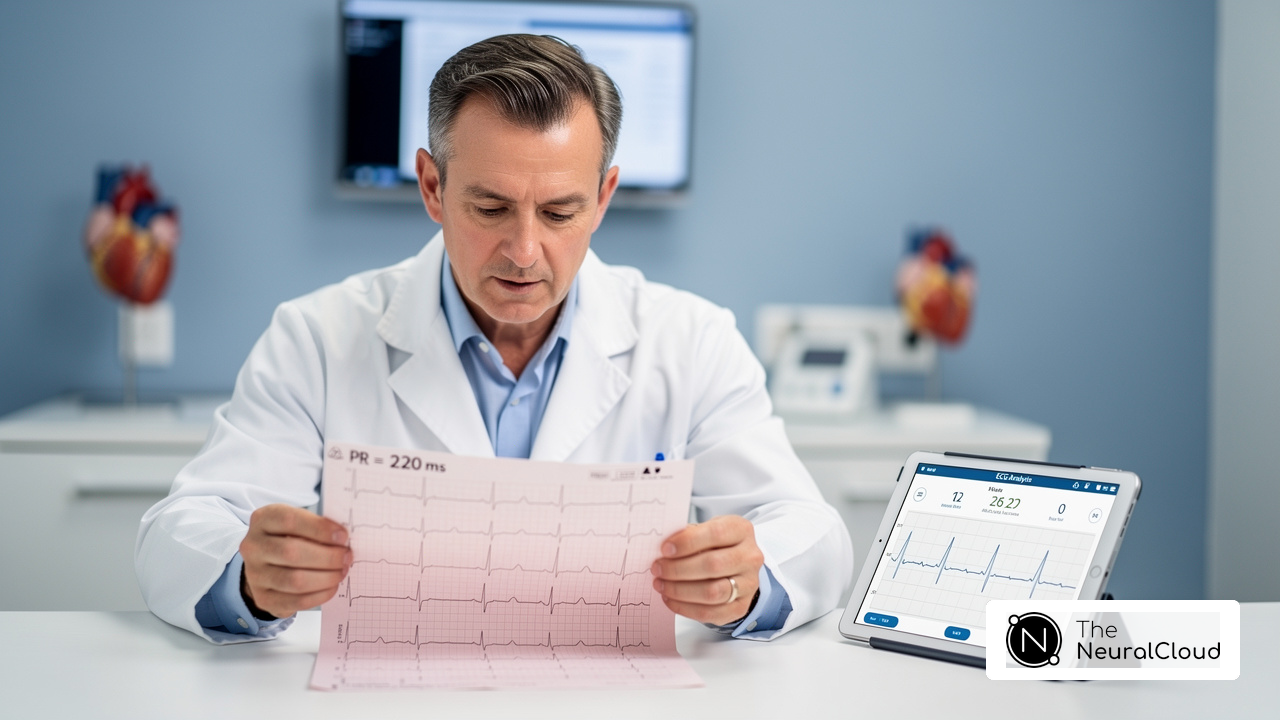
The urgency of accurate diagnosis in emergency settings is paramount, as mismanagement of 3rd degree heart block can lead to life-threatening consequences. This condition, characterized by the complete dissociation of atrial and ventricular activity, presents significant challenges for healthcare professionals. Understanding the intricacies of ECG analysis and treatment options is crucial for clinicians and researchers to manage this condition effectively. Advanced tools like Neural Cloud Solutions' MaxYield™ platform offer innovative solutions that can significantly improve diagnostic accuracy and treatment outcomes.
Define 3rd Degree Heart Block: Key Concepts and Importance
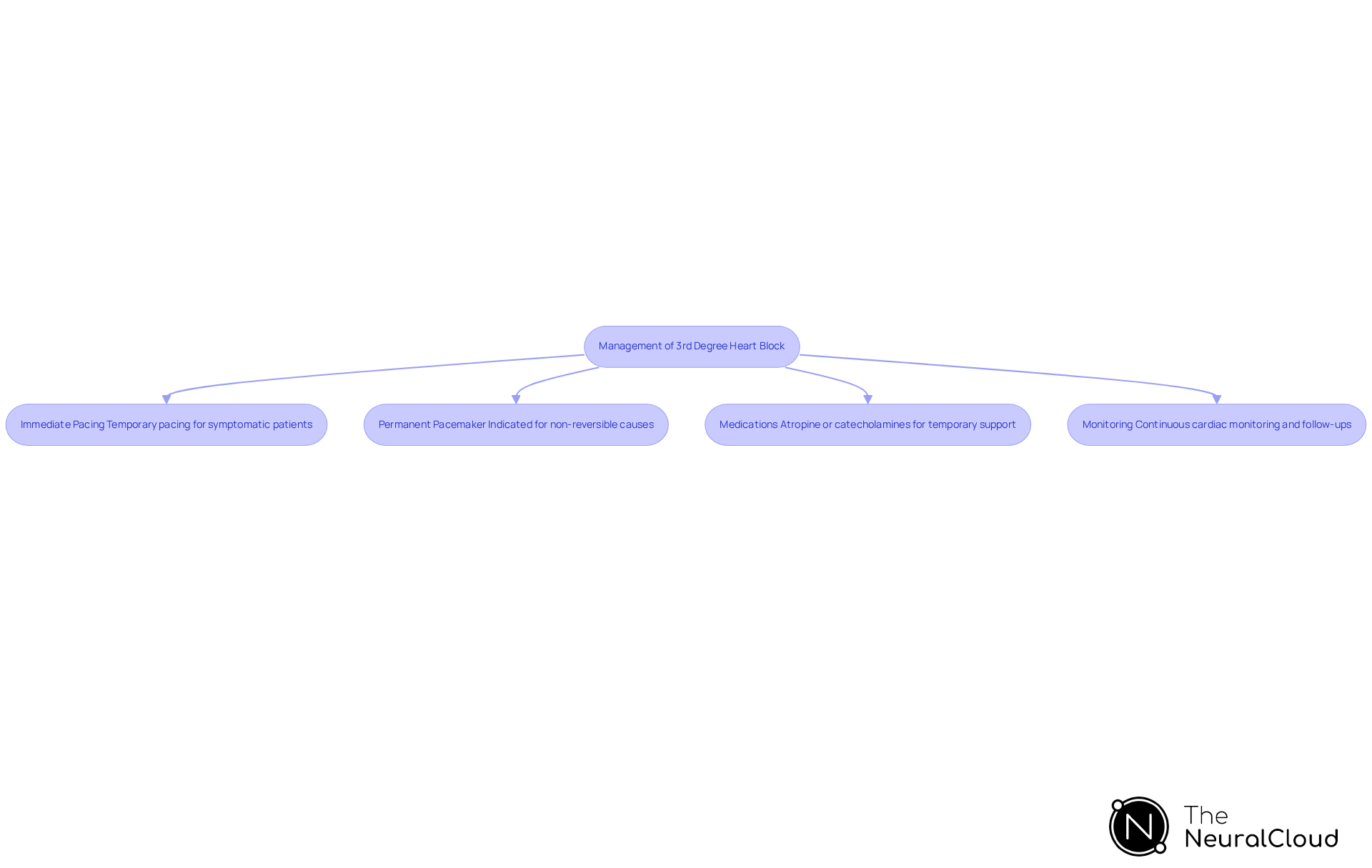
The 3rd degree heart block rhythm strip poses significant challenges in emergency medical settings due to its severe implications for patient health. This condition causes the atria and ventricles to beat independently, leading to serious health risks. The atrial rate is generally quicker than the ventricular rate, which can result in dangerously low pulse rates, sometimes as low as 35 beats per minute. This highlights the need for efficient tools that aid in rapid diagnosis and treatment. Comprehending this condition is essential for healthcare professionals, as it presents considerable risks, including:
- Syncope
- Cardiac failure
- Sudden cardiac arrest
Daniel Jennings, PA-C, emphasizes that a 3rd degree heart block rhythm strip indicates a serious medical emergency. Prompt recognition and intervention are critical to prevent life-threatening complications. Case studies from Canadian healthcare, such as that of a 79-year-old male patient who experienced complete heart block, underscore the importance of timely diagnosis and management, often involving the implantation of a pacemaker to restore normal heart rhythm. Delays in treatment can lead to dire consequences for patients.
Leveraging advanced solutions like Neural Cloud Solutions' MaxYield™ platform can significantly enhance the analysis of ECG data related to this condition. MaxYield™ automates ECG labeling and data extraction, allowing for faster processing of cases without compromising quality. This efficiency is crucial in emergency settings where timely decisions can save lives. As mentioned by Dr. Alan Rabinowitz, 'MaxYield™ competes with human interpretation in accuracy, making it an essential tool for clinicians addressing complex cardiac conditions such as the 3rd degree heart block rhythm strip.'
Additionally, the integration of Insight360 as a customizable visualization tool enhances the presentation of ECG data, transforming clean signals into interactive dashboards and clinical-ready reports. Furthermore, it is important to note that MaxYield™ is currently pending FDA Class II SaMD clearance, ensuring compliance with regulatory standards and supporting audit-ready documentation for GxP inspections. Utilizing advanced platforms like MaxYield™ can be the difference between life and death in critical situations.
Analyze ECG Characteristics of 3rd Degree Heart Block
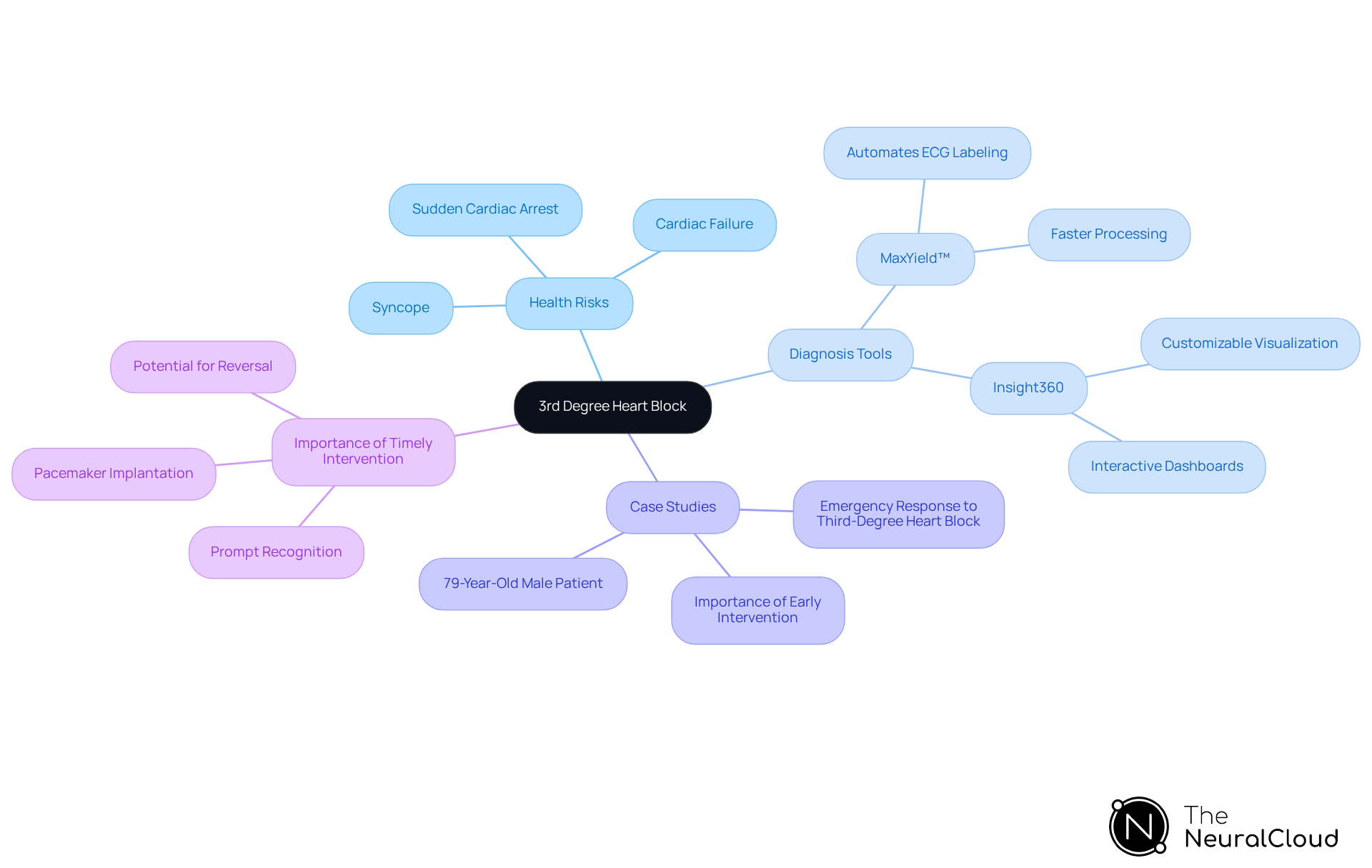
Diagnosing the 3rd degree heart block rhythm strip presents unique challenges due to the dissociation of P waves and QRS complexes. The ECG characteristics of this condition, as seen in a 3rd degree heart block rhythm strip, include P waves and QRS complexes that are completely dissociated. While P waves may occur at a rate of 60-100 beats per minute, the QRS complexes may be significantly slower, often around 30-40 beats per minute. Key features to look for include:
- Complete AV Dissociation: There is no relationship between P waves and QRS complexes.
- Regularity: The P waves and QRS complexes are regular but occur independently.
- Ventricular Escape Rhythm: In the absence of conduction from the atria, the ventricles may generate their own rhythm, which is typically slower.
- Rate Discrepancy: The atrial rate is usually faster than the ventricular rate, indicating a failure of conduction through the AV node.
Diagnosing a 3rd degree heart block rhythm strip can be challenging due to the dissociation of P waves and QRS complexes. MaxYield™ simplifies the diagnostic process for the 3rd degree heart block rhythm strip. This platform automates ECG analysis, filtering out noise to highlight key features in each heartbeat. With the ability to analyze 200,000 heartbeats in under 5 minutes, it provides detailed insights into P-wave, QRS complex, and T-wave onsets and offsets, supporting confident clinical decisions. As Dr. Alan Rabinowitz notes, "MaxYield™ rivals human interpretation in precision, making it an invaluable tool for healthcare professionals." Furthermore, with its FDA Class II SaMD clearance-pending status, MaxYield™ ensures compliance and audit-ready documentation, reinforcing its reliability in clinical settings. By transforming complex ECG data into clear insights, MaxYield™ empowers healthcare providers to make informed decisions swiftly.
Explore Treatment Options and Clinical Management for 3rd Degree Heart Block
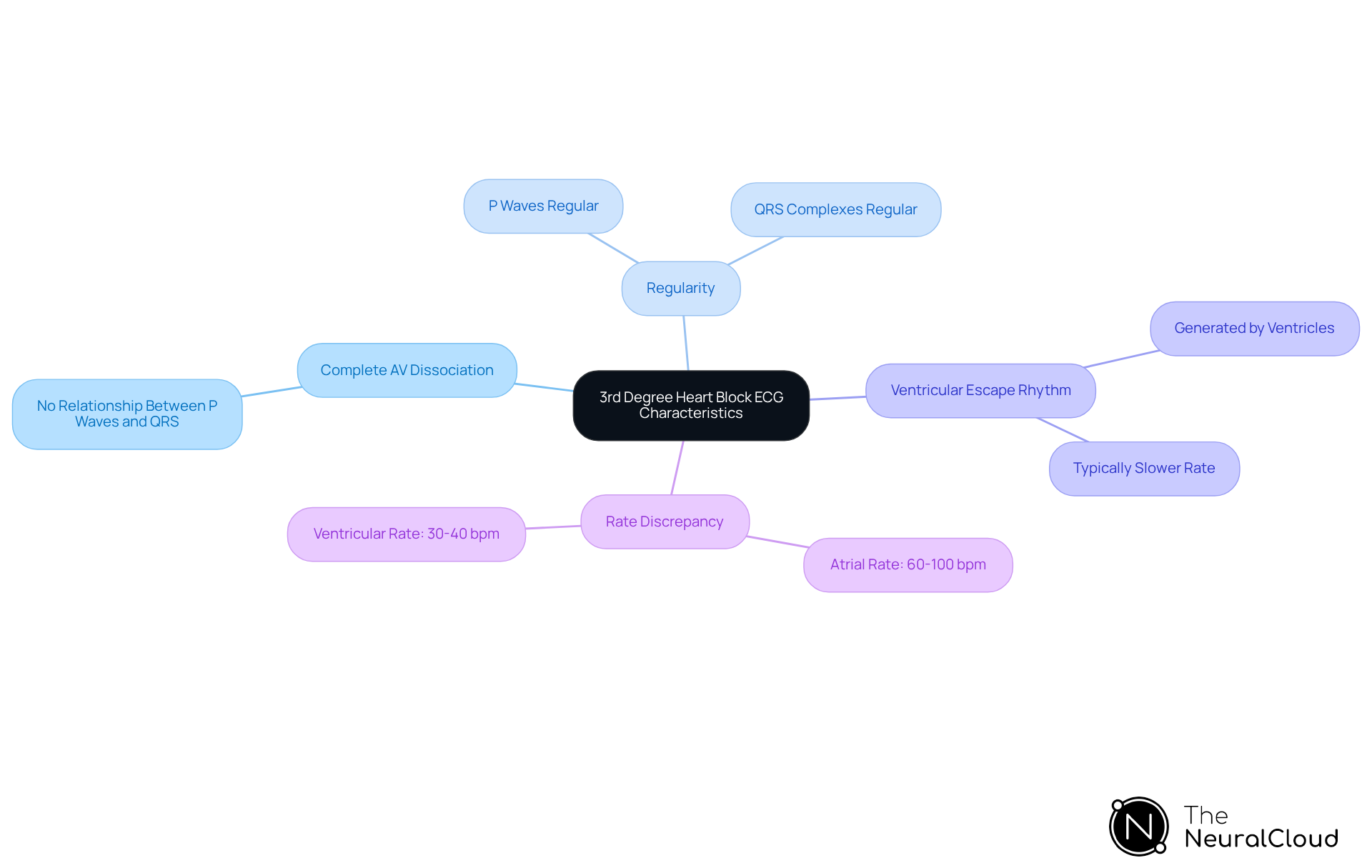
Managing third-degree block requires both immediate and long-term strategies to ensure patient safety and restore normal heart function. Key treatment options include:
- Immediate Pacing: For symptomatic patients, temporary pacing is often initiated to stabilize heart rate and improve hemodynamics. This approach is crucial, especially when a transcutaneous pacemaker fails to capture, necessitating urgent placement of a transvenous pacemaker.
- Permanent Pacemaker: Most patients will need a permanent pacemaker to maintain an adequate pulse rate and prevent complications associated with bradycardia. Permanent pacing is indicated for third-degree AV block not due to a reversible cause, regardless of symptoms. Before moving to permanent pacing, it's crucial to rule out any reversible causes of complete cardiac obstruction, as this can significantly impact management decisions.
- Medications: In certain situations, medications like atropine may be administered to temporarily elevate pulse rate. However, atropine is often ineffective in complete cardiac obstruction, particularly when the obstruction is infranodal. Alternative medications, including catecholamines like epinephrine, may be utilized to sustain sufficient electrical activity while awaiting pacemaker placement.
- Monitoring: Continuous cardiac monitoring is vital for those with a 3rd degree heart block rhythm strip to catch any changes in rhythm or hemodynamics. Regular follow-up visits are advised after implantation to ensure proper device function and patient safety. It's important to recognize that individuals with third-degree cardiac obstruction face increased risks of cardiovascular failure and mortality, underscoring the need for prompt intervention.
Understanding these treatment modalities is crucial for healthcare providers to effectively manage patients with this serious condition, as timely intervention not only improves patient outcomes but also significantly reduces the risk of serious complications associated with this condition.
Differentiate 3rd Degree Heart Block from Other AV Blocks
Understanding the distinctions between various degrees of AV block, particularly the 3rd degree heart block rhythm strip, is crucial for accurate diagnosis and effective patient management. Here are the key differences:
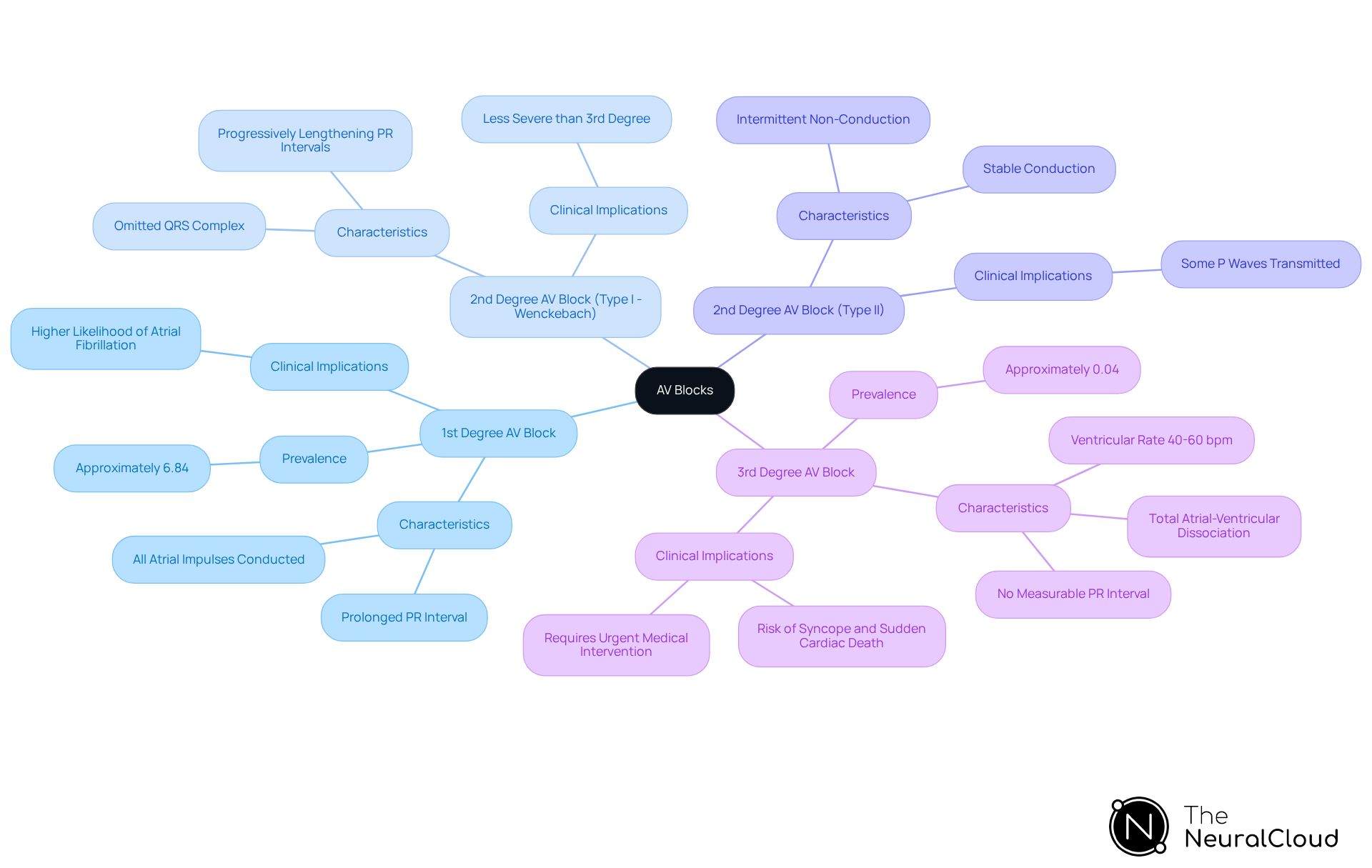
- 1st Degree AV Block: Characterized by a prolonged PR interval, all atrial impulses are conducted to the ventricles, with no dissociation between P waves and QRS complexes. The prevalence of first-degree AV obstruction is approximately 6.84%, and it has a higher likelihood of progressing to atrial fibrillation.
- 2nd Stage AV Block (Type I - Wenckebach): This type features progressively lengthening PR intervals until a QRS complex is omitted. Unlike third-degree obstruction, there is some conduction to the ventricles, making it less severe.
- 2nd Stage AV Block (Type II): Involves intermittent non-conduction of impulses without progressive lengthening of the PR interval. Some P waves are transmitted while others are not, indicating a more stable conduction than in third-degree interruption.
- 3rd Degree AV Dysfunction: Also referred to as complete heart failure, this condition is characterized by total dissociation between atrial and ventricular activity, which can be illustrated by a 3rd degree heart block rhythm strip, showing no impulses transmitted from the atria to the ventricles. The ventricular rate typically ranges from 40-60 bpm, and the absence of a measurable PR interval is a defining characteristic. This obstruction can lead to serious complications, such as syncope and sudden cardiac death, requiring prompt medical intervention.
It's vital for healthcare providers to understand these differences to ensure appropriate treatment and management for patients exhibiting AV symptoms. For instance, case studies in Canada have shown that individuals with a 3rd degree heart block rhythm strip often require urgent pacing interventions, while those with first-degree or second-degree blocks may not need immediate treatment. Expert insights emphasize the importance of recognizing reversible causes, such as medication toxicity and ischemia, which can significantly impact patient outcomes.
Using advanced tools like MaxYield can really boost the efficiency of ECG analysis. MaxYield automates the labeling process, allowing for rapid beat-by-beat analysis of ECG signals, which is essential for accurately identifying cardiac events. As Dr. Alan Rabinowitz notes, "MaxYield’s precision rivals human interpretation, making it an invaluable asset in clinical settings." This automation not only reduces operational costs but also addresses challenges such as physiological variability and signal artifacts, ultimately supporting confident clinical decision-making. Additionally, MaxYield is pending FDA Class II SaMD clearance and is complemented by Insight360, a customizable visualization and reporting tool that transforms clean ECG data into interactive dashboards and clinical-ready reports. Recognizing these differences not only aids in diagnosis but also informs the choice of treatment strategies that can significantly affect patient outcomes.
Conclusion
Timely intervention in 3rd degree heart block is crucial, as delays can lead to severe patient outcomes. This condition, characterized by the complete dissociation of atrial and ventricular activity, poses significant risks, including syncope and sudden cardiac arrest. It's vital for clinicians to grasp the implications and the urgent need for quick diagnosis and treatment. Understanding the defining characteristics of 3rd degree heart block, such as complete AV dissociation and discrepancies in heart rates, is essential for effective management.
Effective management strategies include:
- Immediate pacing
- The necessity of permanent pacemaker implantation for long-term care
Additionally, distinguishing between 3rd degree heart block and other AV blocks is critical for accurate diagnosis, which guides appropriate treatment. By recognizing these unique ECG features, healthcare professionals can respond more effectively in emergency situations.
The insights provided highlight the critical role of advanced tools like Neural Cloud Solutions' MaxYield™ in enhancing ECG analysis and improving patient outcomes. By automating the diagnostic process and ensuring compliance with regulatory standards, these technologies empower healthcare providers to make informed decisions swiftly. Adopting innovative solutions like MaxYield™ is not just beneficial; it’s essential for improving survival rates in critical cardiac conditions.
Frequently Asked Questions
What is 3rd degree heart block?
3rd degree heart block is a serious condition where the atria and ventricles of the heart beat independently, leading to significant health risks, including dangerously low pulse rates.
What are the health risks associated with 3rd degree heart block?
The risks include syncope (fainting), cardiac failure, and sudden cardiac arrest.
Why is prompt recognition and intervention important for 3rd degree heart block?
Prompt recognition and intervention are critical to prevent life-threatening complications, as delays in treatment can lead to dire consequences for patients.
Can you provide an example of a case study related to 3rd degree heart block?
A case study from Canadian healthcare involved a 79-year-old male patient who experienced complete heart block, highlighting the importance of timely diagnosis and management, often requiring the implantation of a pacemaker.
How can advanced solutions assist in managing 3rd degree heart block?
Advanced solutions like Neural Cloud Solutions' MaxYield™ platform enhance the analysis of ECG data, automating ECG labeling and data extraction for faster processing in emergency settings.
What is the significance of the MaxYield™ platform in emergency medical settings?
MaxYield™ competes with human interpretation in accuracy, making it an essential tool for clinicians addressing complex cardiac conditions like 3rd degree heart block, where timely decisions can save lives.
What role does Insight360 play in the analysis of ECG data?
Insight360 serves as a customizable visualization tool that transforms clean ECG signals into interactive dashboards and clinical-ready reports, enhancing the presentation of ECG data.
What is the regulatory status of MaxYield™?
MaxYield™ is currently pending FDA Class II SaMD clearance, ensuring compliance with regulatory standards and supporting audit-ready documentation for GxP inspections.
List of Sources
- Define 3rd Degree Heart Block: Key Concepts and Importance
- Do You Know the Symptoms of Heart Block? (https://my.clevelandclinic.org/health/diseases/17056-heart-block)
- Out of Sync: A Report of Complete Heart Block - PMC (https://pmc.ncbi.nlm.nih.gov/articles/PMC12007959)
- 3rd Degree Heart Block: Causes, Symptoms, Outlook (https://healthline.com/health/heart-disease/3rd-degree-heart-block)
- Complete AV Block: Symptoms, Treatment And Outlook (https://acibademinternational.com/health-library/complete-av-block-an-evidence-based-patient-guide)
- Analyze ECG Characteristics of 3rd Degree Heart Block
- ECG Diagnosis: Complete Heart Block - PMC (https://pmc.ncbi.nlm.nih.gov/articles/PMC3140757)
- Identifying and Treating Third-Degree AV Block (Complete Heart Block) (https://aclsonline.us/rhythms/complete-heart-block)
- AV block: 3rd degree (complete heart block) (https://litfl.com/av-block-3rd-degree-complete-heart-block)
- Atrioventricular (AV) Block - The Cardiology Advisor (https://thecardiologyadvisor.com/ddi/av-block-first-second-third-degree)
- Third-Degree Atrioventricular Block (Complete Heart Block): Background, Etiology, Pathophysiology (https://emedicine.medscape.com/article/162007-overview)
- Explore Treatment Options and Clinical Management for 3rd Degree Heart Block
- Third Degree Heart Block Treatment: Pacemaker, Medications (https://healthline.com/health/heart-disease/third-degree-heart-block-treatment)
- New guideline provides comprehensive recommendations to manage heart disease (https://hospitalnews.com/new-guideline-provides-comprehensive-recommendations-to-manage-heart-disease)
- Third-Degree Atrioventricular Block (Complete Heart Block) Treatment & Management: Approach Considerations, Atropine and Transcutaneous/Transvenous Pacing, Permanent Pacing for Acquired AV Block in Adults (https://emedicine.medscape.com/article/162007-treatment)
- Differentiate 3rd Degree Heart Block from Other AV Blocks
- Atrioventricular Blocks – First, Second and Third Degree : Emergency Care BC (https://emergencycarebc.ca/clinical_resource/clinical-summary/atrioventricular-blocks-first-second-and-third-degree)
- The Heart Block Hat-Trick: A Case of Alternating First-, Second-, and Third-Degree Heart Blocks - PMC (https://pmc.ncbi.nlm.nih.gov/articles/PMC10284657)
- Third-Degree Atrioventricular Block (Complete Heart Block): Background, Etiology, Pathophysiology (https://emedicine.medscape.com/article/162007-overview)
- 3rd Degree Heart Block: Criteria, Causes, and ECG Strip Interpretation (https://aclscertification.org/criteria-for-third-degree-complete-heart-block)
- Types of Heart Block | Mass General Brigham (https://massgeneralbrigham.org/en/about/newsroom/articles/heart-block-types)