Introduction
Traditional ECG tools often struggle with accuracy and efficiency, presenting significant challenges in cardiac diagnostics. Enter MaxYield™, an innovative solution developed by Neural Cloud Solutions Inc. that leverages advanced AI technology to transform ECG analysis. This article delves into the compelling advantages of MaxYield over conventional methods, exploring how its sophisticated algorithms enhance diagnostic precision while addressing the challenges of user adoption and integration. As the healthcare sector in Canada grapples with the need for timely and accurate cardiac assessments, MaxYield's advanced capabilities may set a new benchmark for cardiac care, addressing the pressing need for precision in diagnostics.
Overview of MaxYield and Traditional ECG Tools
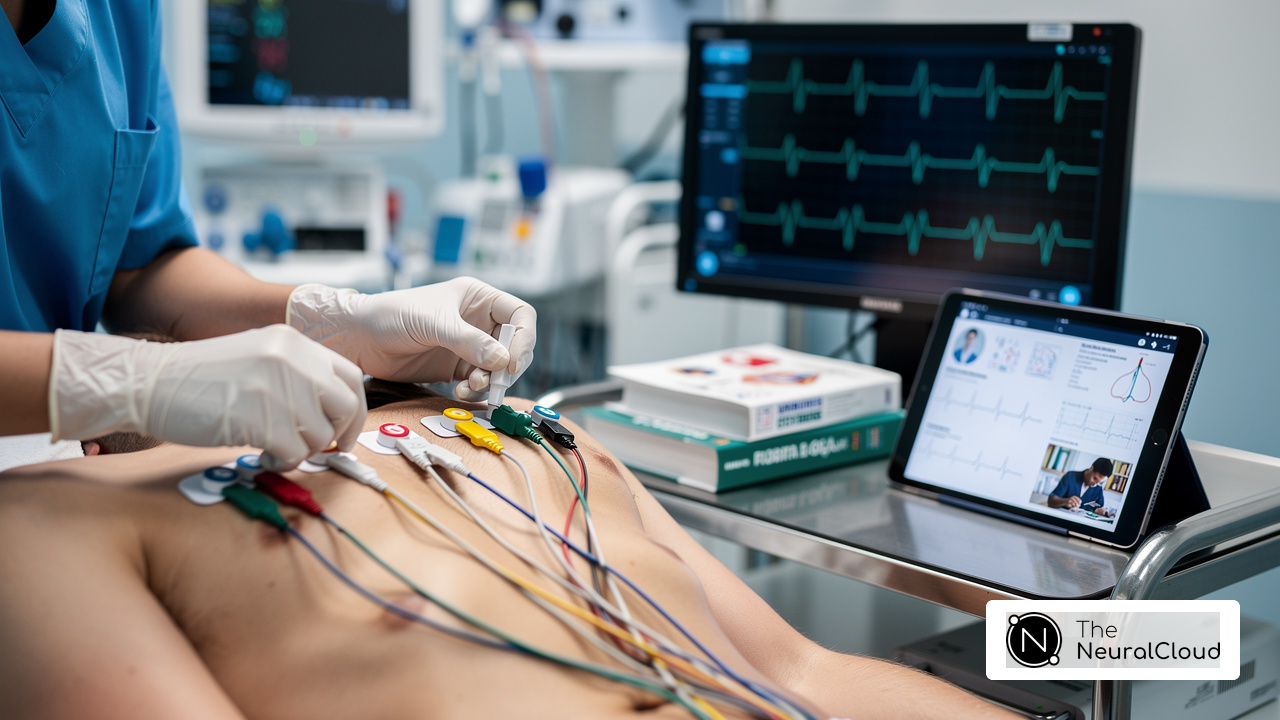
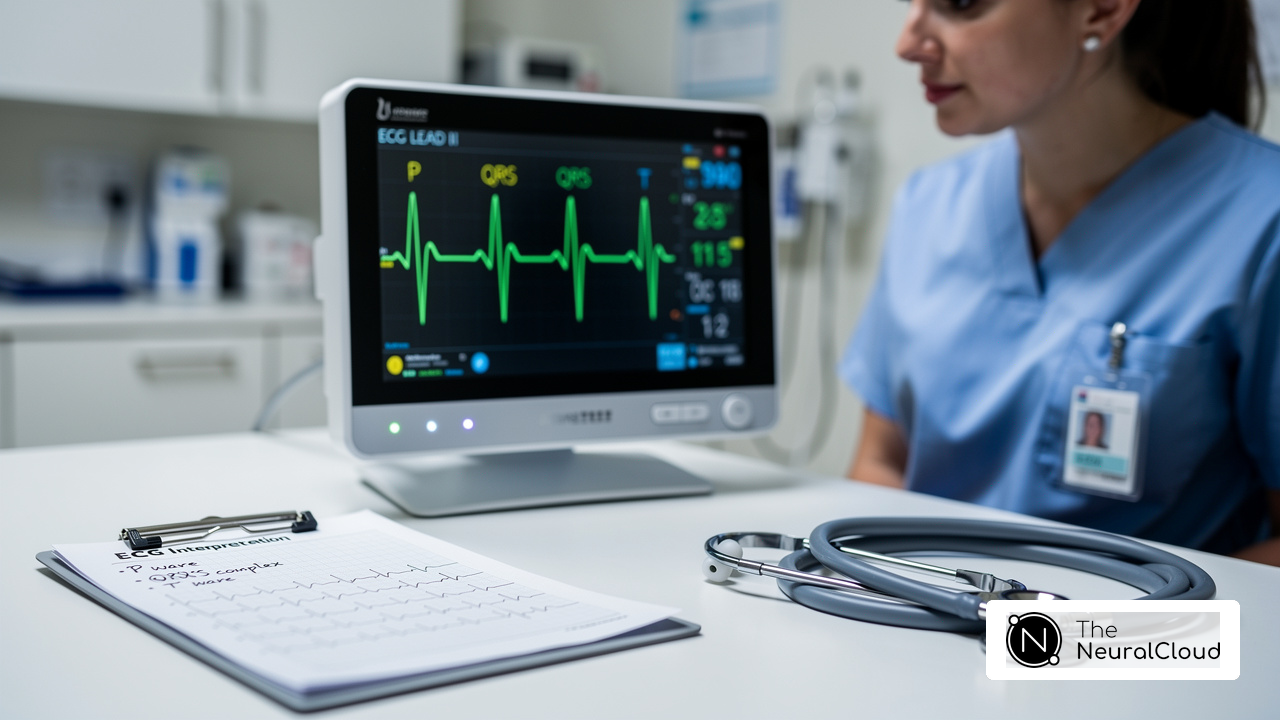
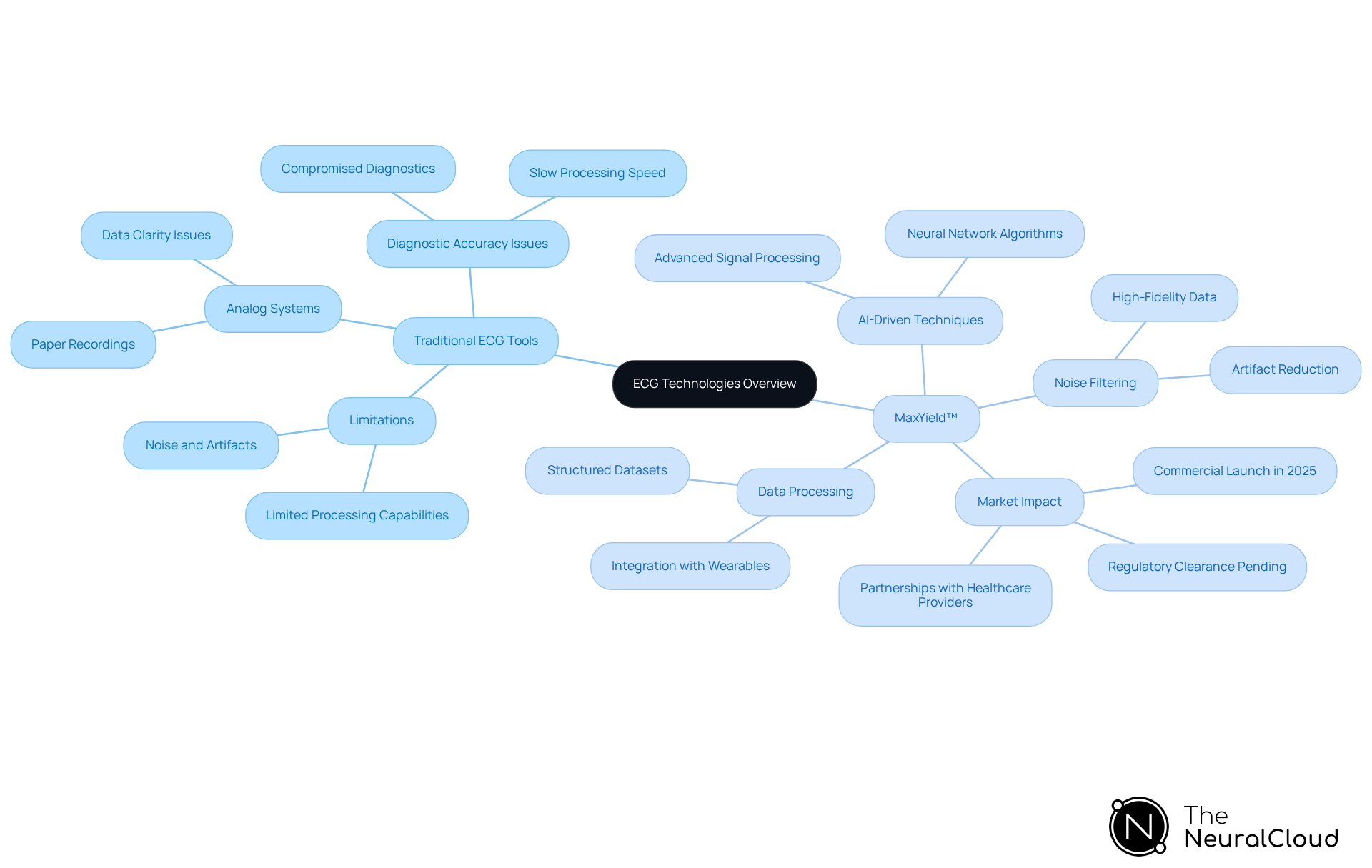
Traditional ECG analysis often falls short, hampered by noise and limited processing capabilities. MaxYield™ signifies a notable progress in ECG technology, created by Neural Cloud Solutions Inc. to improve ECG information processing through advanced AI-driven techniques. This intelligence layer isolates and cleans noisy signals with patented algorithms. As a result, it provides high-fidelity cardiac information essential for medical professionals. In contrast, traditional ECG tools often rely on analog systems that record electrical activity on paper, leading to limitations in data clarity and processing speed. These conventional methods frequently struggle with noise and artifacts, which can compromise diagnostic accuracy.
The ability of the MaxYield™ system to process raw ECG recordings from various devices - including wearables and Holter monitors - transforms them into structured datasets. This addresses the shortcomings of traditional ECG tools and positions itself as a modern cardiologists tool in the evolving landscape of cardiac diagnostics. Furthermore, with a commercial launch aimed for September 2025, the company is poised to make a significant impact in the market. The ongoing pilot project with The Hospital for Sick Children showcases practical applications in pediatric cardiac care. It emphasizes the need for accuracy in monitoring subtle early signals of deterioration, as noted by experts like Esmat Naikyar. So far, this project has demonstrated [improved monitoring results](https://theglobeandmail.com/investing/markets/markets-news/ACCESS Newswire/36282840/ai-ml-subsidiary-neural-cloud-begins-pilot-at-sickkids-to-advance-ai-enabled-pediatric-cardiac-care), showcasing how effective the product is in real-world scenarios.
Additionally, the pending FDA Class II SaMD clearance underscores the regulatory context that will shape the deployment of this innovative technology in healthcare settings. The sophisticated noise filtering and wave recognition features further improve ECG analysis, guaranteeing clear PPG data and hospital-level precision from consumer-grade devices, which is crucial for efficient remote patient monitoring. As MaxYield™ prepares for its market launch, it promises to redefine cardiac diagnostics and improve patient care. Furthermore, the introduction of premium subscription opportunities will offer unique metrics that enhance the value proposition for healthcare providers.
Technological Innovations: MaxYield's AI-Driven Approach vs. Traditional Methods
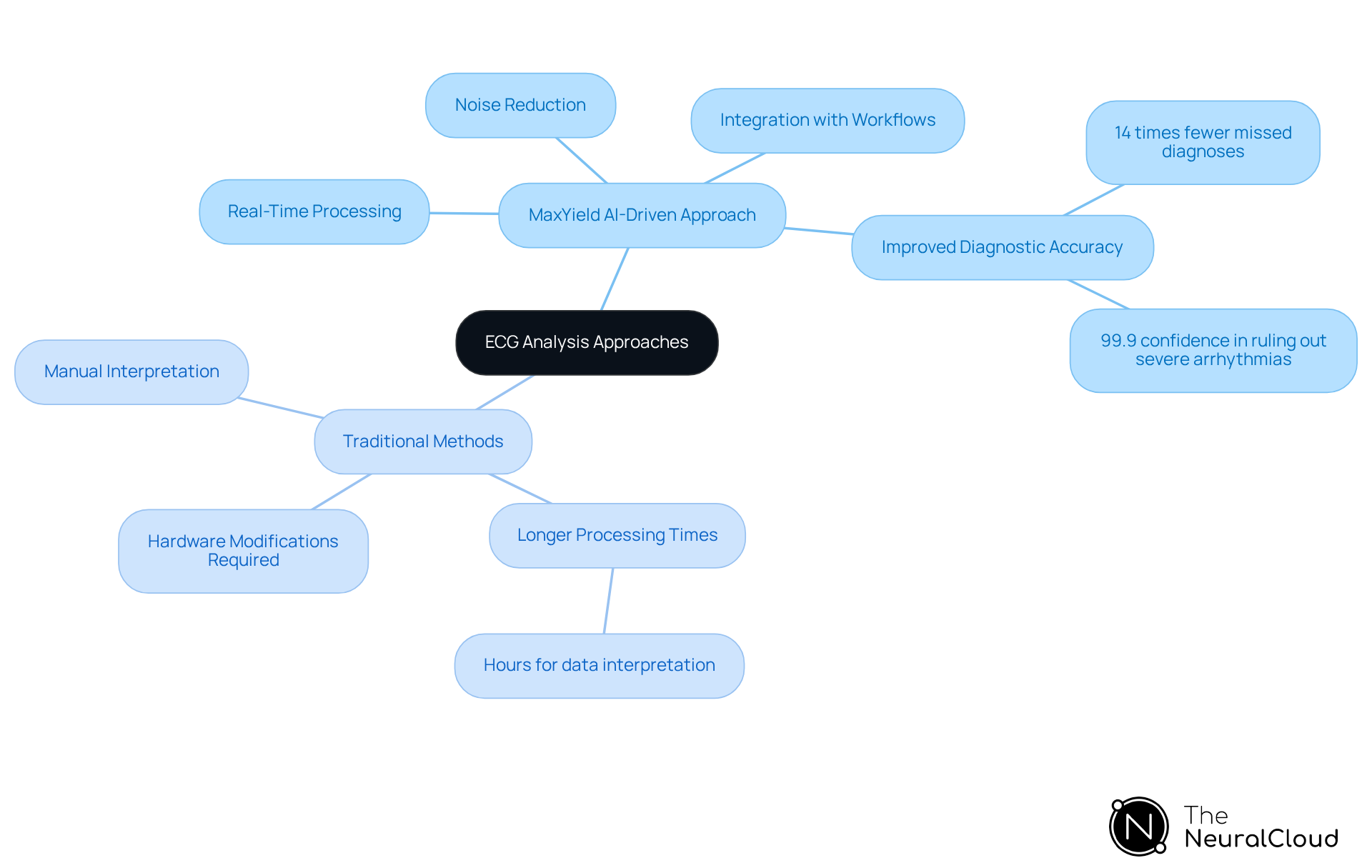
In the fast-paced world of healthcare, the challenges of using ECG analysis as a cardiologists tool can lead to critical delays in patient care. The MaxYield™ platform serves as a cardiologists tool by utilizing advanced AI algorithms to enhance ECG analysis, significantly reducing noise and improving waveform clarity. This innovative method acts as a cardiologists tool that processes information in real-time, enabling clinicians to gain actionable insights quickly. In contrast, traditional ECG methods often rely on manual interpretation, which can result in longer processing times that hinder timely diagnosis and treatment, highlighting the need for a cardiologists tool to improve efficiency. For instance, while traditional ECGs may require hours for data interpretation, the MaxYield™ cardiologists tool can analyze 200,000 heartbeats in under two minutes, illustrating a remarkable difference in efficiency.
Additionally, the device-agnostic design of the system acts as a cardiologists tool, allowing seamless integration with existing workflows, which is a significant advantage over traditional systems that often require extensive hardware modifications. This feature is vital for healthcare providers in Canada, who face increasing challenges in cardiac diagnostics. Notably, AI analysis has demonstrated a 14 times reduction in missed diagnoses of severe arrhythmias compared to human technicians, underscoring the potential of AI as a cardiologists tool to enhance diagnostic accuracy. As Dr. Alan Rabinowitz, a cardiologist, states, 'The ability of AI to streamline ECG analysis serves as a valuable cardiologists tool that not only improves efficiency but also enhances patient outcomes by ensuring timely interventions.'
With advanced noise filtering and automated signal processing, the cardiologists tool enables clinicians to confidently make informed decisions based on clear ECG data. Furthermore, the product is pending FDA Class II SaMD clearance and is complemented by Insight360, a customizable visualization tool that transforms clean ECG data into interactive dashboards and clinical-ready reports. As healthcare demands evolve, leveraging AI in ECG analysis could redefine standards of care and patient safety, establishing it as a vital cardiologists tool.
Practical Considerations: Integration and User Adoption Challenges
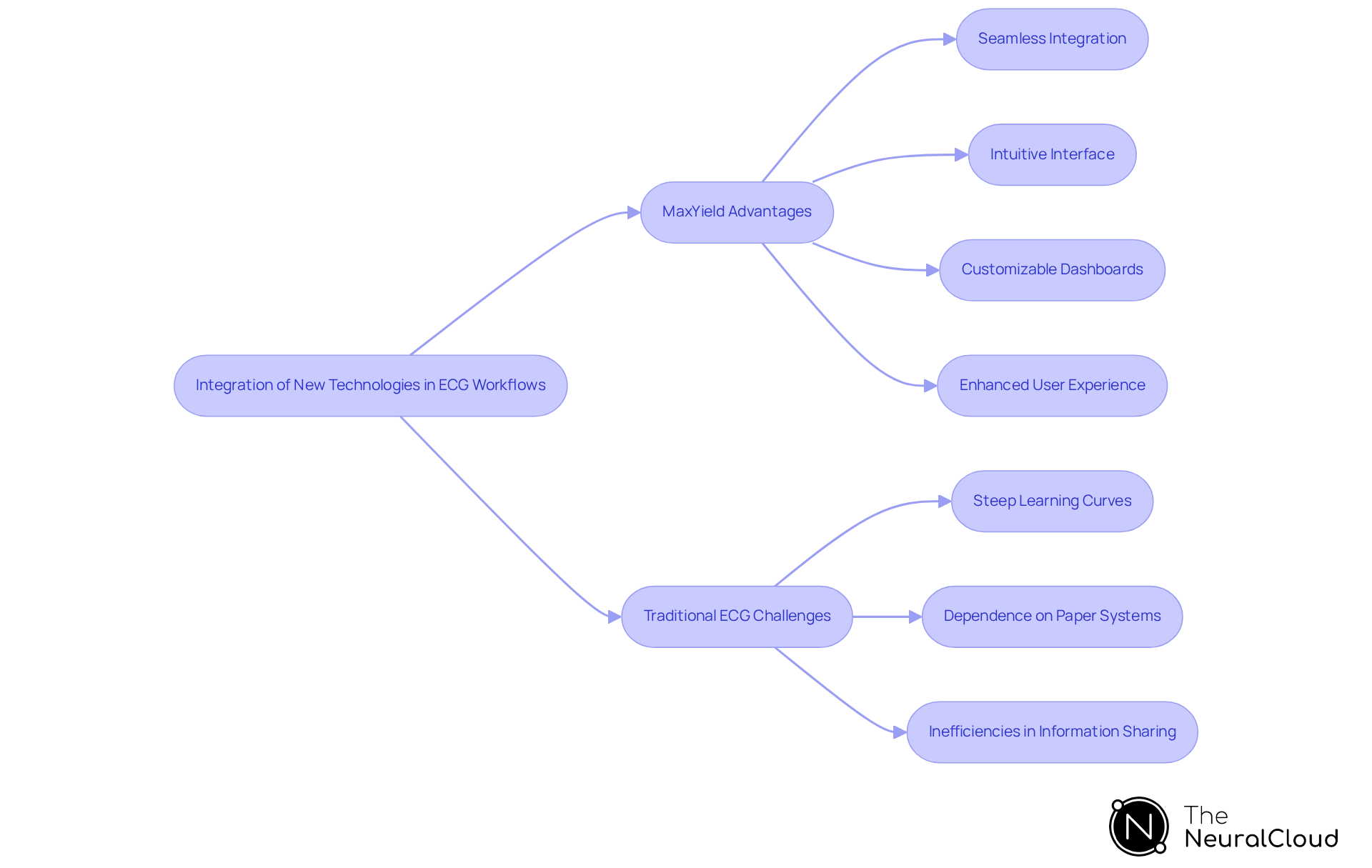
Clinicians face significant challenges when integrating new technologies into their ECG workflows. Integrating MaxYield into existing ECG workflows is seamless. It requires no significant hardware changes, making user adoption easier. The platform's intuitive interface and customizable dashboards, powered by Insight360, enhance the user experience, allowing clinicians to visualize trends and generate reports effortlessly. In contrast, traditional ECG tools often encounter challenges related to user training and adaptation. Clinicians often struggle with the steep learning curves associated with traditional ECG tools, which can complicate their workflow.
In fact, about 85% of office-based physicians in the U.S. are now using some form of EHR technology, indicating a growing trend towards digital solutions that streamline workflows. However, the dependence on paper-based systems in conventional methods can obstruct information sharing and collaboration among healthcare providers. This inefficiency can lead to delays in patient care and hinder collaboration among healthcare providers. MaxYield's digital format enhances efficient information management and accessibility, effectively tackling these integration challenges.
Regulatory compliance details, including FDA Class II SaMD clearance-pending status, further reinforce the credibility of this tool as a reliable resource in clinical settings. Expert insights indicate that the integration of AI ECG tools can significantly improve clinical workflows, providing timely and accurate data that supports better patient outcomes. This shift towards advanced technologies is crucial as healthcare systems increasingly prioritize efficiency and accuracy in diagnostics. Furthermore, endorsements from experts such as Dr. Alan Rabinowitz, Dr. Brett Heilbron, and Dr. Marc W. Deyell emphasize the precision of this technology, rivaling human interpretation and its substantial noise reduction advantages. As healthcare systems evolve, embracing tools like MaxYield is essential for enhancing diagnostic accuracy and improving patient care.
Pros and Cons: A Side-by-Side Evaluation of MaxYield and Traditional ECG Tools
ECG analysis presents several challenges that can hinder accurate diagnosis and timely treatment in clinical settings. Traditional ECG tools often struggle with noise and artifacts, leading to potential misinterpretations and inaccuracies in readings. Additionally, the manual interpretation of data can delay diagnosis and treatment, which is critical in acute care scenarios. These limitations highlight the need for a more advanced solution, such as the MaxYield™ platform.
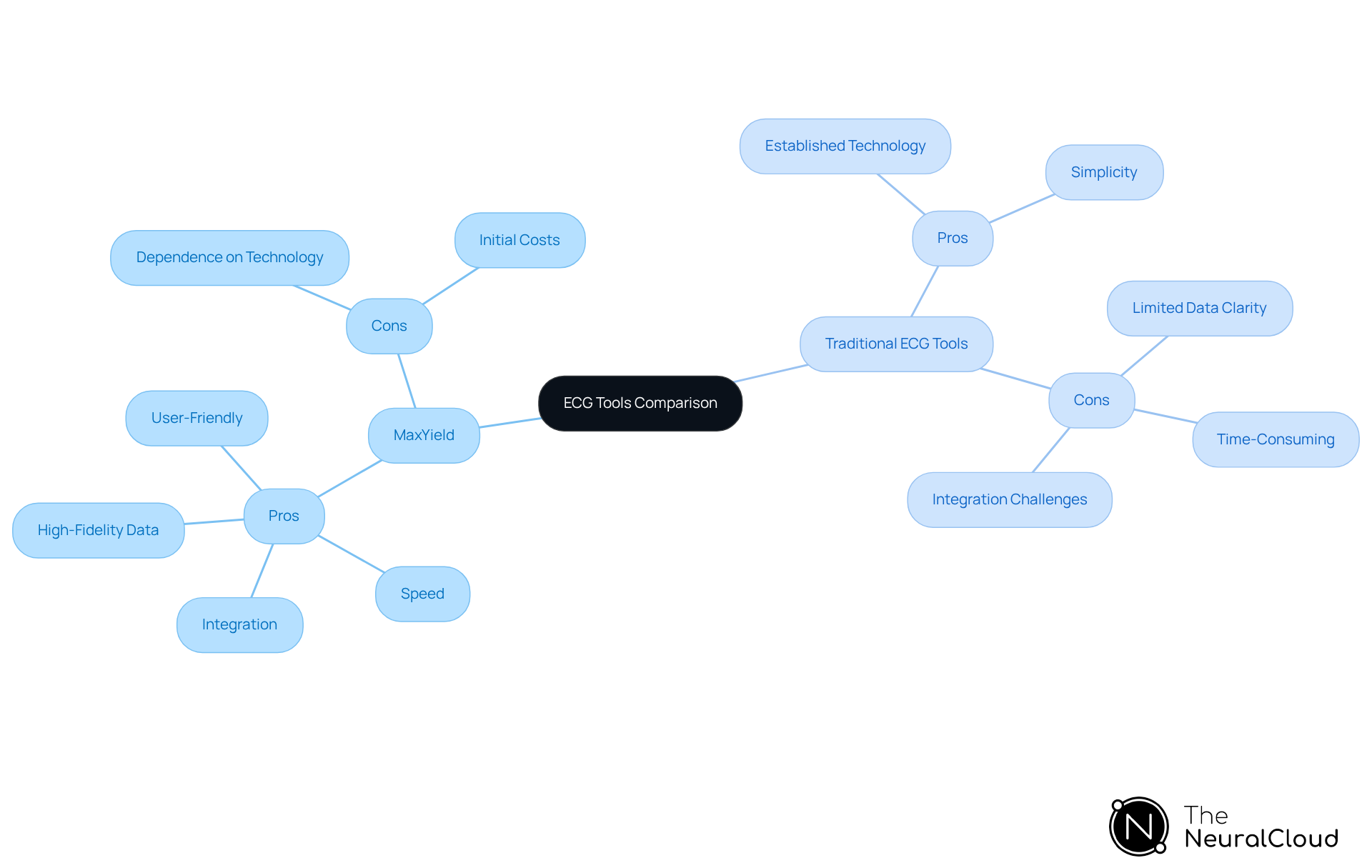
MaxYield
Pros:
- High-Fidelity Data: It uses advanced algorithms to reduce noise, which leads to clearer ECG signals and improves diagnostic accuracy.
- Speed: Capable of processing large volumes of information rapidly, it provides timely insights for clinicians, analyzing 200,000 heartbeats in under two minutes.
- Integration: Being device-agnostic, it seamlessly integrates into existing workflows without extensive modifications, facilitating better data sharing among healthcare teams.
- User-Friendly: With customizable dashboards and reporting tools, it enhances user experience and enables clinicians to visualize trends effectively.
Cons:
- Dependence on Technology: It needs a stable internet connection and compatible devices to work best, which can be a challenge in some environments.
- Initial Costs: Implementation may involve higher upfront costs compared to traditional methods, potentially impacting adoption rates.
Traditional ECG Tools
Pros:
- Established Technology: Widely recognized and trusted in clinical settings, these tools have a long history of use that assures reliability.
- Simplicity: Basic models are straightforward to use and require minimal training, making them accessible for a wide range of healthcare professionals.
Cons:
- Limited Data Clarity: They often struggle with noise and artifacts, leading to potential misinterpretations and inaccuracies in readings.
- Time-Consuming: Manual interpretation can delay diagnosis and treatment, which is critical in acute care scenarios.
- Integration Challenges: They may necessitate significant hardware changes and extensive training for effective use, complicating the transition to modern practices.
By addressing these challenges, MaxYield™ not only enhances ECG analysis but also empowers healthcare professionals to deliver better patient care.
Conclusion
Traditional ECG tools often struggle with noise interference and slow processing speeds, making accurate diagnostics challenging for healthcare professionals. MaxYield™ offers a modern alternative, leveraging advanced AI-driven techniques to enhance the clarity and accuracy of cardiac data. This platform not only enables clinicians to achieve more accurate and timely diagnoses but also positions itself as an essential tool for healthcare providers in Canada.
Key insights throughout the article highlight the advantages of MaxYield™ over traditional methods. The platform's ability to process vast amounts of data rapidly, along with its seamless integration into existing workflows, addresses many challenges faced by healthcare providers. Additionally, the pending FDA Class II SaMD clearance and positive outcomes from pilot projects, such as those at The Hospital for Sick Children, underscore its potential impact on pediatric cardiac care. In contrast, traditional ECG tools often require extensive training and hardware modifications, which can hinder their effectiveness in fast-paced clinical environments.
As cardiac diagnostics evolve, it’s essential for healthcare professionals to embrace innovative solutions like MaxYield™ to enhance diagnostic accuracy and improve patient care. The integration of AI in ECG analysis streamlines workflows and empowers healthcare professionals to make informed decisions swiftly. By prioritizing the adoption of advanced technologies, clinicians can ensure they are equipped to meet the demands of modern healthcare, ultimately leading to better patient outcomes and a more efficient healthcare system.
Frequently Asked Questions
What is MaxYield™ and how does it differ from traditional ECG tools?
MaxYield™ is an advanced ECG technology developed by Neural Cloud Solutions Inc. that utilizes AI-driven techniques to improve ECG information processing. Unlike traditional ECG tools, which often rely on analog systems and struggle with noise and limited processing capabilities, MaxYield™ isolates and cleans noisy signals using patented algorithms, providing high-fidelity cardiac information essential for medical professionals.
What are the limitations of traditional ECG analysis?
Traditional ECG analysis is often hampered by noise and artifacts, leading to compromised diagnostic accuracy. These tools typically record electrical activity on paper, resulting in limitations in data clarity and processing speed.
How does MaxYield™ enhance ECG data processing?
MaxYield™ processes raw ECG recordings from various devices, including wearables and Holter monitors, transforming them into structured datasets. This capability addresses the shortcomings of traditional ECG tools and positions MaxYield™ as a modern tool for cardiologists.
What is the timeline for the commercial launch of MaxYield™?
The commercial launch of MaxYield™ is aimed for September 2025.
What is the significance of the pilot project with The Hospital for Sick Children?
The pilot project with The Hospital for Sick Children highlights the practical applications of MaxYield™ in pediatric cardiac care, emphasizing the importance of accurately monitoring subtle early signals of deterioration. The project has demonstrated improved monitoring results, showcasing the effectiveness of the product in real-world scenarios.
What regulatory approval is pending for MaxYield™?
MaxYield™ is awaiting FDA Class II SaMD clearance, which will shape the deployment of this innovative technology in healthcare settings.
What features of MaxYield™ improve ECG analysis?
MaxYield™ includes sophisticated noise filtering and wave recognition features that enhance ECG analysis, ensuring clear PPG data and hospital-level precision from consumer-grade devices, which is crucial for efficient remote patient monitoring.
How will MaxYield™ impact patient care and healthcare providers?
MaxYield™ promises to redefine cardiac diagnostics and improve patient care by providing high-quality ECG data. Additionally, the introduction of premium subscription opportunities will offer unique metrics that enhance the value proposition for healthcare providers.
List of Sources
- Overview of MaxYield and Traditional ECG Tools
- Major AI Health Partnership: MaxYield ECG Tech Powers Next-Gen Smart Ring Through Multi-Year License Deal (https://stocktitan.net/news/AIMLF/aiml-subsidiary-neural-cloud-signs-loi-with-circular-health-to-2oh9lpuw71dy.html)
- Movesense and NeuralCloud to Pilot AI-Powered ECG and Holter Reporting — Movesense (https://movesense.com/news/2026/02/movesense-and-neuralcloud-to-pilot-ai-powered-ecg-and-holter-reporting)
- AI/ML Subsidiary Neural Cloud Begins Pilot at SickKids to Advance AI-Enabled Pediatric Cardiac Care (https://theglobeandmail.com/investing/markets/markets-news/ACCESS Newswire/36282840/ai-ml-subsidiary-neural-cloud-begins-pilot-at-sickkids-to-advance-ai-enabled-pediatric-cardiac-care)
- AIML Hits Key Regulatory Benchmark with 510(k) Filing for MaxYield(TM) Signal Enhancement Platform (https://biospace.com/press-releases/aiml-hits-key-regulatory-benchmark-with-510k-filing-for-maxyieldtm-signal-enhancement-platform)
- AIML Subsidiary Neural Cloud Signs LOI with Circular Health to License MaxYield(TM) ECG Signal Processing (https://ca.finance.yahoo.com/news/aiml-subsidiary-neural-cloud-signs-110000964.html)
- Technological Innovations: MaxYield's AI-Driven Approach vs. Traditional Methods
- AI could safely replace human analysis of ambulatory ECG - News - PHRI (https://phri.ca/draimartini)
- Long-term ECG: AI algorithm checks heart rhythm (https://healthcare-in-europe.com/en/news/deep-learning-ai-long-term-ecg-analysis.html)
- Spotlight on early detection of 3 heart diseases using ECG-AI - Mayo Clinic News Network (https://newsnetwork.mayoclinic.org/discussion/spotlight-on-early-detection-of-3-heart-diseases-using-ecg-ai)
- Three New Studies Show Viz.ai’s Cardio Suite Speeds Detection of Cardiac Disease and Improves Patient Follow-Up (https://viz.ai/news/three-new-studies-show-viz-ais-cardio-suite-speeds-detection-of-cardiac-disease-and-improves-patient-follow-up)
- AI-ECG Model Outperforms STEMI Criteria for Identifying ACS Patients With Occlusions (https://tctmd.com/news/ai-ecg-model-outperforms-stemi-criteria-identifying-acs-patients-occlusions)
- Practical Considerations: Integration and User Adoption Challenges
- Advances in Cardiac ECG Monitoring Technologies (https://dicardiology.com/channel/advances-cardiac-ecg-monitoring-technologies)
- New study finds AI model improves heart attack detection (https://health.ucdavis.edu/news/headlines/new-study-finds-ai-model-improves-heart-attack-detection/2025/11)
- Roundup: Access to cardiac AI holds promise to save more lives (https://healthcareitnews.com/news/roundup-access-cardiac-ai-holds-promise-save-more-lives)
- Electronic Health Records Statistics By Healthcare, Data, Management (2026) (https://media.market.us/electronic-health-records-statistics)
- National Trends in Hospital and Physician Adoption of Electronic Health Records (https://healthit.gov/data/quickstats/national-trends-hospital-and-physician-adoption-electronic-health-records)
- Pros and Cons: A Side-by-Side Evaluation of MaxYield and Traditional ECG Tools
- theneuralcloud.com (https://theneuralcloud.com/post/comparing-digital-ecg-and-traditional-methods-efficiency-and-accuracy)
- ECG market keeps evolving thanks to AI, home monitoring and Epic integration (https://cardiovascularbusiness.com/topics/cardiac-imaging/electrocardiography-ecg/ecg-market-keeps-evolving-thanks-ai-home-monitoring-and-epic-integration)
- theneuralcloud.com (https://theneuralcloud.com/post/12-ecg-devices-compared-features-pros-and-practical-insights)
- theneuralcloud.com (https://theneuralcloud.com/post/heart-rhythm-reader-vs-traditional-ecg-monitors-key-comparisons)
- Study Shows Promising Results for ECG Technology (https://dicardiology.com/content/study-shows-promising-results-ecg-technology)