Introduction
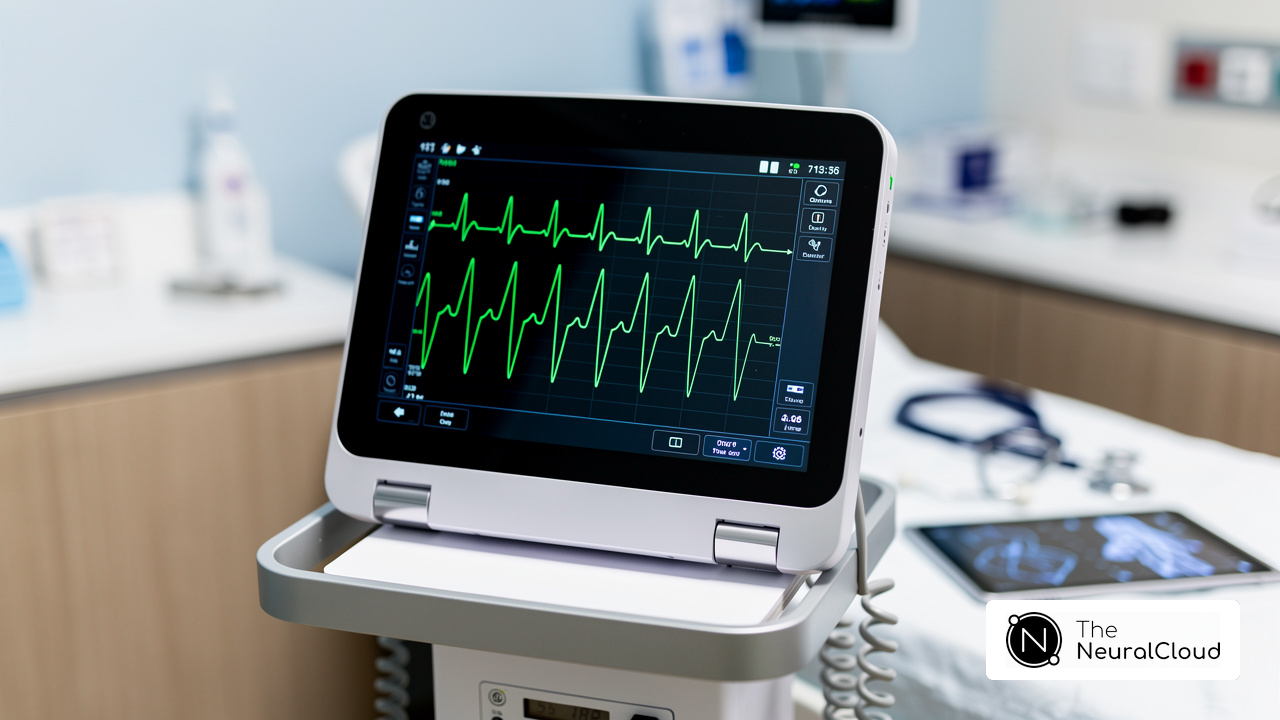
As the landscape of cardiac care evolves, understanding the nuances of the QT interval becomes increasingly vital for health tech developers. As the prevalence of QT abnormalities rises, health tech developers face the challenge of accurately measuring and interpreting these intervals. This challenge is critical, as it directly impacts patient safety and the prevention of life-threatening arrhythmias. To address these challenges, innovative solutions must be implemented to bridge the gap between traditional monitoring methods and the advanced analytics needed for effective QT interval assessment.
Define Normal QT Interval: Importance and Measurement
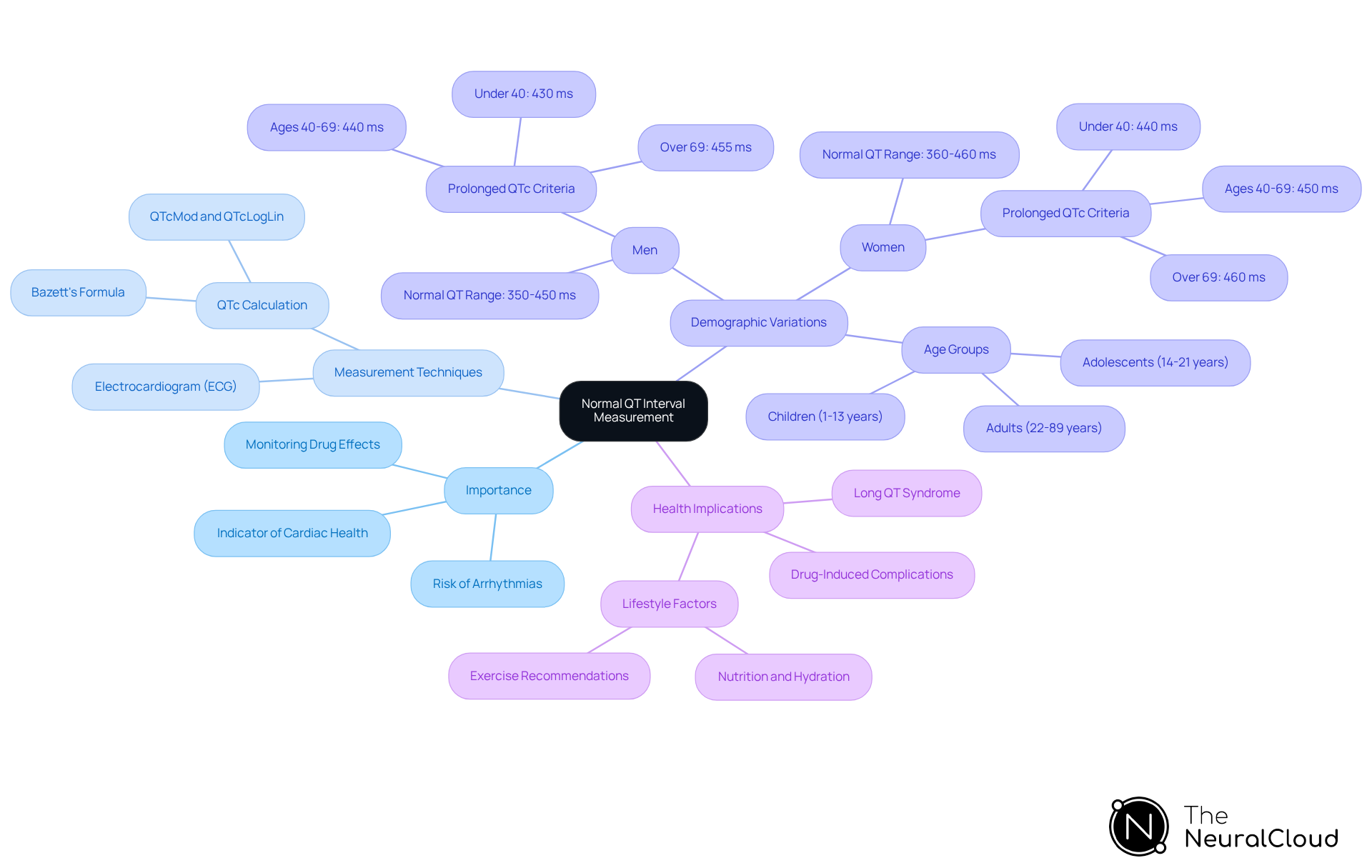
Measuring QT duration accurately is crucial for understanding cardiac health, yet it presents challenges due to demographic variations. The QT duration is a pivotal measurement on an electrocardiogram (ECG), indicating the length of ventricular depolarization and repolarization. For most adults, the normal QT range for duration is between 350 and 450 milliseconds, with specific variations influenced by age and sex. Women generally exhibit longer QT durations than men, with the normal QT range often cited as 360 to 460 milliseconds for females and 350 to 450 milliseconds for males. Precise measurement of the QT duration is crucial, as it serves as an essential indicator of cardiac health. QT duration is measured from the start of the Q wave to the end of the T wave. Adjustments for heart rate are often made to calculate the corrected QT duration (QTc). Health tech developers need to grasp these parameters to create ECG monitoring devices that accurately assess cardiac function.
Recent studies involving a diverse population of 57,595 individuals aged 5 to 89 years have established criteria for prolonged QTc, highlighting the importance of age and sex in these measurements. For instance, the criteria for prolonged QTc are set at:
- 430 milliseconds for men under 40
- 440 milliseconds for women
with adjustments for older age groups. This data underscores the necessity for ECG devices to incorporate these variations to ensure accurate assessments across different demographics.
Furthermore, tracking the QT duration goes beyond simple measurement; it is essential for identifying conditions like congenital or acquired Long QT Syndrome and evaluating the likelihood of drug-induced cardiac complications. Consistent observation is especially crucial for individuals on drugs recognized to influence the QT duration, as variations from standard values can signify an increased likelihood of arrhythmias, including possibly life-threatening situations such as Torsades de Pointes. Integrating accurate QT duration measurement into ECG technology is crucial for improving patient outcomes and advancing cardiac care.
Explore Abnormal QT Interval: Causes and Consequences
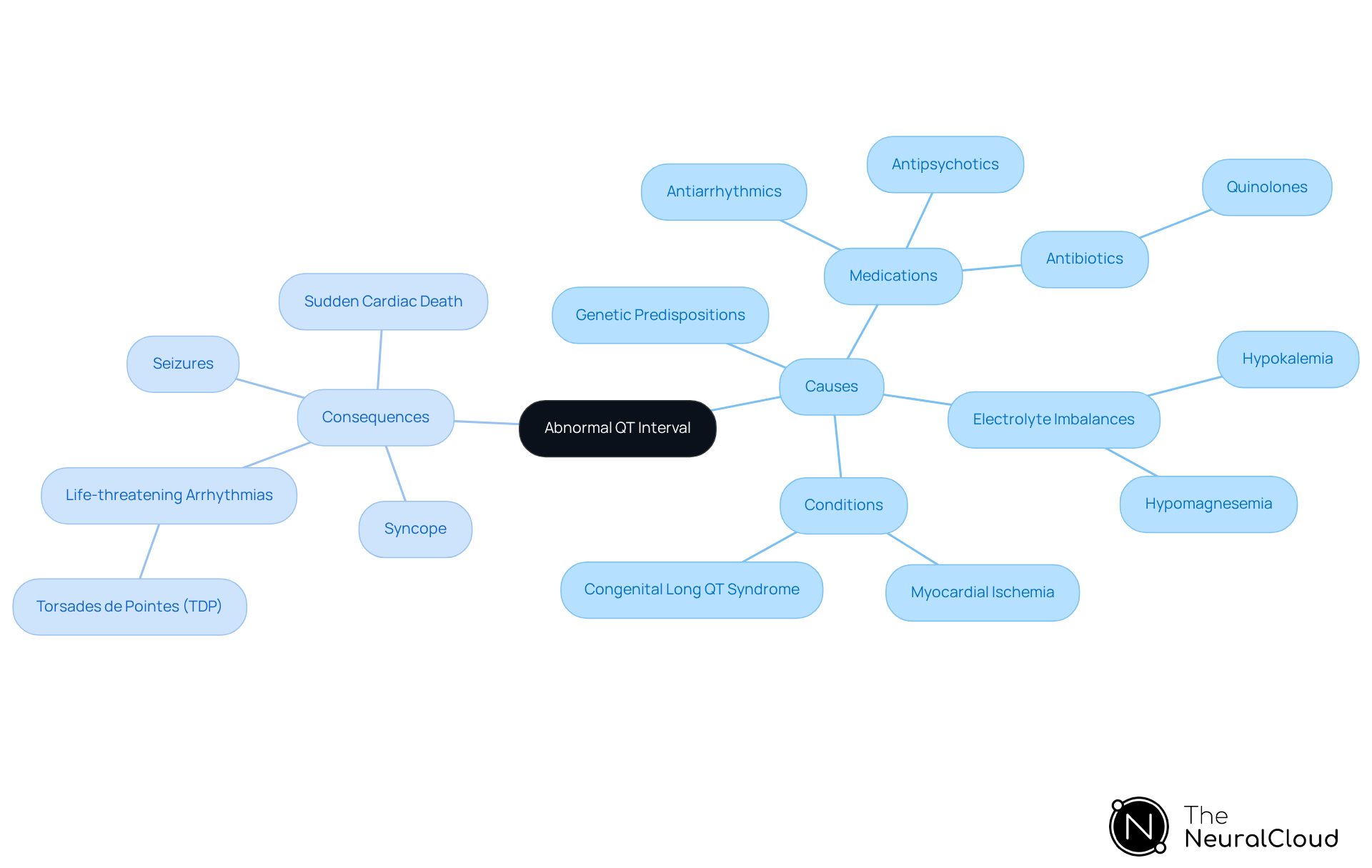
An abnormal QT duration, exceeding 450 ms in men and 460 ms in women, presents serious health risks that demand immediate attention. This condition can lead to life-threatening arrhythmias, such as Torsades de Pointes (TDP). Various factors contribute to QT prolongation, including:
- Genetic predispositions
- Electrolyte imbalances like hypokalemia
- Certain medications, particularly antiarrhythmics, antipsychotics, and some antibiotics
Additionally, conditions such as myocardial ischemia and congenital long QT syndrome can exacerbate these abnormalities.
These profound consequences, including syncope, seizures, and even sudden cardiac death, highlight the urgent need for effective monitoring solutions. In a study involving 501 individuals with type 2 diabetes, the prevalence of QTc > 440 ms was found to be 44.1%, with high-risk QTc (≥500 ms) occurring in only 2% of cases. This alarming prevalence emphasizes the critical need for innovative ECG monitoring solutions that can promptly alert healthcare professionals to potential cardiac risks.
Health tech developers must grasp these causes and their implications to innovate ECG monitoring technologies effectively. By integrating advanced analytics and real-time monitoring capabilities through MaxYield™, which analyzes 200,000 heartbeats in under 5 minutes, developers can enhance patient safety and improve outcomes in cardiovascular care. MaxYield™ automates ECG analysis, providing clear, actionable data by delivering beat-by-beat insights and filtering out noise. Furthermore, considering surgical treatment options for QT prolongation, as well as the importance of genetic testing for family members of individuals diagnosed with long QT syndrome, can provide a more comprehensive approach to managing this condition. Lifestyle modifications, including dietary changes to boost potassium consumption, may also contribute to reducing issues related to QT prolongation.
By addressing these challenges, healthcare professionals can significantly enhance patient safety and outcomes in cardiovascular care.
Compare Normal vs. Abnormal QT Intervals: Key Differences
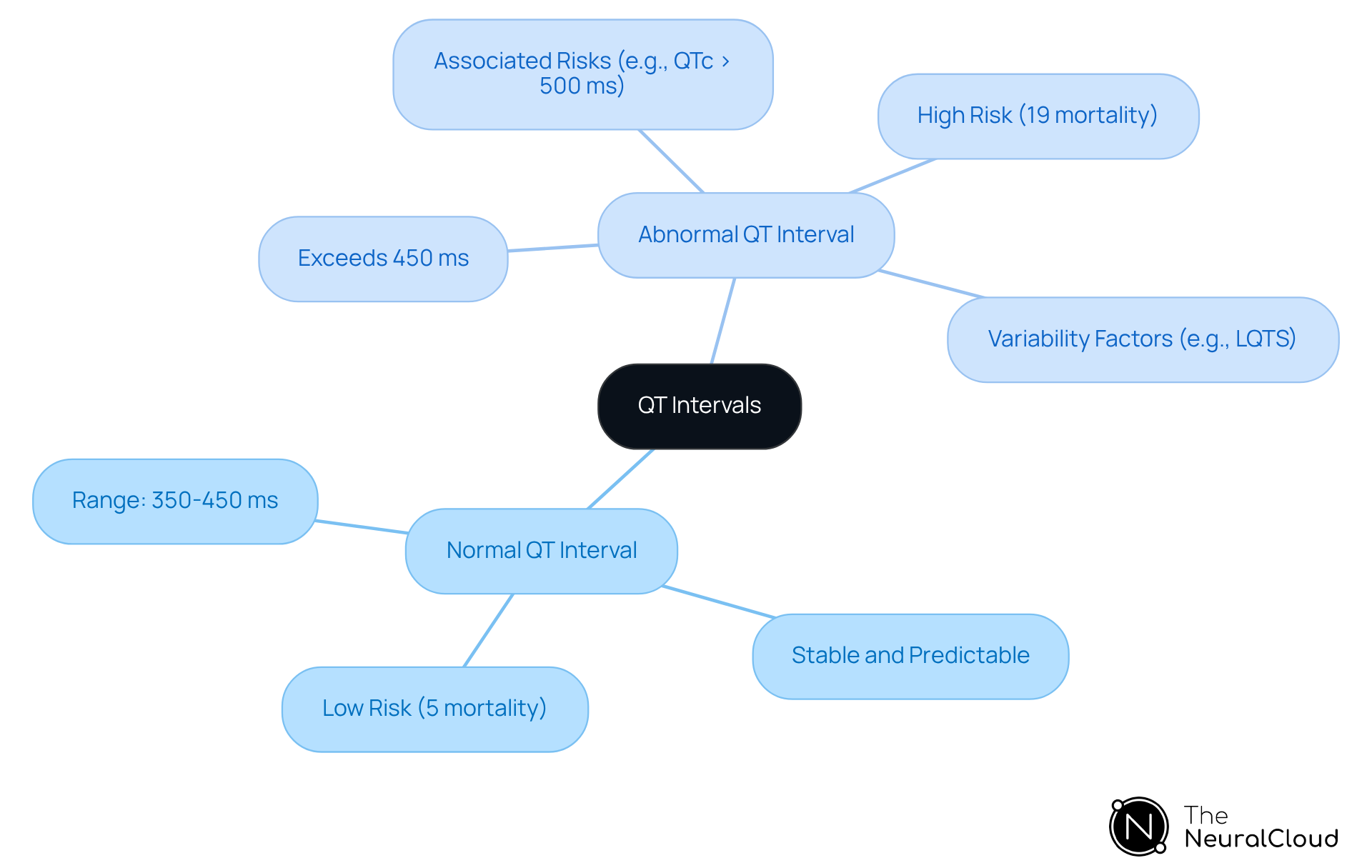
The distinction between normal and abnormal QT durations is crucial for understanding cardiac health risks. Normal QT durations generally fall within the normal QT range of 350 to 450 milliseconds, while abnormal durations exceed these limits, indicating potential cardiac dysfunction. For instance, a QTc duration greater than 500 milliseconds is associated with a significantly heightened risk of arrhythmias, with a mortality rate of 19% for patients with QTc >= 500 msec compared to only 5% for those with QTc < 500 msec.
The normal QT range durations are stable and predictable. In contrast, abnormal durations can vary due to physiological and pathological factors. This variability is especially evident in long QT syndrome (LQTS). In LQTS, the heart's electrical recovery time is prolonged, which can lead to dangerous arrhythmias like torsades de pointes.
Neural Cloud Solutions' MaxYield™ platform addresses these challenges by employing advanced noise filtering, distinct wave recognition, and automated signal processing capabilities. With MaxYield™, critical data can be identified and labeled, even in noisy recordings. This technology rapidly isolates ECG waves from recordings affected by baseline wander, movement, and muscle artifact. As a result, previously hidden parts of extensive Holter, 1-Lead, and patch monitor recordings can be recovered, improving the precision of QT duration measurements.
Case studies further illustrate these differences. For example, the Mayo Clinic's automated QT alert system has shown that monitoring QTc durations can provide essential prognostic information, identifying individuals at high risk and prompting actions to reduce modifiable hazard factors. Furthermore, studies involving over 173,000 primary care individuals indicated that both extremely short and extremely long QTc durations are linked to increased cardiovascular mortality risk. This highlights the necessity for accurate QT duration assessment in clinical practice.
These comparisons underscore the critical need for advanced tools like MaxYield™ that can consistently identify deviations from the normal QT range. By leveraging advanced technology, healthcare professionals can significantly enhance patient outcomes through precise QT duration assessments.
Leverage Technology: Enhancing QT Interval Analysis with AI Solutions
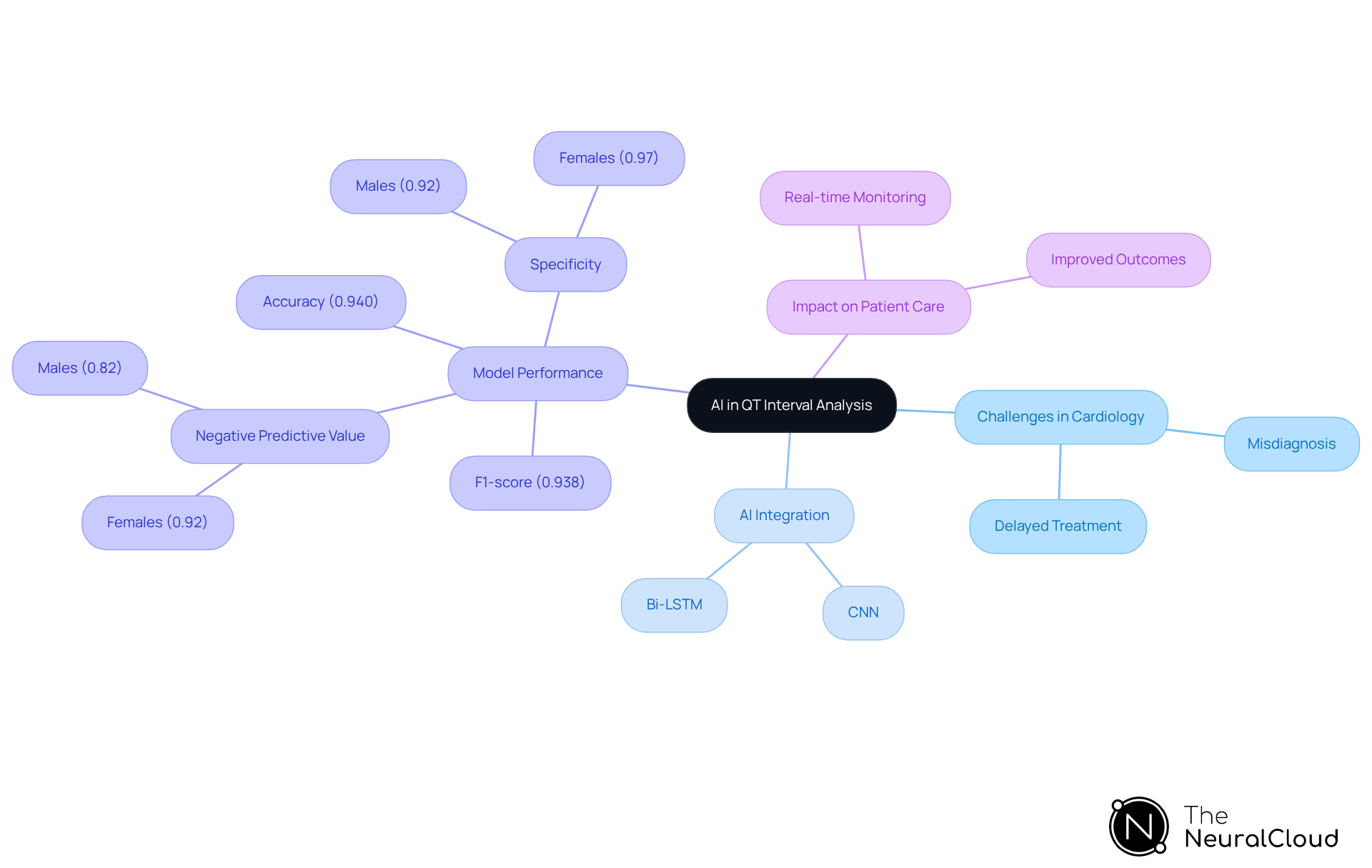
Accurate QT interval analysis remains a challenge in cardiology, often leading to misdiagnosis and delayed treatment. The integration of artificial intelligence (AI) and machine learning into QT duration analysis marks a pivotal advancement in this field. Recent developments have shown that AI algorithms can effectively analyze extensive ECG datasets to identify patterns and anomalies indicative of abnormal QT intervals.
For instance, a model utilizing Convolutional Neural Networks (CNN) and Bidirectional Long Short-Term Memory (Bi-LSTM) has achieved an impressive accuracy of 0.940 and an F1-score of 0.938 in predicting QTc values, even from single-lead ECGs. This model enhances diagnostic accuracy and enables real-time monitoring, allowing healthcare professionals to intervene promptly for those at risk of arrhythmias.
Furthermore, the AI tool has demonstrated high negative predictive values of 0.82 in males and 0.92 in females for ruling out QTc prolongation, with specificities of 0.92 in males and 0.97 in females. Health tech developers can leverage these AI solutions to create more effective and user-friendly ECG monitoring devices, ultimately improving patient care and outcomes in cardiovascular health.
The integration of AI in QT interval analysis is set to redefine cardiac diagnostics, paving the way for more timely and effective patient care.
Conclusion
For health tech developers, grasping the nuances between normal and abnormal QT intervals is crucial for advancing cardiac care. The normal QT range, typically between 350 and 450 milliseconds, serves as a benchmark for assessing cardiac health. Failing to monitor QT intervals accurately can lead to undetected health risks. This accuracy not only enhances diagnostic capabilities but also fosters better patient outcomes.
Key insights from the article highlight the importance of precise QT interval measurement and the implications of abnormal QT durations. Factors such as age, sex, and underlying health conditions significantly influence QT duration, making it imperative for health tech solutions to account for these variations. Furthermore, the integration of AI in QT analysis offers promising advancements, enabling real-time monitoring and timely interventions for patients at risk of arrhythmias.
As cardiac diagnostics continue to evolve, understanding QT interval assessment becomes increasingly vital. Health tech developers should consider these insights and advancements to create solutions that prioritize patient safety and improve cardiovascular health outcomes. By focusing on the nuances of QT interval analysis, the potential for innovation in cardiac care is vast, paving the way for a healthier future.
Frequently Asked Questions
What is the QT interval and why is it important?
The QT interval is a measurement on an electrocardiogram (ECG) that indicates the length of ventricular depolarization and repolarization. It is crucial for understanding cardiac health as it serves as an essential indicator of heart function.
What is the normal range for QT duration in adults?
For most adults, the normal QT duration range is between 350 and 450 milliseconds. However, this can vary based on age and sex.
How does QT duration differ between men and women?
Women generally exhibit longer QT durations than men. The normal QT range is often cited as 360 to 460 milliseconds for females and 350 to 450 milliseconds for males.
How is QT duration measured?
QT duration is measured from the start of the Q wave to the end of the T wave on an ECG.
What is the corrected QT duration (QTc)?
The corrected QT duration (QTc) is calculated by adjusting the QT duration for heart rate to provide a more accurate assessment of cardiac health.
What are the criteria for prolonged QTc based on recent studies?
The criteria for prolonged QTc are set at 430 milliseconds for men under 40 years and 440 milliseconds for women, with adjustments for older age groups.
Why is tracking QT duration important for patients on certain medications?
Tracking QT duration is essential for identifying conditions like congenital or acquired Long QT Syndrome and evaluating the risk of drug-induced cardiac complications. Variations from standard values can indicate an increased likelihood of arrhythmias, including potentially life-threatening situations.
How can health tech developers improve ECG monitoring devices?
Health tech developers need to understand the variations in QT duration based on age and sex to create ECG monitoring devices that accurately assess cardiac function and improve patient outcomes.
List of Sources
- Define Normal QT Interval: Importance and Measurement
- What Is the Normal Value of QT Interval and Why Is It Important? (https://yourhealthmagazine.net/article/heart-disease-stroke-and-diabetes/what-is-the-normal-value-of-qt-interval-and-why-is-it-important)
- New age- and sex-specific criteria for QT prolongation based on rate correction formulas that minimize bias at the upper normal limits (https://sciencedirect.com/science/article/abs/pii/S0167527314008134)
- QT prolongation: Definition, causes, treatment, and more (https://medicalnewstoday.com/articles/qt-prolongation)
- Explore Abnormal QT Interval: Causes and Consequences
- Long QT syndrome (https://nhs.uk/conditions/long-qt-syndrome)
- Prolonged QT Interval: Causes, Consequences-and Prevention | Patient Care Online (https://patientcareonline.com/view/prolonged-qt-interval-causes-consequencesand-prevention)
- QT prolongation: Definition, causes, treatment, and more (https://medicalnewstoday.com/articles/qt-prolongation)
- Prevalence and risk factors for prolonged QT interval and QT dispersion in patients with type 2 diabetes - PMC (https://pmc.ncbi.nlm.nih.gov/articles/PMC5014905)
- Pediatric Long QT Syndrome: Background, Etiology and Pathophysiology, Epidemiology (https://emedicine.medscape.com/article/891571-overview)
- Compare Normal vs. Abnormal QT Intervals: Key Differences
- Long QT syndrome - Symptoms and causes (https://mayoclinic.org/diseases-conditions/long-qt-syndrome/symptoms-causes/syc-20352518)
- The QTc interval: An Essential Tool in Every Clinician's Toolbox (https://gehealthcare.com/en-us/insights/article/the-qtc-interval-an-essential-tool-in-every-clinicians-toolbox?srsltid=AfmBOoo-5-2FI-BNP3HsnU9ejrERWaUoAoXmPLoiFfIo7rJxlmXJniEw)
- QT prolongation: Definition, causes, treatment, and more (https://medicalnewstoday.com/articles/qt-prolongation)
- Leverage Technology: Enhancing QT Interval Analysis with AI Solutions
- AI Refines QTc Interval Estimation in Atrial Fibrillation - NYU Langone Health Physician Focus (https://physicianfocus.nyulangone.org/ai-refines-qtc-interval-estimation-in-atrial-fibrillation)
- Artificial intelligence assisted QT interval measurement in 12-lead-ECGs - PMC (https://pmc.ncbi.nlm.nih.gov/articles/PMC12100344)
- QT Medical Participates in APSC × TSOC 2026, Highlighting the Clinical Value of AI ECG and Smart 12-Lead ECG Solutions | QT Medical, Inc. (https://qtmedical.com/en/news/qt-medical-participates-in-apsc-x-tsoc-2026-highlighting-the-clinical-value-of-ai-ecg-and-smart-12-lead-ecg-solutions)
- Mayo Clinic research yields breakthrough in mobile determination of QT prolongation | Newswise (https://newswise.com/articles/mayo-clinic-research-yields-breakthrough-in-mobile-determination-of-qt-prolongation)