Introduction
Clinicians frequently encounter challenges in distinguishing between supraventricular tachycardia (SVT) and sinus tachycardia, especially in Canada where these conditions are common. This article highlights the key differences, ECG characteristics, and management strategies for both arrhythmias, providing insights that improve diagnostic accuracy and treatment effectiveness. However, with overlapping symptoms and varying clinical presentations, what steps can healthcare providers take to ensure accurate diagnoses and implement the most effective treatment plans?
Distinguishing Features of SVT and Sinus Tachycardia
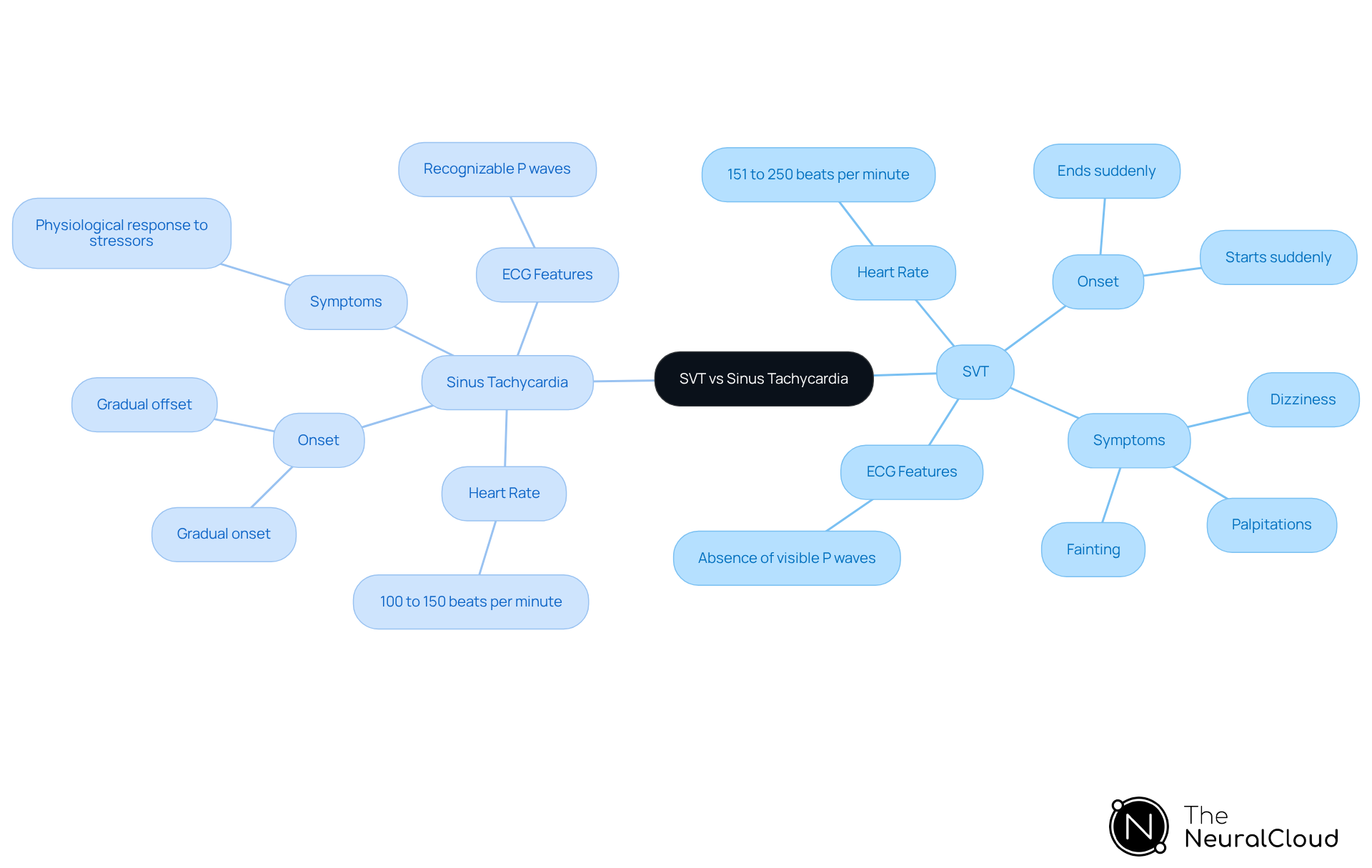
Understanding the differences in SVT rhythm vs sinus tachycardia is essential for accurate diagnosis and treatment. SVT usually has a heart rate over 150 beats per minute and starts and stops suddenly. In contrast, ST typically maintains a heart rate between 100 and 150 beats per minute, with a gradual onset and offset. Patients with SVT often experience symptoms like palpitations, dizziness, or even fainting, while ST usually arises as a physiological response to stressors such as fever, anxiety, or pain.
The absence of visible P waves can make it harder to diagnose SVT, which complicates treatment decisions. In contrast, ST generally shows recognizable P waves on an ECG, aiding in determining the underlying rhythm. Recent studies indicate that misdiagnosing these conditions can lead to ineffective treatment strategies, impacting patient outcomes. For instance, case studies show that understanding a patient's history and current issues can enhance diagnostic accuracy, enabling healthcare professionals to distinguish between sinusoidal rapid heart rate and SVT effectively.
Ultimately, accurate differentiation between SVT rhythm vs sinus tachycardia can significantly enhance treatment efficacy and patient care.
ECG Characteristics: Comparing SVT and Sinus Tachycardia
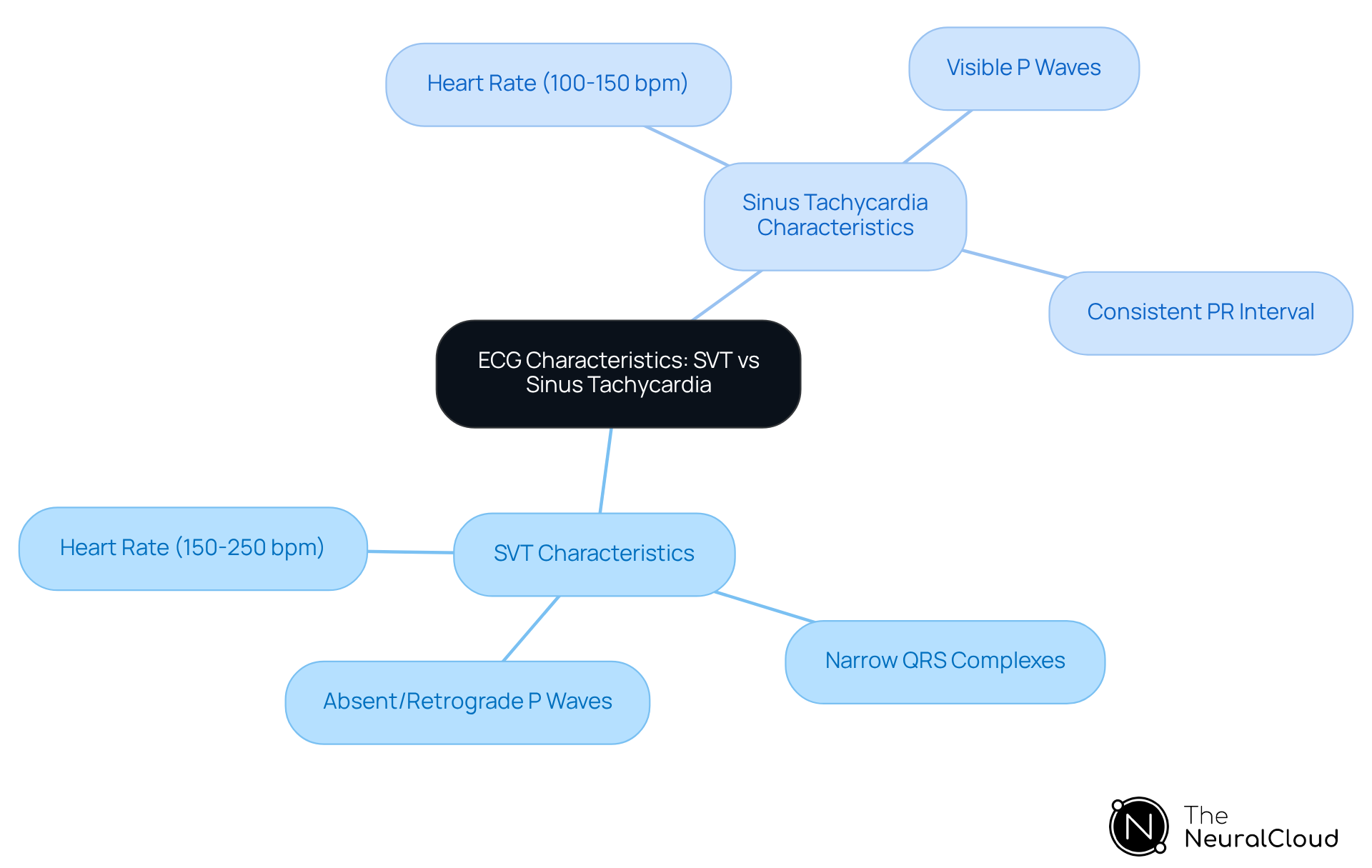
Accurate ECG analysis is crucial for diagnosing arrhythmias, particularly when comparing SVT rhythm vs sinus tachycardia and atrial tachyarrhythmia. When comparing SVT rhythm vs sinus tachycardia:
- SVT usually shows a heart rate of 150 to 250 beats per minute, with narrow QRS complexes and often absent or retrograde P waves, making diagnosis challenging during rapid episodes.
- In contrast, atrial tachyarrhythmia features a heart rate of 100 to 150 beats per minute, with visible P waves preceding each QRS complex, confirming the rhythm originates from the sinoatrial node.
- The PR interval in sinus rapid heart rate remains consistent, while the comparison of SVT rhythm vs sinus tachycardia may show variable PR intervals depending on the underlying mechanism.
Grasping these ECG features is key to diagnosing and managing these conditions effectively. Clinical research fellow Irum D Kotadia emphasizes the need for a 12-lead ECG in all patients with narrow complex rapid heart rates, highlighting the clinical importance of precise ECG interpretation.
Utilizing MaxYield™ from Neural Cloud Solutions can greatly improve this diagnostic process; its ability to automate ECG analysis and reduce noise allows for clearer insights into these arrhythmias, ultimately supporting more confident clinical decision-making. Expert endorsements from Dr. Alan Rabinowitz, Dr. Brett Heilbron, and Dr. Marc W. Deyell highlight MaxYield’s precision, which rivals human interpretation, making it an invaluable tool in modern cardiac care. Additionally, incorporating regulatory compliance details, such as FDA Class II SaMD clearance-pending status, further strengthens the context for healthcare professionals utilizing MaxYield.
Clinical Management: Approaches for SVT and Sinus Tachycardia
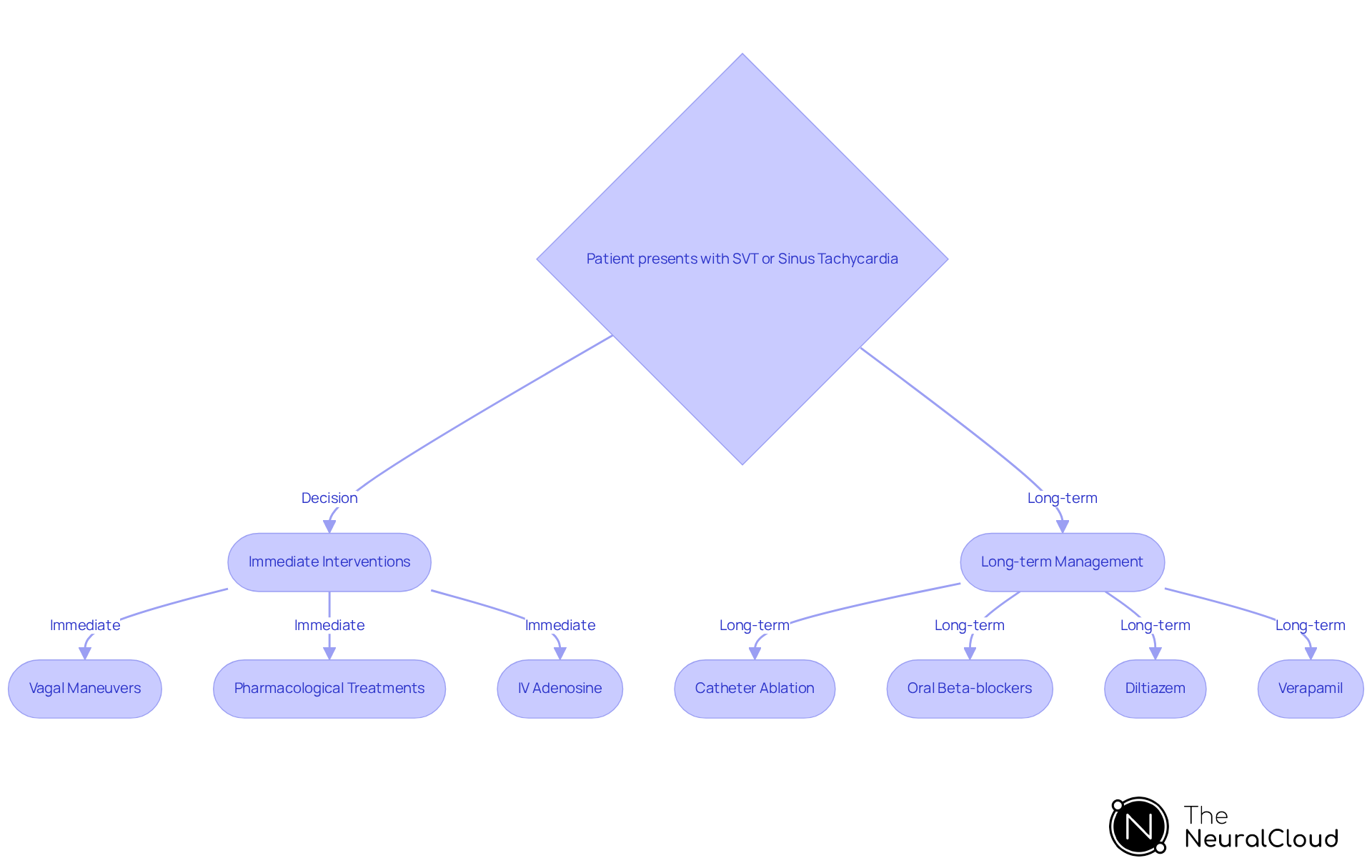
Managing supraventricular arrhythmia (SVT) presents significant challenges, especially when evaluating SVT rhythm vs sinus tachycardia, which require immediate and effective interventions. Typically, this includes:
- Vagal maneuvers
- Pharmacological treatments such as beta-blockers or calcium channel blockers
If episodes recur, catheter ablation might be an option to restore normal heart rhythm and relieve symptoms. In Canada, for example, the management of AVNRT often involves IV beta-blockers or diltiazem, especially in hemodynamically stable patients, as highlighted in recent clinical studies. Additionally, IV adenosine is recommended for differentiating focal atrial arrhythmia (AT) from AVNRT and AVRT in hemodynamically stable patients, providing a critical tool in the management of these conditions.
On the other hand, managing rapid heart rate focuses on identifying and addressing underlying causes, such as pain relief or fever control. While beta-blockers can be utilized, the approach is generally more conservative, emphasizing lifestyle modifications and careful monitoring of the patient's condition. This distinction is crucial, as inappropriate heart rate increase (IST) may arise without clear physiological demands, necessitating a tailored management strategy.
Grasping these management strategies is key to improving patient outcomes. The high prevalence of SVT rhythm vs sinus tachycardia in Canada, particularly AVNRT, underscores the need for focused treatment strategies, as this condition accounts for a significant portion of cases requiring invasive assessment. Furthermore, it is essential to consider the risks associated with catheter ablation, which can include arrhythmias, blood clots, and other complications. By integrating these insights into practice, healthcare professionals can enhance the quality of care provided to patients experiencing these arrhythmias. As Richard L. Page, MD, highlights, for individuals with symptomatic SVT without ventricular pre-excitation during normal rhythm, the suggested medications consist of:
- Oral beta-blockers
- Diltiazem
- Verapamil
Key Takeaways: Understanding SVT and Sinus Tachycardia
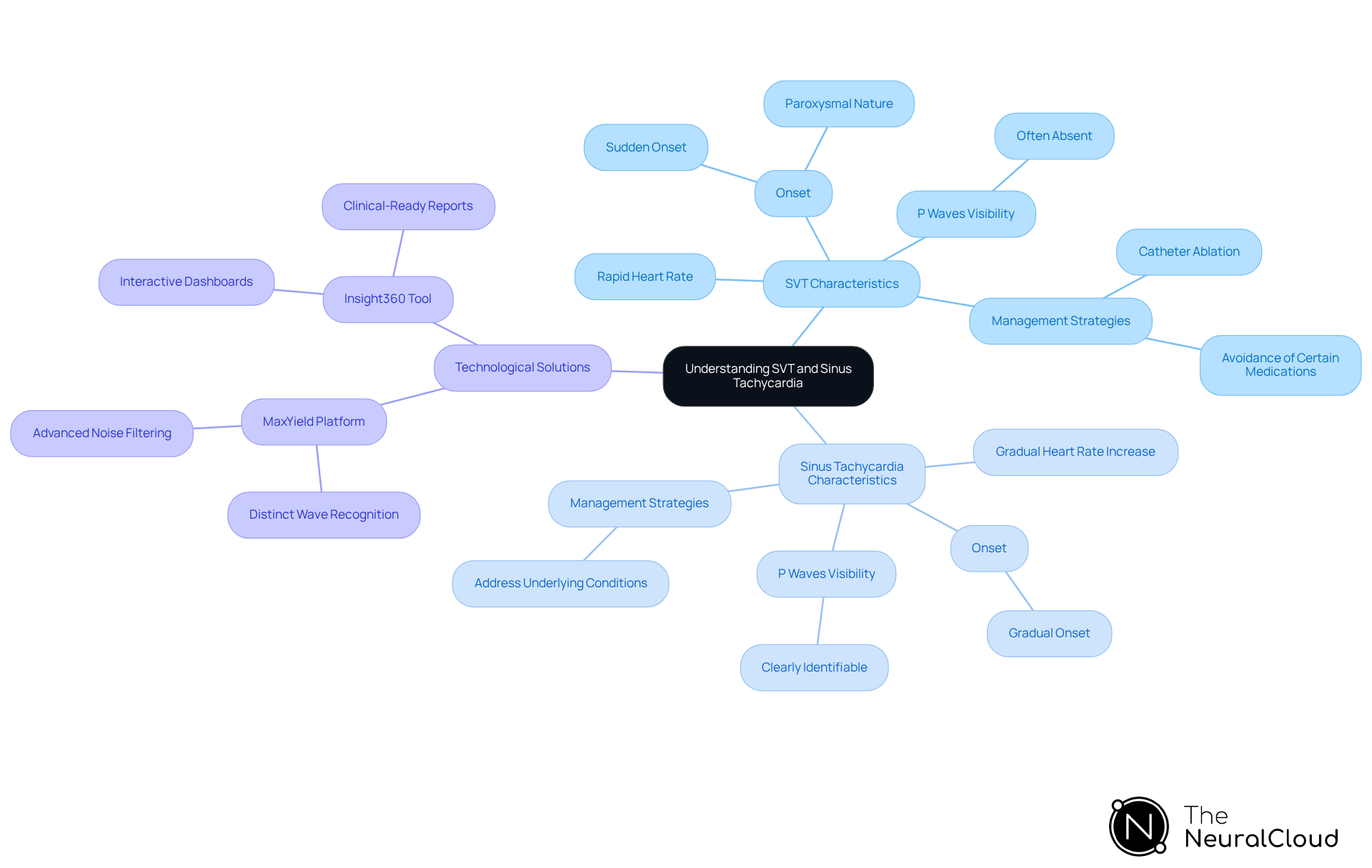
Differentiating between supraventricular tachyarrhythmia (SVT) and atrial tachyarrhythmia is essential for effective heart rate management. SVT is characterized by a rapid heart rate, sudden onset, and often the absence of visible P waves on an ECG. In contrast, atrial tachyarrhythmia features a more gradual increase in heart rate, a slower return to baseline, and clearly identifiable P waves. Clinically, SVT tends to be more symptomatic, requiring aggressive management approaches, while sinus rapid heartbeat usually necessitates addressing underlying conditions such as fever, dehydration, or hyperthyroidism.
Without accurate differentiation, misdiagnosis can lead to ineffective treatment strategies. For instance, recognizing the sudden onset and termination of SVT, often referred to as paroxysmal supraventricular rapid heart rate (PSVT), can help clinicians implement timely interventions. Observational studies show that around 50% of patients with SVT are aged between 45 and 64 years, underscoring the importance of demographic considerations in management strategies.
Recent guidelines emphasize the significance of updated treatment protocols, indicating that traditional medications like amiodarone and digoxin are no longer recommended for the acute management of narrow complex rapid heart rate. Instead, catheter ablation is now favored for recurrent focal atrial rapid heart rate, especially when it leads to rapid heart rate cardiomyopathy. This shift in treatment protocols emphasizes the need for healthcare professionals to stay updated on best practices.
Case studies illustrate the importance of ECG interpretation in distinguishing between these conditions. For example, one study highlighted that sinus tachycardia shows variability in heart rate in response to physiological demands, while SVT maintains a consistent rate once initiated. These insights are crucial for health tech developers looking to improve ECG analysis tools, ensuring they provide accurate and actionable data for healthcare professionals.
Leveraging Neural Cloud Solutions Inc.'s MaxYield platform, which utilizes advanced noise filtering and distinct wave recognition, can significantly enhance the clarity of ECG recordings, transforming lengthy and noisy data into clean, actionable signals. Additionally, the integration of Insight360, a customizable visualization and reporting tool, allows for the transformation of MaxYield’s clean ECG data into interactive dashboards and clinical-ready reports. Expert endorsements from Dr. Alan Rabinowitz, Dr. Brett Heilbron, and Dr. Marc W. Deyell emphasize that MaxYield's precision rivals human interpretation, making it an invaluable tool for modern ECG analysis. Furthermore, it is important to note that MaxYield is currently pending FDA Class II SaMD clearance, ensuring compliance with regulatory standards. Understanding these distinctions can significantly impact patient outcomes and treatment efficacy.
Conclusion
Differentiating between supraventricular tachycardia (SVT) and sinus tachycardia is essential for effective patient management. This article highlights that while SVT is characterized by a rapid heart rate exceeding 150 beats per minute and often presents with sudden onset, sinus tachycardia typically maintains a heart rate between 100 and 150 beats per minute, with a more gradual onset. Recognizing these differences not only aids in accurate diagnosis but also informs appropriate management strategies, ultimately enhancing patient care.
Key insights discussed include the importance of ECG characteristics in differentiating these conditions. The absence of P waves in SVT can lead to misdiagnosis, complicating patient management, whereas sinus tachycardia displays identifiable P waves, making it easier to determine the underlying rhythm. Management of SVT may involve aggressive interventions, including:
- Vagal maneuvers
- Pharmacological treatments
While sinus tachycardia management focuses on addressing underlying causes.
In conclusion, accurately differentiating between SVT and sinus tachycardia is vital for enhancing treatment outcomes. It's important for healthcare professionals to keep up with the latest guidelines and utilize advanced tools like MaxYield from Neural Cloud Solutions Inc. to enhance ECG analysis. By doing so, clinicians can ensure they provide the highest quality of care, ultimately leading to improved patient outcomes in the management of these arrhythmias.
Frequently Asked Questions
What is the primary difference between SVT and sinus tachycardia?
The primary difference is that SVT (Supraventricular Tachycardia) usually has a heart rate over 150 beats per minute and starts and stops suddenly, while sinus tachycardia typically maintains a heart rate between 100 and 150 beats per minute, with a gradual onset and offset.
What symptoms are commonly associated with SVT?
Patients with SVT often experience symptoms such as palpitations, dizziness, or even fainting.
What triggers sinus tachycardia?
Sinus tachycardia usually arises as a physiological response to stressors such as fever, anxiety, or pain.
How can ECG readings help differentiate between SVT and sinus tachycardia?
The absence of visible P waves on an ECG can complicate the diagnosis of SVT, while sinus tachycardia generally shows recognizable P waves, aiding in determining the underlying rhythm.
Why is it important to accurately distinguish between SVT and sinus tachycardia?
Accurate differentiation is crucial because misdiagnosing these conditions can lead to ineffective treatment strategies, negatively impacting patient outcomes.
How can understanding a patient's history improve diagnostic accuracy?
Understanding a patient's history and current issues can enhance diagnostic accuracy, enabling healthcare professionals to effectively distinguish between sinusoidal rapid heart rate and SVT.
What impact does accurate diagnosis have on treatment efficacy?
Accurate differentiation between SVT and sinus tachycardia can significantly enhance treatment efficacy and improve patient care.
List of Sources
- Distinguishing Features of SVT and Sinus Tachycardia
- Differences Between ST (Sinus Tachycardia) and SVT (Supraventricular Tachycardia) (https://aclscertification.org/differences-between-st-sinus-tachycardia-and-svt-supraventricular-tachycardia)
- SVT vs. sinus tachycardia: Key ECG differences explained (https://ems1.com/medical-clinical/articles/sinus-tach-or-svt-4-clues-to-tell-the-difference-Xw1MNh095KzyWpd2)
- SVT: Supraventricular Tachycardia - The Cardiology Advisor (https://thecardiologyadvisor.com/ddi/svt-supraventricular-tachycardia)
- Sinus Tachycardia Vs. SVT: Distinguishing between Sinus Tachycardia and other SVT | Time of Care (https://timeofcare.com/sinus-tachycardia-vs-svt-distinguishing-between-sinus-tachycardia-and-other-svt)
- Supraventricular tachycardia: An overview of diagnosis and management - PMC (https://pmc.ncbi.nlm.nih.gov/articles/PMC6964177)
- ECG Characteristics: Comparing SVT and Sinus Tachycardia
- Supraventricular tachycardia: An overview of diagnosis and management - PMC (https://pmc.ncbi.nlm.nih.gov/articles/PMC6964177)
- SVT vs. sinus tachycardia: Key ECG differences explained (https://ems1.com/medical-clinical/articles/sinus-tach-or-svt-4-clues-to-tell-the-difference-Xw1MNh095KzyWpd2)
- Differences Between ST (Sinus Tachycardia) and SVT (Supraventricular Tachycardia) (https://aclscertification.org/differences-between-st-sinus-tachycardia-and-svt-supraventricular-tachycardia)
- SVT: Supraventricular Tachycardia - The Cardiology Advisor (https://thecardiologyadvisor.com/ddi/svt-supraventricular-tachycardia)
- Clinical Management: Approaches for SVT and Sinus Tachycardia
- New guideline focuses on management of adults with supraventricular tachycardia (https://healio.com/news/cardiology/20151007/new-guideline-focuses-on-management-of-adults-with-supraventricular-tachycardia)
- SVT: Supraventricular Tachycardia - The Cardiology Advisor (https://thecardiologyadvisor.com/ddi/svt-supraventricular-tachycardia)
- Key Takeaways: Understanding SVT and Sinus Tachycardia
- SVT: Supraventricular Tachycardia - The Cardiology Advisor (https://thecardiologyadvisor.com/ddi/svt-supraventricular-tachycardia)
- SVT vs. sinus tachycardia: Key ECG differences explained (https://ems1.com/medical-clinical/articles/sinus-tach-or-svt-4-clues-to-tell-the-difference-Xw1MNh095KzyWpd2)
- ESC Guidelines for Management of Supraventricular Tachycardia: Key Points - American College of Cardiology (https://acc.org/latest-in-cardiology/ten-points-to-remember/2019/09/10/12/36/2019-esc-guidelines-for-supraventricular-tachycardia)