Introduction
The evolution of arrhythmia detection has seen significant milestones since electrocardiography was first introduced. However, traditional methods still face challenges, including inefficiencies and inaccuracies. The MaxYield™ platform stands out as a groundbreaking solution, utilizing advanced AI algorithms to improve the precision and speed of ECG evaluations. This innovation raises an important question for healthcare professionals: can automated solutions effectively address the persistent issues of false positives and subjective interpretations in arrhythmia detection?
To understand the impact of the MaxYield™ platform, it’s essential to recognize the challenges in ECG analysis. Traditional methods often lead to misinterpretations, which can compromise patient care. The MaxYield™ platform offers features that enhance ECG analysis, such as real-time data processing and machine learning capabilities. These features not only streamline the evaluation process but also significantly reduce the likelihood of errors.
The advantages of adopting the MaxYield™ platform are clear. By improving the accuracy of arrhythmia detection, healthcare professionals can make more informed decisions, ultimately leading to better patient outcomes. Additionally, the platform's efficiency allows for quicker diagnoses, which is crucial in emergency situations. As healthcare continues to evolve, integrating such innovative technologies will be vital in overcoming the longstanding challenges in arrhythmia detection.
Background of Arrhythmia Detection and Neural Cloud Solutions
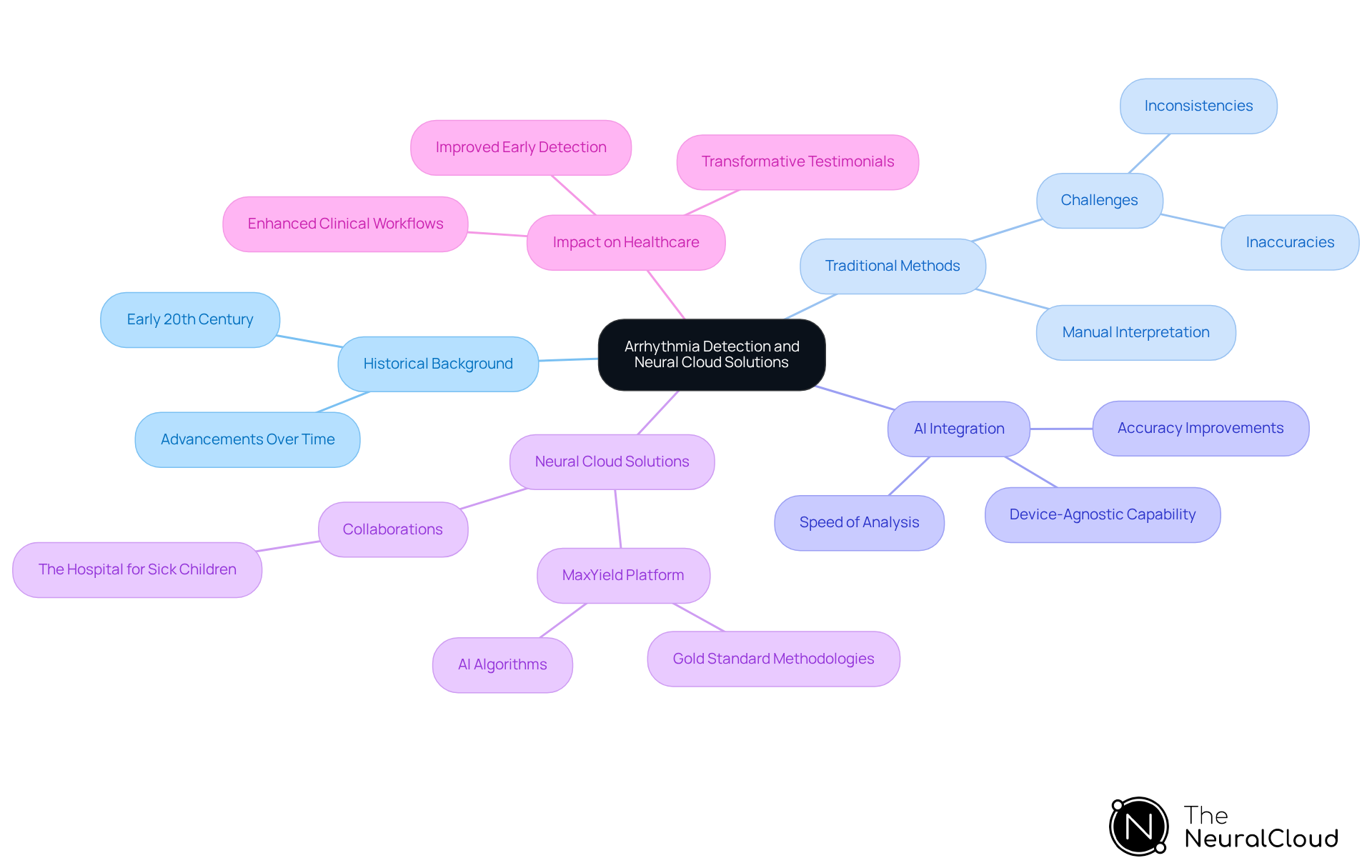
Since the early 20th century, when electrocardiography (ECG) was first introduced, the field has seen remarkable advancements. Initially, the process relied heavily on manual interpretation by skilled clinicians, which often led to inconsistencies and inaccuracies in diagnosing arrhythmias. Neural Cloud Solutions has emerged as a leader in transforming this landscape with its advanced system that employs state-of-the-art technology. This innovation significantly improves the clarity of ECG signals through advanced algorithms, effectively addressing the inefficiencies of traditional methods and becoming an essential tool for healthcare professionals.
The integration of AI into arrhythmia detection represents a crucial shift in the field, enabling faster and more accurate diagnoses. For instance, the system can analyze over 200,000 heartbeats in under five minutes, offering a comprehensive report that identifies and categorizes key elements such as P-waves, QRS complexes, and T-wave intervals. This device-agnostic capability not only speeds up the diagnostic process but also enhances the quality of ECG data, empowering clinicians to make informed decisions with greater confidence.
Recent collaborations, including a partnership with The Hospital for Sick Children, underscore the system's potential in pediatric cardiac care, focusing on improving patient outcomes. Testimonials from leading cardiologists highlight the system's effectiveness, particularly in revolutionizing and streamlining clinical workflows. As the healthcare landscape evolves, this system stands out as a significant advancement in the quest for accurate and reliable cardiac insights.
Challenges in Traditional Arrhythmia Detection Methods
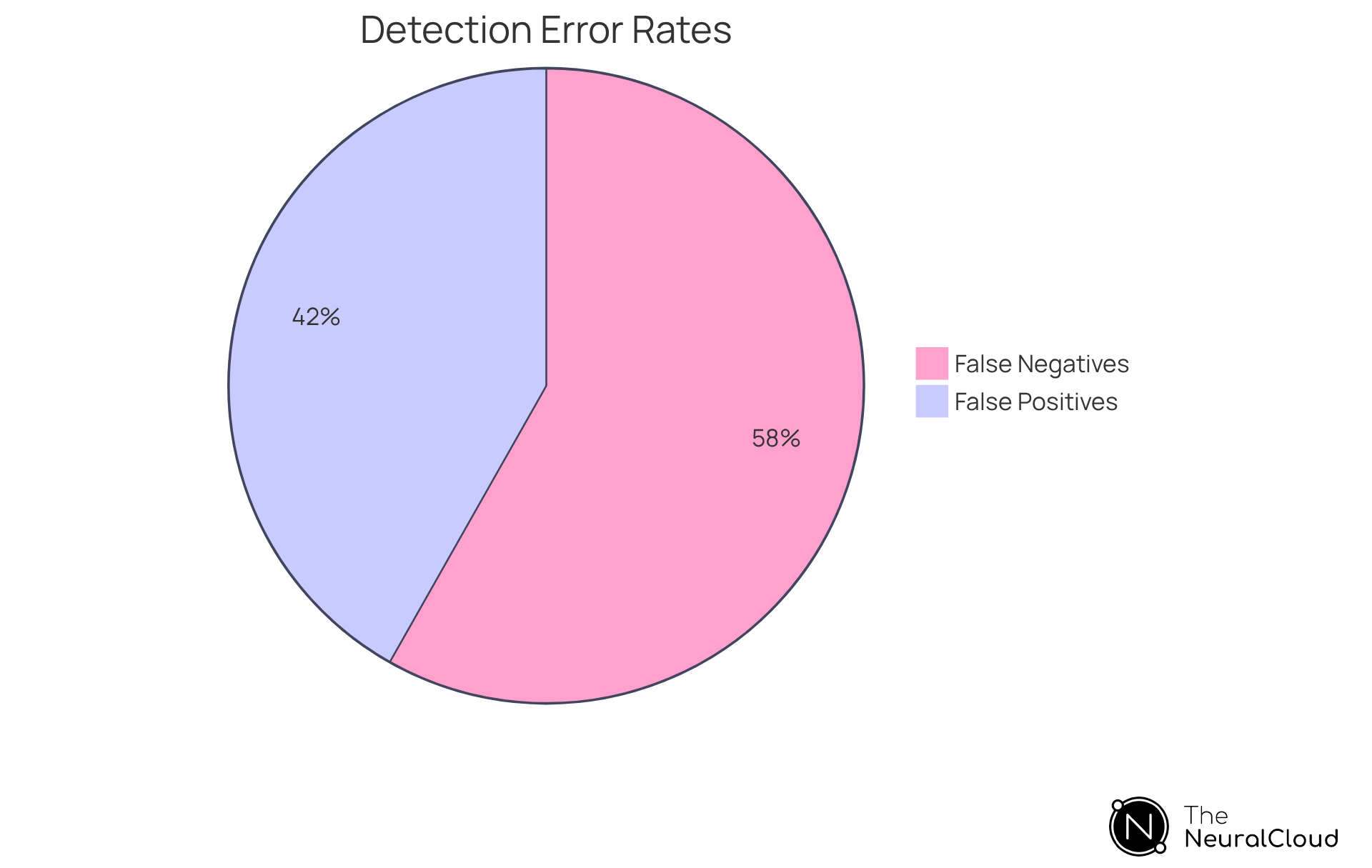
Traditional methods for arrhythmia detection face significant challenges, particularly high rates of false positives. Research shows that false positive rates can soar to 41.8%, leading to unnecessary interventions and putting additional strain on healthcare systems. The diagnostic process is further complicated by the reliance on manual processes, as clinicians often struggle with the manual labeling of waveforms. This task is not only time-consuming but also prone to human error. Moreover, variations in patient physiology can worsen these issues, resulting in inconsistent outcomes that impede accurate diagnosis.
For example, around 15% to 40% of diagnoses are false positives, which drains valuable resources and negatively impacts patient care. These persistent challenges underscore the urgent need for a more reliable and effective solution in arrhythmia detection. Such a solution would facilitate the development of systems that improve accuracy and efficiency. Ultimately, this would enhance patient outcomes and streamline clinical processes, benefiting both healthcare professionals and patients.
Solution Approach: MaxYield™ Platform and Its Innovations
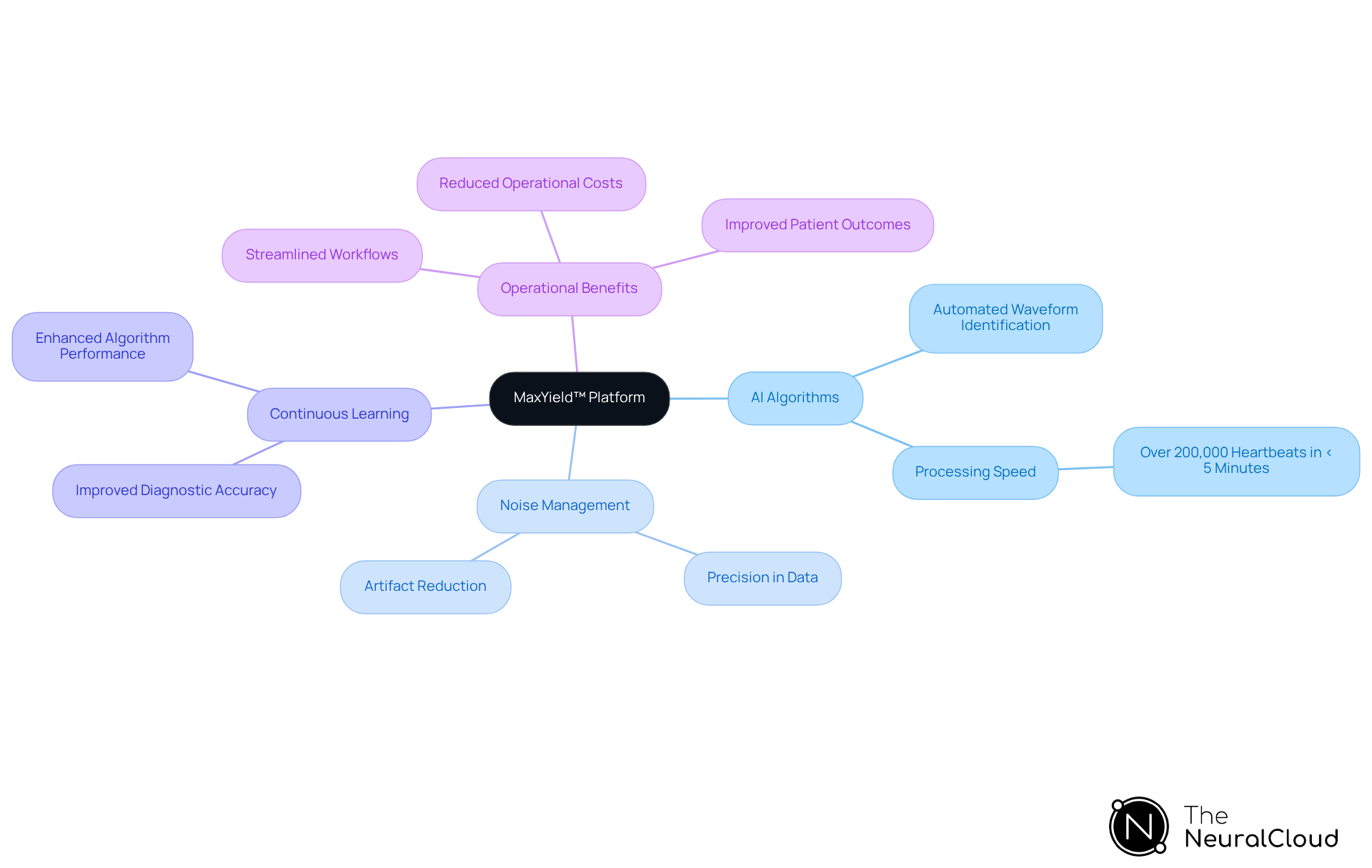
ECG analysis presents several challenges, particularly in terms of time efficiency and accuracy. The MaxYield™ platform addresses these issues through its innovations, which automate the identification and tagging of key features, including P-waves, QRS complexes, and T-wave intervals. This system can process over 200,000 heartbeats in less than five minutes, significantly reducing analysis time. As a result, clinicians can concentrate on critical decision-making rather than manual data interpretation.
One of the standout features of the MaxYield™ platform is its accuracy, which ensures that ECG data remains precise and trustworthy. This reliability is crucial for accurate diagnostics. Furthermore, the system employs a feedback mechanism that enhances algorithm performance over time, leading to improved results. Such advancements not only streamline workflows but also contribute to better patient care.
The benefits of the MaxYield™ platform extend beyond efficiency, as it establishes itself as an essential asset for healthcare providers aiming to enhance diagnostic accuracy and overall patient care. By integrating this innovative technology, healthcare professionals can improve their diagnostic capabilities, ultimately leading to better patient outcomes. The combination of automation and precision makes the MaxYield™ platform a vital tool in modern ECG analysis.
Results: Impact of MaxYield™ on ECG Analysis
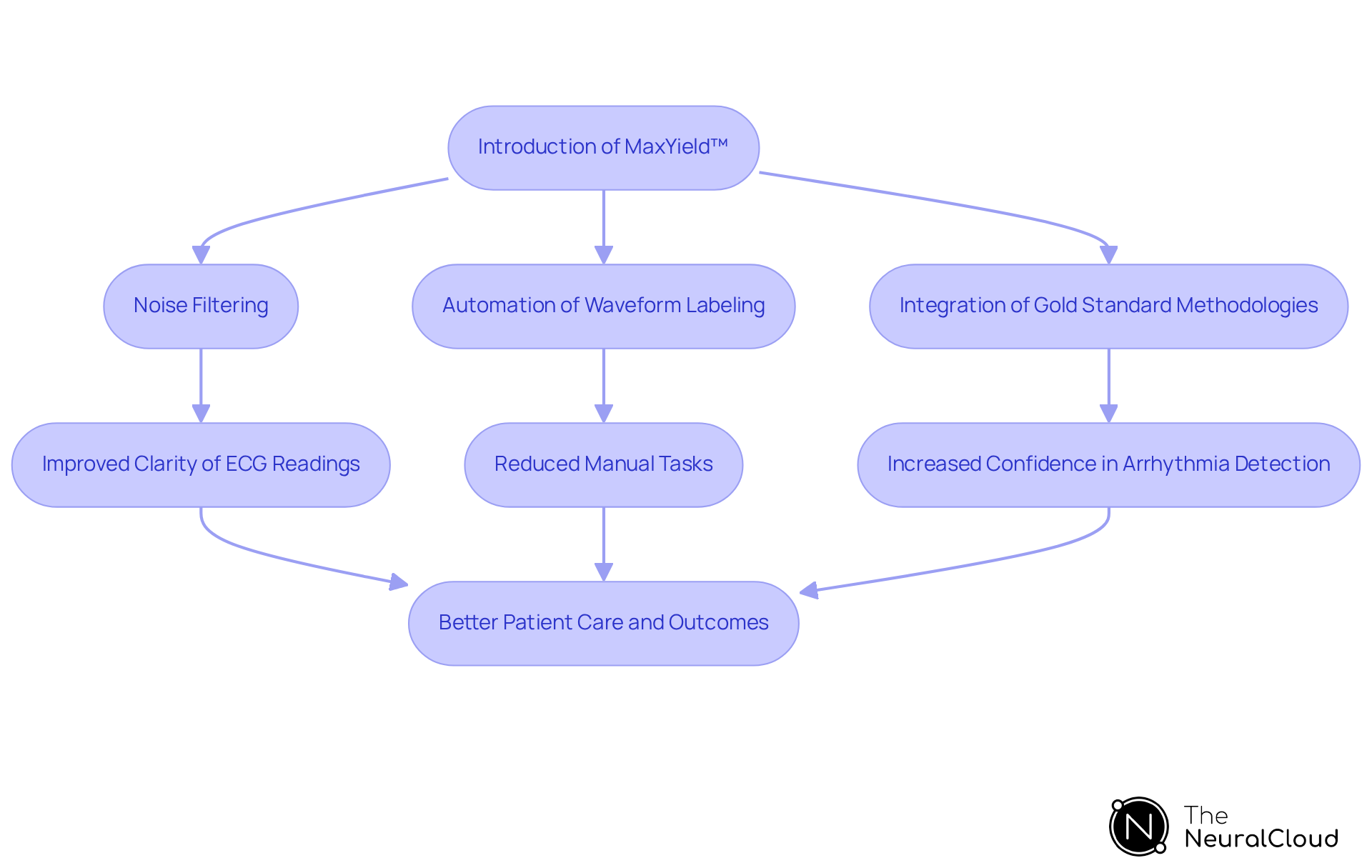
ECG analysis has long faced challenges, particularly in managing noise and manual tasks that can hinder diagnostic accuracy. The introduction of the MaxYield™ platform addresses these issues with advanced features designed to enhance diagnostic performance. Its sophisticated noise filtering and automation capabilities significantly improve the clarity of ECG readings, allowing healthcare professionals to focus on what truly matters: patient care.
One of the standout features of MaxYield™ is its ability to automate ECG interpretation, which streamlines the analysis process. This not only reduces the time clinicians spend on manual tasks but also enhances diagnostic efficiency. As one clinician remarked, "This tool has transformed my approach to ECG analysis, allowing me to focus more on patient outcomes rather than manual tasks." By converting lengthy and noisy ECG recordings into clean, crisp signals, the platform facilitates faster turnaround times for ECG reports.
Moreover, the integration of advanced algorithms ensures that the workflow adheres to the highest standards of accuracy. This commitment to precision means that healthcare professionals can trust the results they receive, ultimately leading to better patient outcomes. The influence of the MaxYield™ platform on ECG analysis is profound, enhancing both efficiency and accuracy.
Insights and Future Directions in Arrhythmia Detection
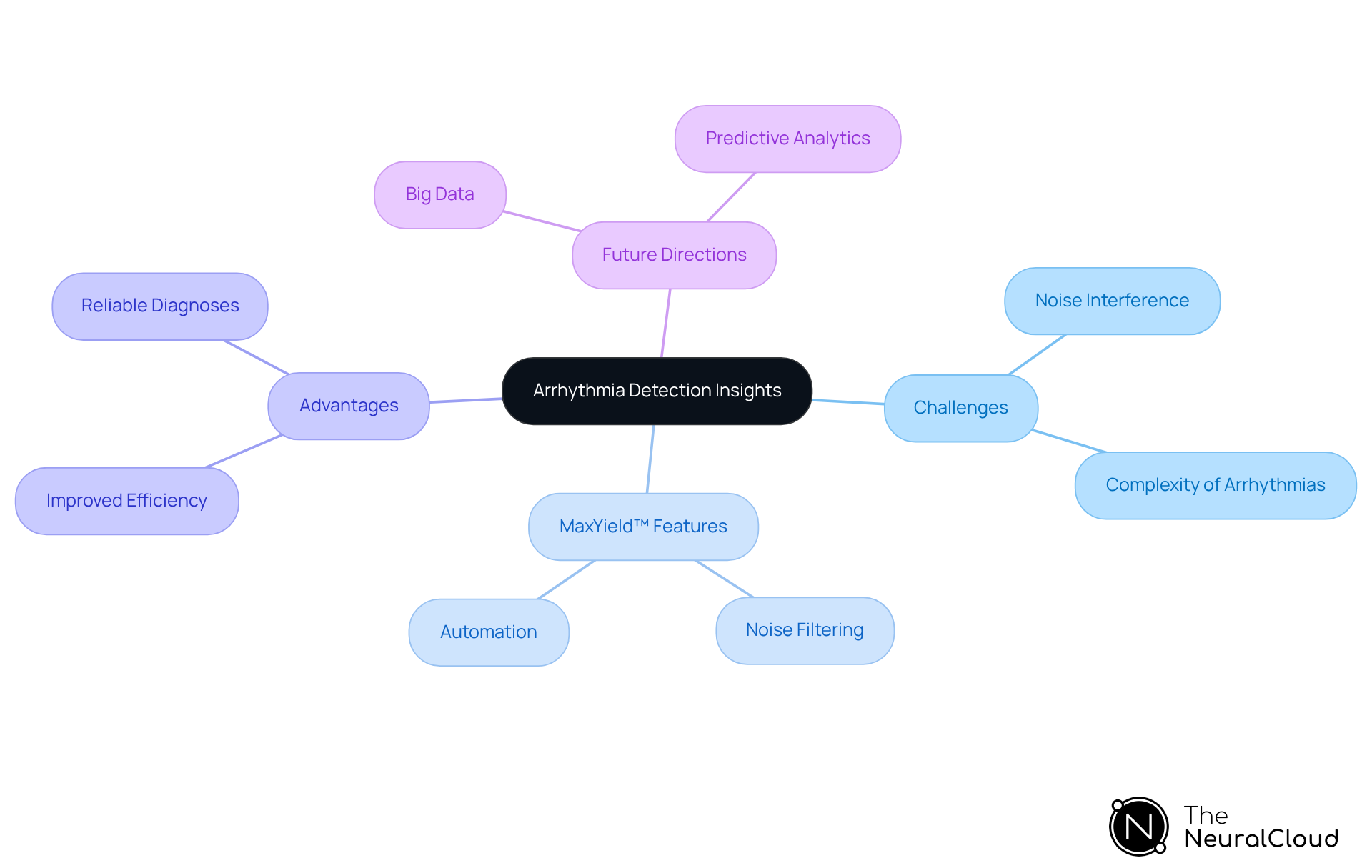
As the field of arrhythmia detection continues to evolve, challenges in traditional methods remain. Traditional methods often struggle with accuracy and the complexity of arrhythmias, leading to inefficiencies in evaluation. The MaxYield™ platform addresses these issues through innovative solutions, such as advanced noise filtering and automation, which streamline workflows and enhance the accuracy of ECG analysis.
MaxYield™ offers several key features that significantly improve ECG evaluation. Its noise filtering effectively reduces artifacts, allowing for clearer signal interpretation. Additionally, the platform automates repetitive tasks, freeing healthcare professionals to focus on more critical aspects of patient care. These features not only enhance the efficiency of ECG analysis but also contribute to more reliable diagnoses.
The advantages of using MaxYield™ extend beyond improved analysis. By integrating enhanced algorithms for arrhythmia detection, the platform supports clinicians in making informed decisions. Furthermore, its compatibility with existing systems facilitates automated labeling, which is crucial for timely interventions. This integration allows for improved workflows and better management of arrhythmias.
Looking ahead, ongoing research into big data and machine learning promises to personalize arrhythmia management further. By leveraging these advancements, healthcare providers can improve patient outcomes and enhance overall healthcare efficiency. In summary, MaxYield™ not only addresses current challenges in arrhythmia detection but also paves the way for future innovations in the field.
Conclusion
The evolution of arrhythmia detection has reached a pivotal moment with the introduction of the MaxYield™ platform, which revolutionizes ECG analysis. This innovative solution utilizes advanced AI algorithms to automate the evaluation process, significantly enhancing the accuracy and efficiency of arrhythmia diagnostics. By addressing the limitations of traditional methods, MaxYield™ empowers healthcare professionals to deliver timely and reliable patient care.
Key insights from the case study reveal the profound impact of MaxYield™ on clinical workflows and diagnostic precision. The platform processes vast amounts of data rapidly, featuring sophisticated noise filtering and automation that transform ECG analysis into a streamlined practice. Clinicians can now focus on strategic decision-making rather than being bogged down by manual tasks, ultimately leading to improved patient outcomes.
As the landscape of arrhythmia detection continues to evolve, integrating advanced technologies like MaxYield™ highlights the importance of innovation in healthcare. The ongoing commitment to refining these tools promises to enhance diagnostic capabilities and personalize patient management further. Embracing such advancements will not only improve the reliability of arrhythmia detection but also pave the way for a future where healthcare is more efficient and patient-centered.
Frequently Asked Questions
What advancements have been made in arrhythmia detection since the early 20th century?
Arrhythmia detection has evolved from manual interpretation by skilled clinicians to the use of advanced AI algorithms for automated ECG evaluation, significantly improving diagnostic accuracy and efficiency.
How does Neural Cloud Solutions improve arrhythmia detection?
Neural Cloud Solutions employs state-of-the-art AI algorithms to automate ECG evaluation, enhancing the clarity of ECG signals and addressing inefficiencies of traditional methods, making it an essential tool for healthcare professionals.
What is the significance of AI in ECG evaluation?
The integration of AI allows for faster and more accurate arrhythmia detection, enabling the analysis of over 200,000 heartbeats in under five minutes and providing a detailed examination of key ECG components.
What are the challenges faced by traditional arrhythmia detection methods?
Traditional methods suffer from high rates of false positives and negatives, subjective interpretation, time-consuming manual labeling of waveforms, and variations in patient physiology, leading to inconsistent diagnostic outcomes.
What impact do false positives have on healthcare?
High false positive rates can lead to unnecessary interventions, strain healthcare resources, and negatively affect patient care, with studies showing false positive rates as high as 41.8%.
How does the new system address the challenges of traditional methods?
The new system aims to automate waveform labeling and enhance signal clarity, which would improve diagnostic precision and streamline clinical processes for both healthcare professionals and patients.
Can you provide an example of collaboration that highlights the system's potential?
A recent partnership with The Hospital for Sick Children focuses on improving early detection of cardiac deterioration in pediatric cardiac care, showcasing the system's potential in specialized healthcare settings.
What do leading cardiologists say about the impact of AI on ECG technology?
Testimonials from leading cardiologists emphasize the transformative effect of AI on ECG technology, particularly in revolutionizing Holter monitor data processing and streamlining clinical workflows.
List of Sources
- Background of Arrhythmia Detection and Neural Cloud Solutions
- morningstar.com (https://morningstar.com/news/accesswire/1083783msn/aiml-subsidiary-neuralcloud-solutions-and-toronto-heart-centre-launch-a-pilot-program-to-test-ai-powered-holter-ecg-reporting)
- fox2now.com (https://fox2now.com/business/press-releases/accesswire/1105928/ai-ml-subsidiary-neural-cloud-begins-pilot-at-sickkids-to-advance-ai-enabled-pediatric-cardiac-care)
- aiml.health (https://aiml.health/press-release/aiml-subsidiary-neural-cloud-signs-loi-with-circular-health-to-license-maxyield-tm-ecg-signal-processing)
- Challenges in Traditional Arrhythmia Detection Methods
- bjcardio.co.uk (https://bjcardio.co.uk/2025/11/demystifying-ai-for-early-af-detection-enhancing-diagnostic-transparency-across-modalities)
- healio.com (https://healio.com/news/cardiology/20251030/aibased-ecg-model-linked-to-reduction-in-false-positives-for-heart-attack)
- AI-driven ECG improves detection of severe heart attacks (https://news-medical.net/news/20251029/AI-driven-ECG-improves-detection-of-severe-heart-attacks.aspx)
- AI-ECG Finds STEMI Faster, Cuts False-Positive Cath Lab Activations (https://tctmd.com/news/ai-ecg-finds-stemi-faster-cuts-false-positive-cath-lab-activations)
- Artificial Intelligence–Assisted ECG Interpretation versus Conventional Reporting in Predicting Arrhythmias in Acute Coronary Syndrome: A Diagnostic Accuracy Study (https://healthcare-bulletin.co.uk/article/artificial-intelligence-assisted-ecg-interpretation-versus-conventional-reporting-in-predicting-arrhythmias-in-acute-coronary-syndrome-a-diagnostic-accuracy-study-4252)
- Solution Approach: MaxYield™ Platform and Its Innovations
- aiml-innovations.com (https://aiml-innovations.com/press-release/ai-ml-innovations-inc-announces-grant-of-u-s-patent-protecting-core-ecg-signal-processing-architecture)
- biospace.com (https://biospace.com/press-releases/aiml-subsidiary-neuralcloud-solutions-commencing-pilot-with-canadian-cardiology-clinic-to-advance-ai-powered-ecg-reporting)
- morningstar.com (https://morningstar.com/news/accesswire/1100002msn/aiml-innovations-inc-announces-grant-of-us-patent-protecting-core-ecg-signal-processing-architecture)
- aiml.health (https://aiml.health/press-release/aiml-subsidiary-neuralcloud-solutions-commencing-pilot-with-canadian-cardiology-clinic-to-advance-ai-powered-ecg-reporting)
- Results: Impact of MaxYield™ on ECG Analysis
- stocktitan.net (https://stocktitan.net/news/AIMLF/aiml-subsidiary-neural-cloud-enters-pilot-with-cornerstone-k2y3zig4earz.html)
- Checking your browser - reCAPTCHA (https://pmc.ncbi.nlm.nih.gov/articles/PMC12419789)
- theneuralcloud.com (https://theneuralcloud.com/post/10-innovations-in-ai-ecg-interpretation-for-enhanced-cardiac-care)
- otcmarkets.com (https://otcmarkets.com/stock/AIMLF/news/AIML-Subsidiary-NeuralCloud-Solutions-Commencing-Pilot-with-Canadian-Cardiology-Clinic-to-Advance-AI-Powered-ECG-Reporti?id=496801)
- Insights and Future Directions in Arrhythmia Detection
- HeartBeam’s Deep Learning Algorithms Demonstrate High Rates of Accuracy for Detecting Arrhythmias (https://ir.heartbeam.com/news-events/press-releases/detail/102/heartbeams-deep-learning-algorithms-demonstrate-high)
- Heart Rhythm 2025 Features Advances in AI that Enhance Safety of Atrial Fibrillation Treatment - HRS (https://hrsonline.org/news/hr2025-features-advanced-ai-safety-afib-treatment)
- The Efficacy of Wearable Cardiovascular Monitoring Devices in Real-Time Arrhythmia Detection: Systematic Review (https://healthcare-bulletin.co.uk/article/the-efficacy-of-wearable-cardiovascular-monitoring-devices-in-real-time-arrhythmia-detection-systematic-review-3415)
- imrpress.com (https://imrpress.com/journal/RCM/26/6/10.31083/RCM39025)
- cureusjournals.com (https://cureusjournals.com/articles/10001-exploring-the-future-of-artificial-intelligence-enhanced-wearable-electronics-for-real-time-arrhythmia-detection)