Introduction
Distinguishing between ischemia and infarction on an ECG is crucial for effective cardiac care. As blood flow to the heart muscle diminishes, ischemic changes can often be reversed with timely intervention, while infarction signifies irreversible tissue damage. This article delves into the critical differences between these two conditions, offering developers insights into how advanced ECG analysis tools can enhance diagnostic accuracy. By improving diagnostic accuracy, we can significantly enhance patient outcomes and redefine cardiac care practices.
Define Ischemia and Infarction: Key Differences
Understanding the differences between ischemia vs infarction ECG is crucial for accurate ECG analysis and effective patient care. Ischemia occurs when blood flow to the heart muscle decreases, leading to insufficient oxygen supply. This can cause chest pain or discomfort, but the condition is often reversible if blood flow is restored promptly. On the other hand, a heart attack refers to the irreversible death of heart tissue caused by prolonged ischemia. For developers, distinguishing between ischemia vs infarction ECG is essential when designing algorithms that analyze ECG data.
On an ECG, the manifestations of ischemia vs infarction ECG may include T-wave inversions and ST-segment depressions, indicating transient changes in cardiac repolarization. In contrast, the ischemia vs infarction ECG typically identifies a heart attack by showing ST-segment elevations and the presence of Q waves, which signify more severe and permanent damage to the heart muscle. Misdiagnosing these conditions can lead to inadequate treatment and serious health risks.
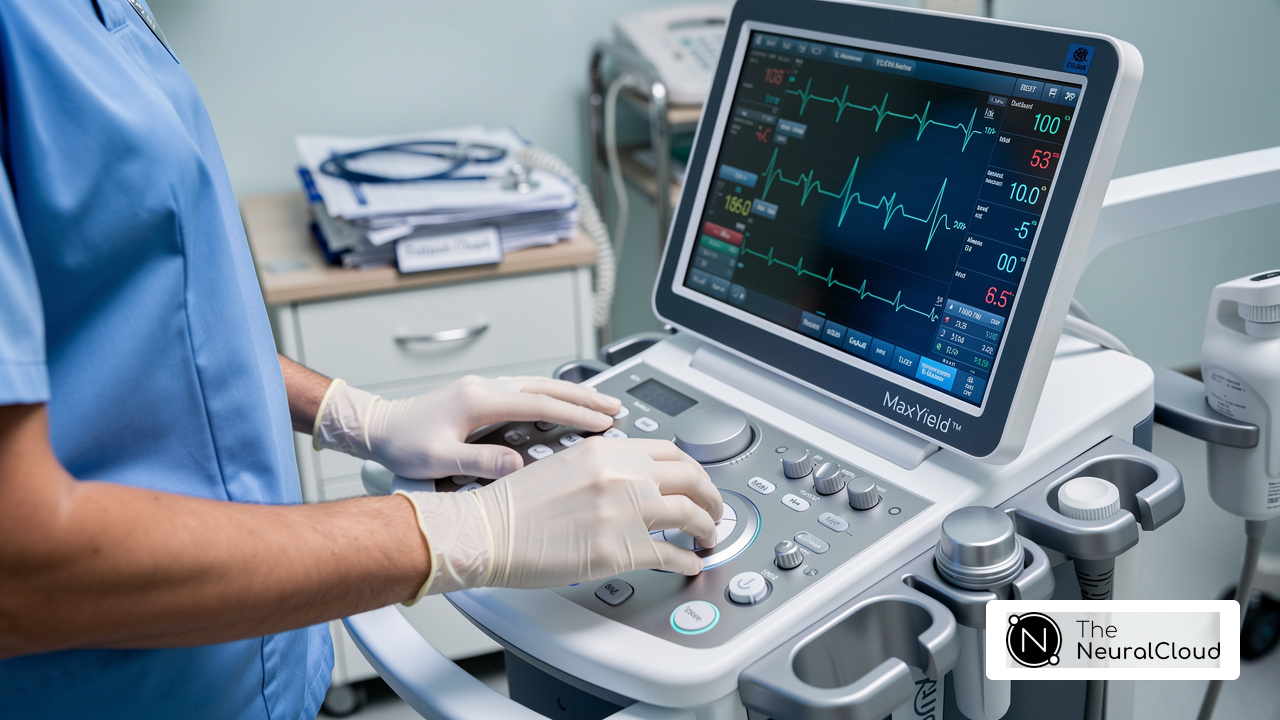
Neural Cloud Solutions' MaxYield™ platform enhances this analysis by rapidly identifying and labeling critical ECG data, even in recordings with high levels of noise and artifact. With this capability, developers can build algorithms that more accurately tell apart ischemic changes from tissue damage. By accurately distinguishing between ischemia vs infarction ECG, healthcare professionals can deliver timely and appropriate interventions.
Real-world examples demonstrate these differences: during an ischemic event, patients may experience symptoms that resolve with treatment, while those affected by tissue death often require immediate medical intervention. This knowledge not only enhances diagnostic precision but also significantly impacts patient outcomes in critical situations.

Identify ECG Patterns of Ischemia and Infarction
Identifying ischemic changes in ECG patterns is crucial for timely cardiac care, yet many clinicians face challenges in accurate interpretation of ischemia vs infarction ECG. ECG patterns indicative of ischemia vs infarction typically manifest as T-wave inversions and ST-segment depressions across multiple leads, signaling inadequate blood flow to the heart. In contrast, myocardial damage is identified by ST-segment elevations in two or more contiguous leads, which is a crucial aspect of understanding ischemia vs infarction ECG, and is often accompanied by the emergence of Q waves. For developers, it is essential to incorporate these specific patterns into ECG interpretation algorithms. An effective algorithm could flag T-wave inversions as potential signs of ischemia vs infarction and ST-segment elevations as definitive indicators of infarction, facilitating timely clinical interventions and enhancing outcomes in acute cardiovascular care.
Recent advancements in AI-driven ECG interpretation, particularly with Neural Cloud Solutions' MaxYield™, have shown promise in enhancing the accuracy of identifying these critical changes. MaxYield™ uses advanced noise filtering and wave recognition to isolate ECG waves, even in noisy recordings. This flexibility helps healthcare professionals make quick, informed decisions, even when recordings are challenging. As Doctor Federico Nani observed, 'Many individuals without an ST elevation have an occlusive MI, but it can be challenging for clinicians to promptly and precisely identify this, resulting in delays in delivering emergency treatment.' Furthermore, studies indicate that T-wave inversions are prevalent in approximately 30% of individuals with ischemic heart disease, emphasizing the importance of integrating these patterns into diagnostic algorithms for ischemia vs infarction ECG.
By utilizing MaxYield™, developers can boost the efficiency and precision of ECG analysis, ultimately enhancing care for individuals. Integrating MaxYield™ into ECG analysis not only enhances diagnostic accuracy but also has the potential to significantly improve patient outcomes in acute care settings.

Explore Clinical Implications of ECG Findings
The challenges in ECG analysis can significantly impact patient outcomes, making prompt and accurate interpretation essential. Quick identification of ischemia can lead to immediate actions, such as medication delivery or angioplasty, which are crucial in preventing tissue death. For example, in cases of ST-elevation myocardial infarction (STEMI), if treatment exceeds 90 minutes, the risk of death increases by about threefold. This highlights the need for ECG evaluation tools that detect ischemic changes and offer actionable insights for clinical decisions.
Neural Cloud Solutions' MaxYield™ platform revolutionizes ECG analysis by transforming lengthy and noisy recordings into clean, crisp signals. Its advanced noise filtering and distinct wave recognition capabilities allow for the identification and labeling of critical data, even in recordings with high levels of noise and artifact. This technology quickly isolates ECG waves, even when recordings are affected by baseline wander, movement, or muscle noise, salvaging previously obscured sections of lengthy Holter, 1-Lead, and patch monitor recordings.
Recent case studies, such as the evaluation of an AI-based ECG model at UC Davis, demonstrate the potential of technology to enhance diagnostic accuracy. This research involved over 1,000 individuals suspected of experiencing a STEMI heart attack across three hospitals in the U.S. The AI model significantly reduced false positives from nearly 42% to about 8%, accurately identifying 553 confirmed STEMI cases compared to 427 by traditional methods. Such advancements highlight the importance of timely recognition of ischemia vs infarction ECG, as missed diagnoses can lead to substantial morbidity and mortality.
By integrating alerts for critical findings, ECG evaluation tools like MaxYield™ can greatly improve healthcare providers' responsiveness in urgent situations. This ultimately enhances patient care and outcomes. Testimonials from healthcare professionals who have utilized MaxYield™ further underscore its effectiveness in real-world applications. As technology advances, the ability to interpret ECGs accurately will be vital in improving survival rates in cardiovascular emergencies.

Utilize Advanced ECG Analysis Tools
In the realm of ECG analysis, traditional methods often fall short, leading to misdiagnoses and delayed treatments. Advanced ECG evaluation tools, like those created by Neural Cloud Solutions, harness the power of AI and machine learning to enhance ECG data interpretation. These innovative technologies automatically identify and classify ischemia vs infarction ECG changes and patterns. This remarkable precision significantly decreases evaluation time. Notably, studies indicate that AI-based ECG models achieve a sensitivity of 92% and specificity of 81%, outperforming traditional methods that often struggle with high false positive rates, leading to potential misdiagnoses.
Developers should consider integrating these advanced technologies into their applications to elevate diagnostic capabilities. By using patented signal mapping algorithms, we can effectively isolate noise and enhance signals, resulting in more reliable ECG interpretations. Furthermore, the MaxYield solution addresses the 'garbage-in/garbage-out' issue by ensuring consistent, clean data across all connected devices, enabling hospital-grade accuracy from consumer-grade patches.
Visualization tools like Insight360 offer clinicians intuitive dashboards that summarize critical findings, thereby facilitating quicker decision-making and improving patient outcomes. The integration of such tools not only streamlines workflows but also aligns with current trends in ECG analysis technology, which emphasize the importance of rapid and accurate diagnosis in emergency situations. Embracing these advanced technologies not only enhances diagnostic accuracy but also transforms patient care in critical situations.

Conclusion
Distinguishing between ischemia and infarction on an ECG is vital for accurate diagnosis and effective patient management. Recognizing that ischemia is a reversible condition due to reduced blood flow, while infarction indicates irreversible heart tissue damage, can be challenging but is essential for developers and healthcare professionals alike. This understanding helps develop accurate ECG algorithms and improves patient care.
Key insights covered in this article highlight the specific ECG patterns associated with each condition, such as T-wave inversions and ST-segment elevations. These patterns are crucial for timely interventions, as misdiagnosis can lead to severe consequences. The advancements in AI-driven ECG analysis, particularly through tools like Neural Cloud Solutions' MaxYield™, have demonstrated significant improvements in diagnostic accuracy, transforming how clinicians approach cardiac emergencies.
Accurate ECG interpretation matters because it can directly affect how patients are treated in emergencies. By embracing advanced ECG analysis tools and understanding the clinical significance of ischemia versus infarction, healthcare providers can enhance their responsiveness and ultimately save lives. This commitment to leveraging technology in ECG interpretation is not just about improving diagnostics; it's about ensuring that every patient receives the timely and effective care they deserve.
Frequently Asked Questions
What is ischemia?
Ischemia occurs when blood flow to the heart muscle decreases, leading to insufficient oxygen supply. This can cause chest pain or discomfort, but the condition is often reversible if blood flow is restored promptly.
What is infarction?
Infarction refers to the irreversible death of heart tissue caused by prolonged ischemia. It is often associated with a heart attack.
How can ischemia and infarction be distinguished on an ECG?
Ischemia on an ECG may show T-wave inversions and ST-segment depressions, indicating transient changes in cardiac repolarization. In contrast, infarction is typically indicated by ST-segment elevations and the presence of Q waves, signifying more severe and permanent damage to the heart muscle.
Why is it important to differentiate between ischemia and infarction in ECG analysis?
Misdiagnosing these conditions can lead to inadequate treatment and serious health risks. Accurate differentiation allows healthcare professionals to deliver timely and appropriate interventions.
How does Neural Cloud Solutions' MaxYield™ platform assist in ECG analysis?
The MaxYield™ platform enhances ECG analysis by rapidly identifying and labeling critical ECG data, even in recordings with high levels of noise and artifact. This capability helps developers build algorithms that more accurately distinguish between ischemic changes and tissue damage.
What are the real-world implications of understanding the differences between ischemia and infarction?
Understanding these differences enhances diagnostic precision and significantly impacts patient outcomes in critical situations. For example, symptoms during an ischemic event may resolve with treatment, while those with tissue death often require immediate medical intervention.
List of Sources
- Define Ischemia and Infarction: Key Differences
- Heart Disease Facts (https://cdc.gov/heart-disease/data-research/facts-stats)
- Identify ECG Patterns of Ischemia and Infarction
- AI outperforms conventional diagnosis for certain types of heart attacks (https://escardio.org/news/press/press-releases/acvc-press)
- AI-based ECG interpretation outperforms standard diagnosis of occlusive myocardial infarction (https://news-medical.net/news/20260323/AI-based-ECG-interpretation-outperforms-standard-diagnosis-of-occlusive-myocardial-infarction.aspx)
- sciencedirect.com (https://sciencedirect.com/science/article/pii/S0196064424012502)
- ECG Case Studies | Interpretation & Answers | Geeky Medics (https://geekymedics.com/ecg-case-studies)
- STEMI ECG Criteria: ST-Elevation Thresholds (https://powerfulmedical.com/blog/stemi-ecg-criteria)
- Explore Clinical Implications of ECG Findings
- ECG Case Studies | Interpretation & Answers | Geeky Medics (https://geekymedics.com/ecg-case-studies)
- New study finds AI model improves heart attack detection (https://health.ucdavis.edu/news/headlines/new-study-finds-ai-model-improves-heart-attack-detection/2025/11)
- Utilize Advanced ECG Analysis Tools
- New study finds AI model improves heart attack detection (https://health.ucdavis.edu/news/headlines/new-study-finds-ai-model-improves-heart-attack-detection/2025/11)
- AI-based ECG interpretation outperforms standard diagnosis of occlusive myocardial infarction (https://news-medical.net/news/20260323/AI-based-ECG-interpretation-outperforms-standard-diagnosis-of-occlusive-myocardial-infarction.aspx)
- pmc.ncbi.nlm.nih.gov (https://pmc.ncbi.nlm.nih.gov/articles/PMC10145690)
- AI-Based ECG Analysis Significantly Improves STEMI Detection, Reduces False Activations - American College of Cardiology (https://acc.org/latest-in-cardiology/articles/2025/10/24/16/56/tues-554pm-ai-tct-2025)