Introduction
The rising incidents of athlete collapse during competitions highlight a pressing need for improved safety measures in sports. Understanding the multifaceted causes - from cardiac issues to environmental factors - can empower coaches, trainers, and medical professionals to implement effective prevention strategies. Yet, while technologies like MaxYield™ and Insight360 offer promising solutions, the real challenge is effectively utilizing them to protect athletes. So, how can sports organizations make the most of these tools to boost athlete safety and performance, especially in emergencies?
Explore the Causes of Athlete Collapse
Athlete fainting poses significant risks, often stemming from both benign and serious health issues. Common causes include:
- Cardiac Arrest: Often linked to underlying cardiac conditions such as hypertrophic cardiomyopathy, prevalent among young athletes. MaxYield™ technology offers immediate insights into heart function, helping identify risks before they lead to collapse. This technology is supported by FDA Class II SaMD clearance-pending status, ensuring compliance with regulatory standards.
- Dehydration and Heat Exhaustion: These conditions can lead to a drop in blood pressure and fainting, particularly in endurance sports. Monitoring sports participants with advanced ECG analysis can help detect early signs of distress, allowing for timely interventions.
- Arrhythmias: Sudden arrhythmias can lead to sports participants falling unexpectedly, often without prior symptoms. The MaxYield™ ECG labeling Neural Network transforms cardiac data analysis, enabling rapid identification of arrhythmias and enhancing participant safety. Expert endorsements from Dr. Alan Rabinowitz, Dr. Brett Heilbron, and Dr. Marc W. Deyell emphasize MaxYield’s precision rivaling human interpretation and its noise reduction benefits.
- Exhaustion and Overexertion: Physical fatigue can result in a breakdown, particularly in high-intensity athletics. Utilizing MaxYield™ technology allows for better monitoring of individuals' exertion levels, helping to prevent overexertion.
- Environmental factors like extreme temperatures and humidity can increase the risk of athlete collapse, especially in outdoor sports. The ability to analyze ECG data in real-time can assist coaches and trainers in making informed decisions regarding participant safety in varying conditions.
- Postural Hypotension: This occurs when an individual stands up too quickly after exertion, leading to a sudden drop in blood pressure. With the insights provided by MaxYield™, trainers can better understand and mitigate these risks.
Additionally, Insight360 serves as a customizable visualization tool that transforms MaxYield’s clean ECG data into interactive dashboards and clinical-ready reports, further enhancing the monitoring process.
Recognizing these causes is crucial for coaches, trainers, and medical professionals to spot warning signs and act preventively. By utilizing the capabilities of Neural Cloud Solutions' MaxYield™ technology, sports professionals can improve player care and performance management, ultimately transforming the field of sports medicine.
Implement Effective Prevention Strategies
The issue of athlete collapse during competitions is a pressing concern that demands proactive strategies for prevention. To effectively prevent athlete collapse, consider implementing the following strategies:
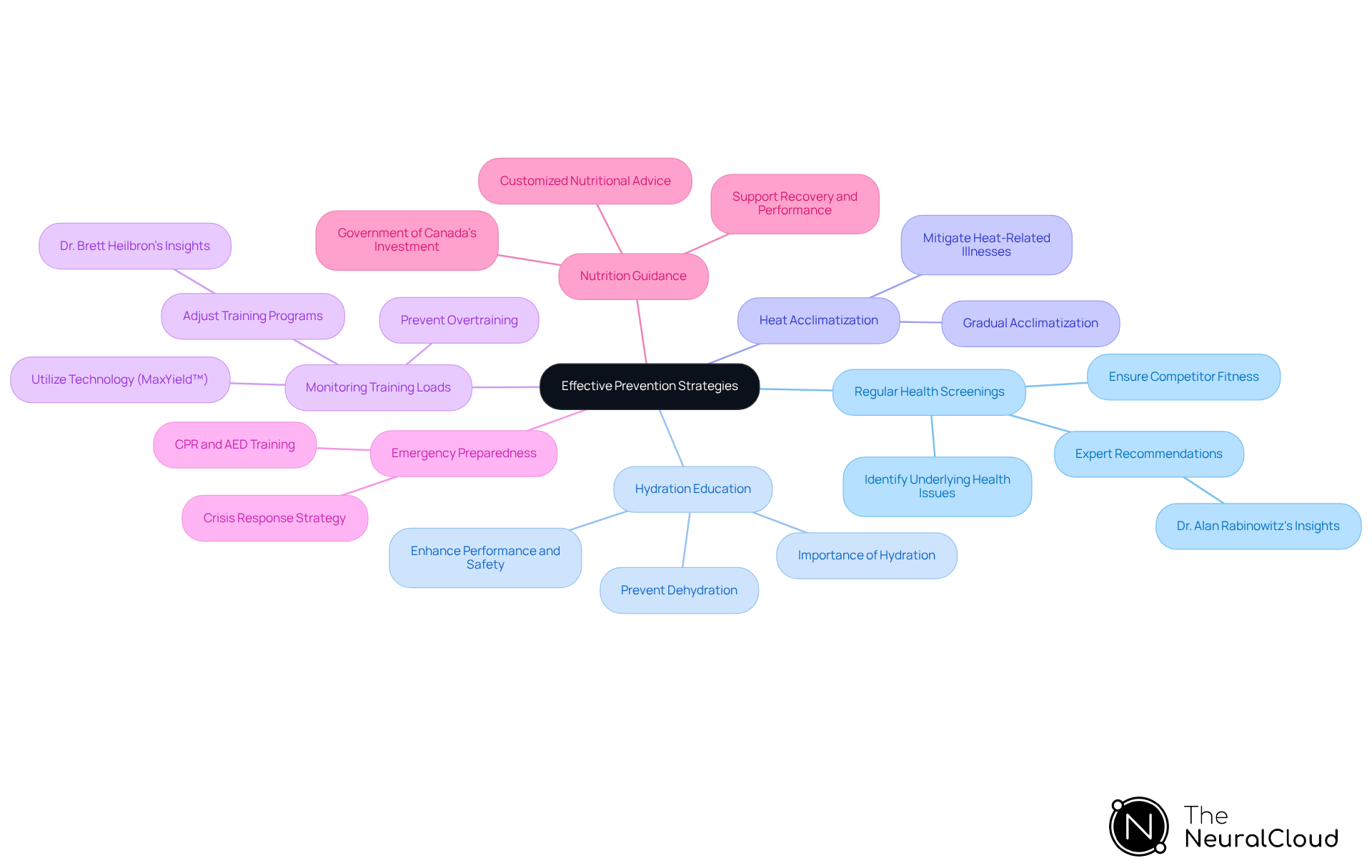
- Regular Health Screenings: Conducting pre-participation physical exams is crucial for identifying underlying health issues. These screenings help ensure competitors are fit to compete and can significantly reduce the risk of collapse during events. In Canada, health screenings are increasingly acknowledged for their role in protecting the well-being of competitors, with numerous athletic organizations suggesting thorough evaluations. Experts like Dr. Alan Rabinowitz emphasize that thorough health screenings can identify potential risks before they become critical.
- Hydration Education: Teaching sports participants about the significance of hydration before, during, and after exercise is essential. Proper hydration can prevent dehydration, a common factor contributing to athlete collapse, especially in high-intensity sports. Incorporating hydration education into training programs can significantly enhance sports performance and safety.
- Heat Acclimatization: Gradually acclimatizing individuals to hot and humid conditions can mitigate the risk of heat-related illnesses. This strategy is essential for competitors participating in environments where temperature and humidity levels are high, ensuring they are physically prepared for the conditions they will face.
- Monitoring Training Loads: Utilizing technology, such as Neural Cloud Solutions Inc.'s MaxYield™, to track sports participants' training intensity and volume helps prevent overtraining, which can lead to fatigue and increase the risk of failure. Regular evaluations can ensure that training programs are appropriately adjusted based on individual participant needs, promoting optimal performance and safety. Dr. Brett Heilbron notes that MaxYield™ provides precision rivaling human interpretation, enhancing monitoring capabilities.
- Emergency Preparedness: Emergency preparedness is vital; it’s a key part of keeping competitors safe. Ensuring that all coaches and staff are trained in CPR and the use of AEDs is critical. Having a clear crisis response strategy in place can save lives in the event of an athlete collapse during training or competition.
- Nutrition Guidance: Offering sports participants with nutritional advice customized to their energy requirements and recovery can improve performance and decrease the chances of collapse. Proper nutrition supports overall health and helps individuals maintain optimal physical condition. The Government of Canada’s investment in support for competitors, including nutrition guidance, reflects the commitment to fostering a safe and healthy environment for participants.
By adopting these strategies, sports organizations can significantly enhance athlete safety and performance. Additionally, it is important to ensure that all technologies used, including MaxYield™, comply with regulatory standards such as FDA Class II SaMD clearance-pending status, ensuring the highest level of safety and efficacy.
Leverage Technology for Monitoring and Prevention
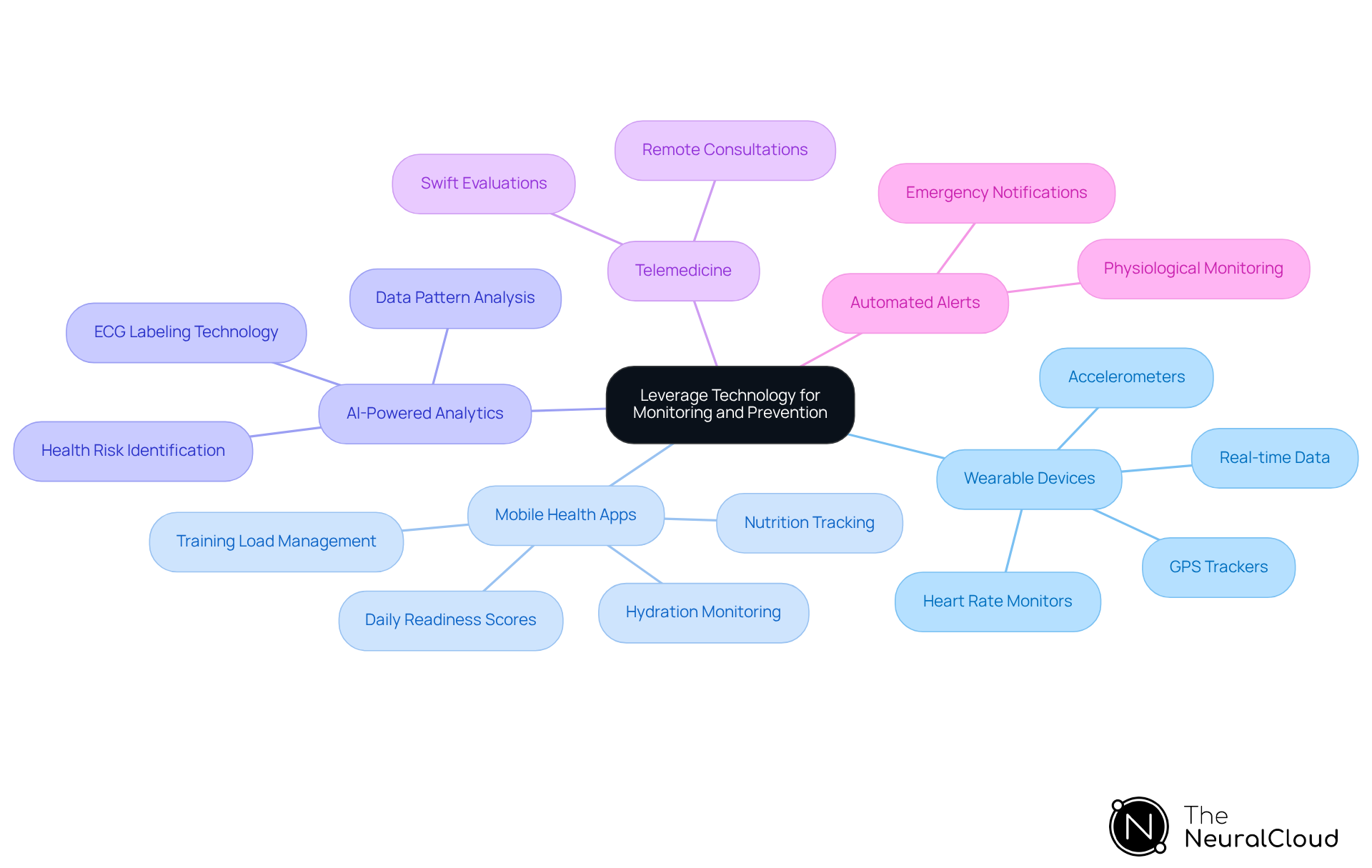
Monitoring the health of sports participants poses significant challenges, particularly in preventing collapses during competition. Key technologies that address these challenges include:
- Wearable Devices: Devices such as heart rate monitors, GPS trackers, and accelerometers provide real-time data on sports participants' physiological responses and performance metrics. In Canada, the wearable technology market is projected to grow significantly, with an estimated market size of USD 103.1 billion in 2026, driven by increasing consumer awareness of health and fitness.
- Mobile Health Apps: Applications that monitor hydration, nutrition, and training loads assist individuals in managing their health proactively. These apps are becoming essential tools for sportspeople, offering features like daily readiness scores and stress monitoring to help avoid overtraining.
- AI-Powered Analytics: Advanced algorithms, such as those used in Neural Cloud Solutions Inc.'s MaxYield technology, analyze data from wearables to identify patterns that may indicate health risks, allowing for timely interventions. MaxYield's ECG labeling Neural Network revolutionizes cardiac data analysis, delivering clear insights about heart function within minutes, which is essential for monitoring sports individuals and improving their performance and safety. This technology is currently pending FDA Class II SaMD clearance, ensuring compliance with regulatory standards.
- Telemedicine: Remote consultations with sports medicine experts enable swift evaluations and suggestions for individuals involved in sports, ensuring they receive prompt care without the necessity for face-to-face appointments.
- Automated Alerts: Systems that notify coaches and medical staff of abnormal physiological readings enhance response times during emergencies. This proactive approach can significantly enhance participant safety during training and competition.
Expert endorsements from Dr. Alan Rabinowitz, Dr. Brett Heilbron, and Dr. Marc W. Deyell emphasize that MaxYield’s precision rivals human interpretation, significantly reducing noise in ECG readings. Additionally, the Insight360 tool complements MaxYield by transforming its clean ECG data into interactive dashboards and clinical-ready reports.
Integrating these technologies can lead to a safer and healthier environment for athletes, ultimately improving their performance and well-being.
Prepare for Emergency Response
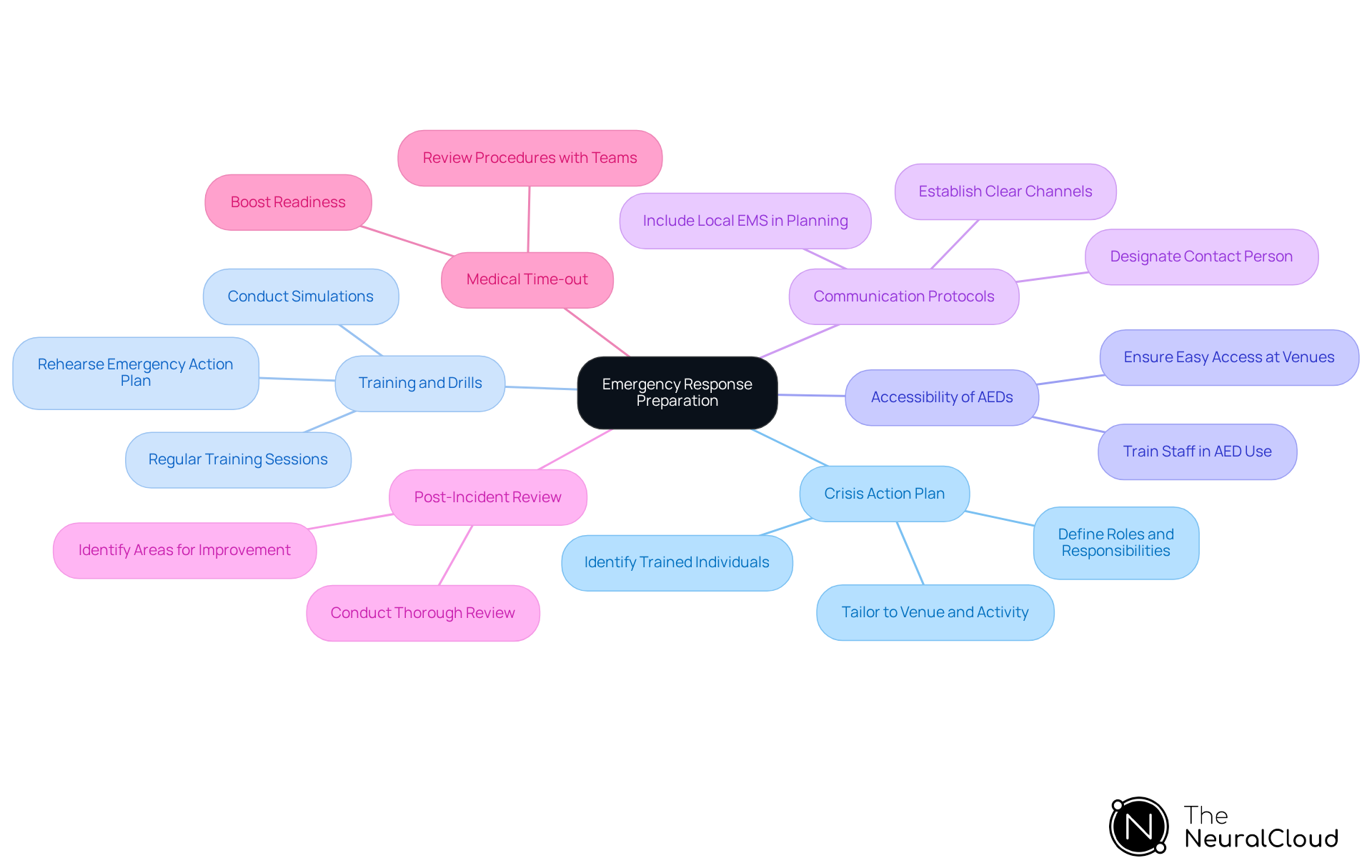
Inadequate preparation for athlete collapse can lead to dire consequences, making a successful crisis response plan essential. Key components include:
- Crisis Action Plan (CAP): Develop a comprehensive CAP that clearly defines the roles and responsibilities of coaches, trainers, and medical personnel during critical situations. Tailor this plan to the specific venue and activity, ensuring that all trained individuals are identified and their roles are well-defined.
- Training and Drills: Regular training sessions and drills are crucial for ensuring that all staff are familiar with the Emergency Action Plan (EAP) and can respond swiftly in critical situations. Conducting simulations allows staff to practice their roles and pinpoint areas for improvement. Regular rehearsals of the EAP are also important to ensure all responders understand the chain of command.
- Accessibility of AEDs: Automated external defibrillators (AEDs) must be easily accessible at all training and competition venues. Staff should receive training in their use to ensure prompt action during cardiac emergencies.
- Communication Protocols: Establish clear communication channels for alerting urgent services and coordinating care among staff. Designate a contact person for crises to streamline the response process and ensure local EMS is included in the planning.
- Post-Incident Review: After any incident, conduct a thorough review to assess the response and identify areas for improvement in the EAP. This debriefing process is vital for enhancing future crisis preparedness strategies.
- Medical Time-out: Implement a 'Medical Time-out' before contests to review procedures and equipment locations with visiting teams. This practice boosts readiness and keeps everyone in the loop about response protocols.
Proactive crisis planning significantly enhances an organization's ability to respond effectively, safeguarding the well-being of competitors. Furthermore, incorporating Neural Cloud Solutions Inc.'s MaxYield technology into these protocols can offer real-time ECG analysis, enabling faster evaluations of an athlete's cardiac health during critical situations. This ECG analysis enhances athletic performance and ensures a higher standard of safety during events. With the FDA Class II SaMD clearance-pending status and audit-ready documentation supporting GxP inspections, MaxYield stands as a reliable solution for emergency response in sports medicine.
Conclusion
Athlete collapse presents a complex challenge that demands immediate attention to safeguard sports participants. By recognizing the various causes, including cardiac issues, dehydration, and environmental factors, stakeholders can implement effective strategies to mitigate risks. By leveraging advanced technology like Neural Cloud Solutions Inc.'s MaxYield™, stakeholders can enhance their ability to monitor athlete health and respond effectively.
Key insights from this discussion highlight the importance of:
- Regular health screenings
- Hydration education
- The use of wearable devices to track physiological responses
Additionally, preparing for emergencies through comprehensive action plans and training ensures that coaches and medical personnel are equipped to respond swiftly and effectively. It's clear that technology, especially AI-driven analytics and mobile health apps, can play a crucial role in managing athlete health proactively.
Ultimately, fostering a culture of safety and preparedness within athletic organizations is crucial. By prioritizing athlete health through education, technology, and emergency readiness, the risk of athlete collapse can be significantly reduced. By embracing these strategies, athletic organizations can create an environment where athletes thrive, free from the fear of collapse.
Frequently Asked Questions
What are the common causes of athlete collapse?
Common causes of athlete collapse include cardiac arrest, dehydration and heat exhaustion, arrhythmias, exhaustion and overexertion, environmental factors, and postural hypotension.
How does cardiac arrest relate to athlete collapse?
Cardiac arrest is often linked to underlying cardiac conditions such as hypertrophic cardiomyopathy, which is prevalent among young athletes. MaxYield™ technology provides immediate insights into heart function to identify risks before they lead to collapse.
What role does dehydration and heat exhaustion play in athlete fainting?
Dehydration and heat exhaustion can cause a drop in blood pressure, leading to fainting, particularly in endurance sports. Advanced ECG analysis can help monitor athletes for early signs of distress.
What are arrhythmias and how do they affect athletes?
Arrhythmias are sudden irregular heartbeats that can cause athletes to collapse unexpectedly, often without prior symptoms. MaxYield™ technology enhances the identification of arrhythmias, improving participant safety.
How can exhaustion and overexertion lead to athlete collapse?
Physical fatigue from high-intensity athletics can result in a breakdown. MaxYield™ technology helps monitor exertion levels to prevent overexertion.
What environmental factors increase the risk of athlete collapse?
Extreme temperatures and humidity can heighten the risk of collapse, especially in outdoor sports. Real-time ECG data analysis aids coaches and trainers in making informed safety decisions.
What is postural hypotension and how does it relate to athlete safety?
Postural hypotension occurs when an individual stands up too quickly after exertion, causing a sudden drop in blood pressure. Insights from MaxYield™ help trainers understand and mitigate these risks.
How does Insight360 enhance the monitoring process for athletes?
Insight360 is a customizable visualization tool that transforms MaxYield’s ECG data into interactive dashboards and clinical-ready reports, improving the monitoring process for athletes.
Why is it important for coaches and trainers to recognize the causes of athlete collapse?
Recognizing these causes is crucial for spotting warning signs and acting preventively, ultimately improving player care and performance management in sports medicine.
List of Sources
- Explore the Causes of Athlete Collapse
- How sudden cardiac arrest can be different for athletes — based on their sex | CBC News (https://cbc.ca/news/health/sudden-cardiac-arrest-athletes-1.7590510)
- Sudden Cardiac Arrest Among Young Competitive Athletes Before and During the COVID-19 Pandemic - PMC (https://pmc.ncbi.nlm.nih.gov/articles/PMC11851236)
- Why Are These Athletes Collapsing? A Cardiologist Responds (https://news.cuanschutz.edu/news-stories/why-are-these-athletes-collapsing-a-cardiologist-responds)
- Why do super-fit, young athletes suffer sudden cardiac arrest? - National | Globalnews.ca (https://globalnews.ca/news/7981266/athletes-cardiac-arrest-euro-christian-eriksen)
- Sudden cardiac arrest in young athletes: 5 things parents should know (https://michiganmedicine.org/health-lab/sudden-cardiac-arrest-young-athletes-5-things-parents-should-know)
- Implement Effective Prevention Strategies
- Secretary of State van Koeverden announces strengthened support for Canadian athletes (https://canada.ca/en/canadian-heritage/news/2026/07/secretary-of-state-van-koeverden-announces-strengthened-support-for-canadian-athletes.html)
- The Importance of Sports Screening for Athletes - EchoMed (https://echomed.co.uk/the-importance-of-sports-screening-for-athletes)
- Assessing athletes beyond routine screening: Incorporating essential factors to optimize cardiovascular health and performance - PMC (https://pmc.ncbi.nlm.nih.gov/articles/PMC11214176)
- Prioritize routine screening and regular monitoring of elite athletes’ mental health, says IOC (https://eurekalert.org/news-releases/1139319)
- Leverage Technology for Monitoring and Prevention
- Wearable Technology Market Size, Share Report 2026-2033 (https://grandviewresearch.com/industry-analysis/wearable-technology-market)
- Mobile Apps for Athletic Wellness: Tracking Sleep, Nutrition, and Recovery Metrics (https://sportsmedicineweekly.com/blog/mobile-apps-for-athletic-wellness-tracking-sleep-nutrition-and-recovery-metrics)
- Wearable Tech: A Game Changer for Athletes' Performance (https://news.lehigh.edu/wearable-tech-a-game-changer-for-athletes-performance)
- Wearable Technology & Athletic Performance - Sport PEI (https://sportpei.pe.ca/resource/wearable-technology-athletic-performance)
- Prepare for Emergency Response
- Emergency Action Plans: Practice Makes Perfect (https://nfhs.org/stories/emergency-action-plans-practice-makes-perfect)
- Emergency Action Planning for Sports Events: EAP Guide (https://sportsplanningguide.com/emergency-action-planning-for-sports-events)
- Crafting an Effective Emergency Action Plan for Youth Sports Organizations - The Matthew Mangine Jr. "One Shot" Foundation - Emergency Action Plans, AED Awareness in Youth Sports (https://oneshot.life/news/insights/crafting-an-effective-emergency-action-plan-for-youth-sports-organizations)
- NFL Presents: Emergency Preparedness in Sports (VIDEO) (https://nfl.com/playerhealthandsafety/health-and-wellness/player-care/nfl-presents-emergency-preparedness-in-sports-webinar)