Introduction
Hyperdynamic left ventricular (LV) systolic function poses significant challenges in cardiovascular health, often resulting in misdiagnosis and overlooked risks. For healthcare professionals, grasping the nuances of this condition is essential for improving diagnostic accuracy. Understanding these implications is crucial for healthcare professionals aiming to improve patient outcomes through advanced diagnostic technologies. Exploring how innovative technologies like MaxYield™ can transform cardiac care reveals the vital intersection of advanced diagnostics and effective management strategies in enhancing heart health.
Define Hyperdynamic Left Ventricular Systolic Function
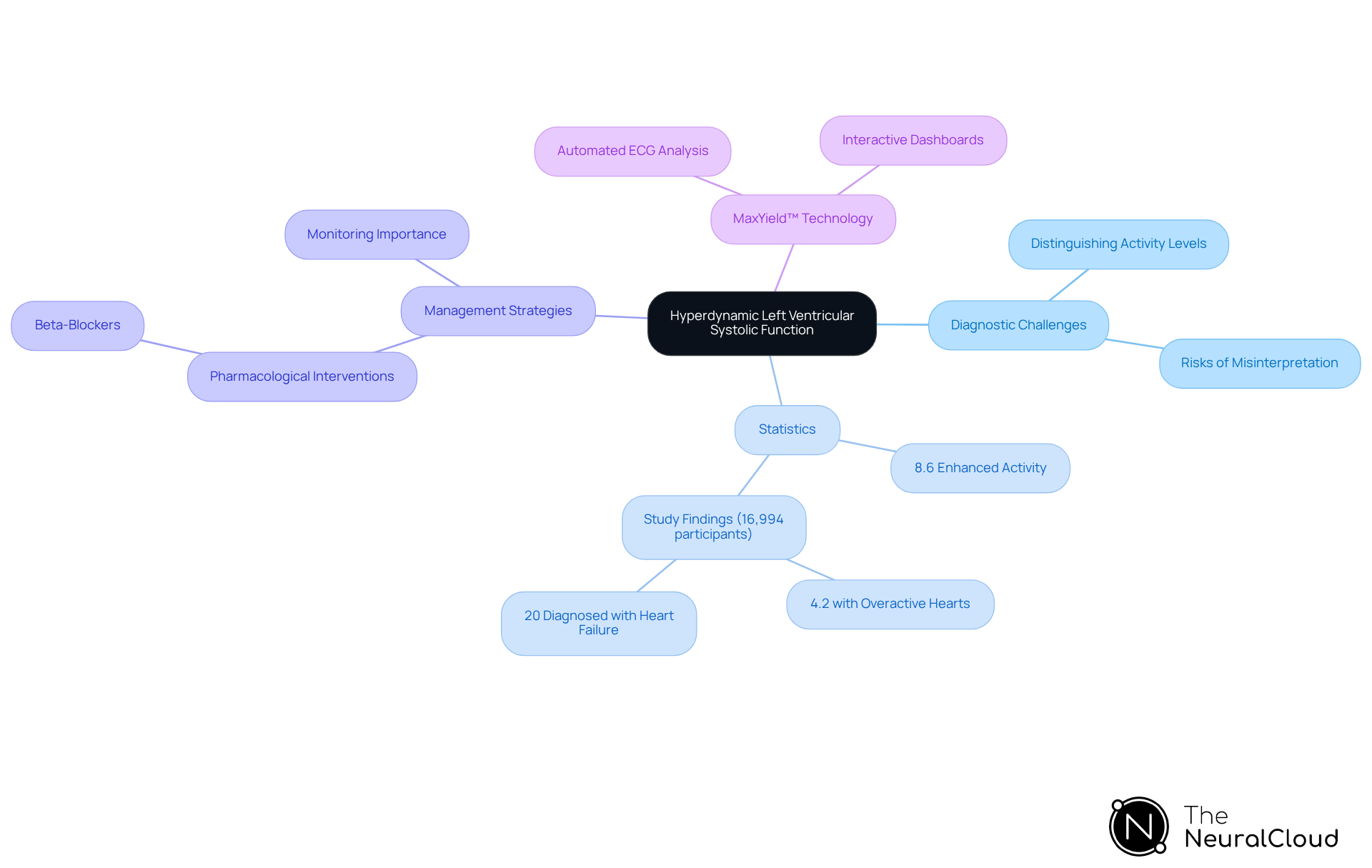
The presence of hyperdynamic LV systolic function poses significant diagnostic challenges for healthcare professionals. This means the left ventricle contracts more forcefully than usual, often as a response to stress. It's crucial to distinguish between heightened activity and normal systolic performance, as misinterpretation can lead to overlooking serious cardiac issues associated with hyperdynamic LV systolic function. Recent studies indicate that around 8.6% of individuals display enhanced LV systolic activity, which can be recognized through echocardiographic evaluations, an essential tool for assessing ejection fraction and visualizing cardiac structures.
A substantial study involving 16,994 participants showed that 720 individuals (4.2%) had overactive hearts, primarily among older individuals with comorbidities like hypertension and diabetes. Moreover, individuals with heightened activity experience greater risks, with a hazard ratio of 1.56 for adverse events compared to those with normal ejection fractions, based on a median 9-year follow-up. This highlights the significance of monitoring and managing hyperdynamic LV systolic function, particularly in critically ill patients. Failure to monitor hyperdynamic LV systolic function can lead to severe complications in critically ill patients.
MaxYield™ offers an advanced, automated ECG analysis platform designed to enhance the detection and management of elevated LV systolic function. By mapping ECG signals through noise and delivering beat-by-beat analysis, MaxYield™ transforms noisy recordings into detailed insights, allowing healthcare professionals to detect cardiac events with precision. The platform outputs an analysis of 200,000 heartbeats in less than 5 minutes, providing critical data on P-wave, QRS complex, and T-wave intervals for each heartbeat. Additionally, the customizable visualization and reporting tool, Insight360, transforms MaxYield’s clean ECG data into interactive dashboards and clinical-ready reports, further enhancing clinical workflows.
Expert opinions highlight that 'an overactive heart is not a healthy heart'; instead, it is linked to a greater occurrence of diastolic dysfunction, with 78% of those affected facing complications. Management strategies concentrate on tackling underlying causes and ensuring stability, often involving pharmacological interventions like beta-blockers. Therefore, comprehending hyperdynamic LV systolic function is crucial for healthcare experts and developers seeking to improve diagnostic precision and outcomes for individuals. Integrating MaxYield™ into clinical practice not only enhances diagnostic accuracy but also plays a vital role in improving patient outcomes.
Explore Clinical Implications and Significance
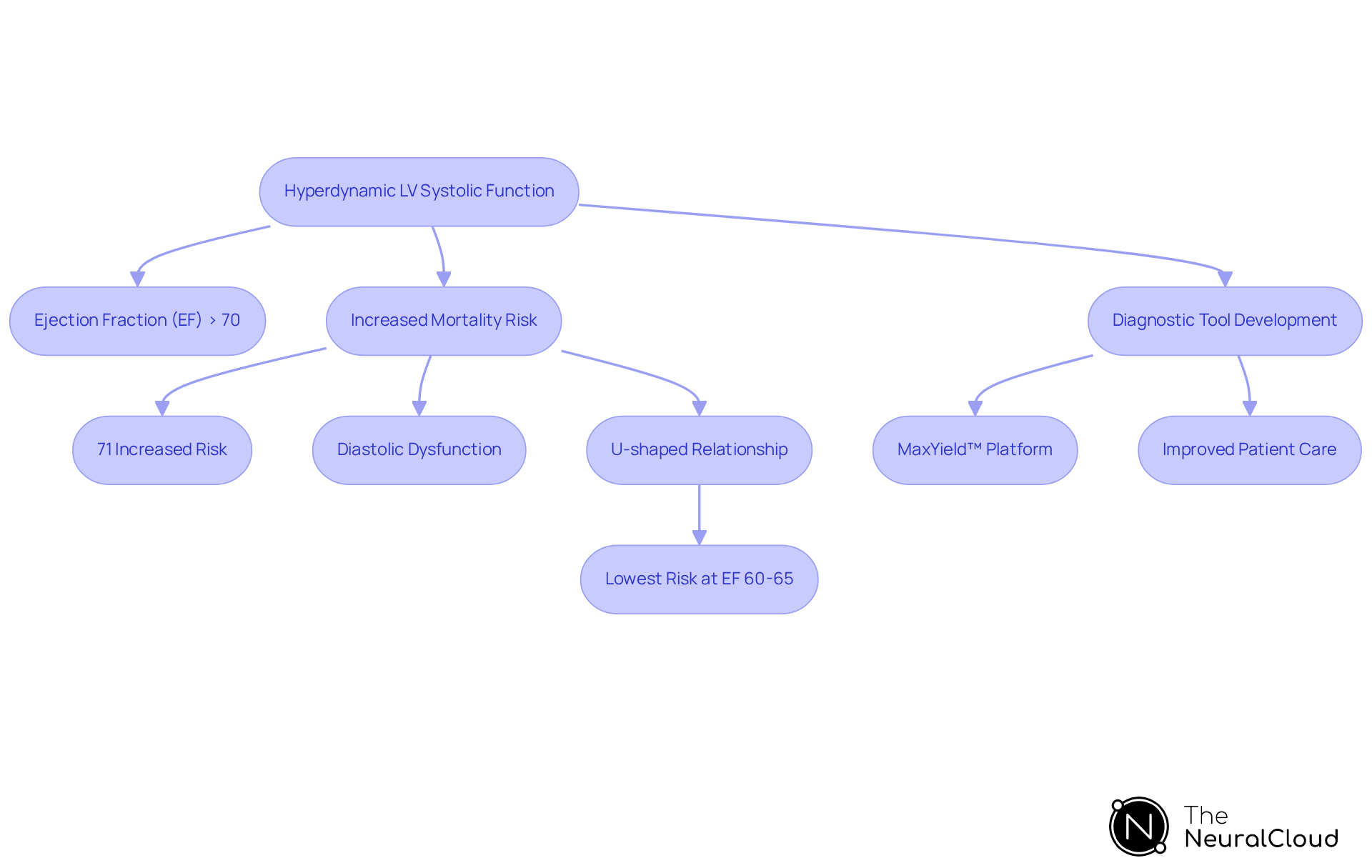
The implications of hyperdynamic lv systolic function present significant challenges in clinical practice. Recent studies show that patients with an ejection fraction (EF) exceeding 70% face a 71% increased risk of mortality, especially when accompanied by diastolic dysfunction. This condition often appears alongside other cardiovascular problems, like hypertension and heart failure, underscoring its importance in clinical settings. Notably, a large population study has established a U-shaped relationship between EF and mortality, with the lowest risk at 60-65%. This indicates that both low and high EF levels are associated with increased mortality risk, challenging previous beliefs about heart performance and survival rates.
For developers of diagnostic tools, understanding these implications is crucial. They must create solutions that not only identify hyperdynamic lv systolic function but also facilitate timely interventions. Without effective tools, timely interventions may be missed, leading to poorer patient outcomes. Neural Cloud Solutions' MaxYield™ platform can play a pivotal role in this process by automating repetitive tasks and providing noise filtering that enhances the clarity of ECG signals. With features like the 'neuralized' signal and a clear, beat-by-beat data wall, MaxYield™ ensures that developers can create diagnostic tools capable of addressing the complexities of ECG analysis.
As Michael H. Crawford observed, 'The most provocative finding in this study was that individuals with EF ≥ 70% died at the same rate as individuals with EF in the 35% to 40% range.' Moreover, during a median follow-up of four years, 23% of individuals died, highlighting the severity of this condition. Leveraging MaxYield™ allows developers to equip their diagnostic tools to manage the complexities of ECG analysis. This ultimately leads to improved patient care.
Detail Diagnostic Approaches and Technologies
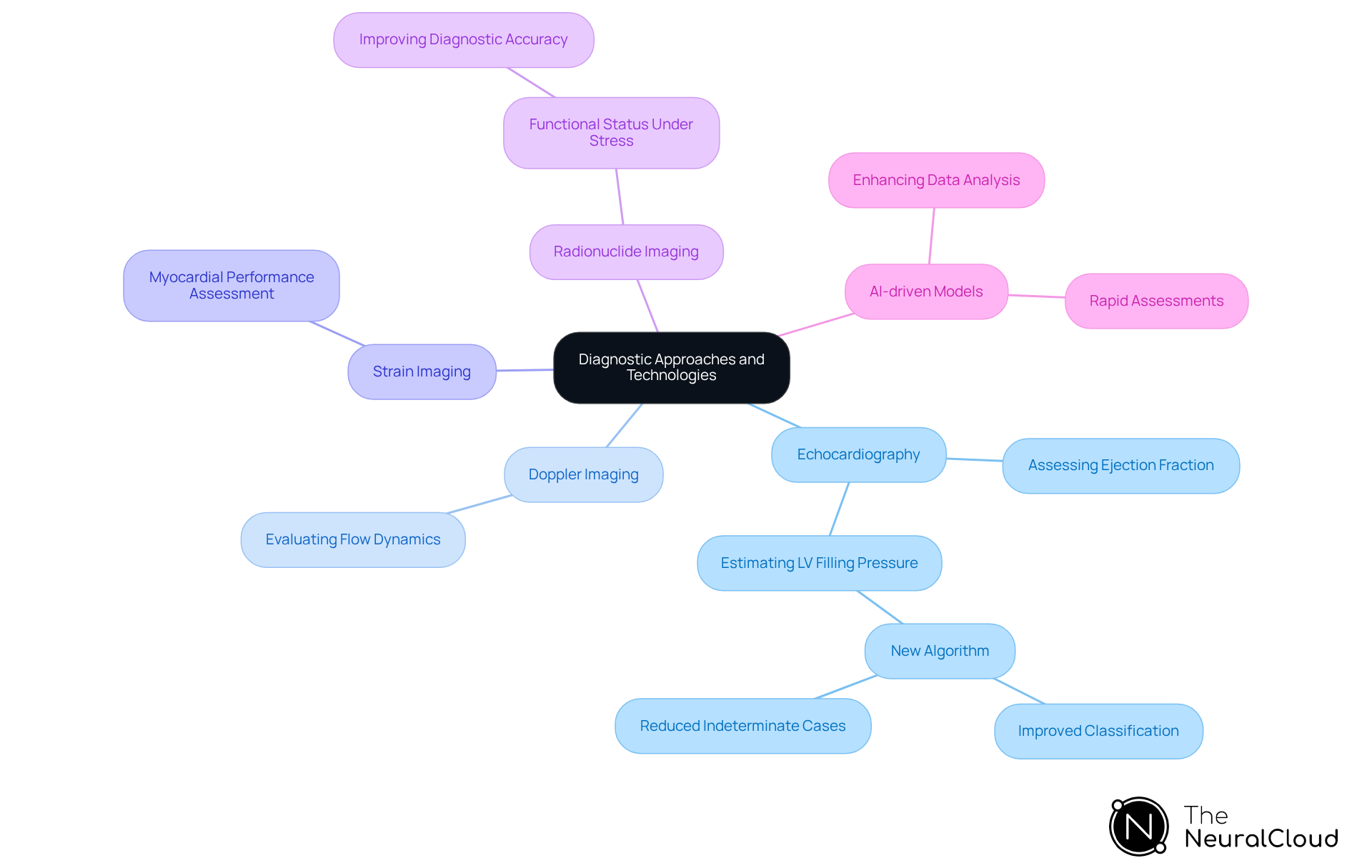
Diagnosing hyperdynamic LV systolic function can be complex and often relies heavily on echocardiography, which is a pivotal tool for assessing ejection fraction and various hemodynamic parameters. Techniques like Doppler imaging and strain imaging evaluate flow dynamics and myocardial performance, providing deeper insights into cardiac function. Radionuclide myocardial perfusion imaging clarifies the LV's functional status under stress, improving diagnostic accuracy.
Recent studies underscore the efficacy of echocardiographic estimation of left ventricular filling pressure (LVFP), which has shown superior classification compared to traditional biomarkers. This new algorithm, confirmed across various centers, significantly decreases the number of individuals classified as indeterminate, thereby streamlining the diagnostic process for conditions like heart failure with preserved ejection fraction (HFpEF), which represents at least 50% of cardiovascular failure hospitalizations.
Dr. Sherif F. Nagueh highlights the significance of precise heart failure diagnosis for prompt treatment, stating, "This study illustrates how thorough multicenter validation can lead to practical tools that enhance care for individuals." Developers ought to focus on incorporating these advanced diagnostic technologies into their platforms to enhance the detection of dynamic activity in individuals. The incorporation of AI-driven models can further enhance the analysis of echocardiographic data, allowing for rapid and accurate assessments that are crucial in clinical settings. By leveraging these advanced diagnostic technologies, healthcare professionals can significantly improve patient outcomes in cardiovascular care.
Discuss Management Strategies and Treatment Options
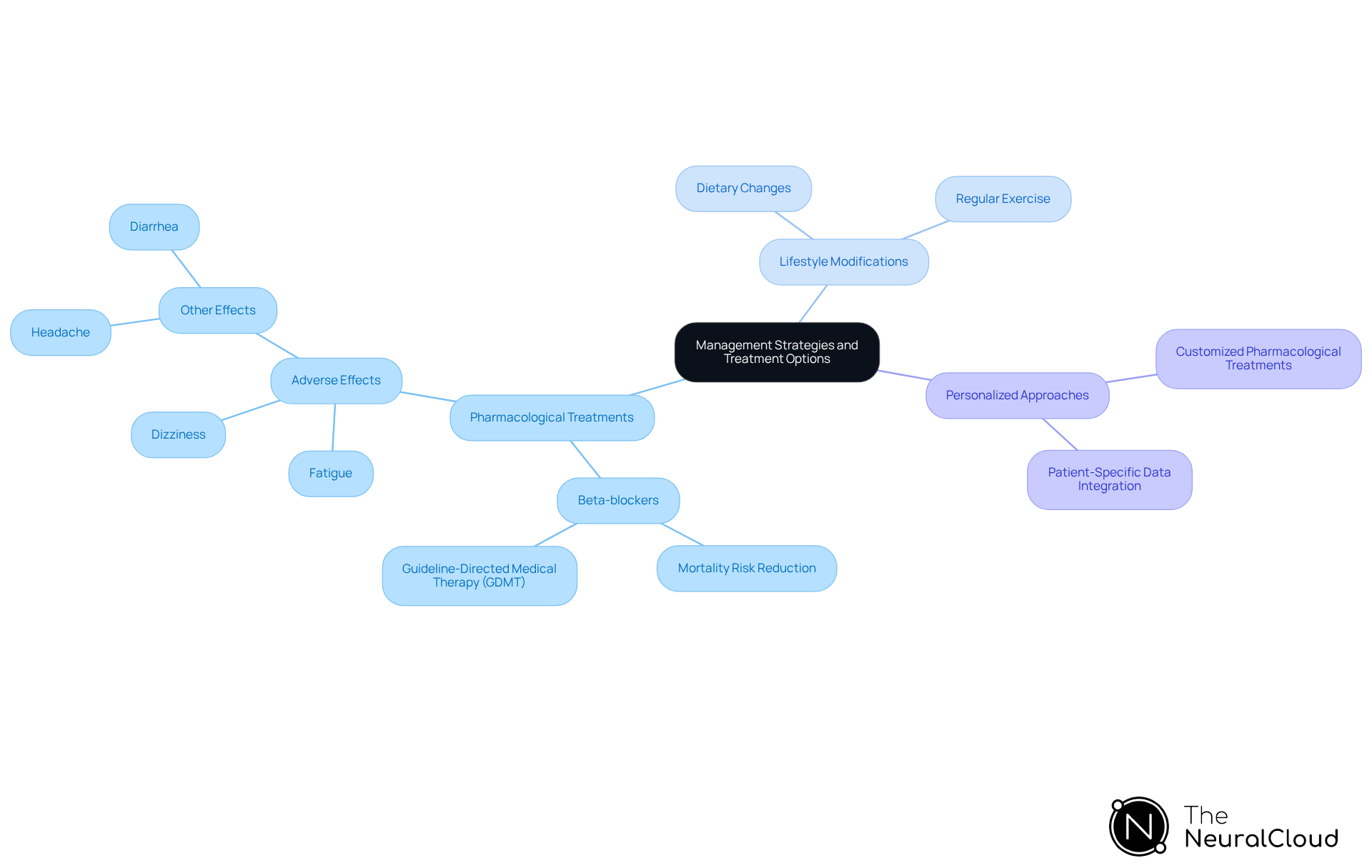
Managing hyperdynamic lv systolic function presents unique challenges that require a multifaceted approach to ensure patient stability and optimal outcomes. First-line therapies typically include beta-blockers, which effectively decrease myocardial contractility and pulse rate. This alleviates the excessive workload on the heart. Studies indicate that beta-blockers significantly lower the mortality risk for individuals with cardiac failure with reduced ejection fraction (HFrEF). Dr. Kenneth B Margulies emphasizes that these medications are cornerstones of guideline-directed medical therapy (GDMT).
Lifestyle modifications, including dietary changes and regular exercise, are also vital for managing conditions like hypertension. These strategies not only improve overall heart health but also enhance outcomes for individuals. Clinicians may customize pharmacological treatments to meet individual needs, ensuring a comprehensive approach to management.
Developers should integrate features that showcase patient-specific data and treatment responses. This approach enhances decision-making in clinical settings and ultimately improves patient care. Furthermore, it is essential to consider the potential adverse effects associated with beta-blockers, such as fatigue and dizziness, to provide a balanced view of treatment options.
Conclusion
The complexities of hyperdynamic left ventricular (LV) systolic function present significant challenges for healthcare professionals and developers alike. Understanding this condition is crucial for effective diagnosis and management of heart health. This condition, characterized by an overactive heart, poses significant risks and challenges, particularly in patients with comorbidities. Recognizing the nuances between normal and hyperdynamic function is vital to prevent misdiagnosis and ensure timely interventions. Misdiagnosis can lead to inadequate treatment and worsening patient conditions.
The article highlights key insights into the diagnostic approaches, clinical implications, and management strategies associated with hyperdynamic LV systolic function. It emphasizes the importance of advanced technologies like MaxYield™ and Insight360 in enhancing diagnostic accuracy and improving patient outcomes. Furthermore, it underscores the necessity of understanding the relationship between ejection fraction and mortality risk, as well as the role of beta-blockers and lifestyle modifications in managing this condition effectively. By leveraging these technologies, healthcare professionals can enhance diagnostic accuracy and patient care.
In conclusion, the future of cardiac care hinges on the effective integration of innovative diagnostic tools and collaborative efforts among healthcare providers. As the healthcare landscape evolves, integrating advanced diagnostic tools and management strategies will be crucial in addressing the complexities of cardiac care. Developers and clinicians must collaborate to ensure that innovative solutions are implemented, ultimately leading to improved patient outcomes and a deeper understanding of heart health in the Canadian context.
Frequently Asked Questions
What is hyperdynamic left ventricular systolic function?
Hyperdynamic left ventricular (LV) systolic function refers to a condition where the left ventricle contracts more forcefully than usual, often in response to stress. It is important to differentiate between heightened activity and normal systolic performance to avoid missing serious cardiac issues.
How common is hyperdynamic LV systolic function?
Recent studies indicate that approximately 8.6% of individuals exhibit enhanced LV systolic activity. A substantial study involving 16,994 participants found that 4.2% had overactive hearts, primarily among older individuals with comorbidities such as hypertension and diabetes.
What are the risks associated with hyperdynamic LV systolic function?
Individuals with hyperdynamic LV systolic function face greater risks, with a hazard ratio of 1.56 for adverse events compared to those with normal ejection fractions, based on a median follow-up of 9 years. This underscores the importance of monitoring and managing this condition, especially in critically ill patients.
How can hyperdynamic LV systolic function be assessed?
Hyperdynamic LV systolic function can be recognized through echocardiographic evaluations, which are essential for assessing ejection fraction and visualizing cardiac structures.
What role does MaxYield™ play in managing hyperdynamic LV systolic function?
MaxYield™ offers an advanced, automated ECG analysis platform that enhances the detection and management of elevated LV systolic function. It provides beat-by-beat analysis of ECG signals, transforming noisy recordings into detailed insights and allowing healthcare professionals to detect cardiac events with precision.
What additional tools does MaxYield™ provide for clinical practice?
MaxYield™ includes a customizable visualization and reporting tool called Insight360, which transforms clean ECG data into interactive dashboards and clinical-ready reports, thereby enhancing clinical workflows.
What management strategies are recommended for hyperdynamic LV systolic function?
Management strategies focus on addressing underlying causes and ensuring stability, often involving pharmacological interventions such as beta-blockers. Understanding hyperdynamic LV systolic function is crucial for healthcare professionals to improve diagnostic precision and patient outcomes.
List of Sources
- Define Hyperdynamic Left Ventricular Systolic Function
- theneuralcloud.com (https://theneuralcloud.com/post/understanding-hyperdynamic-left-ventricular-systolic-function-a-comprehensive-tutorial)
- (PDF) Hyperdynamic left ventricular ejection fraction is associated with higher mortality in COVID-19 patients (https://researchgate.net/publication/360016469_Hyperdynamic_left_ventricular_ejection_fraction_is_associated_with_higher_mortality_in_COVID-19_patients)
- Hyperdynamic Heart EF >70% Increases Mortality Risk 56% | www.PhysiciansWeekly.com (https://physiciansweekly.com/post/clinical-outcomes-and-echocardiographic-features-of-the-hyperdynamic-heart)
- Explore Clinical Implications and Significance
- Hyperdynamic Left Ventricular Function: Good or Bad News? | 2020-04-14 (https://clinician.com/articles/146090-hyperdynamic-left-ventricular-function-good-or-bad-news)
- Hyperdynamic Heart EF >70% Increases Mortality Risk 56% | www.PhysiciansWeekly.com (https://physiciansweekly.com/post/clinical-outcomes-and-echocardiographic-features-of-the-hyperdynamic-heart)
- Detail Diagnostic Approaches and Technologies
- Hot Off the Press: July JASE - ASE (https://asecho.org/news/hot-off-the-press-july-jase)
- Houston Methodist-Led Study Validates Improved Echocardiographic Algorithm for Estimating LV Filling Pressure (https://houstonmethodist.org/leading-medicine-blog/articles/2026/feb/houston-methodist-led-study-validates-improved-echocardiographic-algorithm-for-estimating-lv-filling)
- Hyperdynamic Heart EF >70% Increases Mortality Risk 56% | www.PhysiciansWeekly.com (https://physiciansweekly.com/post/clinical-outcomes-and-echocardiographic-features-of-the-hyperdynamic-heart)
- Eko Health Announces New Study Demonstrating AI-Assisted Detection of Reduced Ejection Fraction (https://finance.yahoo.com/news/eko-health-announces-study-demonstrating-150000482.html)
- How artificial intelligence (AI) helps determine ejection fraction from a single frame - Mayo Clinic (https://mayoclinic.org/medical-professionals/cardiovascular-diseases/news/how-artificial-intelligence-ai-helps-determine-ejection-fraction-from-a-single-frame/mac-20594006)
- Discuss Management Strategies and Treatment Options
- Beta-blockers did not reduce cardiovascular events in selected heart attack patients in the REBOOT trial (https://escardio.org/news/press/press-releases/Beta-blockers-did-not-reduce-cardiovascular-events-in-selected-heart-attack-patients-in-the-REBOOT-trial)
- Heart Failure Management: Current Approaches and Future Directions (https://thecardiologyadvisor.com/features/heart-failure-management-2026)
- Beta Blockers in Heart Failure Management: Unlocking their Potential (https://thecardiologyadvisor.com/features/beta-blockers-in-heart-failure)