Introduction
Left Ventricular Hypertrophy (LVH) is not just a medical term; it serves as a vital indicator of heart health that can greatly influence patient outcomes. With the rise of cardiovascular diseases, it’s crucial for health tech developers to grasp how LVH appears on ECGs. This understanding is essential for creating innovative diagnostic tools. However, accurately identifying these subtle changes within the complexities of ECG data presents a significant challenge.
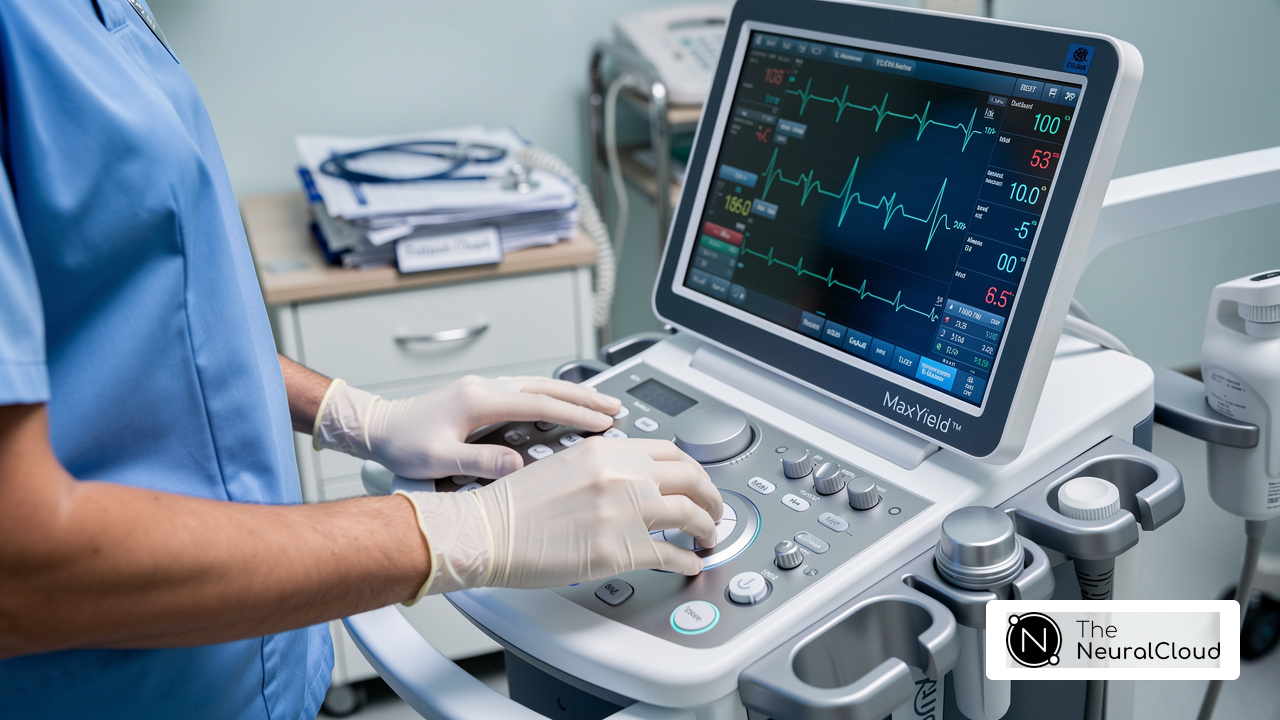
Emerging technologies, such as machine learning and AI, hold the potential to enhance the detection of LVH. By leveraging these advancements, healthcare professionals can make timely and informed decisions. The MaxYield™ platform exemplifies this innovation, offering features that streamline ECG analysis and improve diagnostic accuracy.
The platform’s capabilities include advanced algorithms that detect LVH with precision, reducing the risk of misdiagnosis. This not only benefits healthcare providers by saving time but also enhances patient care through early intervention. As we explore the features and advantages of MaxYield™, it becomes clear how these tools can transform ECG analysis and ultimately improve health outcomes.
Define Left Ventricular Hypertrophy and Its Importance in ECG Analysis
(LVH) is marked by the thickening of the left ventricular walls, primarily due to increased cardiac workload from conditions like hypertension or aortic stenosis. This structural change significantly affects the heart's electrical activity, resulting in complications. Accurate diagnosis and management of LVH is crucial, as LVH serves as an independent prognostic factor for adverse outcomes.
Recent studies show that machine learning models achieve a sensitivity of 0.76 and specificity of 0.84 in detecting LVH through analysis. This highlights the potential of advanced technologies to enhance diagnostic accuracy. The solution from Neural Cloud Solutions revolutionizes this process by employing algorithms and distinct wave recognition. This allows for the rapid isolation and labeling of critical ECG data, even in recordings with significant noise and artifacts.
The capabilities of MaxYield™ not only enhance the clarity of ECG readings but also support confident decision-making. Cardiologists emphasize the importance of recognizing patterns in readings, as timely interventions can significantly improve patient outcomes. As health tech developers work to refine ECG analysis tools, understanding the implications of LVH in relation to cardiovascular health remains a pivotal focus, ensuring that innovations align with clinical needs and enhance patient care.

Explore ECG Diagnostic Criteria for Identifying LVH
The criteria encompass both voltage and non-voltage parameters. A key feature is the Sokolow-Lyon criterion, a well-established voltage standard that indicates LVH when the sum of the S wave in V1 and the tallest R wave in V5 or V6 exceeds 35 mm. This standard has been validated through various studies, underscoring its importance. For instance, one cardiologist noted that "the criteria remain a cornerstone in the evaluation of LVH, offering a straightforward method to diagnosis."
In addition to voltage standards, the Romhilt-Estes scoring system is crucial for diagnosing LVH. This system assigns points based on multiple ECG features, such as R wave amplitude, ST segment changes, and the presence of left axis deviation. Recent research has demonstrated the effectiveness of the Romhilt-Estes system, showing its accuracy in detecting LVH across diverse patient populations. A study indicated that this scoring system significantly enhances diagnostic capabilities, especially when combined with voltage criteria.
As of 2026, updates to the guidelines reflect ongoing advancements in ECG interpretation. Current research suggests that while traditional standards provide a solid foundation, integrating machine learning models can further enhance diagnostic accuracy. For example, a recent study revealed that machine learning approaches outperformed conventional methods in identifying LVH, achieving higher sensitivity and specificity.
Understanding these criteria is essential for developers aiming to create algorithms that accurately identify LVH. By leveraging both the Sokolow-Lyon criterion and the Romhilt-Estes scoring system, health tech developers can improve the reliability of their ECG analysis tools, ultimately leading to better outcomes for patients.

Identify Causes and Risk Factors of Left Ventricular Hypertrophy
is primarily driven by chronic hypertension, which significantly increases the heart's workload. This condition can also arise from genetic factors, valvular heart disease, and intense athletic training, often referred to as 'athlete's heart.' Key risk factors include:
- Obesity
- Diabetes
- A family history of heart disease
Notably, approximately 15% to 20% of the general population is affected by LVH, with higher prevalence in older adults and those with obesity or poorly controlled hypertension.
Research indicates that hypertension is a leading cause of LVH, causing the left ventricle to thicken due to increased pressure. A 2021 study involving more than 130,000 individuals with heart conditions found that LVH is a strong predictor of adverse cardiovascular events, highlighting the significance of early detection and management. Health professionals emphasize that managing hypertension is crucial in preventing LVH-related complications, with effective treatment potentially leading to regression of the condition. As mentioned by a user of Neural Cloud Solutions' platform, "The clarity of ECG readings has transformed our approach to care, allowing for earlier interventions and improved outcomes."
For health tech developers, understanding these causes and risk factors is vital. By incorporating medical history and lifestyle factors into predictive models, developers can improve predictive capabilities, enabling more precise evaluations and timely interventions. Leveraging Neural Cloud Solutions' technology, which utilizes a Continuous Learning Model, can further enhance this process by transforming lengthy and noisy ECG recordings into clean, crisp signals. This advanced AI technology tackles challenges such as noise reduction and signal artifacts while aligning with the increasing demand for accurate diagnostics, ultimately enhancing outcomes for individuals and streamlining workflows.

Utilize Advanced Technologies for Enhanced ECG Analysis of LVH
Advanced technologies, particularly artificial intelligence (AI) and machine learning, are transforming ECG analysis, especially in clinical settings. Traditional methods often struggle with the volume and complexity of ECG data, leading to inaccurate diagnoses. The solution from Neural Cloud Solutions addresses these challenges by automating the analysis of vast amounts of ECG data quickly and accurately.
Features of MaxYield™:
- Data Processing: Processes large datasets efficiently, identifying patterns that traditional methods may overlook.
- Noise Mapping: Maps ECG signals through noise, isolating and labeling key features in every heartbeat.
- Rapid Insights: Delivers beat-by-beat analysis, providing insights from 200,000 heartbeats in under 5 minutes.
Advantages for Healthcare Providers:
The automation and speed of MaxYield™ significantly improve diagnostic accuracy. AI algorithms have shown a sensitivity of 0.76 and a specificity of 0.84 in detecting hypertrophy on ECG, enhancing clinical outcomes. This allows healthcare providers to streamline workflows and conduct faster, more reliable patient assessments.
Real-world applications, such as the PULSE-HF model, further illustrate the platform's potential. It can predict outcomes with high accuracy, showcasing how machine learning can enhance cardiovascular diagnostics. Developers should prioritize creating user-friendly interfaces that leverage MaxYield™'s advanced capabilities, ultimately enhancing clinical decision-making.

Conclusion
Left Ventricular Hypertrophy (LVH) poses significant challenges in ECG analysis and cardiovascular health. Understanding LVH's implications is crucial for health tech developers, as it directly influences the development of diagnostic tools and patient care. By recognizing the structural changes in the heart and their effects on electrical activity, developers can innovate solutions that enhance diagnostic accuracy and improve patient outcomes.
The MaxYield™ platform addresses these challenges by offering advanced features that streamline ECG analysis. Key features include:
- Enhanced Sensitivity and Specificity: Utilizing machine learning and AI technologies, MaxYield™ significantly improves the detection of LVH, ensuring more reliable diagnoses.
- User-Friendly Interface: Designed with healthcare professionals in mind, the platform allows for swift decision-making, making it easier to interpret complex data.
- Integration of Diagnostic Standards: Incorporating established criteria like the Sokolow-Lyon and Romhilt-Estes systems, MaxYield™ provides a solid foundation for identifying hypertrophy on ECG.
The advantages of the MaxYield™ platform extend beyond just improved accuracy. By leveraging these advanced technologies, healthcare professionals can make informed decisions quickly, ultimately enhancing patient care. The integration of predictive algorithms, particularly in relation to hypertension, allows for proactive management of LVH, contributing to better health outcomes.
As the field of cardiovascular diagnostics continues to evolve, the importance of utilizing advanced technologies like MaxYield™ cannot be overstated. Developers are encouraged to prioritize the creation of intuitive tools that incorporate these innovations. By focusing on the intersection of LVH understanding and technological advancement, the health tech industry can significantly enhance patient care and outcomes, paving the way for a healthier future.
Frequently Asked Questions
What is Left Ventricular Hypertrophy (LVH)?
Left Ventricular Hypertrophy (LVH) is characterized by the thickening of the left ventricular walls, primarily due to increased cardiac workload from conditions such as hypertension or aortic stenosis.
Why is LVH important in ECG analysis?
LVH significantly affects the heart's electrical activity, leading to distinct alterations in the ECG waveform. Recognizing these changes is crucial for accurate diagnosis and management of cardiovascular diseases, as LVH serves as an independent prognostic factor for adverse outcomes.
What is the sensitivity and specificity of machine learning models in detecting LVH on ECG?
Recent studies show that machine learning models achieve a sensitivity of 0.76 and specificity of 0.84 in detecting hypertrophy on ECG through analysis.
How does the MaxYield™ platform enhance ECG analysis?
The MaxYield™ platform from Neural Cloud Solutions employs advanced noise filtering and distinct wave recognition, allowing for the rapid isolation and labeling of critical ECG data, even in recordings with significant noise and artifacts.
What benefits does MaxYield™ provide for ECG readings?
MaxYield™ enhances the clarity of ECG readings and supports confident clinical decision-making, which is essential for timely interventions that can significantly improve patient outcomes.
What is the focus of health tech developers regarding ECG analysis tools?
Health tech developers aim to refine ECG analysis tools, ensuring that innovations align with clinical needs and enhance patient care, particularly in understanding the implications of hypertrophy on ECG in relation to cardiovascular health.
List of Sources
- Define Left Ventricular Hypertrophy and Its Importance in ECG Analysis
- Left ventricular hypertrophy detection using electrocardiographic signal - Scientific Reports (https://nature.com/articles/s41598-023-28325-5)
- jmir.org (https://jmir.org/2026/1/e76637)
- mdpi.com (https://mdpi.com/2227-9032/13/4/408)
- nature.com (https://nature.com/articles/s41598-024-66247-y)
- Explore ECG Diagnostic Criteria for Identifying LVH
- academic.oup.com (https://academic.oup.com/eurjpc/article/31/Supplement_1/zwae175.268/7692785)
- researchgate.net (https://researchgate.net/publication/401965878_Diagnostic_Efficacy_of_New_ECG_Criteria_for_Left_Ventricular_Hypertrophy_in_Overweight_and_Obese_Patients_with_Hypertension)
- ahajournals.org (https://ahajournals.org/doi/10.1161/circ.150.suppl_1.4137204)
- academic.oup.com (https://academic.oup.com/ehjdh/article/6/2/252/8008911)
- Electrographic LV Hypertrophy Criteria Found to Predict Stroke in Hypertension (https://thecardiologyadvisor.com/news/detection-of-lvh-with-electrocardiographic-sokolow-lyon-or-cornell-voltage-criteria-predicted-stroke-in-hypertension)
- Identify Causes and Risk Factors of Left Ventricular Hypertrophy
- academic.oup.com (https://academic.oup.com/eurheartj/article/45/Supplement_1/ehae666.2022/7836914)
- Causes of Left Ventricular Hypertrophy (LVH) and How to Treat It (https://verywellhealth.com/left-ventricular-hypertrophy-8728481)
- healthline.com (https://healthline.com/health/left-ventricular-hypertrophy)
- What Is Left Ventricular Hypertrophy? (https://my.clevelandclinic.org/health/diseases/21883-left-ventricular-hypertrophy)
- Utilize Advanced Technologies for Enhanced ECG Analysis of LVH
- AI-Enhanced ECG Analysis Shows Strong Accuracy in Detecting Hypertrophic Cardiomyopathy (https://consultqd.clevelandclinic.org/ai-enhanced-ecg-analysis-shows-strong-accuracy-in-detecting-hypertrophic-cardiomyopathy)
- Can AI help predict which heart-failure patients will worsen within a year? (https://news.mit.edu/2026/can-ai-help-predict-which-heart-failure-patients-will-worsen-0312)
- tempus.com (https://tempus.com/resources/content/articles/ai-revolution-electrocardiography-ecg-ai-insights?srsltid=AfmBOor-aXFiZfxGyiTvs3bC58U-wdnv_Nd4AfQuih7kGTxHX9w7RSOy)
- nature.com (https://nature.com/articles/s41598-026-41824-5)
- jmir.org (https://jmir.org/2026/1/e76637)