Introduction
Healthcare professionals face significant challenges in diagnosing and managing inferior myocardial infarction (IMI), which can greatly affect patient outcomes. Let’s explore the intricacies of IMI together, including its definition, symptoms, and the latest treatment strategies that can enhance care in clinical settings across Canada.
Diagnosing IMI can be particularly challenging due to its subtle symptoms and the risk of misinterpretation. Effective management strategies are essential to mitigate these risks and improve patient outcomes. Clinicians must adopt effective strategies to navigate these complexities and enhance patient recovery.
Define Inferior Myocardial Infarction: Key Concepts and Importance
Inferior myocardial infarction (IMI) presents unique challenges in diagnosis and treatment, making understanding its nuances essential for healthcare professionals. This condition is characterized by ischemic injury to the lower wall, leading to significant complications if not addressed promptly. Key concepts include:
- Etiology: Most inferior MIs result from a blockage in the right coronary artery (RCA), which supplies blood to the inferior wall of the heart. This blockage can arise from atherosclerotic plaque rupture, leading to thrombus formation and reduced coronary flow.
- Symptoms: Patients may present with chest pain, shortness of breath, and other signs of cardiac distress. The clinical presentation can vary, but prompt recognition is crucial for effective management.
- Diagnosis: Electrocardiogram (ECG) findings typically show ST-segment elevation in leads II, III, and aVF, indicating lower wall involvement. Reciprocal ST segment depression may also be observed in lateral leads (I, aVL, V5, and V6).
- Prognosis: Although lower MIs frequently have a more favorable outlook than anterior MIs, they can still result in severe complications, including right ventricular damage (RVMI) and arrhythmias. Recent studies suggest that RVMI occurs in about 18.75% of patients with lower ST-segment elevation heart attack, as noted in the China Acute Heart Attack Registry. Timely reperfusion can significantly enhance recovery and reduce complications for patients with IMI.
The CCS-AMI classification, developed by Canadian cardiovascular specialists, emphasizes the importance of understanding tissue-level changes in heart attacks, including IMI. This classification outlines four stages of heart attack severity, aiding in patient risk assessment and guiding treatment strategies. By integrating this classification into clinical practice, healthcare professionals can enhance patient care and improve results for those experiencing suboptimal heart attacks.
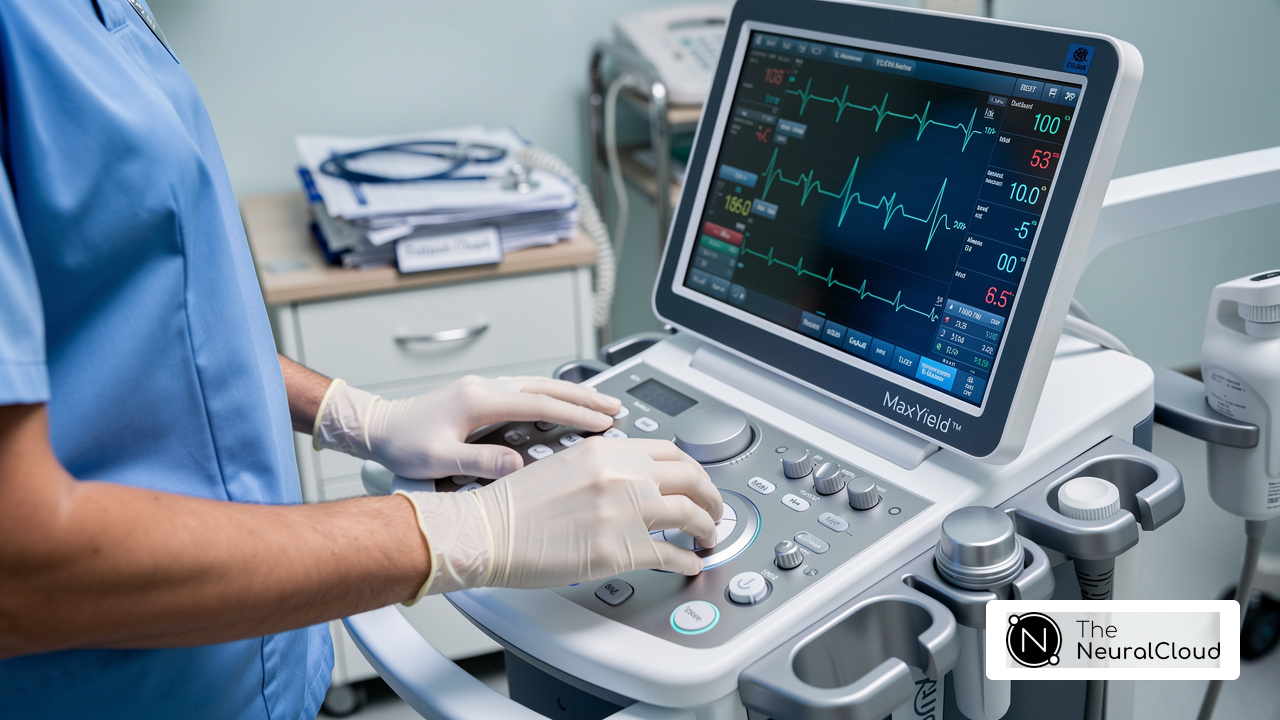
Moreover, integrating advanced solutions like MaxYield from Neural Cloud Solutions can significantly enhance the efficiency of ECG analysis in diagnosing IMI. MaxYield automates ECG labeling and data extraction, allowing healthcare professionals to focus on critical decision-making rather than labor-intensive tasks. With its ability to deliver beat-by-beat analysis in under five minutes, MaxYield transforms noisy recordings into clear insights, supporting confident clinical decisions. As Dr. Alan Rabinowitz notes, "MaxYield’s precision rivals human interpretation, ensuring that even subtle changes in ECG signals are accurately captured and analyzed." This level of automation helps cut costs and makes workflows more efficient, making it an essential tool in the management of lower heart attacks. Additionally, with FDA Class II SaMD clearance-pending status and audit-ready documentation supporting GxP inspections, MaxYield ensures compliance with regulatory standards. Furthermore, Insight360 serves as a customizable visualization tool that transforms MaxYield’s clean ECG data into interactive dashboards and clinical-ready reports, enhancing the overall diagnostic process.

Diagnose Inferior Infarct: Criteria and Techniques
Diagnosing an inferior myocardial infarction (IMI) presents significant challenges that require a comprehensive approach, particularly when utilizing advanced tools like MaxYield™ from Neural Cloud Solutions Inc. Key criteria and methodologies include:
- Clinical Presentation: Patients typically present with symptoms such as chest pain, nausea, and diaphoresis. A detailed patient history and physical examination are crucial for accurate assessment.
- Electrocardiogram (ECG): The ECG is essential for diagnosing IMI, with clinicians focusing on key indicators such as:
- ST-segment elevation in leads II, III, and aVF, which indicates inferior wall involvement.
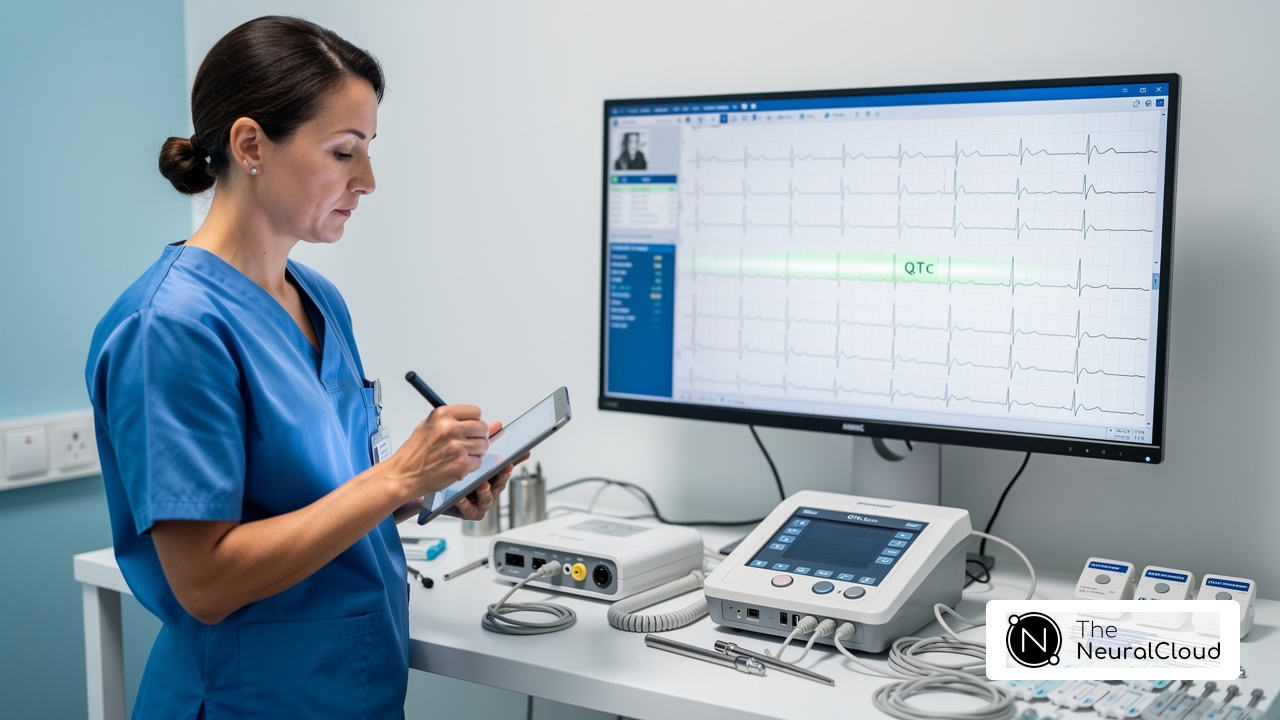
- Reciprocal ST-segment depression in leads I and aVL, suggesting occlusion of the right coronary artery (RCA). With MaxYield™, healthcare professionals can leverage advanced noise filtering and distinct wave recognition to isolate critical ECG waves, even in recordings with significant noise and artifacts, ensuring accurate interpretation.
Experts like Dr. Alan Rabinowitz and Dr. Brett Heilbron emphasize that MaxYield™ rivals human interpretation in precision, making it an invaluable tool in the diagnostic process. Furthermore, the integration of Insight360 transforms MaxYield’s clean ECG data into interactive dashboards and clinical-ready reports, enhancing the overall understanding of the product's capabilities. Integrating MaxYield™ into clinical practice helps healthcare professionals tackle ECG analysis challenges, reduce inefficiencies, and enhance patient outcomes. As MaxYield™ awaits FDA Class II SaMD clearance, its potential to revolutionize ECG analysis and improve patient care remains a compelling prospect for healthcare professionals.

Manage Inferior Infarct: Treatment Strategies and Best Practices
Managing lower heart tissue damage presents significant challenges that require a multifaceted treatment approach. Key treatment strategies include:
- Immediate Care: Administer aspirin and other antiplatelet agents to inhibit further clot formation. Nitroglycerin may be utilized to alleviate chest pain.
- Reperfusion Therapy: Timely reperfusion is crucial. Options include:
- Percutaneous Coronary Intervention (PCI): This is the preferred method for restoring blood flow effectively, with recent guidelines strongly recommending the integration of intracoronary imaging during PCI to enhance patient outcomes, particularly in complex cases.
- Thrombolytic Therapy: This is considered when PCI is not feasible within the critical time frame.
Recent studies, such as the DanGer Shock trial, have demonstrated that utilizing a temporary mechanical support device in acute heart attack and cardiogenic shock is linked to reduced mortality. Ongoing advancements in treatment strategies show a commitment to improving care for patients with heart attacks. Expert opinions, such as those from Dr. Alan Rabinowitz, Dr. Brett Heilbron, and Dr. Marc W. Deyell, emphasize the importance of evidence-based treatments in managing these critical conditions, highlighting that MaxYield™'s precision rivals human interpretation and significantly reduces noise, enhancing diagnostic yield. The integration of advanced technologies like MaxYield™ could redefine treatment protocols and improve survival rates in critical cardiac conditions.

Understand Complications of Inferior Infarct: Risks and Considerations
Inferior heart attacks present significant challenges that can lead to serious complications, impacting patient outcomes and requiring careful management. Several key complications arise from inferior heart attacks, including:
- One significant complication is Right Ventricular Infarction, which often occurs alongside inferior MIs. This condition can lead to hypotension and decreased cardiac output. Patients may also experience arrhythmias, such as bradycardia or AV nodal block, due to ischemia affecting the conduction system.
- Another serious complication is Cardiogenic Shock, which can arise from extensive heart damage and requires immediate intervention.
- Additionally, mechanical complications, such as papillary muscle rupture or ventricular septal defect, may occur days to weeks after the initial heart attack.
- Lastly, patients with inferior MIs face long-term risks, including an increased likelihood of heart failure and recurrent myocardial infarction, which necessitates ongoing monitoring and management. Ongoing monitoring and proactive management are essential to mitigate these risks and enhance patient care.

Conclusion
Inferior myocardial infarction (IMI) poses significant challenges for healthcare professionals in both diagnosis and management. This condition, characterized by ischemic injury to the heart's lower wall, requires prompt recognition and intervention to prevent severe complications. Recognizing IMI can be challenging due to its subtle symptoms, yet timely intervention is critical to avoid severe complications. Understanding IMI helps clinicians improve patient outcomes and manage treatment challenges more effectively.
The article delves into key concepts surrounding IMI, including its:
- etiology
- symptoms
- diagnostic criteria
- management strategies
It highlights the importance of timely reperfusion therapy, the role of advanced tools like MaxYield from Neural Cloud Solutions Inc. in ECG analysis, and the necessity of continuous monitoring to mitigate risks associated with complications such as right ventricular infarction and cardiogenic shock. Utilizing advanced tools like MaxYield not only enhances diagnostic accuracy but also leads to improved patient outcomes.
Given the complexities of IMI, clinicians, researchers, and diagnostic facilities must keep up with the latest advancements in treatment and diagnostic strategies. Embracing innovative solutions like MaxYield can streamline workflows and enhance diagnostic accuracy, ultimately leading to better patient care. Staying abreast of advancements in IMI treatment is not just beneficial; it is essential for improving patient outcomes in cardiac care.
Frequently Asked Questions
What is inferior myocardial infarction (IMI)?
Inferior myocardial infarction (IMI) is a condition characterized by ischemic injury to the lower wall of the heart, which can lead to significant complications if not addressed promptly.
What is the primary cause of inferior myocardial infarction?
Most inferior MIs result from a blockage in the right coronary artery (RCA), which supplies blood to the inferior wall of the heart. This blockage often arises from atherosclerotic plaque rupture, leading to thrombus formation and reduced coronary flow.
What are the common symptoms of inferior myocardial infarction?
Patients may present with chest pain, shortness of breath, and other signs of cardiac distress. The clinical presentation can vary, making prompt recognition crucial for effective management.
How is inferior myocardial infarction diagnosed?
Diagnosis typically involves an electrocardiogram (ECG) that shows ST-segment elevation in leads II, III, and aVF, indicating lower wall involvement. Reciprocal ST segment depression may also be observed in lateral leads (I, aVL, V5, and V6).
What is the prognosis for patients with inferior myocardial infarction?
While lower MIs often have a more favorable outlook than anterior MIs, they can still lead to severe complications, including right ventricular damage (RVMI) and arrhythmias. Recent studies indicate that RVMI occurs in about 18.75% of patients with lower ST-segment elevation heart attacks.
What is the CCS-AMI classification, and why is it important?
The CCS-AMI classification, developed by Canadian cardiovascular specialists, outlines four stages of heart attack severity. It emphasizes understanding tissue-level changes in heart attacks, including IMI, aiding in patient risk assessment and guiding treatment strategies.
How can advanced solutions like MaxYield assist in the management of inferior myocardial infarction?
MaxYield automates ECG labeling and data extraction, allowing healthcare professionals to focus on critical decision-making. It delivers beat-by-beat analysis in under five minutes, transforming noisy recordings into clear insights, which supports confident clinical decisions.
What regulatory status does MaxYield hold?
MaxYield has FDA Class II SaMD clearance-pending status and audit-ready documentation supporting GxP inspections, ensuring compliance with regulatory standards.
How does Insight360 enhance the diagnostic process for inferior myocardial infarction?
Insight360 serves as a customizable visualization tool that transforms MaxYield’s clean ECG data into interactive dashboards and clinical-ready reports, enhancing the overall diagnostic process.
List of Sources
- Define Inferior Myocardial Infarction: Key Concepts and Importance
- Inferior myocardial infarction (https://healio.com/cardiology/learn-the-heart/cardiology-review/topic-reviews/inferior-myocardial-infarction)
- Long-term outcomes in inferior ST-segment elevation myocardial infarction patients with right ventricular myocardial infarction (https://sciencedirect.com/science/article/abs/pii/S0167527322000031)
- New statement presents first clinical classification of heart attacks based on tissue damage (https://medicalxpress.com/news/2023-10-statement-clinical-classification-heart-based.html)
- Inferior Myocardial Infarction - StatPearls - NCBI Bookshelf (https://ncbi.nlm.nih.gov/books/NBK470572)
- Diagnose Inferior Infarct: Criteria and Techniques
- Inferior STEMI (https://litfl.com/inferior-stemi-ecg-library)
- Fifth Universal Definition of Myocardial Infarction (https://solaci.org/en/2026/09/02/esc-2026-fifth-universal-definition-of-myocardial-infarction-new-classification-and-diagnostic-changes)
- New global definition of myocardial infarction aims to improve diagnosis, treatment and patient understanding (https://escardio.org/news/press/press-releases/new-global-definition-of-myocardial-infarction-aims-to-improve-diagnosis-treatment-and-patient-understanding)
- Heart disease in Canada: Highlights from the Canadian Chronic Disease Surveillance System, 2017 - Canada.ca (https://canada.ca/en/public-health/services/publications/diseases-conditions/heart-disease-canada-fact-sheet.html)
- Manage Inferior Infarct: Treatment Strategies and Best Practices
- New Guideline on Acute Coronary Syndromes: Key Takeaways (https://consultqd.clevelandclinic.org/new-guideline-on-acute-coronary-syndromes-key-takeaways-for-cardiologists)
- Potential treatment could prevent millions of annual heart failures and deaths in severe heart attack patients (https://medicalxpress.com/news/2026-08-potential-treatment-millions-annual-heart.html)
- SCAI Publishes Expert Consensus Statement on Managing Patients with ST-Elevated Myocardial Infarction | SCAI (https://scai.org/media-center/news-and-articles/scai-publishes-expert-consensus-statement-managing-patients-st)
- New global definition of myocardial infarction aims to improve diagnosis, treatment and patient understanding (https://escardio.org/news/press/press-releases/new-global-definition-of-myocardial-infarction-aims-to-improve-diagnosis-treatment-and-patient-understanding)
- Understand Complications of Inferior Infarct: Risks and Considerations
- New global definition of myocardial infarction aims to improve diagnosis, treatment and patient understanding (https://escardio.org/news/press/press-releases/new-global-definition-of-myocardial-infarction-aims-to-improve-diagnosis-treatment-and-patient-understanding)
- Inferior Myocardial Infarction (Heart Attack) (https://mdsearchlight.com/heart-health/inferior-myocardial-infarction-heart-attack)
- Complications of Myocardial Infarction: Overview, Arrhythmic Complications of MI, Mechanical Complications of MI (https://emedicine.medscape.com/article/164924-overview)
- Inferior Myocardial Infarction - StatPearls - NCBI Bookshelf (https://ncbi.nlm.nih.gov/books/NBK470572)