Introduction
For health tech developers, understanding the PR interval on an ECG is essential for improving cardiac care. This measurement, usually between 120 and 200 milliseconds, is crucial for diagnosing and managing various cardiac conditions. As the prevalence of short PR intervals becomes more recognized, the challenge lies in accurately interpreting these readings and implementing effective management strategies.
How can developers use this knowledge to create tools that effectively identify and manage short PR intervals?
Define the PR Interval and Its Clinical Importance
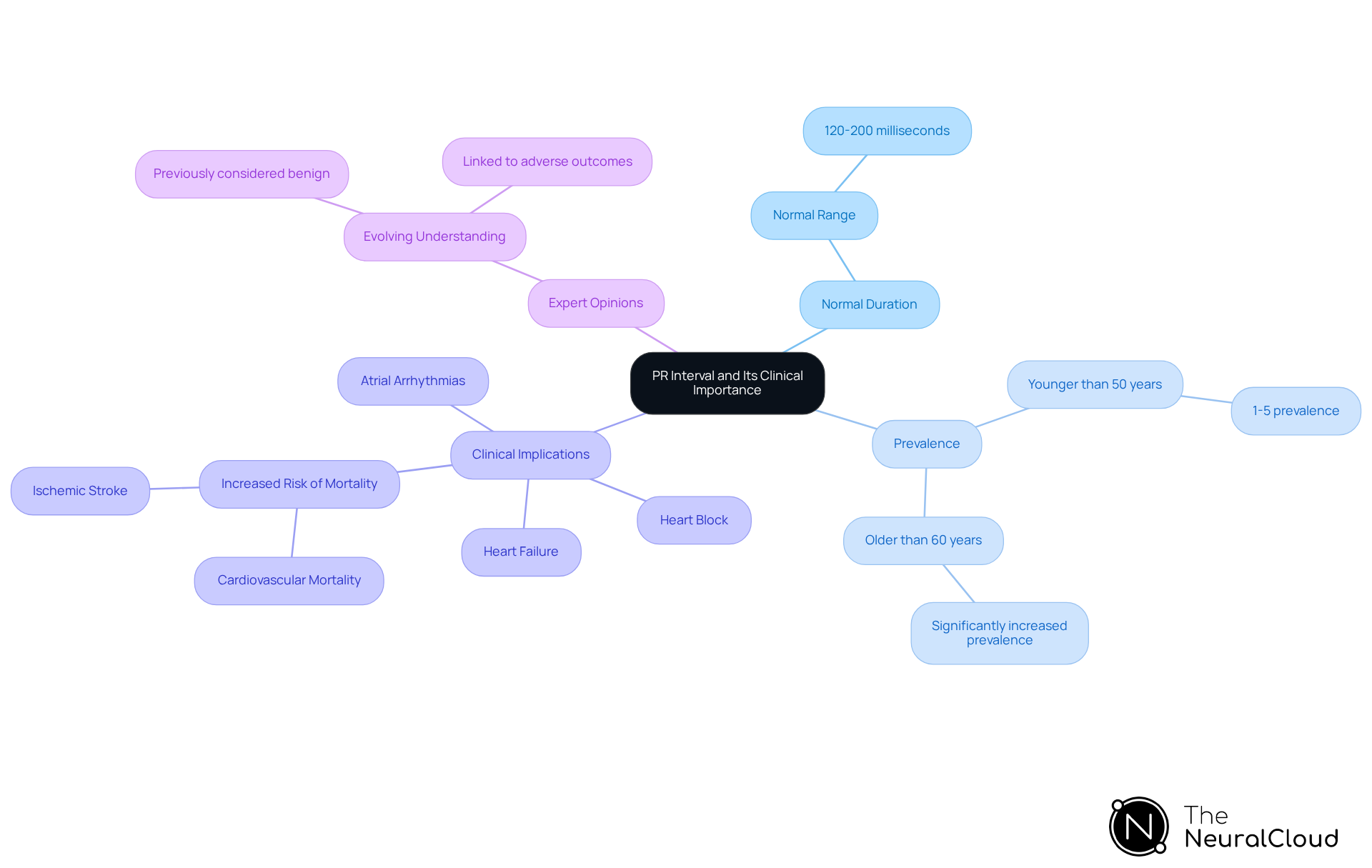
The PR duration on an ECG is a critical measure that can reveal significant cardiac issues. Typically ranging from 120 to 200 milliseconds, this period reflects how long it takes for signals to pass through the atrioventricular (AV) node, which helps coordinate the timing of heart contractions. Understanding the implications of PR duration can be challenging for healthcare professionals, as irregularities can indicate various cardiac conditions, such as heart block or pre-excitation syndromes. Therefore, monitoring this parameter is essential in the analysis and interpretation of short PR ECG.
Current statistics show that the normal PR duration falls between 120 and 200 milliseconds. The prevalence of PR prolongation varies from 1% to 5% in patients younger than 50 years, but this figure increases significantly after age 60. This highlights why monitoring PR duration is especially important for older patients, who are more likely to have conduction issues.
Case studies underscore the clinical importance of the PR duration. For instance, research involving individuals with coronary artery disease has found that extended PR durations are associated with higher risks of cardiovascular mortality and ischemic stroke. Additionally, a longitudinal study from the Framingham Heart Study revealed that individuals with first-degree AV block face a significantly elevated risk of all-cause mortality and future atrial fibrillation.
Expert opinions indicate that while earlier studies suggested PR prolongation was benign, recent analyses have documented links to adverse outcomes, including increased risks of atrial arrhythmias and heart failure. This evolving understanding necessitates further research into the mechanisms and monitoring strategies for PR prolongation, particularly in individuals with underlying cardiovascular conditions. Thus, the PR segment remains a critical focus in short PR ECG analysis, as it provides insights that can guide clinical decision-making and improve patient outcomes, especially when leveraging the advanced capabilities of MaxYield, including its customizable visualization and reporting tool, Insight360, which enhances the interpretation of short PR ECG data by transforming it into interactive dashboards and clinical-ready reports.
Differentiate Between Normal and Short PR Intervals
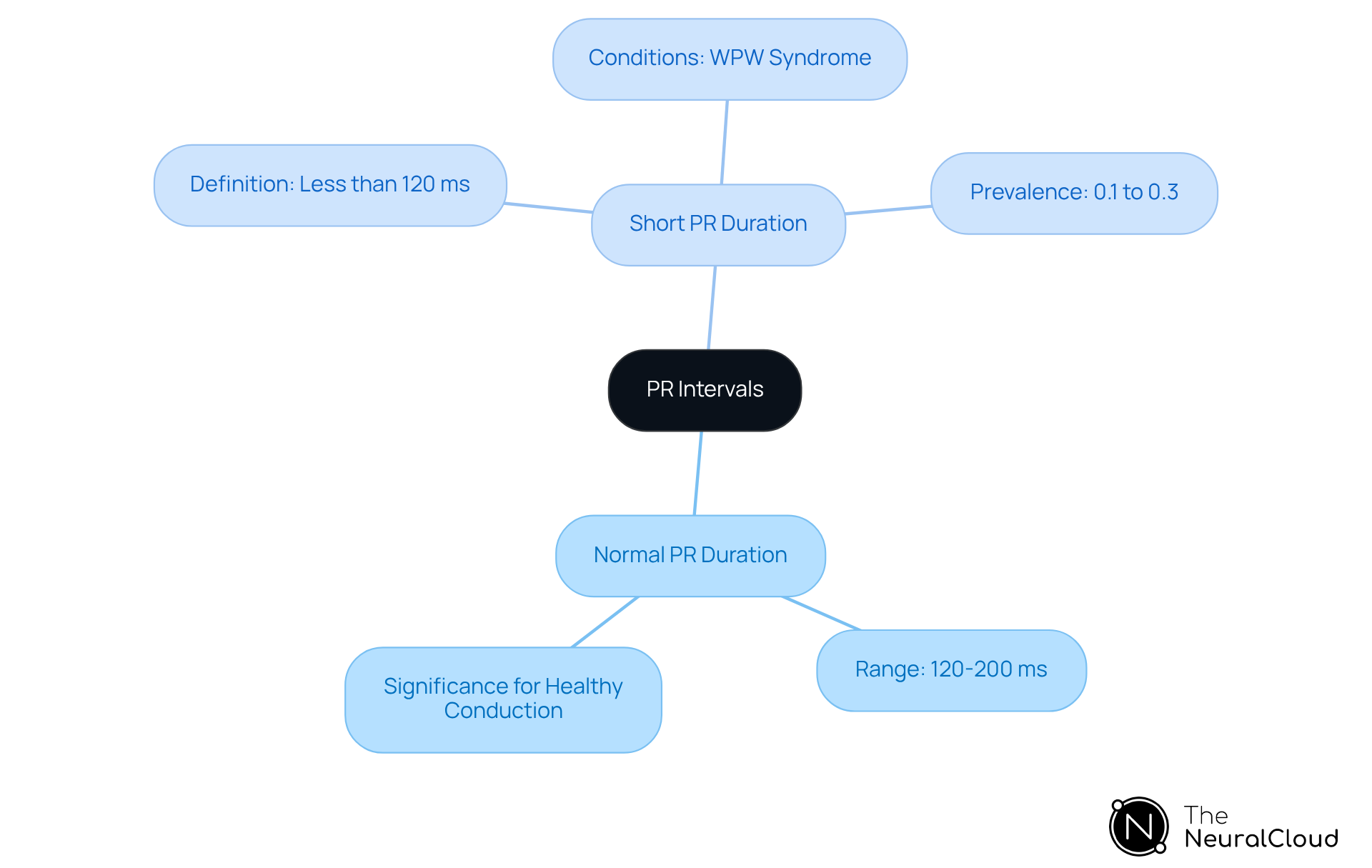
Understanding the nuances of PR duration is essential for accurate ECG interpretation and patient safety. A normal PR duration ranges from 120 to 200 milliseconds, reflecting healthy conduction through the AV node. In contrast, a brief PR duration is defined as less than 120 milliseconds, which can arise from conditions such as Wolff-Parkinson-White (WPW) syndrome, where an accessory pathway bypasses the normal conduction route. The occurrence of brief PR durations in the general population is estimated to be around 0.1% to 0.3%, indicating that while relatively uncommon, these cases are important in clinical practice.
Case studies demonstrate the clinical significance of distinguishing between normal durations and short PR ECG durations. For example, individuals with WPW syndrome frequently exhibit a classic triad of symptoms, including:
- A short PR ECG duration
- A delta wave
- A widened QRS complex
For health tech developers, recognizing these differences is vital to creating effective diagnostic tools, as it informs the design of algorithms that can accurately detect and flag abnormal ECG readings, thereby enhancing diagnostic capabilities.
The MaxYield™ platform from Neural Cloud Solutions automates ECG analysis and offers advanced noise filtering, playing a crucial role in enhancing diagnostic accuracy. With its ability to deliver beat-by-beat analysis of 200,000 heartbeats in less than 5 minutes and highlight key features such as P, QRS, and T waves, MaxYield™ helps streamline the workflow for developers. Additionally, Insight360 serves as a customizable visualization tool that transforms MaxYield™ data into interactive dashboards and clinical-ready reports. According to Dr. Christopher R Ellis, the risk of sudden cardiac death (SCD) in WPW syndrome is about 1 in 100 symptomatic cases over a 15-year follow-up. By incorporating this knowledge into their systems, developers can utilize MaxYield™ and Insight360 to enhance the precision of cardiac evaluations and ultimately contribute to improved outcomes for individuals. With tools like MaxYield™, healthcare professionals can significantly reduce the risks associated with misdiagnosis in conditions like WPW syndrome.
Explore Diagnostic Approaches for Short PR Intervals
Diagnosing a short PR ECG duration presents unique challenges that necessitate a thorough clinical evaluation, including a detailed patient history and physical examination. The following diagnostic approaches are crucial for accurate evaluation:
- Electrocardiography (ECG): This is the primary tool for identifying PR duration abnormalities. A short PR ECG provides a comprehensive perspective on cardiac conduction, enabling precise evaluation of the PR duration.
- Holter Monitoring: Continuous ECG observation over 24 to 48 hours is advantageous for capturing intermittent short PR ECG durations and correlating them with individual symptoms, thereby enhancing diagnostic precision.
- Electrophysiological Studies: In situations where the reason for the short PR ECG remains uncertain, invasive electrophysiological studies may be performed to directly evaluate the conduction pathways, offering essential insights into the underlying mechanisms.
- Imaging Studies: Echocardiography can be employed to evaluate any structural heart disease that may contribute to conduction abnormalities, ensuring a holistic approach to diagnosis.
By employing these diagnostic approaches, healthcare professionals can significantly improve patient outcomes and ensure effective management of short PR ECG durations.

Implement Management Strategies for Short PR Intervals
Managing brief PR durations presents unique challenges that require tailored strategies based on individual patient needs. Effective strategies to consider include:
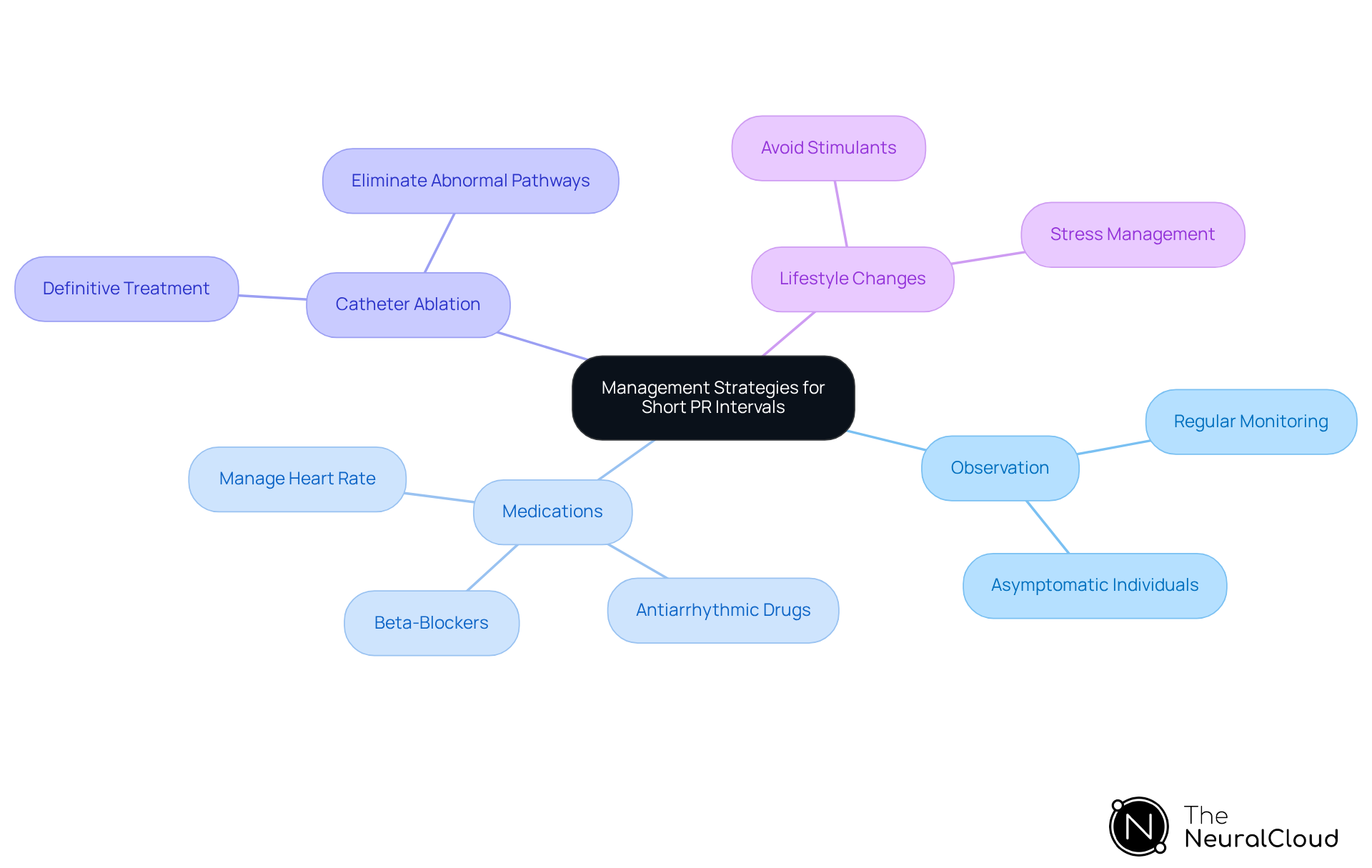
- Observation: For asymptomatic individuals with isolated brief PR durations, regular monitoring is often sufficient to ensure no progression of symptoms.
- Medications: Symptomatic individuals may benefit from beta-blockers or antiarrhythmic drugs, which help manage heart rate and prevent tachyarrhythmias, thereby enhancing comfort and reducing risks associated with rapid heart rates.
- Catheter Ablation: In cases linked to accessory pathways, catheter ablation serves as a definitive treatment, effectively eliminating the abnormal conduction pathway and significantly reducing the risk of arrhythmias.
- Lifestyle Changes: Patients are advised to steer clear of stimulants and handle stress, as these elements can worsen symptoms associated with reduced PR durations.
It's important for health tech developers to grasp these management strategies, as it informs the design of tools that assist healthcare providers in making informed treatment decisions. For instance, a study indicated that individuals with a short PR ECG interval had a higher risk of all-cause mortality, emphasizing the need for effective management strategies. Additionally, expert opinions suggest that individualized care based on ECG findings is essential for optimizing patient outcomes. Ultimately, effective management of brief PR durations can lead to improved patient outcomes and enhanced quality of care.
Conclusion
Health tech developers face significant challenges in accurately interpreting ECG readings, particularly regarding short PR intervals. The PR interval is a crucial measure in ECG readings, serving as a window into the heart's conduction system. Deviations from normal PR durations can indicate potential health risks. By understanding the implications of both normal and short PR intervals, developers can create more effective diagnostic tools that improve patient outcomes.
This article discusses various diagnostic approaches, such as electrocardiography and Holter monitoring, highlighting the necessity for thorough evaluations. Accurate ECG interpretation is vital, as it directly impacts the diagnosis of short PR intervals and the development of tailored management strategies. The management strategies outlined, from observation to catheter ablation, emphasize the importance of individualized care in addressing the unique needs of patients with short PR intervals.
In summary, this article not only informs health tech developers about the clinical implications of short PR ECGs but also emphasizes the need for innovative diagnostic and management solutions. By leveraging advanced technologies like MaxYield and Insight360, developers can significantly enhance the accuracy of cardiac evaluations. This commitment to innovation is crucial for addressing the complexities of cardiac health and ensuring that patients receive the most effective treatments available.
Frequently Asked Questions
What is the PR interval and why is it clinically important?
The PR interval on an ECG measures the time it takes for electrical signals to pass through the atrioventricular (AV) node, typically ranging from 120 to 200 milliseconds. It is clinically important because irregularities in this duration can indicate various cardiac conditions, such as heart block or pre-excitation syndromes.
What are the normal ranges for PR duration?
The normal PR duration falls between 120 and 200 milliseconds.
How does age affect the prevalence of PR prolongation?
The prevalence of PR prolongation varies from 1% to 5% in patients younger than 50 years, but this figure increases significantly after age 60, highlighting the importance of monitoring PR duration in older patients.
What are the risks associated with extended PR durations?
Extended PR durations are associated with higher risks of cardiovascular mortality and ischemic stroke, particularly in individuals with coronary artery disease. Additionally, those with first-degree AV block face an elevated risk of all-cause mortality and future atrial fibrillation.
How has the understanding of PR prolongation evolved over time?
Earlier studies suggested that PR prolongation was benign; however, recent analyses have linked it to adverse outcomes, including increased risks of atrial arrhythmias and heart failure. This evolving understanding emphasizes the need for further research and monitoring strategies.
What tools can assist in the analysis of PR duration?
Advanced capabilities like those offered by MaxYield, including the customizable visualization and reporting tool Insight360, can enhance the interpretation of short PR ECG data by transforming it into interactive dashboards and clinical-ready reports.
List of Sources
- Define the PR Interval and Its Clinical Importance
- Normal Electrocardiography (ECG) Intervals: Normal Electrocardiography Intervals (https://emedicine.medscape.com/article/2172196-overview)
- Modulators of normal ECG intervals identified in a large electronic medical record - PMC (https://pmc.ncbi.nlm.nih.gov/articles/PMC3057498)
- Epidemiology and Outcomes associated with PR Prolongation - PMC (https://pmc.ncbi.nlm.nih.gov/articles/PMC9918374)
- Common ECG finding may indicate serious cardiac problems — Harvard Gazette (https://news.harvard.edu/gazette/story/2009/06/common-ecg-finding-may-indicate-serious-cardiac-problems)
- PR Interval (https://litfl.com/pr-interval-ecg-library)
- Differentiate Between Normal and Short PR Intervals
- Wolff–Parkinson–White Syndrome and Acute Pulmonary Embolism: A Case Report - PMC (https://pmc.ncbi.nlm.nih.gov/articles/PMC6932617)
- Wolff Parkinson White Syndrome - The Cardiology Advisor (https://thecardiologyadvisor.com/ddi/wolff-parkinson-white-syndrome)
- Wolff-Parkinson-White Syndrome: Practice Essentials, Background, Pathophysiology (https://emedicine.medscape.com/article/159222-overview)
- Prevalence of short PR-intervals and risk of cardiac events and mortality - a nationwide study (https://academic.oup.com/eurheartj/article/46/Supplement_1/ehaf784.741/8308824)
- Explore Diagnostic Approaches for Short PR Intervals
- Philips data shows extended ECG Holter monitoring can improve diagnostic results (https://philips.com/a-w/about/news/archive/standard/news/articles/2023/20230828-philips-data-shows-extended-ecg-holter-monitoring-can-improve-diagnostic-results.html)
- Holter Monitoring and Loop Recorders: From Research to Clinical Practice - PMC (https://pmc.ncbi.nlm.nih.gov/articles/PMC5013174)
- What Is a Holter Monitor? (https://my.clevelandclinic.org/health/diagnostics/21491-holter-monitor)
- Automatic diagnosis of the 12-lead ECG using a deep neural network - PMC (https://pmc.ncbi.nlm.nih.gov/articles/PMC7145824)
- Implement Management Strategies for Short PR Intervals
- How is short PR interval treated and is the disease dangerous? (https://vinmec.com/eng/blog/how-is-short-pr-syndrome-treated-and-is-it-dangerous-en)
- Short PR Syndrome, Symptoms, and Treatment (https://vinmec.com/eng/blog/short-pr-syndrome-symptoms-and-treatment-en)
- PR Interval and the Risks of Recurrent Syncope and All‐Cause Mortality in Patients Presenting With Syncope - PMC (https://pmc.ncbi.nlm.nih.gov/articles/PMC13055722)
- Is a Short PR Interval a Cause for Concern? (https://yourhealthmagazine.net/article/heart-disease-stroke-and-diabetes/is-a-short-pr-interval-a-cause-for-concern)
- Clinical outcome as a function of the PR-interval—there is virtue in moderation: data from the Duke Databank for cardiovascular disease (https://academic.oup.com/europace/article/17/6/978/2398505)