Introduction
The distinctive ECG pattern known as STEMI tombstoning is a critical indicator of severe myocardial damage, often signaling a high-risk cardiac event. This phenomenon presents significant challenges in ECG analysis, making it essential for healthcare professionals to understand its implications. By grasping the nuances of STEMI tombstoning, clinicians can enhance diagnostic accuracy and gain insights necessary for timely intervention, which can drastically improve patient outcomes.
However, the stakes are high, with mortality rates soaring between 26% and 38.2% for those presenting with this alarming ECG configuration. This raises an important question: how can clinicians effectively leverage advanced tools and knowledge to navigate the complexities of STEMI tombstoning? The answer lies in utilizing platforms like MaxYield™, which offer innovative features designed to improve ECG analysis.
MaxYield™ enhances the diagnostic process by providing real-time data interpretation and visual aids that simplify complex information. This platform not only streamlines the analysis but also equips healthcare professionals with the tools needed to make informed decisions quickly. As a result, clinicians can mitigate the dire implications of STEMI tombstoning, ultimately leading to better patient outcomes.
Define STEMI Tombstoning: Clinical Significance and Mechanisms
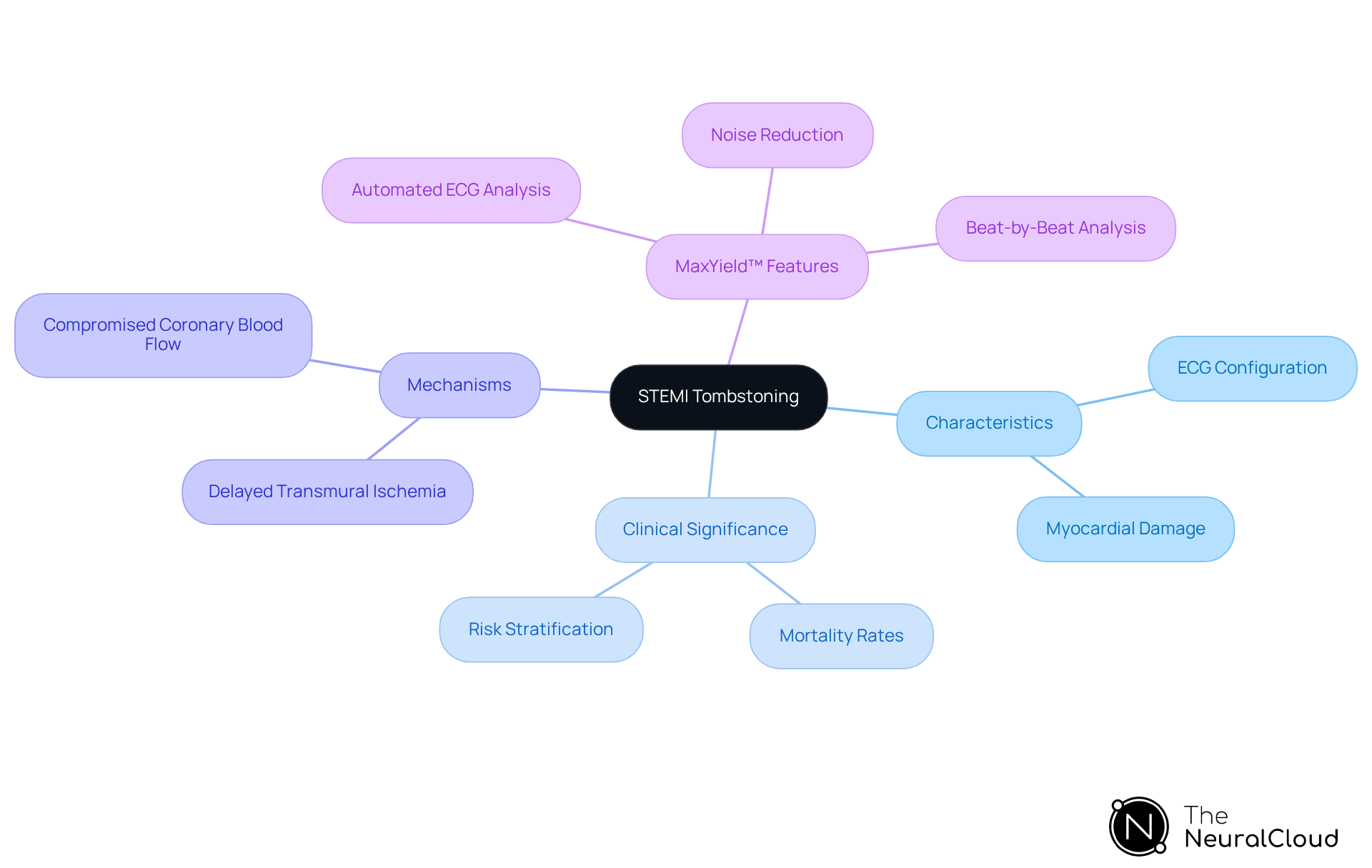
The formation of a STEMI tombstone is characterized by a distinctive electrocardiographic (ECG) configuration, where the morphology is evident. This pattern is primarily observed in patients experiencing a STEMI tombstone and is closely associated with significant myocardial damage. The clinical implications of this phenomenon are profound, correlating with increased mortality rates and severe left ventricular dysfunction. Research indicates that this specific pattern is linked to a mortality rate between 26% and 38.2%, highlighting its importance in clinical practice.
Mechanistically, this phenomenon results from delayed transmural ischemia, leading to extensive myocardial injury and compromised coronary blood flow. It is not just a morphological variation; it represents a serious clinical condition that requires prompt recognition and intervention. Understanding the implications of this phenomenon is vital for healthcare professionals, as it aids in the management of high-risk patients, ultimately improving patient outcomes.
To enhance ECG analysis, advanced tools like Neural Cloud Solutions' MaxYield™ can be invaluable. MaxYield™ automates ECG analysis and minimizes noise, significantly improving the clarity of these critical signals. Its features include advanced algorithms, which facilitates the rapid identification of specific patterns, thereby supporting confident clinical decisions. This capability not only enhances workflow efficiency in cardiac care but also ensures that healthcare professionals can respond effectively to critical situations.
Features of MaxYield™:
- Automated tools for quick pattern recognition
Advantages for Healthcare Professionals:
- Improved clarity in ECG readings
- Enhanced decision-making capabilities
- Increased workflow efficiency in cardiac care
By leveraging MaxYield™, healthcare providers can significantly improve their ability to recognize and respond to high-risk cardiac events, ultimately leading to better patient outcomes.
Identify ECG Characteristics of Tombstoning in STEMI Patients
ECG analysis can present significant challenges, particularly in identifying critical features in STEMI patients. The ECG characteristics of this phenomenon include pronounced elevation, often exceeding 5 mm in leads V2-V4, along with a distinctive convex morphology. Clinicians may also observe an absence or minimal presence of R waves, with the ST segment creating a downward slope. Additionally, changes in other leads can further confirm the diagnosis. Recognizing these features is vital, as they indicate a severe myocardial insult that requires immediate medical intervention.
MaxYield™ addresses these challenges by enhancing the analysis of ECG characteristics. This platform offers automated, accurate, and scalable solutions that improve diagnostic clarity and efficiency in clinical settings. Key features of MaxYield™ include:
- ST segment and morphology changes.
- Enhanced visualization of ECG data for better interpretation.
- Integration with existing clinical workflows to streamline processes.
The advantages of MaxYield™ are substantial for healthcare professionals. By providing precise ECG analysis, the platform allows for quicker decision-making and improved patient outcomes. Furthermore, the clarity and efficiency gained from using MaxYield™ can significantly reduce the cognitive load on clinicians, enabling them to focus on delivering high-quality care.
Explore Angiographic Features and Their Clinical Implications
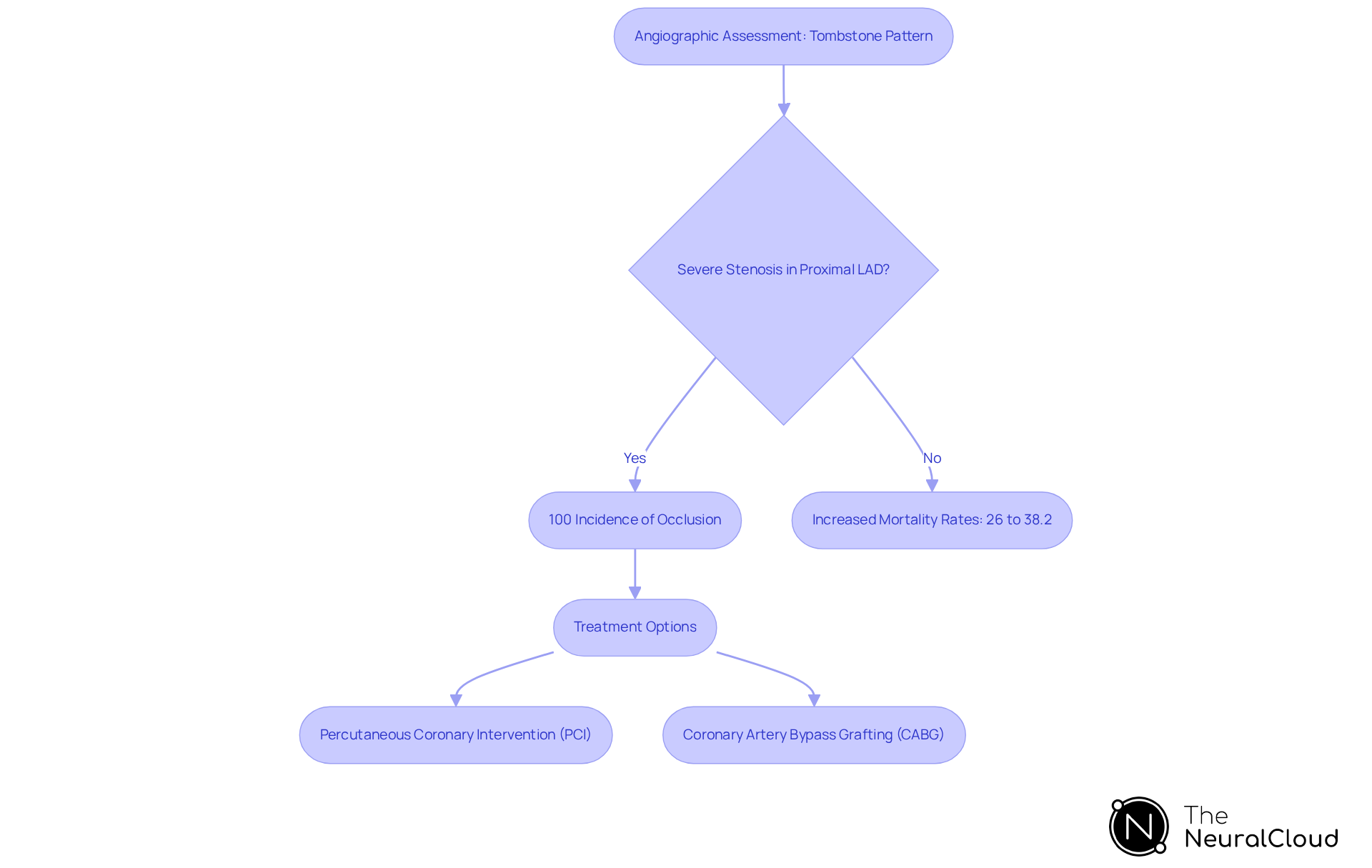
Angiographic assessments in individuals showing ST-segment elevation that resembles tombstones often point to occlusion, particularly in the proximal left anterior descending artery (LAD). This connection is crucial, as it directly correlates with the extent of myocardial damage these individuals experience. Research shows that those with tombstoning have a staggering 100% incidence of total or partial occlusion of the LAD artery, compared to just 44% in individuals without this pattern. Such severe occlusions frequently require intervention, including:
- Coronary artery bypass grafting (CABG)
Recognizing these angiographic traits enables clinicians to anticipate potential complications and tailor treatment effectively, thereby improving outcomes for patients. Furthermore, the presence of severe occlusion is associated with increased mortality rates, ranging from 26% to 38.2%. This underscores the importance of timely intervention for this patient group.
Assess Prognosis and Long-Term Outcomes in Tombstoning Cases
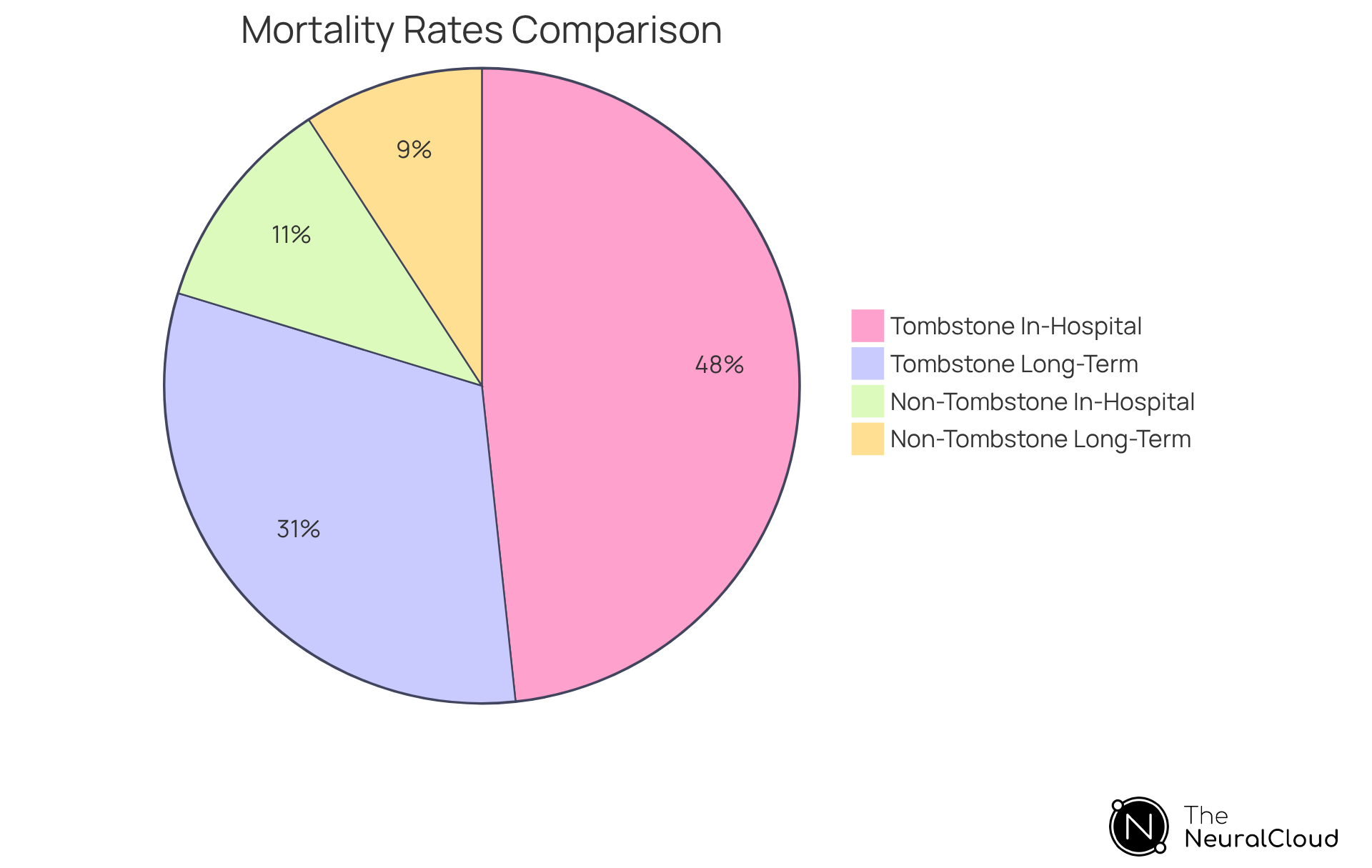
Patients exhibiting STEMI face a notably poor prognosis, marked by significantly increased mortality and morbidity. Research indicates that left ventricular ejection fraction (LVEF) is a critical factor influencing survival; lower LVEF correlates with a heightened risk of mortality. In a study involving 335 individuals diagnosed with STEMI, those with a STEMI tombstone experienced an in-hospital death rate of 10%, while those without this pattern had a rate of just 2.3%.
Long-term follow-up reveals that individuals with STEMI tombstone have a mortality rate of 6.5%, significantly higher than the 1.9% observed in their counterparts. Given these findings, it is essential for clinicians to implement strategies that include:
- Pharmacotherapy
Such proactive measures aim to mitigate risks associated with complications and recurrent events. By adopting these strategies, healthcare professionals can enhance the quality of life for these patients and improve their overall clinical outcomes.
Conclusion
Recognizing the critical significance of STEMI tombstoning is essential for healthcare professionals in cardiology. This distinctive ECG pattern serves as a vital diagnostic marker, indicating severe myocardial damage and heightened mortality risk. Understanding the implications of this phenomenon is crucial for timely intervention and improved patient outcomes, emphasizing the need for vigilance in clinical practice.
In the context of ECG analysis, healthcare professionals face challenges in accurately identifying and interpreting complex patterns. The MaxYield™ platform addresses these challenges by providing advanced tools that enhance ECG analysis. Its features include:
- Real-time data processing
- Intuitive user interface
- Comprehensive reporting capabilities
These functionalities streamline the workflow for healthcare providers, allowing for quicker and more accurate decision-making in cardiac care.
The advantages of utilizing MaxYield™ are significant. By improving ECG analysis, healthcare professionals can make informed decisions that directly impact patient care. The platform not only facilitates better diagnostic accuracy but also enhances workflow efficiency, ultimately leading to improved patient outcomes. This is particularly important for patients exhibiting the tombstoning pattern, as timely intervention can mitigate risks and enhance long-term survival rates.
Ultimately, the insights provided regarding STEMI tombstoning reinforce the necessity for prompt recognition and intervention in high-risk cardiac situations. Healthcare professionals are encouraged to integrate advanced diagnostic tools like MaxYield™ into their practice. By doing so, they can significantly impact survival rates and quality of life for individuals facing the challenges associated with this serious condition.
Frequently Asked Questions
What is STEMI tombstoning?
STEMI tombstoning refers to a specific electrocardiographic (ECG) pattern characterized by a convex shape of ST-segment elevation, resembling a tombstone. It is primarily observed in patients with significant myocardial damage.
What are the clinical implications of STEMI tombstoning?
The clinical implications of STEMI tombstoning are severe, correlating with increased mortality rates and significant left ventricular dysfunction. Research indicates a mortality rate associated with this pattern between 26% and 38.2%.
What causes the formation of a STEMI tombstone?
The formation of a STEMI tombstone is caused by delayed transmural ischemia, which leads to extensive myocardial injury and compromised coronary blood flow.
Why is it important for healthcare professionals to understand STEMI tombstoning?
Understanding STEMI tombstoning is vital for healthcare professionals as it aids in the swift identification and management of high-risk patients, ultimately improving clinical outcomes.
How can advanced tools enhance ECG analysis in relation to STEMI tombstoning?
Advanced tools like Neural Cloud Solutions' MaxYield™ can enhance ECG analysis by automating the process, reducing noise for clearer signals, and providing beat-by-beat analysis for quick pattern recognition.
What are the features of MaxYield™?
The features of MaxYield™ include automated ECG analysis, noise reduction for clearer signals, and beat-by-beat analysis for quick pattern recognition.
What advantages does MaxYield™ offer to healthcare professionals?
MaxYield™ offers improved clarity in ECG readings, enhanced decision-making capabilities, and increased workflow efficiency in cardiac care.
How can leveraging MaxYield™ improve patient outcomes?
By leveraging MaxYield™, healthcare providers can significantly enhance their ability to recognize and respond to high-risk cardiac events, ultimately leading to better patient outcomes.
List of Sources
- Define STEMI Tombstoning: Clinical Significance and Mechanisms
- researchgate.net (https://researchgate.net/publication/47636532_Tombstoning_ST-Elevation_Myocardial_Infarction)
- Tombstoning ST-Elevation Myocardial Infarction - PMC (https://pmc.ncbi.nlm.nih.gov/articles/PMC2842959)
- pmc.ncbi.nlm.nih.gov (https://pmc.ncbi.nlm.nih.gov/articles/PMC7358892)
- Patients with Tombstoning Pattern on the Admission Electrocardiography Who Have Undergone Primary Percutaneous Coronary Intervention for Anterior Wall ST‐Elevation Myocardial Infarction: In‐Hospital and Midterm Clinical Outcomes - PMC (https://pmc.ncbi.nlm.nih.gov/articles/PMC6932004)
- Explore Angiographic Features and Their Clinical Implications
- semanticscholar.org (https://semanticscholar.org/paper/"Tombstoning"-of-ST-segment-in-acute-myocardial-on-Kukla-Dudek/6a0aa7de57ac8fc1ed0b657eb1844ecb27946506)
- Tombstoning ST-Elevation Myocardial Infarction - PMC (https://pmc.ncbi.nlm.nih.gov/articles/PMC2842959)
- escardio.org (https://escardio.org/The-ESC/Press-Office/Press-releases/New-data-presented-to-guide-the-treatment-of-patients-with-multivessel-coronary-artery-disease)
- acc.org (https://acc.org/latest-in-cardiology/articles/2025/10/24/16/56/tues-254pm-combo-mi-tct-2025)
- Assess Prognosis and Long-Term Outcomes in Tombstoning Cases
- pmc.ncbi.nlm.nih.gov (https://pmc.ncbi.nlm.nih.gov/articles/PMC7358892)
- europepmc.org (https://europepmc.org/article/med/16583329)