Introduction
The T axis in an ECG presents a critical challenge that can significantly impact cardiac health and patient outcomes. For health tech developers, mastering the nuances of the T axis normal range - between 15° and 75° - is essential for creating algorithms that provide accurate cardiac assessments. Inconsistent data across devices can lead to misinterpretations of cardiac health. Developers must address this challenge to ensure accurate assessments. Exploring advanced technologies could be the key to transforming ECG analysis and enhancing patient care.
Clarify the T Axis: Physiological Significance in ECG
Understanding the T line in an ECG is vital for accurate cardiac assessments and algorithm development. The T line represents the direction of electrical activity during ventricular repolarization, a crucial element of cardiac function that indicates how the heart recovers after each contraction. For health technology creators, grasping the T line is essential. It aids in developing algorithms that accurately analyze ECG data.
Inconsistent ECG data from various devices can lead to inaccurate analyses and poor patient outcomes. With MaxYield, creators can ensure that the data they analyze is consistent and clean, addressing the common issue of garbage-in/garbage-out. The t axis normal range ecg is between 15° and 75°. Deviations from this range may indicate underlying cardiac issues, such as ischemia or hypertrophy.
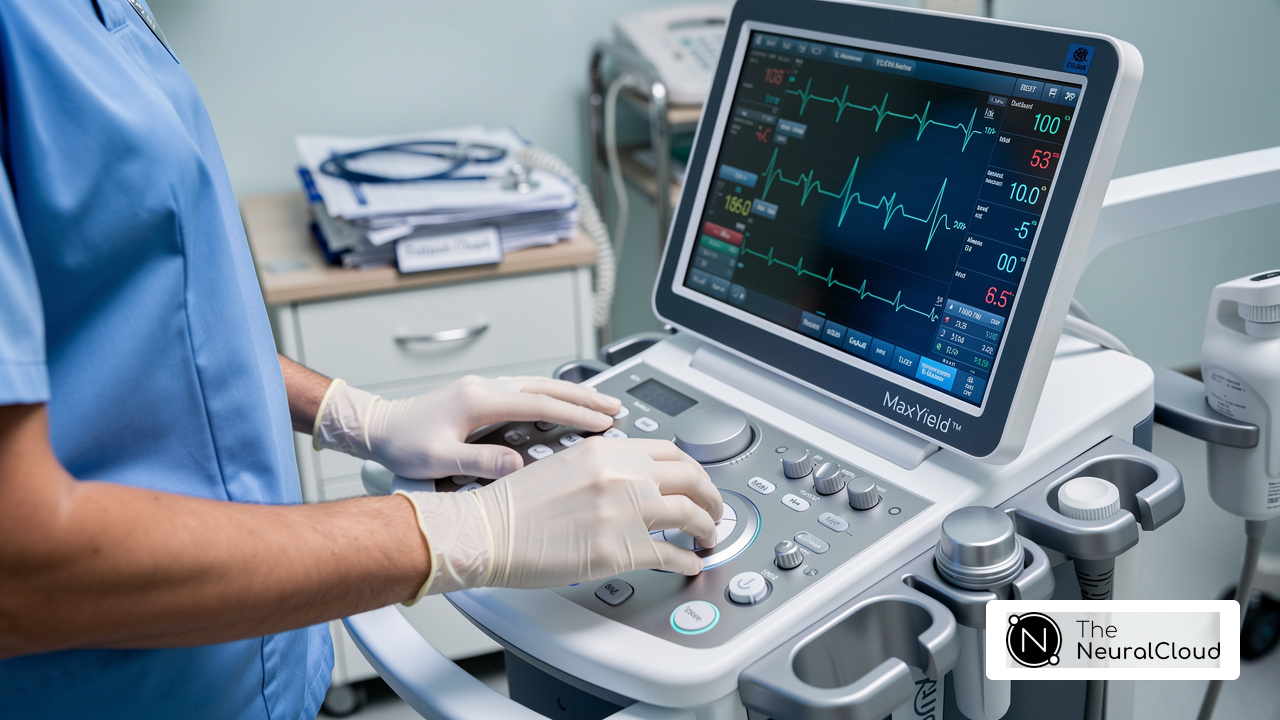
MaxYield offers advanced ECG analysis features, including automated noise reduction and adaptive algorithms. These tools enable creators to design more effective diagnostic solutions that enhance care for individuals and support assured clinical decisions. This integration of hospital-grade precision from consumer-grade devices allows for better monitoring and management of individuals at home, ultimately transforming remote monitoring.
Additionally, MaxYield provides distinctive metrics and premium subscription options that add significant value. This empowers creators to improve their solutions and deliver superior patient outcomes.

Measure the T Axis: Techniques for Accurate Assessment
Determining the T dimension in ECG analysis presents several challenges for healthcare professionals. To precisely gauge the T dimension, creators can employ various methods:
- 12-Lead ECG: This standard method provides a comprehensive view of the heart's electrical activity. By looking at the leads, programmers can figure out the T coordinate using vector analysis, which is key to understanding cardiac health. The t axis normal range ecg is defined as being between 15° to 75°, which offers a benchmark for creators to evaluate readings effectively.
- Hexaxial Reference System: This method involves plotting the T wave's amplitude in the frontal plane to determine its angle, providing a precise measurement of the T direction.
- Automated Algorithms: By utilizing AI and machine learning, programmers can generate algorithms that autonomously compute the T coordinate from raw ECG data, significantly improving both speed and precision.
Importantly, the typical P, QRS, and T axes do not vary by gender, which is essential for creators contemplating demographic factors in their applications. Additionally, the t axis normal range ECG shows a slight increase with age, providing valuable insights for interpreting ECG data across different patient demographics. Each of these techniques contributes to a more precise understanding of cardiac health, ultimately leading to improved diagnostic outcomes.
Furthermore, with Neural Cloud Solutions' MaxYield™, programmers can enhance their ECG analysis workflow through advanced noise filtering and automation. This integration makes sure the processed data is accurate and efficient, as MaxYield™ employs sophisticated algorithms to reduce noise and improve signal clarity. By streamlining the analysis process, MaxYield™ supports continuous learning models that adapt to evolving healthcare needs, making it an invaluable tool for developers in the health tech space. Ultimately, these advancements in ECG analysis can significantly enhance patient care and outcomes.

Define the Normal Range: Clinical Implications of T Axis Variations
Understanding the t axis normal range ecg is crucial for identifying significant cardiac conditions. The typical range for the t axis normal range ecg is defined as 15° to 75°. Deviations from this range can indicate serious cardiac issues:
- Left Deviation (LAD): A T orientation less than 15° may suggest underlying problems such as left ventricular hypertrophy or conduction abnormalities. Research indicates that patients with left deviation often experience higher rates of hypertension, dyslipidemia, and ischemic heart disease, complicating their clinical outcomes. In a hospital-based population, left deviation was linked to a cumulative 3-year incidence of major adverse cardiovascular events (MACE) of 26.4%, compared to 18.4% in those with a normal orientation.
- Right T Deviance (RAD): Conversely, a T angle greater than 75° can be associated with right ventricular hypertrophy or pulmonary conditions. Notably, individuals with right deviation tend to be younger and may have a higher prevalence of atrial fibrillation, indicating different underlying pathophysiological mechanisms.
Understanding these variations is key for health technology developers, enabling them to create systems that can flag potential cardiac risks based on T measurements. This ability boosts diagnostic accuracy and helps improve patient outcomes by allowing for timely interventions. As cardiac diagnostics continue to evolve, integrating these insights into ECG analysis tools is vital for enhancing cardiovascular care and patient safety.

Integrate Technology: Enhancing T Axis Analysis with Advanced ECG Solutions
Despite advancements in cardiac care, ECG analysis still faces significant challenges that can hinder accurate diagnosis and timely intervention. To improve T dimension analysis, developers can integrate advanced ECG solutions such as:
- AI Algorithms: Utilizing machine learning to analyze large datasets enhances the precision of T measurements and identifies patterns that may suggest cardiac issues. For instance, AI detection of ventricular arrhythmia has achieved an accuracy of 99.2%, significantly enhancing diagnostic capabilities.
- Real-Time Monitoring: Implementing wearable technology that continuously tracks ECG data enables prompt analysis of the T line, offering timely insights into an individual's cardiac health. This method helps quickly spot issues like left ventricular dysfunction and silent atrial fibrillation, which are vital for timely treatment.
- Visualization Tools: Advanced visualization software, such as Insight360, aids clinicians in interpreting T axis normal range ECG data more effectively, allowing for better decision-making. These tools can generate customizable dashboards and reports, enhancing the understanding of trends and anomalies in ECG readings.
Moreover, the MaxYield platform automates ECG signal labeling, accurately mapping PQRST waveforms and providing clear wave durations and intervals. This automation alleviates the need for manual input, saving time and resources while ensuring clear interpretation of diverse ECG patterns. By incorporating these technologies, developers can create robust ECG analysis tools that not only improve diagnostic accuracy but also significantly enhance patient care outcomes. However, integrating these advanced solutions into existing healthcare systems poses significant challenges, including regulatory compliance and system compatibility. Addressing these challenges is crucial for maximizing the potential of AI-enhanced ECG solutions in improving patient outcomes.

Conclusion
Many developers struggle with accurately interpreting the T axis in ECG analysis, which can hinder effective cardiac diagnostics. The T axis reflects the heart's electrical activity during ventricular repolarization, and maintaining its normal range of 15° to 75° is crucial for identifying potential cardiac issues. By mastering the T axis, developers can significantly enhance ECG data analysis, leading to better patient care.
Key insights discussed in the article highlight the importance of precise T axis measurement techniques, such as:
- 12-lead ECG
- hexaxial reference systems
- automated algorithms
These methods not only facilitate accurate assessments but also allow for the identification of significant deviations that may indicate serious cardiac conditions. The integration of advanced technologies, like AI algorithms and real-time monitoring tools, further enhances the reliability and efficiency of ECG analysis, ultimately fostering better clinical decision-making.
As cardiac diagnostics evolve, it’s crucial for health tech developers to embrace these insights and technologies. By focusing on the T axis's physiological significance and leveraging advanced ECG solutions, developers can make meaningful contributions to improving cardiovascular care. This proactive approach not only enhances diagnostic accuracy but also empowers healthcare providers to deliver timely interventions, ultimately transforming patient outcomes across the healthcare landscape.
Frequently Asked Questions
What is the significance of the T line in an ECG?
The T line in an ECG represents the direction of electrical activity during ventricular repolarization, which is crucial for assessing how the heart recovers after each contraction.
Why is understanding the T line important for health technology creators?
Grasping the T line is essential for health technology creators as it aids in developing algorithms that accurately analyze ECG data, which is vital for effective cardiac assessments.
What is the normal range for the T axis in an ECG?
The normal range for the T axis in an ECG is between 15° and 75°. Deviations from this range may indicate underlying cardiac issues, such as ischemia or hypertrophy.
How does MaxYield address the issue of inconsistent ECG data?
MaxYield ensures that the ECG data analyzed is consistent and clean, addressing the common problem of garbage-in/garbage-out, which can lead to inaccurate analyses and poor patient outcomes.
What advanced features does MaxYield offer for ECG analysis?
MaxYield provides advanced ECG analysis features, including automated noise reduction and adaptive algorithms, which help create more effective diagnostic solutions.
How does MaxYield transform remote monitoring of individuals?
By integrating hospital-grade precision from consumer-grade devices, MaxYield enhances monitoring and management of individuals at home, ultimately transforming remote monitoring.
What additional benefits does MaxYield provide to creators?
MaxYield offers distinctive metrics and premium subscription options that empower creators to improve their solutions and deliver superior patient outcomes.
List of Sources
- Measure the T Axis: Techniques for Accurate Assessment
- researchgate.net (https://researchgate.net/publication/272470438_Calculating_cardiac_axis_on_a_12-lead_ECG)
- Normal P, QRS & T Axis on an Electrocardiogram (ECG) as Seen in Plateau Specialist Hospital, Jos. Central Nigeria | Iris Publishers (https://irispublishers.com/ojcrr/fulltext/normal-pqrs-&-axis-on-an-electrocardiogram-ecg-as-seen-in-plateau.ID.000593.php)
- justanswer.com (https://justanswer.com/medical/m84vc-saw-one-comprehensive-answers-axis.html)
- Define the Normal Range: Clinical Implications of T Axis Variations
- Cardiac Axis Deviation in Systemic Sclerosis-Related Pulmonary Hypertension (https://thecardiologyadvisor.com/news/cardiac-axis-deviation-in-systemic-sclerosis-related-pulmonary-hypertension)
- Normal P, QRS & T Axis on an Electrocardiogram (ECG) as Seen in Plateau Specialist Hospital, Jos. Central Nigeria | Iris Publishers (https://irispublishers.com/ojcrr/fulltext/normal-pqrs-&-axis-on-an-electrocardiogram-ecg-as-seen-in-plateau.ID.000593.php)
- Clinical impact of left and right axis deviations with narrow QRS complex on 3-year outcomes in a hospital-based population in Japan - Scientific Reports (https://nature.com/articles/s41598-021-88259-8)
- Integrate Technology: Enhancing T Axis Analysis with Advanced ECG Solutions
- Client Challenge (https://nature.com/articles/s41569-020-00503-2)
- pmc.ncbi.nlm.nih.gov (https://pmc.ncbi.nlm.nih.gov/articles/PMC10145690)
- Philips Launches ECG AI Marketplace to Enhance Early Cardiac Diagnosis (https://usa.philips.com/a-w/about/news/archive/standard/news/press/2025/philips-launches-ecg-ai-marketplace-to-enhance-early-cardiac-diagnosis.html)
- Three New Studies Show Viz.ai’s Cardio Suite Speeds Detection of Cardiac Disease and Improves Patient Follow-Up (https://viz.ai/news/three-new-studies-show-viz-ais-cardio-suite-speeds-detection-of-cardiac-disease-and-improves-patient-follow-up)
- AI-Based ECG Analysis Significantly Improves STEMI Detection, Reduces False Activations - American College of Cardiology (https://acc.org/latest-in-cardiology/articles/2025/10/24/16/56/tues-554pm-ai-tct-2025)