Introduction
A wavy baseline in ECG readings presents significant challenges for healthcare professionals, often obscuring critical cardiac information. Understanding the causes - ranging from patient movement to electrode issues and environmental interference - is essential for accurate diagnosis and treatment. This article explores effective techniques and innovative technological solutions that can enhance ECG clarity. It addresses the pressing question: how can clinicians ensure reliable interpretations despite the complexities introduced by a wavy baseline?
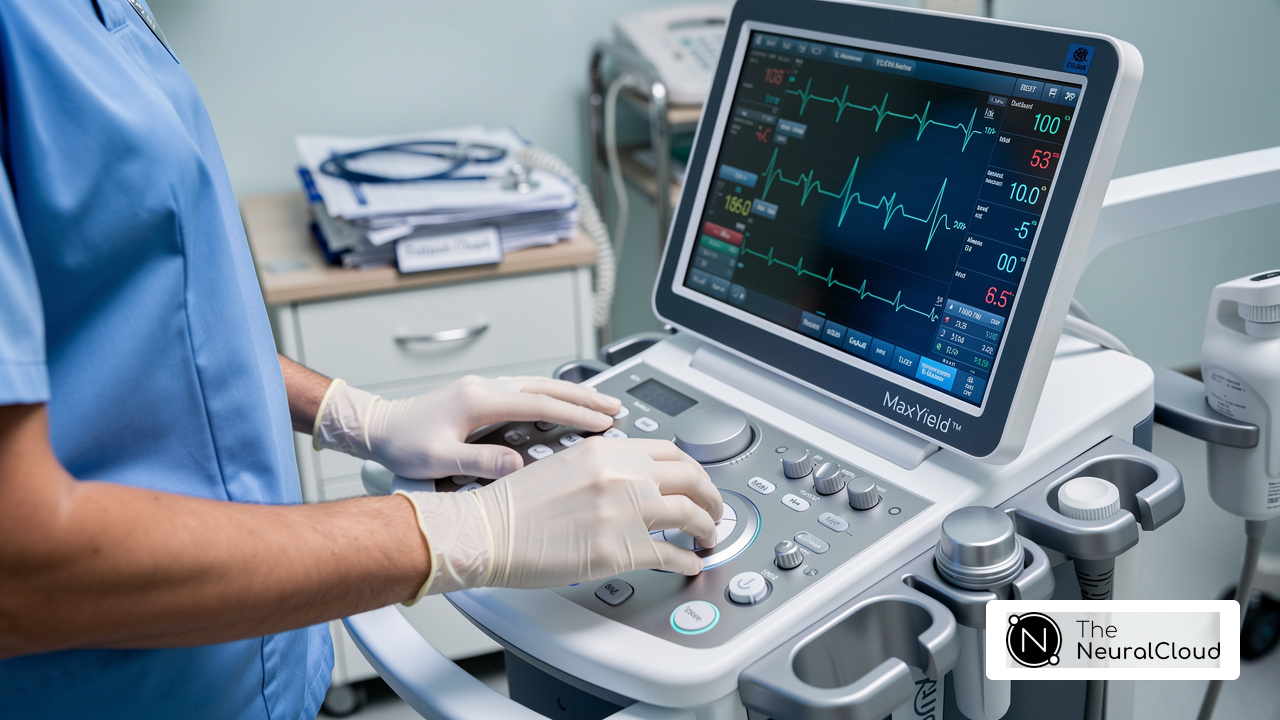
The MaxYield™ platform offers a comprehensive approach to improving ECG analysis. By utilizing advanced algorithms, it effectively filters out noise and enhances signal clarity. This feature not only simplifies the interpretation process but also increases diagnostic accuracy. Healthcare professionals can rely on MaxYield™ to provide clearer insights into cardiac health, ultimately leading to better patient outcomes.
In summary, the MaxYield™ platform stands out by addressing the common challenges faced in ECG analysis. Its innovative features empower clinicians to make informed decisions with confidence. By enhancing ECG clarity, MaxYield™ not only improves diagnostic capabilities but also supports healthcare professionals in delivering high-quality patient care.
Define Wavy Baseline in ECG: Causes and Implications
A wavy baseline ECG indicates a slow, undulating variation that can obscure true cardiac readings. This phenomenon can stem from several factors:
- Physiological Causes: Movement artifacts, such as patient motion or breathing, introduce noise into the ECG signal, resulting in a wavy baseline. Research shows that even small patient movements can significantly affect data quality, complicating the analysis of critical cardiac events. The MaxYield™ platform addresses this by rapidly isolating ECG waves from recordings affected by such artifacts, enhancing the clarity of the signals.
- Electrode Issues: Inadequate electrode contact, whether due to loose or dry electrodes, can lead to fluctuations. Proper skin preparation and meticulous electrode placement are essential to mitigate these issues and ensure accurate readings. However, even with optimal placement, noise can still occur. This is where the advanced noise filtering capabilities of the MaxYield™ platform come into play, ensuring reliable data.
- Environmental Interference: External electrical disruption from nearby devices can distort the ECG signal, contributing to fluctuations in the reference level. The MaxYield™ platform is designed to evolve with each use, improving its ability to filter out such noise and enhance diagnostic yield.
The implications of a wavy baseline ECG are profound; it can obscure critical cardiac events, complicating both diagnosis and treatment. Understanding these causes is crucial for healthcare professionals to effectively address and correct the issue, ensuring reliable ECG interpretations. Utilizing solutions like the MaxYield™ platform can greatly enhance the efficiency and precision of ECG analysis.

Analyze Wavy Baseline: Systematic Interpretation Techniques
To effectively analyze a wavy baseline in ECG readings using Neural Cloud Solutions' MaxYield™ platform, it's important to follow systematic interpretation techniques that enhance clarity and accuracy:
- Identify the Baseline: Start by establishing a clear reference line by pinpointing the isoelectric line, which represents the flat line between heartbeats. This step is crucial for recognizing deviations caused by the undulating reference line.
- Assess Waveforms: Examine the P waves, QRS complexes, and T waves for regularity and morphology. A consistent pattern amidst a wavy baseline ECG can indicate that the heart is functioning normally, despite the presence of artifacts.
- Use Filtering Techniques: Implement digital filtering methods, such as high-pass filters, to minimize low-frequency noise that contributes to background drift. The MaxYield™ platform enhances the visibility of cardiac signals, making it easier to interpret the data accurately by effectively filtering out noise and artifacts.
- Compare with Previous ECGs: If available, contrast the current ECG with earlier recordings to identify any changes in fundamental characteristics. Insights from studies, such as the Multicenter Chest Pain Study, show that access to prior ECGs significantly improves triage decisions, making this comparison vital for identifying new issues that may require further investigation.
The analysis showed a wavy baseline ECG. Document Findings: Thoroughly record any observations regarding the wavy baseline ECG and its potential causes. This information is essential for ongoing patient care and future analyses, ensuring that clinicians have a comprehensive understanding of the patient's cardiac status. Addressing operational challenges, such as the burden of non-actionable alerts in remote cardiac monitoring, is crucial when documenting findings to streamline clinical workflows.

Implement Solutions: Utilizing Technology to Enhance ECG Clarity
To enhance ECG clarity and address wavy baselines, several technological solutions can be implemented:
- AI-Powered Analysis Tools: Platforms like Neural Cloud Solutions' MaxYield™ leverage advanced AI algorithms to automatically detect and correct baseline wander. This results in clearer ECG readings, enhancing precision and simplifying the analysis process for healthcare professionals. With these tools, clinicians can examine more data in less time, benefiting from clear data sets and refined outputs.
- Advanced Filtering Techniques: Digital filters, including wavelet transforms and adaptive filtering, effectively eliminate baseline noise while preserving the integrity of cardiac data. MaxYield™ employs gold standard noise filtering, along with highlighting of the P, QRS, and T Waves, as well as the wavy baseline ECG. This significantly reduces deviations in critical intervals, enhancing diagnostic reliability. Notably, noise-profile filtering has demonstrated superior performance in maintaining critical interval accuracy compared to traditional methods.
- Real-Time Monitoring Systems: Utilizing systems that provide real-time feedback on quality allows clinicians to make immediate adjustments to settings or patient positioning. This minimizes artifacts and ensures optimal clarity. Intelligent preprocessing enhances diagnostic capabilities by effectively addressing data contamination, leading to more accurate assessments.
- Wearable ECG Devices: The adoption of wearable technology designed for consistent skin contact helps reduce motion artifacts, leading to improved data quality. These devices are becoming increasingly crucial as ECG monitoring expands in ambulatory environments, where this technology can process signal inputs beyond just ECGs.
- Training and Education: Ongoing training for healthcare professionals in the latest ECG analysis technologies and techniques is vital. This ensures that clinicians can effectively utilize advanced tools and methodologies, ultimately enhancing patient outcomes. Incorporating AI tools into clinical practice is essential for maximizing the benefits of these technologies.

Adopt Best Practices: Streamlining ECG Analysis for Optimal Outcomes
To streamline ECG analysis and achieve optimal outcomes, healthcare professionals should adopt several best practices while leveraging Neural Cloud Solutions' MaxYield™ platform:
- Standardize Protocols: Developing and implementing standardized protocols for ECG acquisition and interpretation ensures consistency across different practitioners and settings. This enhances the effectiveness of automated labeling through advanced techniques, leading to more reliable results.
- Regular Equipment Maintenance: Regular calibration and maintenance of ECG machines and electrodes are crucial. This prevents artifacts caused by faulty equipment, which can be further mitigated by the clarity provided by advanced AI technology, ensuring accurate readings.
- Patient Preparation: Informing patients about the importance of staying still during the ECG procedure and ensuring appropriate skin preparation improves electrode contact. This enables optimal signal quality, which can be analyzed effectively for better diagnostic outcomes.
- Continuous Training: Ongoing training for healthcare staff on the latest ECG technologies and interpretation techniques is essential. Utilizing Neural Cloud Solutions' Continuous Learning Model, which evolves with each use, can significantly improve diagnostic accuracy and efficiency.
- Utilize Quality Control Measures: Implementing quality control measures allows for regular assessment of the accuracy and reliability of ECG readings. This enables timely adjustments and improvements in practice, supported by the automated insights generated through MaxYield™.

Conclusion
Understanding wavy baseline ECG is crucial for accurate cardiac assessments. This article has explored the various causes of wavy baselines, including physiological factors, electrode issues, and environmental interference. Recognizing these elements is essential for healthcare professionals as they interpret ECGs, ensuring effective and reliable patient care.
Key techniques for analyzing wavy baselines include:
- Establishing a clear reference line
- Utilizing digital filtering methods
- Comparing with previous ECGs
The MaxYield™ platform from Neural Cloud Solutions offers advanced technology that enhances the clarity and precision of ECG readings. By integrating these features, healthcare professionals can streamline the interpretation process, leading to improved patient outcomes.
The significance of addressing wavy baselines in ECG cannot be overstated. Leveraging technology like MaxYield™ and adhering to best practices allows healthcare professionals to enhance the quality of cardiac monitoring. This results in more accurate diagnoses and better patient care. Embracing these solutions is imperative for advancing ECG analysis standards in clinical settings.
Frequently Asked Questions
What does a wavy baseline in an ECG indicate?
A wavy baseline in an ECG indicates a slow, undulating variation that can obscure true cardiac readings.
What are the physiological causes of a wavy baseline in ECG?
Physiological causes include movement artifacts such as patient motion or breathing, which introduce noise into the ECG signal and affect data quality.
How can patient movement affect ECG readings?
Even small patient movements can significantly impact the quality of ECG data, complicating the analysis of critical cardiac events.
What role does the MaxYield™ platform play in addressing wavy baseline issues?
The MaxYield™ platform rapidly isolates ECG waves from recordings affected by artifacts, enhancing the clarity of the signals.
What electrode issues can contribute to a wavy baseline in ECG?
Inadequate electrode contact, such as loose or dry electrodes, can lead to fluctuations in the ECG signal.
How can electrode-related issues be mitigated?
Proper skin preparation and meticulous electrode placement are essential to ensure accurate readings, although noise can still occur.
What environmental factors can affect ECG readings?
External electrical disruption from nearby devices can distort the ECG signal, contributing to fluctuations in the reference level.
How does the MaxYield™ platform handle environmental interference?
The MaxYield™ platform evolves with each use to improve its ability to filter out noise from environmental interference, enhancing diagnostic yield.
What are the implications of a wavy baseline ECG for diagnosis and treatment?
A wavy baseline can obscure critical cardiac events, complicating both diagnosis and treatment, making it essential for healthcare professionals to understand and address the issue.
How can healthcare professionals ensure reliable ECG interpretations?
Understanding the causes of a wavy baseline and utilizing solutions like the MaxYield™ platform can greatly enhance the efficiency and precision of ECG analysis.
List of Sources
- Define Wavy Baseline in ECG: Causes and Implications
- wavy.com (https://wavy.com/news/health/isle-of-wight-man-experiences-strange-symptoms-ahead-of-heart-attack)
- pmc.ncbi.nlm.nih.gov (https://pmc.ncbi.nlm.nih.gov/articles/PMC5361052)
- Abnormal EKG: Results, causes, and next steps (https://medicalnewstoday.com/articles/324922)
- nature.com (https://nature.com/articles/s41598-024-64175-5)
- AI-ECG Finds STEMI Faster, Cuts False-Positive Cath Lab Activations (https://tctmd.com/news/ai-ecg-finds-stemi-faster-cuts-false-positive-cath-lab-activations)
- Analyze Wavy Baseline: Systematic Interpretation Techniques
- globenewswire.com (https://globenewswire.com/news-release/2026/04/14/3273285/0/en/EHRA-2026-Studies-Reveal-Why-False-Positives-Persist-in-AI-Equipped-Implantable-Cardiac-Monitors.html)
- Breakthrough in heart health: A new approach to interpreting ECG data using large language models (https://eurekalert.org/news-releases/1073406)
- gehealthcare.com (https://gehealthcare.com/en-us/insights/article/the-value-of-a-baseline-resting-ecg-for-comparison-purposes.html?srsltid=AfmBOoqDhS_er-vQYILdq9ble6OCGV26hmIym_3lty1BQfVhzy83EShn)
- Researchers unlock hidden geometry of the heart to revolutionise ECG interpretation | King's College London (https://kcl.ac.uk/news/researchers-unlock-hidden-geometry-of-the-heart-to-revolutionise-ecg-interpretation)
- ndtv.com (https://ndtv.com/health/ai-based-ecg-analysis-shows-higher-accuracy-in-identifying-occlusive-heart-attack-study-finds-11244104)
- Implement Solutions: Utilizing Technology to Enhance ECG Clarity
- AI-Powered ECG Analysis Offers Promising Path for Early Detection of Chronic Obstructive Pulmonary Disease, Say Mount Sinai Researchers (https://mountsinai.org/about/newsroom/2026/ai-powered-ecg-analysis-offers-promising-path-for-early-detection-of-chronic-obstructive-pulmonary-disease-say-mount-sinai-researchers)
- AI-powered ECG analysis shows promise for early COPD detection (https://medicalxpress.com/news/2026-01-ai-powered-ecg-analysis-early.html)
- ECG Noise Filtering Improves Clinical Accuracy (https://emjreviews.com/interventional-cardiology/news/ecg-noise-filtering-improves-clinical-accuracy)
- pulmonologyadvisor.com (https://pulmonologyadvisor.com/news/ai-powered-ecg-analysis-promising-for-early-detection-of-copd)
- Adopt Best Practices: Streamlining ECG Analysis for Optimal Outcomes
- ce.mayo.edu (https://ce.mayo.edu/cardiovascular-diseases/content/ecg-interpretation-nuts-and-bolts-analysis-management-2026)
- Recommendations for the Standardization and Interpretation of the Electrocardiogram | Circulation (https://ahajournals.org/doi/10.1161/circulationaha.106.180200)
- Regulatory Compliance — FDA, AHA, ISO Certified | C-Booth Innovations (https://cboothinnovations.com/compliance)
- Checking your browser - reCAPTCHA (https://pmc.ncbi.nlm.nih.gov/articles/PMC7522782)
- AI-Powered ECG Analysis Offers Promising Path for Early Detection of Chronic Obstructive Pulmonary Disease, Say Mount Sinai Researchers (https://mountsinai.org/about/newsroom/2026/ai-powered-ecg-analysis-offers-promising-path-for-early-detection-of-chronic-obstructive-pulmonary-disease-say-mount-sinai-researchers)