Introduction
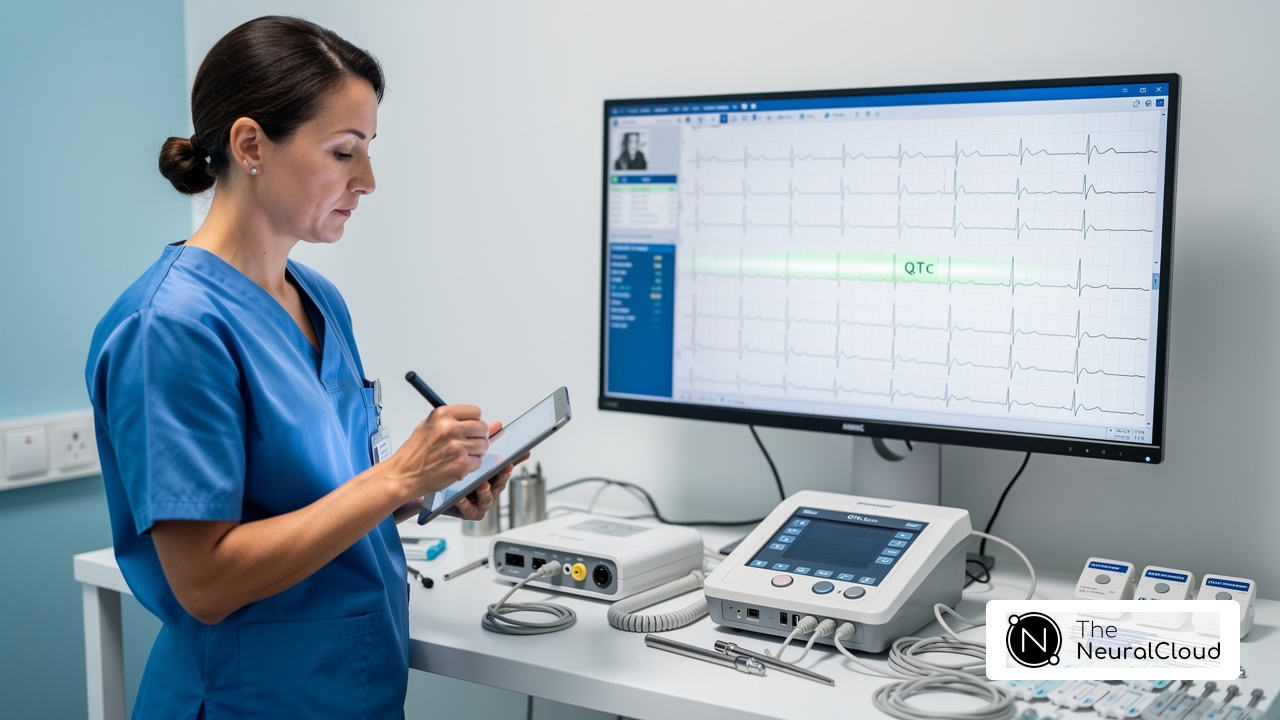
Understanding Wellens Syndrome is essential for healthcare professionals, as it acts as a critical warning sign for an impending myocardial infarction. This condition is characterized by distinct EKG patterns that often emerge during pain-free intervals. If not recognized promptly, Wellens Syndrome can easily be misdiagnosed, leading to severe consequences for patients.
To ensure accurate identification and timely intervention, clinicians can employ several strategies. These include:
- Thorough patient history assessments
- Careful analysis of EKG patterns
- Continuous education on the latest diagnostic criteria
By implementing these strategies, healthcare providers can significantly enhance their ability to safeguard patients from severe cardiac events.
Define Wellens Syndrome: Clinical Significance and EKG Patterns
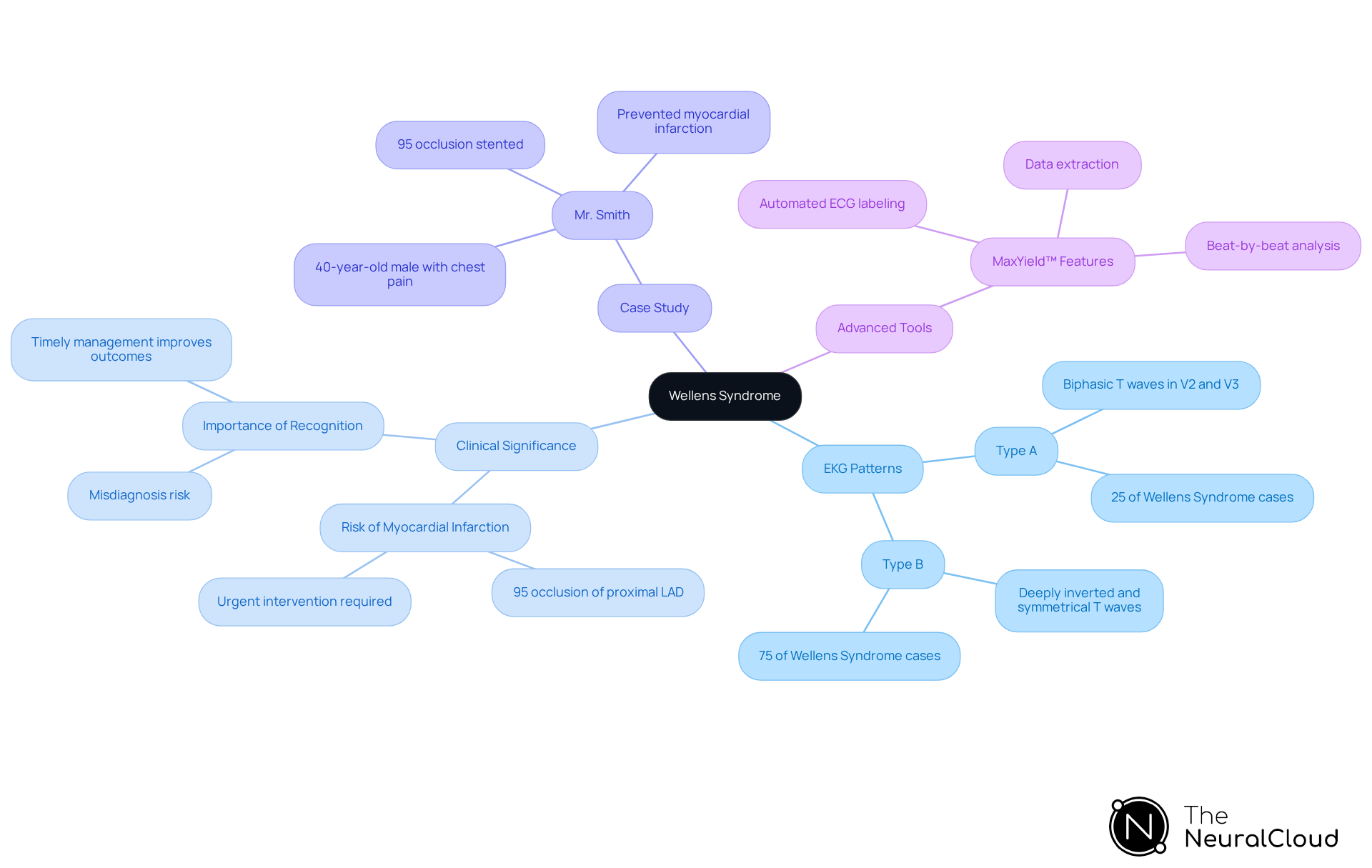
The condition represents a critical electrocardiographic pattern indicating significant narrowing in the proximal left anterior descending (LAD) artery. Clinically, it is characterized by two distinct patterns: Type A, which presents with biphasic T waves in leads V2 and V3, and Type B, marked by deeply inverted and symmetrical T waves, accounting for 75% of cases. Patients typically report a history of anginal chest pain that resolves, often leading to a misleadingly normal EKG during pain-free intervals. This can result in misdiagnosis if the EKG changes are not carefully evaluated.
Identifying this condition is essential, as it indicates a serious cardiac risk. Studies show that individuals with this condition have a 95% blockage of the proximal LAD. In a cohort study of 145 individuals, 26 exhibited significant EKG changes, underscoring its clinical significance. Prompt recognition and intervention can avert serious complications, as individuals often do not respond positively to medical treatment alone. For instance, a case involving a 40-year-old male, Mr. Smith, highlights the importance of early recognition; he was urgently transferred to a PCI-capable hospital where a 95% occlusion of his proximal LAD was successfully stented, averting a potential myocardial infarction.
Incorporating technology can greatly improve the analysis of EKG patterns linked to this condition. MaxYield™ automates ECG labeling and data extraction, allowing healthcare professionals to process cases faster without compromising quality. Key features of MaxYield™ include:
- Automation: Streamlines the identification of critical patterns.
- Data extraction: Facilitates efficient case processing.
- Beat-by-beat analysis: Isolates key features in every heartbeat.
These features support clinicians in making informed decisions. The advantages for healthcare professionals are significant. By delivering precise analysis, MaxYield™ enables timely initiation of appropriate management strategies, thereby improving patient outcomes and reducing the risk of serious complications.
Identify EKG Changes: Key Features of Wellens Syndrome
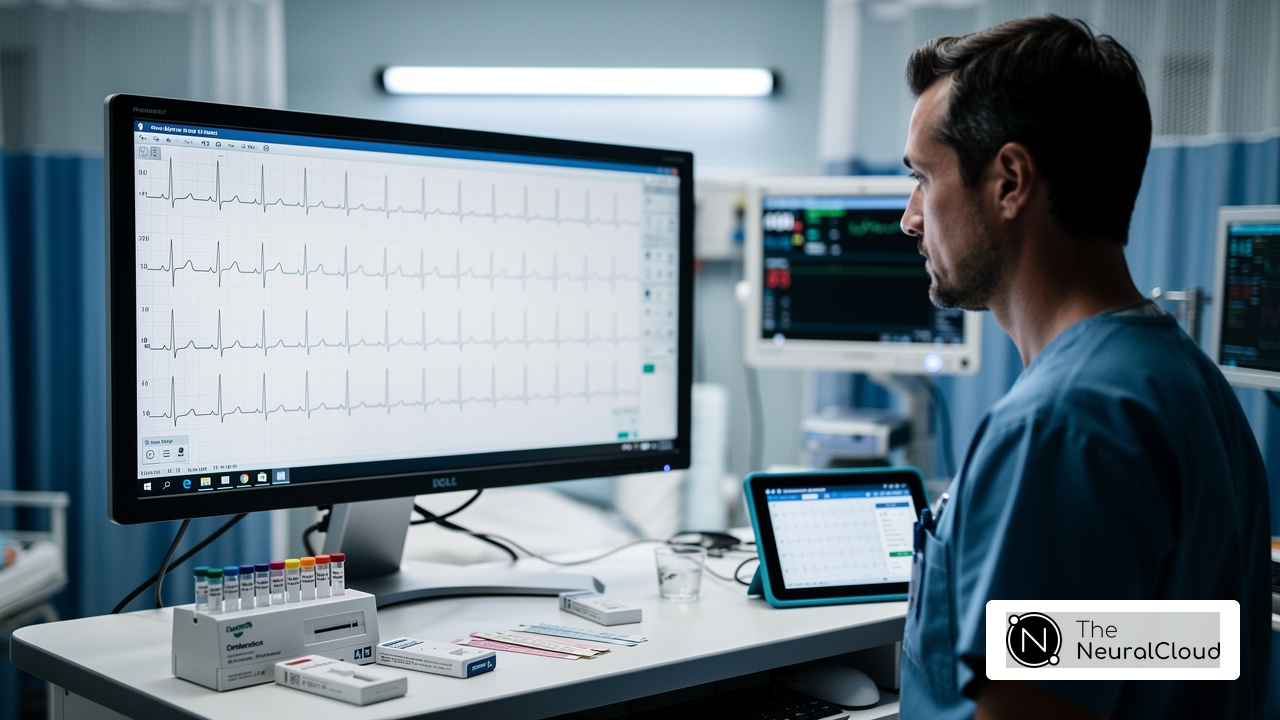
The hallmark alterations in the EKG associated with this specific condition are crucial for accurate diagnosis and management. These alterations include:
- Type A, where the T wave initially rises before falling. This pattern is observed in approximately 25% of cases.
- Type B: Defined by deeply inverted and symmetric T waves in the same leads, this pattern occurs in about 75% of cases.
Typically, individuals exhibit these changes while being pain-free, highlighting the importance of communication with the individual's healthcare provider. Notably, the EKG further supports the diagnosis of Wellens Syndrome. Identifying these patterns in the EKG is essential, as they can significantly influence management and outcomes. A low threshold of suspicion and clinical awareness are vital for the early identification of the syndrome, as emphasized in recent literature. For example, a case study illustrated an individual whose condition progressed from Type A to Type B, underscoring the need for vigilance in monitoring changes to facilitate timely intervention.
Integrating advanced tools like artificial intelligence can enhance the ECG analysis process by automating evaluations, reducing noise, and providing detailed insights into each heartbeat. Machine learning offers beat-by-beat evaluation, enabling healthcare professionals to quickly recognize and understand significant changes linked to Wellens Syndrome. By isolating key features in the ECG signals, technology supports timely clinical decisions, which is crucial for early revascularization often necessary for patients diagnosed with Wellens Syndrome. This reinforces the clinical implications of recognizing these EKG patterns.

Apply Knowledge: Clinical Implications and Management Strategies for Wellens Syndrome
Management of this condition requires prompt action due to the heightened risk of complications. Key strategies include:
- Cardiac Catheterization: Patients should undergo immediate cardiac catheterization to assess the severity of left anterior descending (LAD) artery stenosis. Rapid recognition of this condition allows for efficient treatment categorization, ensuring the prompt allocation of interventions such as coronary angiography and percutaneous coronary intervention (PCI).
- Medication Management: Initiate antiplatelet agents, beta-blockers, and statins to alleviate symptoms and reduce cardiac workload. This approach is crucial, as approximately 75% of individuals with this condition who receive only medical management may suffer extensive anterior wall ischemia within days.
Monitoring is essential to detect any changes that may indicate worsening ischemia, such as those seen in Wellens Syndrome. Utilizing Neural Cloud Solutions' technology enhances this process by providing rapid labeling of ECG waveforms, allowing healthcare providers to analyze more data in less time and improve monitoring accuracy. Patients with this condition may exhibit slight elevations in troponin levels, making careful monitoring vital for timely intervention.
- Consumer Education: Educate individuals about the signs and symptoms of angina and the critical importance of seeking immediate care if they experience chest pain. Early recognition and aggressive intervention are pivotal in improving long-term outcomes and reducing complications such as arrhythmias and heart failure.
By implementing these strategies, along with the innovative capabilities of MaxYield™ for data analysis and processing, healthcare providers can significantly enhance patient outcomes and mitigate the risks associated with Wellens Syndrome.

Conclusion
Recognizing Wellens Syndrome EKG is crucial for preventing serious cardiac events, as it serves as a key indicator of significant stenosis in the proximal left anterior descending artery. This condition presents with two distinct EKG patterns - Type A and Type B - each with unique characteristics that demand careful interpretation. The potential for misdiagnosis due to misleadingly normal EKG results during pain-free intervals underscores the importance of vigilance in evaluating EKG changes.
The clinical significance of Wellens Syndrome cannot be overstated. Prompt identification and intervention are essential. Key strategies include urgent cardiac evaluation and medication management, which are vital in mitigating the risk of myocardial infarction. Additionally, the integration of advanced tools like Neural Cloud Solutions' MaxYield™ platform enhances the accuracy and efficiency of EKG analysis, ultimately improving patient outcomes.
In the realm of cardiac care, understanding and recognizing the nuances of Wellens Syndrome EKG can profoundly impact patient management. By prioritizing education on this condition and implementing timely interventions, healthcare professionals can significantly reduce the risks associated with Wellens Syndrome. The commitment to early recognition and appropriate treatment not only saves lives but also enhances the quality of care provided to patients facing this critical condition.
Frequently Asked Questions
What is Wellens Syndrome?
Wellens Syndrome is a critical electrocardiographic pattern that indicates significant narrowing in the proximal left anterior descending (LAD) artery.
What are the EKG patterns associated with Wellens Syndrome?
There are two distinct EKG patterns for Wellens Syndrome: Type A, characterized by biphasic T waves in leads V2 and V3, and Type B, marked by deeply inverted and symmetrical T waves, which accounts for 75% of cases.
What symptoms do patients with Wellens Syndrome typically report?
Patients usually report a history of anginal chest pain that resolves, which can lead to a misleadingly normal EKG during pain-free intervals.
Why is it important to identify Wellens Syndrome?
Identifying Wellens Syndrome is crucial as it indicates a significant risk for imminent myocardial infarction, with studies showing a 95% blockage of the proximal LAD in affected individuals.
Can Wellens Syndrome be misdiagnosed?
Yes, Wellens Syndrome can be misdiagnosed if the EKG changes are not carefully evaluated, especially during pain-free intervals when the EKG may appear normal.
What is the clinical significance of Wellens Syndrome?
Wellens Syndrome is clinically significant because prompt recognition and intervention can prevent serious cardiac incidents, as individuals often do not respond positively to medical treatment alone.
Can you provide an example of a case involving Wellens Syndrome?
A case involving a 40-year-old male, Mr. Smith, illustrates the importance of early recognition; he was urgently transferred to a PCI-capable hospital where a 95% occlusion of his proximal LAD was successfully stented, preventing a potential myocardial infarction.
How can technology assist in the analysis of EKG patterns related to Wellens Syndrome?
Advanced tools like Neural Cloud Solutions' MaxYield™ platform can improve the analysis of EKG patterns by automating ECG labeling, facilitating data extraction, and providing beat-by-beat analysis.
What are the key features of the MaxYield™ platform?
Key features of MaxYield™ include automated ECG labeling, data extraction for efficient case processing, and beat-by-beat analysis that isolates key features in every heartbeat.
What advantages does MaxYield™ offer to healthcare professionals?
MaxYield™ delivers precise analysis, enabling timely initiation of appropriate management strategies, thereby improving patient outcomes and reducing the risk of serious complications.
List of Sources
- Define Wellens Syndrome: Clinical Significance and EKG Patterns
- academic.oup.com (https://academic.oup.com/ehjcr/article/9/7/ytaf333/8198484)
- Wellens’ Syndrome: Hidden in Plain Sight - PCNA (https://pcna.net/news/wellens-syndrome-hidden-in-plain-sight)
- Wellens Syndrome: The Forgotten Diagnosis | ACOEP RSO (https://acoep-rso.org/the-fast-track/wellens-syndrome-the-forgotten-diagnosis)
- Checking your browser - reCAPTCHA (https://pmc.ncbi.nlm.nih.gov/articles/PMC9013025)
- “Wellens Syndrome” an Underdiagnosed and Potentially Catastrophic Entity. Regarding a Case (https://irispublishers.com/ojcrr/fulltext/Wellens-Syndrome-an-Underdiagnosed-and-Potentially-Catastrophic-Entity-Regarding-a-Case.ID.000679.php)
- Identify EKG Changes: Key Features of Wellens Syndrome
- Checking your browser - reCAPTCHA (https://pmc.ncbi.nlm.nih.gov/articles/PMC10665542)
- crtonline.org (https://crtonline.org/crm-details/new-newsrelease-1033)
- Wellens’ Syndrome: Hidden in Plain Sight - PCNA (https://pcna.net/news/wellens-syndrome-hidden-in-plain-sight)
- Wellens Syndrome Important to Consider in Chest Pain: Key Points - American College of Cardiology (https://acc.org/latest-in-cardiology/ten-points-to-remember/2023/01/20/17/59/wellens-syndrome)
- Wellens Syndrome: The Forgotten Diagnosis | ACOEP RSO (https://acoep-rso.org/the-fast-track/wellens-syndrome-the-forgotten-diagnosis)
- Apply Knowledge: Clinical Implications and Management Strategies for Wellens Syndrome
- Wellens Syndrome Treatment & Management: Approach Considerations, Prehospital Care, Emergency Stabilization, MI Prevention, and Pharmacotherapy (https://emedicine.medscape.com/article/1512230-treatment)
- Checking your browser - reCAPTCHA (https://pmc.ncbi.nlm.nih.gov/articles/PMC9013025)
- Wellens' Syndrome: ECG Signs & Criteria (https://powerfulmedical.com/blog/wellens-syndrome)