Introduction
In emergency situations, distinguishing between ventricular tachycardia (VT) and ventricular fibrillation (VF) can mean the difference between life and death. Both conditions present unique challenges on an ECG, yet their implications for patient care could not be more different. Clinicians must ask themselves how to effectively tell VT from VF to ensure timely and appropriate treatment. This article explores the key ECG characteristics and symptoms of both conditions. It also outlines treatment strategies, providing essential insights for optimizing cardiac care in Canada.
Define Ventricular Tachycardia and Ventricular Fibrillation
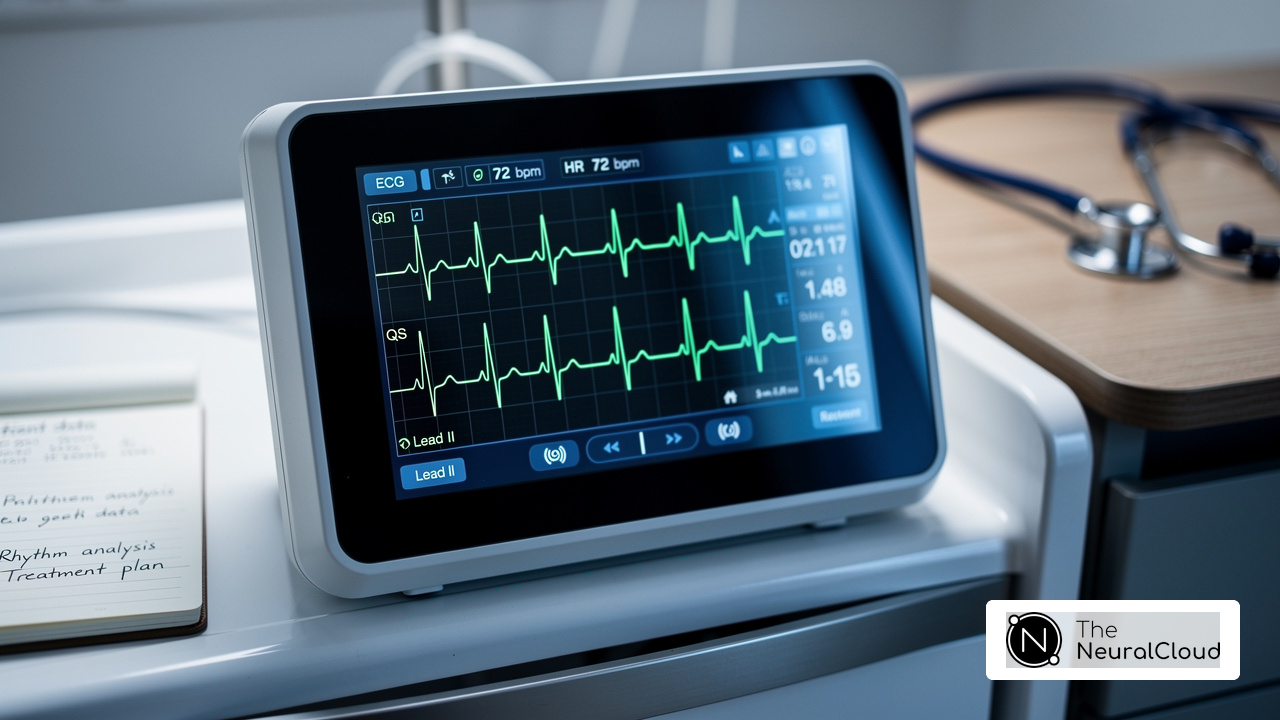
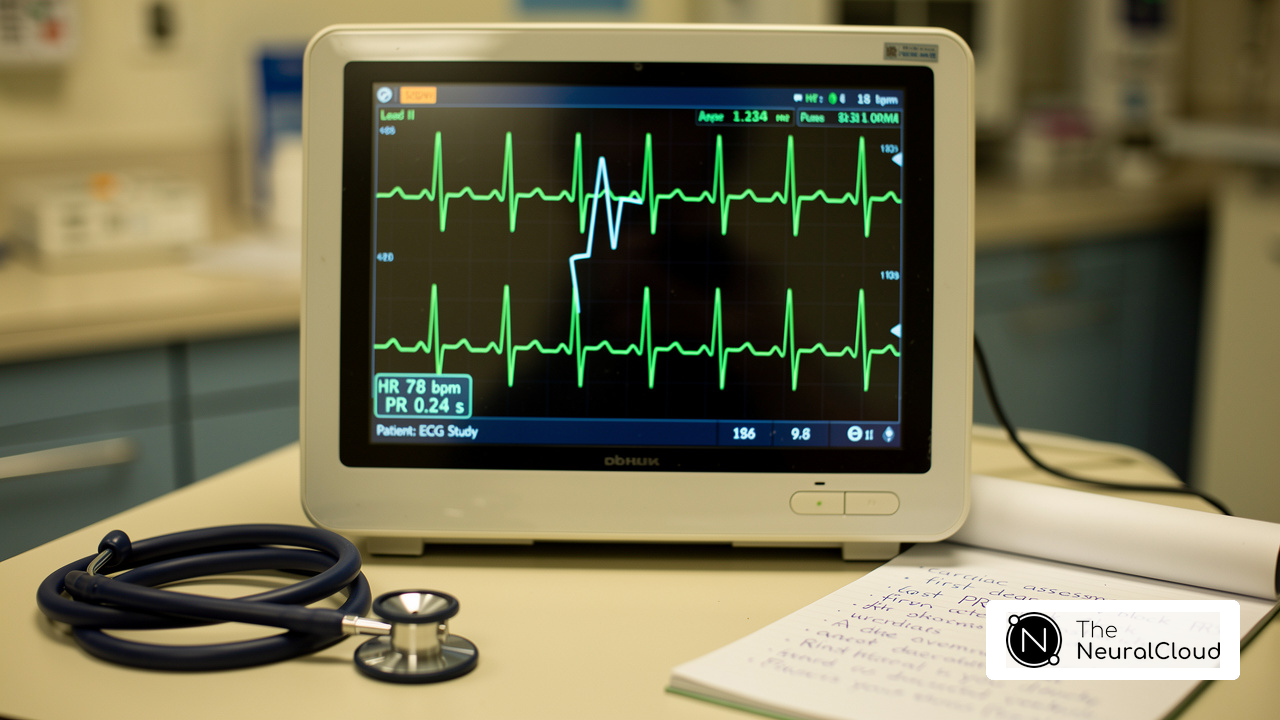
Tachycardia (VT) presents a significant challenge in emergency medicine due to its rapid heart rate, often exceeding 100 beats per minute. It is characterized by identifiable QRS complexes on an ECG, indicating organized electrical activity. In contrast, Ventricular Fibrillation (VF) is marked by chaotic and disorganized electrical activity in the ventricles, resulting in ineffective contractions and a lack of blood flow. On an ECG, VF is identified by the absence of recognizable QRS complexes, P waves, or T waves, presenting instead as irregular deflections of varying amplitude.
Grasping these definitions is crucial for healthcare professionals to effectively distinguish between ventricular tachycardia vs ventricular fibrillation ECG. Recognizing VF promptly is critical, as delays can lead to dire consequences. Immediate defibrillation has a success rate of about 99% if performed within seconds, highlighting the importance of rapid response in emergency situations.
With the integration of MaxYield™, healthcare professionals can enhance their ECG analysis efficiency, effectively addressing challenges such as physiological variability and signal artifacts. Dr. Alan Rabinowitz emphasizes that MaxYield™ matches human interpretation in precision, significantly reducing noise and improving diagnostic yield. Furthermore, the platform's FDA Class II SaMD clearance-pending status ensures compliance and readiness for clinical application, making it a transformative tool for clinicians managing cases of ventricular tachycardia vs ventricular fibrillation ECG.
As Dr. Brett Heilbron highlights, the flexibility of MaxYield™ enables ongoing enhancement in precision, which is essential for effective care. By leveraging their understanding of these conditions with MaxYield™'s advanced capabilities, healthcare professionals can achieve optimal outcomes for their patients.

Compare Symptoms of Ventricular Tachycardia and Ventricular Fibrillation
Recognizing the symptoms of ventricular tachycardia vs ventricular fibrillation ECG is essential for effective patient care. Symptoms can include palpitations, dizziness, chest pain, and syncope, as the rapid heart rate can lead to serious complications if not addressed promptly. Depending on how long the episode lasts and its severity, patients might stay conscious and responsive. In Canada, VT affects approximately 50,000 individuals, underscoring the need for timely recognition of these symptoms.
In contrast, the comparison of ventricular tachycardia vs ventricular fibrillation ECG typically shows that VF leads to immediate loss of consciousness and is often associated with sudden cardiac arrest, where individuals may show no pulse and require urgent resuscitation efforts. Failure to act quickly can result in severe outcomes, including sudden cardiac arrest, making it crucial for emergency response and treatment decisions. Approximately 300,000 sudden cardiac deaths annually in the U.S. are attributed to conditions represented in the ventricular tachycardia vs ventricular fibrillation ECG, highlighting the importance of this knowledge for healthcare professionals and those creating health tech solutions to enhance cardiac care.
With the integration of MaxYield’s advanced AI technology, clinicians can enhance their ECG analysis efficiency, transforming lengthy and noisy recordings into clean, crisp signals. This not only assists in the precise recognition of these essential symptoms but also simplifies the workflow, enabling healthcare professionals to concentrate on care. Furthermore, MaxYield’s automation capabilities contribute to operational cost reductions, allowing healthcare facilities to allocate resources more effectively.
Expert endorsements from Dr. Alan Rabinowitz, Dr. Brett Heilbron, and Dr. Marc W. Deyell emphasize that MaxYield’s precision rivals human interpretation, significantly reducing noise and improving diagnostic accuracy. Additionally, the regulatory compliance details, including FDA Class II SaMD clearance-pending status, further enhance the credibility of MaxYield in the context of ECG analysis. This understanding can ultimately save lives and improve patient outcomes in cardiac care.

Contrast Treatment Strategies for Ventricular Tachycardia and Ventricular Fibrillation
Understanding the management of ventricular tachycardia vs ventricular fibrillation ECG is essential for effective patient care. Management of Tachycardia (VT) involves several approaches. These include:
- Antiarrhythmic drugs
- Cardioversion
- Catheter ablation
The choice depends on the individual's stability and the underlying causes of the arrhythmia. A recent study found that 51% of individuals treated with catheter ablation experienced recurrent VT. In contrast, 71% of those receiving antiarrhythmic drug therapy had similar issues. This highlights the effectiveness of catheter ablation in managing VT.
The urgency of VF treatment is much greater. Defibrillation success rates drop by 5%-10% for each minute after VF begins. This underscores the critical need for timely intervention. It is vital for healthcare providers to understand the differences in treatment related to ventricular tachycardia vs ventricular fibrillation ECG. In emergency situations, prompt intervention can significantly influence patient outcomes. The involvement of a cardiologist in the care of patients with VT/VF is crucial. This ensures comprehensive management and improved patient outcomes.

Summarize Key Differences and Similarities
Understanding the differences in the ventricular tachycardia vs ventricular fibrillation ECG is crucial for effective cardiac care. Tachycardia (VT) features a rapid yet organized heart rhythm, which can be distinguished on an ECG when considering ventricular tachycardia vs ventricular fibrillation ECG by the presence of wide QRS complexes. Symptoms of VT can include palpitations, dizziness, and chest discomfort, with non-sustained episodes often being asymptomatic and not requiring immediate treatment.
When comparing ventricular tachycardia vs ventricular fibrillation ECG, it is evident that Ventricular Fibrillation (VF) displays a chaotic and disorganized rhythm without identifiable ECG patterns. This can lead to loss of consciousness and demands immediate medical intervention. VF is the most dangerous type of heart arrhythmia, capable of causing sudden cardiac arrest within minutes without prompt treatment. Statistics indicate that VF accounts for approximately 70 to 80% of sudden cardiac arrest cases, emphasizing its critical nature.
Treatment strategies differ significantly:
- VT is often managed through medications, catheter ablation, or electrical cardioversion if the individual is hemodynamically unstable.
- Conversely, VF necessitates urgent defibrillation and CPR to restore effective heart rhythm.
For instance, a study highlighted that the annual incidence of VF in individuals with arrhythmogenic right ventricular cardiomyopathy/dysplasia (ARVC/D) is about 2%. Understanding the differences in ventricular tachycardia vs ventricular fibrillation ECG is vital for accurate diagnosis and management in clinical practice. In emergencies, timely intervention can significantly impact patient outcomes.
As noted by the American Heart Association, "Shorter delays are associated with more favorable survival rates," underscoring the importance of rapid response in cases of VF. Leveraging advanced technologies like MaxYield™ from Neural Cloud Solutions Inc. can enhance the clarity of ECG readings, allowing for more accurate differentiation in the analysis of ventricular tachycardia vs ventricular fibrillation ECG, even in noisy environments.
Experts such as Dr. Alan Rabinowitz and Dr. Brett Heilbron emphasize that MaxYield™ rivals human interpretation in precision, making it an invaluable tool for clinicians aiming to improve patient outcomes. Utilizing advanced tools like MaxYield™ can significantly enhance diagnostic accuracy, ultimately saving lives in critical situations.

Conclusion
Differentiating between ventricular tachycardia and ventricular fibrillation is a critical skill for healthcare professionals. While VT presents as a rapid but organized heart rhythm identifiable on an ECG, VF is characterized by chaotic electrical activity that can lead to sudden cardiac arrest. Differentiating between these two conditions is crucial for healthcare professionals. Timely recognition and intervention can significantly influence patient outcomes.
Key insights from the article include:
- Symptoms associated with each condition
- The urgency of treatment
- Varying management strategies
VT may present with symptoms such as palpitations and dizziness, while VF often results in immediate loss of consciousness and requires urgent defibrillation. The article emphasizes the importance of advanced tools like MaxYield™ from Neural Cloud Solutions Inc., which enhances ECG analysis and aids in the rapid identification of these critical conditions.
Given the serious implications of VT and VF, it's vital for healthcare professionals to focus on quick and accurate diagnosis. Timely recognition of these conditions can be life-saving. By understanding the nuances of ventricular tachycardia vs ventricular fibrillation ECG, clinicians can enhance their response strategies, ensuring better outcomes for patients facing these life-threatening arrhythmias.
Frequently Asked Questions
What is Ventricular Tachycardia (VT)?
Ventricular Tachycardia (VT) is a rapid heart rate condition characterized by a heart rate exceeding 100 beats per minute, with identifiable QRS complexes on an ECG, indicating organized electrical activity.
How does Ventricular Fibrillation (VF) differ from VT?
Ventricular Fibrillation (VF) is marked by chaotic and disorganized electrical activity in the ventricles, leading to ineffective contractions and a lack of blood flow. On an ECG, VF is identified by the absence of recognizable QRS complexes, P waves, or T waves, presenting as irregular deflections of varying amplitude.
Why is it important for healthcare professionals to distinguish between VT and VF?
Distinguishing between VT and VF is crucial for healthcare professionals because recognizing VF promptly is critical; delays can lead to dire consequences. Immediate defibrillation has a success rate of about 99% if performed within seconds.
How can MaxYield™ assist healthcare professionals in analyzing ECGs?
MaxYield™ enhances ECG analysis efficiency by addressing challenges such as physiological variability and signal artifacts. It matches human interpretation in precision, significantly reducing noise and improving diagnostic yield.
What is the significance of MaxYield™'s FDA Class II SaMD clearance-pending status?
The FDA Class II SaMD clearance-pending status of MaxYield™ ensures compliance and readiness for clinical application, making it a transformative tool for clinicians managing cases of ventricular tachycardia and ventricular fibrillation.
How does Dr. Brett Heilbron view the flexibility of MaxYield™?
Dr. Brett Heilbron emphasizes that the flexibility of MaxYield™ enables ongoing enhancement in precision, which is essential for effective care in managing patients with VT and VF.
List of Sources
- Define Ventricular Tachycardia and Ventricular Fibrillation
- Ventricular Tachycardia: An Arrhythmia That May Require Multidisciplinary Care | Baptist Health South Florida (https://baptisthealth.net/baptist-health-news/ventricular-tachycardia-an-arrhythmia-that-may-require-multidisciplinary-care)
- Ventricular Fibrillation (VF) - Cardiology - Merck Manual Professional Edition (https://merckmanuals.com/en-ca/professional/cardiovascular-disorders/specific-cardiac-arrhythmias/ventricular-fibrillation-vf)
- Ventricular Fibrillation: Background, Etiology, Pathophysiology (https://emedicine.medscape.com/article/158712-overview)
- Ventricular fibrillation: What caused Sen. John Fetterman's hospital stay (https://wtae.com/article/ventricular-fibrillation-fetterman/69427319)
- Compare Symptoms of Ventricular Tachycardia and Ventricular Fibrillation
- Halifax-led heart study could lead to better treatment for deadly condition | CBC News (https://cbc.ca/news/canada/nova-scotia/halifax-heart-study-arrhythmia-dalhousie-1.3570264)
- Ventricular Tachycardia: Background, Etiology, Pathophysiology (https://emedicine.medscape.com/article/159075-overview)
- New study reveals a better way to get the heart back on beat - UBC Faculty of Medicine (https://med.ubc.ca/news/new-study-reveals-a-better-way-to-get-the-heart-back-on-beat)
- Contrast Treatment Strategies for Ventricular Tachycardia and Ventricular Fibrillation
- New Study Shows Catheter Ablation Reduces Ventricular Tachycardia Events in Underrepresented Patient Population (https://hrsonline.org/news/cathether-ablation-reduces-vt-underrepresented-patients)
- Ventricular Fibrillation Treatment & Management: Approach Considerations, Defibrillation, ACLS Algorithm Overview (https://emedicine.medscape.com/article/158712-treatment)
- Guidelines & Clinical Updates | Canadian Heart Rhythm Society (https://chrsonline.ca/resources-publications/guidelines-clinical-updates)
- Summarize Key Differences and Similarities
- Ventricular Fibrillation: Background, Etiology, Pathophysiology (https://emedicine.medscape.com/article/158712-overview)
- V-Tach vs. VFib: Differences and Similarities (https://verywellhealth.com/vtach-vs-vfib-7504686)
- What Are the Key Differences In Ventricular Tachycardia and Ventricular Fibrillation? (https://icliniq.com/articles/heart-circulatory-health/ventricular-tachycardia-vs-ventricular-fibrillation)
- VFib vs. V-Tach: Differences, treatment, and outlook (https://medicalnewstoday.com/articles/vfib-vs-vtach)