Introduction
In the realm of cardiovascular emergencies, ST-Elevation Myocardial Infarction (STEMI) presents a critical challenge where timely diagnosis is essential. As healthcare technology advances, swift and accurate diagnosis is crucial, presenting developers with opportunities to create solutions that improve patient outcomes. Despite these advancements, many healthcare professionals still face challenges in accurately identifying STEMI and its variations. This prompts a critical question for healthcare professionals: how can technology be harnessed to guarantee timely and precise diagnoses?
Define STEMI: Understanding ST-Elevation Myocardial Infarction
ST-Elevation Myocardial Infarction is a critical emergency that demands immediate attention due to its potential for severe heart damage. This condition is characterized by a complete blockage of one or more coronary arteries, leading to significant myocardial ischemia. It is primarily identified through ST-segment elevation on an electrocardiogram (ECG), which indicates that a section of the heart muscle is deprived of essential blood supply. Without prompt intervention, patients face the risk of irreversible heart damage and potential death.
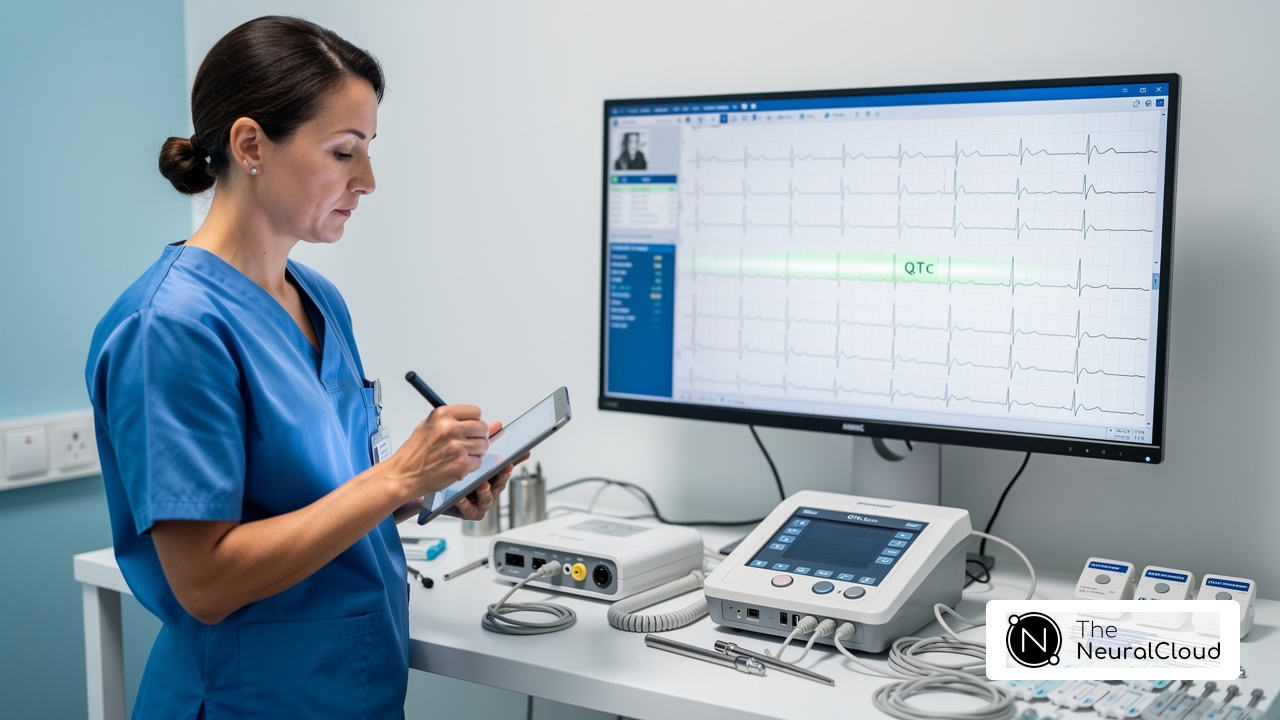
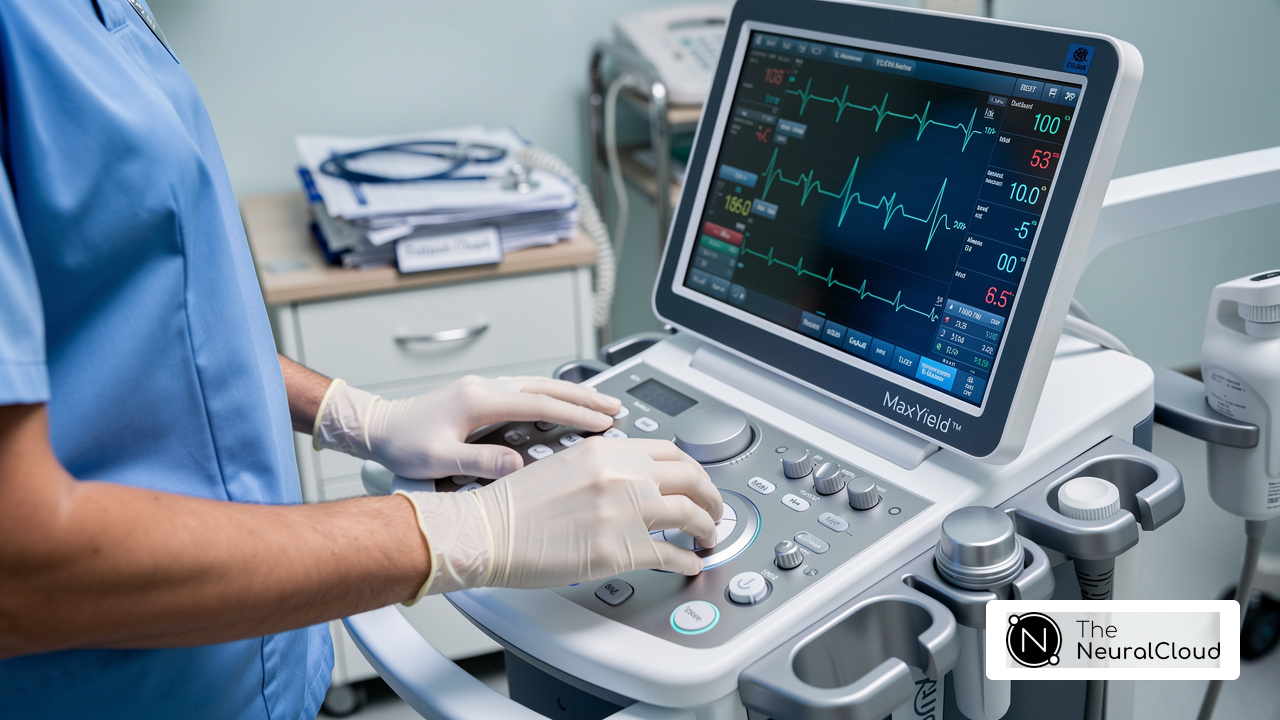
Recent studies highlight the importance of accurate and rapid diagnosis. AI-based ECG platforms like Neural Cloud Solutions' MaxYield™ significantly enhance triage accuracy. MaxYield™ effectively maps ECG signals, filtering out noise to isolate and label key features in each heartbeat. It also offers continuous monitoring capabilities, ensuring that individuals are consistently assessed without the costs associated with clinical-grade hardware.
For instance, an AI model assessed at UC Davis Medical Center accurately recognized 553 confirmed heart attack cases on initial ECGs, surpassing conventional techniques that identified only 427 cases. This advancement decreased false positives from nearly 42% to around 8%. Such improvements emphasize the potential of combining technology with clinical expertise to enhance outcomes for individuals while decreasing erroneous complaint tickets.
Understanding heart attack features and consequences is crucial for health tech developers, as it guides the development of innovative diagnostic tools and care protocols. These advancements can optimize emergency services and improve patient safety. The study, conducted from January 2020 to May 2024, further emphasizes the relevance of these advancements in the context of evolving healthcare technologies. As healthcare technology evolves, leveraging AI tools like MaxYield™ will be essential for improving emergency care and patient safety.

Explore the Clinical Significance of STEMI: Implications for Patient Care
ST-elevation myocardial infarction (STEMI) poses a critical challenge in emergency medicine, demanding immediate action to restore heart function. Delays in care can lead to significant heart damage. They also increase mortality rates. Research shows that every 30-minute delay in care raises the one-year mortality rate by about 7.5%. This urgency highlights the need for innovative technologies that enable swift diagnosis and treatment. Neural Cloud Solutions' MaxYield™ enhances ECG data processing through advanced noise filtering and wave recognition. By automating repetitive tasks, it processes data more efficiently, allowing for quick identification of heart attacks and timely interventions.
Health technology developers must focus on improving the speed and accuracy of heart attack detection. This focus ultimately enhances outcomes for patients and reduces the risks associated with delays in care. Recent data indicates that the rates of percutaneous coronary interventions (PCI) for STEMI have not returned to pre-pandemic levels, with a nearly 30% decline observed during the COVID-19 pandemic. This reluctance to seek hospital care for heart attacks may result in higher mortality and complications, further underscoring the need for effective health tech solutions that streamline diagnosis and treatment.
As Dr. Manoj Thangam, an interventional cardiologist, notes, 'Our network of PCI centers across the country gives us unique access to data that independent centers may not have.' This statement emphasizes the critical role of data in improving patient outcomes. The integration of advanced technologies like MaxYield™ is essential to reversing the trend of declining care and improving patient survival rates.

Identify Key Characteristics of STEMI: Diagnostic Criteria and ECG Findings
Accurate identification of ST-Elevation Myocardial Infarction remains a critical challenge in emergency medicine, hinging on specific ECG observations, particularly ST-segment elevation surpassing 1 mm in two or more adjacent leads. In men, this elevation is typically observed in at least two contiguous leads, while in women, it is noted as 1.5 mm in leads V2 and V3, or 1 mm in other continuous chest leads. Alongside these ECG characteristics, common symptoms such as chest pain, shortness of breath, and diaphoresis serve as critical indicators of myocardial ischemia. Elevated cardiac biomarkers, particularly troponin, further support the diagnosis, confirming myocardial injury. Understanding these diagnostic standards is crucial for health tech developers, as it directly impacts the creation of ECG interpretation algorithms and diagnostic tools designed to help healthcare professionals recognize myocardial infarction quickly and precisely.
Recent advancements in AI-driven ECG models, such as Neural Cloud Solutions' MaxYield™, have demonstrated significant improvements in triage accuracy, reducing false positives to approximately 8%, compared to nearly 42% with traditional methods. MaxYield™ excels in identifying and labeling critical data, even in recordings with high levels of noise and artifact, allowing for the rapid isolation of ECG waves from recordings affected by baseline wander, movement, and muscle artifact. This advancement not only enhances diagnostic accuracy but also significantly impacts patient care and outcomes, underscoring the potential for technology to enhance emergency cardiovascular care by facilitating timely interventions and improving diagnostic yield. For practical applications, user manuals for MaxYield™ provide detailed guidance on leveraging its capabilities in various clinical scenarios.

Examine Variations of STEMI: Types and Their Clinical Presentations
Understanding what defines a stemi is crucial for effective treatment and intervention in the types of myocardial infarction. Myocardial infarction can be categorized into several types based on the location of the blockage within the coronary arteries, primarily anterior and inferior types. Anterior myocardial infarction typically results from a blockage in the left anterior descending artery. In contrast, inferior myocardial infarction is often caused by occlusion in the right coronary artery. Each type has unique clinical features and ECG changes that influence treatment strategies.
For instance, anterior myocardial infarction is linked to more severe symptoms and a greater risk of complications, including elevated mortality and morbidity if not addressed promptly. Recent findings indicate that patients with anterior myocardial infarction may experience worse outcomes compared to those with inferior myocardial infarction. This underscores the importance of rapid diagnosis and intervention.
Understanding these differences is key for health tech developers, as it allows for the development of customized diagnostic and care solutions that effectively meet the unique requirements of various heart attack presentations. The expression 'time is muscle' emphasizes the importance of acknowledging these differences, as delays in treatment can lead to worse outcomes for patients.
Moreover, the Sgarbossa criteria can aid in recognizing myocardial infarction in patients with left bundle branch block, highlighting the significance of precise ECG interpretation in guiding prompt decision-making. Neural Cloud Solutions' MaxYield™ platform enhances this process by automating ECG analysis, effectively mapping ECG signals through noise, and delivering beat-by-beat insights that support clinical decision-making.
Dr. Navdeep Sekhon emphasizes that quickly recognizing and treating what defines a stemi is crucial for reducing morbidity and mortality. Timely intervention can significantly improve patient outcomes and reduce the risk of complications.

Conclusion
ST-Elevation Myocardial Infarction (STEMI) is a critical medical emergency that demands immediate action to prevent severe heart damage. Understanding the complexities of STEMI, including its definition and the latest diagnostic technologies, is crucial for health tech developers and medical professionals.
This article highlights the significance of accurate and rapid diagnosis in managing STEMI, emphasizing the role of innovative technologies such as AI-driven platforms like MaxYield™. These innovations boost ECG accuracy and help ensure timely interventions, which are vital given the serious consequences of delays in treatment. The discussion of various types of STEMI and their clinical presentations further illustrates the necessity for tailored diagnostic approaches that align with the unique characteristics of each case.
As healthcare continues to evolve, integrating advanced diagnostic tools and real-time monitoring systems is essential for overcoming the challenges of STEMI. Health tech developers are encouraged to leverage these insights to create solutions that not only improve the speed and accuracy of heart attack detection but also ultimately contribute to saving lives. By embracing innovation and collaboration, the healthcare community can transform emergency care and significantly improve survival rates for patients facing STEMI.
Frequently Asked Questions
What is STEMI?
STEMI stands for ST-Elevation Myocardial Infarction, a critical emergency characterized by a complete blockage of one or more coronary arteries, leading to significant myocardial ischemia and potential severe heart damage.
How is STEMI identified?
STEMI is primarily identified through ST-segment elevation on an electrocardiogram (ECG), which indicates that a section of the heart muscle is deprived of essential blood supply.
Why is immediate attention required for STEMI?
Immediate attention is required for STEMI because without prompt intervention, patients face the risk of irreversible heart damage and potential death.
What role does AI play in diagnosing STEMI?
AI-based ECG platforms, such as Neural Cloud Solutions' MaxYield™, enhance triage accuracy by effectively mapping ECG signals, filtering out noise, and isolating key features in each heartbeat, which supports rapid and accurate diagnosis.
How does MaxYield™ improve the diagnosis of heart attacks?
MaxYield™ improves diagnosis by offering continuous monitoring and accurately recognizing heart attack cases, as evidenced by a study at UC Davis Medical Center where it identified 553 confirmed cases compared to only 427 with conventional techniques, reducing false positives from nearly 42% to around 8%.
What is the significance of understanding heart attack features for health tech developers?
Understanding heart attack features is crucial for health tech developers as it guides the development of innovative diagnostic tools and care protocols, optimizing emergency services and improving patient safety.
What timeframe does the study mentioned in the article cover?
The study mentioned in the article was conducted from January 2020 to May 2024, emphasizing the relevance of advancements in healthcare technologies.
How can AI tools like MaxYield™ impact emergency care?
AI tools like MaxYield™ can significantly improve emergency care by enhancing diagnostic accuracy and patient safety, making them essential as healthcare technology evolves.
List of Sources
- Define STEMI: Understanding ST-Elevation Myocardial Infarction
- New study finds AI model improves heart attack detection (https://health.ucdavis.edu/news/headlines/new-study-finds-ai-model-improves-heart-attack-detection/2025/11)
- STEMI: ST-segment Elevation Myocardial Infarction - The Cardiology Advisor (https://thecardiologyadvisor.com/ddi/stemi-st-elevation-myocardial-infarction)
- Cover Story | Acute Coronary Syndromes: New Perspectives, New Data - American College of Cardiology (https://acc.org/latest-in-cardiology/articles/2024/06/01/01/42/cover-story-acute-coronary-syndromes-new-perspectives-new-data)
- Explore the Clinical Significance of STEMI: Implications for Patient Care
- Nationwide Study Finds Significant Decline in Treatment for Heart Attacks During Pandemic | SCAI (https://scai.org/media-center/news-and-articles/nationwide-study-finds-significant-decline-treatment-heart-attacks)
- Identify Key Characteristics of STEMI: Diagnostic Criteria and ECG Findings
- STEMI: ST-segment Elevation Myocardial Infarction - The Cardiology Advisor (https://thecardiologyadvisor.com/ddi/stemi-st-elevation-myocardial-infarction)
- New study finds AI model improves heart attack detection (https://health.ucdavis.edu/news/headlines/new-study-finds-ai-model-improves-heart-attack-detection/2025/11)
- STEMI - Electrocardiogram - M3 Curriculum | SAEM (https://saem.org/about-saem/academies-interest-groups-affiliates2/cdem/for-students/online-education/m3-curriculum/group-electrocardiogram-(ecg)-rhythm-recognition/stemi)
- STEMI ECG Criteria: ST-Elevation Thresholds (https://powerfulmedical.com/blog/stemi-ecg-criteria)
- Examine Variations of STEMI: Types and Their Clinical Presentations
- STEMI - Electrocardiogram - M3 Curriculum | SAEM (https://saem.org/about-saem/academies-interest-groups-affiliates2/cdem/for-students/online-education/m3-curriculum/group-electrocardiogram-(ecg)-rhythm-recognition/stemi)