Introduction
As the use of artificial pacemakers increases, understanding heart rhythms becomes increasingly complex and critical in cardiac care. A paced rhythm, characterized by electrical impulses from a pacemaker, plays a crucial role in maintaining adequate heart function for patients with compromised natural pacing. Yet, the intricacies involved in interpreting these rhythms present considerable challenges for healthcare providers, often complicating patient management.
What key characteristics define paced rhythms, and how might they impact patient outcomes in the rapidly changing field of cardiac treatment?
Define Paced Rhythm: A Fundamental Concept in Cardiac Care
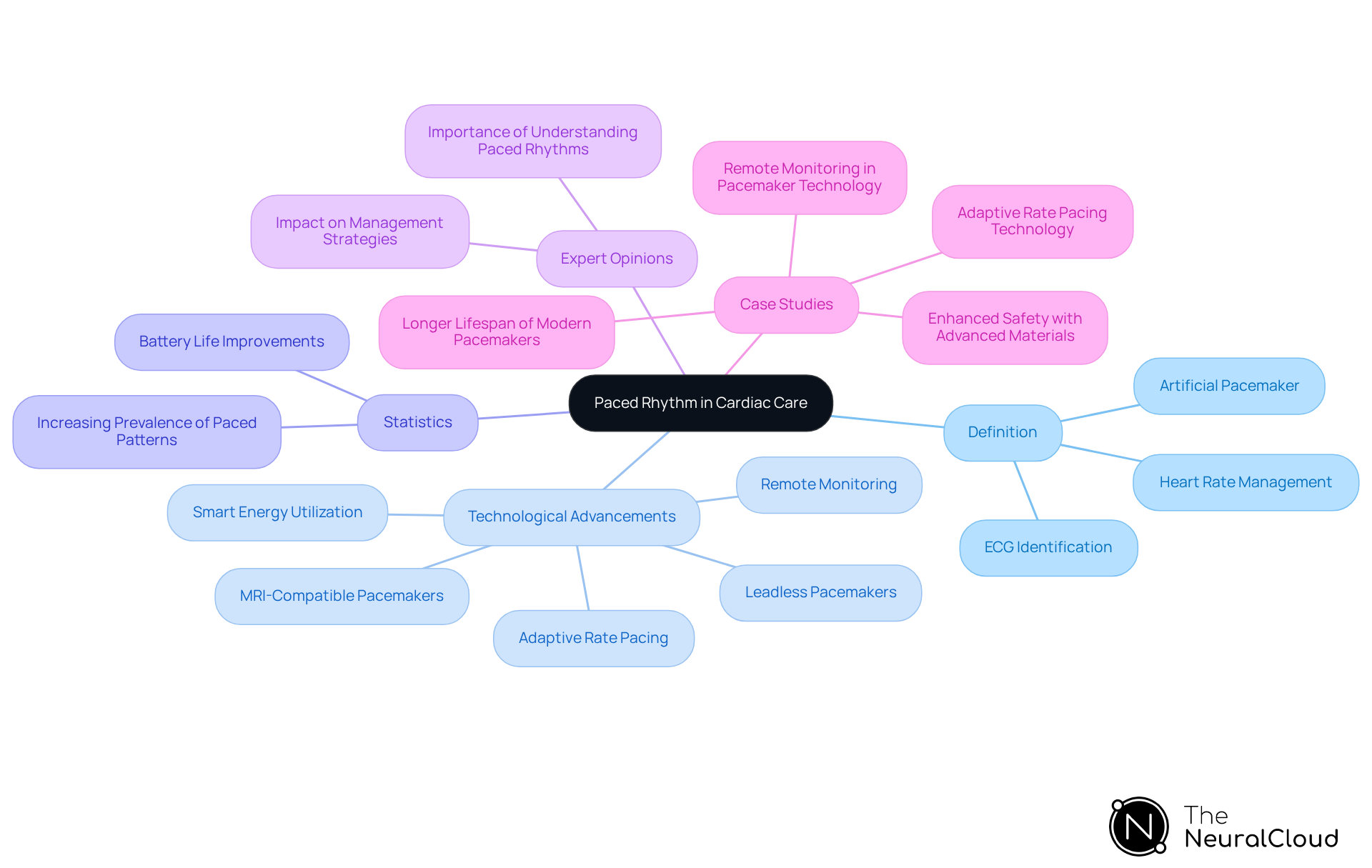
Managing heart rhythms can be challenging, especially when natural pacemakers fail. A paced tempo refers to a heart rhythm managed by an artificial pacemaker, which sends electrical impulses to stimulate the heart at a set rate. This pattern is identifiable on an electrocardiogram (ECG) by pacing spikes that appear before the P wave in atrial pacing or the QRS complex in ventricular pacing. The primary aim of a controlled tempo is to maintain an adequate heart rate in individuals whose natural pacemaker is malfunctioning or absent, ensuring proper blood circulation and preventing symptoms associated with bradycardia or other arrhythmias.
Recent advancements in pacemaker technology have made it easier to manage paced patterns. For instance, modern pacemakers now feature smart energy utilization, adjusting their power consumption based on the user's activity level. This innovation enhances battery life and extends device durability to 10 to 15 years, reducing the need for replacements and minimizing the overall risk of complications from surgery.
Statistics indicate that the prevalence of paced patterns among individuals with cardiac issues is increasing, underscoring the growing reliance on these devices for effective pulse management. The integration of remote monitoring technology, such as MaxYield from Neural Cloud Solutions, allows healthcare providers to continuously assess pacemaker status and heart patterns without requiring in-office visits, fostering a proactive approach to care.
Expert opinions emphasize the importance of understanding what is a paced rhythm in cardiac care, as it directly influences management strategies for patients. Case studies illustrate the successful use of adaptive rate pacing technology, enabling pacemakers to adjust to an individual's physical activity, significantly improving their quality of life. This adaptability not only enhances participation in daily activities but also marks a shift toward more personalized cardiac care.
Understanding paced patterns can lead to more effective treatment strategies and better patient outcomes.
Contextualize the Importance of Paced Rhythms in Cardiac Care
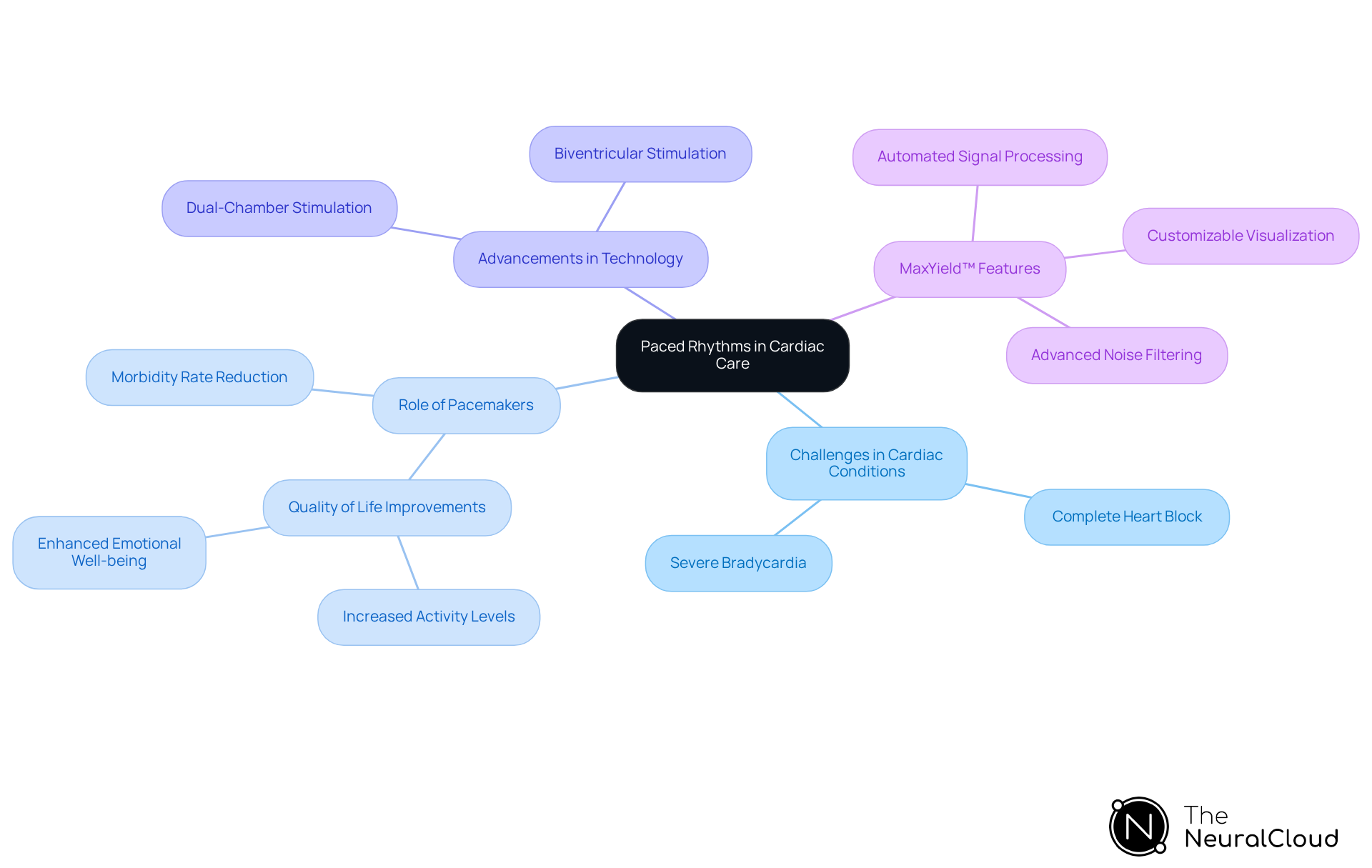
In cardiac care, managing conditions like complete heart block and severe bradycardia presents significant challenges. The rise in pacemaker usage in Canada reflects this trend, with more individuals benefiting from these devices. Pacemakers have revolutionized the management of cardiac conditions, significantly improving quality of life and lowering morbidity rates. What is a paced rhythm? It refers to ensuring a consistent pulse rate, which reduces complications linked to insufficient cardiac output, such as syncope, fatigue, and worsening cardiac failure.
Recent advancements in pacemaker technology, including dual-chamber and biventricular stimulation, have further enhanced the synchronization of cardiac contractions. This optimization leads to improved outcomes for individuals. For instance, studies have shown that individuals with heart failure who receive advanced pacing therapies experience significant improvements in their overall health and activity levels. It's important for healthcare professionals to understand what is a paced rhythm, as this knowledge allows them to efficiently oversee and address individuals with intricate cardiac issues, ultimately improving the quality of care in cardiovascular health.
In this context, Neural Cloud Solutions' MaxYield™ platform plays a pivotal role in addressing challenges in ECG analysis. Key features of MaxYield™ include:
- Advanced noise filtering
- Automated signal processing
- Customizable visualization with Insight360
These features enhance the clarity of ECG data, allowing healthcare providers to effectively manage and treat patients with complex cardiac conditions. By consolidating workflows and providing consistently smooth and distinct ECG waves, MaxYield™ empowers clinicians to make informed decisions, ultimately enhancing the standard of care in cardiovascular health. Understanding what is a paced rhythm and utilizing advanced tools like MaxYield™ can have a profound impact on patient care and outcomes.
Explore Key Characteristics and Components of Paced Rhythms
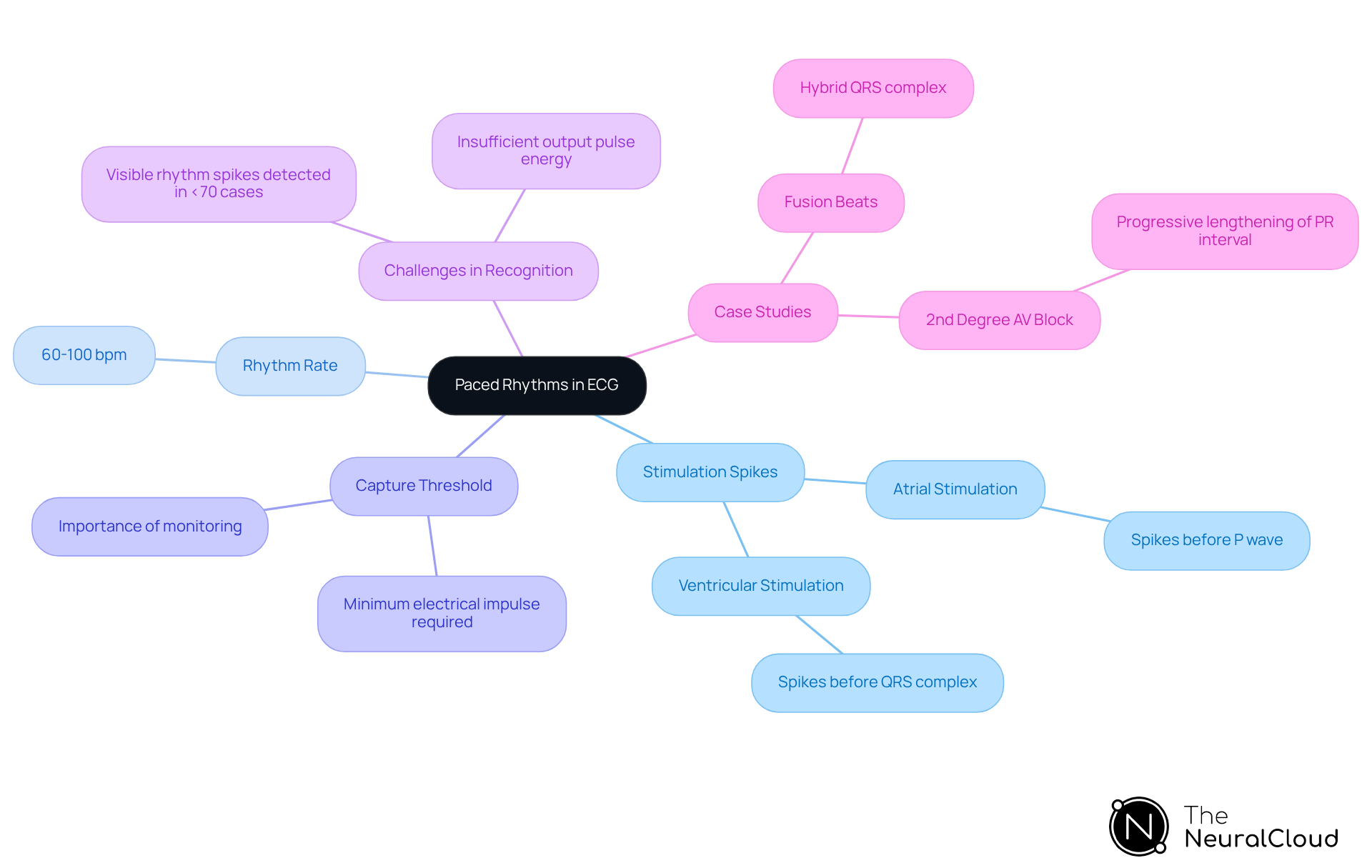
Understanding what is a paced rhythm in ECG readings is vital for effective cardiac care. Key characteristics include stimulation spikes, which are vertical deflections that indicate the delivery of electrical impulses from the pacemaker. In atrial stimulation, these spikes appear before the P wave, while in ventricular stimulation, they precede the QRS complex. The rhythm rate is typically set between 60 to 100 beats per minute, tailored to the physiological needs of the patient. To achieve effective rhythm control, it's essential to monitor the capture threshold, which is the minimum electrical impulse required to stimulate the cardiac muscle.
A study found that visible rhythm spikes in ECGs from modern cardiac resynchronization therapy (CRT) systems were detected in less than 70% of cases during atrial stimulation, highlighting the challenges healthcare professionals face in recognizing these spikes in practice. While initial rhythm spikes effectively stimulate cardiac contractions, later spikes may fail to engage the heart due to insufficient output pulse energy. This underscores the importance of adjusting pacemaker settings to ensure the heart responds effectively to stimulation.
Case studies illustrate various rhythm scenarios, such as fusion beats, where the native beat and pacemaker beat combine, resulting in a hybrid QRS complex. For instance, one case involved an individual with regular atrial stimulation spikes at 90 bpm and 100% atrial capture. However, not every P wave resulted in a QRS complex due to a progressive lengthening of the PR interval, indicating a co-existent 2nd degree AV block.
Experts emphasize that a systematic approach to ECG interpretation is crucial, particularly in recognizing pacing characteristics. Emergency physicians stress that understanding these elements is key to evaluating how well a pacemaker is working and ensuring the best outcomes for patients. Overall, understanding what is a paced rhythm, along with the advanced features of MaxYield™ and the adaptable visualization and reporting tool Insight360, is essential for healthcare providers to analyze ECGs effectively and manage patients with pacemakers.
Illustrate Examples of Paced Rhythms in Clinical Practice
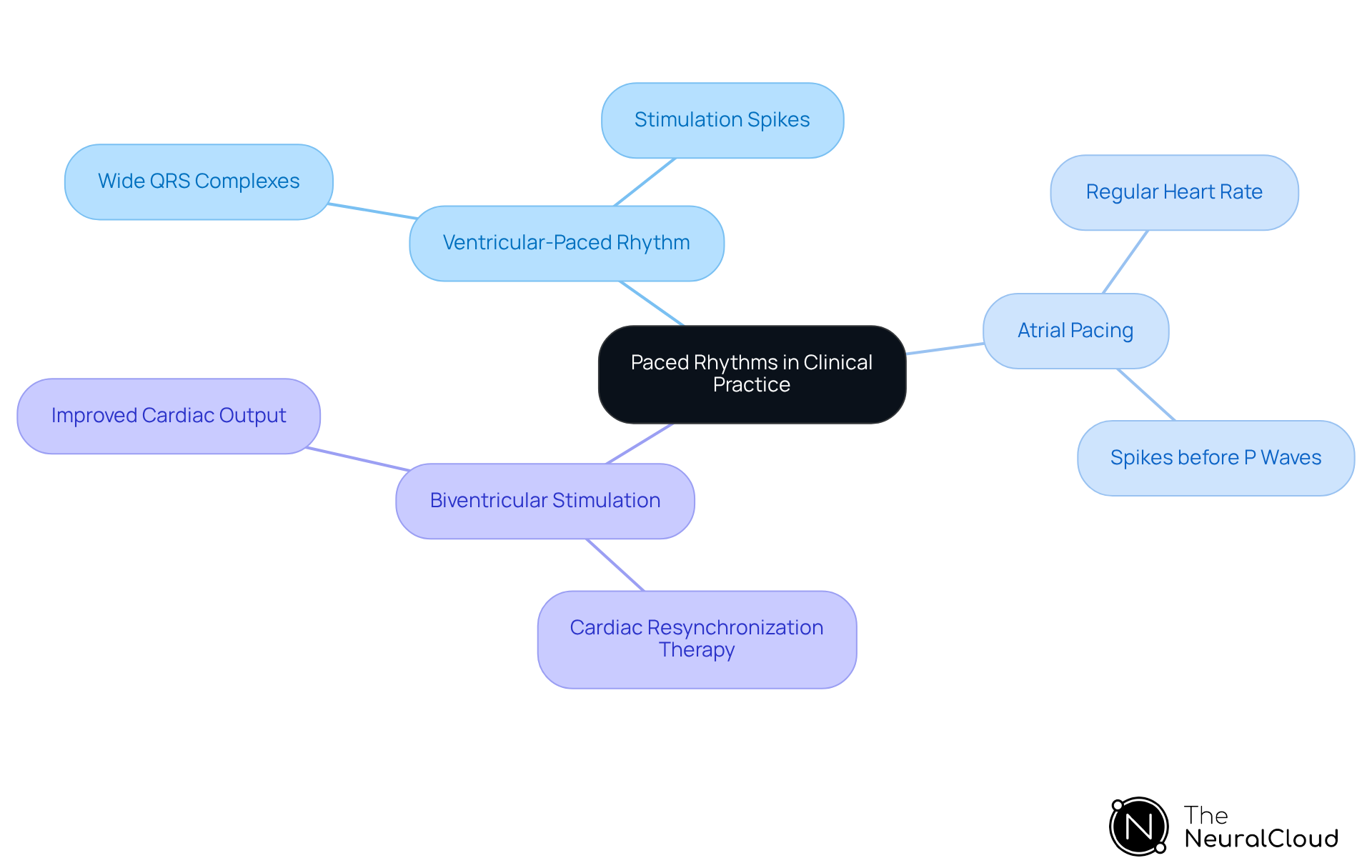
In clinical practice, understanding paced patterns is crucial for accurate ECG analysis and effective cardiac management. For instance, an individual with total atrioventricular block may display a ventricular-paced rhythm, which is recognizable by wide QRS complexes and stimulation spikes preceding each QRS. In contrast, an individual with atrial fibrillation may undergo atrial stimulation to maintain a regular heart rate, resulting in stimulation spikes visible before the P waves on the ECG. Additionally, patients undergoing cardiac resynchronization therapy (CRT) often exhibit biventricular stimulation, where both the right and left ventricles are activated to enhance synchrony and improve cardiac output.
Interestingly, about 90% of ECGs show visible pace spikes from ventricular pacing, while atrial pacing reveals spikes in less than 70% of cases. These examples underscore the critical importance of understanding what is a paced rhythm in order to achieve accurate diagnosis and effective management in cardiac care. Modern bipolar pacemakers can complicate the detection of these rhythms, presenting a challenge for accurate diagnosis. Ultimately, understanding what is a paced rhythm can significantly enhance diagnostic accuracy and patient care in cardiology.
Conclusion
The complexities of paced rhythms present significant challenges in cardiac care, especially as technology evolves. A paced rhythm, characterized by the use of artificial pacemakers to regulate heartbeats, plays a crucial role in ensuring adequate blood circulation for patients with compromised natural pacemaker function. It's crucial for healthcare professionals to grasp this knowledge, as it directly influences treatment strategies and patient outcomes.
Throughout the article, key insights have been highlighted, including:
- The definition of paced rhythms
- Their significance in managing conditions like bradycardia and heart block
- The technological advancements that enhance their effectiveness
The integration of tools such as MaxYield™ and Insight360 from Neural Cloud Solutions Inc. exemplifies how modern technology can improve ECG analysis and patient monitoring, ultimately leading to better management of cardiac conditions. Case studies further illustrate the practical applications of paced rhythms in clinical settings, emphasizing the importance of recognizing pacing characteristics for accurate diagnosis and treatment.
In conclusion, by prioritizing education on paced rhythms, healthcare providers can transform patient care and outcomes in cardiovascular health. As the reliance on pacemakers grows, so does the need for healthcare providers to stay informed about the latest advancements and best practices in managing these rhythms. Embracing this knowledge and utilizing advanced monitoring technologies will empower clinicians to deliver personalized and effective care, ultimately enhancing the standard of cardiovascular health in Canada.
Frequently Asked Questions
What is a paced rhythm in cardiac care?
A paced rhythm refers to a heart rhythm managed by an artificial pacemaker, which sends electrical impulses to stimulate the heart at a set rate. This is necessary when the natural pacemaker of the heart is malfunctioning or absent.
How can paced rhythms be identified on an electrocardiogram (ECG)?
Paced rhythms can be identified on an ECG by the presence of pacing spikes that appear before the P wave in atrial pacing or the QRS complex in ventricular pacing.
What is the primary aim of maintaining a paced rhythm?
The primary aim of maintaining a paced rhythm is to ensure an adequate heart rate in individuals with a malfunctioning natural pacemaker, which helps maintain proper blood circulation and prevents symptoms associated with bradycardia or other arrhythmias.
What advancements have been made in pacemaker technology?
Recent advancements include smart energy utilization, allowing modern pacemakers to adjust their power consumption based on the user's activity level, which enhances battery life and extends device durability to 10 to 15 years.
Why is the prevalence of paced patterns increasing among individuals with cardiac issues?
The prevalence of paced patterns is increasing due to a growing reliance on pacemakers for effective pulse management, as they provide essential support for individuals with cardiac issues.
How does remote monitoring technology, such as MaxYield from Neural Cloud Solutions, benefit patients with pacemakers?
Remote monitoring technology allows healthcare providers to continuously assess pacemaker status and heart patterns without requiring in-office visits, fostering a proactive approach to patient care.
What is the significance of understanding paced rhythms in cardiac care?
Understanding paced rhythms is crucial as it directly influences management strategies for patients, leading to more effective treatment strategies and better patient outcomes.
How does adaptive rate pacing technology improve patient quality of life?
Adaptive rate pacing technology enables pacemakers to adjust to an individual's physical activity, significantly improving their quality of life by enhancing participation in daily activities and promoting personalized cardiac care.
List of Sources
- Define Paced Rhythm: A Fundamental Concept in Cardiac Care
- Six Groundbreaking Advancements in Pacemakers - Houston Physicians Hospital (https://houstonphysicianshospital.com/six-groundbreaking-advancements-in-pacemakers)
- Advances in Pacemaker Technology (https://modernheartandvascular.com/advances-in-pacemaker-technology)
- MEDTRONIC REACHES 1O MILLION IMPLANTABLE DEVICES PRODUCED IN SWITZERLAND, IMPACTING PATIENTS WORLDWIDE (https://news.medtronic.com/2026-02-09-MEDTRONIC-REACHES-1O-MILLION-IMPLANTABLE-DEVICES-PRODUCED-IN-SWITZERLAND,-IMPACTING-PATIENTS-WORLDWIDE)
- Contextualize the Importance of Paced Rhythms in Cardiac Care
- Study Finds Common Complication of Pacemakers Four Times Higher Than Previously Thought | Beth Israel Deaconess Medical Center (https://bidmc.org/news-stories/all-news-stories/news/2023/05/study-finds-common-complication-of-pacemakers-four-times-higher-than-previously-thought)
- Three Major Studies May Shift Care for A-Fib, Heart Attack and Pulmonary Embolism - ChristianaCare News (https://news.christianacare.org/2026/04/three-major-studies-may-shift-care-for-a-fib-heart-attacks-and-pulmonary-embolism)
- Pacemakers Greatly Improve Quality of Life | Newswise (https://newswise.com/articles/pacemakers-greatly-improve-quality-of-life)
- Battery-free, light-powered pacemaker may improve quality of life for heart disease patients (https://news.arizona.edu/news/battery-free-light-powered-pacemaker-may-improve-quality-life-heart-disease-patients)
- Explore Key Characteristics and Components of Paced Rhythms
- Paced ECG Analysis: First in a Series - EP Heart Cardiovascular Electrophysiology Program (https://med.uth.edu/epheart/2017/09/09/paced-ecg-analysis-first-in-a-series)
- Pacemaker Essentials: How to Interpret a Pacemaker ECG - CanadiEM (https://canadiem.org/pacemaker-essentials-interpret-pacemaker-ecg)
- Diagnostic accuracy of pace spikes in the electrocardiogram to diagnose paced rhythm (https://sciencedirect.com/science/article/abs/pii/S0022073615002058)
- Pacemaker Rhythms – Normal Patterns (https://litfl.com/pacemaker-rhythms-normal-patterns)
- Illustrate Examples of Paced Rhythms in Clinical Practice
- Diagnostic accuracy of pace spikes in the electrocardiogram to diagnose paced rhythm (https://sciencedirect.com/science/article/abs/pii/S0022073615002058)
- Late-Breaking Clinical Trials at Heart Rhythm 2025 Showcase Promising Outcomes for Left Bundle Branch Area Pacing in Heart Failure Treatment - HRS (https://hrsonline.org/news/lcbt-showcase-promising-outcomes-left-bundle-branch-area-pacing)
- Physician Testimonials for Aveir VR | Abbott (https://cardiovascular.abbott/us/en/hcp/products/cardiac-rhythm-management/pacemakers/aveir-dr-dual-chamber-leadless-pacemaker-system/case-studies.html)
- Management and outcome of patients with acute myocardial infarction presenting with pacemaker rhythm | Request PDF (https://researchgate.net/publication/311783232_Management_and_outcome_of_patients_with_acute_myocardial_infarction_presenting_with_pacemaker_rhythm)