Introduction
Clinicians face significant challenges in accurately diagnosing accelerated idioventricular rhythm (AIVR), a condition that can complicate cardiac diagnostics. Misinterpretation of AIVR can lead to inappropriate treatment decisions, affecting patient outcomes. Healthcare professionals must distinguish AIVR from more serious arrhythmias, which is crucial for effective patient management. Understanding AIVR's nuances is essential for improving patient outcomes and leveraging technological advancements in diagnosis and management.
Define Accelerated Idioventricular Rhythm (AIVR)
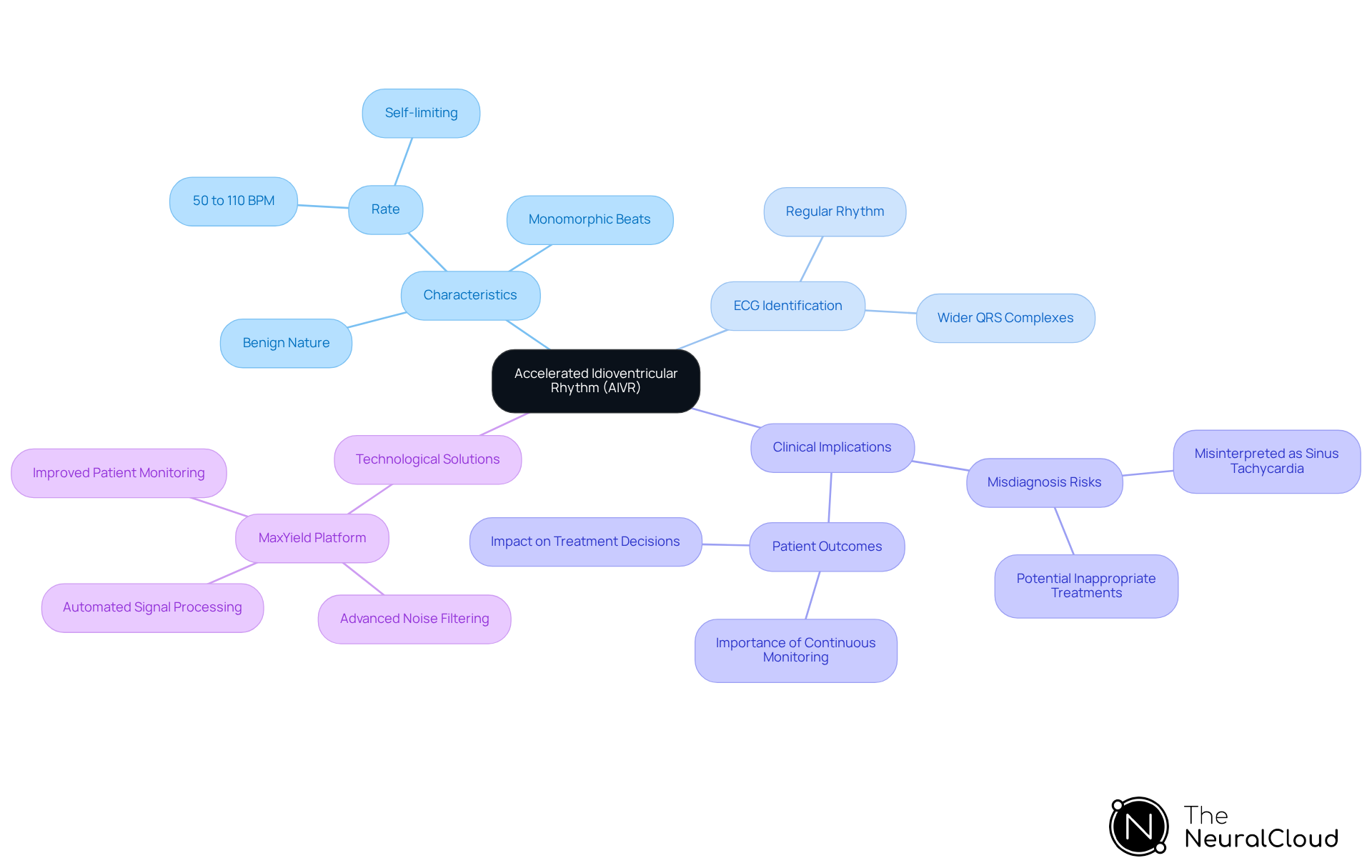
Understanding what is accelerated idioventricular rhythm presents unique challenges in ECG analysis that can impact patient care. This rhythm occurs when an ectopic ventricular pacemaker outpaces the sinus node, typically ranging from 50 to 110 beats per minute. It features three or more consecutive monomorphic ventricular beats and is often viewed as a benign condition.
On an electrocardiogram (ECG), what is accelerated idioventricular rhythm can be identified by its regular rhythm and distinct QRS complexes, which are wider than normal due to their ventricular origin. Unlike ventricular tachycardia, this arrhythmia typically occurs at a slower rate and is often self-limiting, resolving as the sinus rate rises.
Continuous ECG monitoring is essential for accurate diagnosis and management, as misdiagnosis may result in inappropriate treatments. For instance, an 18-month-old male presented with lethargy and respiratory distress, where initial ECG monitoring revealed monomorphic QRS complexes at a rate of 170 BPM, misinterpreted as sinus tachycardia.
Neural Cloud Solutions' MaxYield platform improves this process with advanced noise filtering and automated signal processing, delivering a clean, neuralized signal to clinicians. Incorporating MaxYield allows healthcare professionals to simplify the understanding of what is accelerated idioventricular rhythm analysis, reducing the risk of misdiagnosis and improving patient outcomes. Moreover, the platform consolidates ECG data, facilitating effective patient monitoring and management.
Identify Causes of Accelerated Idioventricular Rhythm
Understanding what is accelerated idioventricular rhythm is crucial as it presents significant challenges in ECG analysis, particularly during the reperfusion phase of acute myocardial infarction. This phase indicates successful reperfusion and commonly triggers what is accelerated idioventricular rhythm. Other significant causes include:
- Drug toxicity, especially from digoxin, cocaine, and volatile anesthetics
- Electrolyte imbalances
- Myocarditis
- Specific cardiomyopathies
Elevated vagal tone and reduced sympathetic tone can also trigger atrial idioventricular rhythm, particularly in individuals without structural heart disease.
Recent research emphasizes that this arrhythmia is typically harmless and self-resolving, often subsiding on its own when the sinus rate exceeds that of the ventricular foci. For instance, a case examination involving a healthy marathon runner demonstrated a ventricular rhythm at 60 bpm with multiple sinus capture beats, illustrating how high vagal tone can lead to sinus bradycardia and arrhythmia in athletic individuals. Notably, this condition has been observed in 0.3% of healthy volunteers, suggesting that some cardiac arrhythmias may occur by chance in early-phase studies without significant demographic predisposition.
It's essential for clinicians to understand these causes, as addressing the underlying issues can frequently resolve the arrhythmia without invasive interventions. The suggested mechanism for atrial-ventricular reentrant tachycardia involves improved automaticity of the ventricular pacemaker, with triggered activity possibly contributing, especially in instances of ischemia and digoxin toxicity. Additionally, patients with low cardiac output states may benefit from the restoration of AV synchrony, which can improve cardiac function.
Neural Cloud Solutions' MaxYield™ platform enhances this understanding by providing advanced noise filtering and wave recognition, which helps streamline the analysis of ECG data. By automating repetitive tasks and providing a clear, 'neuralized' signal, MaxYield™ enables healthcare professionals to efficiently handle arrhythmia issues, tackling challenges like physiological variability and signal artifacts. This innovative approach enhances beat-to-beat assessment and improves workflow efficiency, empowering clinicians to focus on critical decision-making.

Examine Symptoms of Accelerated Idioventricular Rhythm
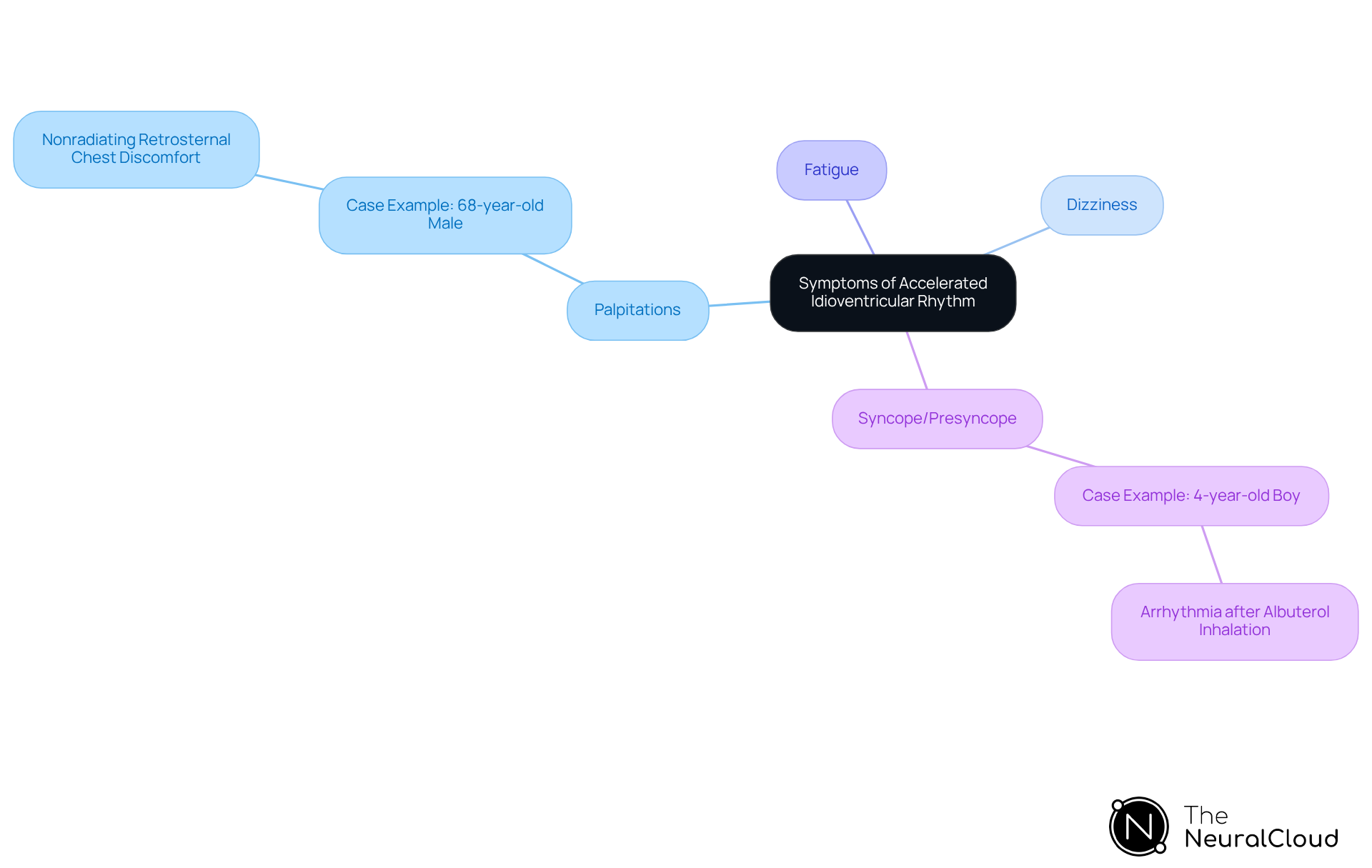
Patients with what is accelerated idioventricular rhythm often present a diagnostic challenge due to the variability in symptom expression. While many remain asymptomatic, common symptoms include:
- Palpitations
- Dizziness
- Fatigue
- In some cases, syncope or presyncope
These symptoms often relate to underlying conditions like myocardial ischemia or electrolyte disturbances. For instance, a case involving a 68-year-old male with hypertension highlighted instances of nonradiating retrosternal chest discomfort during physical activity, suggesting a link between this condition and exertional symptoms.
In another significant case, a 4-year-old boy experienced arrhythmia after inhaling albuterol for status asthmaticus, demonstrating that symptoms can manifest even in young individuals without prior heart conditions. This shows why healthcare providers need to conduct thorough assessments, as symptoms may vary significantly based on the individual's health status.
Expert opinions indicate that while this condition is often benign, understanding what is accelerated idioventricular rhythm and the presence of symptoms necessitates careful evaluation alongside ECG findings to establish the suitable management strategy. In symptomatic individuals, closer observation or intervention may be required, especially if the arrhythmia is linked to significant underlying cardiac problems. Furthermore, atrial premature beats were observed in 0.3% of participants in a study analyzing ECG recordings from 1,273 healthy volunteers, highlighting its prevalence in the general population.
To enhance the analysis of artificial intelligence virtual reality, Neural Cloud Solutions' MaxYield™ platform offers advanced noise filtering and automated signal processing, which can significantly improve the clarity of ECG readings. By utilizing MaxYield™, healthcare providers can streamline their workflow, ensuring that they receive clean, 'neuralized' signals and distinct ECG waves, which are crucial for accurate diagnosis and treatment. Additionally, the Insight360 tool transforms MaxYield’s clean ECG data into interactive dashboards and clinical-ready reports, further enhancing data visualization and reporting capabilities. Overall, understanding the symptomatology of this condition is essential for effective diagnosis and treatment, ensuring that individuals receive timely and suitable care. Understanding the risk of hemodynamic instability in some patients is vital for their management.
Contextualize Accelerated Idioventricular Rhythm in Cardiac Health
In clinical settings, understanding what is accelerated idioventricular rhythm poses diagnostic challenges that can impact patient management. Often occurring during acute myocardial infarction and other cardiac incidents, what is accelerated idioventricular rhythm may indicate underlying cardiac issues. However, what is accelerated idioventricular rhythm is typically considered a benign arrhythmia that requires no intervention unless it leads to symptoms or significant hemodynamic instability. In cardiac diagnostics, understanding what is accelerated idioventricular rhythm (AIVR) serves as a critical marker for clinicians, influencing management decisions and interventions.
Recent studies indicate that atrial premature beats are frequently observed in individuals undergoing primary percutaneous coronary intervention (PCI) for ST-segment elevation myocardial infarction (STEMI), with an incidence ranging from 15% to 50%, depending on monitoring methods. Typically, this rhythm is self-limiting and resolves when the sinus rate surpasses what is accelerated idioventricular rhythm, which ranges from 40 to 120 beats per minute.
Experts note that while atrial premature beats can lead to complications, especially in those with severe cardiomyopathy, they are generally harmless. For instance, research involving 128 STEMI patients found that this condition was linked to a notable decrease in systolic blood pressure but did not necessitate the use of vasopressors or inotropes due to its brief duration.
Case analyses further demonstrate the significance of advanced interactive virtual reality in managing individuals. One study highlighted the necessity for emergency providers to critically evaluate individuals with AIVR, as understanding what is accelerated idioventricular rhythm is crucial to avoid misdiagnosis that could result in unsuitable treatments. Additionally, understanding what is accelerated idioventricular rhythm is important as this condition has been associated with a greater occurrence of repeated CPR in post-resuscitation situations, underscoring its significance in acute care environments.
As ECG technology advances, understanding what is accelerated idioventricular rhythm is crucial for improving patient outcomes and refining clinical practices.

Conclusion
Clinicians must grasp the nuances of accelerated idioventricular rhythm (AIVR) to ensure optimal cardiac care. This arrhythmia, characterized by a ventricular pacemaker outpacing the sinus node, typically presents at a rate of 50 to 110 beats per minute and is often benign. Identifying AIVR on an ECG is crucial; misinterpretation can result in incorrect treatment decisions. This underscores the importance of accurate diagnosis and monitoring.
Key aspects of AIVR include its causes, symptoms, and clinical implications, which are vital for effective management. While AIVR can occur during critical cardiac events such as acute myocardial infarction, it is generally self-limiting and resolves as the sinus rate increases. The variability in symptom presentation ranges from asymptomatic cases to those experiencing palpitations or dizziness, necessitating thorough evaluation by healthcare providers. Furthermore, the integration of advanced technologies like Neural Cloud Solutions' MaxYield platform enhances ECG analysis, improving diagnostic accuracy and patient outcomes.
By embracing advanced diagnostic tools, healthcare professionals can significantly improve patient outcomes in cardiac health. Staying informed about the nuances of AIVR ensures timely and appropriate management, ultimately contributing to better cardiac health outcomes in the Canadian context.
Frequently Asked Questions
What is accelerated idioventricular rhythm (AIVR)?
Accelerated idioventricular rhythm (AIVR) is a cardiac rhythm that occurs when an ectopic ventricular pacemaker outpaces the sinus node, typically ranging from 50 to 110 beats per minute. It is characterized by three or more consecutive monomorphic ventricular beats and is often considered a benign condition.
How can AIVR be identified on an electrocardiogram (ECG)?
AIVR can be identified on an ECG by its regular rhythm and distinct QRS complexes, which are wider than normal due to their ventricular origin. Unlike ventricular tachycardia, AIVR occurs at a slower rate and is often self-limiting, resolving as the sinus rate increases.
Why is continuous ECG monitoring important for diagnosing AIVR?
Continuous ECG monitoring is crucial for accurate diagnosis and management of AIVR because misdiagnosis can lead to inappropriate treatments. For example, an 18-month-old male with lethargy and respiratory distress had an initial ECG that misinterpreted AIVR as sinus tachycardia.
How does Neural Cloud Solutions' MaxYield platform assist in AIVR analysis?
Neural Cloud Solutions' MaxYield platform enhances AIVR analysis by providing advanced noise filtering and automated signal processing, which delivers a clean, neuralized signal to clinicians. This helps simplify the understanding of AIVR and reduces the risk of misdiagnosis, ultimately improving patient outcomes.
What benefits does the MaxYield platform offer for patient monitoring and management?
The MaxYield platform consolidates ECG data, facilitating effective patient monitoring and management. By improving the clarity of ECG signals, it aids healthcare professionals in making more accurate assessments and decisions regarding patient care.
List of Sources
- Define Accelerated Idioventricular Rhythm (AIVR)
- 18-Month-Old with Lethargy and Accelerated Idioventricular Rhythm in Prehospital Setting: A Case Report - PubMed (https://pubmed.ncbi.nlm.nih.gov/38551813)
- Idioventricular Rhythm - StatPearls - NCBI Bookshelf (https://ncbi.nlm.nih.gov/books/NBK554520)
- Accelerated Idioventricular Rhythm: Background, Pathophysiology, Etiology (https://emedicine.medscape.com/article/150074-overview)
- Clinical characteristics and therapeutic strategy of frequent accelerated idioventricular rhythm - BMC Cardiovascular Disorders (https://link.springer.com/article/10.1186/s12872-021-02221-0)
- Identify Causes of Accelerated Idioventricular Rhythm
- Myocardial Infarction News - Cardiology | MedPage Today (https://medpagetoday.com/cardiology/myocardialinfarction)
- Accelerated Idioventricular Rhythm (AIVR) (https://litfl.com/accelerated-idioventricular-rhythm-aivr)
- Accelerated Idioventricular Rhythm: Background, Pathophysiology, Etiology (https://emedicine.medscape.com/article/150074-overview)
- ECG Diagnosis: Accelerated Idioventricular Rhythm | The Permanente Journal (https://thepermanentejournal.org/doi/10.7812/TPP/17-173)
- Examine Symptoms of Accelerated Idioventricular Rhythm
- Accelerated Idioventricular Rhythm: Background, Pathophysiology, Etiology (https://emedicine.medscape.com/article/150074-overview)
- Accelerated idioventricular rhythm as anginous substrate in elderly: Report of an unprecedented case - PMC (https://pmc.ncbi.nlm.nih.gov/articles/PMC10943551)
- Idioventricular Rhythm - StatPearls - NCBI Bookshelf (https://ncbi.nlm.nih.gov/books/NBK554520)
- Contextualize Accelerated Idioventricular Rhythm in Cardiac Health
- Acute haemodynamic effects of accelerated idioventricular rhythm in primary percutaneous coronary intervention (https://eurointervention.pcronline.com/article/acute-haemodynamic-effects-of-accelerated-idioventricular-rhythm-in-primary-percutaneous-coronary-intervention)
- Accelerated Idioventricular Rhythm: Background, Pathophysiology, Etiology (https://emedicine.medscape.com/article/150074-overview)
- AIVR in the Emergency Department — NUEM Blog (https://nuemblog.com/blog/aivr)
- Postresuscitation accelerated idioventricular rhythm: a potential prognostic factor for out-of-hospital cardiac arrest survivors - PubMed (https://pubmed.ncbi.nlm.nih.gov/17457573)